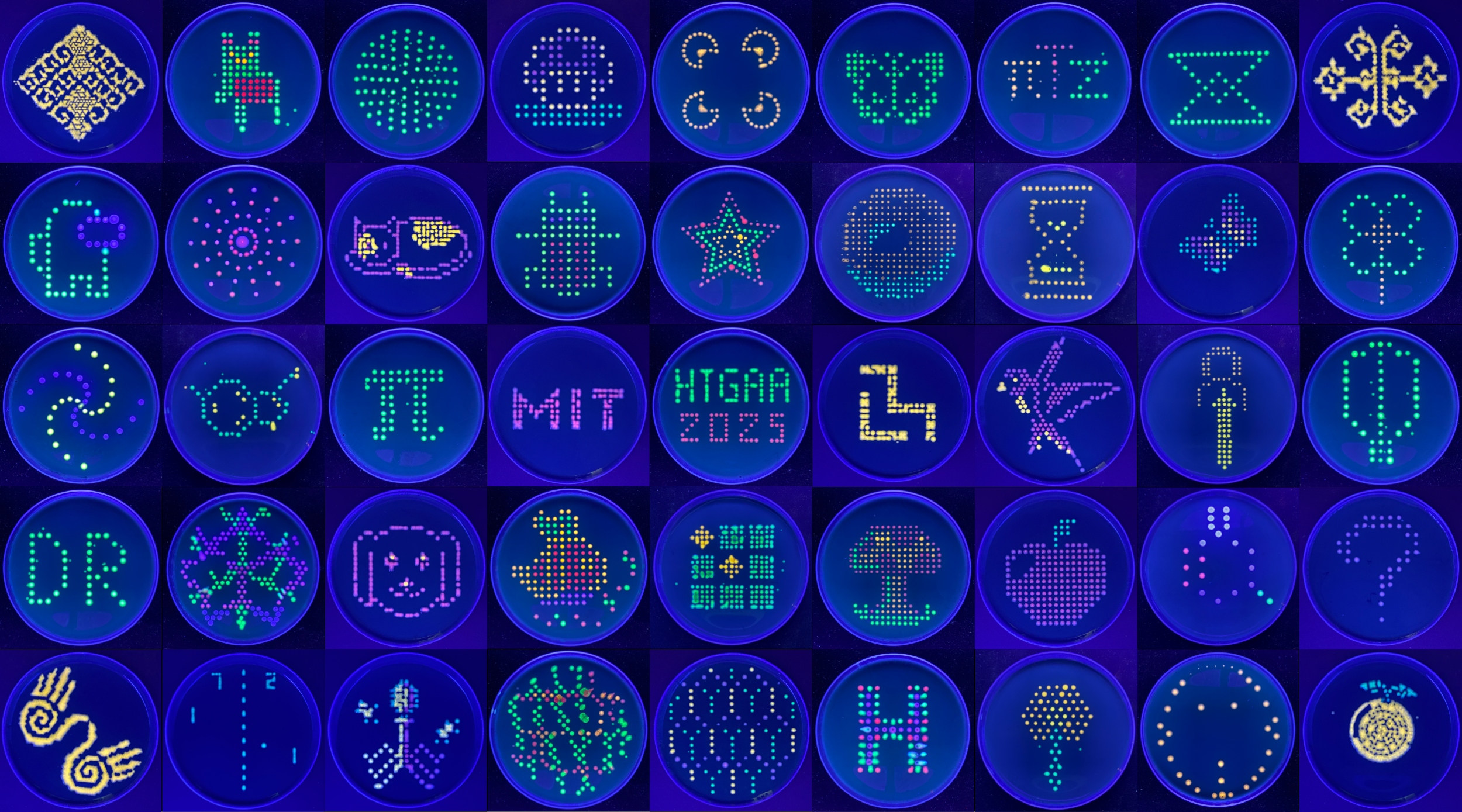
HTGAA 2025

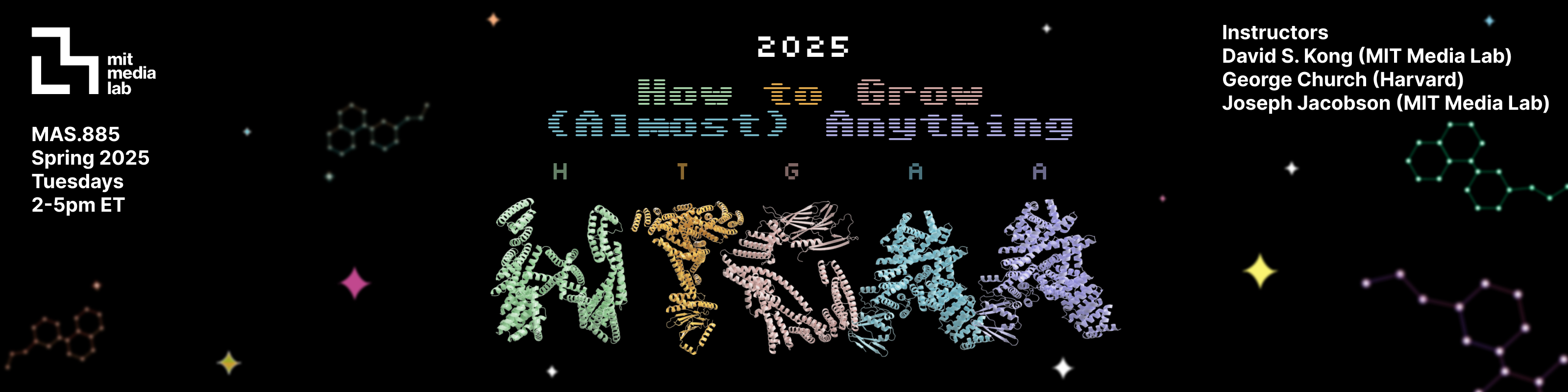
HTGAA 2025 banner

Tip

Welcome to How to Grow (Almost) Anything — 2025. For full schedule, rooms, and policies, see [Logistics].

Get started

Logistics Weeks (01–14) Bootcamp (Parts 1–3) Final Projects Students & Global Nodes

Class snapshot

  • Lecture: Tuesdays, 2–5 PM ET — MIT E15‑341 & Zoom
  • Recitation: Wednesdays, 5–6 PM ET — MIT E15‑359 & Zoom
  • Lab: MIT 68‑083; see weekly pages for specifics
  • Global Nodes: local recitations over Zoom

Details (Zoom links, exceptions, room notes) live on [Logistics].

Explore the course

  • Class & recitation times, lab room, office hours, and global node note (2025).
  • Lecture → Homework → Recitation → Lab → Reading & Resources.
  • A three-part fast start for HTGAA 2025

What you’ll see each week

Big‑picture concepts, demos, and guest speakers. Slides and recordings are posted after each class.

Hands‑on assignments and documentation prompts. Clear checklists and notices help you get it done.

Interactive review and Q&A. Often includes short live demos or walkthroughs.

Wet‑lab or automation activities; protocols and inventory links included when relevant.

Curated references, tools, and papers to support the week’s topic.

HTGAA banner
HTGAA 2025 banner (source)
Pipettes in research lab
Pipettes — Unsplash
DNA double helix render
DNA render — Unsplash
HTGAA 2025 banner

Subsections of HTGAA 2025

Logistics

HTGAA lab plate

Info

Bookmark this page — it’s the single source of truth for time, rooms, and global‑node notes.

  • Tuesdays, 2–5 PM ET
  • Room: MIT E15‑341 & Zoom
  • Slides/recordings: linked from each Week page after class
  • Wednesdays, 5–6 PM ET
  • Room: MIT E15‑359 & Zoom
  • Room: 68‑083
  • Week‑specific sessions and protocols appear on each Week → Lab page.
  • Available upon request. Coordinate directly with the teaching team.
  • Global recitations are organized locally by each node (via Zoom).
  • Contact your node lead for times and links.

Contacts

  • Head Instructor: Dr. David S. Kong — dkong@mit.edu
  • Head TA: Suvin Sundararajan — suvinsun@mit.edu
Tip

Looking for content? Jump to Weeks or Bootcamp.


See also

Subsections of Logistics

Teaching Assistants

Teaching team

Head TA

MIT/Harvard TAs

  • Ronan Donovan (MIT)
  • Lauren “Ren” Ramlan (MIT)
  • Michelle Yue (Harvard)
  • Cholpisit (Ice) Kiattisewee (MIT)
  • Itamar Chinn (MIT)
  • Anna-Thérèse Mehra (Harvard)
  • Diogo De Souza (Harvard)
  • Becky Perelman (Harvard)
  • Cathy Guo (Harvard Wyss)
  • Jieming Chu (Harvard Wyss)
  • Johannes Stein (Harvard)
  • Kevin Tang (Harvard)
  • Raoul Fuerst (Harvard)
  • Kyuho Jang (MIT)
  • Kanna Momose (MIT)
  • Lennart Justen (MIT)

Global Teaching Assistants

Weeks

Welcome! Browse each week below. We’ll keep pages updated as slides/recordings post.

Subsections of Weeks

Week 01 — Principles & Practices

Lab scene

This week lays the foundation for ethics, safety, and governance in biotechnology — and we get hands-on in lab basics.

  • Info Recording (Feb 4, 2025): • Session 1 (before class end, ~3h) — Zoom • Session 2 (after class end, ~50m) — Zoom Slides will be shared after class.
  • Warning Document your work clearly — sketches, screenshots, notes, even failed attempts (and how you addressed them). Class Assignment Describe a biological engineering application or tool you want to develop and why. This can tie to your eventual final project or current research. Define governance/policy goals to ensure your application contributes to an ethical future (e.g., safety, equity, autonomy). Break big goals into sub‑goals. Propose at least three governance actions across different actors (e.g., researchers, companies, federal agencies). For each action, consider: Purpose — what changes are you proposing? Design — what’s needed for it to work? Assumptions — what might you have wrong? Risks of failure & “success” — unintended consequences if it “works.” Score each action (1–3; 1=best) against your policy goals (or a framework of your own). Use the matrix below as inspiration. Prioritize one option (or a combo) and explain your trade‑offs, assumptions, and uncertainties.
  • Slides (Updated Feb 5): Google Slides Recording (Updated Feb 7): Zoom
  • Objective Welcome to HTGAA! This first lab introduces pipetting and serial dilutions, foundational for precise liquid handling and solution preparation. This is a one‑day lab with two mini‑protocols (mixing colors and dilutions). By the end, you’ll confidently use pipettes, prepare solutions to target concentrations, and troubleshoot common errors. Tip This is a one‑day lab covering mixing colors and dilutions. By the end you’ll confidently use pipettes and prepare solutions at desired concentrations.
  • Lab‑specific Unit conversion & significant figures — Crash Course Intro to pipetting — YouTube Governance & ethics Protein Design Meets Biosecurity — Church & Baker (Science, 2024) Science.org Synthetic Genomics: Options for Governance — J. Craig Venter Institute US Presidential Commission on the Study of Bioethical Issues — “New Directions” report WHO Global guidance framework — Mitigating biorisks Bold Goals for U.S. Biotechnology and Biomanufacturing — White House (2023) National Security Commission on Emerging Biotechnology (interim) — U.S. Senate iGEM Safety Hub — 2020 and 2023 Responsibility Handbook for Community Biology Spaces — Genspace DIYBio Ask a Biosafety Expert — ask.diybio.org Rooftop Solar & the Four Levers of Social Change — Ethan Zuckerman

Subsections of Week 01

Lecture — Principles & Practices

Info

Recording (Feb 4, 2025):
• Session 1 (before class end, ~3h) — Zoom
• Session 2 (after class end, ~50m) — Zoom

Slides will be shared after class.

HTGAA lecture

Homework — Principles & Practices

Warning

Document your work clearly — sketches, screenshots, notes, even failed attempts (and how you addressed them).

Class Assignment

  1. Describe a biological engineering application or tool you want to develop and why. This can tie to your eventual final project or current research.
  2. Define governance/policy goals to ensure your application contributes to an ethical future (e.g., safety, equity, autonomy). Break big goals into sub‑goals.
  3. Propose at least three governance actions across different actors (e.g., researchers, companies, federal agencies). For each action, consider:
    • Purpose — what changes are you proposing?
    • Design — what’s needed for it to work?
    • Assumptions — what might you have wrong?
    • Risks of failure & “success” — unintended consequences if it “works.”
  4. Score each action (1–3; 1=best) against your policy goals (or a framework of your own). Use the matrix below as inspiration.
  5. Prioritize one option (or a combo) and explain your trade‑offs, assumptions, and uncertainties.

Governance scoring matrix

Weekly Assignment

Reflect on any ethical concerns that arose this week. Propose governance actions you think are appropriate to address them. Include this on your class page for Week 1.

Before Next Class

  • Open a personal Notion page (covered in Recitation) and submit the public link via this Google Form.
  • Complete the Principles & Practices assignment above.

Recitation — Principles & Practices

Slides (Updated Feb 5):

Recording (Updated Feb 7):

Lab — Pipetting

Objective

Welcome to HTGAA! This first lab introduces pipetting and serial dilutions, foundational for precise liquid handling and solution preparation. This is a one‑day lab with two mini‑protocols (mixing colors and dilutions). By the end, you’ll confidently use pipettes, prepare solutions to target concentrations, and troubleshoot common errors.

Tip

This is a one‑day lab covering mixing colors and dilutions. By the end you’ll confidently use pipettes and prepare solutions at desired concentrations.

Concepts You’ll Learn

  • Units & conversions
  • Serial dilutions
  • Pipetting proficiency

Preparation & Protocol

  • Lab Prep — materials and notes (posted after lab)
  • Lab Protocol — HTGAA 2025 Pipetting Lab (Google Doc)

Inventory

Subsections of Lab

Lab Prep — Week 1 (Pipetting)

Info

Lab Prep and Lab Answer Keys will be shared here after the lab.
Relevant segments of the recitation recording will be updated here after the class.

Reading & Resources — Week 1

Lab‑specific

Governance & ethics

Week 02 — DNA Read, Write, and Edit

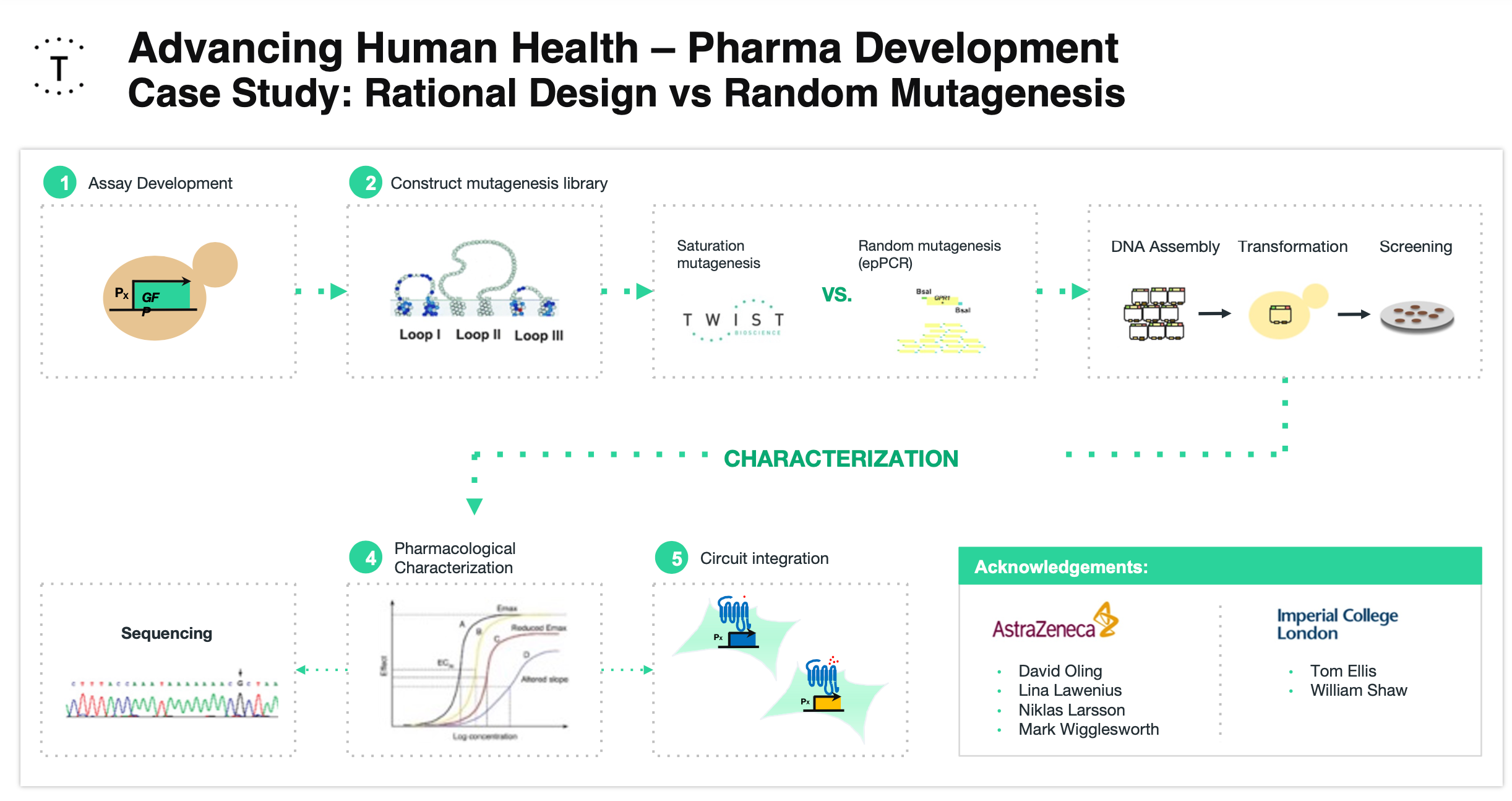
Twist case study figure

This week explores the read–write–edit toolkit: sequencing and synthesis workflows, restriction digests and gel electrophoresis, and early genome‑editing frameworks.

  • Slides: George Church — Reading & Writing Life Joe Jacobson — Gene Synthesis Class Recording: Zoom
  • Warning Document every step of your in‑silico and lab work — sketches, screenshots, notes, failures, and fixes. Your write‑up should help others reproduce your process. Part 0 — Basics of Gel Electrophoresis Watch the week’s lecture and recitation videos. (Bootcamp is optional.) Part 1 — Benchling & In‑silico Gel Art Use the Gel Art: Restriction Digests and Gel Electrophoresis protocol as a guide.
  • Slides (Updated Feb 12): Google Slides Recording: Zoom
  • Objective A focused 3‑hour lab on restriction digests and agarose gel electrophoresis. You’ll create DNA gel art while mastering core techniques that underpin verification of DNA constructs. Tip 3‑hour lab blending creativity and molecular biology: you’ll pour gels, set up restriction digests, run electrophoresis, and visualize DNA. Concepts You’ll Learn Benchling tools for design Restriction digest setup Agarose gel preparation Gel electrophoresis execution DNA visualization MIT lab timing (special for this week) Thu, Feb 13 — 1–4 PM ET, Building 68‑079 Prep & Protocol Lab Prep Lab Protocol (Google Doc)
  • Core DNA Sequencing at 40: Past, Present, and Future (2017) — Shendure, Balasubramanian, Church, et al. Nature DNA Synthesis Technologies to Close the Gene Writing Gap (2023) — Hoose, Vellacott, Storch, et al. Nature Rev Chem Recombineering and MAGE (2021) — Wannier et al. Nat Rev Methods Primers CRISPR: A Decade of Genome Editing is Only the Beginning — Wang, Doudna, et al. Science Databases GenBank overview — NCBI NCBI Genome — NCBI Ensembl — Ensembl UCSC Genome Browser — UCSC | Harvard GMC Editors & Tutorials CRISPR/Cas9 — Addgene tutorial | Benchling guide | PAM sequences Base editors — Review (2018) Prime editing — Prime editor | primeedit.nygenome.org | guide TALENs — Short guide | Design resource | Directed evolution Additional Resources Gel purification of DNA — Addgene Synthetic genomes with altered genetic codes (2020) — ScienceDirect DNA recorders — Nature (2021) Single‑molecule sensors on chips — PubMed (2022) Genome editors review (pre‑CRISPR era) — Trends Biotech (2013) Clinical trials of genome editing therapies — Nature (2020)

Subsections of Week 02

Homework — DNA Read, Write, and Edit

Warning

Document every step of your in‑silico and lab work — sketches, screenshots, notes, failures, and fixes. Your write‑up should help others reproduce your process.

Part 0 — Basics of Gel Electrophoresis

  • Watch the week’s lecture and recitation videos. (Bootcamp is optional.)

Part 1 — Benchling & In‑silico Gel Art

Use the Gel Art: Restriction Digests and Gel Electrophoresis protocol as a guide.

  1. Create a free account at benchling.com
  2. Import Lambda DNA from NEB.
  3. Simulate digests with enzymes: EcoRI, HindIII, BamHI, KpnI, EcoRV, SacI, SalI.
  4. Design a banding pattern inspired by Paul Vanouse’s Latent Figure Protocol.

Part 2 — Wet‑lab Gel Art

Info
Optional for Committed Listeners with lab access; mandatory for MIT/Harvard students. Documentation due at the start of class Feb 18.

Perform the experiment you designed in Part 1 per the Gel Art protocol.

Part 3 — DNA Design Challenge

Info
Mandatory for MIT/Harvard students and Committed Listeners; due at the start of class Feb 18.
  • Choose a protein of interest and obtain the amino‑acid sequence (NCBI/UniProt/other).
  • Reverse translate to DNA.
  • Continue per recitation guidance (gRNA design, editor choice, etc.).

Gel art example

Lab — DNA Gel Art

Objective

A focused 3‑hour lab on restriction digests and agarose gel electrophoresis. You’ll create DNA gel art while mastering core techniques that underpin verification of DNA constructs.

Tip

3‑hour lab blending creativity and molecular biology: you’ll pour gels, set up restriction digests, run electrophoresis, and visualize DNA.

Concepts You’ll Learn

  • Benchling tools for design
  • Restriction digest setup
  • Agarose gel preparation
  • Gel electrophoresis execution
  • DNA visualization

MIT lab timing (special for this week)

  • Thu, Feb 13 — 1–4 PM ET, Building 68‑079

Prep & Protocol

Gel art example

Subsections of Lab

Reading & Resources — Week 2

Core

  • DNA Sequencing at 40: Past, Present, and Future (2017) — Shendure, Balasubramanian, Church, et al. Nature
  • DNA Synthesis Technologies to Close the Gene Writing Gap (2023) — Hoose, Vellacott, Storch, et al. Nature Rev Chem
  • Recombineering and MAGE (2021) — Wannier et al. Nat Rev Methods Primers
  • CRISPR: A Decade of Genome Editing is Only the Beginning — Wang, Doudna, et al. Science

Databases

Editors & Tutorials

Additional Resources

Week 03 — Lab Automation

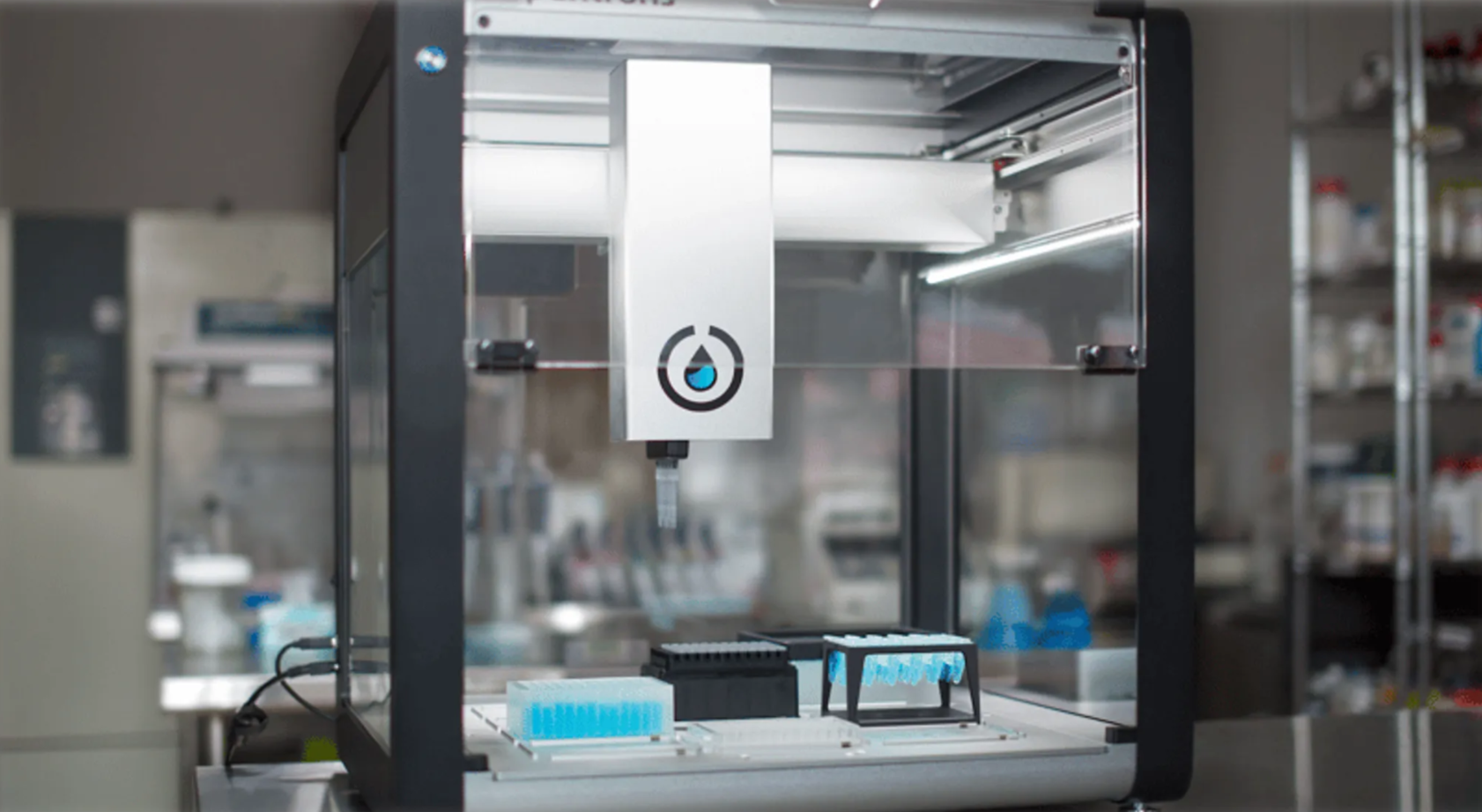
Opentrons OT‑2 in lab

This week focuses on lab automation using the Opentrons OT‑2. You’ll write Python to control the robot and create bio‑art patterns using fluorescent E. coli on black agar plates.

  • Info There was no live lecture this week per the source site. Check the Recitation and Lab sections for materials and recordings.
  • Warning Submit your code BEFORE your lab time. You’ll run your protocol on an OT‑2 during scheduled lab time. What to do Read the pre‑lab materials to understand the workflow and safety. Create your protocol in the provided Colab (Python) and test in simulation. Submit your completed protocol to your TA. Sign‑up for a robot time slot: Robot time slot form Submit your Colab block: Protocol submission form Post‑Lab Questions (Mandatory) Describe how you would use automation for your final project (pseudocode/scripts, fixtures or 3D‑printed holders, etc.). Find and briefly describe a paper that uses Opentrons or similar tools for a novel bio application.
  • Slides: Google Slides Recording: will be posted (per source).
  • Tip Program the Opentrons OT‑2 to deposit fluorescent E. coli and create bio‑art on black agar plates. Objective In this two‑day lab you’ll program the Opentrons OT‑2 to deposit fluorescent E. coli on black agar plates, creating glowing bio‑art under UV light. It’s a hands‑on intro to automation + creative biotech.
  • Lab Automation & Opentrons Opentrons Lab Automation Primer — overview primer and reading list. Notion Opentrons Art GUI — web app & links to API/Colab resources. opentrons-art.rcdonovan.com Opentrons Robotics (YouTube) — channel with OT‑2 primers and demos. YouTube

Subsections of Week 03

Lecture — Lab Automation

Info

There was no live lecture this week per the source site. Check the Recitation and Lab sections for materials and recordings.

Homework — Lab Automation

Warning

Submit your code BEFORE your lab time. You’ll run your protocol on an OT‑2 during scheduled lab time.

What to do

  1. Read the pre‑lab materials to understand the workflow and safety.
  2. Create your protocol in the provided Colab (Python) and test in simulation.
  3. Submit your completed protocol to your TA.

Post‑Lab Questions (Mandatory)

  1. Describe how you would use automation for your final project (pseudocode/scripts, fixtures or 3D‑printed holders, etc.).
  2. Find and briefly describe a paper that uses Opentrons or similar tools for a novel bio application.

Mona E.coLisas bio‑art

Recitation — Lab Automation

Slides: Google Slides
Recording: will be posted (per source).

Lab — Opentrons Art

Tip

Program the Opentrons OT‑2 to deposit fluorescent E. coli and create bio‑art on black agar plates.

Objective

In this two‑day lab you’ll program the Opentrons OT‑2 to deposit fluorescent E. coli on black agar plates, creating glowing bio‑art under UV light. It’s a hands‑on intro to automation + creative biotech.

Concepts You’ll Learn

  • Writing Python for the Opentrons OT‑2
  • Automating liquid handling steps
  • Pouring black agar plates
  • Handling fluorescent E. coli safely

Prep & Protocol

Opentrons OT‑2 workspace

Subsections of Lab

Reading & Resources — Week 3

Lab Automation & Opentrons

  • Opentrons Lab Automation Primer — overview primer and reading list. Notion
  • Opentrons Art GUI — web app & links to API/Colab resources. opentrons-art.rcdonovan.com
  • Opentrons Robotics (YouTube) — channel with OT‑2 primers and demos. YouTube

Week 04 — Protein Design Part I

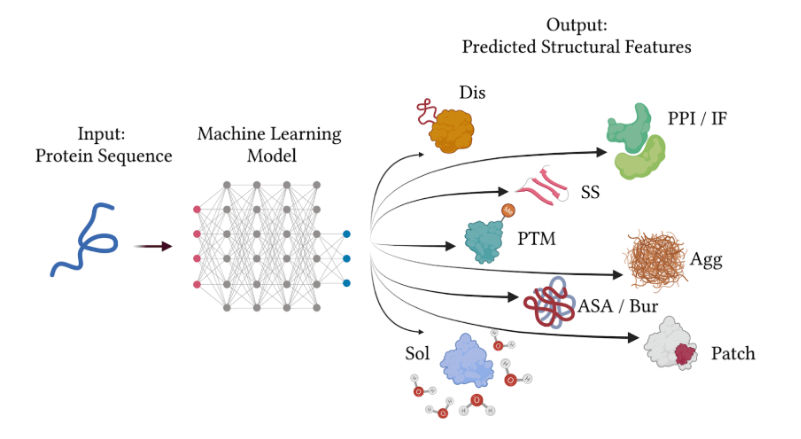
ML-predicted protein structural features

This week begins Protein Design (Part I) — modern sequence/structure tools for evaluating and designing proteins.

  • This session introduces Protein Design foundations: what sequence/structure information is, how to find it, and how modern ML tools have changed design workflows. Core resources (converted from the course page) RCSB PDB — archive and tools for experimentally-determined macromolecular structures, with powerful search/visualization. UniProt / UniProtKB — comprehensive, curated protein sequence and functional knowledgebase; tightly linked with PDB and other resources. Predicted structures — both resources now surface computationally predicted structures for many proteins, complementing experimental data. (Slides and recording will be posted here when available.)
  • Warning Homework details will be added here when posted on the course site. Context (converted from the course page) Use RCSB PDB to explore 3D structures and annotations of your protein of interest. Use UniProt/UniProtKB to obtain sequence and functional information and navigate cross‑links to structural resources. Note that these databases increasingly include computationally predicted structures alongside experimental entries.
  • Info Recitation slides and recording will appear here when posted.
  • Tip This week’s lab is entirely in‑silico — no in‑person wet‑lab. Concepts You’ll Learn Protein prediction tools Sequence recovery models Generative models Designing toward desired physicochemical properties Lab Protocol The protein design lab will be entirely in‑silico; you’ll run a variety of models to test different protein designs.
  • Info No additional readings were posted on the course site at the time of conversion. This section will be updated if materials appear.

Subsections of Week 04

Lecture — Protein Design Part I

This session introduces Protein Design foundations: what sequence/structure information is, how to find it, and how modern ML tools have changed design workflows.

Core resources (converted from the course page)

  • RCSB PDB — archive and tools for experimentally-determined macromolecular structures, with powerful search/visualization.
  • UniProt / UniProtKB — comprehensive, curated protein sequence and functional knowledgebase; tightly linked with PDB and other resources.
  • Predicted structures — both resources now surface computationally predicted structures for many proteins, complementing experimental data.

(Slides and recording will be posted here when available.)

Homework — Protein Design Part I

Warning

Homework details will be added here when posted on the course site.

Context (converted from the course page)

  • Use RCSB PDB to explore 3D structures and annotations of your protein of interest.
  • Use UniProt/UniProtKB to obtain sequence and functional information and navigate cross‑links to structural resources.
  • Note that these databases increasingly include computationally predicted structures alongside experimental entries.

Recitation — Protein Design Part I

Info

Recitation slides and recording will appear here when posted.

Lab — Protein Design Part I

Protein features diagram

Tip

This week’s lab is entirely in‑silico — no in‑person wet‑lab.

Concepts You’ll Learn

  • Protein prediction tools
  • Sequence recovery models
  • Generative models
  • Designing toward desired physicochemical properties

Lab Protocol

The protein design lab will be entirely in‑silico; you’ll run a variety of models to test different protein designs.

Picture source: Hou, Feenstra et al., 2022 — “Ten quick tips for sequence‑based prediction of protein properties using machine learning,” PLOS Comput Biol 18(12): e1010669.

Reading & Resources — Week 4

Info

No additional readings were posted on the course site at the time of conversion. This section will be updated if materials appear.

Week 05 — Protein Design Part II

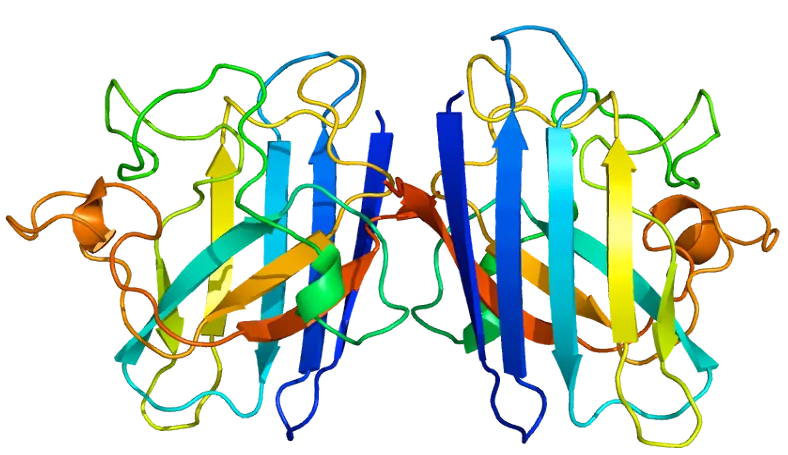
SOD1 structure ribbon diagram

Continuing Protein Design, this week focuses on protein–peptide interactions using modern ML models (PepMLM) and AlphaFold‑Multimer.

  • Date: Tue Mar 4 (per schedule). Slides: (will be posted when available) Recording: Zoom
  • Warning Mandatory for MIT/Harvard students and Committed Listeners. Due Tue, Mar 11 (before lecture). Key Links Tracking sheet: Google Sheet Part A — PepMLM peptide design (From Pranam) Info Optional for MIT/Harvard; mandatory for Committed Listeners. Due Tue, Mar 11 (start of class). Create a Hugging Face account → we’ll use PepMLM‑650M: model page.
  • Date: Wed Mar 5. Slides: MS2‑Phage homework discussion (from Notion file reference) Recording: Zoom
  • Tip This week’s practical work is in‑silico and pairs with the Homework: design peptides with PepMLM and evaluate binding to SOD1 using AlphaFold‑Multimer. Objective Model protein–peptide interactions by generating peptide candidates (PepMLM‑650M) and predicting complexes (AlphaFold‑Multimer). Compare ipTM scores across candidates to select promising binders. Concepts You’ll Learn Protein language models for peptide design Multimeric structure prediction (protein–peptide) ipTM as a binding‑confidence heuristic Practical workflows in Google Colab (GPU) Quick Links PepMLM‑650M (Hugging Face) AlphaFold‑Multimer ColabFold
  • PepMLM‑650M (protein language model) — model card UniProt — SOD1 (P00441) — entry Genes & Development (2008) — SOD1‑binding peptide reference — paper AlphaFold‑Multimer (ColabFold) — notebook Protein–peptide modeling validation — Frontiers in Bioinformatics (2022)

Subsections of Week 05

Lecture — Protein Design Part II

Date: Tue Mar 4 (per schedule).
Slides: (will be posted when available)
Recording: Zoom

Homework — Protein Design Part II

Warning

Mandatory for MIT/Harvard students and Committed Listeners. Due Tue, Mar 11 (before lecture).

Part A — PepMLM peptide design (From Pranam)

Info
Optional for MIT/Harvard; mandatory for Committed Listeners. Due Tue, Mar 11 (start of class).
  1. Create a Hugging Face account → we’ll use PepMLM‑650M: model page.

    1. Generate a token: Settings → Tokens (create new).
    2. Ensure repo is ChatterjeeLab/PepMLM-650M.
    3. Open the PepMLM Colab and make a copy: Colab (linked from the model page).
    4. In Colab, choose T4 GPU, run all blocks.
    5. When prompted “Input HF token”, paste your token. When asked “Add token as git credential?”, choose No.
  2. Get the amino‑acid sequence for SOD1 on UniProt (ID: P00441). Make the A4V mutation.

  3. Run PepMLM inference and generate 4 peptides (length 12 aa). (2 is acceptable if time‑limited.)

  4. Add a known SOD1‑binding peptide to your list: FLYRWLPSRRGG (see Genes & Development reference).
    genesdev.cshlp.org

  5. Use AlphaFold‑Multimer (ColabFold notebook) to model the SOD1:peptide complex.
    Open notebook: AlphaFold‑Multimer

  6. After running AF‑Multimer with your 5 peptides (4 generated + 1 known), plot the ipTM scores to compare relative binding confidence.

  7. Write a 1‑paragraph summary of your results.

Part B — Final Project: L‑Protein Mutants

Info
Mandatory for MIT/Harvard and Committed Listeners. Due Wed, Mar 12 (start of class).

This is computationally heavy — start early.
More details: Final Project Page (external Notion): www.notion.so

Lab — Protein Design Part II

Tip

This week’s practical work is in‑silico and pairs with the Homework: design peptides with PepMLM and evaluate binding to SOD1 using AlphaFold‑Multimer.

Objective

Model protein–peptide interactions by generating peptide candidates (PepMLM‑650M) and predicting complexes (AlphaFold‑Multimer). Compare ipTM scores across candidates to select promising binders.

Concepts You’ll Learn

  • Protein language models for peptide design
  • Multimeric structure prediction (protein–peptide)
  • ipTM as a binding‑confidence heuristic
  • Practical workflows in Google Colab (GPU)

SOD1 ribbon structure

Reading & Resources — Week 5

Week 06 — Genetic Circuits Part I

Gibson assembly theme image

This week introduces design and assembly of genetic circuits, anchored around Gibson Assembly and the associated wet‑lab skills.

  • Date: Tue Mar 11. Slides: Chris Mason — “A 500‑year plan for engineering life on Earth and beyond” Lisa Riedmayr — “Genetic Medicines” Recording: Zoom
  • Warning These questions are based on the Gibson Assembly Lab and are mandatory for Committed Listeners and MIT/Harvard students. Key Link Gibson Assembly — Recitation/Protocol (Google Doc) Questions What are some components in the Phusion High‑Fidelity PCR Master Mix and what is their purpose? What are some factors that determine primer annealing temperature during PCR? There are two methods in this protocol that create linear fragments of DNA: PCR and restriction enzyme digest. Compare and contrast these two methods, including when one may be preferable. Why does the PvuII digest require CutSmart buffer? How can you ensure that the DNA sequences you digested and PCR‑ed will be appropriate for Gibson cloning? How does the plasmid DNA enter E. coli cells during transformation? Describe another assembly method in detail (e.g., Golden Gate Assembly) in 5–7 sentences with diagrams. Model this method with Benchling or a similar tool.
  • Date: Wed Mar 12. Slides: will be shared after the class. Recording: Zoom
  • Tip This week’s lab pairs directly with the Homework. Use the protocol and primer‑design notes below; document your process and results. Objective Practice DNA assembly by preparing linear fragments (via PCR and/or restriction digest) and assembling them with Gibson Assembly, followed by transformation into E. coli. Concepts You’ll Learn Primer design fundamentals PCR setup and thermocycling Restriction digests & buffer selection Gibson Assembly principles & workflow Transformation and selection Protocol & Prep Gibson Assembly (Google Doc) Primer Design — Supplemental to Gibson Assembly Recitation
  • Primer Design — Supplemental to Gibson Assembly Recitation Introduction to Gibson Assembly — YouTube More from NEB — NEB: Gibson Assembly

Subsections of Week 06

Homework — Genetic Circuits Part I

Warning

These questions are based on the Gibson Assembly Lab and are mandatory for Committed Listeners and MIT/Harvard students.

Questions

  1. What are some components in the Phusion High‑Fidelity PCR Master Mix and what is their purpose?
  2. What are some factors that determine primer annealing temperature during PCR?
  3. There are two methods in this protocol that create linear fragments of DNA: PCR and restriction enzyme digest. Compare and contrast these two methods, including when one may be preferable.
  4. Why does the PvuII digest require CutSmart buffer?
  5. How can you ensure that the DNA sequences you digested and PCR‑ed will be appropriate for Gibson cloning?
  6. How does the plasmid DNA enter E. coli cells during transformation?
  7. Describe another assembly method in detail (e.g., Golden Gate Assembly) in 5–7 sentences with diagrams. Model this method with Benchling or a similar tool.

Recitation — Genetic Circuits Part I

Date: Wed Mar 12.
Slides: will be shared after the class.
Recording: Zoom

Lab — Gibson Assembly

Tip

This week’s lab pairs directly with the Homework. Use the protocol and primer‑design notes below; document your process and results.

Objective

Practice DNA assembly by preparing linear fragments (via PCR and/or restriction digest) and assembling them with Gibson Assembly, followed by transformation into E. coli.

Concepts You’ll Learn

  • Primer design fundamentals
  • PCR setup and thermocycling
  • Restriction digests & buffer selection
  • Gibson Assembly principles & workflow
  • Transformation and selection

Protocol & Prep

Gibson assembly figure

Week 07 — Genetic Circuits Part II

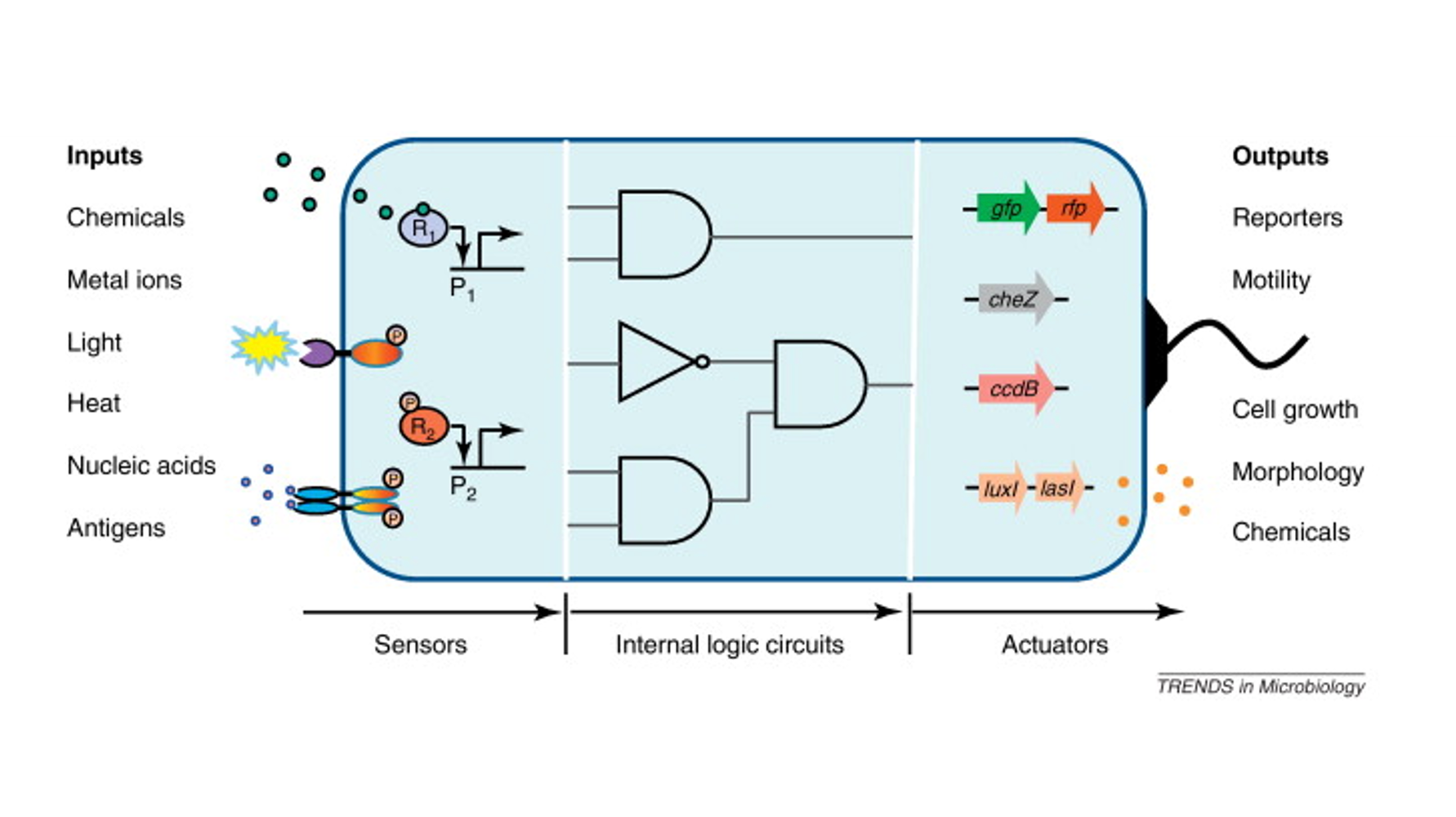
Genetic circuits illustration

We continue Genetic Circuits with emphasis on regulatory logic, toggle switches, and practical pathways for implementing and testing circuits in cells.

  • Date: Tue Mar 18. Slides: will be posted after class. Recording: Zoom
  • Warning This homework is based on the Week 7 Lab. It’s a good week to start honing final projects and focusing on developing / researching protocols. Key Link Week 7 — Homework & Lab Google Doc Questions 1–3 (mandatory for all students) How do endoribonucleases (ERNs) work to decrease protein levels? Name 2 differences between how ERNs work and how proteases work. How does Lipofectamine 3000 work? How does DNA get into human cells and how is it expressed? Explain what poly‑transfection is and why it’s useful when building neuromorphic circuits. Questions 4–6 (added Mar 19; optional for MIT/Harvard, mandatory for Committed Listeners) Genetic Toggle Switches Provide a detailed explanation of the mechanism behind genetic toggle switches, including how bi‑stability is established and maintained. Describe at least one induction method used to switch states, including molecular signals or environmental factors involved. Note limitations. How many “switches” can we potentially chain? Is there a metabolic cost? Natural Genetic Circuit Example Identify and describe in detail a naturally occurring genetic circuit, emphasizing its biological function, components, and regulatory interactions. Synthetic Genetic Circuit Select and critically analyze a synthetic genetic circuit previously engineered by researchers (e.g., pDAWN). Provide details about its construction, components, intended function, and performance. Discuss potential limitations or improvements suggested in subsequent literature or experimental data.
  • Date: Wed Mar 19. Slides: will be shared after class. Recording: Zoom
  • Tip This week’s lab focuses on genetic circuit design and testing workflows. Document your design rationale, parts selection, and test plans. Objective Translate design principles into an actionable workflow: from selecting promoters/regulators to drafting test plans for toggle switches or related motifs. Concepts You’ll Learn Regulatory logic & bi‑stability Design strategies for toggle/switch constructs Practical testing plans and documentation
  • Gibson Assembly Recap (protocol) — Google Doc pDAWN optogenetic system — Addgene Synthetic gene circuits review — overview (2024)

Subsections of Week 07

Lecture — Genetic Circuits Part II

Date: Tue Mar 18.
Slides: will be posted after class.
Recording: Zoom

Homework — Genetic Circuits Part II

Warning

This homework is based on the Week 7 Lab. It’s a good week to start honing final projects and focusing on developing / researching protocols.

Questions 1–3 (mandatory for all students)

  1. How do endoribonucleases (ERNs) work to decrease protein levels? Name 2 differences between how ERNs work and how proteases work.
  2. How does Lipofectamine 3000 work? How does DNA get into human cells and how is it expressed?
  3. Explain what poly‑transfection is and why it’s useful when building neuromorphic circuits.

Questions 4–6 (added Mar 19; optional for MIT/Harvard, mandatory for Committed Listeners)

  1. Genetic Toggle Switches
    • Provide a detailed explanation of the mechanism behind genetic toggle switches, including how bi‑stability is established and maintained.
    • Describe at least one induction method used to switch states, including molecular signals or environmental factors involved.
    • Note limitations. How many “switches” can we potentially chain? Is there a metabolic cost?
  2. Natural Genetic Circuit Example
    • Identify and describe in detail a naturally occurring genetic circuit, emphasizing its biological function, components, and regulatory interactions.
  3. Synthetic Genetic Circuit
    • Select and critically analyze a synthetic genetic circuit previously engineered by researchers (e.g., pDAWN). Provide details about its construction, components, intended function, and performance.
    • Discuss potential limitations or improvements suggested in subsequent literature or experimental data.

Recitation — Genetic Circuits Part II

Date: Wed Mar 19.
Slides: will be shared after class.
Recording: Zoom

Lab — Genetic Circuits

Tip

This week’s lab focuses on genetic circuit design and testing workflows. Document your design rationale, parts selection, and test plans.

Objective

Translate design principles into an actionable workflow: from selecting promoters/regulators to drafting test plans for toggle switches or related motifs.

Concepts You’ll Learn

  • Regulatory logic & bi‑stability
  • Design strategies for toggle/switch constructs
  • Practical testing plans and documentation

MIT plate art

Reading & Resources — Week 7

Week 09 — Cell Free Systems

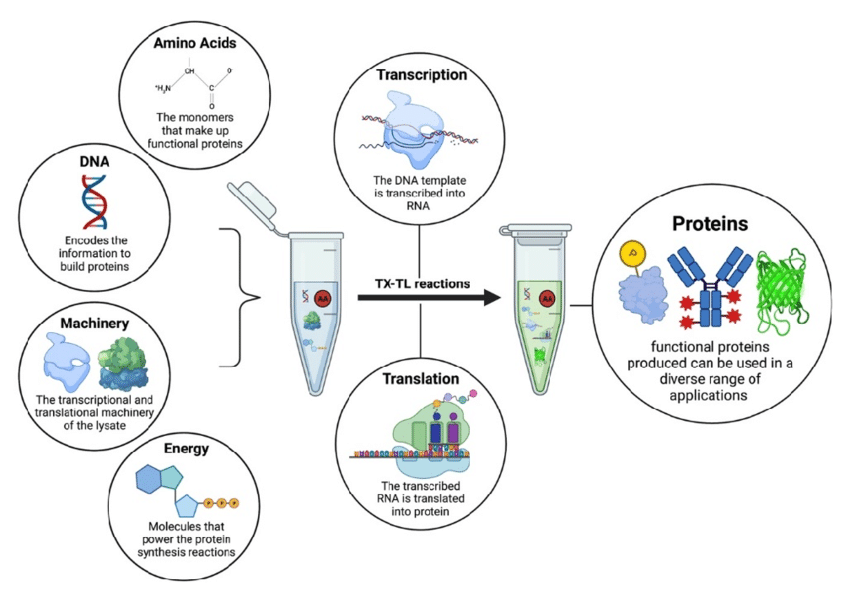
Components of a cell‑free expression system

We explore cell‑free expression: building reactions from defined parts, tuning energy regeneration, and producing proteins without living cells.

  • Date: Tue Apr 1. Slides: (will be posted when available) Recording: Zoom
  • Warning Mandatory for Committed Listeners and MIT/Harvard students. Part A — Questions Key readings: miniPCR — DNAdots: Cell‑free technology ACS Synth Biol (2024) Explain the main advantages of cell‑free protein synthesis over in vivo expression. Name two cases where cell‑free is preferable. Describe the main components of a cell‑free expression system and the role of each. Why is energy provision/regeneration critical? Propose a method to ensure a continuous ATP supply. Compare prokaryotic vs eukaryotic cell‑free systems. Choose a protein for each and justify. Design an experiment to optimize expression of a membrane protein; list challenges and mitigations. You observe low yield; provide three plausible causes and a troubleshooting plan for each. Part B — Individual Final Project Report Tip Start exploring your final project in depth this week. The minimum requirement is completing Aim 1.
  • Date: Wed Apr 2. Slides: will be shared here after class. Recording: Zoom
  • Info MIT/Harvard: No in‑person lab protocol this week (per schedule). Global Nodes: Use the PDF protocol below. Objective Induce a reporter in a cell‑free transcription‑translation (TX‑TL) system and quantify expression changes between treatments. Concepts You’ll Learn TX‑TL reaction components and setup Induction strategies and controls Fluorescence quantification & fold‑change analysis Protocol Global Labs Protocol (PDF) — Cell_Free_System_Laboratory_(Global_Labs).pdf Post‑Lab Questions (Mandatory) Using your lab images (or provided images), compute fluorescence fold‑change between treatments. Discuss LacI function in the context of the circuit used. What would you expect if the same induction were performed in E. coli BL21(DE3)?
  • miniPCR — DNAdots: Cell‑free technology — PDF Recent cell‑free system advances — ACS Synth Biol (2024) Example project gallery — Google Slide Deck

Subsections of Week 09

Lecture — Cell Free Systems

Date: Tue Apr 1.
Slides: (will be posted when available)
Recording: Zoom

Homework — Cell Free Systems

Warning

Mandatory for Committed Listeners and MIT/Harvard students.

Part A — Questions

Key readings:

  1. Explain the main advantages of cell‑free protein synthesis over in vivo expression. Name two cases where cell‑free is preferable.
  2. Describe the main components of a cell‑free expression system and the role of each.
  3. Why is energy provision/regeneration critical? Propose a method to ensure a continuous ATP supply.
  4. Compare prokaryotic vs eukaryotic cell‑free systems. Choose a protein for each and justify.
  5. Design an experiment to optimize expression of a membrane protein; list challenges and mitigations.
  6. You observe low yield; provide three plausible causes and a troubleshooting plan for each.

Part B — Individual Final Project Report

Tip

Start exploring your final project in depth this week. The minimum requirement is completing Aim 1.

MIT/Harvard tracking

Key ordering dates (MIT/Harvard):

  • Twist — Apr 11, 2025
  • Thermo Fisher — Apr 11, 2025
  • AddGene plasmids — Apr 11, 2025
  • NEB — May 1, 2025 (rolling)
  • GeneWiz — May 1, 2025

Recitation — Cell Free Systems

Date: Wed Apr 2.
Slides: will be shared here after class.
Recording: Zoom

Cell‑free recitation figure

Lab — Cell Free Induction

Info

MIT/Harvard: No in‑person lab protocol this week (per schedule).
Global Nodes: Use the PDF protocol below.

Objective

Induce a reporter in a cell‑free transcription‑translation (TX‑TL) system and quantify expression changes between treatments.

Concepts You’ll Learn

  • TX‑TL reaction components and setup
  • Induction strategies and controls
  • Fluorescence quantification & fold‑change analysis

Protocol

Post‑Lab Questions (Mandatory)

  1. Using your lab images (or provided images), compute fluorescence fold‑change between treatments. Discuss LacI function in the context of the circuit used.
  2. What would you expect if the same induction were performed in E. coli BL21(DE3)?

Week 10 — Bio Production

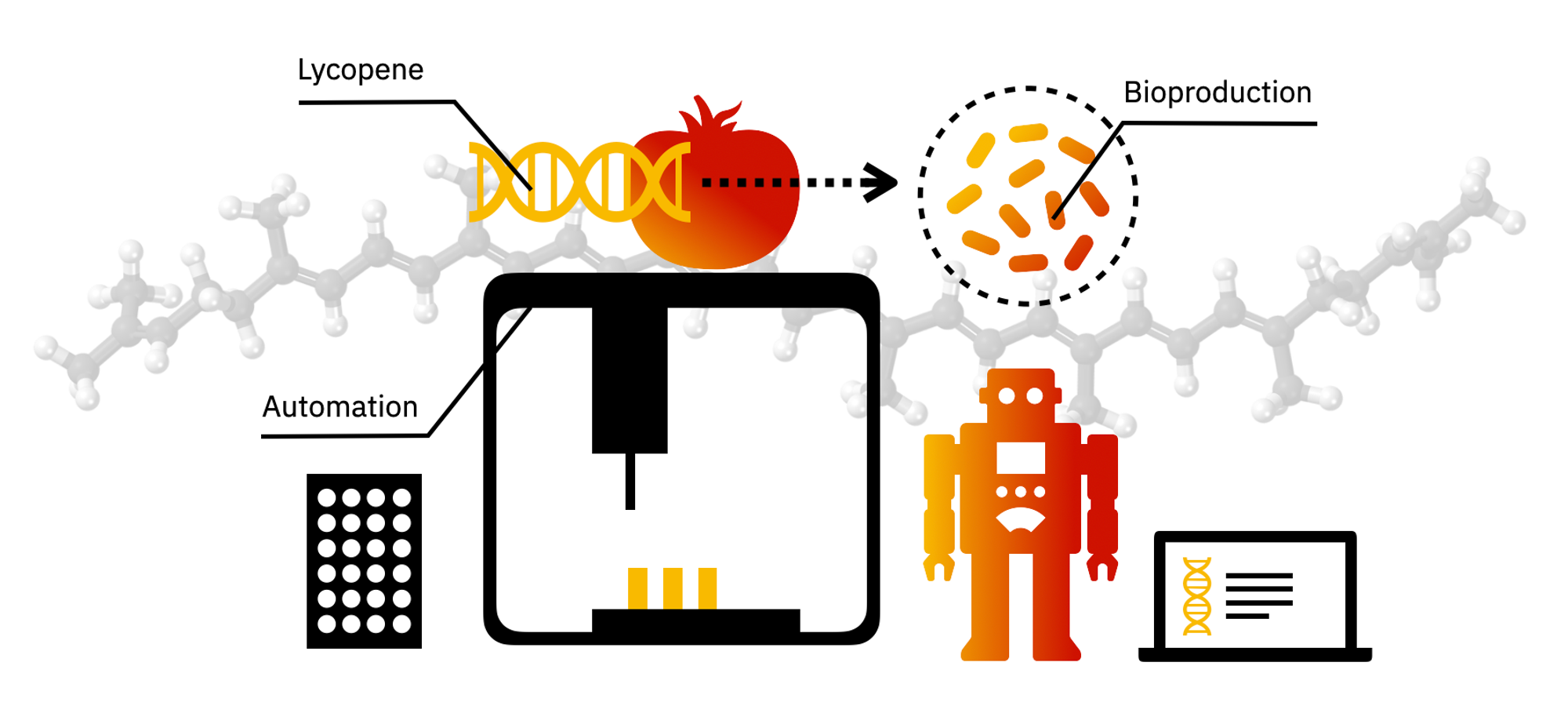
Lycopene bio‑production & automation

This week explores bio production—scaling from bench‑scale designs to strains and processes that produce carotenoids (e.g., lycopene, β‑carotene) and other biomolecules. Expect an emphasis on media design, carbon sources (e.g., fructose), and automation.

  • Date: Tue Apr 8. Slides: Will be shared after class. Recording: Zoom
  • Warning Part A is based on lecture prompts (Mandatory for Committed Listeners). Part B is based on the Bio Production Lab (Mandatory for Committed Listeners and MIT/Harvard students). Part A — Lecture Questions Assume that all of the molecular biology work you’d like to do could be automated. What new biological questions would you ask, or what new types of products would you make? If you could make metric tons of any protein, what would you make and what positive impact could you have? Part B — Lab‑Linked Questions Key Link:
  • Date: Wed Apr 9. Slides: 2025: Lycopene & β‑Carotene Bioproduction Recording: Zoom
  • Tip This lab focuses on designing, ordering, and assembling DNA constructs that support your final project goals. Document Benchling files, provide FASTA sequences, and outline a precise cloning & validation plan.

    1. DNA Design 1.1 Benchling Documentation Workspace reference — include links or screenshots of your Benchling workspace. Plasmid maps & features — promoters, CDS, antibiotic markers, restriction sites. Rationale — explain element choices (host compatibility, reporter/assay match). 1.2 FASTA Files Submission‑ready sequences for each designed construct. Verify correctness via in‑silico digest or alignment. 1.3 Provider Requirements (e.g., Twist) Order summary — list fragments/constructs, lengths, GC content, constraints. Checklist — avoid problematic repeats/hairpins; remove restricted sites; check stop codons/frames. 2) Detailed Protocol 2.1 DNA Assembly and Cloning Overview — choose Gibson, Golden Gate, or restriction‑ligation as appropriate. Linearization/fragment prep — digest or PCR; purify. Assembly reaction — follow kit‑specific conditions (e.g., Gibson 50 °C for 15–60 min; Golden Gate cyclical 37 °C/16 °C). Transformation — competent cells; plate on appropriate antibiotic. Colony screening — colony PCR or miniprep → verification. 2.2 Reagents & Materials Assembly mixes (e.g., NEB Gibson/Golden Gate). Competent cells (e.g., DH5α, TOP10). LB‑Agar + antibiotic (Amp, Kan, etc.). Primers — 20–30 bp overlaps for Gibson or type IIS flanks for Golden Gate. 2.3 Useful Databases RCSB PDB UniProt
  • Bio Production lab protocol — Google Doc Lycopene via fructose — Biotechnol Lett (2016) Fructose improves yield & expression — Biotechnol Prog (1999) Protein expression in E. coli — Frontiers in Microbiology (2021)

Subsections of Week 10

Lecture — Bio Production

Date: Tue Apr 8.

Slides: Will be shared after class.
Recording: Zoom

Homework — Bio Production

Warning

Part A is based on lecture prompts (Mandatory for Committed Listeners).
Part B is based on the Bio Production Lab (Mandatory for Committed Listeners and MIT/Harvard students).

Part A — Lecture Questions

  1. Assume that all of the molecular biology work you’d like to do could be automated. What new biological questions would you ask, or what new types of products would you make?
  2. If you could make metric tons of any protein, what would you make and what positive impact could you have?

Part B — Lab‑Linked Questions

Key Link:

Key Papers:

Answer the following:

  1. Which genes, when transferred into E. coli, will induce production of lycopene and β‑carotene, respectively?
  2. Why must plasmids transferred into E. coli contain an antibiotic resistance marker for this workflow?
  3. What outcomes might we expect when we vary media, fructose, and temperature in the overnight cultures?
  4. Generally describe what OD600 measures and how it should be interpreted in this experiment.
  5. Identify other experimental setups where acetone could be used to separate cellular matter from a compound we intend to measure.
  6. Why engineer E. coli to produce lycopene and β‑carotene when Erwinia herbicola naturally produces them?

Learning Module — Exploring Carotenoid Bioproduction (optional but encouraged)

Use this space to begin thinking through DNA design related to carotenoid pathways (targets, operon structure, promoter choices, and measurement plan).

Lab — DNA Design

Tip

This lab focuses on designing, ordering, and assembling DNA constructs that support your final project goals. Document Benchling files, provide FASTA sequences, and outline a precise cloning & validation plan.

DNA design & circuits collage

1) DNA Design

1.1 Benchling Documentation

  • Workspace reference — include links or screenshots of your Benchling workspace.
  • Plasmid maps & features — promoters, CDS, antibiotic markers, restriction sites.
  • Rationale — explain element choices (host compatibility, reporter/assay match).

1.2 FASTA Files

  • Submission‑ready sequences for each designed construct.
  • Verify correctness via in‑silico digest or alignment.

1.3 Provider Requirements (e.g., Twist)

  • Order summary — list fragments/constructs, lengths, GC content, constraints.
  • Checklist — avoid problematic repeats/hairpins; remove restricted sites; check stop codons/frames.

2) Detailed Protocol

2.1 DNA Assembly and Cloning

  1. Overview — choose Gibson, Golden Gate, or restriction‑ligation as appropriate.
  2. Linearization/fragment prep — digest or PCR; purify.
  3. Assembly reaction — follow kit‑specific conditions (e.g., Gibson 50 °C for 15–60 min; Golden Gate cyclical 37 °C/16 °C).
  4. Transformation — competent cells; plate on appropriate antibiotic.
  5. Colony screening — colony PCR or miniprep → verification.

2.2 Reagents & Materials

  • Assembly mixes (e.g., NEB Gibson/Golden Gate).
  • Competent cells (e.g., DH5α, TOP10).
  • LB‑Agar + antibiotic (Amp, Kan, etc.).
  • Primers — 20–30 bp overlaps for Gibson or type IIS flanks for Golden Gate.

2.3 Useful Databases

Week 11 — Building Genomes

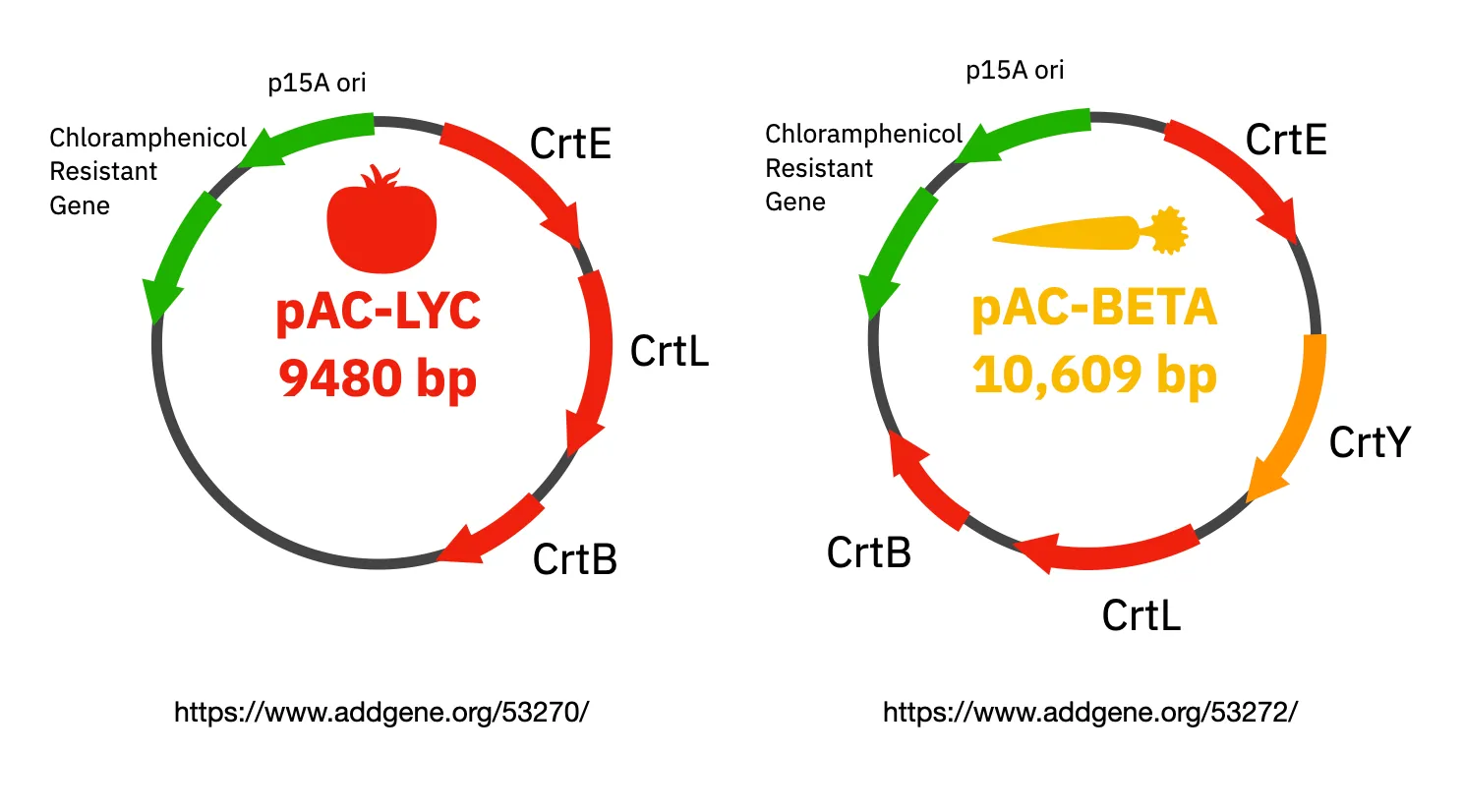
pAC‑LYC / pAC‑BETA overview

From DNA design to building genomes and bioproduction: this week bridges sequence design with practical pathways to construct systems that produce carotenoids and other compounds.

  • Info Slides will be posted here after class; recording will appear once processed. Recording: Zoom
  • Warning Homework will be posted here when available. Use this week to deepen your strain design plans and connect them to next week’s imaging/measurement workflows.
  • Info Recitation slides will be shared here after the class; recording will be linked below. Recording: Zoom
  • Tip In this two‑day lab, you’ll produce beta‑carotene and lycopene in E. coli and analyze growth (OD600) and pigment absorbance. Objective Work with E. coli carrying pAC‑LYC (lycopene) and pAC‑BETA (beta‑carotene) to optimize pigment production by tuning media, temperature, and carbon source. Concepts You’ll Learn Fundamentals of bioproduction Tuning environmental factors to optimize production Measuring OD600 and absorbance spectra Handling cultures, plasmid systems, and acetone extraction Key Plasmids pAC‑LYC (Addgene #53270) pAC‑BETA (Addgene #53272) Workflow (2 Days) Day 1: Set up overnight cultures; vary LB vs 2YT, 37 °C vs 30 °C, and ± fructose. Day 2: Measure OD600; extract pigments with acetone; record absorbance spectra for lycopene vs β‑carotene.
  • pAC‑LYC — Addgene pAC‑BETA — Addgene Bioproduction with fructose — Biotechnol Lett (2016) OD600 & absorbance basics — ThermoFisher protocol

Subsections of Week 11

Lecture — Building Genomes

Info

Slides will be posted here after class; recording will appear once processed.

Recording: Zoom

Homework — Building Genomes

Warning

Homework will be posted here when available.

Use this week to deepen your strain design plans and connect them to next week’s imaging/measurement workflows.

Recitation — Building Genomes

Info

Recitation slides will be shared here after the class; recording will be linked below.

Recording: Zoom

Lab — Bio Production (Beta‑Carotene & Lycopene)

Tip

In this two‑day lab, you’ll produce beta‑carotene and lycopene in E. coli and analyze growth (OD600) and pigment absorbance.

Objective

Work with E. coli carrying pAC‑LYC (lycopene) and pAC‑BETA (beta‑carotene) to optimize pigment production by tuning media, temperature, and carbon source.

Concepts You’ll Learn

  • Fundamentals of bioproduction
  • Tuning environmental factors to optimize production
  • Measuring OD600 and absorbance spectra
  • Handling cultures, plasmid systems, and acetone extraction

Key Plasmids

Workflow (2 Days)

  • Day 1: Set up overnight cultures; vary LB vs 2YT, 37 °C vs 30 °C, and ± fructose.
  • Day 2: Measure OD600; extract pigments with acetone; record absorbance spectra for lycopene vs β‑carotene.

Day 1 / Day 2 workflow

References

Week 12 — Imaging and Measurement

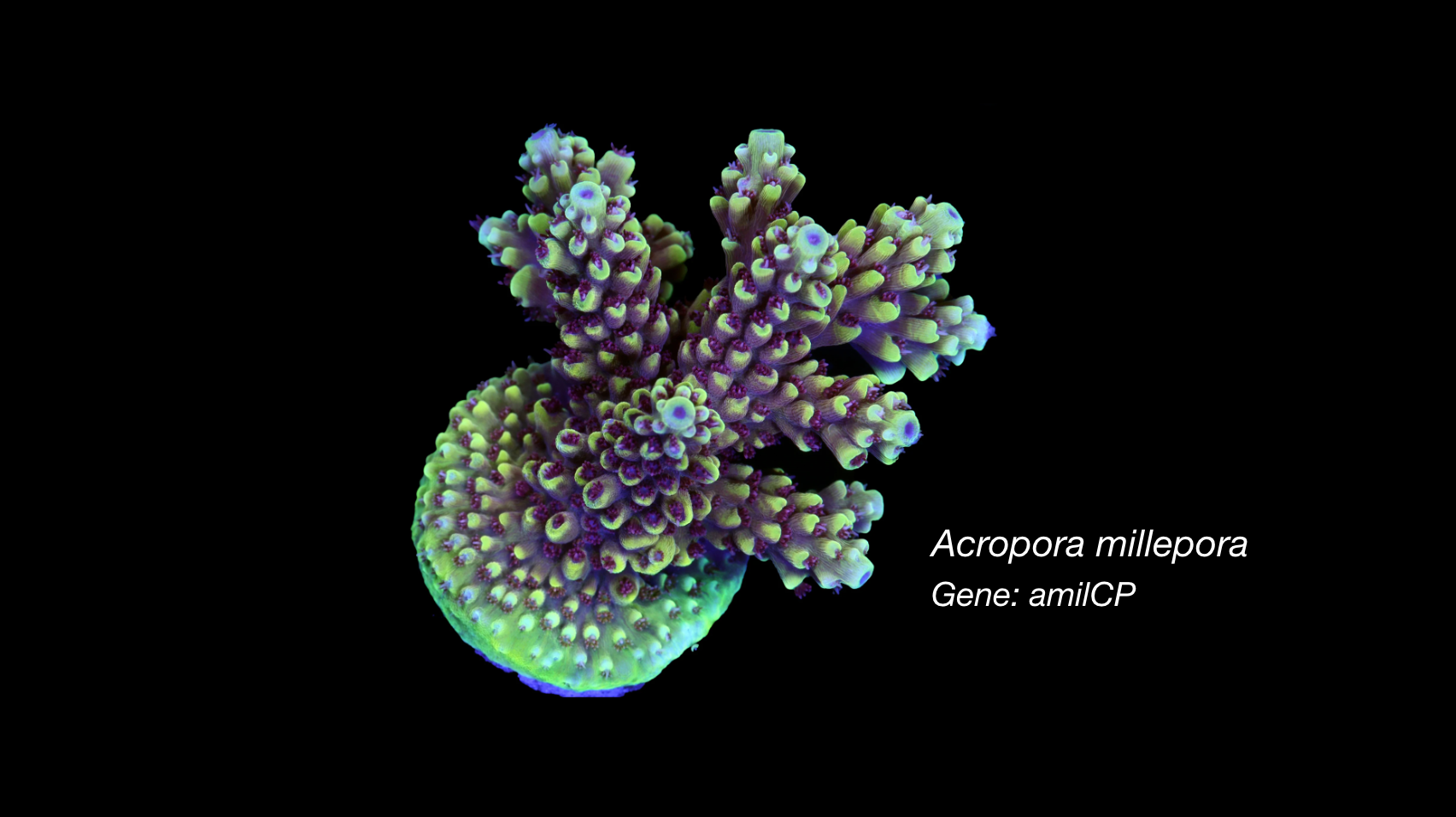
Fluorescent coral — Imaging & Measurement

We focus on imaging & measurement workflows that let us read biology to guide design: LC‑MS for intact mass & peptide maps and instrumentation for fluorescence & microscopy.

  • Date: Tue Apr 22. Slides: Lecture Slides Recording: Class Recording
  • Info Homework this week is based on data generated at Waters Immerse Cambridge. You’ll characterize eGFP structure (intact mass; peptide map) using LC‑MS. Data will be provided online for remote students. Final Project Homework Warning Mandatory for MIT/Harvard; optional for Committed Listeners (edited Apr 23). Identify at least one aspect of your project you will measure (e.g., protein mass/sequence, biomarker presence/quantity). Describe all elements you will measure and how you will perform these measurements. Specify the technologies you will use (e.g., gel electrophoresis, DNA sequencing, mass spectrometry). Waters Homework Tip Part 1 & 2 mandatory for Committed Listeners and MIT/Harvard students; Part 3 optional. Molecular weight — intact protein measurement. Primary amino acid sequence — peptide map. (Optional) Protein structure/shape — native vs denatured protein measurement.
  • Date: Wed Apr 23. Slides: Recitation Slides Recording: Recitation Recording
  • Tip This week’s practical focuses on LC‑MS workflows for eGFP characterization (intact mass and peptide mapping). On‑site work takes place at Waters Immerse Cambridge; remote students will use the shared dataset. Objective Connect measurement to design by acquiring and interpreting LC‑MS data. Concepts You’ll Learn Sample prep for intact mass vs peptide mapping Fundamentals of LC‑MS instrumentation & readouts Native vs denatured protein measurements Basic analysis and documentation
  • Immerse Cambridge (Waters) — About the lab Mass spectrometry overview (Proteomics) — Thermo Fisher Peptide mapping by LC/MS — Agilent (PDF) Intro to LC‑MS (lecture notes) — UCL (PDF)

Subsections of Week 12

Homework — Imaging and Measurement

Info

Homework this week is based on data generated at Waters Immerse Cambridge. You’ll characterize eGFP structure (intact mass; peptide map) using LC‑MS. Data will be provided online for remote students.

Final Project Homework

Warning
Mandatory for MIT/Harvard; optional for Committed Listeners (edited Apr 23).
  • Identify at least one aspect of your project you will measure (e.g., protein mass/sequence, biomarker presence/quantity).
  • Describe all elements you will measure and how you will perform these measurements.
  • Specify the technologies you will use (e.g., gel electrophoresis, DNA sequencing, mass spectrometry).

Waters Homework

Tip
Part 1 & 2 mandatory for Committed Listeners and MIT/Harvard students; Part 3 optional.
  1. Molecular weight — intact protein measurement.
  2. Primary amino acid sequence — peptide map.
  3. (Optional) Protein structure/shape — native vs denatured protein measurement.

Lab — Imaging & Measurement

Tip

This week’s practical focuses on LC‑MS workflows for eGFP characterization (intact mass and peptide mapping). On‑site work takes place at Waters Immerse Cambridge; remote students will use the shared dataset.

Objective

Connect measurement to design by acquiring and interpreting LC‑MS data.

Concepts You’ll Learn

  • Sample prep for intact mass vs peptide mapping
  • Fundamentals of LC‑MS instrumentation & readouts
  • Native vs denatured protein measurements
  • Basic analysis and documentation

Mass spectrometry schematic

Week 13 — Frugal Science, Microbiome

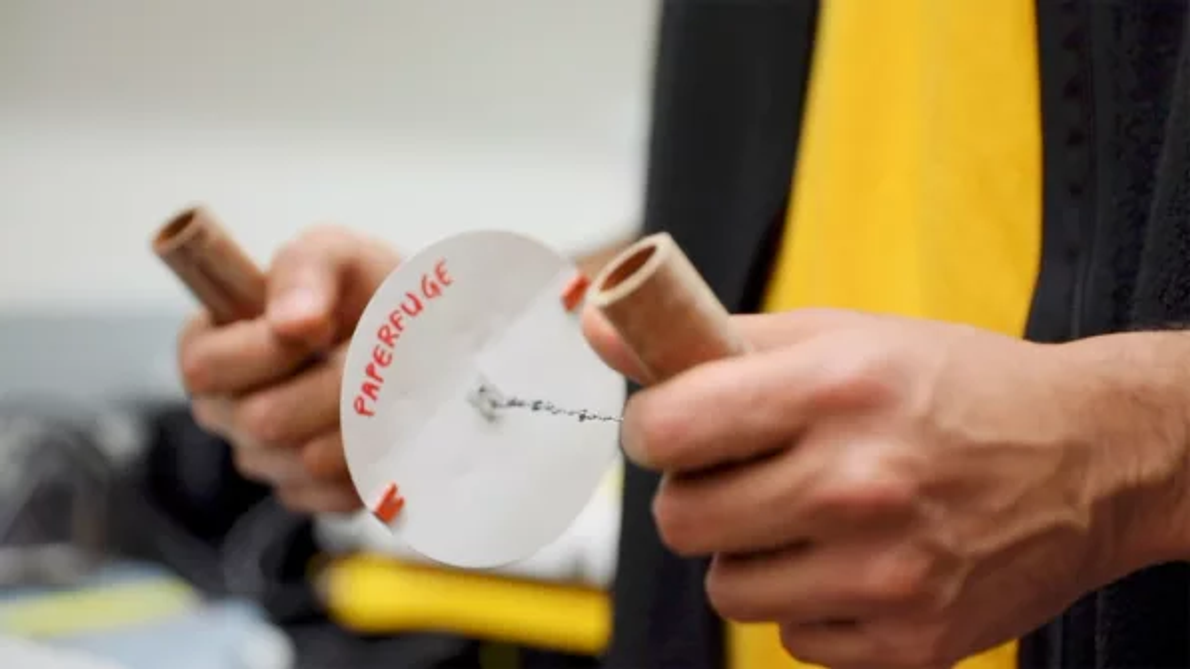
Frugal science (paperfuge) hero image

This week explores frugal science approaches (low‑cost, accessible tools) and the microbiome, with an emphasis on resource‑aware experimental design.

  • Info Lecture slides will be posted here after the class; recording will be linked when available. Recording: Zoom
  • Info The Week 13 page currently lists “Add Note Here.” We’ll update this section with prompts and deliverables once the course site publishes them. Suggestion: Draft a resource‑aware protocol for a measurement or assay relevant to your final project (cost, accessibility, robustness).
  • Info Recitation slides will be shared here after the class; recording will be updated once available. Recording: Zoom
  • Tip This week is reserved for make‑up labs and final‑project execution. Use lab time to run missing protocols, validate constructs, collect final measurements, or perform imaging. Objective Allocate bench time to complete experiments needed for your final project milestone(s). Concepts You’ll Practice Resource‑aware experimental design (frugal science mindset) Measurement planning (microbiome & general wet‑lab workflows) Documentation and sample tracking Recommendations Bring a clear checklist of experiments, materials, and expected outcomes. Coordinate with instructors on space/equipment. Log instrument settings, reagents, and environmental conditions.
  • Paperfuge & frugal science — Manu Prakash et al. (Nature Biomed Eng, 2017) Microbiome experimental design primer — Microbiome study design (Nat Rev Microbiol, 2018) Low‑cost field diagnostics overview — Ann. Rev. Biomed. Eng. (2021)

Subsections of Week 13

Lecture — Frugal Science, Microbiome

Info

Lecture slides will be posted here after the class; recording will be linked when available.

Recording: Zoom

Homework — Frugal Science, Microbiome

Info

The Week 13 page currently lists “Add Note Here.” We’ll update this section with prompts and deliverables once the course site publishes them.

Suggestion: Draft a resource‑aware protocol for a measurement or assay relevant to your final project (cost, accessibility, robustness).

Recitation — Frugal Science, Microbiome

Info

Recitation slides will be shared here after the class; recording will be updated once available.

Recording: Zoom

Lab — Makeup / Final Projects

Tip

This week is reserved for make‑up labs and final‑project execution. Use lab time to run missing protocols, validate constructs, collect final measurements, or perform imaging.

Objective

Allocate bench time to complete experiments needed for your final project milestone(s).

Concepts You’ll Practice

  • Resource‑aware experimental design (frugal science mindset)
  • Measurement planning (microbiome & general wet‑lab workflows)
  • Documentation and sample tracking

Recommendations

  • Bring a clear checklist of experiments, materials, and expected outcomes.
  • Coordinate with instructors on space/equipment.
  • Log instrument settings, reagents, and environmental conditions.

Week 14 — Bio Design, Living Materials

Bio design & living materials — abstract image

We close the semester with Bio Design & Living Materials, plus final‑project wrap‑up and documentation.

  • Date: Tue May 6. Slides: will be shared here after class. Recording: Zoom
  • Info Focus on completing and documenting your final projects this week. Key Link Final Project Information
  • Date: Wed May 7. Slides: will be shared after class. Recording: Zoom
  • Tip Use this week for final project experiments, measurements, and documentation. Confirm space/equipment needs with instructors. Objective Allocate bench time to complete any remaining experiments and finalize documentation for presentations. Concepts You’ll Practice Connecting measurements to design decisions Imaging or assays for key results Clear documentation (figures, captions, protocol notes)
  • Final project information — local page (converted content; link resolves once that section is built) Course Logistics — MIT/Harvard times & nodes

Subsections of Week 14

Lecture — Bio Design, Living Materials

Date: Tue May 6.

Slides: will be shared here after class.
Recording: Zoom

Homework — Week 14

Info

Focus on completing and documenting your final projects this week.

Recitation — Bio Design, Living Materials

Date: Wed May 7.

Slides: will be shared after class.
Recording: Zoom

Lab — Capstone Work Session

Tip

Use this week for final project experiments, measurements, and documentation. Confirm space/equipment needs with instructors.

Objective

Allocate bench time to complete any remaining experiments and finalize documentation for presentations.

Concepts You’ll Practice

  • Connecting measurements to design decisions
  • Imaging or assays for key results
  • Clear documentation (figures, captions, protocol notes)

Reading & Resources — Week 14

Bootcamp

Welcome to the Bio Bootcamp — a three‑session fast start into the core skills and concepts you’ll use all term.

  • Mon, Jan 20, 2025 — 9:00–12:00 ET
  • Wed, Jan 22, 2025 — 9:00–12:00 ET
  • Fri, Jan 24, 2025 — 9:00–12:00 ET

Subsections of Bootcamp

Bootcamp Part 1 — Bio Basics, Phage Therapeutics, DNA Designs, Genetic Circuits

Bootcamp Part 1 — Bio Basics, Phage Therapeutics, DNA Designs, Genetic Circuits
Info

Over 250 people attended the live bootcamp! If you missed it, use the slides and recordings below.


Topics & Agenda

Most‑updated slides: Part I (Google Drive)
Recording: MIT Zoom


Resources

  • Central dogma of molecular biology

  • Precision Health — The Central Dogma (2‑min) — YouTube

  • What is the ‘Central Dogma’?YourGenome

  • Enzymes — Amoeba Sisters — YouTube

  • DNA and RNA (nucleic acids)

  • DNA Design

    • An Introduction to Genetic Engineering — Cambridge — cambridge.org
    • Eukaryotic Genome Complexity — Nature Scitable — nature.com
  • PhagesBacteriophages: The Deadliest Being on Planet EarthYouTube

  • Genetic Circuits — Talks by Voigt/Lu — YouTube

Bootcamp Part 2 — Scientific Method, Experimental Design & Lab Techniques

Bootcamp Part 2 — Scientific Method, Experimental Design & Lab Techniques
Info

Over 250 people attended the live bootcamp! If you missed it, use the slides and recordings below.


Topics & Agenda

Most‑updated slides: Part II (Google Drive)
Recording: MIT Zoom


Resources

  • Image practice & guides

    • Effective image visualization for publications — F1000Research
    • Community‑developed checklists for publishing images and image analyses — Nature Methods
    • 3 ways to make your scientific images accurate, informative and accessible — Nature Index
  • Literature research

Bootcamp Part 3 — Python, Colab, Benchling & Accessible Biolabs

Bootcamp Part 3 — Python, Colab, Benchling & Accessible Biolabs
Info

Over 250 people attended the live bootcamp! If you missed it, use the slides and recordings below.


Topics & Agenda

Presentation Slides: Part III (Google Drive)
Recording: (link will be updated when posted)


Resources

Supporting Colabs

AI Tools

Final Projects

Welcome to the Final Projects hub. You’ll find the Individual report specifications and the Group project brief here.

  • Project brief & stages — 2025 continues from 2024’s effort

Subsections of Final Projects

Group Final Project

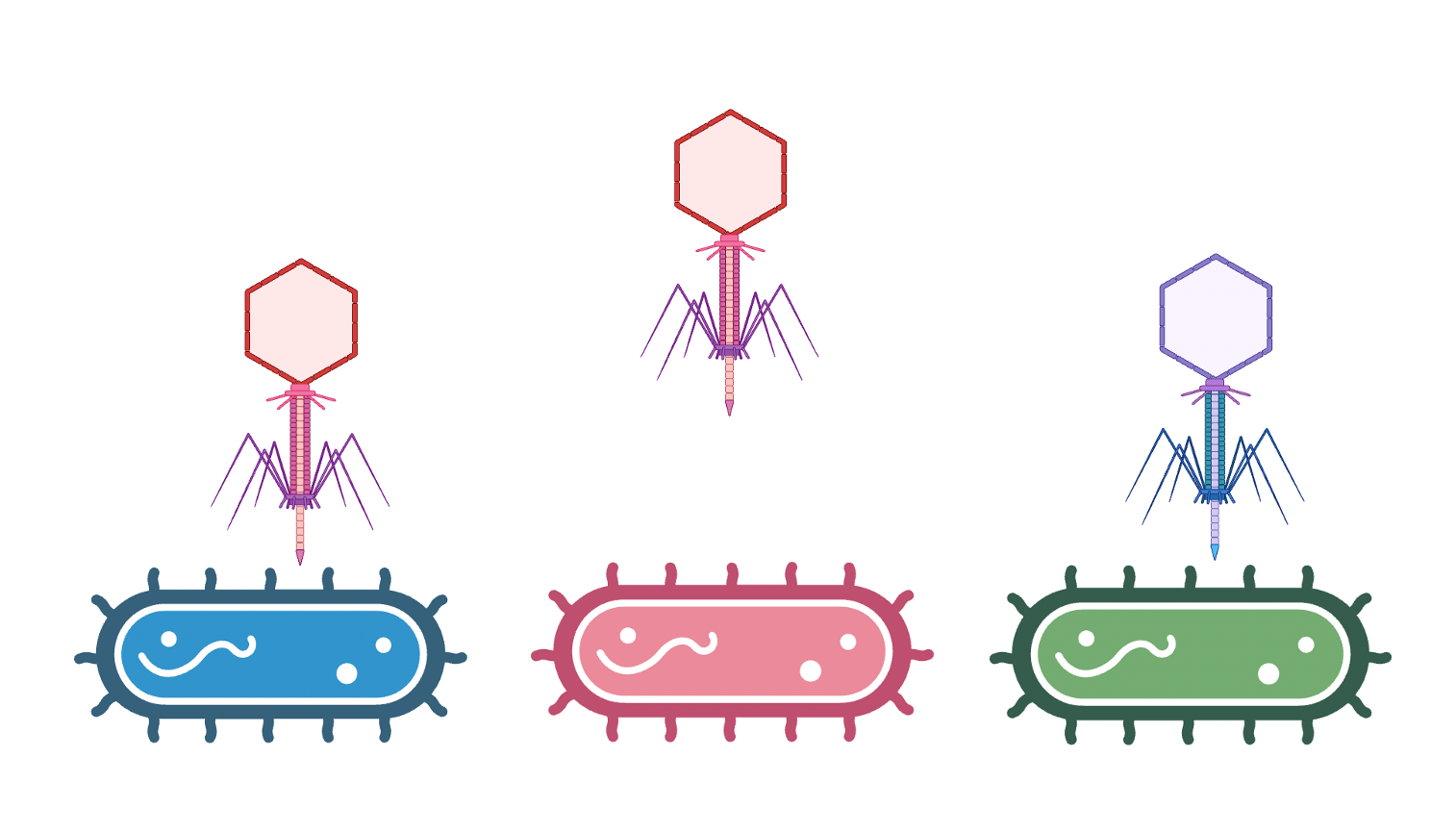
Phages and bacteria cartoon
Warning

This page mirrors the 2024 Group Final Project and notes on the 2025 continuation (as posted on the course site). It will be updated as the 2025 details publish.

Phage Therapy — Context

Phage therapy uses bacteriophages to treat bacterial infections and offers specificity advantages over conventional antibiotics. A well-known case is Tom Patterson and Steffanie Strathdee’s story (see CNN coverage).

The Project

We aim to engineer bacteriophages so they can better withstand bacterial resistance mechanisms. Building on prior work, the 2025 cohort continues with MS2 phage and its host E. coli.

MS2: the Model System

MS2 infects E. coli with high specificity. It encodes A (maturation), coat, L (lysis), and replicase proteins. The L protein is crucial for lysis; host proteins like DnaJ affect its processing.

MS2 genome and L gene region

Stages

  1. Engineer L‑protein mutants using protein design tools.
  2. Synthesize the mutant gene (e.g., via Twist).
  3. (Additional stages TBD) — will be reflected as the 2025 page publishes.

References

Individual Final Project

HTGAA project gallery tiles
Tip

Presentations: Tue May 13, 2025 (see Zoom on the class page).
Documentation due: May 15, 2025 (post your report on your student page).

Links:


Section 1 — Abstract

Provide an abstract/summary for your project (minimum 150 words). Use lay language and include: Significance, Objectives, Hypotheses, Specific Aims, and Methods.

Section 2 — Background

Describe the state of knowledge and the gap your project will address. Include a critical evaluation of the literature, broader context, and the specific problem(s) you seek to solve.


Section 3 — (Content published on the source page)

Full text will be mirrored here once posted on the course site.

Section 4 — (Content published on the source page)

Full text will be mirrored here once posted on the course site.

Section 5 — (Content published on the source page)

Full text will be mirrored here once posted on the course site.

Section 6 — (Content published on the source page)

Full text will be mirrored here once posted on the course site.

Section 7 — (Content published on the source page)

Full text will be mirrored here once posted on the course site.

Students

Homework & projects of in-person Students from MIT & Harvard


Node links:

Students:


Node links:

Students:


Node links:

Students:


Node links:

Students:


Node links:

Students:


Node links:

Students:


Node links:

Students:


Node links:

Students:

Subsections of Students

Global Nodes

Node links:

Students:


Node links:

Students:


Node links:

Students:


Node links:

Students:


Node links:

Students:


Node links:

Students:


Node links:

Students:


Node links:

Students:

Subsections of Global Nodes

Lifefabs Institute (London, UK)

Node links:

Students:

SynBioGenetics USFQ (Quito, Ecuador)

Node links:

Students: