Week 02 — DNA Read, Write, and Edit
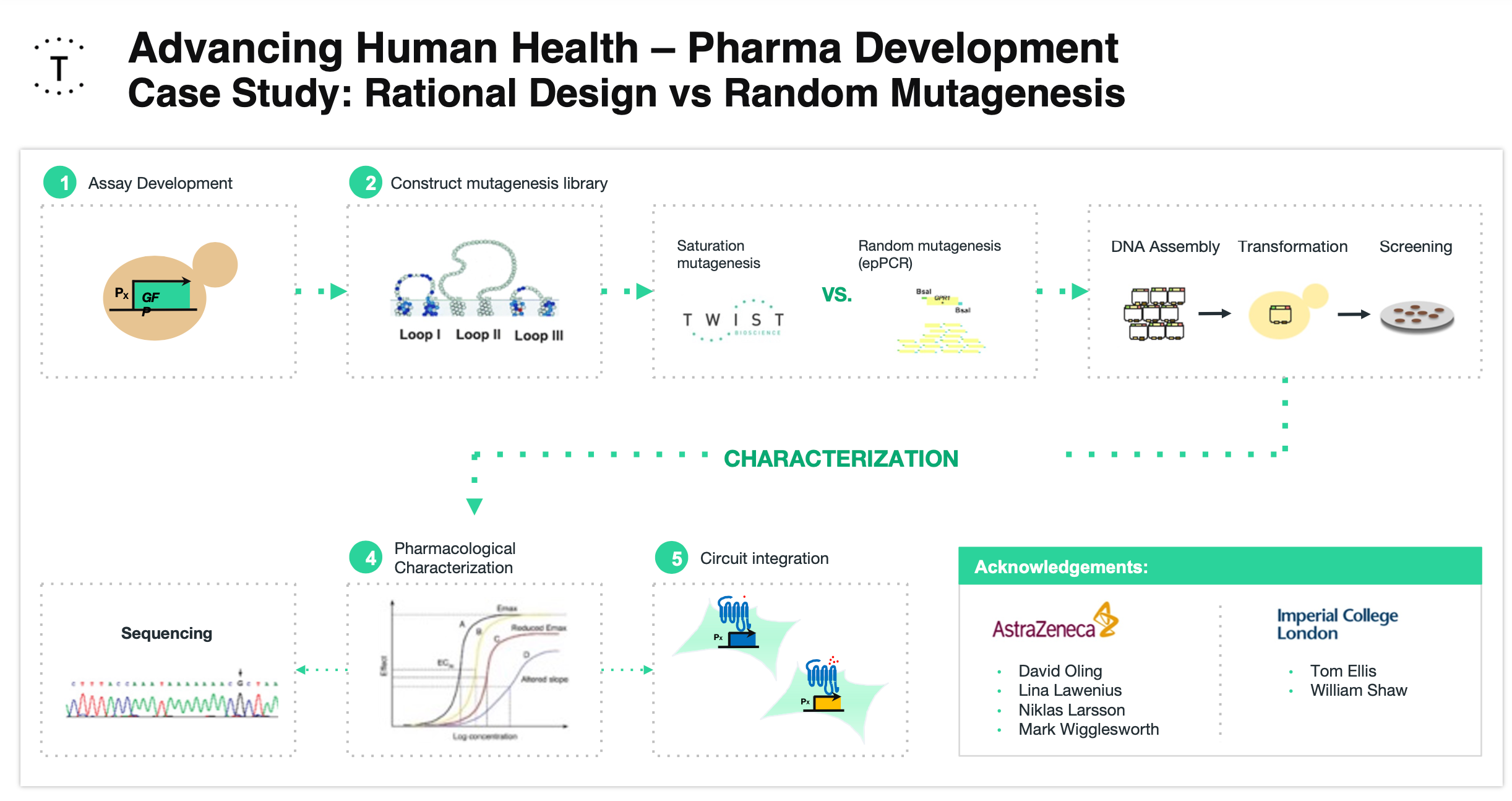
Twist case study figure

This week explores the read–write–edit toolkit: sequencing and synthesis workflows, restriction digests and gel electrophoresis, and early genome‑editing frameworks.

  • Slides: George Church — Reading & Writing Life Joe Jacobson — Gene Synthesis Class Recording: Zoom
  • Warning Document every step of your in‑silico and lab work — sketches, screenshots, notes, failures, and fixes. Your write‑up should help others reproduce your process. Part 0 — Basics of Gel Electrophoresis Watch the week’s lecture and recitation videos. (Bootcamp is optional.) Part 1 — Benchling & In‑silico Gel Art Use the Gel Art: Restriction Digests and Gel Electrophoresis protocol as a guide.
  • Slides (Updated Feb 12): Google Slides Recording: Zoom
  • Objective A focused 3‑hour lab on restriction digests and agarose gel electrophoresis. You’ll create DNA gel art while mastering core techniques that underpin verification of DNA constructs. Tip 3‑hour lab blending creativity and molecular biology: you’ll pour gels, set up restriction digests, run electrophoresis, and visualize DNA. Concepts You’ll Learn Benchling tools for design Restriction digest setup Agarose gel preparation Gel electrophoresis execution DNA visualization MIT lab timing (special for this week) Thu, Feb 13 — 1–4 PM ET, Building 68‑079 Prep & Protocol Lab Prep Lab Protocol (Google Doc)
  • Core DNA Sequencing at 40: Past, Present, and Future (2017) — Shendure, Balasubramanian, Church, et al. Nature DNA Synthesis Technologies to Close the Gene Writing Gap (2023) — Hoose, Vellacott, Storch, et al. Nature Rev Chem Recombineering and MAGE (2021) — Wannier et al. Nat Rev Methods Primers CRISPR: A Decade of Genome Editing is Only the Beginning — Wang, Doudna, et al. Science Databases GenBank overview — NCBI NCBI Genome — NCBI Ensembl — Ensembl UCSC Genome Browser — UCSC | Harvard GMC Editors & Tutorials CRISPR/Cas9 — Addgene tutorial | Benchling guide | PAM sequences Base editors — Review (2018) Prime editing — Prime editor | primeedit.nygenome.org | guide TALENs — Short guide | Design resource | Directed evolution Additional Resources Gel purification of DNA — Addgene Synthetic genomes with altered genetic codes (2020) — ScienceDirect DNA recorders — Nature (2021) Single‑molecule sensors on chips — PubMed (2022) Genome editors review (pre‑CRISPR era) — Trends Biotech (2013) Clinical trials of genome editing therapies — Nature (2020)

Subsections of Week 02

Homework — DNA Read, Write, and Edit

Warning

Document every step of your in‑silico and lab work — sketches, screenshots, notes, failures, and fixes. Your write‑up should help others reproduce your process.

Part 0 — Basics of Gel Electrophoresis

  • Watch the week’s lecture and recitation videos. (Bootcamp is optional.)

Part 1 — Benchling & In‑silico Gel Art

Use the Gel Art: Restriction Digests and Gel Electrophoresis protocol as a guide.

  1. Create a free account at benchling.com
  2. Import Lambda DNA from NEB.
  3. Simulate digests with enzymes: EcoRI, HindIII, BamHI, KpnI, EcoRV, SacI, SalI.
  4. Design a banding pattern inspired by Paul Vanouse’s Latent Figure Protocol.

Part 2 — Wet‑lab Gel Art

Info
Optional for Committed Listeners with lab access; mandatory for MIT/Harvard students. Documentation due at the start of class Feb 18.

Perform the experiment you designed in Part 1 per the Gel Art protocol.

Part 3 — DNA Design Challenge

Info
Mandatory for MIT/Harvard students and Committed Listeners; due at the start of class Feb 18.
  • Choose a protein of interest and obtain the amino‑acid sequence (NCBI/UniProt/other).
  • Reverse translate to DNA.
  • Continue per recitation guidance (gRNA design, editor choice, etc.).

Gel art example

Lab — DNA Gel Art

Objective

A focused 3‑hour lab on restriction digests and agarose gel electrophoresis. You’ll create DNA gel art while mastering core techniques that underpin verification of DNA constructs.

Tip

3‑hour lab blending creativity and molecular biology: you’ll pour gels, set up restriction digests, run electrophoresis, and visualize DNA.

Concepts You’ll Learn

  • Benchling tools for design
  • Restriction digest setup
  • Agarose gel preparation
  • Gel electrophoresis execution
  • DNA visualization

MIT lab timing (special for this week)

  • Thu, Feb 13 — 1–4 PM ET, Building 68‑079

Prep & Protocol

Gel art example

Subsections of Lab

Reading & Resources — Week 2

Core

  • DNA Sequencing at 40: Past, Present, and Future (2017) — Shendure, Balasubramanian, Church, et al. Nature
  • DNA Synthesis Technologies to Close the Gene Writing Gap (2023) — Hoose, Vellacott, Storch, et al. Nature Rev Chem
  • Recombineering and MAGE (2021) — Wannier et al. Nat Rev Methods Primers
  • CRISPR: A Decade of Genome Editing is Only the Beginning — Wang, Doudna, et al. Science

Databases

Editors & Tutorials

Additional Resources