Individual Final Project
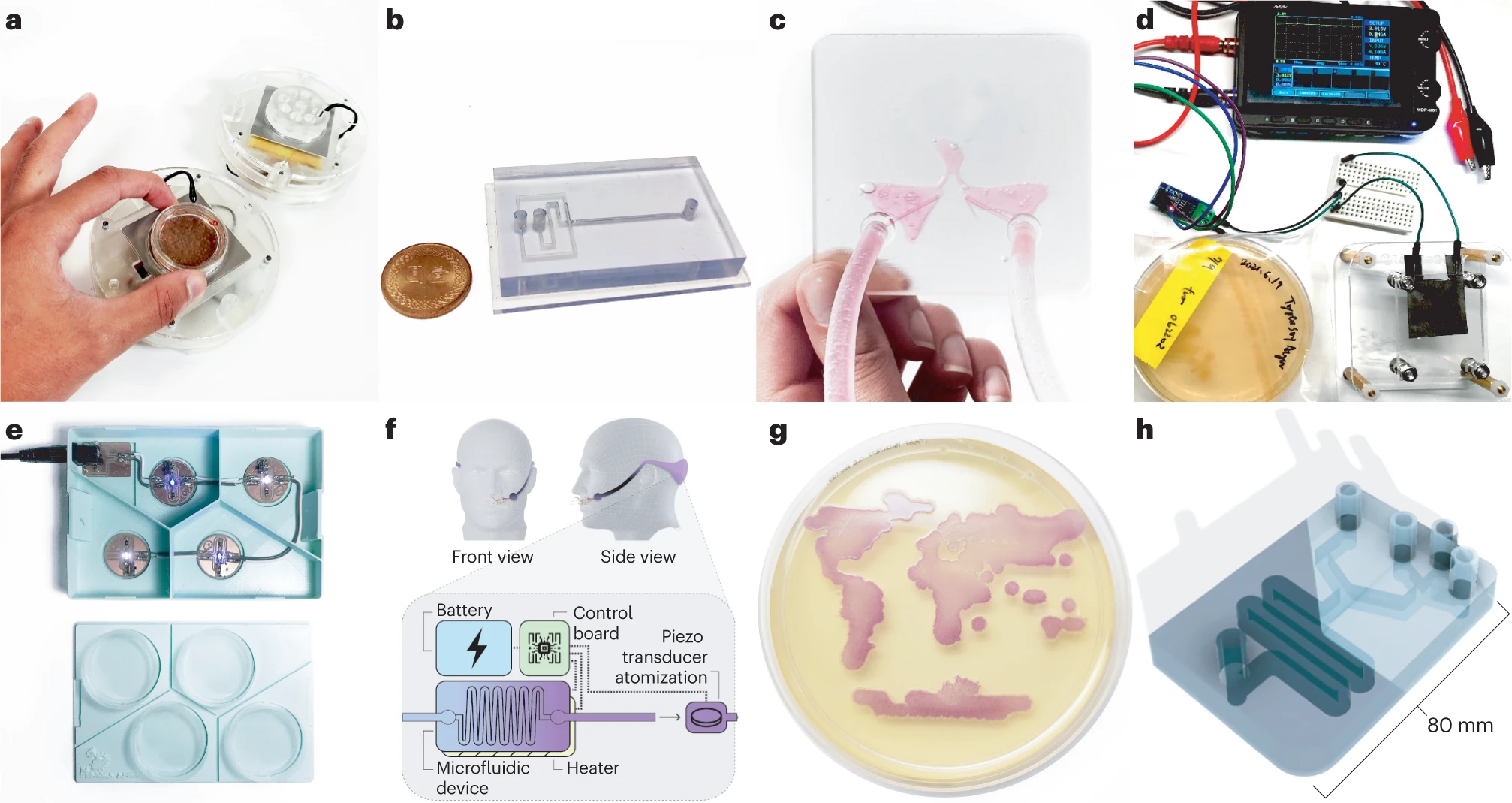
For your Individual Final Project, write up your project and results on your HTGAA webpage following the guidelines below. You will present your project from that online writeup; presentations should be 6 minutes for MIT/Harvard students and 3 minutes for Global Committed Listeners, with 1-2 minutes of questions and discussion following.
Important Dates
Feb 25, 2026: Share 3 Individual Final Project ideas (1 slide each, in Google slide deck to be provided)
Mar 18, 2026: Finalize Individual Final Project topic; send TAs Twist designs
Apr 30 & May 1, 2026: Final project open Lab sessionn #1 (MIT/Harvard)
May 7 & 8, 2026: Final project open Lab sessionn #2 (MIT/Harvard)
May 12, 2026: MIT / Harvard Individual Final Project presentations (~3 Hours)
May 13, 2026: Global Committed Listener Individual Final Project presentations (~9-12 Hours)
Links: Links will be available later in the semester:
- (Signup sheets for a presentation slot)
- (A schedule of MIT/Harvard TA availability for lab work)
- (Signup sheet for MIT/Harvard Lab slots)
SECTION 1: ABSTRACT
1. Provide an abstract/summary for your project. (minimum 150 words)
- Self-contained description of the project
- Should contain a brief outline of:
- Significance
- Broad objectives
- Hypotheses
- Specific aims
- Methods to be employed
- Use lay language (i.e., understandable by the general public) as much as possible
SECTION 2: BACKGROUND
Provide background information and research for your final project. This should describe the current state of knowledge related to your project and should include a critical evaluation of the literature that identifies the gap in knowledge that this project will fill. Explain the larger context of your project area. What are the challenges and obstacles related to your project? What problem(s) are you seeking to address?
Cite at least 2 peer-reviewed research papers. Include any figures or visuals to help assist in explaining the background of your project area.
(min. 2 paragraphs)
SECTION 3: VISION and IMPACT
3a. Introduce the vision and impact of your final project. (min. 1-2 paragraphs) What is the overall vision and goal of your project? How will the world be different if your project is successful? Include figures and visuals as appropriate.
- Examples of topics to discuss
- How your project solves a pressing problem in the world
- Importance of the problem it solves or the critical barrier(s) to progress in the field that the proposed project addresses
- The ways in which it contributes to the larger society
- How the proposed project will improve scientific knowledge, technical capability, and/or clinical practice in one or more broad fields
- How the concepts, methods, technologies, treatments, services, or preventative interventions that drive this field will be changed if the proposed aims are achieved
3b. Describe how your project is innovative (min. 3 sentences)
- Examples of topics to discuss
- Novel applications, usage, or development of theoretical concepts, approaches, methodologies, instrumentation, and/or interventions
- How it challenges current theories, paradigms, or ways in which technology/biological tools are used
- How your project pushes the boundaries of synthetic biology
3c. Describe the bioethical considerations involved in your project. (min. 2 paragraphs)
- First paragraph: Include what ethical implications are involved in your project. Try to suggest ethical the principle(s) you may apply (e.g. non-maleficence, justice)?
- Second paragraph: Describe the measures that should be taken to ensure that your project is ethical (both in how the research is conducted and in its broader implications for society). You may wish to answer the following questions:
- What action(s) do you propose?
- What are potential unintended consequences of your proposed actions?
- What could you have wrong (e.g., incorrect assumptions and uncertainties)?
- What are alternatives to your proposed actions?
SECTION 4: PROJECT AIMS
Outline three aims of your final project (min. 3 sentences, at least one for each aim)
- The first aim should be structured “The first aim of my final project is to [insert an achievable experimental goal that encompasses your project] by utilizing [insert protocols/tools/strategies you will use to achieve your goal]”
- State or link any methods/experimental protocols/OpenTrons protocols/DNA or protein designs/protein design tools or models/Twist orders you will use
- You will provide a detailed, step-by-step outline of how you will achieve your goal for the first aim in the experimental design portion of this assignment (i.e., in question 7)
- Feel free to run your goal by a TA
- The second aim should be a medium-term aim that is a follow-up to your first aim and focused on goals beyond this class, building toward your third, visionary aim
- For example, your second aim may be to successfully execute a set of experimental protocols, solve a specific problem, or develop a specific technology building upon the goals of your first aim.
- The third aim should be a visionary, long-term aim
- Reveal how the larger goal of the project can be impactful
- Examples: challenging an existing paradigm or clinical practice, addressing a critical barrier to progress in the field, describing how you envision a new technology to change how a certain type of research is conducted
SECTION 5: EXPERIMENTAL DESIGN
Share a detailed experimental plan for your final project. Include a timeline for each part of your experimental plan (i.e., how long you would expect each step in your final project to take). (min. 15 lines/sentences—a numbered list is acceptable)
- Include specific methods/tools/technologies/biological concepts for each part of the final project and analysis
- Include any details related to any DNA designs and explain your design choices
- This section will be used to determine whether the experiments are well designed, feasible, and likely to succeed in testing your hypothesis
- Often this section is broken into discrete tasks/sub-aims
- For each experiment and/or analysis, include a description of your expected results
- If possible, include figure(s) that visually shows a broad workflow of your project or a specific aspect of your experimental plan
SECTION 6: RESULTS
Share the experimental results of your project. Include figures, tables, graphs, etc. to represent your experimental work. What did you measure and what were the results of those measurements? These results can be from lab work, computational methods, etc.
Here is a non-exhaustive list of areas where you can provide results:
- Performing a PCR reaction using primers relevant to your final project
- Performing a Gibson assembly relevant to your final project
- Designing DNA relevant to your final project
- Creating and performing a cell-free assay related to your final project
- Creating and running a code to validate an aspect of your final project
- Developing a model or completing a computational analysis relevant to your project
- Designing DNA construct(s) that can express at least one gene of interest, ordering it (via Twist), and testing of the expression of the construct(s) (potentially using an OpenTrons robot)
In the event you were unable to run certain experiments, please share your expected results. What kind of data were you hoping to get and why? Show an example data set or plot for reference (this could be from the literature or something you draw or plot).
SECTION 7: DISCUSSION AND FUTURE WORK
7a. Discussion (2 paragraphs minimum). Interpret your results. What worked? What didn’t? What data met your expectations? What did not go as planned and why do you think it didn’t work?
Discuss any other aspects of your project here as well. What were foreseen and/or unforeseen challenges? What strategies did you employ, or will you employ, to overcome these challenges?
7b. Future Work (1 paragraph minimum).
What are the next immediate steps you would like to take? What is your short term future work? What is your medium and long term future work? How do these plans relate to your aims?
SECTION 8: TECHNIQUES, TOOLS, AND TECHNOLOGY
8. We discussed and practiced various techniques related to synthetic biology throughout the semester. Place a check next to the techniques relevant to your project.
- Foundational Lab Practices
- Pipetting
- Lab Safety
- Bioethical Considerations (must check this box)
- DNA Skills & Analysis
- DNA Gel Art
- DNA Sequencing
- DNA Editing (e.g., CRISPR)
- DNA Construct Design
- Restriction Enzyme Digestion
- Gel Electrophoresis
- DNA Purification from Gel
- Databases (e.g., GenBank, NCBI, Ensembl, UCSC Genome Browser)
- Laboratory Automation
- Opentrons
- Creating Code for Laboratory Automation
- Using Liquid Handling Robots (e.g., Opentrons)
- Opentrons
- Protein Design
- Protein Design
- Models and Notebooks
- Databases
- Tools
- Protein Design
- BioProduction
- Chassis Selection (e.g., DH5α, Bl21-DE3 for expression)
- Registry of Standard Biological Parts
- FreeGenes
- Plasmid Preparation
- Bacterial Culturing
- Quality Control / Analysis
- Bacterial Processing (e.g., Centrifugation, Lysis, DNA Purification)
- Cell-Free System
- Cell-Free Reactions
- Freeze-Dried Cell-Free Systems
- NEB Express Kits
- miniPCR Tools
- Gibson Assembly
- Primer Design or Selection
- PCR Reactions
- Gibson Assembly
- Other Cloning Methods (e.g., Restriction Enzyme Digestion or Gateway Cloning)
- Creating Twist Order
9. Expand upon two techniques you checked in the previous question by describing how you would utilize those techniques in your final project. (min. 4 sentences
SECTION 9: ADDITIONAL INFORMATION
10a. List all references cited in this assignment (bullet-point list)
10b. Create a supply list and budget for your project (bullet-point list)
- What supplies, equipment, and budget is needed for your project to work?
Example Past Final Projects:
2022:
2021:
- Microfluidic Covid-19 mRNA Vaccine Drug Delivery
- Bacterial Shading
- Immune-System-Friendly RNA Delivery
Example Past Class Webpages:
2022:
2021: