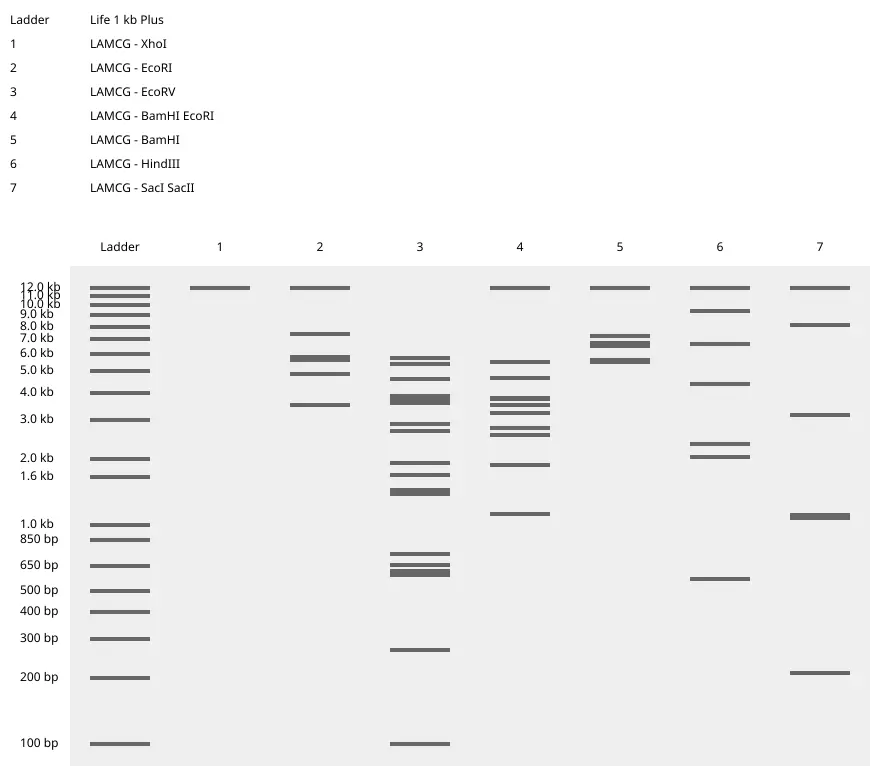
Simulate restriction enzyme digests using lambda DNA and generate gel electrophoresis patterns.
Tools Used
Benchling
Restriction enzyme digest simulation
Lambda DNA reference sequence
Restriction Enzymes
EcoRI
HindIII
BamHI
KpnI
EcoRV
SacI
SalI
XohI
Part 3 — DNA Design Challenge
Selected Protein
Protein Name
BDNF (Brain-Derived Neurotrophic Factor)
Organism
Homo sapiens
Reason for Selection
I am interested in understanding how brain biology supports learning, memory, and cognition. BDNF plays an important role in synaptic plasticity and memory consolidation by helping neurons strengthen their connections during learning processes.
One particularly interesting feature is the Val66Met polymorphism, where a single nucleotide variation changes protein trafficking and influences memory formation and cognitive performance. This demonstrates how even small DNA sequence changes can produce measurable biological and behavioral effects.
(i) What DNA would you want to sequence (e.g., read) and why?
Human brain cell genomic DNA, focusing on mutated neurological disease genes to understand neurodegeneration and develop targeted therapies.
(ii) In lecture, a variety of sequencing technologies were mentioned. What technology or technologies would you use to perform sequencing on your DNA and why?
Technology: Oxford Nanopore (Third-generation)
Generation: Third-generation; reads single molecules in real time with ultra-long reads.
Input: High-molecular-weight genomic DNA from brain tissue or lab-grown neurons.
Preparation: DNA extraction, size selection, end-repair, adapter ligation — no PCR amplification needed.
Essential steps: DNA passes through a protein nanopore; ionic current changes as each base passes through.
Base calling: Electrical current disruptions are decoded by AI software into nucleotide sequences.
Output: Long FASTQ read files containing nucleotide sequences with quality scores.
Part 5.2 — DNA Write/Edit
(i) What DNA would you want to synthesize (e.g., write) and why?
Codon-optimized BDNF expression cassette for delivery into neurons to restore BDNF signaling in diseased brains.
(ii) What kinds of edits might you want to make to DNA (e.g., human genomes and beyond) and why?
Correct BDNF promoter mutations causing reduced expression in Alzheimer’s patients, and knock out disease-aggravating genes like APP.
(iii) What technology or technologies would you use to perform these DNA edits and why?
Technology: CRISPR-Cas9
How it edits: Cas9 protein guided by sgRNA cuts DNA at a precise target location.
Essential steps: Design sgRNA → deliver Cas9+sgRNA into cells → DNA cut → repair via HDR template.