Week 06: Genetic Circuits Part I
Assignment 1 — DNA Assembly Questions
Q1. Components of Phusion High-Fidelity PCR Master Mix
Components
Phusion DNA Polymerase
Thermostable, high-fidelity enzyme with proofreading activity that synthesizes new DNA strands.dNTPs
The four nucleotide building blocks (A, T, G, and C) used to construct DNA.Reaction Buffer
Maintains optimal pH and ionic conditions. Also contains MgCl₂, an essential cofactor for polymerase activity.
Q2. Factors Determining Primer Annealing Temperature
The annealing temperature mainly depends on:
- Primer length
- GC content
Longer primers and primers with higher GC content generally require higher annealing temperatures because GC base pairs form three hydrogen bonds, compared to two hydrogen bonds in AT pairs.
Q3. PCR vs Restriction Enzyme Digest
| Feature | PCR | Restriction Digest |
|---|---|---|
| Equipment | Thermocycler | Heat block / incubator |
| Inputs | Template DNA + primers | DNA with restriction sites + enzymes |
| DNA Ends Produced | Usually blunt ends | Sticky or blunt ends |
| Best Use Case | Amplifying or modifying DNA; adding overhangs | Removing inserts; directional cloning |
| Purification Required | Yes | Yes |
Q4. Ensuring Fragments are Appropriate for Gibson Assembly
To ensure fragments are suitable for Gibson cloning:
- Design and verify overlaps in silico using the Benchling Assembly Wizard.
- Run PCR or digest products on an agarose gel to confirm expected fragment sizes.
- Purify the fragments before assembly.
- For maximum confidence, sequence the purified products before Gibson assembly.
Q5. How Plasmid DNA Enters E. coli During Transformation
During heat-shock transformation:
- Cells are treated with CaCl₂, which helps neutralize the negative charges on DNA and the bacterial membrane.
- Cells are first kept on ice and then briefly exposed to 42°C.
- This sudden temperature shift temporarily creates pores in the membrane, allowing plasmid DNA to enter the cell.
Q6. Golden Gate Assembly
Golden Gate Assembly uses Type IIS restriction enzymes such as BsaI or AarI.
Key Features
- These enzymes cut outside their recognition sequence.
- Custom 4-base sticky ends can be designed for directional assembly.
- Multiple DNA fragments can be assembled in a single reaction.
Why It Works Efficiently
- Correctly assembled fragments lose the recognition sites, preventing further cutting.
- Incorrect assemblies retain recognition sites and are cut again by the enzyme.
This creates a highly efficient, seamless, and scarless DNA assembly method.
Assignment 2 — Asimov Kernel
Tasks
- Create a repository for your work.
- Create a blank notebook entry and save it to the repository.
- Explore devices in the Bacterial Demos Repository.
- Run simulations using the Simulator and follow the instructions provided in the Info Panel (
iicon). - Reconstruct the Repressilator construct.
- Create Original constructs.
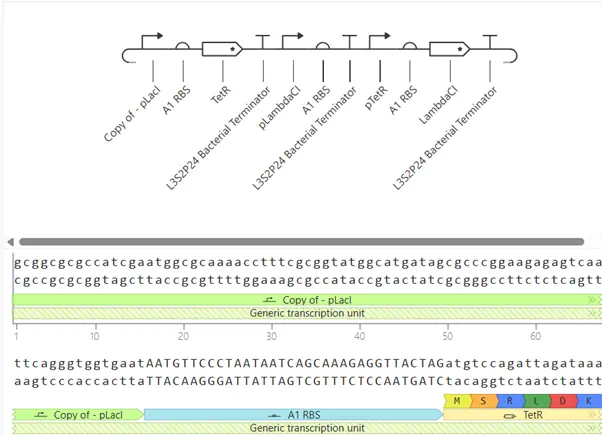
Repressilator Reconstruction
Reconstructed Circuit
Original Constructs
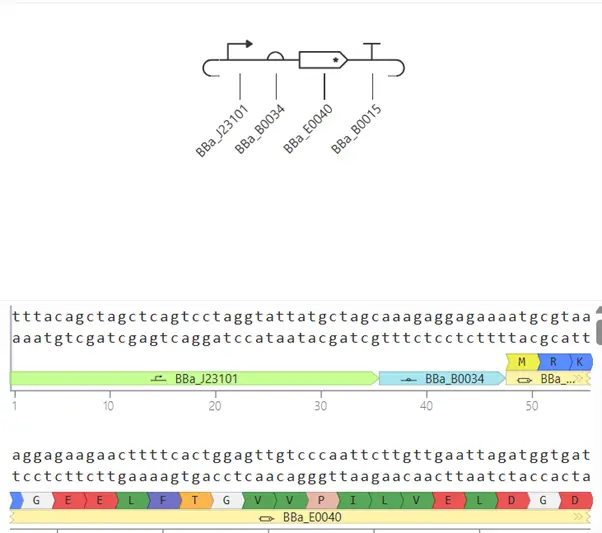
Construct 1 — Constitutive GFP Expression
Construct 2 — Genetic Toggle Switch
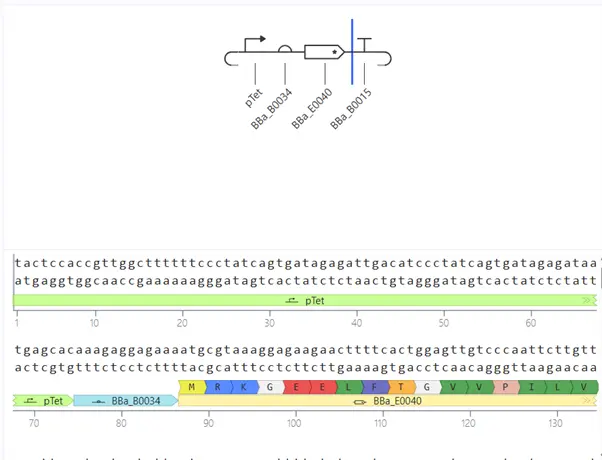
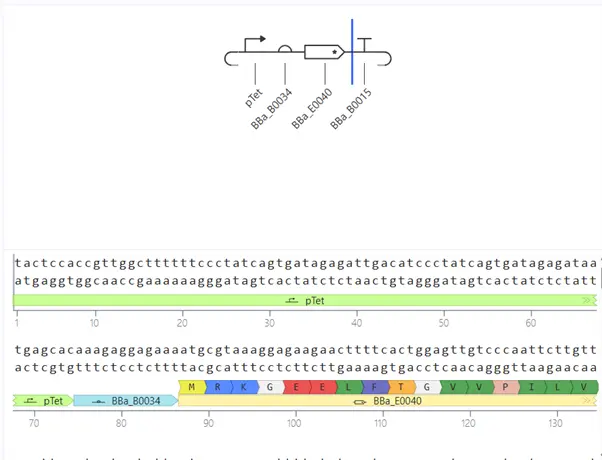
Construct 3 — TetR-Repressible Single Gene