Week 3 HW: Lab Automation
Python Script for Opentrons Artwork
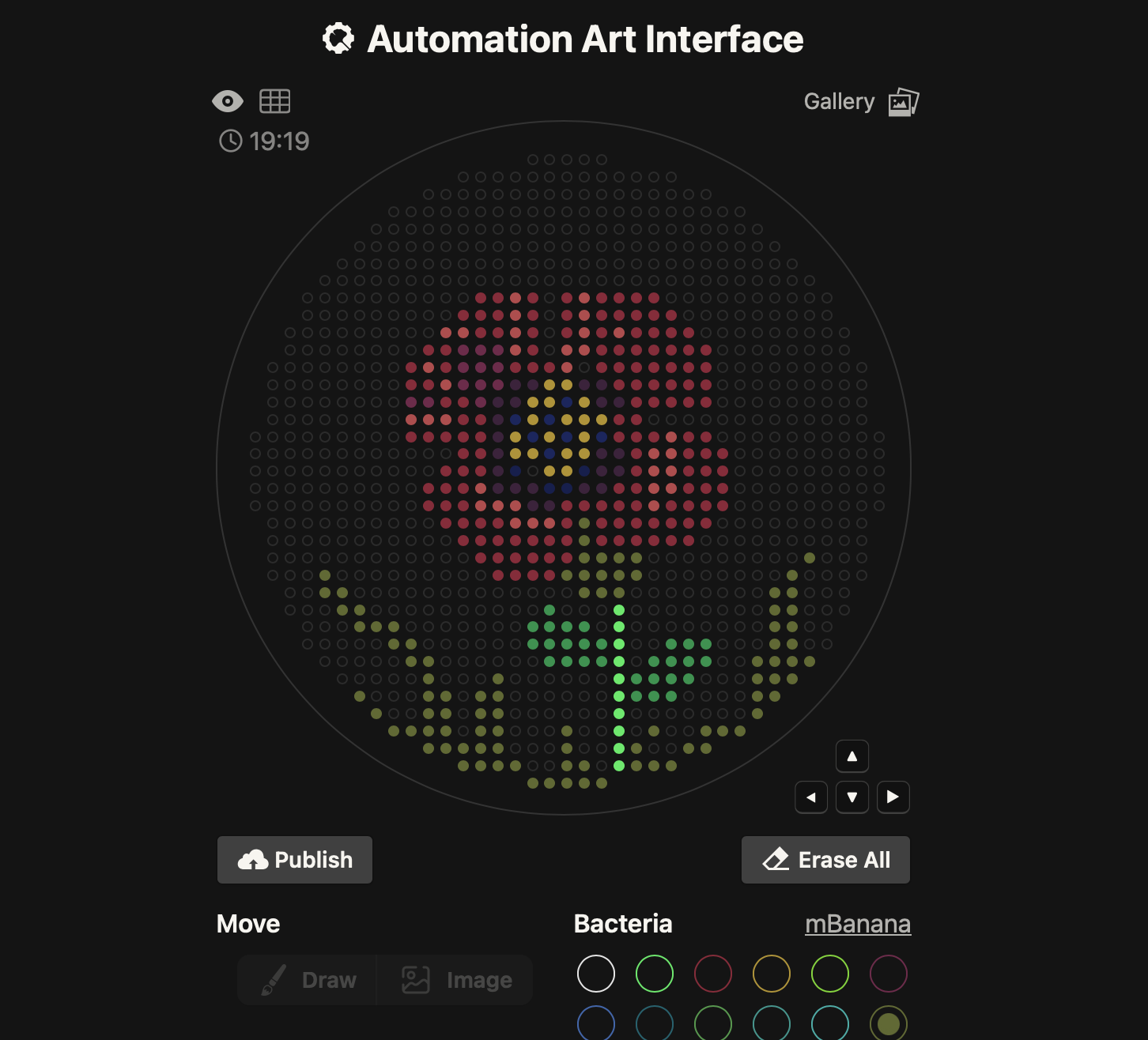
I started off drawing my picture here, with lots of different colors and going through quite a few iterations.

Once I exported my python code and imported it into the colab notebook, I worked through a few debugging problems, and also realized that the colors were didfferent than the ones I had chosen on the opentron simulator. This group of purple, for example, I wanted to change, so I moved the coordinates to the section that coded for red dots.
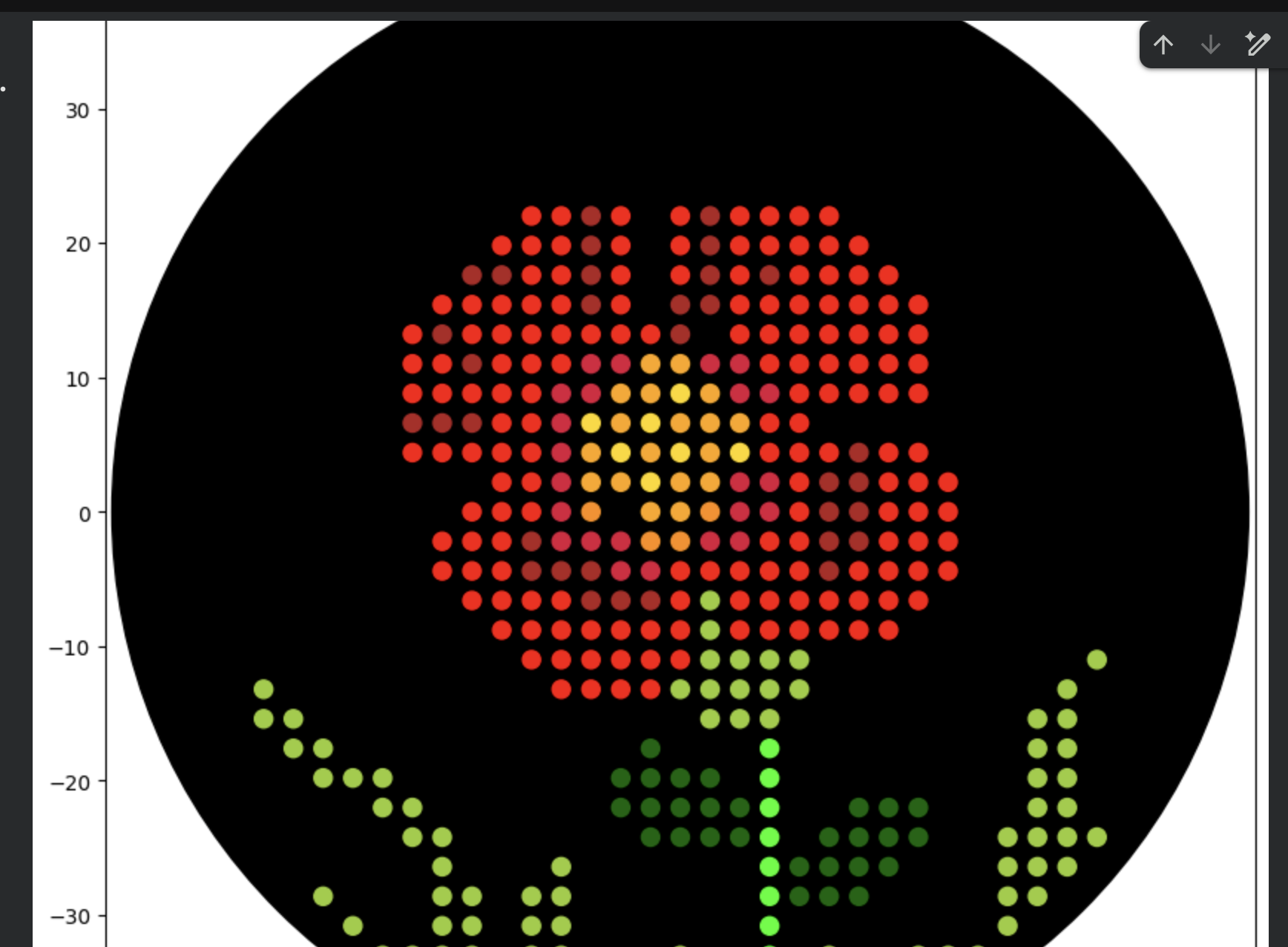
The color was looking better, but the design still wasn’t exactly like I wanted it.

There were a couple of holes in the design, so I went back to the simulator, found those points, copied the coordinates, and inserted them in the code.
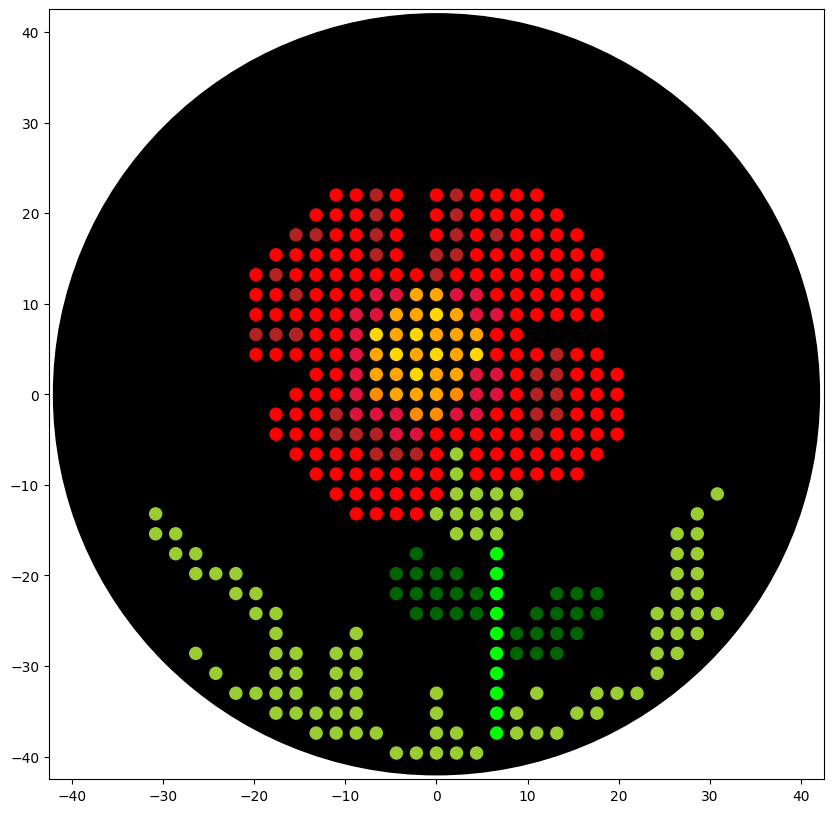
Here is the finished result! A poppy!
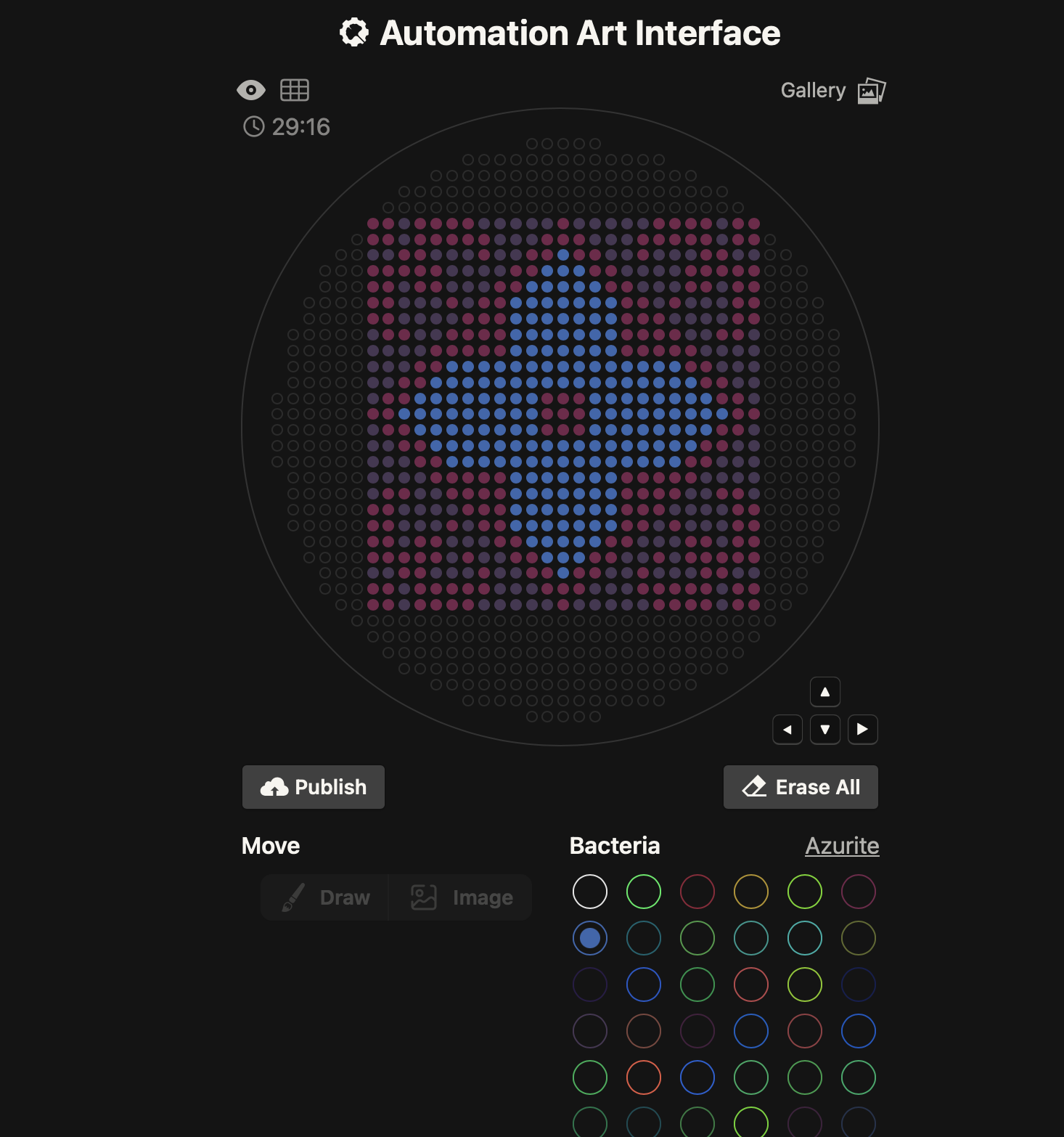
Here is my new design with purple, blue, and pink.
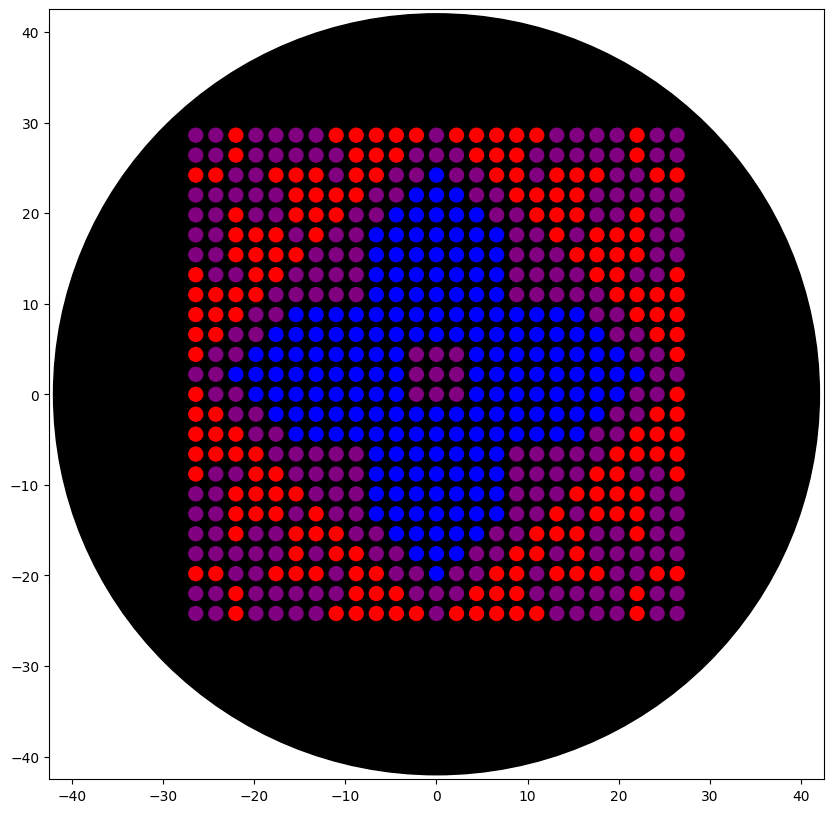
And the finished results after some trial and error.
Post-lab Questions
Published Paper
AssemblyTron (Bryant et al., 2023, Synthetic Biology) uses the Opentrons OT-2 to automate the full DNA assembly pipeline – PCR, Golden Gate, and homology-dependent in vivo assembly – by integrating directly with j5 design software. It performed four simultaneous four-fragment chromoprotein assemblies with accuracy comparable to manual methods, automating a step of the Design-Build-Test-Learn cycle that had no open-source solution before.
Automation Plan
My three projects share a common automation logic: screen many conditions in parallel to find an optimal biological configuration that would be impossible to identify manually.
Iron and Ferment (Sahrawi) Opentrons dispenses varying concentrations of phytate-containing substrate (lentil or cereal extract) and lactic acid bacteria strains across a 96-well deep plate, varying pH and incubation temperature proxies per well. After fermentation, colorimetric phytate assay is run plate-wide. Output: optimal strain and condition for maximum iron bioavailability at ambient desert temperature.
Signal Loss (Bee Biosensor) Opentrons screens engineered S. alvi biosensor circuit variants – varying promoter strength, reporter construct, and inducer concentration – across a 96-well plate to identify the configuration with highest sensitivity to target neurochemical stress markers at field-realistic concentrations.
Threshold (Soil Restoration) Opentrons deposits engineered bacterial consortium members at systematically varied ratios and densities across a plate containing soil extract. Bioluminescence coherence is read over time as a proxy for synchronization crossing threshold. Nitrogen cycling and phosphate solubilization are measured per well to confirm metabolic output.
Final Project Ideas
THRESHOLD
A synthetic microbial inoculant designed to push collapsed soil ecosystems past the reorganization threshold and into a new stable state
Proposal:
Desertified and agriculturally degraded soils do not recover spontaneously even when external pressures are removed. The soil microbial community, which drives nutrient cycling and aggregate structure, collapses past a tipping point and locks into a degraded stable state. This project proposes engineering a synthetic microbial consortium that uses quorum sensing-coupled genetic oscillator circuits to generate coordinated metabolic activity above a critical cell density threshold, with the aim of pushing a collapsed soil system into a new functional stable state. The consortium additionally carries out soil-relevant functions: nitrogen fixation, phosphate solubilization, and extracellular polysaccharide production for soil aggregate rebuilding.
Background:
Many ecosystems have multiple stable states separated by thresholds, and once a system crosses into a degraded state, positive feedbacks maintain it there even after the original stressor is removed (Scheffer et al., 2001, Nature). Bardgett and van der Putten (2014, Nature) showed that collapsed microbial networks fail to reorganize not because species are absent but because coupling between community members is insufficient to generate coordinated metabolic output. The proposed mechanism draws on the Kuramoto model (1984), which describes how coupled oscillators synchronize suddenly above a critical coupling strength. Panarchy theory (Holling, 2001, Ecosystems) describes an equivalent transition in ecosystem dynamics: a collapsed system in the reorganization phase can shift into a new growth phase if sufficient connectivity is present to seed it. The oscillator circuit follows the dual-feedback activator-repressor architecture of Stricker et al. (2008, Nature). Inoculant density controls coupling strength, meaning the threshold can be approached and crossed in a controlled and measurable way across different soil conditions.
Output:
A characterized synthetic microbial consortium inoculant, validated in controlled degraded soil microcosms. Delivered as a stabilized, storable preparation (lyophilized or encapsulated) suitable for application to desertified or post-agricultural soils. Accompanied by a protocol for determining the minimum effective inoculant density for a given soil condition. The primary scientific output is the identification and mapping of the reorganization threshold as a measurable, targetable parameter in soil restoration practice.
Automation:
Opentrons screens combinatorial consortium compositions across a 96-well plate, varying strain ratios, inoculant densities, and soil extract conditions. Readouts include nitrogen cycling activity, phosphate availability, and bioluminescence phase coherence as a proxy for synchronization. This identifies the minimum consortium composition and density needed to cross the reorganization threshold in a given soil type before committing to larger scale application.
SIGNAL LOSS
An engineered gut biosensor to detect neurochemical disruption of waggle dance communication in honey bee colonies under pesticide stress
Proposal:
The waggle dance is the primary mechanism by which honey bee foragers communicate the location and quality of food sources to recruits. Its fidelity depends on specific neurochemical states: octopamine encodes food value into dance parameters, and dopamine mediates the motivation to initiate dancing. Sublethal neonicotinoid exposure disrupts acetylcholine signaling in the bee brain, reducing waggle dance circuit production by up to tenfold at field-realistic doses (Eiri and Nieh, 2012, Journal of Experimental Biology). This project proposes engineering a bacterial biosensor into the native bee gut microbiome that detects disruption of these neurochemical signals and reports noninvasively through fecal output – a monitoring tool that provides early warning of communication breakdown in managed colonies before behavioral decline is visible at the colony level.
Background:
Octopamine signaling encodes reward value of a food source and directly modulates dance vigor and duration. Dopamine levels in forager brains increase transiently at dance initiation and decline at its end, facilitating encoding of food source properties during the dance. Neonicotinoids target nicotinic acetylcholine receptors expressed in brain areas responsible for mechanosensory processing, olfactory integration, and memory, disrupting the circuits that encode waggle dance information. The feasibility of noninvasive gut-based biosensing was established by Chhun et al. (2024, PLOS Biology), who engineered Snodgrassella alvi, a core bee gut symbiont, to express a fluorescent reporter readable from fecal samples without sacrificing the bee. This project extends that framework by engineering S. alvi to detect markers of neurochemical stress appearing in gut tissue under neonicotinoid exposure and report their concentration via colorimetric fecal output. A 2023 Science paper (Dong et al.) showed waggle dance fidelity is partly socially learned, meaning impaired dancers produce degraded dances that naive bees then learn from, compounding disruption across cohorts and making early individual-level detection more valuable than waiting for colony-level signals.
Output: An engineered S. alvi strain carrying a biosensor circuit responsive to markers of neonicotinoid-induced neurochemical stress, validated in controlled pesticide exposure experiments in laboratory colonies. Delivered as a standardized inoculant introducible to managed colonies. Fecal readout is colorimetric and requires no laboratory equipment, making it usable by beekeepers in the field. Automation: Opentrons screens biosensor circuit variants across a 96-well plate, testing promoter strengths, reporter constructs, and inducer concentrations to identify the circuit configuration with highest sensitivity and lowest background in the relevant concentration range of the target metabolites.
IRON AND FERMENTATION
A low-cost fermentation system to fight iron-deficiency anemia in the Sahrawi refugee camps, Tindouf, Algeria
Proposal:
Iron-deficiency anemia is endemic in the Sahrawi refugee camps due to near-total reliance on humanitarian aid staples (rice, lentils, cereals) whose iron is largely inaccessible to the body because of high phytate content. This project proposes engineering or selecting lactic acid bacteria strains that, through fermentation, dramatically reduce phytates and increase bioavailable iron from the exact foods already present.
Background:
Phytates (phytic acid) bind iron and zinc in grains and legumes, blocking absorption – a mechanism well documented by Hurrell and Egli (2010, American Journal of Clinical Nutrition) who showed that phytate reduction can increase iron absorption by up to tenfold. Lactic acid fermentation is one of the few processes that degrades phytates effectively at low cost. Hotz and Gibson (2007, Journal of Nutrition) showed that traditional fermentation practices can reduce phytate content by 20 to 90 percent depending on substrate and strain. Certain Lactobacillus strains also produce ascorbic acid precursors, which further boost non-heme iron absorption. The challenge is optimizing for ambient desert temperatures (35 to 45 degrees C) and minimal equipment, making strain selection and protocol design critical. UNHCR nutritional assessments of the Tindouf camps have consistently flagged anemia as a priority concern, particularly in children under five and pregnant women.
Output:
A validated, low-cost fermentation protocol (a starter culture kit) optimized for Sahrawi staple foods, tested for phytate reduction and iron bioavailability. Accompanied by accessible documentation designed with and for the community.
Automation:
Opentrons screens arrays of fermentation conditions across a 96-well deep plate, varying strain combinations, pH levels, temperature proxies, and incubation times. Measures phytate reduction colorimetrically and maps iron bioavailability across conditions to identify the optimal protocol for resource-constrained deployment.