Hey everyone! I’m Abby, a very soon-to-be industrial design graduate from the university of bologna in Italy. I investigate institutions, environments, and practices as non-linear systems, and develop methods to translate research insights across media.
Project Proposal: I am interested in the applications synthetic biology could have on the people staying in the Saharawi refugee camps in Tindouf, Algeria. I would like to explore the possibilities of a lowcost fermentation system specifically designed to reduce irondeficiency anemia, which is a big problem there because the intertwining of various circumstances has caused the community to rely almost exclusively on humantiarian aid, which consists mostly of long shelf life products like rice, lentils, and cereals.
Reflections for Week 2 Homework Questions from Professor Jacobson: Nature’s machinery for copying DNA is called polymerase. What is the error rate of polymerase? How does this compare to the length of the human genome. How does biology deal with that discrepancy?
Part 1: Benchling & In-silico Gel Art I created a Benchling account, imported the Lambda phage genome (GenBank J02459, ~48.5 kb), and ran restriction simulations for all seven enzymes. Benchling calculates cut sites and spits out the expected fragment sizes for each digest, which is really all you need to start planning a gel layout.
The design side is where it gets interesting. Paul Vanouse’s Latent Figure Protocol uses the natural variation in fragment sizes across different enzyme digests to compose images — the biology does the art. I used Ronan’s gel simulation tool to quickly preview different lane arrangements without re-running everything in Benchling each time, which saved a lot of back-and-forth. The goal was to pick an enzyme combination and lane order where the resulting band pattern, viewed across lanes, suggests a recognizable shape.
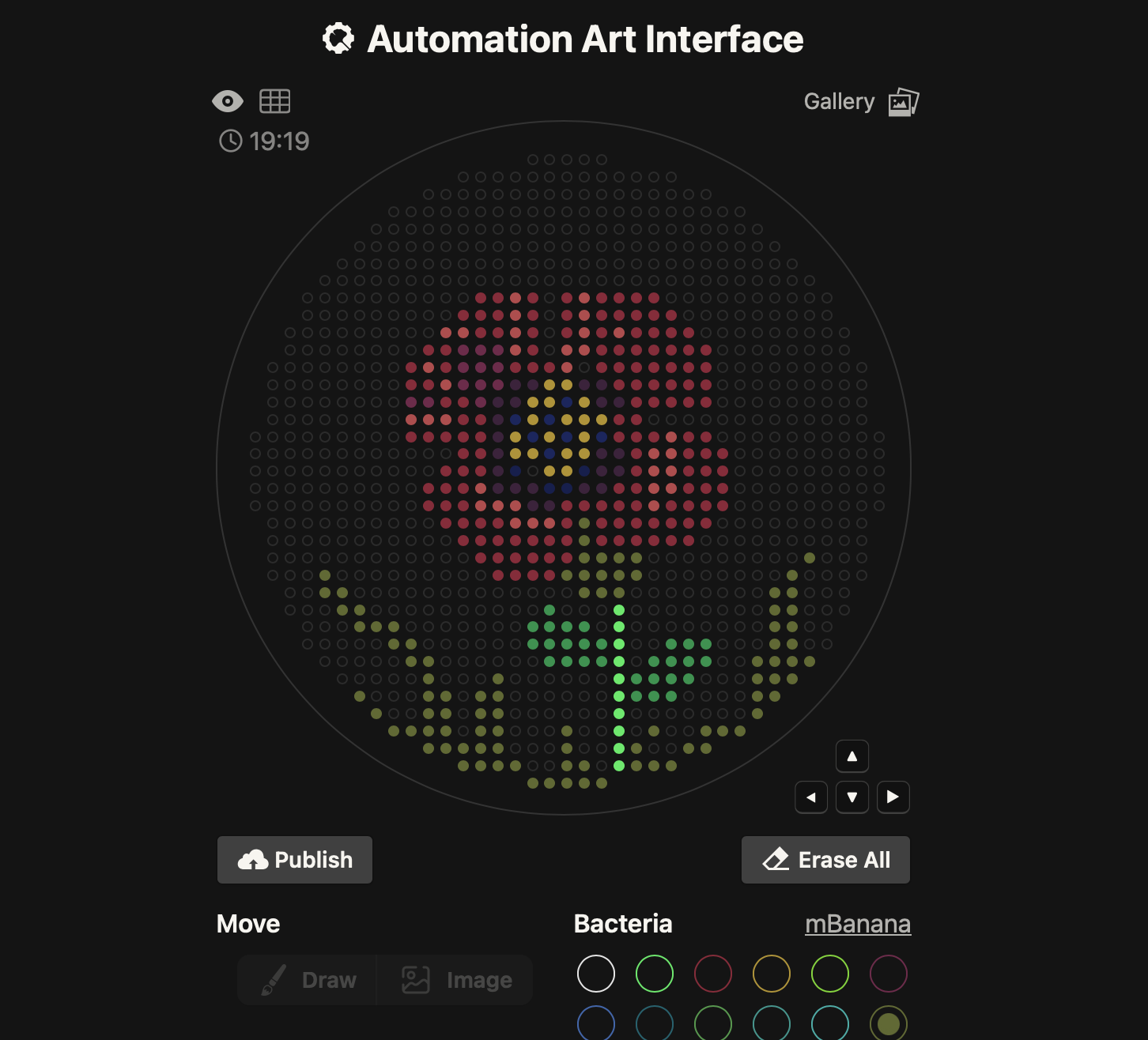
Python Script for Opentrons Artwork I started off drawing my picture here, with lots of different colors and going through quite a few iterations.
Once I exported my python code and imported it into the colab notebook, I worked through a few debugging problems, and also realized that the colors were didfferent than the ones I had chosen on the opentron simulator. This group of purple, for example, I wanted to change, so I moved the coordinates to the section that coded for red dots.
Subsections of Homework
Week 1 HW: Principles and Practices
1. Project Proposal:
I am interested in the applications synthetic biology could have on the people staying in the Saharawi refugee camps in Tindouf, Algeria. I would like to explore the possibilities of a lowcost fermentation system specifically designed to reduce irondeficiency anemia, which is a big problem there because the intertwining of various circumstances has caused the community to rely almost exclusively on humantiarian aid, which consists mostly of long shelf life products like rice, lentils, and cereals.
2. Governance/policy goals
Goal 1: Enhance Biosecurity
1a) Prevent contamination incidents:
Ensure fermentation cultures don’t become contaminated with pathogenic bacteria (Salmonella, E. coli,
Clostridium), prevent spoilage that could waste precious food rations, and protect immunocompromised populations (malnutrition weakens immune systems)
1b) Enable rapid response to foodborne illness:
Establish clear protocols for identifying and responding to contamination events, create traceability systems to identify sources of problems, and enable quick intervention if adverse events occur
Goal 2: Foster Lab Safety
2a) Prevent incidents during culture development:
Ensure safe handling of bacterial cultures in research labs, prevent accidental release of modified or non-native strains, and maintain biosafety level appropriate to organisms used
2b) Enable safe field implementation:
Train refugee camp personnel in safe fermentation practices, provide clear protocols for culture maintenance and storage, and establish monitoring systems for culture purity
Goal 3: Protect the Environment
3a) Prevent ecological incidents:
Avoid introducing non-native bacterial strains to the Sahara ecosystem, ensure waste products can be safely disposed of in desert environment, and prevent unintended environmental consequences of scaled implementation
3b) Minimize environmental footprint:
Use locally-available or easily-transported materials, design for minimal water consumption (critical in desert), and avoid creating new waste streams
Goal 4: Other Considerations
4a) Minimize costs:
Keep implementation costs low enough for humanitarian budgets, minimize labor burden on already-strained refugee communities, and avoid creating dependency on external inputs
4b) Ensure feasibility:
System must work in extreme heat (50°C+) without refrigeration, must be replicable by people with minimal education, and must fit within existing camp infrastructure and social structures
3. Potential governance actions
OPTION 1: Standardized safety protocol
Purpose: What is done now and what changes am I proposing?
Current state: Fermentation in humanitarian contexts is ad-hoc and unregulated. NGOs occasionally distribute
fermented foods (like fortified yogurt), but there are no standardized protocols for refugee-led fermentation of
staple foods. Food safety in camps focuses on distribution logistics, not on food processing by recipients.
Proposed change: Create a standardized “Humanitarian Fermentation Safety Protocol” (HFSP) that
establishes: (1) approved starter culture strains tested for safety and efficacy, (2) step-by-step fermentation
procedures with safety checkpoints, (3) simple quality control tests (pH testing, visual inspection, smell tests),
(4) clear guidance on when to discard batches, and (5) training curriculum for camp-based “fermentation
coordinators.” This protocol would be certified by major humanitarian organizations (WHO, WFP, UNHCR) and
implemented through existing NGO networks, similar to how water purification protocols are standardized
across humanitarian operations.
Design:
What is needed to make it work?
Actors involved:
Primary implementers: Local NGOs already operating in camps (e.g., Médecins du Monde, Red
Cross/Crescent)
Certifying bodies: WHO Food Safety Division, WFP nutrition program
Funders: Humanitarian aid donors (ECHO, USAID, bilateral donors)
Onground trainers: Refugee community members trained as “fermentation coordinators”
Requirements:
Scientific validation through clinical trials showing safety and efficacy, protocol development translating research into simple, visual protocols,training materials created in multilanguage, pictorial guides suitable for lowliteracy populations, starter culture supply chain established for distributing and replenishing cultures, monitoring system with simple data collection on usage, outcomes, and adverse events
Assumptions:
Assumption 1: Fermented foods will be culturally acceptable and palatable
Could be wrong if: Taste preferences or religious/cultural beliefs create barriers
Assumption 2: Simple quality control tests (pH, visual) are sufficient to ensure safety
Could be wrong if: Pathogenic contamination can occur without obvious signs
Assumption 3: Starter cultures can be maintained indefinitely through serial propagation
Could be wrong if: Cultures drift genetically or become contaminated over time
Risks of Failure and Success:
Risks of Failure:
Foodborne illness outbreak from contaminated batch undermines trust in all fermentation, low adoption due to complexity, taste, or cultural barriers, resource diversion from other critical needs without sufficient benefit
Risks of Success
Refugees become reliant on external starter culture supply rather than building true selfsufficiency, market distortion if fermentation becomes commercialized, resources invested here could have greater impact elsewhere (e.g., fresh food supply chains)
OPTION 2: Opensource research commons
Purpose:
What is done now and what changes am I proposing?
Current state: Research on fermentation for humanitarian nutrition is scattered across academic institutions.
Findings are published in paywalled journals, protocols are not standardized, and there’s no central repository.
Researchers face liability concerns that limit field testing. Humanitarian organizations lack access to
cutting-edge research.
Proposed change: Create an “Open Fermentation for Humanitarian Health” research commons - a
Wikipedia-like platform where: (1) researchers openly share protocols, strain data, and results, (2) humanitarian
workers can access and adapt proven methods, (3) users can report outcomes and modifications, (4)
contributors receive credit but waive liability for implementations, and (5) platform includes discussion forums
for troubleshooting. Modeled after open-source software or open-hardware. Researchers/institutions sign a “humanitarian use waiver” acknowledging that field implementations are beyond their control, similar to how drone hobbyists share designs with liability
disclaimers.
Design:
What is needed to make it work?
Actors involved:
Platform creators: Academic consortium + tech developers (could be MIT Media Lab, Johns Hopkins Humanitarian Health)
Content users: NGO field staff, camp health workers, refugee communities
Legal framework designers: International humanitarian law experts + academic legal counsel
Funders: Research grants (NIH, NSF), humanitarian innovation funds, foundation support
Moderators: Communityelected experts who curate content quality
Requirements:
Digital platform that is secure, accessible, with offline capability, legal framework with carefully crafted liability waiver that protects researchers while not absolving them of gross negligence, quality standards through peer review system or community verification for protocols, translation capacity for multilanguage content (Arabic, French, Spanish, etc.)
Assumptions:
What could I have wrong?
Assumption 1: Liability waivers will adequately protect researchers from lawsuits
Could be wrong if: Legal systems in various countries don’t recognize waivers, or families sue anyway
Assumption 2: Open sharing won’t compromise academic careers (researchers need publications)
Could be wrong if: Universities don’t value opensource contributions for tenure/promotion
Assumption 3: Field workers have internet access to use platform
Could be wrong if: Refugee camps have limited connectivity (though offline access could help)
Risks of Failure and Success:
Risks of Failure:
Legal disasters researcher sued despite waiver, chilling all future participation, misinformation spread bad protocols go viral, causing harm, abandoned platform like many wellintentioned websites, it gets no traction and dies quietly
Risks of Success:
No one feels accountable for safety when problems arise (“I just found it online”), companies or individuals commercialize freelyshared research without giving back, Western researchers “share” solutions without meaningful input from affected
communities
OPTION 3: Regulatory approval for probiotic food processing kits
Purpose:
What is done now and what changes am I proposing?
Current state: Fermentation cultures and probiotics are regulated as either foods or pharmaceuticals depending on health claims made. For humanitarian use, there’s regulatory gray area - cultures aren’t formally approved for “treating malnutrition.” Companies hesitate to develop products for small humanitarian market,analogous to how pharmaceuticals neglect “orphan diseases” with small markets.
Proposed change: Create a new FDA/EMA fast-track regulatory category: “Humanitarian Nutritional
Intervention Kits.” These would be: (1) pre-packaged starter culture kits designed for specific deficiency contexts, (2) approved through streamlined process (like FDA Emergency Use Authorization), (3) manufactured
to pharmaceutical quality standards but distributed like food aid, (4) include simple instructions and quality control measures, and (5) protected from liability similar to vaccines under PREP Act. Would incentivize biotech companies by providing: regulatory clarity and faster approval, liability protection from field implementations, tax incentives or procurement guarantees from aid agencies, and patent exclusivity for humanitarian applications. Similar to how the Orphan Drug Act incentivized pharmaceutical development for rare diseases.
Design:
What is needed to make it work?
Actors involved:
Regulatory agencies: FDA (US), EMA (Europe), WHO (international standards).
Legislators: Congress/Parliament to pass enabling legislation and liability protections.
Manufacturers: Biotech/probiotic companies (Chr. Hansen, DuPont Nutrition, small biotech startups).
Humanitarian agencies: WFP, UNHCR (as major purchasers, setting specifications).
Clinical researchers: To conduct safety/efficacy trials for approval. Funders: Government development agencies (USAID, DFID), foundations (Gates, Wellcome)
Requirements:
Legislation creating new regulatory category and liability protections, regulatory guidance with FDA/EMA developing approval standards for kits, economic incentives including tax credits, advance purchase commitments, or grant funding for R&D
Assumptions:
What could I have wrong?
Assumption 1: Companies will be interested in humanitarian market despite low profit margins
Could be wrong if: Even with incentives, market is too small and uncertain
Assumption 2: Regulatory approval ensures safety in diverse field conditions
Could be wrong if: Lab/clinical trial conditions don’t replicate extreme heat, water quality, user error in
camps
Could be wrong if: Medical appearance creates suspicion or resistance
Risks of Failure and Success:
Risks of Failure:
Companies don’t participate, leaving regulatory pathway unused; Lots of money spent on R&D and trials for products that don’t work in field; large companies dominate, excluding innovative small startups or academic solutions
Risks of Success
Private companies gain undue influence over public health decisions in vulnerable populations,kits cost too much for cashstrapped humanitarian budgets, companies have no incentive to improve; regulatory barriers prevent new entrants
4. The matrix in action
Criterion
Option 1
Option 2
Option 3
Enhance biosecurity – prevent incidents
2
3
1
Enhance biosecurity – help respond
1
2
2
Foster lab safety – prevent incidents
2
2
1
Foster lab safety – help respond
1
3
1
Protect environment – prevent incidents
2
2
1
Protect environment – help respond
1
3
2
Minimize costs & stakeholder burden
2
1
3
Feasibility
2
2
3
Does not impede research
2
1
3
Promote constructive applications
1
1
2
5. Prioritization of goverance options, tradeoffs, assumptions, and uncertainties
My Recommendation: Hybrid Approach
Start with Option 1 (Standardized Safety Protocol with NGO Certification) as the immediate intervention,
while simultaneously developing Option 2 (OpenSource Research Commons) as the research and
innovation infrastructure.
Here, we see a balance of safety and access: option 1 provides structured safety protocols without the high costs and delays of Option 3, while being more controlled than Option 2 alone. Key aspects of this combination are that it enables iterative learning, feeding into the research commons, builds toward self-sufficiency, and leverages existing infrastructure.
There is a long timeline that comes along with option 3 alone, and it also requires a lot of funding, which is contrained in this particular context. Standardized kits are also unable to adapt to local variation and create permanent reliance on external supply chains. However, Option 3 could play a supporting role.
Key Tradeoffs Considered:
Safety vs. Access
Choice: Prioritized access with structured safety over maximum safety with limited access.
Rationale: Current situation (65% anemia) is already a health crisis. Moderate risk from fermentation is justified
if it significantly improves nutrition.
Mitigation: Strong training, simple quality control tests, rapid response protocols.
Innovation vs. Standardization
Choice: Standardized protocol for implementation, open commons for innovation.
Rationale: Field workers need clear, proven protocols. Researchers need freedom to experiment.
Mitigation: Build feedback loop where field experiences inform research priorities.
Cost vs. Quality
Choice: Lowercost, “good enough” solution over expensive pharmaceuticalgrade.
Rationale: Perfect is enemy of good. Better to help 10,000 people moderately than 100 people perfectly.
Mitigation: Invest in monitoring to catch and address quality issues quickly.
Key Assumptions and Uncertainties:
Assumption 1: Fermentation will significantly reduce anemia prevalence
Uncertainty level: Medium, lab studies show phytate reduction, but field efficacy unknown
Mitigation: Pilot study with rigorous monitoring before scaling
Assumption 2: Cultural acceptance will be high
Uncertainty level: High, haven’t done ethnographic research in Sahrawi camps
Mitigation: Extensive community consultation; start with culturally familiar fermented foods (if any)
Assumption 3: NGOs have capacity to implement
Uncertainty level: Medium, NGOs are overstretched but nutrition is priority
Mitigation: Design for minimal additional burden; integrate with existing food distribution
Target Audience for Recommendation:
Primary audience: Director of Nutrition Division, World Food Programme (WFP)
Why WFP:
WFP has been supporting Sahrawi camps since 1986 and manages food distribution (so can integrate fermentation protocols)
6. Some sources I found helpful
Liang et al. (2017): “Phytate Degradation During Fermentation.” Journal of Agricultural and Food Chemistry.
DOI: 10.1021/acs.jafc.7b00455
Hurrell & Egli (2010): “Iron bioavailability and dietary reference values.” American Journal of Clinical Nutrition.
DOI: 10.3945/ajcn.2010.28674F
DOI: 10.1021/acs.jafc.7b00455
Ostrom (1990): “Governing the Commons: The Evolution of Institutions for Collective Action.”
Week 2 Lecture Prep
7. Reflections for Week 2
Homework Questions from Professor Jacobson:
Nature’s machinery for copying DNA is called polymerase. What is the error rate of polymerase? How does this compare to the length of the human genome. How does biology deal with that discrepancy?
The error rate of polymerase is 1:106. The length of the human genome is about 3.2 x 10⁹ base pairs. With the error rate of polymerase, just one genome replication would cause about 3,200 errors. Biology makes up for this by layering error correction: polyemerase proofreading, mismatch repair systems, and post-replication repair pathways. All together, the error rate drops to 1-3 errors per human genome replication.
How many different ways are there to code (DNA nucleotide code) for an average human protein? In practice what are some of the reasons that all of these different codes don’t work to code for the protein of interest?
The average human protein length is 1036bp, about 345 amino acids. There are 64 possible codons and only about 20 amino acids, which means most amino acids have multiple synonymous codons. The number of DNA sequences that could code the same protein is therefore: very, very large. In practice, not all of these codes work to code for the protein of interest because of GC content constraints, mRNA secondary structure, coson bias, repetitive sequences, and regulatory side-effects.
Homework Questions from Dr. LeProust:
What’s the most commonly used method for oligo synthesis currently?
The most commonly used method for oligo synthesis is currently solid-phase phosphoramidite synthesis.
Why is it difficult to make oligos longer than 200nt via direct synthesis?
It’s difficult to make oligos longer than 200nt via direct synthesis because errors accumulate at every synthesis cycle.
Why can’t you make a 2000bp gene via direct oligo synthesis?
You can’t make a 2000bp gene via direct oligo synthesis because direct chemical synthesis does not scale to kilobase lengths. Long genes are made by sythesizing short oligos, enzymatic assembly, and cloning and sequence verification.
Homework Question from George Church:
What are the 10 essential amino acids in all animals and how does this affect your view of the “Lysine Contingency”?
Lysine is a natural weak point in animals because they can’t make it on their own. By controlling lysine, or how its used, you can control whether an organism survives, which makes the Lysine Contingency a strong idea.
Week 2 HW: DNA Read, Write, and Edit
Part 1: Benchling & In-silico Gel Art
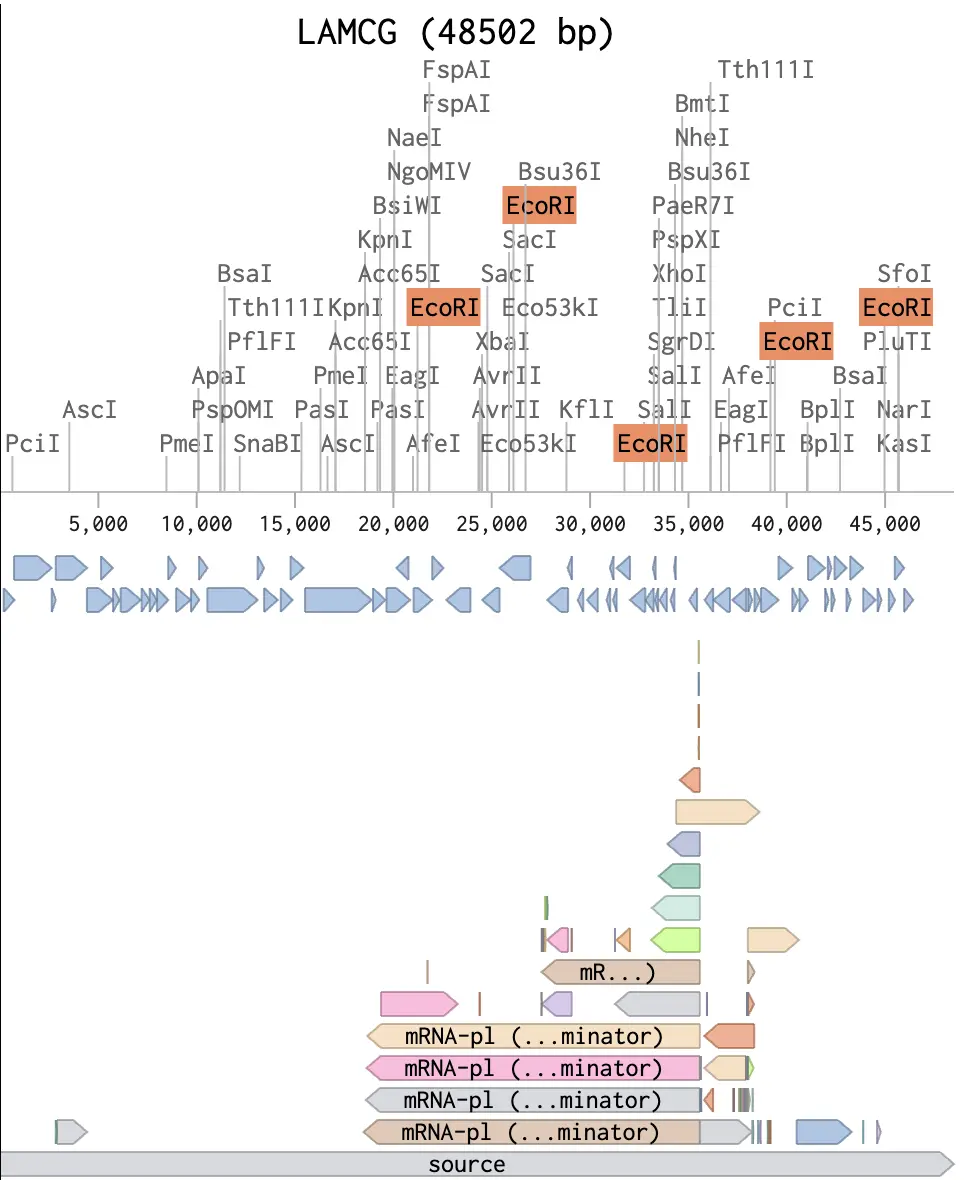
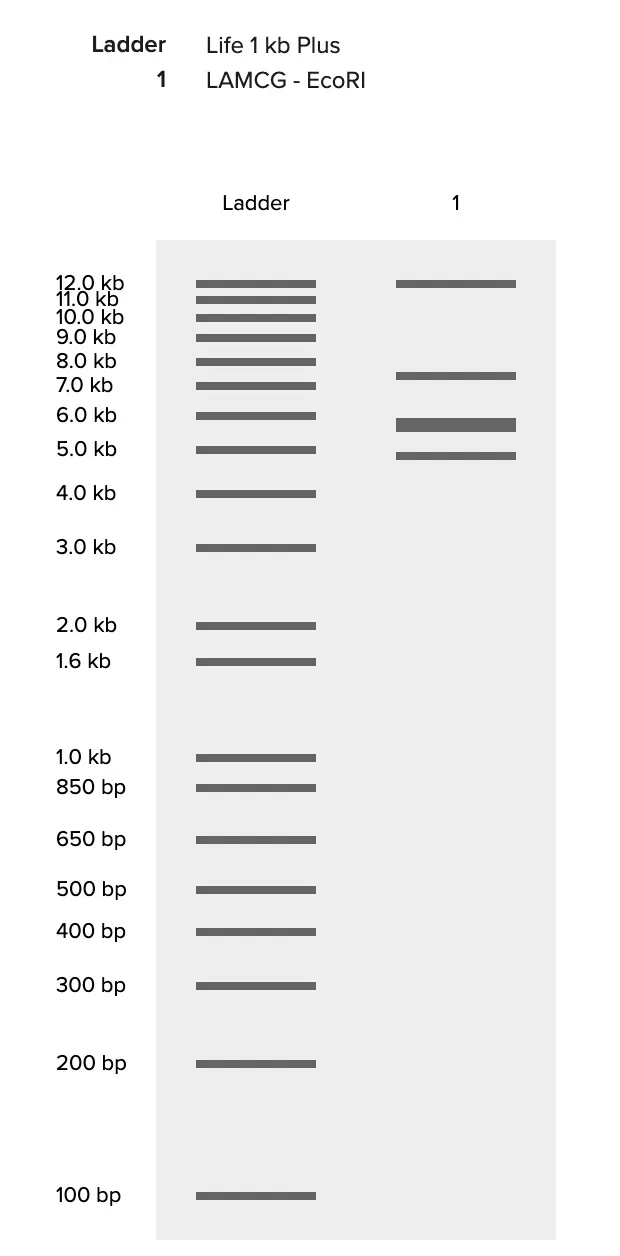
I created a Benchling account, imported the Lambda phage genome (GenBank J02459, ~48.5 kb), and ran restriction simulations for all seven enzymes. Benchling calculates cut sites and spits out the expected fragment sizes for each digest, which is really all you need to start planning a gel layout.
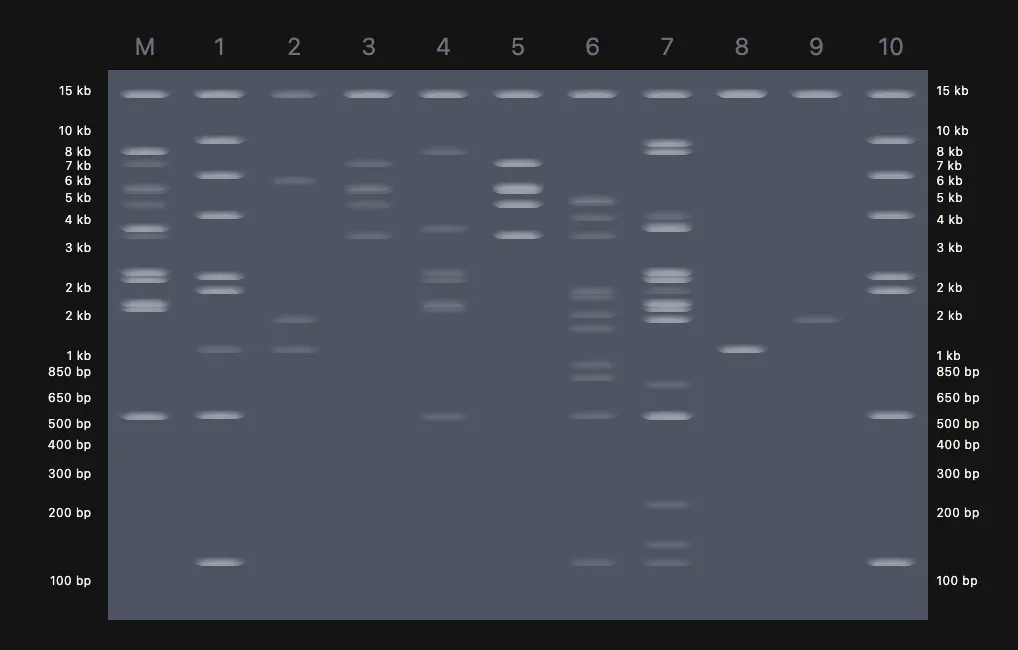
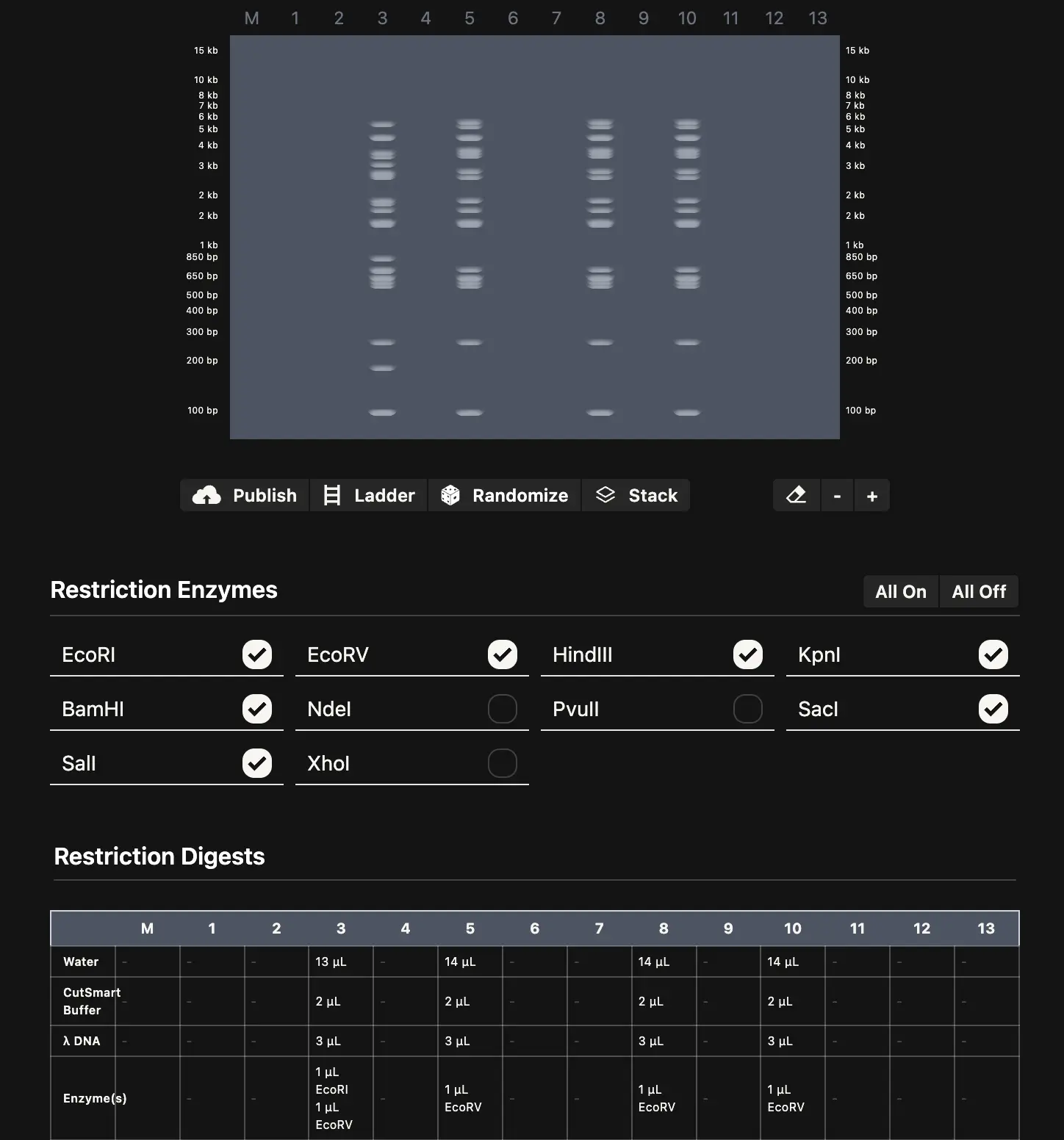
The design side is where it gets interesting. Paul Vanouse’s Latent Figure Protocol uses the natural variation in fragment sizes across different enzyme digests to compose images — the biology does the art. I used Ronan’s gel simulation tool to quickly preview different lane arrangements without re-running everything in Benchling each time, which saved a lot of back-and-forth. The goal was to pick an enzyme combination and lane order where the resulting band pattern, viewed across lanes, suggests a recognizable shape.
Expected fragment sizes:
• EcoRI: 21,226 / 7,421 / 5,804 / 5,643 / 4,878 / 3,530 bp (6 fragments)
• HindIII: 23,130 / 9,416 / 6,557 / 4,361 / 2,322 / 2,027 / 564 / 125 bp (8 fragments)
• BamHI: 16,841 / 7,233 / 6,770 / 6,527 / 5,626 / 5,505 bp (6 fragments)
• KpnI: 6 fragments ranging from ~1,400 to ~14,000 bp
• EcoRV: Multiple fragments across several cut sites
• SacI: ~4 fragments
• SalI: 3 large fragments (only 2 cut sites in Lambda)
Here are some screenshots of the process:
Part 3: DNA Design Challenge
3.1. Choose your protein: Allophycocyanin (APC)
I picked Allophycocyanin (APC) — a deep blue-green light-harvesting protein found in cyanobacteria and red algae. It absorbs at ~652 nm and emits at ~660 nm, it looks striking, and it has an actually interesting backstory: cyanobacteria expressing APC are responsible for a huge chunk of oceanic nitrogen fixation, making them quietly foundational to the global food supply. Spirulina, the supplement, is loaded with phycobiliproteins including APC. It also sees real use as a fluorescent label in flow cytometry. Visually interesting, agriculturally relevant, well-documented — easy choice.
Protein sequence (UniProt P00299 | APC_ANASP, alpha chain, Anabaena sp. PCC 7120):
The central dogma runs DNA → RNA → protein. Reverse translation works backwards from the amino acid sequence to infer a plausible DNA sequence. The wrinkle is that the genetic code is degenerate — most amino acids are encoded by multiple codons — so there’s no single “correct” reverse translation, just many valid options. The native apcA gene sequence from Anabaena sp. (NCBI Gene ID: 1108771) is one of them:
ATGAGTGTTACTAAATCTATTGTTAATGCAGCAGATAAGCGTTCGTATGTTCTTACGTACGTTGCAGGTGGCACGCAGATGCCTTATGAACAAATTTCTCAGCTGATTTCGGAGAGTGATGGCTTGCAAGGCGCTGTCATAGAAGCTGCCATCAGCCAGCTAGATACGTTCAACTCGAGCCGCTTGGCCGCCGCAATCAACGGCAAACTTAACCGTCGCAATGCAGCAGCTCAGAAGATCCGTGATACTGAAAGTGTATACAATCAACTCGGCGAACCTCAAAACAAAAAGATTGCTTCGGCTTTGAGCCTGTTCAACTCTGGCGAACCTGCTCAGCTCCTTGCCGAACATCTTCTCCCGAATGCTCAGACGTCTGTTACCGAAAGTCTTGCAGCTGCTTTACGTCAATATATCCTTGCACATCAAGCAGCATATGTTCAGAAGATGGAA
3.3. Codon optimization
Different organisms have strong preferences for which synonymous codons they actually use — codon usage bias. A codon that’s common in cyanobacteria might be rare in human cells, meaning the ribosome stalls, makes errors, or just produces less protein. Swapping in codons the host organism prefers dramatically improves yield and accuracy. It’s one of those steps that’s easy to skip and consistently costs you later.
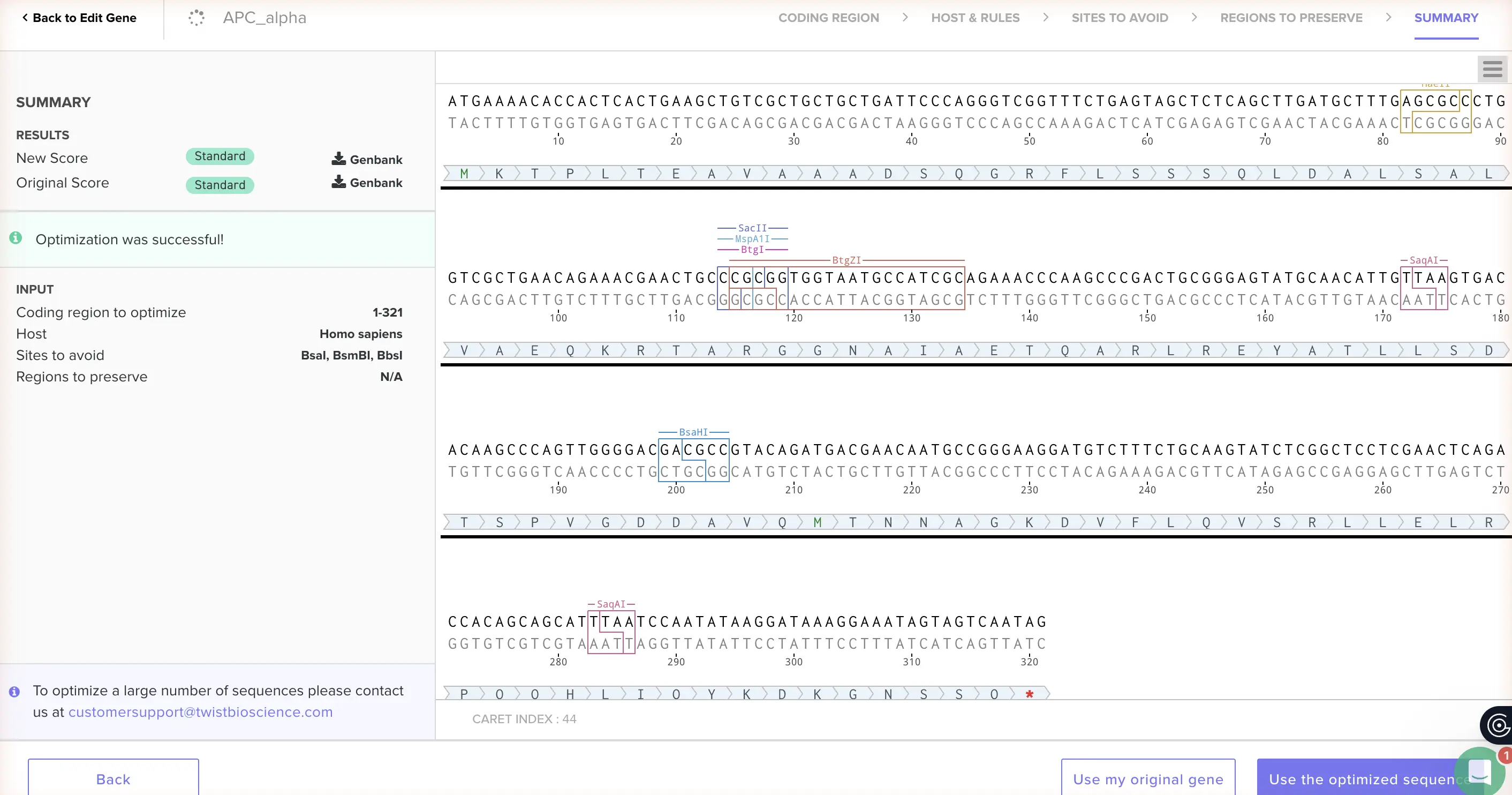
I optimized for human cells because the interesting downstream applications for APC — fluorescent reporter in mammalian cell biology, diagnostic tools, potential therapeutic use — all live in that space. I used the Twist Bioscience Codon Optimization Tool, with BsaI, BsmBI, and BbsI recognition sites removed as required.
Human-optimized APC alpha sequence:
ATGAGTGTGACCAAGTCCATCGTGAATGCAGCTGACAAGCGCTCCTACGTGCTGACCTACGTGGCTGGCGGCACCCAGATGCCCTACGAGCAGATCTCCCAGCTGATCTCCGAGAGCGACGGCCTGCAGGGCGCTGTGATCGAGGCAGCCATCTCCCAGCTGGACACCTTTAACTCTAGCCGCCTGGCCGCCGCCATCAACGGCAAGCTGAACCGGCGCAATGCCGCCGCCCAGAAGATCCGGGACACCGAGTCCGTGTACAACCAGCTGGGCGAGCCCCAGAACAAGAAGATCGCCTCCGCCCTGAGCCTGTTCAACAGCGGCGAGCCAGCCCAGCTGCTGGCCGAGCACCTGCTGCCCAACGCCCAGACCTCTGTGACCGAGAGCCTGGCCGCCGCCCTGCGGCAGTACATCCTGGCACACCAGGCCGCCTACGTGCAGAAGATGGAG
3.4. Your have a ssequence! Now what?
Two main routes: put it in a cell, or skip the cells entirely.
Cell-based (in vivo):
Clone the optimized sequence into an expression vector (exactly what we’re building in Part 4), transform into E. coli, and let the bacteria do the work. RNA polymerase transcribes the gene into mRNA; ribosomes translate the mRNA into the amino acid chain; the chain folds into APC. Harvest by lysing the cells and purifying via the His-tag. One catch with APC specifically: the protein needs its chromophore (phycocyanobilin) to fluoresce, which requires co-expressing the biosynthetic enzymes HO1 and PcyA — otherwise you get a colorless apoprotein.
Cell-free (in vitro):
Add the DNA (or mRNA directly) to a cell extract containing ribosomes, tRNA, RNA polymerase, and energy sources — transcription and translation happen in a tube. Faster to set up, works for proteins that are toxic to bacteria, and useful for rapid prototyping. Less scalable for large quantities, but often the better choice early in a project.
3.5. How does it work in nature/biological systems
The information flows one way: DNA gets transcribed into mRNA (every T becomes a U, otherwise same sequence as the coding strand), and the ribosome reads the mRNA in triplet codons, adding one amino acid per codon. AUG = Met = start. Three codons signal stop. For APC alpha: 144 codons, 432 nucleotides, one 144-amino acid protein that folds and binds its chromophore to become a functional light-harvesting unit.
One of the more elegant tricks in molecular biology: a single stretch of DNA can encode multiple different proteins. In eukaryotes, alternative splicing swaps exons in and out. In phages like MS2, overlapping reading frames squeeze two completely different proteins out of the same nucleotides just by shifting where the ribosome starts reading. Evolution is efficient.
Part 4: Prepare a Twist DNA Synthesis Order
4.1 Accounts
Created accounts at benchling.com and twist-bioscience.com. Benchling for design and annotation; Twist for ordering the synthesized construct.
4.2 Expression Cassette
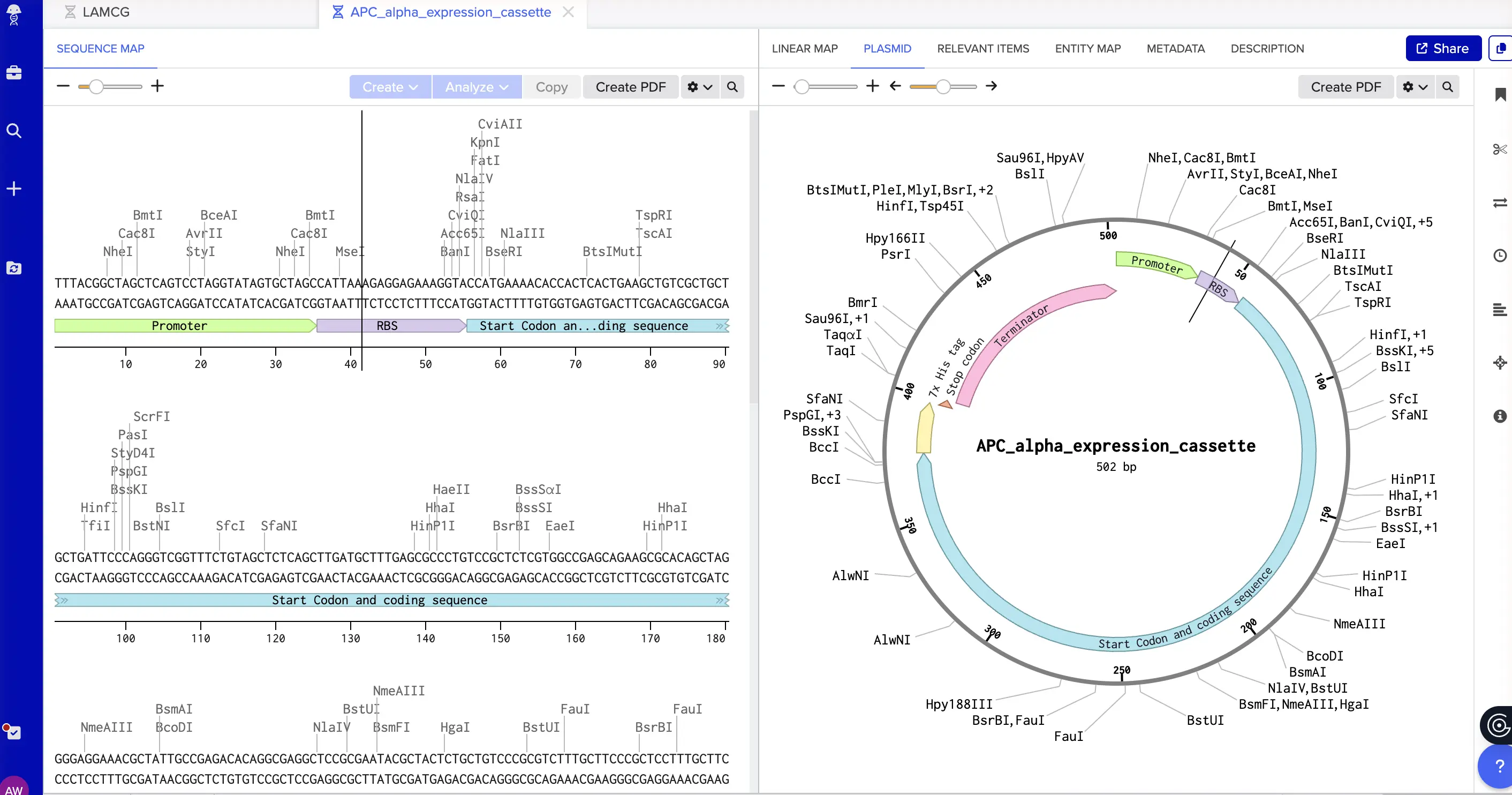
Built the cassette in Benchling as a new linear DNA sequence, annotating each element as I pasted it in. The APC coding sequence replaces sfGFP. Structure:
Promoter (BBa_J23106)
TTTACGGCTAGCTCAGTCCTAGGTATAGTGCTAGC
Constitutive promoter — drives transcription constantly, no inducer needed.
RBS (BBa_B0034 + spacers)
CATTAAAGAGGAGAAAGGTACC
Positions the ribosome for efficient translation initiation.
Start Codon
ATG
Begin.
Coding Sequence (APC alpha, human-optimized)
[446 bp — see Part 3.3]
The codon-optimized APC alpha subunit.
7x His Tag
CATCACCATCACCATCATCAC
Purification handle. Lets you pull the protein out of cell lysate with nickel-affinity chromatography.
Stop Codon
TAA
End.
Terminator (BBa_B0015)
CCAGGCATCAAATAAAACGAAAGGCTCAGTCGAAAGACTGGGCCTTTCGTTTTATCTGTTGTTTGTCGGTGAACGCTCTCTACTAGAGTCACACTGGCTCACCTTCGGGTGGGCCTTTCTGCGTTTATA
Tells RNA polymerase to stop. Prevents transcriptional read-through into whatever’s downstream.
Verified the full cassette, confirmed all annotations are in place, and downloaded the FASTA file.
4.3–4.6 Twist Configuration
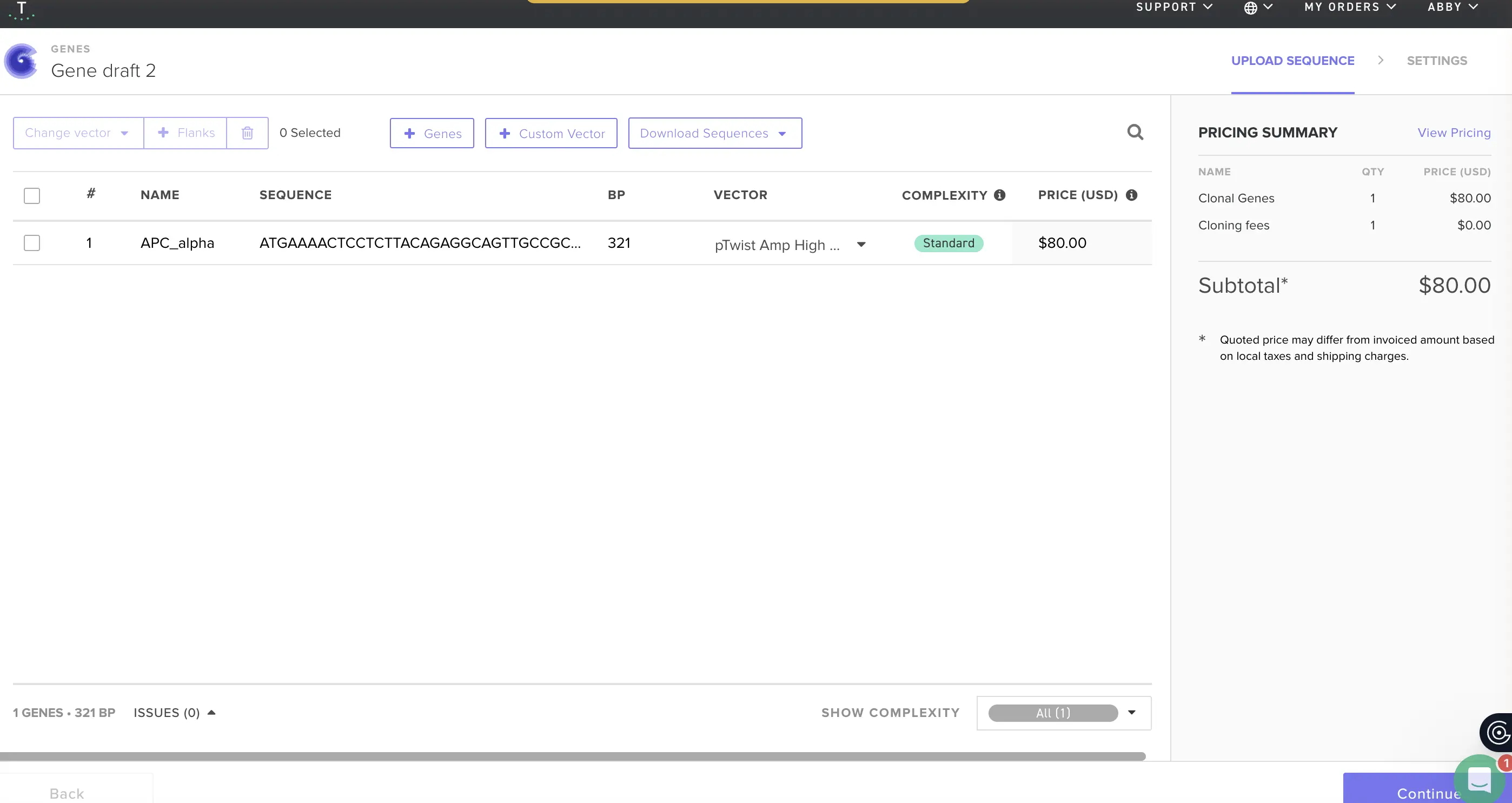
On Twist: Genes → Clonal Genes. Clonal genes arrive as circular plasmid DNA ready for direct transformation into E. coli, which historically saves 1–2 weeks versus gene fragments that need an additional assembly step. Worth choosing unless you have a specific reason not to.
Uploaded the FASTA via Nucleotide Sequence upload. For the backbone, I selected pTwist Amp High Copy: ampicillin resistance for selection, high-copy ColE1 origin for good plasmid yield, and a compatible cloning site. Downloaded the full construct as a GenBank file, then imported it back into Benchling. That’s the complete plasmid — pTwist-Amp-APC-alpha — ready for transformation.
Part 5: DNA Read/Write/Edit
5.1. DNA Read
(i) What DNA would you want to sequence and why?
Agricultural soil microbiomes — specifically comparing microbial community composition and functional gene content between conventional monoculture fields and regenerative/polyculture farms. The soil microbiome drives nitrogen cycling, carbon sequestration, disease suppression, and plant-growth promotion, but most of these organisms can’t be cultured in a lab. Metagenomics lets you read the full genetic blueprint of the entire community without culturing anything. Applied to agriculture, it could identify microbial indicators of soil health, track how farming practices shift communities over time, and pinpoint which organisms are responsible for beneficial traits worth protecting or enhancing.
(ii) In lecture, a variety of sequencing technologies were mentioned. What technology or technologies would you use to perform sequencing on your DNA and why?
Oxford Nanopore (MinION). Long reads (10–50 kb average, ultra-long reads >100 kb) are essential for metagenomic assembly — short reads from second-gen platforms struggle to resolve closely related strains or span repetitive regions. The MinION is also portable enough to bring to the field, enabling real-time soil monitoring without shipping samples to a sequencing center.
Generation: Third-generation. Sequences single native molecules in real time, no PCR amplification required, and can directly detect base modifications like methylation.
Sample prep:
• DNA extraction from soil (bead-beating + column purification to remove humic acids that inhibit downstream enzymes)
• Optional size selection to enrich for long fragments
• End repair + dA-tailing
• Ligation of ONT sequencing adapters (which carry the motor protein that threads DNA through the pore)
• Load onto flow cell
Base calling:
A voltage drives ionic current through protein nanopores in a synthetic membrane. As each DNA strand is threaded through by the motor protein, different bases block the current in characteristic ways. The resulting current trace is converted to sequence by a neural network (Dorado/Guppy). Output: FASTQ files with long reads and per-base quality scores, assembled into contigs for taxonomic and functional annotation.
5.2. DNA Write
(i) What DNA would you want to sythesize and why?
A synthetic nitrogen fixation cassette based on the nif gene cluster from Azotobacter vinelandii, for expression in plant chloroplasts. Nitrogen fertilizer is one of the largest agricultural inputs globally and a major source of greenhouse gas emissions and water pollution. Legumes solve this problem by hosting nitrogen-fixing rhizobia in root nodules — if staple crops like wheat or maize could do the same, it would be a massive deal for food security and sustainability. Chloroplasts are a logical target because they’re descended from cyanobacteria, have their own gene expression machinery, and maintain a low-oxygen environment that nitrogenase needs.
For a proof-of-concept, I’d start with the core nitrogenase structural genes: nifH (~900 bp), nifD (~1,600 bp), and nifK (~1,500 bp), codon-optimized for Arabidopsis chloroplast expression, plus chloroplast transit peptides and a co-expressed oxygen-protection system (bacterial hemoglobin VHb from Vitreoscilla, which scavenges oxygen to protect the notoriously O₂-sensitive nitrogenase).
(ii) What technology or technologies would you use to perform this DNA sythesis and why?
Twist uses silicon microarray chips to synthesize thousands of oligonucleotides in parallel at low cost per base, then assembles them into full-length genes. It’s the right tool for multi-kilobase constructs where accuracy matters.
Essential steps:
• Design + codon optimization (removing restriction sites, repeats, problematic secondary structures)
• Phosphoramidite chemistry: sequential base addition via coupling, capping, oxidation, deprotection cycles
• Synthesis of overlapping ~200 bp oligo fragments covering each gene
• Assembly PCR or Gibson Assembly to join fragments into full-length genes
• Sequence verification by Sanger sequencing
• Delivery as sequence-verified clonal genes
Limitations: practically capped at ~10 kb per construct with high accuracy, so the full 24 kb nif cluster needs to be split across multiple orders and assembled. Error rates (~1 per 1,000 bp) mean sequence verification isn’t optional. Repetitive sequences and extreme GC content remain genuinely hard. Turnaround is 1–3 weeks, which slows down design-test cycles — though costs have dropped enough that this is no longer the bottleneck it once was.
5.3. DNA Edit
(i) What DNA would you want to edit and why?
TaGW2 in wheat — a negative regulator of grain size and weight. Loss-of-function mutations produce significantly larger, heavier grains without requiring additional inputs. The same gene in rice (OsGW2) has natural loss-of-function alleles associated with increased grain width, so this is well-validated biology. Wheat is globally responsible for ~20% of human calories; a 10% increase in grain weight per plant compounds into a meaningful food security gain.
The catch: wheat is hexaploid (three ancestral genomes, six copies of every chromosome). You have to knock out all three TaGW2 homeologs simultaneously to see the full phenotype. Traditional breeding would take decades of backcrossing to stack three traits. CRISPR does it in one transformation event.
(ii) What technology or technologies would you use to perform these DNA edits and why?
CRISPR-Cas9 with multiplexed gRNAs targeting conserved sequences across the A, B, and D genome copies. The gRNA (~20 bp) base-pairs with the target site; Cas9 cuts both DNA strands; the cell repairs the break via NHEJ, which introduces small indels; indels in a coding exon cause frameshifts that knock out the protein. Three gRNAs, one transformation, all three homeologs disrupted.
Steps:
• Design 3–4 gRNAs targeting conserved exonic sequences in TaGW2-A, -B, and -D (PAM: NGG)
• Deliver as Cas9+gRNA ribonucleoprotein complexes (RNPs) via biolistic bombardment into wheat embryo cells — RNP delivery avoids foreign DNA integration, which simplifies regulatory review
• Regenerate plants from transformed tissue
• Screen by PCR + sequencing for edits in all three homeologs
• Phenotype for grain size, weight, and yield
Limitations: off-target cuts are the main concern, mitigated by careful gRNA design and high-fidelity Cas9 variants. Wheat’s genome is large (~17 Gb) and highly repetitive, making both editing and off-target assessment harder than in model plants. Transformation efficiency in wheat lags behind Arabidopsis. Regulatory status varies significantly by country — some jurisdictions treat CRISPR edits indistinguishable from natural mutations as non-GMO; others require full review regardless.
Week 3 HW: Lab Automation
Python Script for Opentrons Artwork
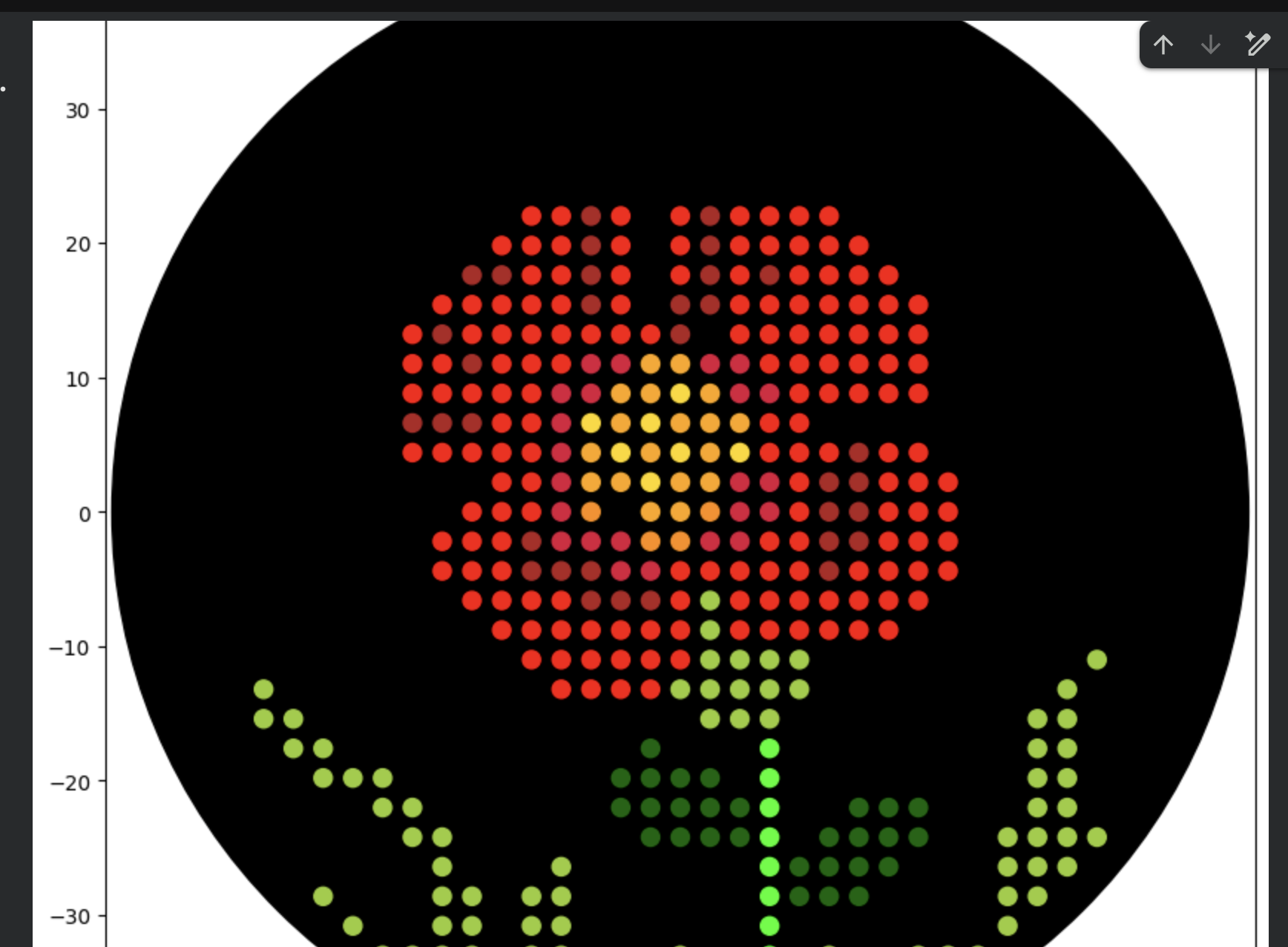
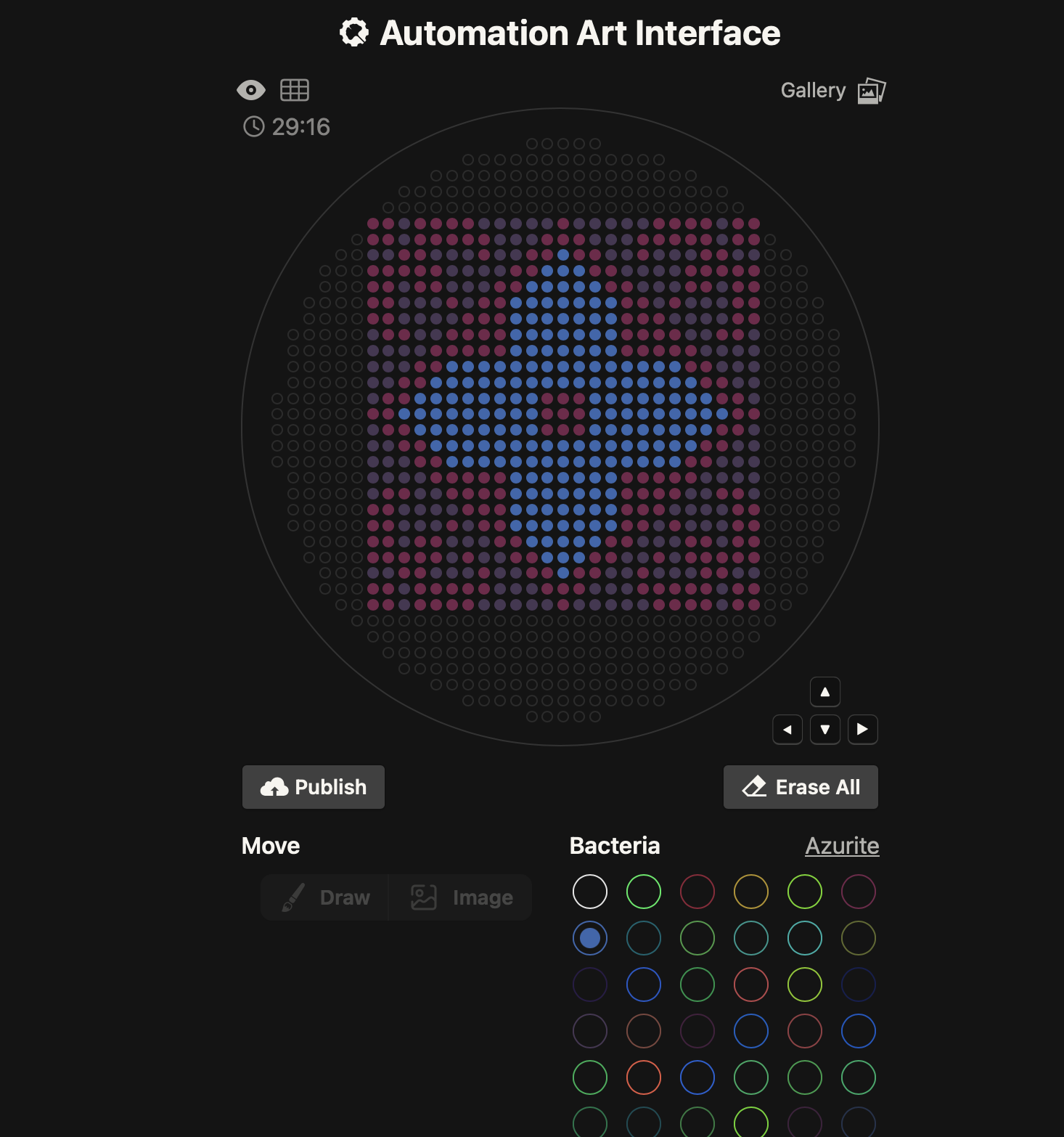
I started off drawing my picture here, with lots of different colors and going through quite a few iterations.
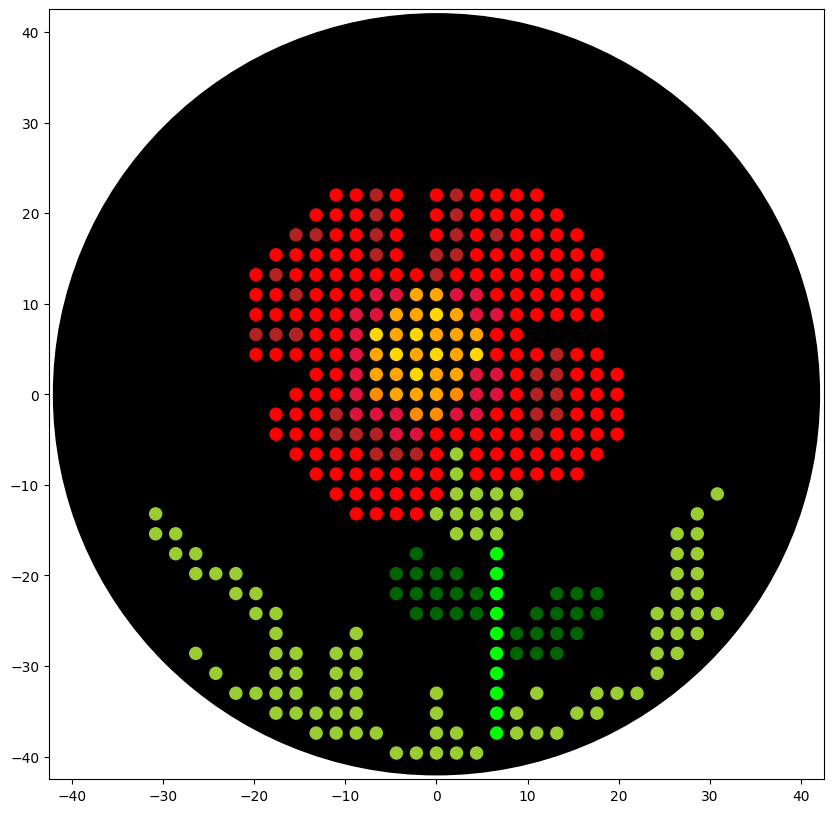
Once I exported my python code and imported it into the colab notebook, I worked through a few debugging problems, and also realized that the colors were didfferent than the ones I had chosen on the opentron simulator. This group of purple, for example, I wanted to change, so I moved the coordinates to the section that coded for red dots.
The color was looking better, but the design still wasn’t exactly like I wanted it.
There were a couple of holes in the design, so I went back to the simulator, found those points, copied the coordinates, and inserted them in the code.
Here is the finished result! A poppy!
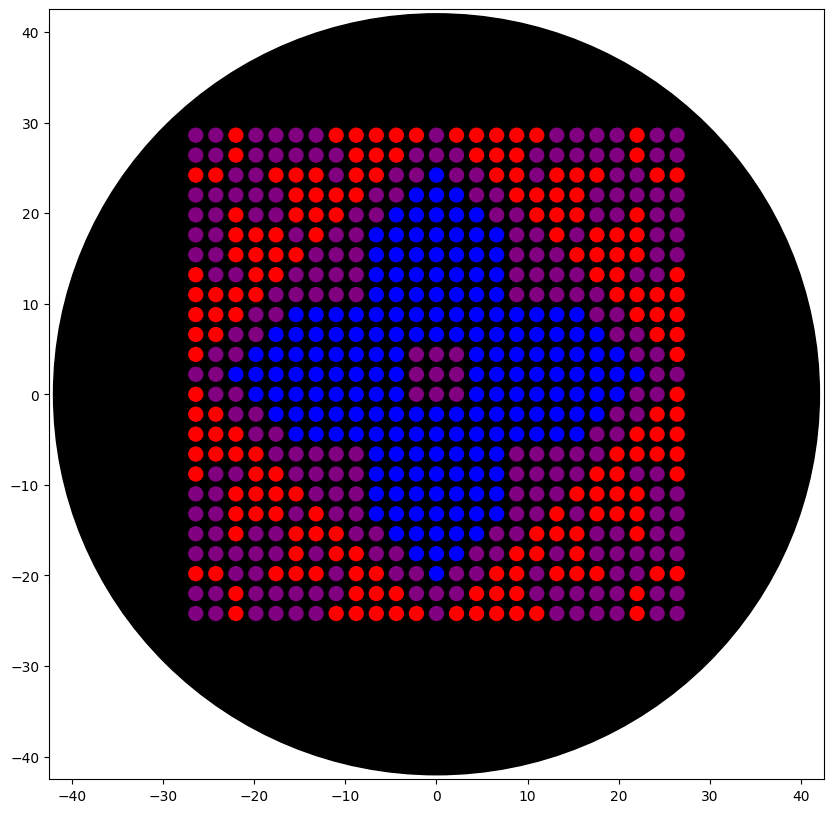
Here is my new design with purple, blue, and pink.
And the finished results after some trial and error.
Post-lab Questions
Published Paper
AssemblyTron (Bryant et al., 2023, Synthetic Biology) uses the Opentrons OT-2 to automate the full DNA assembly pipeline – PCR, Golden Gate, and homology-dependent in vivo assembly – by integrating directly with j5 design software. It performed four simultaneous four-fragment chromoprotein assemblies with accuracy comparable to manual methods, automating a step of the Design-Build-Test-Learn cycle that had no open-source solution before.
Automation Plan
My three projects share a common automation logic: screen many conditions in parallel to find an optimal biological configuration that would be impossible to identify manually.
Iron and Ferment (Sahrawi)
Opentrons dispenses varying concentrations of phytate-containing substrate (lentil or cereal extract) and lactic acid bacteria strains across a 96-well deep plate, varying pH and incubation temperature proxies per well. After fermentation, colorimetric phytate assay is run plate-wide. Output: optimal strain and condition for maximum iron bioavailability at ambient desert temperature.
Signal Loss (Bee Biosensor)
Opentrons screens engineered S. alvi biosensor circuit variants – varying promoter strength, reporter construct, and inducer concentration – across a 96-well plate to identify the configuration with highest sensitivity to target neurochemical stress markers at field-realistic concentrations.
Threshold (Soil Restoration)
Opentrons deposits engineered bacterial consortium members at systematically varied ratios and densities across a plate containing soil extract. Bioluminescence coherence is read over time as a proxy for synchronization crossing threshold. Nitrogen cycling and phosphate solubilization are measured per well to confirm metabolic output.
Final Project Ideas
THRESHOLD
A synthetic microbial inoculant designed to push collapsed soil ecosystems past the reorganization threshold and into a new stable state
Proposal:
Desertified and agriculturally degraded soils do not recover spontaneously even when external pressures are removed. The soil microbial community, which drives nutrient cycling and aggregate structure, collapses past a tipping point and locks into a degraded stable state. This project proposes engineering a synthetic microbial consortium that uses quorum sensing-coupled genetic oscillator circuits to generate coordinated metabolic activity above a critical cell density threshold, with the aim of pushing a collapsed soil system into a new functional stable state. The consortium additionally carries out soil-relevant functions: nitrogen fixation, phosphate solubilization, and extracellular polysaccharide production for soil aggregate rebuilding.
Background:
Many ecosystems have multiple stable states separated by thresholds, and once a system crosses into a degraded state, positive feedbacks maintain it there even after the original stressor is removed (Scheffer et al., 2001, Nature). Bardgett and van der Putten (2014, Nature) showed that collapsed microbial networks fail to reorganize not because species are absent but because coupling between community members is insufficient to generate coordinated metabolic output. The proposed mechanism draws on the Kuramoto model (1984), which describes how coupled oscillators synchronize suddenly above a critical coupling strength. Panarchy theory (Holling, 2001, Ecosystems) describes an equivalent transition in ecosystem dynamics: a collapsed system in the reorganization phase can shift into a new growth phase if sufficient connectivity is present to seed it. The oscillator circuit follows the dual-feedback activator-repressor architecture of Stricker et al. (2008, Nature). Inoculant density controls coupling strength, meaning the threshold can be approached and crossed in a controlled and measurable way across different soil conditions.
Output:
A characterized synthetic microbial consortium inoculant, validated in controlled degraded soil microcosms. Delivered as a stabilized, storable preparation (lyophilized or encapsulated) suitable for application to desertified or post-agricultural soils. Accompanied by a protocol for determining the minimum effective inoculant density for a given soil condition. The primary scientific output is the identification and mapping of the reorganization threshold as a measurable, targetable parameter in soil restoration practice.
Automation:
Opentrons screens combinatorial consortium compositions across a 96-well plate, varying strain ratios, inoculant densities, and soil extract conditions. Readouts include nitrogen cycling activity, phosphate availability, and bioluminescence phase coherence as a proxy for synchronization. This identifies the minimum consortium composition and density needed to cross the reorganization threshold in a given soil type before committing to larger scale application.
SIGNAL LOSS
An engineered gut biosensor to detect neurochemical disruption of waggle dance communication in honey bee colonies under pesticide stress
Proposal:
The waggle dance is the primary mechanism by which honey bee foragers communicate the location and quality of food sources to recruits. Its fidelity depends on specific neurochemical states: octopamine encodes food value into dance parameters, and dopamine mediates the motivation to initiate dancing. Sublethal neonicotinoid exposure disrupts acetylcholine signaling in the bee brain, reducing waggle dance circuit production by up to tenfold at field-realistic doses (Eiri and Nieh, 2012, Journal of Experimental Biology). This project proposes engineering a bacterial biosensor into the native bee gut microbiome that detects disruption of these neurochemical signals and reports noninvasively through fecal output – a monitoring tool that provides early warning of communication breakdown in managed colonies before behavioral decline is visible at the colony level.
Background:
Octopamine signaling encodes reward value of a food source and directly modulates dance vigor and duration. Dopamine levels in forager brains increase transiently at dance initiation and decline at its end, facilitating encoding of food source properties during the dance. Neonicotinoids target nicotinic acetylcholine receptors expressed in brain areas responsible for mechanosensory processing, olfactory integration, and memory, disrupting the circuits that encode waggle dance information. The feasibility of noninvasive gut-based biosensing was established by Chhun et al. (2024, PLOS Biology), who engineered Snodgrassella alvi, a core bee gut symbiont, to express a fluorescent reporter readable from fecal samples without sacrificing the bee. This project extends that framework by engineering S. alvi to detect markers of neurochemical stress appearing in gut tissue under neonicotinoid exposure and report their concentration via colorimetric fecal output. A 2023 Science paper (Dong et al.) showed waggle dance fidelity is partly socially learned, meaning impaired dancers produce degraded dances that naive bees then learn from, compounding disruption across cohorts and making early individual-level detection more valuable than waiting for colony-level signals.
Output: An engineered S. alvi strain carrying a biosensor circuit responsive to markers of neonicotinoid-induced neurochemical stress, validated in controlled pesticide exposure experiments in laboratory colonies. Delivered as a standardized inoculant introducible to managed colonies. Fecal readout is colorimetric and requires no laboratory equipment, making it usable by beekeepers in the field.
Automation: Opentrons screens biosensor circuit variants across a 96-well plate, testing promoter strengths, reporter constructs, and inducer concentrations to identify the circuit configuration with highest sensitivity and lowest background in the relevant concentration range of the target metabolites.
IRON AND FERMENTATION
A low-cost fermentation system to fight iron-deficiency anemia
in the Sahrawi refugee camps, Tindouf, Algeria
Proposal:
Iron-deficiency anemia is endemic in the Sahrawi refugee camps due to near-total
reliance on humanitarian aid staples (rice, lentils, cereals) whose iron is largely
inaccessible to the body because of high phytate content. This project proposes
engineering or selecting lactic acid bacteria strains that, through fermentation,
dramatically reduce phytates and increase bioavailable iron from the exact foods
already present.
Background:
Phytates (phytic acid) bind iron and zinc in grains and legumes, blocking
absorption – a mechanism well documented by Hurrell and Egli (2010, American
Journal of Clinical Nutrition) who showed that phytate reduction can increase
iron absorption by up to tenfold. Lactic acid fermentation is one of the few
processes that degrades phytates effectively at low cost. Hotz and Gibson (2007,
Journal of Nutrition) showed that traditional fermentation practices can reduce
phytate content by 20 to 90 percent depending on substrate and strain. Certain
Lactobacillus strains also produce ascorbic acid precursors, which further boost
non-heme iron absorption. The challenge is optimizing for ambient desert
temperatures (35 to 45 degrees C) and minimal equipment, making strain selection
and protocol design critical. UNHCR nutritional assessments of the Tindouf camps
have consistently flagged anemia as a priority concern, particularly in children
under five and pregnant women.
Output:
A validated, low-cost fermentation protocol (a starter culture kit) optimized for
Sahrawi staple foods, tested for phytate reduction and iron bioavailability.
Accompanied by accessible documentation designed with and for the community.
Automation:
Opentrons screens arrays of fermentation conditions across a 96-well deep plate,
varying strain combinations, pH levels, temperature proxies, and incubation times.
Measures phytate reduction colorimetrically and maps iron bioavailability across
conditions to identify the optimal protocol for resource-constrained deployment.