Week 1 HW: Principles and Practices
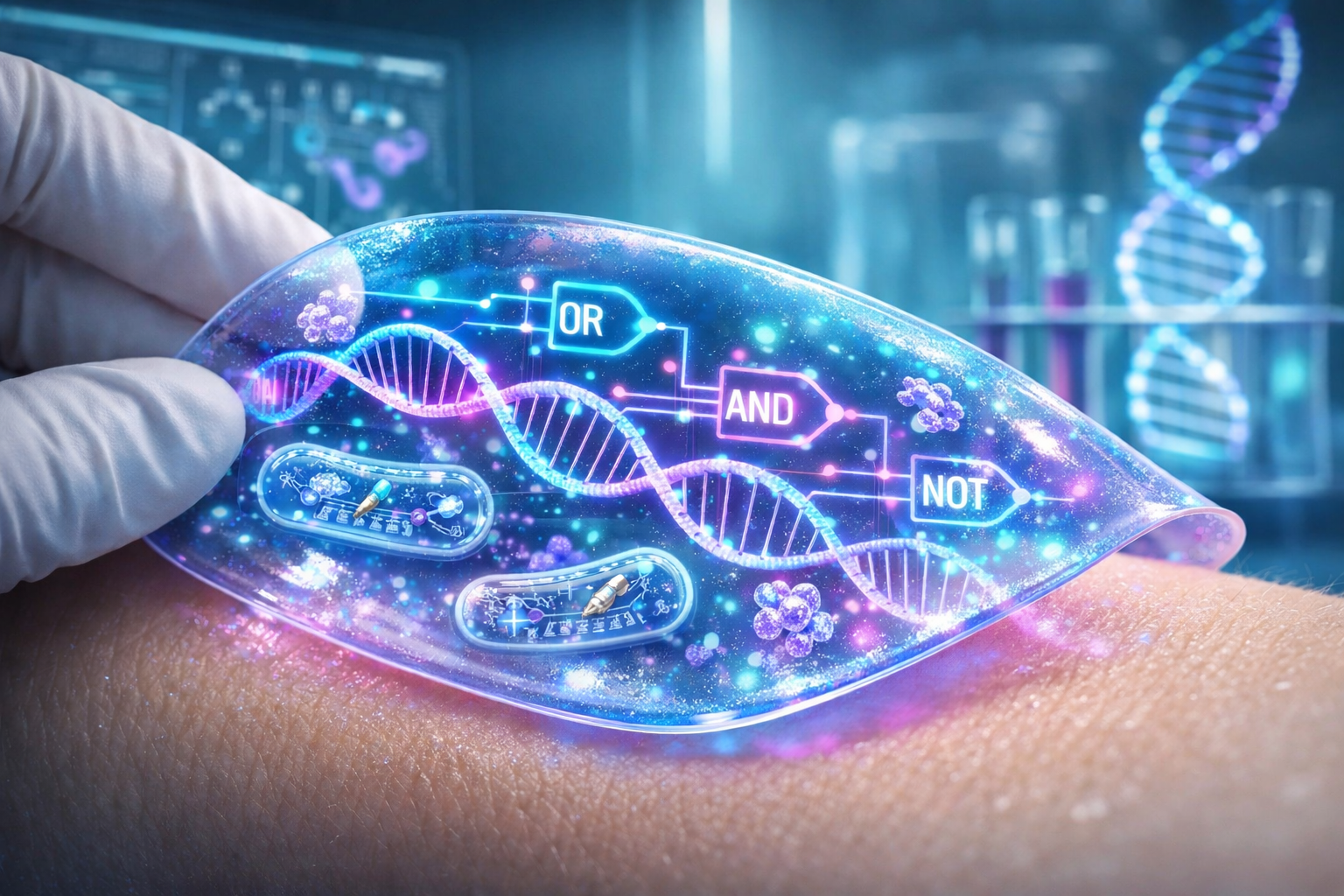
1. Biological Engineering Application:
The Concept: DermLogic
I propose a smart biopolymer hydrogel patch that is designed to treat recalcitrant cutaneous HPV.
- The Problem: Traditional treatment like Cidofir are effective but limited by poor penetration and systemic toxicity risks.
- The Solution: A patch that acts as a local manufacturing unit, producing therapeutics only when specific triggers are met.
Personal Motivation
My commitment to this project stems from watching close friends and family struggle with recalcitrant cutaneous HPV for decades. Despite enduring numerous rounds of painful cryotherapy and laser treatments, their condition remains unchanged. I am struck by the stagnation in treatment options for such a common and stubborn virus. Through this course, I want to bridge that gap by developing a localized, non-invasive solution that offers hope to those who have exhausted traditional medical paths
Learning Sandbox Goals
- Protein Design: I am really interested in learning tools like Alphafold and rosetta to design peptides that can specifically degrade the HPV-specific oncoproteins.
- Designing genetic circuits that use logic to ensure precision delivery.
- I love the idea of Living Materials that act like mini computers embedded into the biopolymer to produce the antiviral peptide on demand.
2. Governance Policy Goals:
From reading the resource material and this weeks presentations I think to ensure a technology like this to be developed ethically, here I propose three primary policy goals:
Safety & Security:
Prevent the accidental release of potent antivirals or engineered microbes out of the living material to unintended places.
- Treating patient safety as paramount. So the first trials will always be done under medical supervision.
- Making the product as inert as possible when not in use and easily biodegradable.
Equity and Autonomy:
In the longer run, the patch needs to be affordable and self-administration capable. This will reduce expensive clinic visits which currently limits access to HPV care.
- Facing the shame associated with such conditions head on and help patients feel understood and cared for. Making information public is the first step towards that.
Constructive Use:
Prevent the genetic circuit delivery system to be used by bad players to deliver harmful compounds.
- As with the fields half pipe of doom these technologies must be steered away from bad actors. But since learning to tame fire humans have managed to live with dangerous but useful things. So keeping an optimists perspective will help be a step ahead of evil.
3. Proposed Governance Action:
(Three options)
i: Cell-free Mandate:
This requires all biological machinery on peoples skin to exist in a cell free state to avoid mishap.
- Use cell free systems that come alive under the right condition.
- There should be a clear On and Off state trigger and indication that is mandatory to perform in order to use the polymer.
ii: Open Source Design Ledger:
Create a local registry of peptides used in the genetic circuits.
- Allow for a broader collaboration platform that allows various participants in the building of such smart biomaterials.
iii: Tiered access control:
Limits access to high potency therapeutics to certified labs while keeping biopolymer open-source
- Learn from existing methodologies and governance practices that deal with sensitive and potentially harmful information and build on top of them.
Current actors interested in this will be researchers who already work with antivirals but might not be native to synthetic biology tools. I would like to share MVPs with them to understand there safety concerns and whether they think my design has any flaws. Also learning about local biosafety laws during the design of the MVP will be paramount. Also health care providers and industry manufacturers of such antivirals would be good collaboration partners.
Details
4. 📊 Governance Scoring Rubric
(Scale: 1 is Best)
| Does the option: | Cell-free Mandate | Open Source Design Ledger | Tiered access control |
|---|---|---|---|
| 🛡️ Enhance Biosecurity | |||
| • By preventing incidents | 1 🥇 | 3 | 1 🥇 |
| • By helping respond | 1 🥇 | 3 | 2 |
| 🔬 Foster Lab Safety | |||
| • By preventing incident | 1 🥇 | 3 | 1 🥇 |
| • By helping respond | 1 🥇 | 3 | 2 |
| 🌿 Protect the environment | |||
| • By preventing incidents | 1 🥇 | 3 | 3 |
| • By helping respond | 2 | 3 | 3 |
| ⚙️ Other considerations | |||
| • Minimizing costs/burdens | 3 | 1 🥇 | 2 |
| • Feasibility? | 2 | 2 | 2 |
| • Not impede research | 1 🥇 | 1 🥇 | 2 |
| • Promote constructive apps | 1 🥇 | 1 🥇 | 1 🥇 |
5. Prioritization:
Thinking about the scores achieved by the proposed governance actions against this rubric I have found that the cell-free mandate should be prioritized. My learnings from this weeks class is that we should prioritize safety by design during every step of the DBTL cycle. This consecutively will allow broader open source collaboration on the biopolymer itself since harm is reduced from step 1. Throughtout the week I came up with a number of biopolymer and syn bio ideas ideas and did the governance rubric on each of them. These ideas included making a tennis string out of proteins, keratin based insulation material that has mold prevention immobilized enzymes, recreating breast milk to replace inadequate infant formula, using synbio to clearn the worlds waters through living synbio mats, programmable cambium. This weeks reframing taught me that this technology is still at its nascent stage and needs careful administration into crucial gaps in human requirements. Every thing we do changes the perception of syn bio to people. So we dont just want to present it as a novelty but an essential tool for the future of life. We must not only think about doing things that are possible but do them while keeping saftey, environment and access a priority. As much as we would like to replace petrochemicals with biopolymers straightaway there use is currently highly specialised. Also using it to solve a perosonally inspired project will make sure that I keep safety and access paramount in my mind. And through every stage of the project, design the safety before hand and not treat it as an impediment just to jump regulatory hoops. The designers of the biology must also be the designers of safety around that biology. Also I would say the trade off of making tiered access could cause some friction but having cell-free will make sharing this information open source more robust and possible.
Thanks to this new framework of thinking I will try to incorporate my bold claims here into practice in my project.
Week 2 Lecture Prep: Q&A
Homework Questions from Professor Jacobson:
- Nature’s machinery for copying DNA is called polymerase. What is the error rate of polymerase? How does this compare to the length of the human genome. How does biology deal with that discrepancy?
Answer:As mentioned in the slides it appears that the error rate of DNA Polymerase is $10^{6}$ meaning there will be approximately 1 error every $10^{6}$ base additions. Based on a quick search the length of the human genome seems to be around 3 billion pairs $3\times10^{9}$ bp. So based on that there should be 3000 errors per cell division. So to avoid this DNA polymerase has a built in proof reading that corrects some of these errors. Further research shows that there are additional repair mechanisms that brings the final error to one per $10^{10}$ bases. Later in a slide we also learn about the MutS Repair System found in all DNA.
- How many different ways are there to code (DNA nucleotide code) for an average human protein? In practice what are some of the reasons that all of these different codes don’t work to code for the protein of interest?
Answer: DNA nucleotide code codes for amino acids in triplet codons. Since there are four neuclotides it makes it 64 codons (4x4x4) that code for 20 amino acids. This gives each amino acid around 3 possible codon options. Since an average human protein is around 400 aa long that gives each protein $3^{400}$ possibilities of codon options for every protein. That is equal to $10^{190}$ which is more than the atoms in the universe which is $10^{80}$ . This is due to the combination of reasons. One of them being the amount of GC neuclotide pairs which make stronger bonds than AT pair. So nature needs to balance the amount of these GC pairs. Too few and the resulting structure is unstable and gets degraded and too high means excessive folding making the DNA/RNA innaccessible for the polymerases and the ribosomes. In the final slide fabrication complexity mathematically explains that biology lives at the half max of complexity where a polymer of N monomeric building blocks of Q different types has Q acheiving the half max at 20 for a polymer of length 500. Which is the same number as number of aa (20) for an average human protein size (500). So nature lives right at this balance of complexity and redundancy.
Homework Questions from Dr. LeProust:
- What’s the most commonly used method for oligo synthesis currently?
Answer: Solid-phase phospohoramidite DNA synthesis invented in 1981 by Caruthers which happens one neuclotide at a time in the 3’ to 5’ direction reverse of how nature (DNA polymerase) does it. Dr Prosts slides and Prof Jacobsons slides show some cool mechanism of removing something called the DMT group in certain neuclotide and then flooding the system with neucleiotides and thus synthesizing many parallel oligos at once. Quite remorkable . While the chemistry is the same as in 1981 its is now scaled using silicon-based microchips (like those used by Twist Bioscience) to synthesize upto 1 Million unique oligos at once much more efficiently, significantly reducing associated energy consumption and costs.
- Why is it difficult to make oligos longer than 200nt via direct synthesis?
Answer: In Phosphoramidite synthesis small inefficiencies compound so with the biological error correction mechanism even industry standard coupling efficiency of 99% becomes catastrophic over hundreds of cycles so even a 200-mer has a overall yield of $0.99^{200}$ which is approximately 13% accuracy. Plus it probably becomes very messy to control because I would assume that the momomers would wanna fold incorrectly.
- Why can’t you make a 2000bp gene via direct oligo synthesis?
Answer: Error rates would lead to multiple mutations per molecule at that scale leading to very few correct full length sequences and will also take a long time. Thus the slides recommend assembling of smaller gene fragments (around 5kb according to the slides) to reduce error and increase control.
Homework Question from George Church:
- What are the 10 essential amino acids in all animals and how does this affect your view of the “Lysine Contingency”?
Answer: The 10 essential amino acids (once we cant produce ourselves) include 9 core EAAs namely Histidine, isoleucine, leucine, lysine, methionine, phenylalanine, threonine, tryptophan and valine. Arginine is considered essential for specific species. I find it intreseting that life didnt progrzm itself to be fully self sufficient by producing them all. But then maybe thats a higher expenditure on the cellular machinery. Maybe biology evolved to produce the things only if it wasnt abundant in the environment. The Jurrassic park reference of the lysine contingency seems ridiculous since lysine is one of the 10 amino acids animals dont produce themselves sufficiently yet we are able to get them from eating meat and plants. Thus you couldnt keep the dinasours from surviving without suppliying them with lysine because just like us they had the option of getting lysine from eating other herbivores and plants or the Tourists. The slide also shows NSAA (Non-standard amino acids) that can pave the path for us to design synthetic life dependent upon different sets of amino acids. How would that change things I wonder!
Chat GPT 5.2 generated image with prompt: “Futuristic medical illustration of a smart biopolymer patch…”
*Thanks for reading!*