Week 7 — Genetic Circuits Part II: Neuromorphic Circuits
Assignment Part 1: Intracellular Artificial Neural Networks (IANNs)
- Practice NW:
High Pass
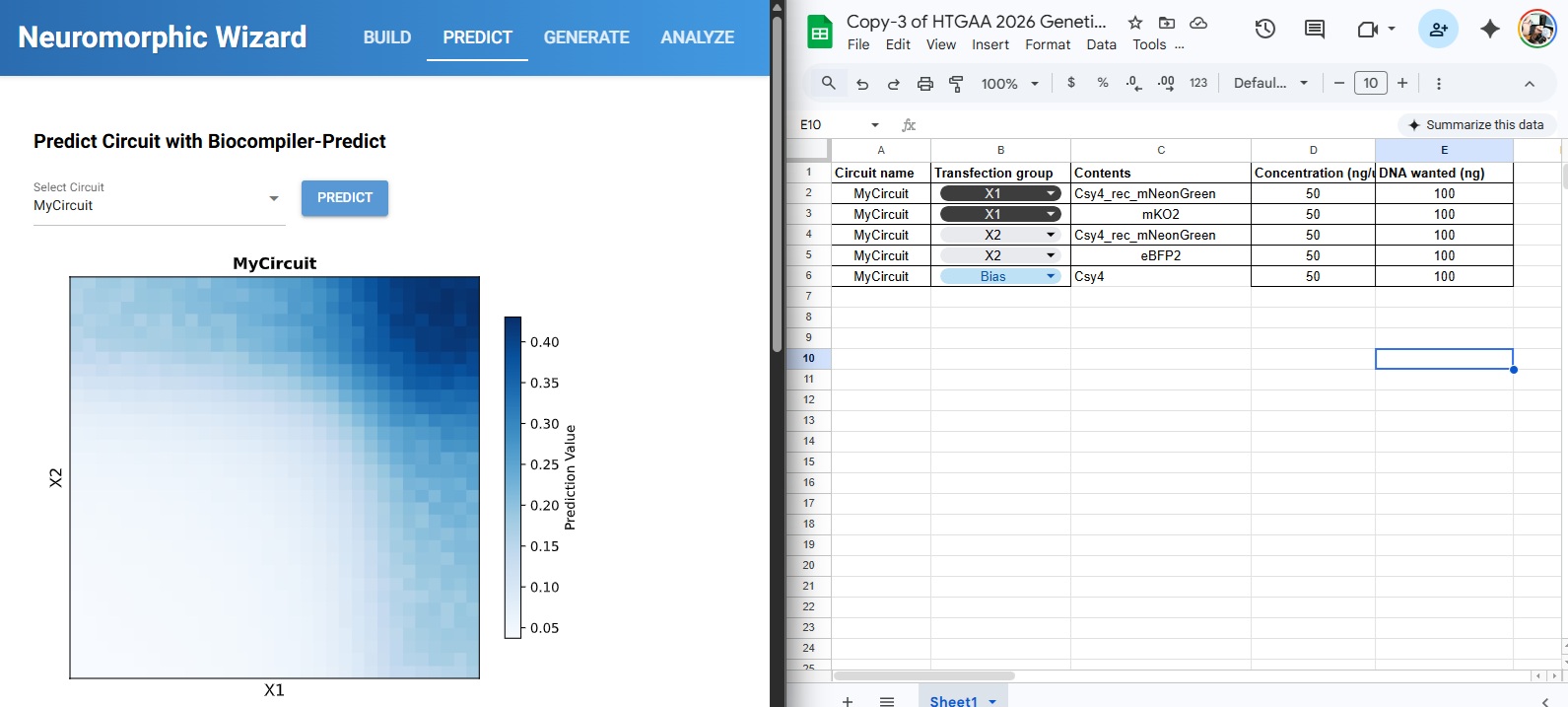
Low Pass
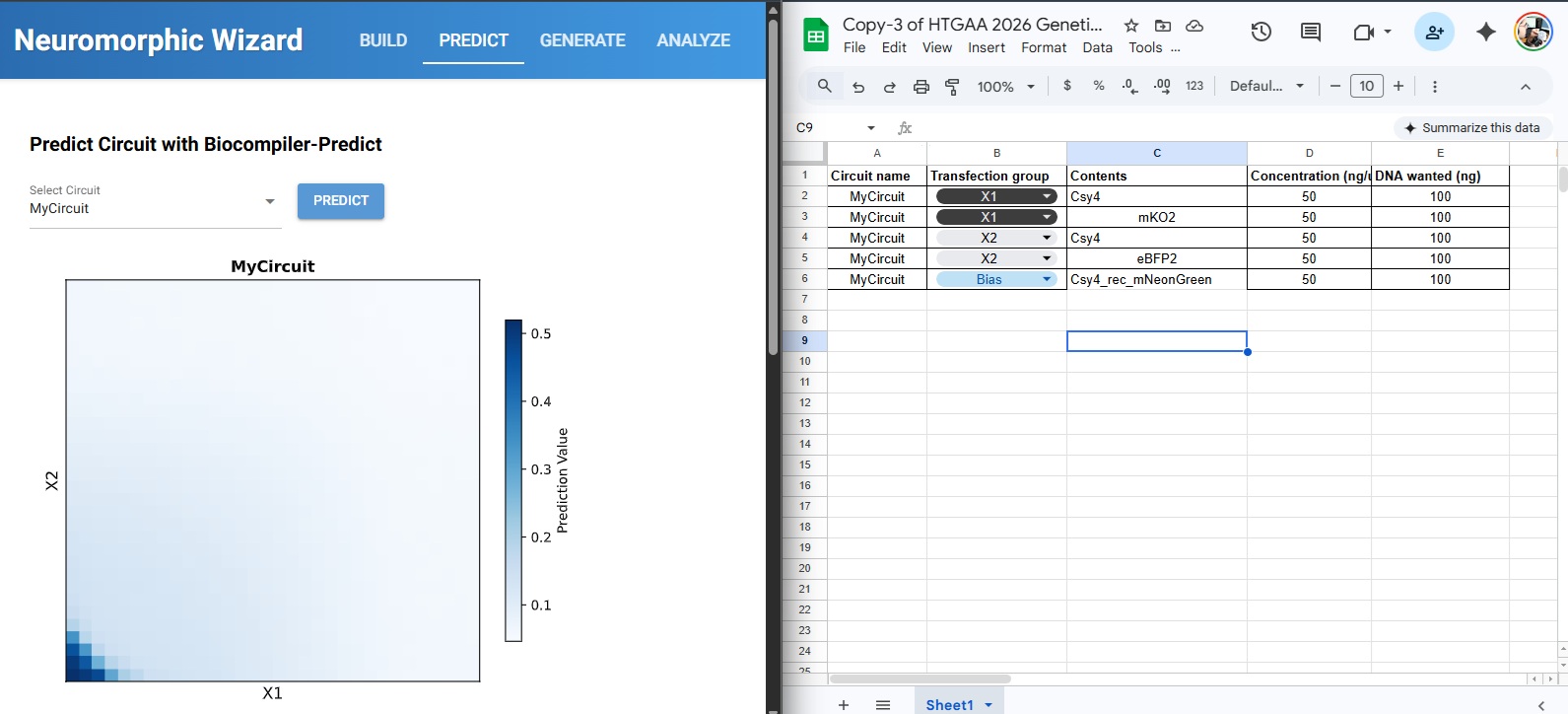
Dual Region
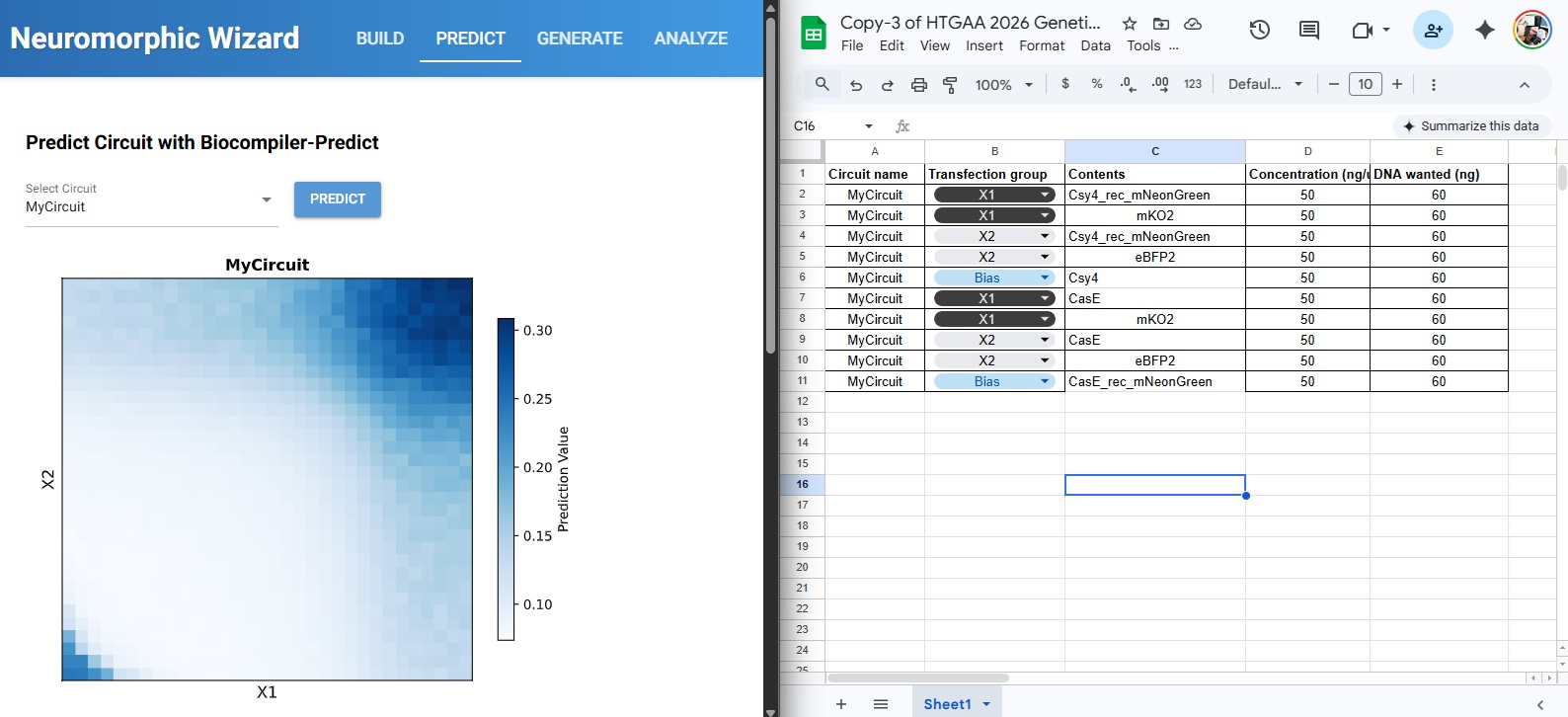
1. Advantages of IANNs over Boolean Circuits
Traditional Boolean circuits are limited to binary “True/False” logic, which struggles with the “fuzzy” nature of biological environments. IANNs provide:
- Noise Filtering: By using weighted thresholds, IANNs can ignore transient spikes (like exercise-induced miR-26) that would normally trigger a false positive in a Boolean switch.
- Analog Resolution: They allow for a graded response. In my DermLogic patch, this means the hydrogel can change density proportionally to the severity of the biomarker signal.
- Complex Pattern Recognition: IANNs can integrate multiple inputs (miR-21 AND miR-26) to make a single “calculated” decision, similar to how a neuron fires only when a specific summation of signals is reached.
2. Application: The DermLogic Subtractive Patch
- Input/Output: The inputs are miR-21 (pathology signal) and miR-26 (physical activity noise). The output is the expression of ELP hydrogel.
- Behavior: The IANN performs a subtraction (Output = miR21 - w . miR26). This ensures the patch only assembles/disassembles when the pathological signal outweighs the background noise of the user’s daily movement.
- Limitations: IANNs face “Metabolic Load” limits; running complex neural math in a cell-free system requires high concentrations of Csy4, which can deplete the resources needed for the output protein (ELP).
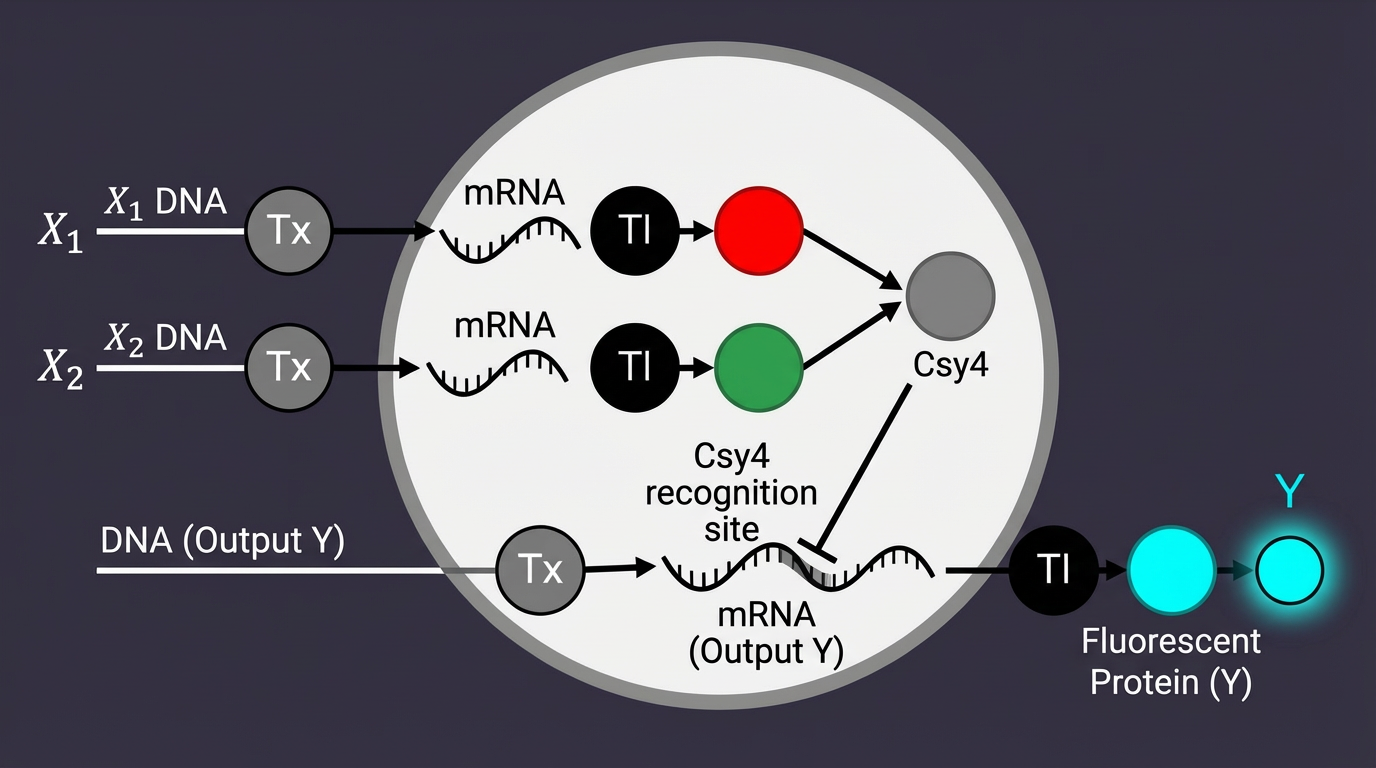
3. Draw a diagram for an intracellular multilayer perceptron where layer 1 outputs an endoribonuclease that regulates a fluorescent protein output in layer 2.
Assignment Part 2: Fungal Materials
1. Existing Fungal Materials
Examples include Mycelium-based packaging (e.g., Ecovative) and fungal leather (MycoWorks).
- Advantages: They are carbon-negative, biodegradable, and grow on agricultural waste.
- Disadvantages: They are currently slower to “manufacture” than plastics and can be sensitive to moisture, leading to premature degradation.
2. Genetic Engineering in Fungi
I would want to engineer fungi to secrete specific therapeutic enzymes upon sensing a skin pathogen.
- Why Fungi? Fungi are eukaryotes, meaning they can perform complex “post-translational modifications” (like glycosylation) that bacteria cannot. This makes them better “factories” for human-like proteins.
- Advantage over Bacteria: Fungi possess a robust secretory pathway and can form large, physical structures (mycelial mats) that serve as both the “factory” and the “bandage” simultaneously.
Assignment Part 3: First DNA Twist Order
Project Overview: Skin microRNA Receptor Patch
For this week’s assignment, I integrated my Final Project Aim 1 into the neuromorphic circuit framework. I designed a DNA construct (DL_Final_Integrated_Patch_v1) intended to function as a smart, bio-responsive interface.
1. The Design Logic (Neuromorphic Approach)
The circuit is designed to sense specific skin microRNAs (such as miR-21 or miR-26) which serve as “weighted inputs.” Unlike traditional digital logic (0 or 1), this circuit aims to emulate Intracellular Artificial Neural Networks (IANNs) by:
- Analog Sensing: Responding to varying concentrations of microRNA rather than a simple on/off state.
- Thresholding: Using the genetic architecture to trigger a response only when a specific “signature” or threshold of biomarkers is sensed.
- Material Output: Expressing ELP (Elastin-Like Polypeptide) to modulate the physical properties of the hydrogel matrix.
2. Genetic Architecture & Components
The current construct includes several key components visualized in my design:
- Promoters & RBS: Utilizing parts like J23106 and B0034 to ensure reliable baseline expression.
- Csy4 Processing: Used for RNA transcript maturation or gating to clean up the “noise” in the circuit.
- ELP Matrix: The ELP sequence allows the genetic output to be translated into a structural change in the hydrogel, effectively creating an Engineered Living Material (ELM).
Reflective Note: I am exploring how to move beyond simple Boolean gates. While the design is in its first iteration, the goal is to create a “weighted” response system where the hydrogel’s state is a direct “calculation” of the skin’s molecular environment.
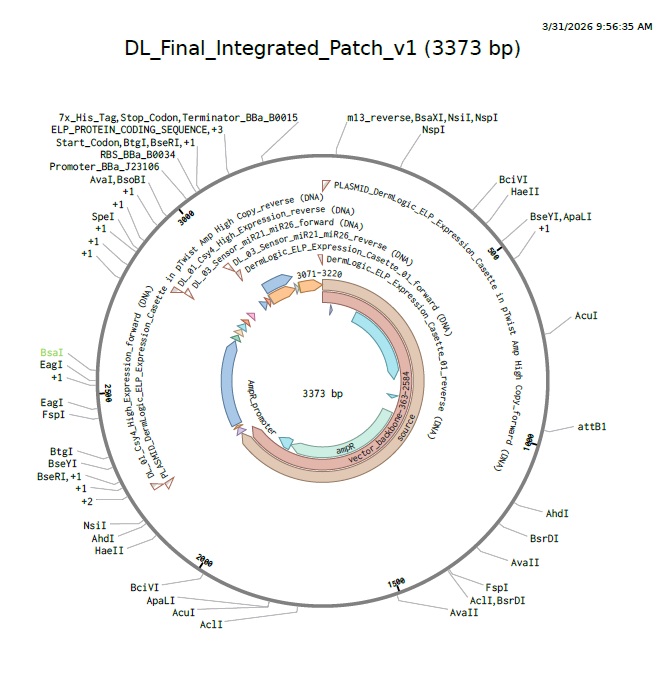
3. DNA Synthesis & Backbone Specifications
In accordance with the Week 7 Assignment Part 3 requirements, this construct is designed for synthesis in a high-efficiency vector optimized for cell-free protein expression.
| Feature | Specification |
|---|---|
| Backbone Vector | pTwist Amp High Copy |
| Selection Marker | Ampicillin (AmpR) |
| Copy Number | High |
| Total Length | 3,373 bp |
| Insert Design | DL_Final_Integrated_Patch_v1 |
4. Reflective Note: Beyond Boolean Logic
In traditional synthetic biology, sensors are often designed as simple “ON/OFF” Boolean switches. However, for a sweat-sensing patch, the biological environment is naturally “noisy”—for example, physical exercise can cause a 40-fold spike in miR-26, which would normally trigger a false positive in a standard gate.
By adopting a neuromorphic architecture, I am treating miR-21 (the signal) and miR-26 (the exercise noise) as weighted inputs to a single-layer perceptron. Utilizing the Csy4 endoribonuclease as a subtractive processor allows the circuit to perform a real-time analog calculation (Output = Signal - Noise) directly within the ELP hydrogel matrix. This ensures that the diagnostic output is a true reflection of skin pathology rather than a byproduct of the user’s physical activity.