Hypothesis: Substitution of a bacteriophage’s replisome with an orthogonal T7 replisome for continuous hypermutation directed towards stability The idea of a proposal comes from an article by Diercks et al., 2024, in which they use a very faulty replisome that induces hypermutation, in which they direct towards a very high antibiotic resistance.
Subsections of Projects
Individual Final Project
Autologous engraftment of immunoengineered hematopoietic stem cells for Env-targetting broad neutralizing antibodies
At the very end, bibliographic references, among relevant information such as sequences and their origin will be found there.
Addendum:
Some things were explained during the presentation, such as:
CCR5 being the target because people who have a malfunctioning CCR5 are just fine! So it is considerably a ‘healthy’ target.
SECTION 1: Abstract
Generating humoral immunity against HIV, particularly the difficulty of eliciting broadly neutralizing antibodies (bnAbs) through conventional vaccination remains a challenge. Current approaches rely on complex immune maturation pathways that are inefficient and often impaired in immunocompromised individuals, highlighting the need for alternative strategies. The objective here is to develop a stem cell–based immunoengineering platform capable of producing long-term, self-renewing humoral immunity by genetically programming antibody specificity. The hypothesis here is that autologous hematopoietic stem cells engineered to carry predefined anti-HIV Env bnAb heavy and light chain genes will differentiate into B-cell lineages that express functional bnAb receptors, then produce the antibodies that are predefined. The first milestone will consist of the design of a construct encoding bnAb heavy and light-chain sequences, which can be gathered from scientific literature, secondly, perform CRISPR-mediated genome editing in human CD34+ hematopoietic stem and progenitor cells, and third, evaluate differentiation into B-cell progeny and expression of the engineered receptor.
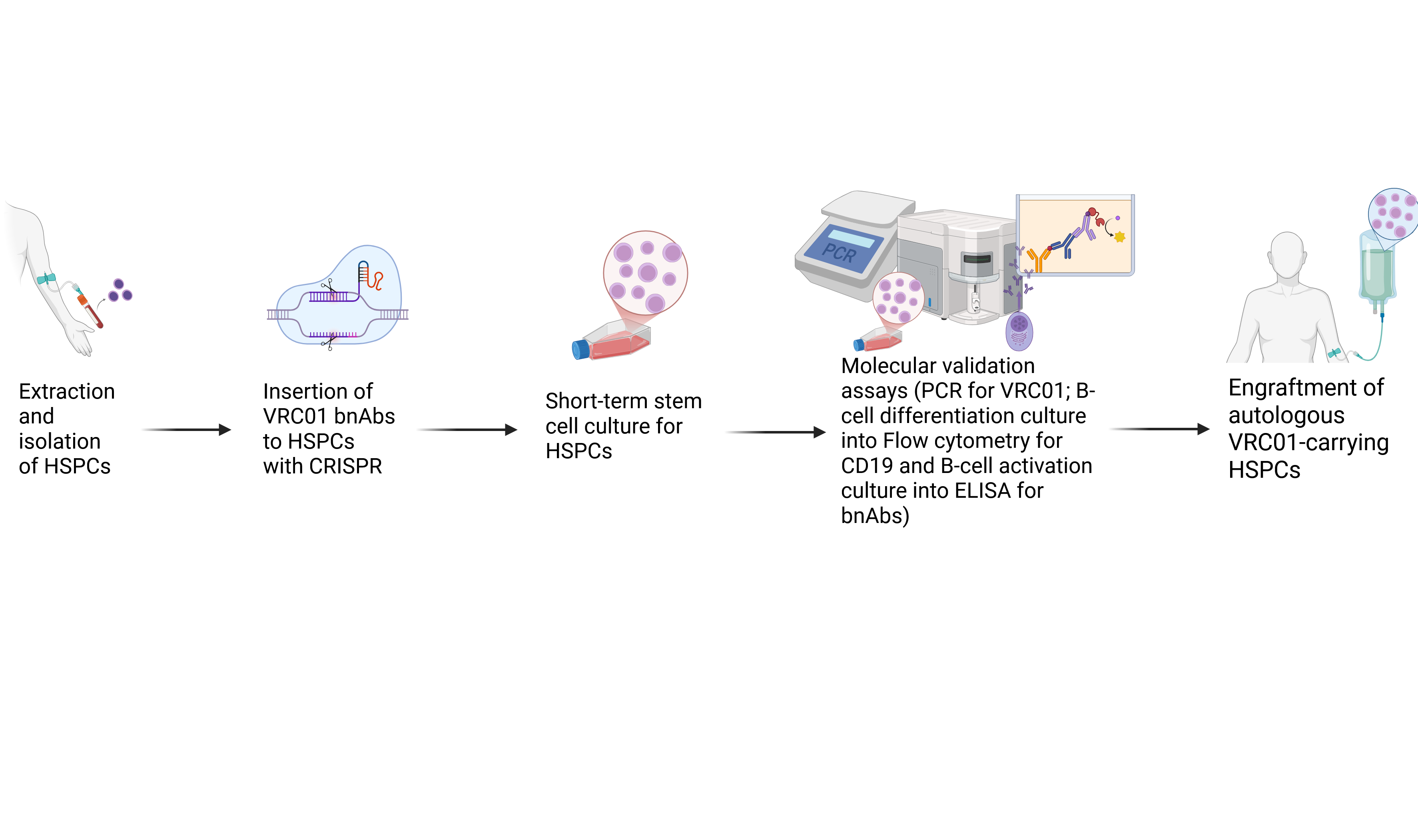
Methods will include ex vivo isolation of CD34+ HSPCs from peripheral blood, CRISPR-Cas9–based genome editing, short-term stem cell culture for HSPCs, and validation through molecular assays, sequencing, and flow cytometry to confirm integration and antigen-specific receptor expression.
SECTION 2: Project Aims
Aim 1: Experimental Aim
The first aim of my final project is to genetically engineer autologous hematopoietic stem cells to carry predefined anti-HIV Env broadly neutralizing antibody heavy and light-chain genes, so that their B-cell progeny express an HIV-specific broadly neutralizing B-cell receptor, by utilizing CRISPR-based gene editing, a DNA design for bnAb heavy and light chain insertion, ex vivo HSC culture, and differentiation and molecular validation assays.
Aim 2: Development Aim
This could shift prevention and treatment from repeated drug administration to a one-time or very infrequent treatment.
Aim 3: Visionary Aim
If fully realized, this approach would challenge the current paradigm of lifelong antiretroviral therapy by overcoming the challenge that viruses like HIV, denguevirus, and influenza has: mutations and serotypes. Essentially, this could be a universal treatment if done for each virus that has these kind of challenges.
SECTION 3: Background
Briefly summarize two peer-reviewed research citations relevant to your research (minimum four sentences).
A very relevant study by Jardine et al., (2016) shows that immunogens like eOD-GT8 can activate rare VRC01-class precursor B cells and recover their paired heavy and light chain sequences, but these cells are extremely rare and require complex maturation.
And another one, by Porteus et al., (2026), which demonstrates that CRISPR-edited HSPCs can be genetically engineered to produce B cells that secrete functional antibodies.
Explain how your project is novel or innovative. (Minimum 3 sentences.)
This is innovative because it applies CRISPR-based genome engineering of hematopoietic stem cells to directly program the production of HIV broadly neutralizing antibodies, rather than relying on immunogems to elicit them. It introduces a new approach that assures the generation of B-cells with predefined production of bnAbs that are known to neutralize HIV virions. This challenges the existing belief that protective immunity must be induced through immunogens.
SECTION 4: Experimental design, techniques, tools and technology
(I believe this comes from the homework from one of the weeks)
Please identify at least one (ideally many) aspect(s) of your project that you will measure. It could be the mass or sequence of a protein, the presence, absence, or quantity of a biomarker, etc.
The integration of the VRC01 sequence in the hematopoietic cells.
Please describe all of the elements you would like to measure, and furthermore describe how you will perform these measurements.
VRC01 sequence (bnAbs that target Env) in the hematopoietic cells
A GFP reporter gene
What are the technologies you will use (e.g., gel electrophoresis, DNA sequencing, mass spectrometry, etc.)? Describe in detail.
Flow cytometry we can get to know how many cells have been genetically modified.
PCR can be done too, targetting the construct we’ve inserted with primers designed just for that.
VRC01 Sequencing:
4S1R_2|Chain B[auth H]|Fab of VRC01-lineage antibody,45-VRC01.H08.F-117225 heavy chain|Homo sapiens (9606)
QVRLVQSGPQIKTPGASVTISCGTSGYDFMESLINWVRQDIGKGPEWMGWINPRGGGVNYGRRFQGKVTMTRDVSSGTAYLTLRGLTSDDTAKYYCVRGKSCCGGRRYCNGADCFNWDFEHWGQGTLVIVSSASTKGPSVFPLAPSSKSTSGGTAALGCLVKDYFPEPVTVSWNSGALTSGVHTFPAVLQSSGLYSLSSVVTVPSSSLGTQTYICNVNHKPSNTKVDKKVEPKSC
4S1R_3|Chain C[auth L]|Fab of VRC01 light chain|Homo sapiens (9606)
EIVLTQSPGTLSLSPGETAIISCRTSQYGSLAWYQQRPGQAPRLVIYSGSTRAAGIPDRFSGSRWGPDYTLTISNLESGDFGVYYCQQYEFFGQGTKVQVDIKRTVAAPSVFIFPPSDEQLKSGTASVVCLLNNFYPREAKVQWKVDNALQSGNSQESVTEQDSKDSTYSLSSTLTLSKADYEKHKVYACEVTHQGLSSPVTKSFNRGEC
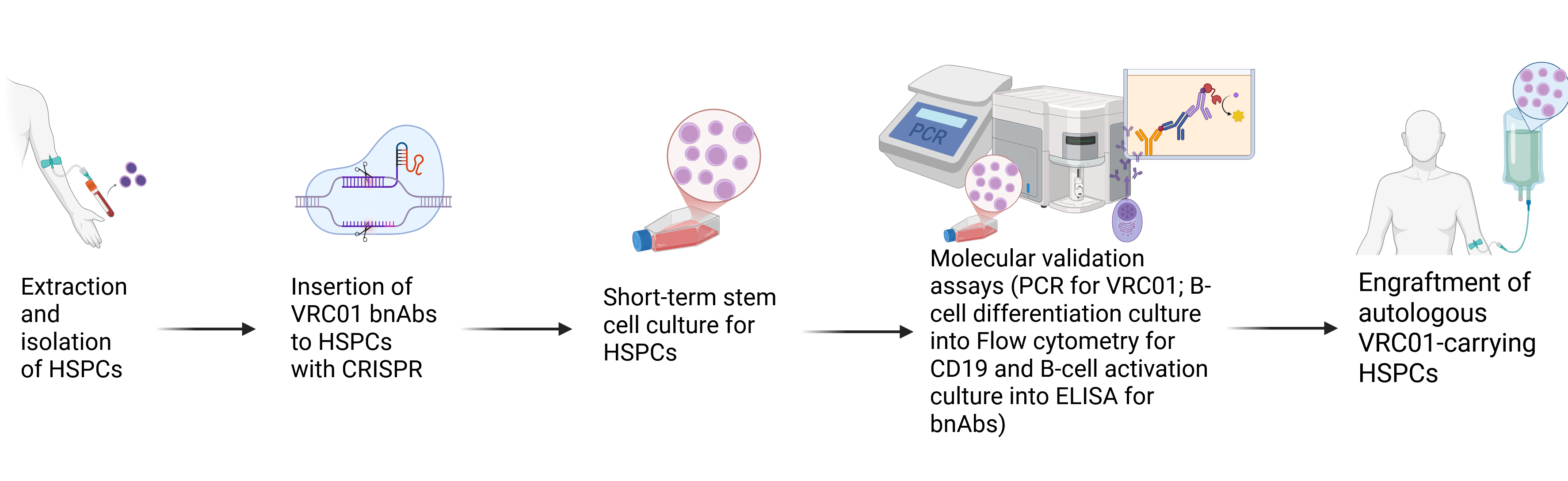
And as for the workflow, it’s the first image in this page! Here it is once more:
A detailed experimental plan for your final project. Include a timeline for each part of your experimental plan (i.e., how long you would expect each step in your final project to take).
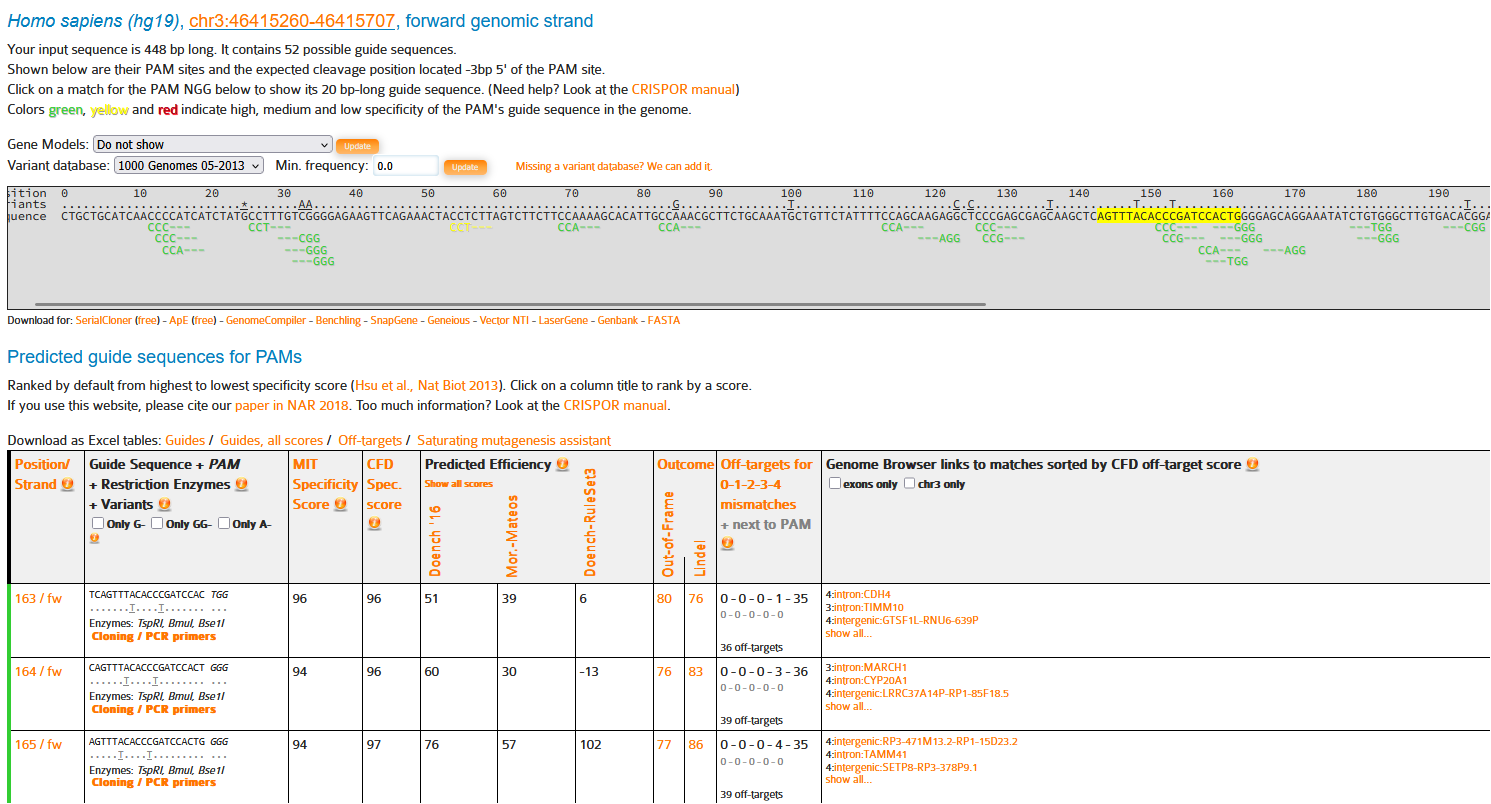
Design a CCR5-targeting sgRNA and assemble the AAV6 donor cassette containing VRC01 heavy/light chain sequences, immunoglobulin promoter/enhancer elements, P2A peptide, homology arms, etc (This genuinely took me 2 weeks, I’ve never done CRISPR designs before).
First administrate G-CFS and plerixafor to mobilize CD34+ HSPCs, then from peripheral blood through perform mononuclear cell isolation, red blood cell lysis, and magnetic enrichment of lineage-negative/CD34+ cells, followed by short-term cytokine-supported ex vivo culture (Rodríguez et al., 2021). (1 week).
Perform CRISPR-Cas9 genome editing through electroporation and AAV6-mediated donor delivery for insertion into the CCR5 locus (1 week).
Validate successful integration through sequencing of the edited CCR5 locus (1 week).
Differentiate edited HSPCs toward the B-cell lineage using StemSpan™ B Cell Differentiation Supplement 3, followed by flow cytometry analysis of CD19/CD20 expression (2 weeks).
Activate differentiated B cells to stimulate antibody secretion with Miltenyi Biotec B Cell Expansion Kit and evaluate VRC01 bnAb production through ELISA (1 week).
Place a check next to the techniques relevant to your project.
(I’m gonna list them off because I often have trouble with syntaxing)
Pipetting
Pipetting✅
Bioethical Considerations✅
Bioproduction
Plasmid Preparation✅
DNA Gel Art
DNA Sequencing✅
DNA Editing✅
DNA Construct Design✅
Databases (e.g., GenBank, NCBI, Ensembl, and UCSC Genome Browser)✅
Gel Electrophoresis✅
Lab Automation
Designing a Twist Order✅
Gibson Assembly
Primer Design or Selection✅
CRISPR
CRISPR/Cas9✅
Designing Prime Editing gRNA✅
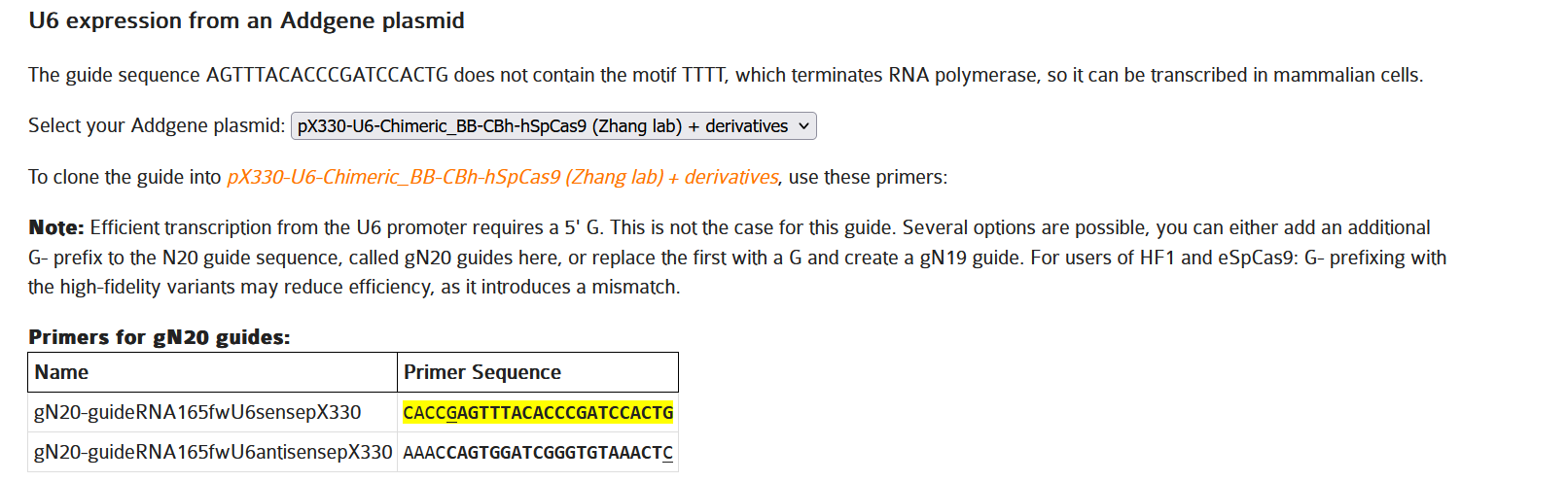
Talking about CRISPR, here’s some relevant images:
This took a week for me to learn. Pretty fun admittedly!
1. Expand upon two techniques you checked in the previous question by describing how you would utilize those techniques in your final project. (min. 4 sentences)
I’d use CRISPR because I consider that is the safest way to genetically modified cells. The point after all is to make have the HSPCs already know what antibody to produce, and because adjuvants are rarely enough, desining a prime editing gRNA is one of the first steps to take into consideration for a project like this.
SECTION 5: Results & Quantitative Expectations
You are required to validate at least one aspect of your final project aims
I have chosen to validate: Performing a PCR reaction using primers relevant to my final project
Write down a detailed protocol of how you validated this aspect of your final project. (Numbered list or paragraph is fine)
Design primers to amplify the beginning and the end of the CCR5 locus in order to verify the integration of the VRC01 bnAb casette
Using agenomic DNA template, the designed forward and rever primers, a DNA polymerase master mix, nuclease-free water and dNTPs, PCR would be performed in a thermocycler.
The product would then be analyzed through agarose gel electrophoresis to confirm the presence of the inserted DNA (given that wek now the size of it) using a molecular ladder.
What synthetic biology techniques did you utilize in validating this aspect of your final project? You can refer to the list of techniques in question 8. (min. 4 sentences)
CRISPR/Cas9 genome editing (for the insertion of a foreign gene), primer design (for electrophoresis), PCR reactions (also for electrophoresis), gel electrophoresis (to see if the gene has been indeed inserted), DNA sequencing (can also be used to verify gene integration), and DNA construct design (the design of the gene that’s going to be inserted).
Adding now Gel Electrophoresis to the checkmark list above
You must present data as part of your final project and include some analysis of that data. The data may be collected experimentally in the lab or generated as simulated data (e.g., using the Asimov Kernel or another simulation method). (min. 2 sentences)
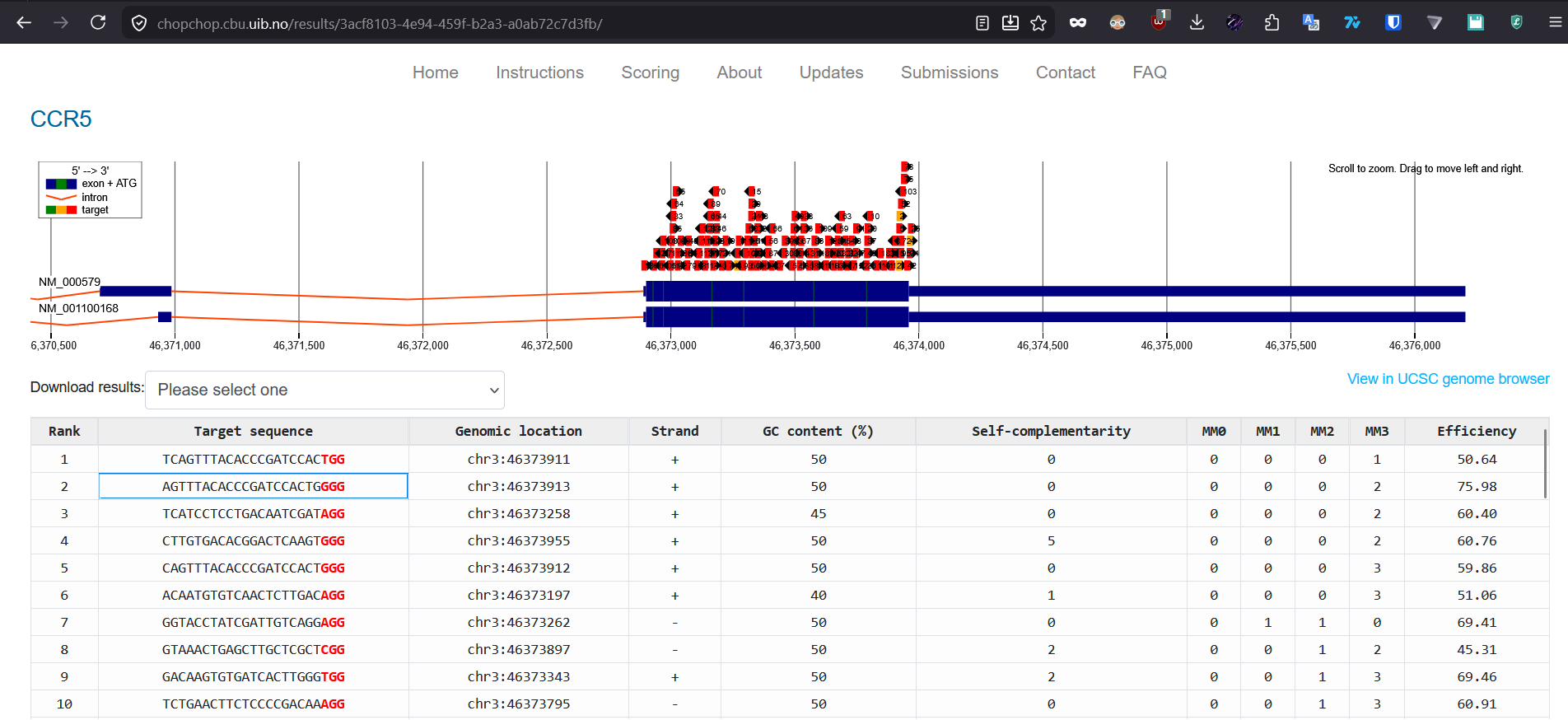
I will refer to my ChopChop results for this.
So there were multiple options as to what gRNA to use in order to target CCR5, the likely most important thing to look at is the efficiency, which is predicted with GC content, self-complementarity, and potential off-targets for each gRNA generated. This is arguably the most important step because without this step, no other step is to be had, so knowing this data, as in, the efficiency, and analyzing every other result, it is essential to pick which option’s the best in order to make this experiment work.
Did you encounter any unexpected challenge(s) when performing your validation? If so, describe the challenge(s) and strategies to overcome it. If not, discuss potential problems, difficulties, limitations, and/or alternative strategies to overcome challenges in your final project. (min. 4 sentences).
I will answer that they were more a challenge of my own understanding rather than technical ones, given that I have a weak background on bioinformatics! But if I have to propose strategies, then, it is simply to read into the FAQ, about, and all documentation of a software or platform I may be using. Secondly, recur to YouTube tutorials if that doesn’t suffice. Third, if none of those options work, then recur to an LLM.
SECTION 6: ADDITIONAL INFORMATION
Bibliographic references
Jardine, J. G., Kulp, D. W., Havenar-Daughton, C., Sarkar, A., Briney, B., Sok, D., Sesterhenn, F., Ereño-Orbea, J., Kalyuzhniy, O., Deresa, I., Hu, X., Spencer, S., Jones, M., Georgeson, E., Adachi, Y., Kubitz, M., deCamp, A. C., Julien, J. P., Wilson, I. A., Burton, D. R., … Schief, W. R. (2016). HIV-1 broadly neutralizing antibody precursor B cells revealed by germline-targeting immunogen. Science (New York, N.Y.), 351(6280), 1458–1463.
Porteus, M., Luna, S., Feist, W., Utz, A., Afaghani, J., Miyauchi, M., … & Schmiderer, L. (2026). Engineered hematopoietic stem cells give rise to therapeutic antibody secreting B cells. https://www.researchsquare.com/article/rs-9269825/v1
Rodríguez, A., Filiatrault, J., Flores-Guzmán, P., Mayani, H., Parmar, K., & D’Andrea, A. D. (2021). Isolation of human and murine hematopoietic stem cells for DNA damage and DNA repair assays. STAR protocols, 2(4).
Wu, X., Yang, Z. Y., Li, Y., Hogerkorp, C. M., Schief, W. R., Seaman, M. S., Zhou, T., Schmidt, S. D., Wu, L., Xu, L., Longo, N. S., McKee, K., O’Dell, S., Louder, M. K., Wycuff, D. L., Feng, Y., Nason, M., Doria-Rose, N., Connors, M., Kwong, P. D., … Mascola, J. R. (2010). Rational design of envelope identifies broadly neutralizing human monoclonal antibodies to HIV-1. Science (New York, N.Y.), 329(5993), 856–861. https://doi.org/10.1126/science.1187659
Create a supply list and budget for your project (bullet-point list)
What supplies, equipment, and budget is needed for your project to work?
Left AAV2 ITR (https://parts.igem.org/Part:BBa_K5471021)
cgcgctcgctcgctcactgaggccgcccgggcaaagcccgggcgtcgggcgacctttggtcgcccggcctcagtgagcgagcgagcgcgcagagagggagtggccaactccatcactaggggttcct
Right AAV2 ITR (https://parts.igem.org/Part:BBa_K5471022)
aggaacccctagtgatggagttggccactccctctctgcgcgctcgctcgctcactgaggccgggcgaccaaaggtcgcccgacgcccgggctttgcccgggcggcctcagtgagcgagcgagcgcg
VRC01 broadly neutralizing antibody for HIV Env protein (Extracted the heavy chain, added a linker, plus extracted teh light chain) (https://www.rcsb.org/structure/3NGB). First, starting off with the heavy chain, reverse translated
caggtgcgcctggtgcagagcggcccgcagattaaaaccccgggcgcgagcgtgaccatt
agctgcggcaccagcggctatgattttatggaaagcctgattaactgggtgcgccaggat
attggcaaaggcccggaatggatgggctggattaacccgcgcggcggcggcgtgaactat
ggccgccgctttcagggcaaagtgaccatgacccgcgatgtgagcagcggcaccgcgtat
ctgaccctgcgcggcctgaccagcgatgataccgcgaaatattattgcgtgcgcggcaaa
agctgctgcggcggccgccgctattgcaacggcgcggattgctttaactgggattttgaa
cattggggccagggcaccctggtgattgtgagcagcgcgagcaccaaaggcccgagcgtg
tttccgctggcgccgagcagcaaaagcaccagcggcggcaccgcggcgctgggctgcctg
gtgaaagattattttccggaaccggtgaccgtgagctggaacagcggcgcgctgaccagc
ggcgtgcatacctttccggcggtgctgcagagcagcggcctgtatagcctgagcagcgtg
gtgaccgtgccgagcagcagcctgggcacccagacctatatttgcaacgtgaaccataaa
ccgagcaacaccaaagtggataaaaaagtggaaccgaaaagctgc
Hypothesis: Substitution of a bacteriophage’s replisome with an orthogonal T7 replisome for continuous hypermutation directed towards stability
The idea of a proposal comes from an article by Diercks et al., 2024, in which they use a very faulty replisome that induces hypermutation, in which they direct towards a very high antibiotic resistance.
Choose one or two main goals from the list that you think you can address computationally (e.g., “We’ll try to stabilize the lysis protein,” or “We’ll attempt to disrupt its interaction with E. coli DnaJ.”).
Goal #1: We’ll try to make the bacteriophage more resistant to varying environmental conditions such as temperature and pH.
Goal #2: We’ll try to reach this stability without compromising the bacteriophage’s infectivity
Write a 1-page proposal (bullet points or short paragraphs) describing:

Which tools/approaches from recitation you propose using (e.g., “Use Protein Language Models to do in silico mutagenesis, then AlphaFold-Multimer to check complexes.”).
Why do you think those tools might help solve your chosen sub-problem?
Name one or two potential pitfalls (e.g., “We lack enough training data on phage–bacteria interactions.”).
Include a schematic of your pipeline.
Proposal
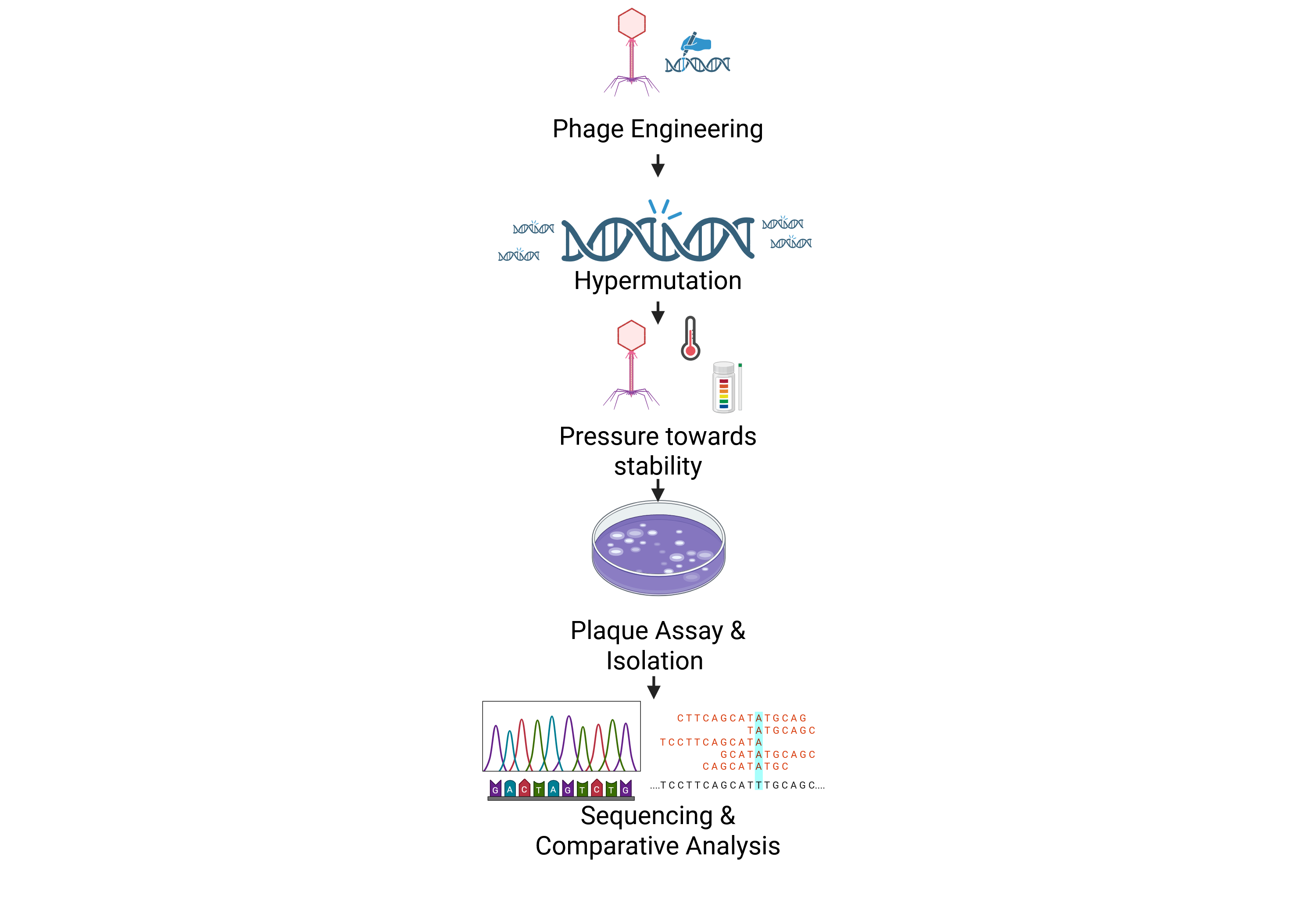
My proposal consists on a bacteriophage based on the T7 replisome, since T7 encodes much of its own replication machinery, a lower-fidelity replisome, we can generate phages that are both faulty, but also excel at our characteristic of interest: stability. By exposing that population to a defined stress linked to stability, and then isolate the phages that remain infectious using plaque-based assays, we can recover viable survivors. After sequencing several independently recovered survivor phages, I would compare their encoded proteins with Clustal Omega, from that, we could build a consensus-style view of which residues remain strongly conserved and which sites may repeatedly change under selection, and so, we can make a construct of, hopefully, a very stable bacteriophage
Two potential pitfalls could be
Results for clustal-omega could be too divergent, making it difficult to decide on conserved residues
There could be no stable bacteriophages due to the faultiness of the replisome
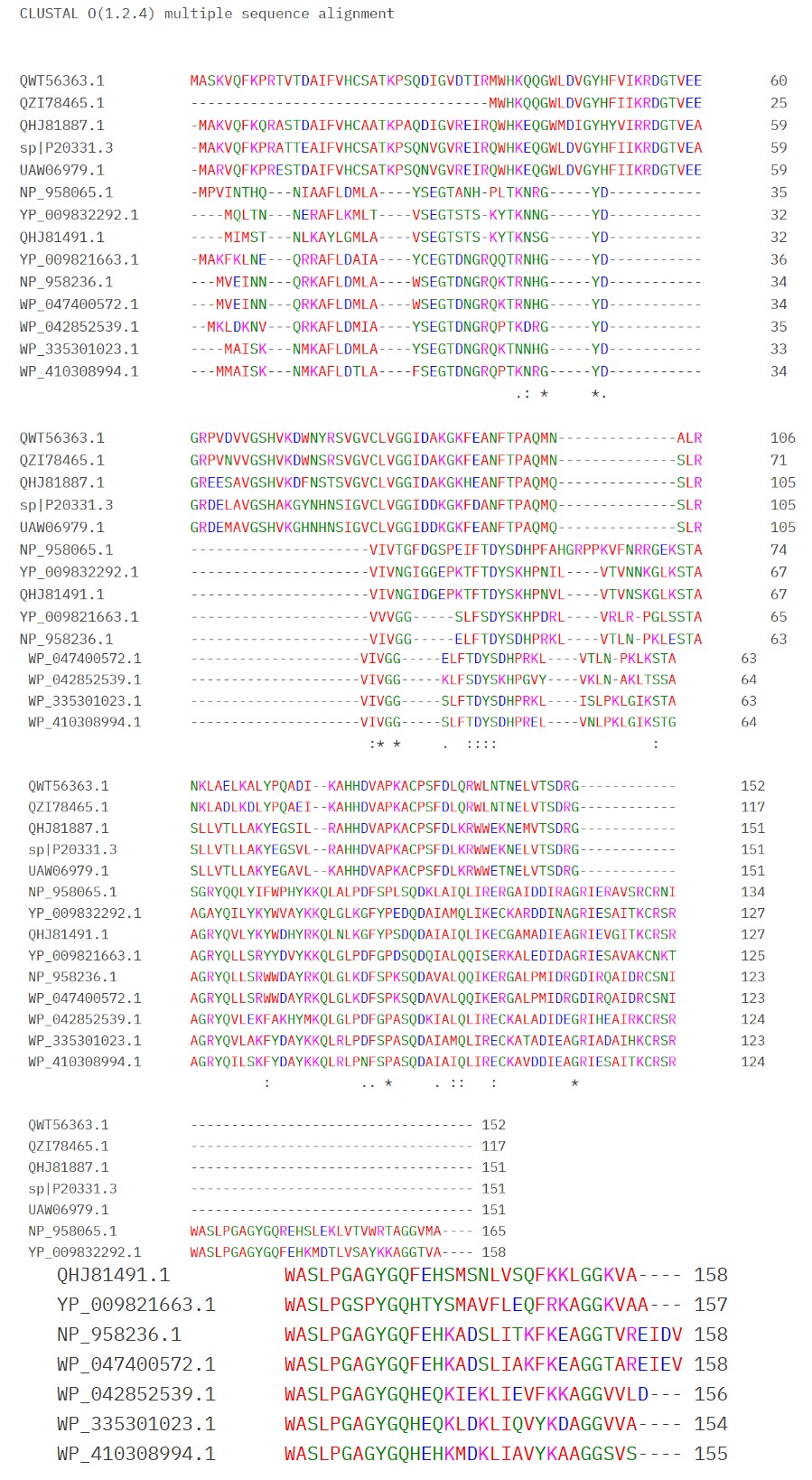
Results for clustal-omega MSA
(We’re doing a theoretical alignment, given that we cannot perform the proposed experiment to carry on real alignments)
The reasoning behind the selection of these sequences was identifying which residues remain conserved in the bacteriophage for endolysin. From there, we shall spot which ones exhibit sufficient flexibility without altering the function too much.
To do this, we avoided sequences that were either too similar (or straight up identical) or too divergent. And so, our selected sequences were chosen within an intermediate homology range:
Similar enough: retain functional homology
Different enough: reveal clear patterns of conservation and variation
Schematic of our workflow
Bibliographic references
Diercks, C. S., Sondermann, P. J., Rong, C., Dik, D. A., Gillis, T. G., Ban, Y., & Schultz, P. G. (2024). An Orthogonal T7 Replisome for Continuous Hypermutation and Accelerated Evolution in E. coli. bioRxiv : the preprint server for biology, 2024.07.25.605042. https://doi.org/10.1101/2024.07.25.605042