Week 2 HW: DNA read, write, and edit
Part 1: Benchling & In-silico Gel Art
Simulation of Lambda genome Restriction Enzyme Digestion
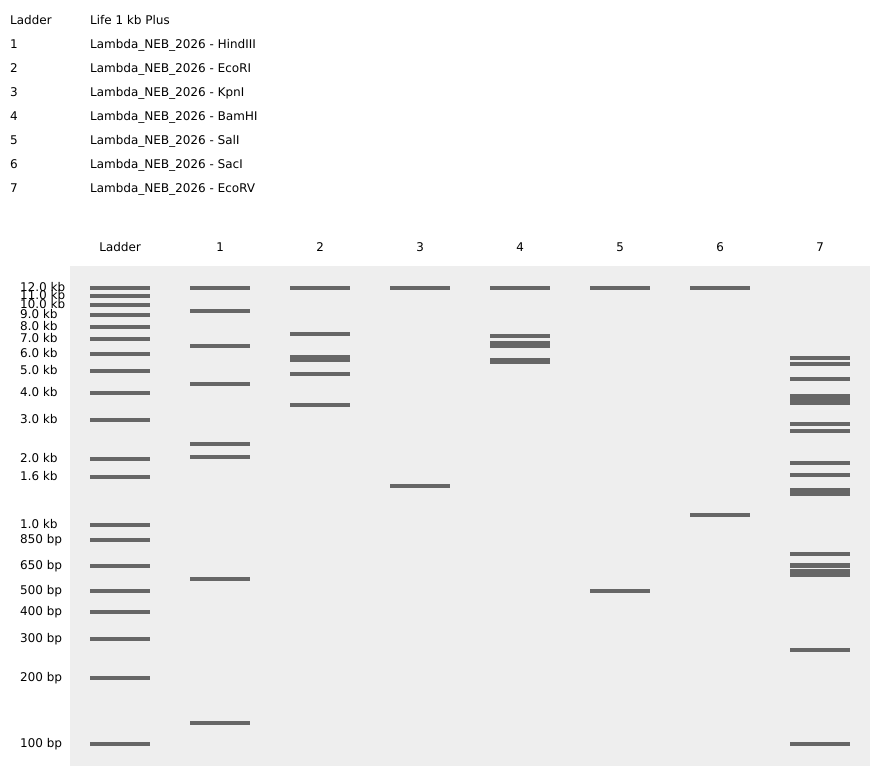
Using the same enzymes I tried to perform Gel Art. Perhaps, columns would have been closer in real life, but this preview reminds me sunset (if look on spare place).
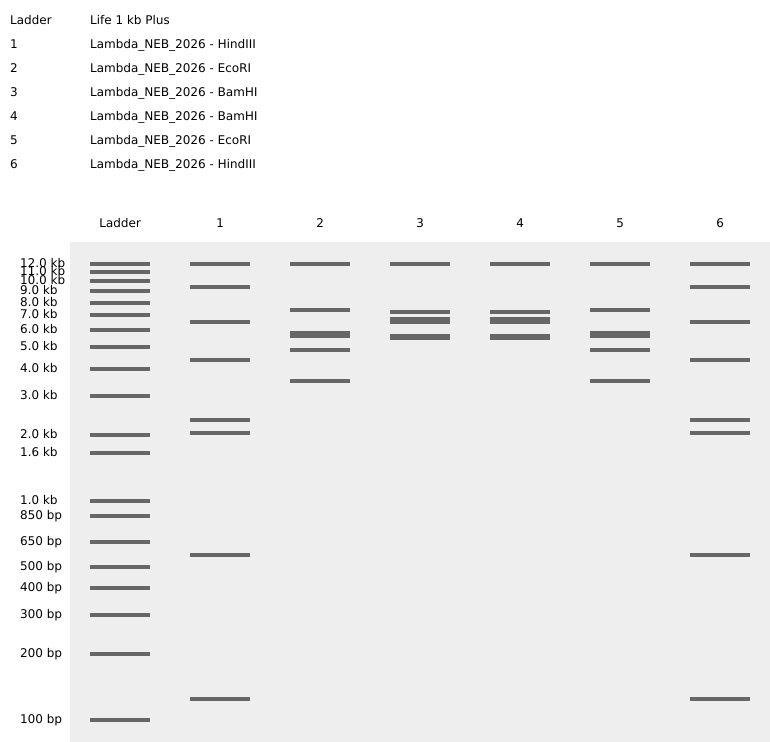
Part 3: DNA Design Challenge
3.1. Choose your protein
I chose one of the Anthozoan chromoproteins — spisPINK from Stylophora pistillata. These proteins are actively studied for last decades due to their potential as markers in imaging, reporters in genetic engineering, and a source for synthetic biology. There were data of successful expression of this protein by E.coli, so it’s interesting to get the strain capable of it. In this article, authors describe spisPink’s structure, hybridization, and dimerization tendency. Interestingly,
In phylogenetic analyses of anthozoan chromoproteins and related fluorescent proteins that have a common ancestor, gfasPurple, amilCP and eforRED are within the same larger clade with ‘dsRed-like’ red fluorescent proteins, whereas spisPINK belongs to a sister clade containing predominantly blue and green fluorescent proteins.
Also, it is really pink! The sequence I worked with uploaded by the article authors.
pdb|7SWU|D Chain D, Chromoprotein spisPINK MSHSKQALADTMKMTWLMEGSVNGHAFTIEGEGTGKPYEGKQSGTFRVTKGGPLPFAFDIVAPTLXFKCFMKYPADIPDYFKLAFPEGLTYDRKIAFEDGGCATATVEMSLKGNTLVHKTNFQGGNFPIDGPVMQKRTLGWEPTSEKMTPCDGIIKGDTIMYLMVEGGKTLKCRYENNYRANKPVLMPPSHFVDLRLTRTNLDKEGLAFKLEEYAVARVLEV
3.2. Reverse Translate
Using Reverse Translate Tool from bioinformatics.org, I received the following sequences:
reverse translation of pdb|7SWU|D Chain D, Chromoprotein spisPINK to a 666 base sequence of most likely codons. atgagccatagcaaacaggcgctggcggataccatgaaaatgacctggctgatggaaggcagcgtgaacggccatgcgtttaccattgaaggcgaaggcaccggcaaaccgtatgaaggcaaacagagcggcacctttcgcgtgaccaaaggcggcccgctgccgtttgcgtttgatattgtggcgccgaccctgnnntttaaatgctttatgaaatatccggcggatattccggattattttaaactggcgtttccggaaggcctgacctatgatcgcaaaattgcgtttgaagatggcggctgcgcgaccgcgaccgtggaaatgagcctgaaaggcaacaccctggtgcataaaaccaactttcagggcggcaactttccgattgatggcccggtgatgcagaaacgcaccctgggctgggaaccgaccagcgaaaaaatgaccccgtgcgatggcattattaaaggcgataccattatgtatctgatggtggaaggcggcaaaaccctgaaatgccgctatgaaaacaactatcgcgcgaacaaaccggtgctgatgccgccgagccattttgtggatctgcgcctgacccgcaccaacctggataaagaaggcctggcgtttaaactggaagaatatgcggtggcgcgcgtgctggaagtg
This is the best for synthetic gene design for high expression, and PCR primers. Alternatively, the tool offers consensus sequence, which is better for degenerate PCR primer design, where accounting for multiple potential codons is necessary:
reverse translation of pdb|7SWU|D Chain D, Chromoprotein spisPINK to a 666 base sequence of consensus codons. atgwsncaywsnaarcargcnytngcngayacnatgaaratgacntggytnatggarggnwsngtnaayggncaygcnttyacnathgarggngarggnacnggnaarccntaygarggnaarcarwsnggnacnttymgngtnacnaarggnggnccnytnccnttygcnttygayathgtngcnccnacnytnnnnttyaartgyttyatgaartayccngcngayathccngaytayttyaarytngcnttyccngarggnytnacntaygaymgnaarathgcnttygargayggnggntgygcnacngcnacngtngaratgwsnytnaarggnaayacnytngtncayaaracnaayttycarggnggnaayttyccnathgayggnccngtnatgcaraarmgnacnytnggntgggarccnacnwsngaraaratgacnccntgygayggnathathaarggngayacnathatgtayytnatggtngarggnggnaaracnytnaartgymgntaygaraayaaytaymgngcnaayaarccngtnytnatgccnccnwsncayttygtngayytnmgnytnacnmgnacnaayytngayaargarggnytngcnttyaarytngargartaygcngtngcnmgngtnytngargtn
3.3. Codone Optimization
In case of using pUC19 plasmid backbone (have it in lab) for cloning spisPINK gene in E. coli, I’d consider E. coli codon preferences and avoid cleavage sites of NheI + XhoI enzymes, becaise they i) cut once in the vector MCS, ii) do NOT cut inside spisPINK gene according to Benchling, and iii) produce incompatible sticky ends. I used Codon Optimization Tool from Vector Builder and here’s improved sequence:
ATGAGCCATAGTAAACAGGCGCTGGCGGATACCATGAAAATGACCTGGCTGATGGAAGGCAGCGTGAACGGCCATGCGTTTACCATTGAAGGCGAAGGCACTGGCAAACCGTATGAGGGTAAACAGAGCGGCACCTTTCGCGTGACCAAAGGCGGCCCGCTGCCGTTCGCGTTCGATATTGTGGCCCCGACCCTGTTTAAATGTTTTATGAAATATCCGGCGGATATTCCGGATTACTTTAAGCTGGCCTTTCCGGAAGGTCTGACCTACGATCGTAAAATTGCGTTTGAAGATGGCGGCTGCGCGACCGCGACCGTGGAAATGAGCCTGAAAGGCAACACCCTGGTGCATAAAACCAACTTCCAGGGCGGCAATTTTCCGATTGATGGCCCGGTGATGCAGAAACGTACCCTGGGCTGGGAACCGACCAGCGAAAAAATGACCCCGTGCGATGGCATTATTAAAGGCGATACCATTATGTACCTGATGGTGGAAGGCGGCAAAACCCTGAAATGTCGCTATGAAAACAACTACCGCGCCAATAAACCGGTGCTGATGCCACCGAGCCACTTTGTGGATCTGCGCCTGACCCGTACCAATCTGGATAAAGAAGGCCTGGCGTTTAAACTGGAAGAATATGCCGTTGCGCGCGTGCTGGAAGTG
3.4. What technologies could be used to produce this protein from your DNA?
Using high-copy plasmid + adding strong promoter to the gene sequence is reliable and well-known technology for receiving strain which constitutively express smth. However, ligation percentage could be low and it is not seamless. Golden Gate assembly overcomes this troubles, and it is indeed elegant method—in case of higher DNA design skills. Besides considering E. coli codon preferences, BsaI and BsmBI sites should be removed and overhang to be designed. Thus, in my case of inserting only one gene sequence, high-copy plasmid + adding strong promoter should be OK.
Part 4: Prepare a Twist DNA Synthesis Order
I used sfGFP sequence from example. All the parts together:
TTTACGGCTAGCTCAGTCCTAGGTATAGTGCTAGCCATTAAAGAGGAGAAAGGTACCATGAGCAAAGGAGAAGAACTTTTCACTGGAGTTGTCCCAATTCTTGTTGAATTAGATGGTGATGTTAATGGGCACAAATTTTCTGTCCGTGGAGAGGGTGAAGGTGATGCTACAAACGGAAAACTCACCCTTAAATTTATTTGCACTACTGGAAAACTACCTGTTCCGTGGCCAACACTTGTCACTACTCTGACCTATGGTGTTCAATGCTTTTCCCGTTATCCGGATCACATGAAACGGCATGACTTTTTCAAGAGTGCCATGCCCGAAGGTTATGTACAGGAACGCACTATATCTTTCAAAGATGACGGGACCTACAAGACGCGTGCTGAAGTCAAGTTTGAAGGTGATACCCTTGTTAATCGTATCGAGTTAAAGGGTATTGATTTTAAAGAAGATGGAAACATTCTTGGACACAAACTCGAGTACAACTTTAACTCACACAATGTATACATCACGGCAGACAAACAAAAGAATGGAATCAAAGCTAACTTCAAAATTCGCCACAACGTTGAAGATGGTTCCGTTCAACTAGCAGACCATTATCAACAAAATACTCCAATTGGCGATGGCCCTGTCCTTTTACCAGACAACCATTACCTGTCGACACAATCTGTCCTTTCGAAAGATCCCAACGAAAAGCGTGACCACATGGTCCTTCTTGAGTTTGTAACTGCTGCTGGGATTACACATGGCATGGATGAGCTCTACAAACATCACCATCACCATCATCACTAACCAGGCATCAAATAAAACGAAAGGCTCAGTCGAAAGACTGGGCCTTTCGTTTTATCTGTTGTTTGTCGGTGAACGCTCTCTACTAGAGTCACACTGGCTCACCTTCGGGTGGGCCTTTCTGCGTTTATA
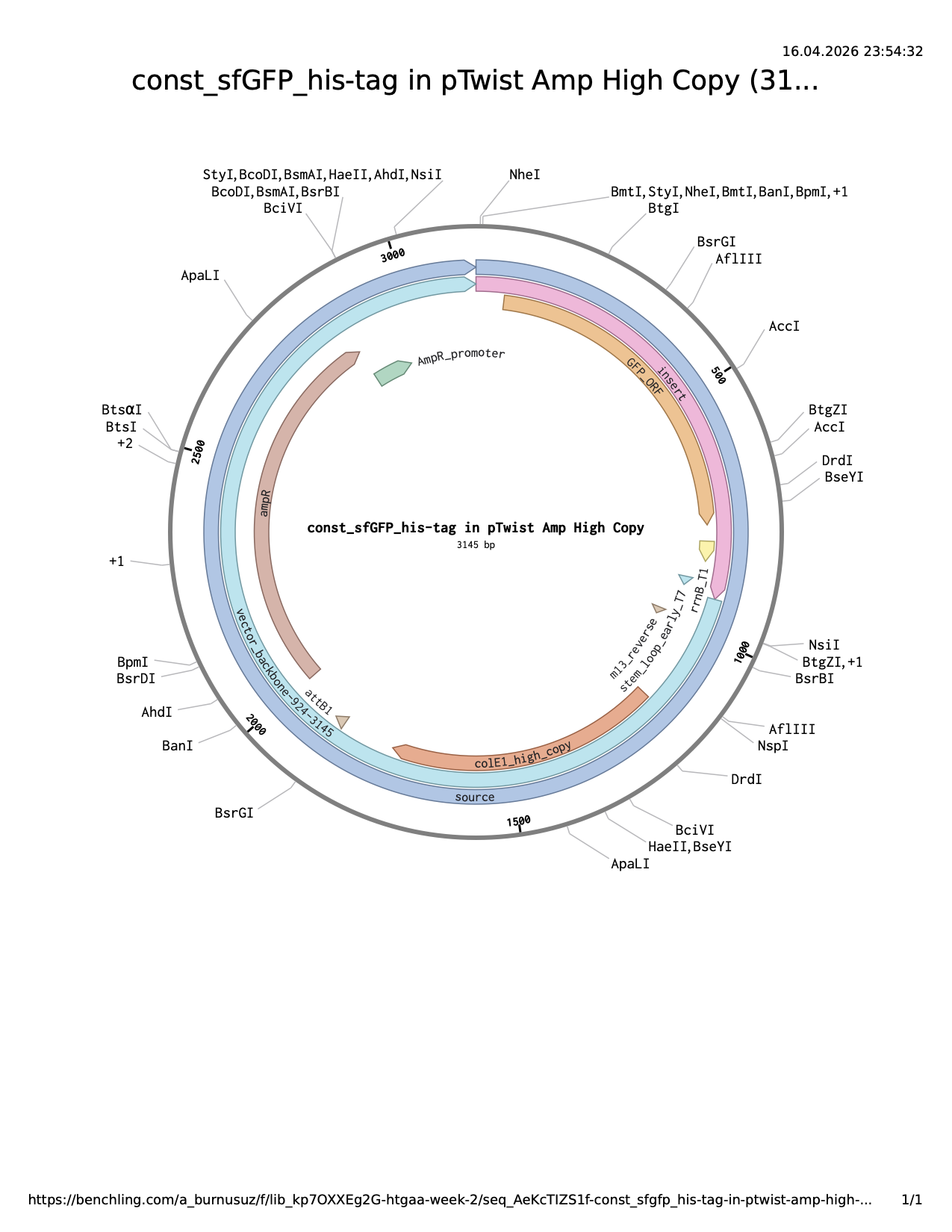
Then, I uploaded it to Clonal Genes order section at Twist using pTwist Amp High Copy (both my lab and my node have ampicillin). The result plasmid sequence and map are attached.
Part 5: DNA Read/Write/Edit
5.1. DNA Read
What DNA would you want to sequence (e.g., read) and why?
In lecture, a variety of sequencing technologies were mentioned. What technology or technologies would you use to perform sequencing on your DNA and why? 1) 2) 3) 4)
5.2. DNA Write
What DNA would you want to synthesize (e.g., write) and why?
What technology or technologies would you use to perform this DNA synthesis and why? 1) 2)