Week 1 HW: Principles and Practices
Step 1. First, describe a biological engineering application or tool you want to develop and why.
I am passionate about reading, as well as Biology, so I came up with an idea that could mix both and be sustainable and enjoyable for us bookworms.
My idea that I would like to put into practice is a reading light powered by bioluminescent algae, combined with microbial fuel cells for supplemental energy. Instead of relying solely on electricity, the lamp is partially powered by living systems, creating a sustainable, educational, and interactive device.
Bioluminescent algae (e.g., Pyrocystis lunula or engineered E. coli) produces gentle, continuous light. Algae glow when they metabolize nutrients, providing a natural light source. This can lead to sustainable outcomes, such as reducing electricity consumption, using renewable biological processes and biodegradable components that minimalize waste.
My additional goals are to enhance the aesthetic experience of reading and to explore practical, safe uses of bioluminescence beyond the laboratory.🦠🌱
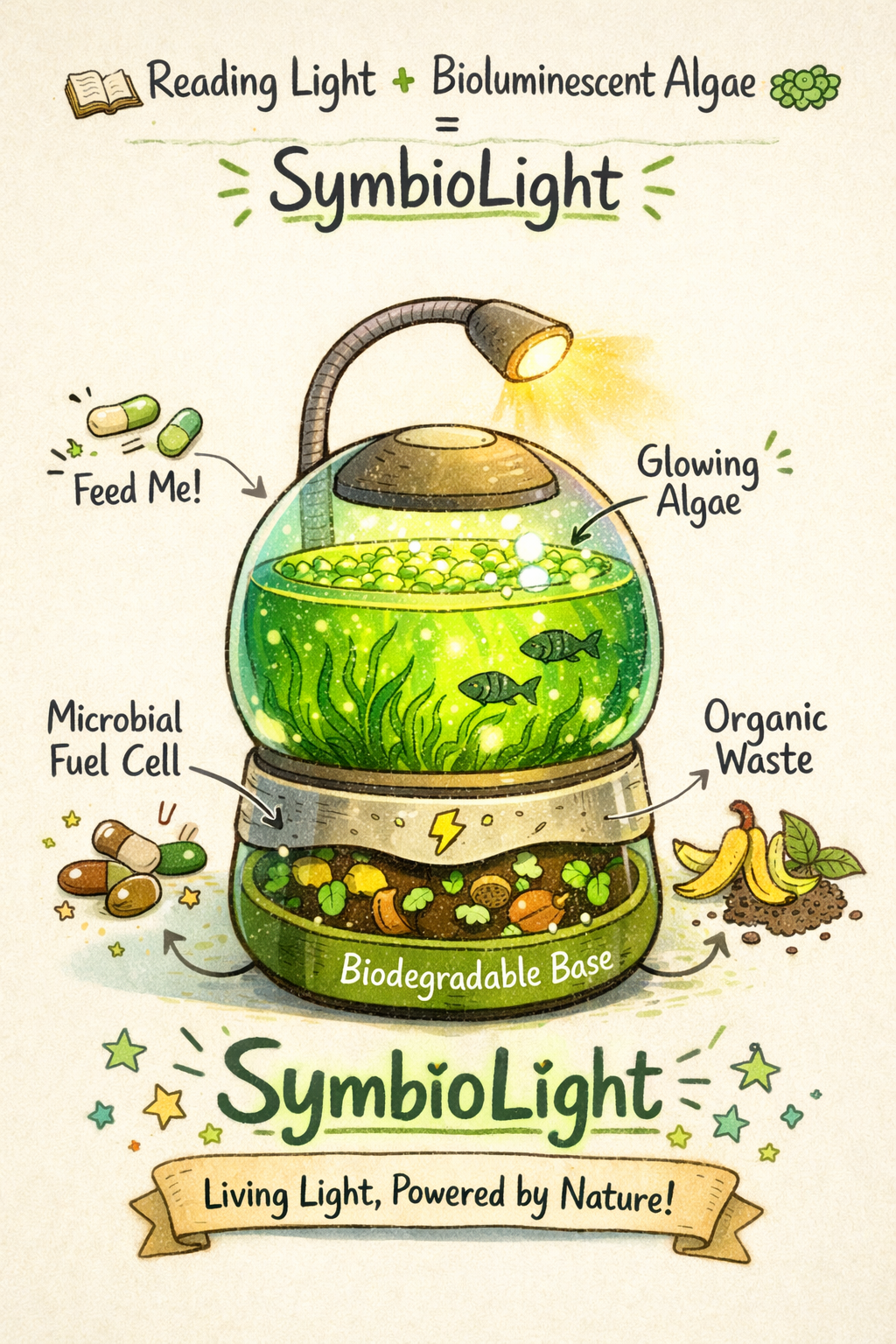
This image is AI generated
Step 2. Next, describe one or more governance/policy goals related to ensuring that this application or tool contributes to an “ethical” future, like ensuring non-malfeasance (preventing harm). Break big goals down into two or more specific sub-goals.
My first big goal is that this lamp should, of course, not harm any humans, animals or the environment
- Sub-goal 1A: Containment of living organisms
- The use of non-pathogenic, lab-safe algae or bacteria.
- Ensuring that the lamp is a closed system to prevent accidental release into homes or the environment.
- Include fail-safes so organisms cannot survive outside the lamp (e.g., nutrient-dependent survival).
- Developing clear usage guidelines, labeling, and instructions.
- Prevent accidental ingestion, skin reactions, or allergic responses.
- Educate users on proper disposal of nutrients and lamp components.
My second big goal is that the lamp should not negatively impact ecosystems or contribute to waste.
- Sub-goal 2A: Biodegradable materials
- The use of compostable biomaterials for the lamp casing and cartridges.
- Reducing reliance on plastics or non-renewable resources.
- Design the lamp to consume minimal electricity and nutrients.
- Ensure any waste products from the lamp (e.g., spent algae or nutrient capsules) are safe and compostable.
Step 3. Next, describe at least three different potential governance “actions” by considering the four aspects below (Purpose, Design, Assumptions, Risks of Failure & “Success”)
Governance Action 1: Implement a Biosafety Certification Program
- Purpose: Ensure that all SymbioLight lamps meet strict biosafety standards to prevent accidental release of organisms or harm to users.
- Design: Require all lamps to be tested in labs for non-pathogenicity and containment integrity.
- Assumptions: Users may handle the lamp incorrectly or dispose of it improperly.
- Risks or Failure: Contaminated or unsafe lamps reaching consumers.
- Success: Safe adoption of living lamps in households.
Governance Action 2: The use of Biodegradable, Low-Impact Materials Policy
- Purpose: Ensure the lamp’s components do not harm the environment when discarded, aligning with sustainability goals.
- Design: Mandate mycelium, algae-based plastics, or bacterial cellulose for lamp casing and nutrient cartridges. Plus, require testing for complete compostability and low environmental toxicity.
- Assumptions: Users will dispose of lamps in composting or bio-waste systems.
- Risks or Failure: Non-compostable waste entering landfills or water systems.
- Success: Increased public trust in synthetic biology products.
Governance Action 3: Mandatory User Education & Ethical Guidance
- Purpose: Promote safe, responsible, and informed use of SymbioLight, and foster public understanding of living systems.
- Design: Include educational manuals and labels explaining the biology, safety protocols, and proper disposal.
- Assumptions: Users may be unfamiliar with living systems and mishandle them without guidance.
- Risks or Failure: Misuse or neglect of living organisms leading to lamp failure or ecological impact.
- Success: Informed users who safely interact with living lamps.
Step 4. Next, score (from 1-3 with, 1 as the best, or n/a) each of your governance actions against your rubric of policy goals.
| Does the option: | Option 1 | Option 2 | Option 3 |
|---|---|---|---|
| Enhance Biosecurity | |||
| • By preventing incidents | 3 | 3 | 3 |
| • By helping respond | 2 | 2 | 2 |
| Foster Lab Safety | |||
| • By preventing incident | 2 | 3 | 2 |
| • By helping respond | 2 | 2 | 2 |
| Protect the environment | |||
| • By preventing incidents | 2 | 3 | 2 |
| • By helping respond | 1 | 1 | 2 |
| Other considerations | |||
| • Minimizing costs and burdens to stakeholders | 2 | 2 | 2 |
| • Feasibility? | 2 | 3 | 2 |
| • Not impede research | 2 | 2 | 2 |
| • Promote constructive applications | 3 | 2 | 2 |
Step 5. Last, drawing upon this scoring, describe which governance option, or combination of options, you would prioritize, and why. Outline any trade-offs you considered as well as assumptions and uncertainties.
After considering the three proposed governance actions—(1) biosafety certification, (2) sustainable materials policy, and (3) user education requirements—I would prioritize a combination of Option 1 and 3, with Option 2 as a secondary but important long-term goal.
The most critical ethical responsibility of SymbioLight is to ensure non-malfeasance—that the product cannot cause harm to people or the environment. Because the lamp involves living organisms, even if they are benign, the greatest potential risk lies in accidental release of engineered algae or bacteria, contamination of local ecosystems as well as unintended health effects in homes. Without strong biosafety guarantees, the entire concept could become unethical regardless of how sustainable or educational it is.
The rason why I would prioritize Option 3 as well, is because even a perfectly engineered product can cause problems if misused. Therefore, governance must include the human element. SymbioLight users need to understand how to care for living organisms, how to dispose of materials properly and the limits of what the lamp can safely do.
Lastly, Option 2 is also important, but not first because sustainability is a core motivation for SymbioLight, but it does not address immediate safety risks. Using biodegradable materials is ethically desirable, yet a lamp made from non-ideal materials is still less harmful than a lamp that releases unsafe organisms.