With a background in Architecture and Urban Planning, holding a bachelor’s degree from the Federal Technological University of Paraná (Brazil). My practice is driven by material experimentation, biomaterials, and research through design approaches that emerge from hands-on making, iterative prototyping, and critical reflection.
I am interested in design as an exploratory and situated practice, operating at the intersection of material processes, systems thinking, and social and environmental responsibility.
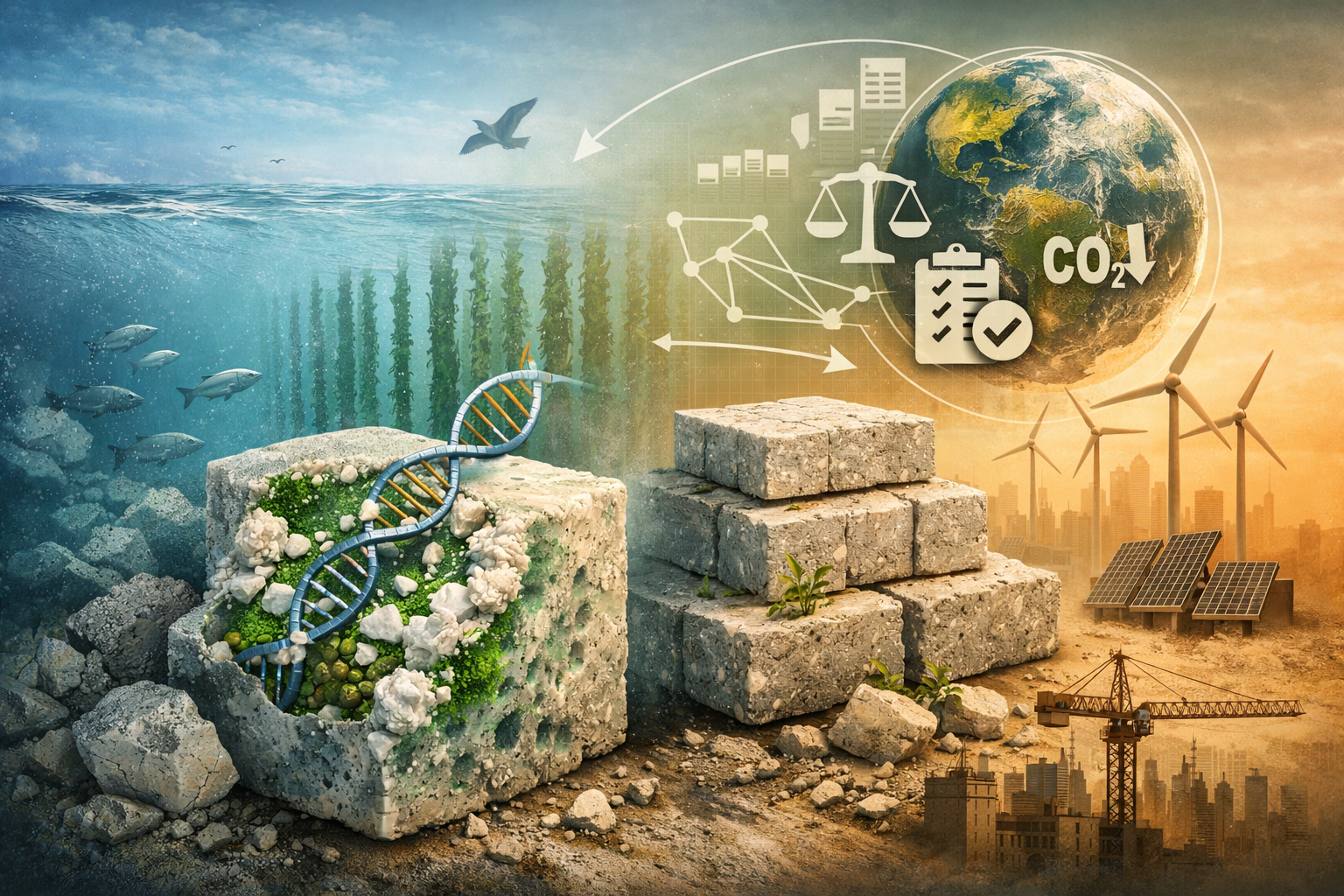
Project Ideation Process with ChatGPT 5.2 My project idea originated from my previous experimentation with algae-based bioplastics (alginate), as well as from a biomaterials workshop I attended during the 14th São Paulo Architecture Biennale. In this workshop, biomaterials researcher Heidi Jalkh presented her work combining oyster shell waste with alginate, resulting in a paste-like material that could be molded and dried into solid blocks.
WEEK 2 Assignment AI Assistance Disclosure
For this week’s assignments, I continued using ChatGPT as a learning support tool to help clarify key concepts that were not yet fully formed in my understanding. I used it primarily to better comprehend the questions and to guide my reasoning process while developing my responses.
I uploaded and referenced the lecture slides materials directly within ChatGPT so that they could serve as the primary foundation for the explanations and guidance provided. ChatGPT was used to support conceptual clarification, provide structural guidance, and help organize the final responses in a clear and coherent manner.
Subsections of Homework
Week 1 HW: Principles and Practices
Project Ideation Process with ChatGPT 5.2
My project idea originated from my previous experimentation with algae-based bioplastics (alginate), as well as from a biomaterials workshop I attended during the 14th São Paulo Architecture Biennale. In this workshop, biomaterials researcher Heidi Jalkh presented her work combining oyster shell waste with alginate, resulting in a paste-like material that could be molded and dried into solid blocks.
Chemically, this material forms through ionic interactions between calcium ions and alginate chains, producing a hardened aggregate visually and texturally similar to concrete. However, according to her research, this material remains significantly weaker and less water-resistant than conventional cement-based materials. This weakness is largely due to the nature of ionic calcium–alginate crosslinking, which is reversible and mechanically less stable compared to the crystalline and covalent structures formed in Portland cement.
This presentation led me to question whether it might be possible to improve the hardness and water resistance of such alginate–calcium systems—potentially through synthetic biology, so that they could replace concrete in some limited construction applications, such as non-structural components or surface materials.
Because the inputs for this material are largely biological and renewable (algae-derived alginate and calcium-rich waste such as shells), and because the material forms at ambient temperatures without the high heat and CO₂ emissions required for cement production, it appeared promising as a lower-carbon alternative for certain uses where high structural performance is not required.
Why and How I used ChatGPT
I do not have prior experience with synthetic biology, nor a formal background in biology or chemistry. For this reason, I used ChatGPT as a discussion and reasoning partner to explore whether this idea was chemically, biologically, and conceptually plausible. 😅
I used the AI to:
ask foundational questions about chemical mechanisms,
test whether biological analogies (such as shell formation) were relevant,
explore what a minimal proof of concept could look like,
and understand how synbio could realistically (not so sure 😕) enter the project.
Due to time constraints and my limited technical expertise, I was not able to independently fact-check every detail of the discussion. I am fully aware that the AI may have provided simplified or partially incorrect explanations, and that all claims would need verification in a real research context. Nevertheless, I chose to continue the ideation process to see how far the concept could be developed and structured.
What follows is a condensed and organized summary of the main turning points in my discussion with ChatGPT. The original conversation was much more exploratory and messy; this section presents only the key questions and conceptual shifts that shaped the project.
Key Questions and Turning Points
1. First Question
What are the chemical and process-based differences between modern cement production and the oyster shell + alginate mixture? Why is concrete significantly stronger, more stable, and more water-resistant?
ChatGPT response (summary):
Concrete gains its strength through high-temperature limestone calcination, producing calcium oxide that reacts with water to form stable crystalline hydration products. This process creates a dense, largely irreversible mineral network.
In contrast, alginate–calcium systems rely on ionic crosslinking, which is weaker, reversible in water, and lacks hierarchical mineral organization. This explains the lower mechanical strength and durability of alginate-based materials.
2. Second Question
Is it chemically and biologically possible to modify alginate so that these weak ionic bonds become stronger and more water-resistant? How could this be done?
ChatGPT response (summary):
The discussion shifted toward biomineralization in mollusk shells, which achieve remarkable strength using the same basic inputs: calcium, organic matrices, and ambient conditions.
The key insight was that shells do not rely on simple ionic binding, but on controlled mineral nucleation guided by an organic matrix. In alginate, this control could be influenced by its M/G composition (mannuronic vs. guluronic acid units), where higher guluronic content increases calcium affinity. This suggested a pathway where alginate could act as an active mineralizing matrix, rather than a passive binder.
3. Third Question
How could this idea be tested experimentally? What would be the most basic proof of concept, how could synbio be used to tune alginate properties, and what would be the long-term vision of this research?
ChatGPT response (summary):
The project was reframed into phases:
Phase 1 (Proof of Concept):
Test whether alginate matrices with spatially differentiated calcium affinity can localize mineral nucleation, rather than mineralizing uniformly.
Phase 2 (Synbio Integration):
Use synthetic biology to program alginate composition and architecture by modulating the M/G ratio and G-block organization—to increase calcium affinity, promote denser biomineralization, and reduce water sensitivity through structural stabilization.
Phase 3 (Long-Term Vision):
Develop biologically programmed material systems where organization precedes mineral growth, closely mimicking shell formation processes.
This led to a clear narrowing of scope: the project would not aim to outperform concrete mechanically, but to demonstrate a different material logic.
Final Research Project Summary (Developed with ChatGPT)
This project explores whether alginate-based matrices can be biologically programmed through synthetic biology to spatially control calcium mineral nucleation, shifting from passive ionic binders to active biomineralizing systems inspired by shell formation.
WEEK 01 ASSIGNMENT
Now that the project idea was defined, I continued within the same conversation in chat GPT, using this entire ideation process as the basis for answering the Week 1 assignment questions on governance and policy goals.
First, describe a biological engineering application or tool you want to develop and why. This could be inspired by an idea for your HTGAA class project and/or something for which you are already doing in your research, or something you are just curious about.
ANSWER 1 (click to expand)
I want to develop a synthetic biology–enabled material system that explores how the composition of alginate can be biologically programmed to control where calcium-based mineralization occurs within a material, inspired by the way shells are formed through biomineralization.
The motivation comes from the environmental impact of conventional concrete and from natural mineralized systems, such as shells, which achieve high structural performance through low-energy, biologically guided processes rather than industrial mixing and heat.
Rather than aiming to replace concrete directly, this project focuses on a proof of concept: testing whether alginate can be transformed from a passive ionic binder into an active biomineralizing matrix capable of localizing calcium carbonate nucleation. The central idea is to use synthetic biology to modulate the alginate’s M/G composition—specifically increasing guluronic acid content to enhance calcium affinity—and to explore how such biologically tuned alginates can act as spatial cues for mineral growth.
As a biological engineering tool, this system treats polymer composition as a programmable variable, where synbio defines when, where, and how strongly the material interacts with calcium ions. By demonstrating spatially controlled calcium mineralization, this work reframes construction materials as outcomes of biological organization and process, rather than homogeneous mixtures, offering a pathway toward low-energy, low-carbon mineral-based materials inspired by shell formation.
Next, describe one or more governance/policy goals related to ensuring that this application or tool contributes to an “ethical” future, like ensuring non-malfeasance (preventing harm). Break big goals down into two or more specific sub-goals.
ANSWER 2 (click to expand)
Goal 1 — Avoid environmental harm and unsafe material practices
A key ethical goal is to reduce environmental damage without introducing new risks.
Sub-goals:
Move away from carbon-intensive cement processes:
Conventional cement production relies on heating limestone at very high temperatures, a process that releases large amounts of CO₂. This project explores alternative material logics that avoid these high-energy, high-emission steps.
Use materials already present in natural systems:
The project prioritizes alginates and calcium-based mineralization pathways that are common in marine environments, reducing the risk of introducing toxic or persistent substances.
Limit the release of engineered biological systems:
Synthetic biology is used here to guide material production, not to deploy living engineered organisms in the built environment, helping minimize ecological risks.
Goal 2 — Support responsible and equitable material scaling
Because construction materials are used at massive scale, ethical responsibility also includes how such systems might be produced and adopted.
Sub-goals:
Reduce dependence on extractive supply chains:
By relying on algae-derived polymers rather than mined limestone, the project aims to reduce reliance on environmentally damaging extraction practices.
Encourage open and transparent material development:
The project emphasizes shared principles and open research rather than proprietary material formulations, supporting more inclusive and accountable innovation.
Use materials according to real needs:
Instead of replacing concrete everywhere, the project focuses on applications where lower-carbon alternatives are sufficient, helping avoid unnecessary material overuse.
Avoid competition with food systems and fertile land:
Because algae can be cultivated in marine environments, alginate-based materials do not compete directly with agricultural land, freshwater resources, or food supply chains. This makes them, in theory, more suitable for global-scale deployment without exacerbating food security or land-use pressures.
Next, describe at least three different potential governance “actions” by considering the four aspects below (Purpose, Design, Assumptions, Risks of Failure & “Success”).
Purpose: What is done now and what changes are you proposing?
Design: What is needed to make it “work”? (including the actor(s) involved - who must opt-in, fund, approve, or implement, etc)
Assumptions: What could you have wrong (incorrect assumptions, uncertainties)?
Risks of Failure & “Success”: How might this fail, including any unintended consequences of the “success” of your proposed actions?
ANSWER 3 (click to expand)
Action 1 — Technical governance through material-by-design constraints
Actor: Academic researchers, research labs, standards bodies
Purpose
Today, new bio-based materials are often developed by optimizing performance first, with governance and safety considered later (?not sure it this is true). This project proposes a shift where governance is embedded directly into material design, by limiting the system to non-toxic polymers and calcium-based mineralization pathways already common in nature.
Design
Researchers define material design constraints early (e.g. no toxic additives, no living engineered organisms in final materials).
Funding agencies and academic labs require projects to document how biological engineering is confined to upstream material production.
This works similarly to how biosafety levels or “safe-by-design” principles are applied in biomedical research.
Assumptions
That early design constraints will meaningfully reduce downstream risks.
That researchers will adopt these constraints voluntarily rather than viewing them as limiting innovation.
Risks of Failure & “Success”
Failure: Constraints could be too vague or inconsistently applied, offering little real protection.
Risk of success: Over-standardization could limit exploration of alternative bio-based materials that might also be safe but fall outside predefined categories.
Action 2 — Regulatory distinction between biological production and material deployment
Actor: Federal regulators, environmental agencies, building regulators
Purpose
Current regulatory frameworks often treat bioengineered systems as inherently risky, regardless of whether living organisms are present in the final product (?not sure if this is true). This project proposes a clear regulatory distinction between biological production processes and inert material deployment, similar to how fermentation-derived chemicals are regulated separately from live organisms.
I am not fully certain that this regulatory distinction applies cleanly to all construction scenarios. In civil construction, materials can be deployed in different ways: in prefabricated systems, the material arrives on site as a finished product, making it easier to separate biological production from material deployment. However, in cast-in-place applications, this distinction becomes less clear. If material hardening or mineralization is biologically programmed and occurs on site, the boundary between biological production and deployment may blur, since the biological process would unfold during construction rather than upstream.
Design
Regulators define categories separating:
biological production stages (regulated under biosafety rules),
final construction materials (regulated under building and environmental codes).
Approval focuses on material composition, stability, and environmental behavior, not the production method alone.
This mirrors regulatory approaches in pharmaceuticals, where biologically produced compounds are treated as chemicals once purified.
Assumptions
That regulators can clearly verify that no viable engineered organisms remain in the final material.
That agencies have the expertise to evaluate bio-based materials without defaulting to overly restrictive controls.
Risks of Failure & “Success”
Failure: Regulatory uncertainty could slow adoption or discourage research.
Risk of success: Easier approval pathways could encourage rapid commercialization without sufficient lifecycle or environmental impact assessment.
Action 3 — Incentivizing low-carbon materials without mandating full substitution
Actor: Governments, public procurement agencies, construction industry
Purpose
Many climate policies frame innovation as full replacement of existing systems, which can push immature technologies into inappropriate roles. This project proposes incentives that reward partial reduction of concrete use, rather than total substitution.
Design
Governments and public builders offer incentives for reducing cement volume in non-structural applications.
Bio-based materials like alginate-mineral composites are evaluated on carbon reduction per volume displaced, not absolute strength.
This approach is analogous to how renewable energy was initially supported through partial grid integration rather than immediate full replacement.
Assumptions
That partial substitution can meaningfully reduce emissions at scale.
That industry actors will adopt materials based on incentives rather than purely on cost.
Risks of Failure & “Success”
Failure: Incentives may be too weak to change industry behavior.
Risk of success: Bio-based materials could be overused in contexts where they are not appropriate, creating durability or safety issues if governance does not clearly define application limits.
Next, score (from 1-3 with, 1 as the best, or n/a) each of your governance actions against your rubric of policy goals. The following is one framework but feel free to make your own:
ANSWER 4 (click to expand)
Does the option:
Option 1
Option 2
Option 3
Enhance Biosecurity
• By preventing incidents
1
2
n/a
• By helping respond
2
1
n/a
Foster Lab Safety
• By preventing incident
1
2
n/a
• By helping respond
2
1
n/a
Protect the environment
• By preventing incidents
1
2
1
• By helping respond
2
1
3
Other considerations
• Minimizing costs and burdens to stakeholders
2
3
1
• Feasibility?
1
2
1
• Not impede research
2
2
1
• Promote constructive applications
1
2
1
ChatGPT summary
Option 1 — Technical / Safe-by-design constraints
Strongest for prevention (biosecurity, lab safety, environment), because risks are reduced before deployment.
Slightly weaker for response, since it assumes prevention works.
Very feasible in academic contexts, but may place some constraints on exploratory research.
👉 Best for early-stage research governance.
Option 2 — Regulatory distinction (production vs deployment)
Strongest for response and oversight, since it clarifies who regulates what and when.
Less effective at prevention alone, because it acts after design choices are made.
Higher administrative burden and slower implementation.
👉 Best for transition from lab to real-world application.
Option 3 — Incentives for partial substitution
Not directly related to biosecurity or lab safety (hence n/a).
Very strong for environmental impact at scale and adoption.
Lowest burden on researchers and industry.
Risk lies in overuse or misapplication if not paired with technical standards.
👉 Best for scaling impact without forcing premature substitution.
Last, drawing upon this scoring, describe which governance option, or combination of options, you would prioritize, and why. Outline any trade-offs you considered as well as assumptions and uncertainties.
ANSWER 5 (click to expand)
I would prioritize a combination of Option 1 and Option 3, with Option 2 applied later as a supporting layer.
Option 1 (safe-by-design technical governance) serves as the foundation, as it is most effective at preventing biosecurity, lab safety, and environmental risks during the research and prototyping stages. By embedding constraints directly into material design—such as using non-toxic polymers, calcium-based mineralization, and non-living final materials—risks are reduced early without slowing down academic innovation.
Option 3 (incentive-based scaling) complements this approach by enabling responsible adoption at scale. Rather than mandating full replacement of concrete, incentives that reward partial reductions in cement use encourage gradual uptake while minimizing misuse of immature materials and reducing stakeholder burden.
Option 2 (regulatory distinction) is important for later stages, when materials move toward commercialization. Applying it too early could add unnecessary complexity without significantly improving safety.
Key trade-offs considered
Prevention vs. flexibility:
Safe-by-design constraints may limit certain experimental pathways, but this trade-off is acceptable given the large-scale environmental implications of construction materials.
Speed vs. oversight:
Incentive-based scaling accelerates adoption but requires clear boundaries to prevent inappropriate use in high-risk structural contexts.
Clarity vs. bureaucracy:
Regulatory distinction improves oversight but introduces administrative complexity, which is why it is better phased in later.
Assumptions and uncertainties
It is assumed that early design constraints meaningfully reduce downstream risk, though some risks may only become visible at larger scales.
It is assumed that partial substitution of concrete can deliver significant carbon reductions, which depends on adoption patterns and industry response.
There is uncertainty around how regulators will interpret bio-based materials, particularly in jurisdictions with limited experience regulating synthetic biology in construction contexts.
Reflecting on what you learned and did in class this week, outline any ethical concerns that arose, especially any that were new to you. Then propose any governance actions you think might be appropriate to address those issues. This should be included on your class page for this week.
ANSWER 6 (click to expand)
One ethical concern that became particularly clear to me this week relates to scale. While bio-based materials such as alginate can be framed as sustainable alternatives to carbon-intensive materials like concrete, scaling such systems to a global level introduces new environmental questions rather than eliminating them entirely.
As I developed my project, I became more aware that large-scale algal production, if required to meaningfully impact global construction markets, could significantly alter marine ecosystems surrounding algal farms. Even if algae do not compete directly with agricultural land or freshwater resources, intensive marine cultivation could affect biodiversity, nutrient cycles, and local coastal environments.
To address this concern, appropriate governance actions would include requiring ecological impact assessments specific to marine environments, setting limits on monoculture density, and encouraging distributed, regionally adapted production rather than centralized mega-farms. In this way, governance would focus not only on reducing carbon emissions, but also on preventing new forms of environmental harm from emerging through scale-driven deployment of bio-based materials.
ASSIGNMENT - Week 2 Lecture Prep
ChatGPT usage
I used ChatGPT for all responses in this assignment, both to help explain the questions and specific terms with which I was not previously familiar, as well as to assist in formulating the answers. I used the provided lecture slides as the primary reference material and also submitted the complete questions to ChatGPT in order to receive explanations and clarification on points where I had doubts.
Homework Questions from Professor Jacobson:
1. Nature’s machinery for copying DNA is called polymerase. What is the error rate of polymerase? How does this compare to the length of the human genome. How does biology deal with that discrepancy?
1. ANSWER (click to expand)
error rate of polymerase = 1:106
length of the human genome = 3 × 10⁹ base pairs
Given that the human genome contains on the order of 3 × 10⁹ base pairs, absolute precision is impossible at this scale, and even a very low replication error rate remains biologically relevant.
Biology resolves this discrepancy by controlling the error rate—low enough to ensure stability, but high enough to allow evolution. This control is achieved through several mechanisms, such as proofreading during replication, post-replication repair systems, genetic redundancy (having two copies of each gene), and evolutionary tolerance to low levels of mutation.
2. How many different ways are there to code (DNA nucleotide code) for an average human protein? In practice what are some of the reasons that all of these different codes don’t work to code for the protein of interest?
2. ANSWER (click to expand)
The genetic code uses 64 possible codons to encode 20 amino acids.
An average human protein contains approximately 300 amino acids.
This implies that there are on the order of 64³⁰⁰ possible DNA sequences that could encode the same protein, since more than one codon can encode the same amino acid. However, despite this redundancy in the genetic code, there are significant biological constraints that prevent many of these sequences from functioning properly. Some of the main reasons include:
Codon bias
Different organisms (and even different tissues) preferentially use certain codons.
The use of rare codons can significantly reduce translation efficiency.
tRNA availability
Not all codons have the same abundance of corresponding tRNAs.
This affects the speed and success of translation.
mRNA structure
Certain sequences can form secondary structures that hinder translation.
Some structures can block ribosome movement.
Genetic regulation
DNA and mRNA sequences often contain embedded regulatory signals.
Changing codons can unintentionally create or disrupt important regulatory elements.
Protein folding and translation timing
The rate of translation influences how a protein folds.
Altering codon usage can lead to misfolded proteins, even when the amino acid sequence is correct.
Homework Questions from Dr. LeProust:
1. What’s the most commonly used method for oligo synthesis currently?
1. ANSWER (click to expand)
The most commonly used method today is solid-phase phosphoramidite chemical synthesis.
In practical terms:
DNA is synthesized base by base in a sequential manner.
The growing strand is attached to a solid support.
Each cycle adds one nucleotide at a time (A, T, C, or G) using controlled chemical reactions.
2. Why is it difficult to make oligos longer than 200nt via direct synthesis?
2. ANSWER (click to expand)
This difficulty arises because errors accumulate at each step of the synthesis process. Each nucleotide addition cycle is not 100% efficient—typically achieving around 99–99.5% efficiency per base, which is already considered high. When this process is repeated hundreds of times, the fraction of perfectly synthesized molecules decreases exponentially. In addition, synthesis errors such as deletions, incorrect base incorporations, and premature terminations occur more frequently, making purification increasingly difficult as oligo length increases.
3. Why can’t you make a 2000bp gene via direct oligo synthesis?
2. ANSWER (click to expand)
A 2000 bp gene would require approximately 2000 sequential chemical synthesis cycles. Even with extremely high efficiency at each cycle, the probability of producing a completely correct full-length molecule would be close to zero.
As a result, the final product would consist of a large mixture of incorrect sequences, making it practically impossible to purify or use for downstream applications. For this reason, long genes cannot be synthesized directly using current chemical synthesis methods.
In practice, short oligonucleotides (approximately 60–200 nucleotides) are synthesized first and then assembled into longer DNA sequences. This assembly is typically achieved using PCR, recombination-based methods, or other enzymatic approaches. DNA synthesis today is modular, not monolithic.
Homework Question from George Church:
1. (Using Google & Prof. Church’s slide #4) What are the 10 essential amino acids in all animals and how does this affect your view of the “Lysine Contingency”?
1. ANSWER (click to expand)
Animals share a conserved set of ten essential amino acids, meaning these compounds cannot be synthesized internally and must be obtained from the environment or diet. These essential amino acids are histidine, isoleucine, leucine, lysine, methionine, phenylalanine, threonine, tryptophan, valine, and arginine. Although arginine is sometimes classified as semi-essential in adult humans, it is considered essential across animals in a broader biological context.
Knowing that all animals depend on this shared set of essential amino acids reframes the Lysine Contingency not as a unique or exceptional case, but as an example of a broader metabolic dependency. Lysine serves as a particularly clear illustration of how evolution has offloaded critical biosynthetic functions onto the environment, creating deep interdependencies that both constrain and shape life.
Week 2 HW: dna read write and edit
WEEK 2 Assignment
AI Assistance Disclosure
For this week’s assignments, I continued using ChatGPT as a learning support tool to help clarify key concepts that were not yet fully formed in my understanding. I used it primarily to better comprehend the questions and to guide my reasoning process while developing my responses.
I uploaded and referenced the lecture slides materials directly within ChatGPT so that they could serve as the primary foundation for the explanations and guidance provided. ChatGPT was used to support conceptual clarification, provide structural guidance, and help organize the final responses in a clear and coherent manner.
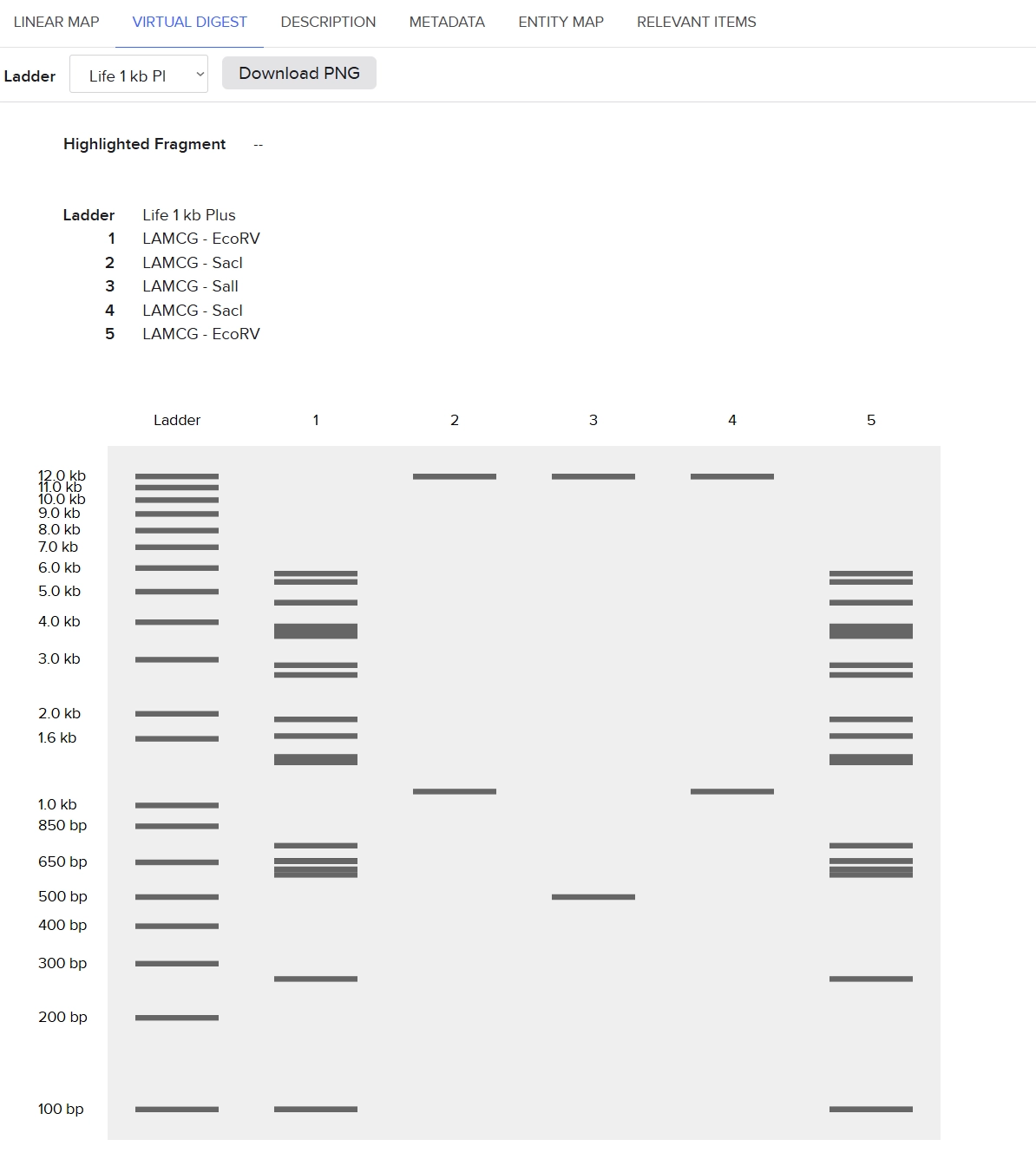
I imported the Lambda phage genome into Benchling and performed in-silico restriction digests using only the enzymes listed in the assignment. The final enzymes of choice used were:
EcoRV
SacI
SalI
For gel visualization, I selected the Life 1 kb Plus ladder in Benchling as the molecular weight reference.
I was not able to determine which ladder was used in the online gel-art simulation tool (https://rcdonovan.com/gel-art). Therefore, I used Donovan’s website primarily as a visual reference to explore possible banding patterns and compositions. When comparing the simulated gel in Benchling using the Life 1 kb Plus ladder, the patterns appeared slightly different from those shown in the Donovan tool. However, it was still possible to approximate the general distribution, number of fragments, and relative band intensity.
Concept and Strategy
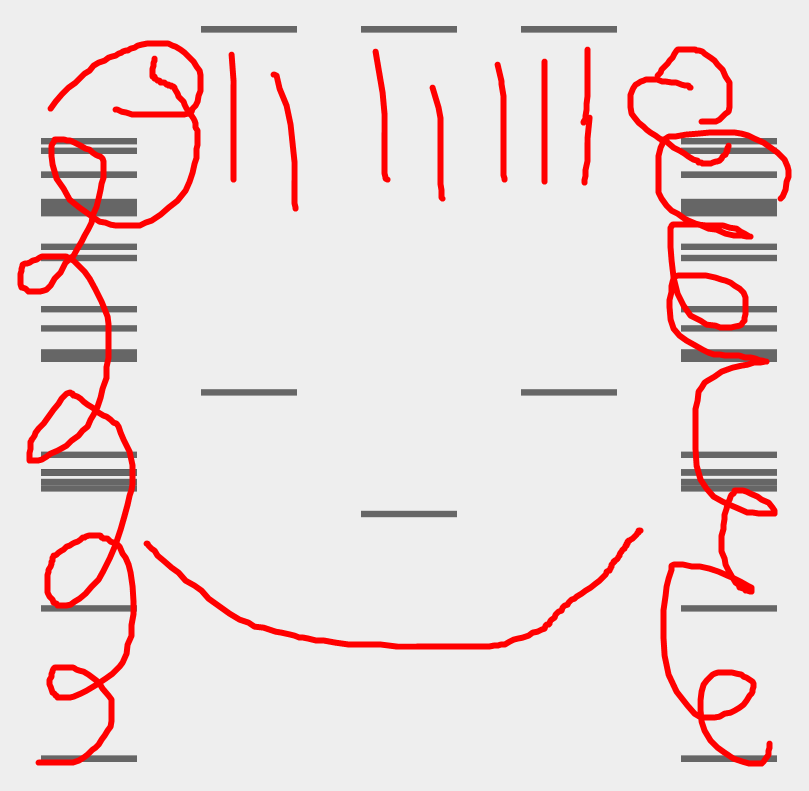
My conceptual goal was to create a face-like figure using the gel band patterns.
My strategy was:
In the outer lanes, I used enzymes that produced a larger number of fragments distributed across the gel. These denser patterns formed a visual “frame,” resembling hair around the face.
For the central features (eyes and mouth), I selected enzymes that produced fewer fragments and simpler band patterns. These cleaner lanes helped define the facial features with only lines in different positions
Here is the print of the Benchling:
Below is the image of the gel pattern I intended to generated.
Additionally, I created an overlay sketch to better illustrate and clarify the face-like figure that I intended to form.
Part 3: DNA Design Challenge
3.1. Choose your protein.
3.1. - answer (click to expand)
Protein Chosen: AlgG – Mannuronan C5-epimerase
Alginate C-5 epimerase AlgG
Organism: Azotobacter vinelandii
UniProtKB: Reviewed (Swiss-Prot)
Accession: P70805
Length: 525 amino acids
I chose the AlgG (mannuronan C-5-epimerase) protein from Azotobacter vinelandii because it plays a key role in alginate biosynthesis. AlgG catalyzes the epimerization of β-D-mannuronic acid (M) residues into α-L-guluronic acid (G) residues within the alginate polymer. The M/G ratio directly influences the mechanical properties and calcium crosslinking behavior of alginate-based biomaterials. Since my research interests focus on alginate structural materials and biofabrication, this enzyme is conceptually aligned with my project goals.
3.2. Reverse Translate: Protein (amino acid) sequence to DNA (nucleotide) sequence.
3.2. - answer (click to expand)
I did not use any reverse translation tool, because I retrieved the native coding sequence (CDS) of the algG gene directly from the NCBI GenBank database (Accession: X87973).
Because the AlgG protein sequence is already experimentally characterized and linked to a published genomic record, obtaining the authentic CDS from GenBank provides the biologically accurate nucleotide sequence rather than a hypothetical reverse-translated version. Reverse translation can generate multiple possible DNA sequences due to codon degeneracy, whereas the GenBank entry corresponds to the naturally occurring gene sequence from Azotobacter vinelandii.
The CDS spans nucleotides 68–1645 of the deposited genomic record, corresponding to a 1578 bp coding region, including the stop codon. This sequence encodes the 525–amino-acid AlgG protein and matches the reviewed UniProt entry (P70805).
I selected Escherichia coli as the host organism for codon optimization because it is a widely used bacterial system for recombinant protein production.
Codon optimization is necessary because different organisms exhibit codon bias, meaning they preferentially use certain codons to encode specific amino acids. Although multiple codons can encode the same amino acid, translation efficiency depends on the availability and abundance of corresponding tRNAs within the host organism.
Since the native algG gene originates from Azotobacter vinelandii, its codon usage may not be optimal for efficient expression in E. coli. Differences in codon preference could result in reduced translation efficiency or lower protein yield. Therefore, the nucleotide sequence was optimized for E. coli to enhance translation efficiency, improve mRNA stability, and increase recombinant protein production while preserving the original 525-amino-acid sequence of AlgG.
Once the codon-optimized algG DNA sequence is obtained, the protein can be produced using either cell-dependent or cell-free expression systems.
Cell-Dependent Expression
In a cell-dependent system, the optimized algG gene would be cloned into an expression plasmid and introduced into Escherichia coli.
The essential steps include:
Cloning the gene into a plasmid under a suitable promoter (e.g., T7).
Transforming the plasmid into E. coli.
Growing the cells and inducing gene expression.
Transcription of DNA into mRNA.
Translation of mRNA into the AlgG protein.
Protein purification for further use.
In this system, the bacterial cell performs transcription and translation using its native molecular machinery.
Cell-Free Expression
Alternatively, the DNA could be added to a cell-free transcription–translation system, where purified ribosomes and enzymes synthesize the protein in vitro. This method is faster but more expensive and less scalable.
Conclusion
For AlgG production, cell-dependent expression in E. coli seems to be the most appropriate method. AlgG is a bacterial enzyme and does not require complex post-translational modifications, making E. coli a cost-effective and scalable host for recombinant protein production.
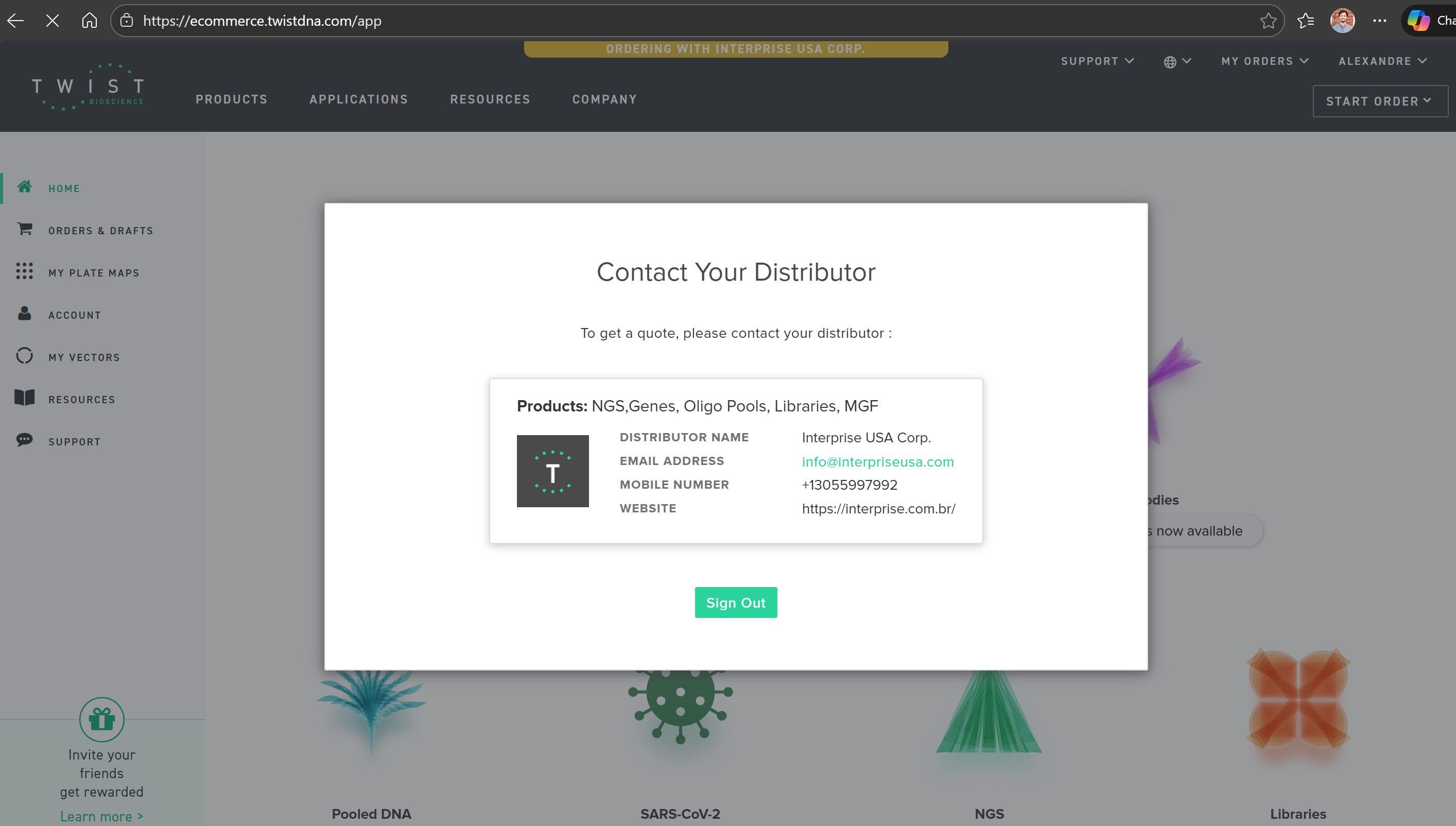
Part 4: Prepare a Twist DNA Synthesis Order (UNABLE TO ACESS TWIST SITE AND TOOLS)
I created my account on Twist; however, I am not able to access the website or any of its tools because the site requests that I contact the distributor in my country. Please see the attached screenshot.
5.1.1 What DNA would you want to sequence and why?
5.1.1 - answer (click to expand)
Although the algG gene from Azotobacter vinelandii has already been characterized, I would sequence environmental isolates of Azotobacter vinelandii and related alginate-producing bacteria to investigate naturally occurring variants of the alginate biosynthesis gene cluster.
The alginate biosynthesis pathway is encoded by a biosynthetic gene cluster, which includes multiple adjacent genes responsible for polymer synthesis, modification, and export. Variations within this cluster—particularly in genes such as algG (mannuronan C-5-epimerase)—may influence the M/G ratio, block distribution, polymer length, and degree of modification of alginate.
Since the mechanical properties of calcium-crosslinked alginate materials depend strongly on G-block continuity and molecular weight, identifying naturally evolved variants of the biosynthetic cluster could inform the engineering of alginate-based structural biomaterials. By sequencing environmental strains, it may be possible to discover variants that produce alginates with enhanced calcium-binding capacity and improved mechanical strength, which is directly relevant to my broader research goal of developing calcium-precipitated alginate-based construction materials.
5.1.2 In lecture, a variety of sequencing technologies were mentioned. What technology or technologies would you use to perform sequencing on your DNA and why?
Also answer the following questions:
Is your method first-, second- or third-generation or other? How so?
What is your input? How do you prepare your input (e.g. fragmentation, adapter ligation, PCR)? List the essential steps.
What are the essential steps of your chosen sequencing technology, how does it decode the bases of your DNA sample (base calling)?
What is the output of your chosen sequencing technology?
5.1.2 - answer (click to expand)
To analyze the full alginate biosynthesis gene cluster and its structural organization, I would use third-generation long-read sequencing technology, possibly a platform from Oxford Nanopore Technologies.
Because the alginate biosynthesis cluster spans multiple adjacent genes and may contain repetitive or regulatory regions, long-read sequencing is particularly suitable for capturing entire gene clusters in single continuous reads. This reduces assembly ambiguity and allows detection of structural variations, insertions, or rearrangements that could influence alginate production.
Oxford Nanopore sequencing is a third-generation sequencing technology. It sequences single DNA molecules in real time without requiring extensive amplification and produces long reads that can span tens of kilobases.
Input: High-molecular-weight genomic DNA extracted from environmental isolates of Azotobacter vinelandii.
Essential preparation steps:
Genomic DNA extraction from bacterial cultures.
DNA purification to remove proteins and contaminants.
Quality control (concentration and fragment length assessment).
End repair and preparation of DNA ends.
Adapter ligation to attach nanopore-compatible sequencing adapters.
Loading the prepared DNA library onto a nanopore flow cell.
PCR amplification is typically minimized to preserve long fragment length.
In nanopore sequencing:
A single DNA molecule passes through a protein nanopore embedded in a membrane.
An electrical current flows through the pore.
Each nucleotide (A, T, G, C) causes a characteristic change in electrical current.
The device records these signal disruptions.
A computational algorithm performs base calling by translating electrical signal patterns into nucleotide sequences.
Unlike fluorescence-based sequencing, nanopore technology decodes DNA by measuring changes in electrical current in real time.
The output includes:
Raw electrical signal files (FAST5 format).
Processed sequence files (FASTQ), containing:
DNA sequence
Quality scores for each base.
Assembled genome sequences (FASTA format) after bioinformatic processing.
Identification and structural analysis of the alginate biosynthesis gene cluster.
Long-read output enables reconstruction of full biosynthetic clusters and comparison between environmental variants.
5.2 DNA Write
5.2.1 What DNA would you want to synthesize (e.g., write) and why?
5.2.1 - answer (click to expand)
As an initial step, I would synthesize a codon-optimized version of the algG gene (1578 bp), designed for expression in Escherichia coli.
Rather than engineering the entire alginate biosynthesis cluster at once, focusing on algG provides a targeted and controlled strategy to modulate the M/G ratio of alginate. Since AlgG (mannuronan C-5 epimerase) directly converts mannuronic acid (M) residues into guluronic acid (G) residues, altering its activity can influence G-block continuity, which is a key determinant of calcium-mediated crosslinking strength.
Because the mechanical properties of alginate-based materials strongly depend on G-block length and distribution, engineering algG represents a rational first step toward designing alginate biomaterials with enhanced structural performance. Once the effect of epimerase modulation is characterized, additional regulatory elements or biosynthetic genes could be engineered in subsequent stages.
5.2.2 What technology or technologies would you use to perform this DNA synthesis and why?
Also answer the following questions:
What are the essential steps of your chosen sequencing methods?
What are the limitations of your sequencing method (if any) in terms of speed, accuracy, scalability?
5.2.2 - answer (click to expand)
To synthesize the codon-optimized algG gene (1578 bp), I would use commercial gene synthesis technology from Twist Bioscience.
Twist uses high-throughput silicon-based DNA synthesis platforms that chemically synthesize short oligonucleotides and assemble them into full-length gene constructs. This method allows precise, sequence-verified DNA synthesis with scalable production capacity.
Because the algG sequence is within a typical gene-length range (~1.6 kb), it is well suited for commercial gene synthesis and can be delivered cloned into a plasmid vector for immediate expression in Escherichia coli.
The essential steps of synthetic gene production include:
In silico DNA design and codon optimization.
Chemical synthesis of short DNA oligonucleotides (typically 60–200 bp).
Assembly of overlapping oligos into larger fragments.
Enzymatic assembly into the full-length gene (e.g., Gibson Assembly or similar methods).
Cloning into a plasmid vector.
Sequence verification (usually by next-generation sequencing).
Delivery of the verified construct.
Limitations of this method:
Speed: Gene synthesis typically requires several days to weeks depending on sequence complexity and production queue.
Accuracy: Although modern synthesis platforms are highly accurate, errors can occur during oligonucleotide synthesis or assembly. Therefore, sequence verification is required.
Scalability: Single-gene synthesis is routine and scalable. However, synthesizing very large constructs (e.g., entire operons or genomes) increases cost and technical complexity.
Sequence Constraints: Extreme GC content, repetitive elements, or regions prone to forming strong secondary structures may reduce synthesis efficiency. However, the GC content of the codon-optimized algG gene (~53%) falls within an optimal range for DNA synthesis and does not present significant technical constraints.
5.3 DNA Edit
5.3.1 What DNA would you want to edit and why? What kinds of edits might you want to make to DNA (e.g., human genomes and beyond) and why?
5.3.1 - answer (click to expand)
Initially I would focus on editing the alginate biosynthesis pathway in Azotobacter vinelandii.
Specifically, I would edit the algG gene to:
Increase epimerase activity
Modify substrate specificity
Enhance G-block continuity
Since AlgG controls the conversion of mannuronic acid (M) to guluronic acid (G), modifying its catalytic efficiency could directly influence the mechanical properties of calcium-crosslinked alginate.
Because calcium crosslinking strength depends strongly on guluronic acid block length, precise genome editing of algG could enable the production of alginate with enhanced structural performance for biomaterial applications.
This represents a controlled microbial engineering approach rather than editing higher organisms.
5.3.2 What technology or technologies would you use to perform these DNA edits and why?
Also answer the following questions:
How does your technology of choice edit DNA? What are the essential steps?
What preparation do you need to do (e.g. design steps) and what is the input (e.g. DNA template, enzymes, plasmids, primers, guides, cells) for the editing?
What are the limitations of your editing methods (if any) in terms of efficiency or precision?
5.3.2 - answer (click to expand)
I would use the CRISPR-Cas9 genome editing system. CRISPR-Cas9 enables precise, targeted modifications in bacterial genomes and is widely used for microbial metabolic engineering.
CRISPR-Cas9 works through:
A guide RNA (gRNA) designed to match a specific DNA sequence.
The Cas9 nuclease binds to the guide RNA.
The complex scans the genome.
When the guide RNA matches the target sequence, Cas9 creates a double-strand break.
The cell repairs the break via:
Non-homologous end joining (NHEJ) → small insertions/deletions
Homology-directed repair (HDR) → precise edits using a repair template
For precise modification of algG, a donor DNA template would be provided to introduce specific mutations via HDR.
Preparation steps include:
Designing a guide RNA targeting a specific region of algG
Designing a donor DNA template containing the desired mutation
Cloning CRISPR components into a plasmid system
Inputs required:
Cas9 enzyme (expressed from plasmid)
Guide RNA sequence
Donor repair template (if precise edit is desired)
Competent bacterial cells
Selection markers for screening edited colonies
Limitations:
Efficiency: HDR efficiency in bacteria can be variable.
Off-target effects: Cas9 may cut unintended genomic regions if guide RNA specificity is imperfect.
Cellular stress: Double-strand breaks can reduce cell viability.
Regulatory concerns: Genome-edited organisms may face biosafety and regulatory restrictions.