Week 3 HW: lab-automation
Post-Lab Questions
- Find and describe a published paper that utilizes the Opentrons or an automation tool to achieve novel biological applications.
Article: “Automation of protein crystallization scaleup via Opentrons-2 liquid handling”
Jacob B. DeRoo, Alec A. Jones, Caroline K. Slaughter, Tim W. Ahr, Sam M. Stroup, Grace B. Thompson, Christopher D. Snow, SLAS Technology, Volume 32, 2025, 100268, ISSN 2472-6303,
https://doi.org/10.1016/j.slast.2025.100268
General overview: Protein crystallization is a complex and time-consuming process that is essential for determining protein structures in structural biology. Producing well-formed protein crystals requires careful optimization of multiple conditions, including protein concentration, precipitant composition, and mixing accuracy. Because these parameters cannot be predicted in advance, crystallization is largely a trial-and-error process that demands repeated setup of crystallization plates. Traditionally, this process is performed manually, making it labor-intensive and susceptible to human error and variability. In addition, viscous protein solutions are difficult to handle consistently, which further complicates crystallization experiments.
In this study, the authors demonstrate how an Opentrons OT-2 liquid-handling robot can be adapted to automate protein crystallization plate setup. The robot was programmed using Python scripts, allowing precise control over aspirating, dispensing, and positioning steps. The researchers used Hampton Research Cryschem 24-well plates, which are larger than standard microplates and not directly compatible with the OT-2 deck. To address this limitation, the team designed a custom 3D-printed adapter made from polylactic acid (PLA) that securely clips into two deck slots and holds the crystallization plate in place. This setup enabled accurate and reproducible preparation of sitting-drop crystallization experiments using an affordable, open-source automation platform.
Findings: The authors validated the automated workflow using multiple experimental approaches. First, food dyes (red, blue, and yellow) were dispensed into colorless water to visually confirm accurate gradient formation across the crystallization plate, showing no significant difference between automated and manual pipetting. The system was then tested using hen egg white lysozyme (HEWL), a protein known to crystallize reliably under suitable conditions. During testing, the authors identified that the GEN1 P10 pipette had difficulty consistently dispensing very small volumes (2 µL) onto the sitting-drop pedestal. To overcome this limitation, they increased the total drop volume to 4 µL, which improved consistency and reliability. Finally, the automated protocol was used to reproduce crystallization of a protein previously studied by the authors, demonstrating that the Opentrons-based workflow could successfully replicate known crystallization outcomes with reduced manual effort.
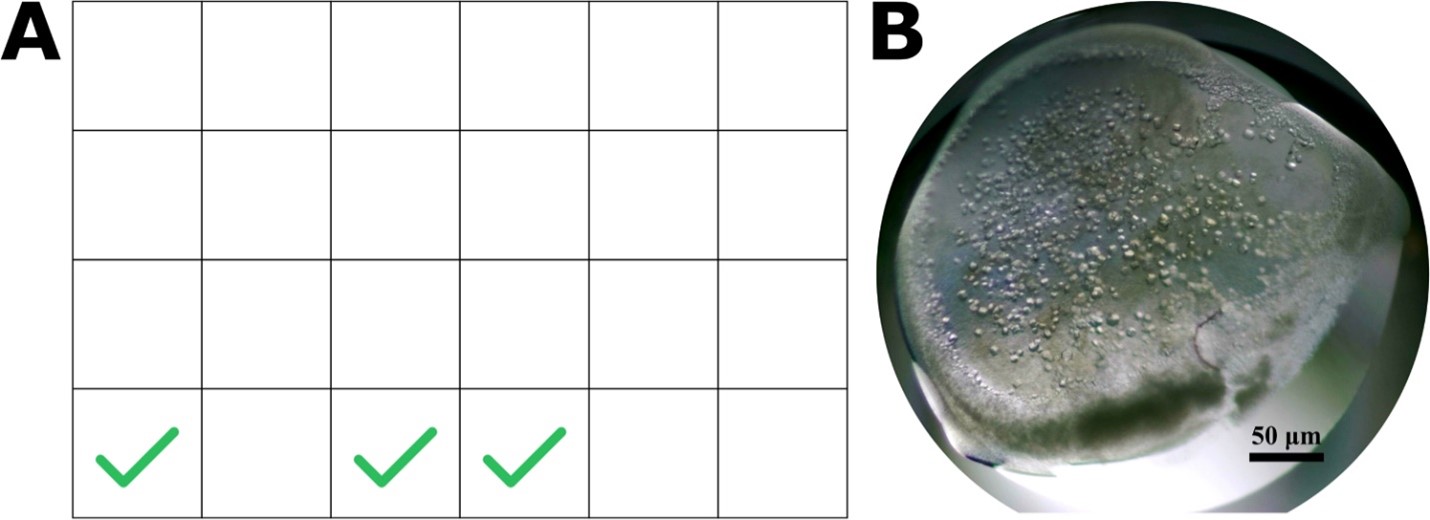 Figure 1: Crystallization results from OT-2–prepared Cryschem 24-well sitting-drop experiments.
Write a description about what you intend to do with automation tools for your final project. You may include example pseudocode, Python scripts, 3D printed holders, a plan for how to use Ginkgo Nebula, and more. You may reference this week’s recitation slide deck for lab automation details.
For my final project, I want to use lab automation tools to explore biological stress responses, with a focus on the hormone cortisol and its long-term effects on mental health. My motivation comes from the Iraqi context, where years of war, instability, environmental stress, and constant exposure to technology have contributed to high levels of anxiety, attention deficits, and stress-related disorders across the population.
According to the review article “https://pmc.ncbi.nlm.nih.gov/articles/PMC5619133/" chronic elevation of cortisol disrupts normal physiological balance and keeps the body in a prolonged fight-or-flight state. Long-term cortisol exposure affects the brain, particularly regions involved in attention, emotional regulation, and cognitive control, and is strongly associated with anxiety, impaired focus, and declining mental health. The article explains how sustained stress alters hypothalamic–pituitary–adrenal (HPA) axis regulation, leading to maladaptive stress responses rather than short-term protective ones.
In this project, I aim to simulate stress-related conditions in a controlled and automated way, rather than measuring stress directly in humans. Using automation tools such as the Opentrons liquid-handling robot, I would design workflows that represent different stress states (for example: baseline, moderate stress, chronic stress) through reproducible experimental conditions. Automation allows precise control of timing, volumes, and repetition, which is essential when modeling biological stress responses.
I would document the workflow using Python scripts or pseudocode, similar to what we learned in recitation, even if the protocol is not yet tested on the robot. Automation is critical here because stress biology depends on consistency and repetition, which manual handling cannot guarantee.
By replicating stress-associated conditions in vitro through automated workflows, this project aims to better understand how chronic stress environments such as those experienced by many Iraqi individuals may contribute to long-term cognitive and emotional effects. Understanding these mechanisms is an important step toward improved diagnosis, prevention, and treatment of stress-related disorders.
For now this is my pesudocode that will be developed more before the end of this course.
for condition in stress_conditions: dispense_reagents(condition) incubate_for_defined_time(condition) prepare_samples_for_analysis()