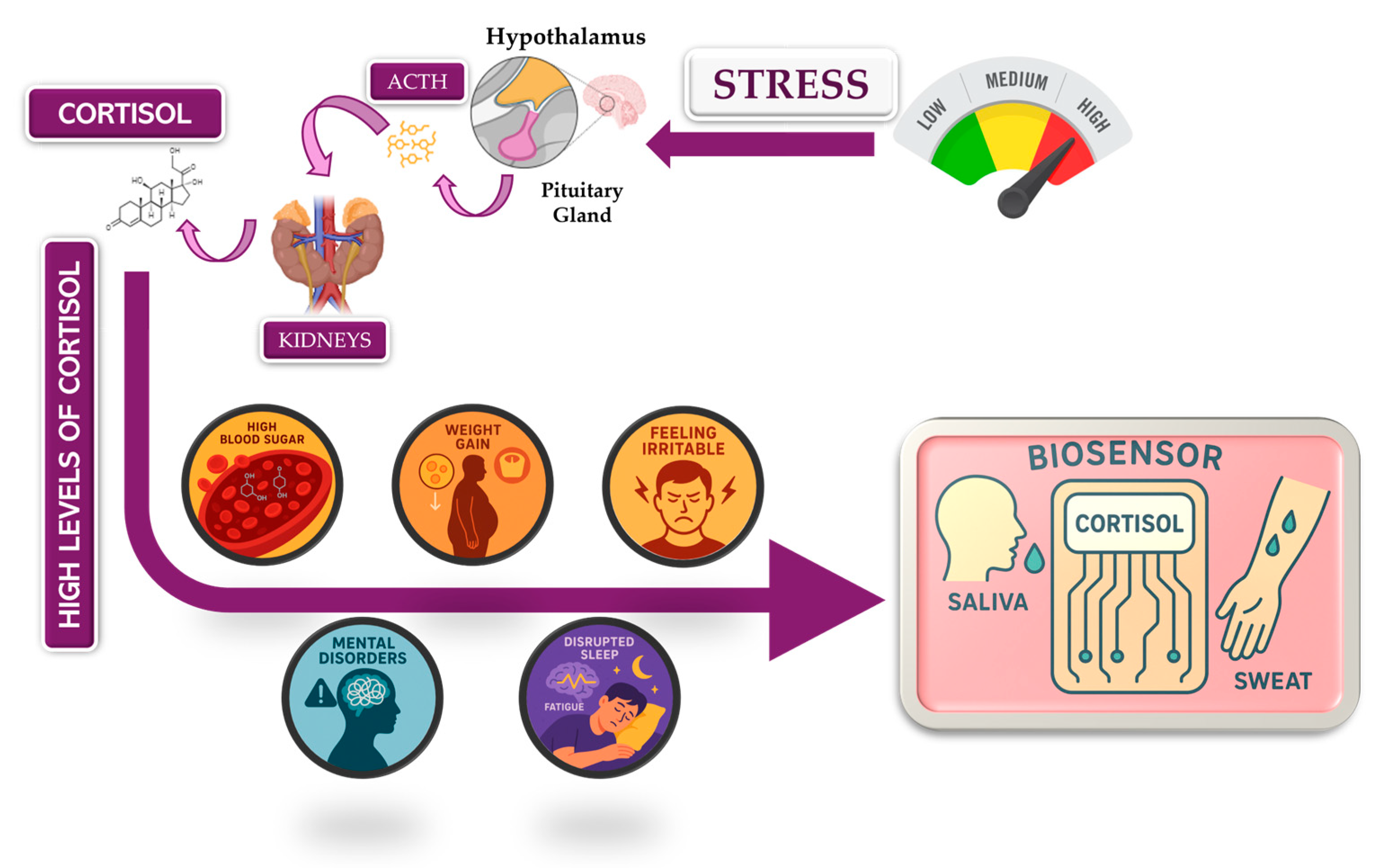
Design of a Glucocorticoid Receptor (GR-LBD)-Based Biosensor for Cortisol Detection Section1:Abstract Cortisol is one of the main hormones we look at when studying stress, circadian rhythm, and endocrine function, and it can be measured easily from saliva. It plays an important role in regulating multiple systems in the body, including metabolism, immune response, and cardiovascular function, which makes accurate measurement of cortisol important for understanding physiological stress. The problem is that most current detection systems rely on antibodies, which are not always stable, can be expensive, and do not perform well in complex environments like saliva. On top of that, cortisol is very similar in structure to cortisone, which makes it difficult to distinguish between the two and leads to noise and cross-reactivity in many biosensors.
From Brainstorming to Project Direction During our first group brainstorming session, We kept talking about the L protein stability, how the MS2 L protein interacts with the bacterial chaperone DnaJ, whether specific amino acid changes affect lysis behavior, and how modifying certain regions could potentially improve protein function. We also discussed improving lysis efficiency and helping MS2 overcome possible host resistance.
Subsections of Projects
Individual Final Project
Design of a Glucocorticoid Receptor (GR-LBD)-Based Biosensor for Cortisol Detection
Section1:Abstract
Cortisol is one of the main hormones we look at when studying stress, circadian rhythm, and endocrine function, and it can be measured easily from saliva. It plays an important role in regulating multiple systems in the body, including metabolism, immune response, and cardiovascular function, which makes accurate measurement of cortisol important for understanding physiological stress. The problem is that most current detection systems rely on antibodies, which are not always stable, can be expensive, and do not perform well in complex environments like saliva. On top of that, cortisol is very similar in structure to cortisone, which makes it difficult to distinguish between the two and leads to noise and cross-reactivity in many biosensors.
The goal of this project is to design a protein-based system using the ligand-binding domain of the human glucocorticoid receptor (GR-LBD, NR3C1), which naturally binds the ligand cortisol. Instead of designing a completely new protein, the idea is to start from a real biological system and improve it. The hypothesis is that a targeted mutation in the GR-LBD, combined with a dual-layer system design, will improve selectivity for cortisol over cortisone.
To achieve this, the project involves designing a codon-optimized DNA sequence encoding the GR-LBD for expression in E. coli, introducing a single point mutation (Q→K) based on literature showing that mutations in this domain can change receptor behavior without completely disrupting ligand binding, and evaluating the design using computational tools such as AlphaFold and ESMFold to assess structural stability and compare the wild-type and mutated versions.
In addition, the project includes a proposed dual approach, where a simple “scavenger” step could help remove interfering molecules before detection.
Overall, this project is trying to see whether a slightly engineered natural receptor can be a more stable and selective alternative to antibody-based cortisol sensors in saliva.
Section2
Aim 1: Experimental Aim
The first aim of my project is to design a modified glucocorticoid receptor ligand-binding domain by introducing a glutamine to lysine mutation and evaluating its structural impact. A codon-optimized DNA sequence was generated for expression in Escherichia coli and submitted for synthesis. Structural prediction tools such as AlphaFold and Evolutionary Scale Modeling Fold will be used to analyze changes in the binding region. The goal is to assess whether this mutation could influence selectivity toward cortisol over cortisone based on structural behavior.
Aim 2: Development Aim
The second aim of this project is to move from computational design to experimental validation by expressing and testing the engineered glucocorticoid receptor ligand-binding domain protein in a laboratory setting at the Designer Cells node. The protein will be expressed in Escherichia coli BL21(DE3), purified using an appropriate chromatography method, and tested using a fluorescence-based assay to measure its interaction with cortisol. Cortisone will also be tested to evaluate selectivity.
Additional testing will be performed under saliva-like conditions to assess how the protein behaves in a more realistic environment. The goal of this aim is to determine whether the mutation has a measurable effect on ligand selectivity and to identify any limitations related to protein expression, folding, or stability.
Aim 3: Visionary Aim
The third aim of this project is to explore how the engineered glucocorticoid receptor ligand-binding domain protein could be used in a real-time, non-invasive cortisol sensing system. If the protein shows sufficient selectivity and stability, it could be linked to a fluorescence-based signal to convert binding into a measurable output.
The long-term goal is to enable continuous monitoring of cortisol in biological samples such as saliva. This would address current limitations in cortisol detection, which are not well suited for real-time use in complex environments. By modifying a natural receptor instead of designing a fully synthetic system, this approach could provide a more stable and adaptable platform for biosensing. In the future, this could support the development of portable or wearable systems for stress monitoring.
Section3: Background
Recent work from the Baker Lab shows that protein biosensors can be designed computationally to respond to specific targets and generate measurable outputs such as fluorescence or luminescence. These systems are powerful and flexible, especially for detecting larger targets like proteins. However, their application to small molecules like cortisol is still limited, mainly because it is difficult to achieve high selectivity when molecules are structurally very similar. In addition, these systems often lose stability when moved from controlled laboratory conditions to complex environments such as saliva, where non-specific interactions can interfere with detection.
On the other hand, studies on the glucocorticoid receptor ligand-binding domain (GR-LBD) show that it naturally binds cortisol with high affinity, making it a strong starting point for biosensing. However, the receptor is structurally flexible and can also bind similar molecules like cortisone, which explains the issue of cross-reactivity. Research has shown that small mutations in this domain can modify receptor behavior without completely disrupting binding, suggesting that selectivity can be improved through targeted changes.
Despite this, the GR-LBD alone is not optimized for use in complex biological environments, highlighting a gap between strong natural binding and the level of specificity needed for reliable biosensing.
This project looks at measuring cortisol to better understand stress, but that also raises some concerns about how this kind of biological data is used. If the measurements are not fully accurate, especially in saliva, people might misunderstand their stress levels and make decisions based on incomplete information. Stress is also more complex than a single hormone, so relying only on cortisol could be misleading. Because of this, it is important to follow the principle of non-maleficence, meaning we should avoid causing harm by overinterpreting the results. At the same time, responsibility matters in how the data is explained, and justice is important if this type of technology becomes more widely used, so it is not limited to only certain groups.
To handle these issues, the project will focus on clearly defining the limits of the system and carefully validating its performance in real samples like saliva. The results should be presented in a way that makes it clear that this is not a full measure of stress, but only one indicator. One possible issue is that people may assume the measurement fully reflects their stress level, which is not always true. There is also uncertainty in the design itself, since modifying the protein may not completely fix problems like cross-reactivity or stability. As an alternative, cortisol measurements could be used together with other indicators instead of on their own. This is relevant to public health because improving how stress is monitored could support earlier awareness and help reduce long-term health effects.
Section4: EXPERIMENTAL DESIGN
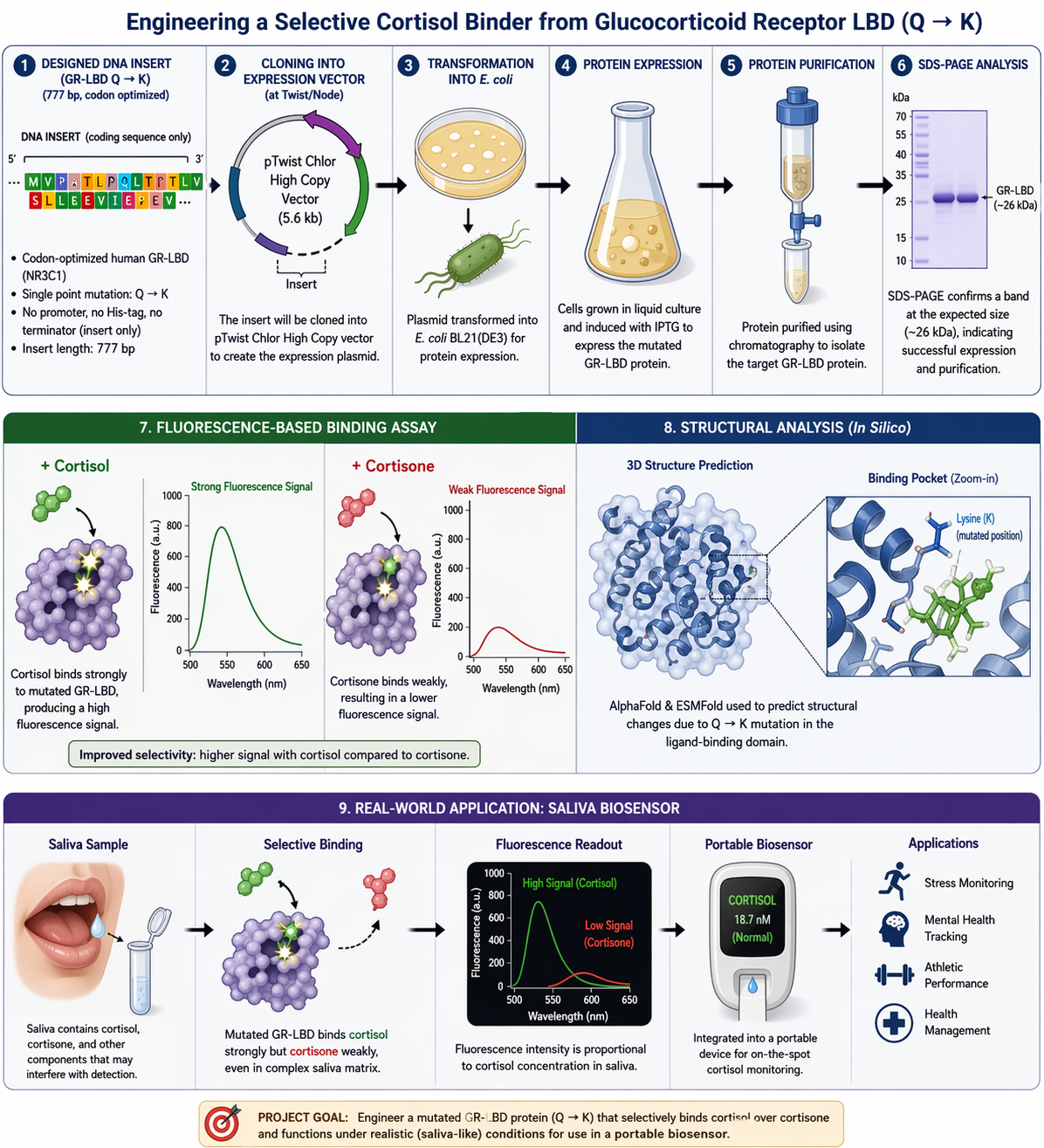
The DNA construct encoding the mutated glucocorticoid receptor ligand-binding domain, where glutamine is replaced with lysine, will be submitted to Twist Bioscience for synthesis and cloning into the pTwist Chlor high-copy vector. Since I am a committed listener, the construct will be delivered to my node, where the experimental work will be carried out. This is expected to take around two weeks, although delays may occur depending on node logistics.
Once plasmid is received, the sequence will be verified to confirm that it matches the design, which usually takes one to two days. The plasmid will then be introduced into Escherichia coli BL21(DE3), and within two days successful colonies should show that the construct is stable. The bacteria will then be grown in liquid culture, and over the next three days protein expression will be induced using isopropyl beta-D-1-thiogalactopyranoside, with the expectation that the target protein will be produced. The cells should be harvested and lysed within two days, resulting in a crude protein extract.
The protein will be purified using a chromatography-based method within few days, depending on the construct behavior, to reduce contamination from other proteins. The purified sample will then be analyzed using sodium dodecyl sulfate polyacrylamide gel electrophoresis, which takes about one to two days, where a band at the expected size would confirm protein identity and purity.
A fluorescence-based binding assay will be used during several days to test interaction with cortisol, where successful binding should produce a measurable signal. The same assay will be performed with cortisone, where a lower signal would suggest improved selectivity. Since a wild-type construct is not included, the results will be interpreted based on existing literature.
Binding experiments will also be repeated under saliva-like conditions over a few additional days to evaluate performance in a more complex environment. Some signal reduction may occur due to interference, but detectable binding would indicate stability. Repeating the measurements will help assess consistency.
In addition, structural prediction tools such as AlphaFold and Evolutionary Scale Modeling Fold will be used over two days to examine changes in the binding region. These results will help explain experimental observations.
Overall, the aim is to determine whether the mutation improves selectivity toward cortisol while maintaining stability under realistic conditions. Any limitations, such as weak signal or instability, will be noted and documented well for future improvement.
DNA Gel Art
☐ DNA Sequencing
☐ DNA Editing
☑ DNA Construct Design
☐ Restriction Enzyme Digestion
☑ Gel Electrophoresis
☐ DNA Purification From Gel
☑ Databases (e.g., GenBank, NCBI, Ensembl, UCSC Genome Browser)
Lab Automation
☐ Creating Code for Laboratory Automation
☐ Using Liquid Handling Robots (e.g., Opentrons)
☑ Designing a Twist Order
☐ Creating a plan to use the Autonomous lab at Ginkgo Bioworks
Protein Design
☑ Protein Design
☐ Use of Boltz or PepMLM
☐ Use of Asimov Kernel
☑ Use of Benchling
☐ Models and Notebooks
☑ Databases
Cell-Free Systems
☐ Cell Free Reactions
☐ Freeze-Dried Cell Free Systems
☐ miniPCR Tools
☑ Protein Purification
Gibson Assembly
☐ Primer Design or Selection
☐ PCR Reactions
☐ Gibson Assembly
☐ Other Cloning Methods
CRISPR
☐ CRISPR/Cas9
☐ Designing Prime Editing gRNA
DNA Construct Design: One of the main techniques used in this project is DNA construct design. I designed a codon-optimized sequence of the glucocorticoid receptor ligand-binding domain and introduced a specific mutation, where glutamine was replaced with lysine, to explore its effect on ligand selectivity. This step was important because it directly determines how the protein will be expressed and whether it can potentially distinguish between cortisol and cortisone. The final construct was prepared for synthesis and cloning into an expression vector through Twist Bioscience, allowing it to be used in downstream experimental steps.
Protein Purification: Another important technique in this project is protein purification. After expressing the mutated protein in Escherichia coli, the protein needs to be isolated from other cellular components to ensure accurate testing. A chromatography-based purification method would be used to obtain a cleaner protein sample, which is necessary before performing binding assays. This step is critical because any contamination could affect the fluorescence signal and lead to incorrect conclusions about binding and selectivity.
Section5: Results & Quantitative Expectations
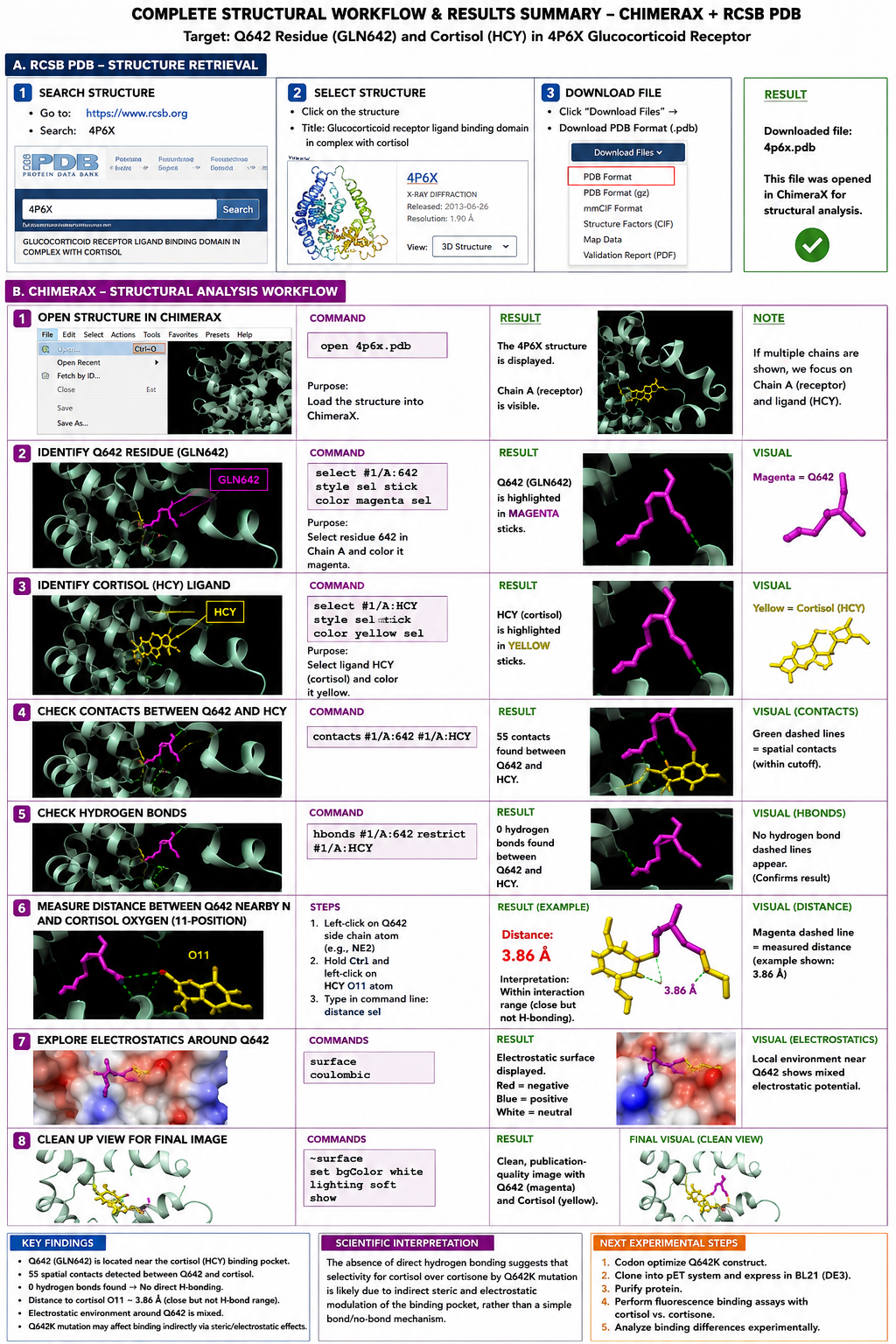
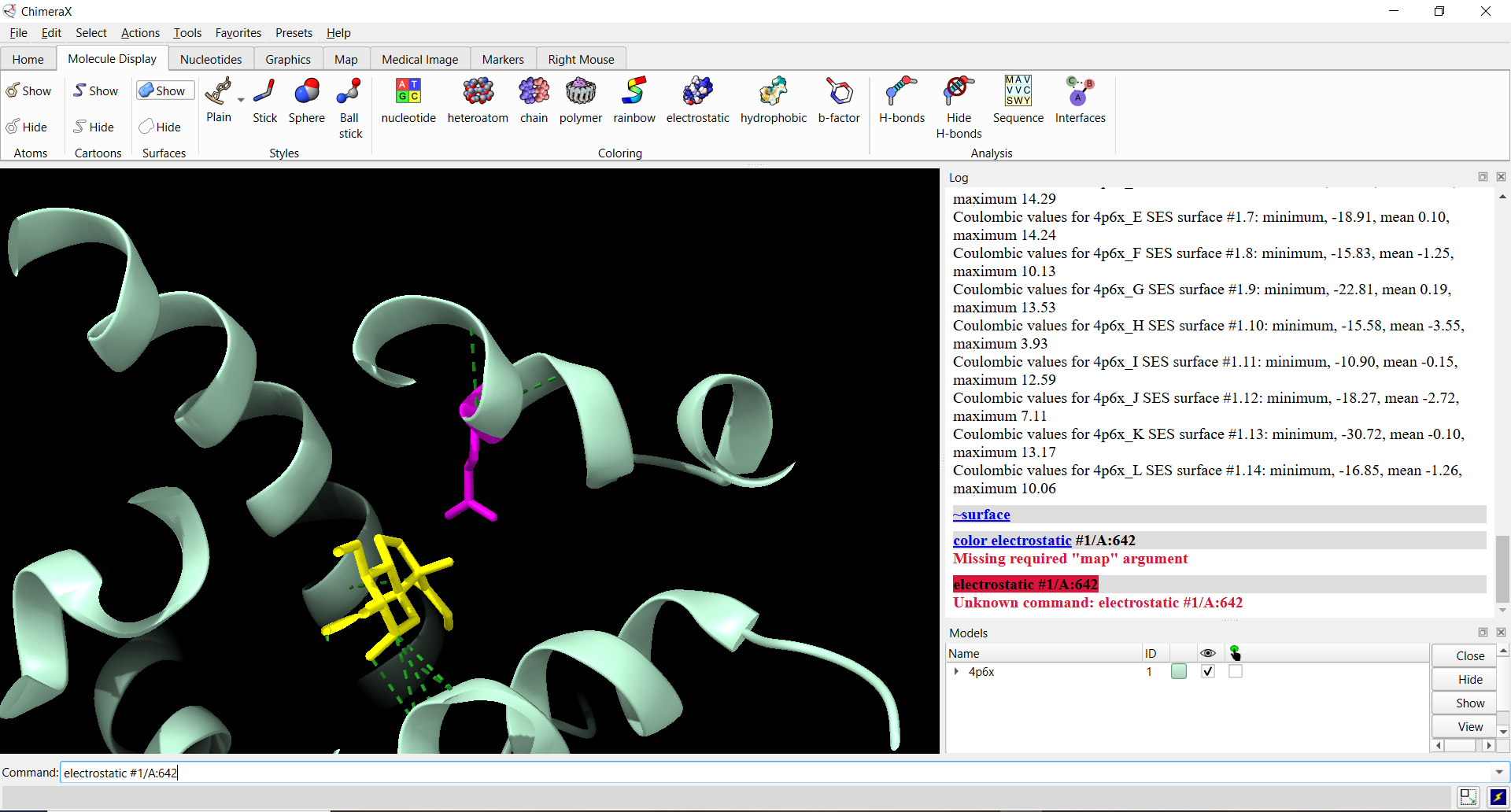
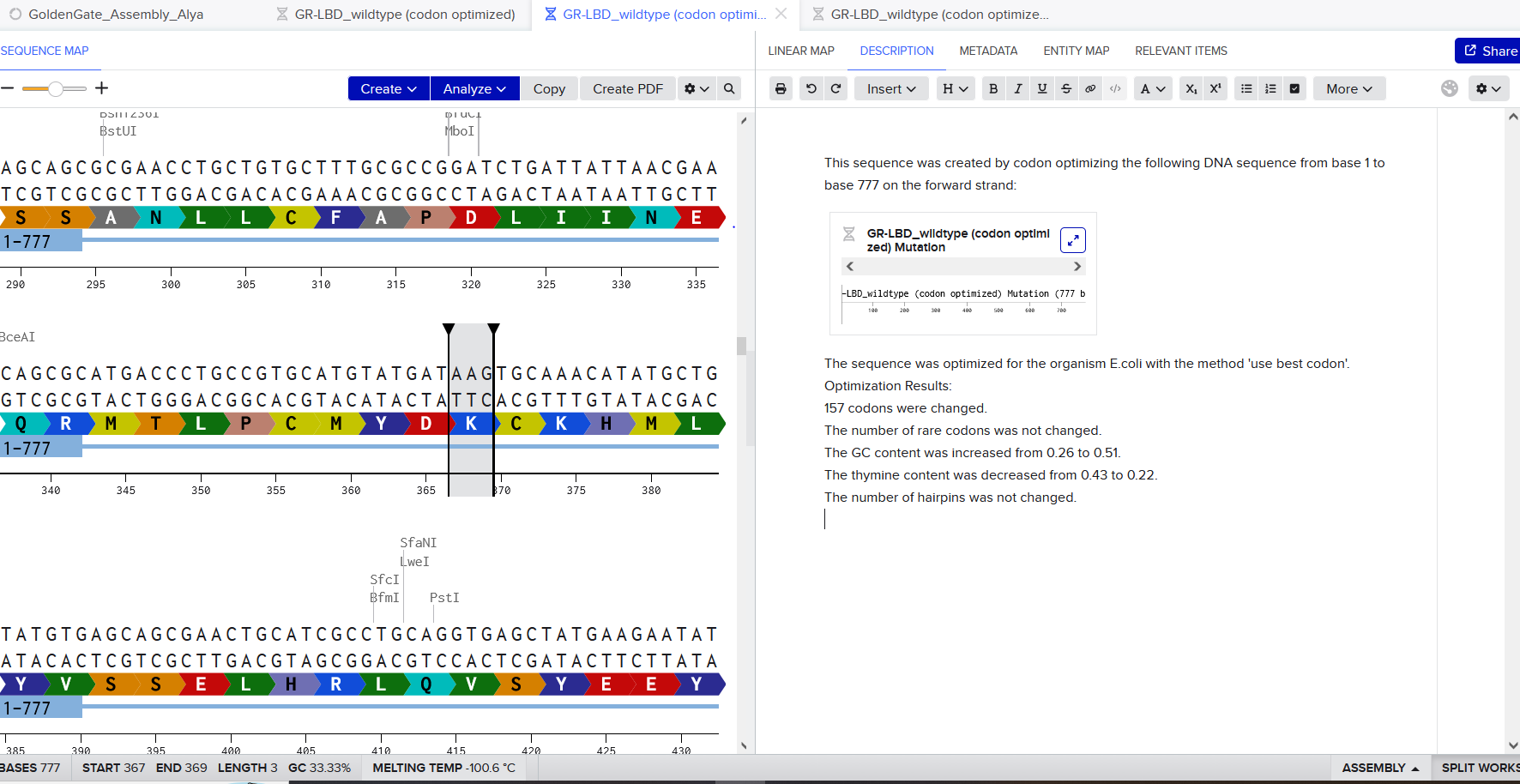
In this project, I designed and verified the GR-LBD DNA construct containing the Q642K mutation. The goal was to ensure that the sequence was correctly modified and ready for future expression studies. Preliminary structural analysis showed that Q642 is positioned close to the cortisol binding region, with ~55 local contacts and a measured distance of ~3.86 Å. No direct hydrogen bonds were observed. Following technical guidance from Mikael Hwang, these findings suggested that Q642 may influence ligand recognition through indirect steric or electrostatic effects rather than direct hydrogen-bond interactions. This provided additional rationale for further exploring the Q642K mutation.
Protocol
I started with the GR-LBD protein sequence and converted it into a DNA sequence.
The sequence was codon-optimized for E. coli.
I imported the sequence into Benchling and checked the reading frame.
A point mutation (Q → K) was introduced around base pairs 365–369.
I confirmed that the mutation does not disrupt the sequence or translation.
The final construct (777 bp) was reviewed and prepared as a Twist order.
The main technique used here is DNA construct design, where I created a codon-optimized sequence with a specific mutation. The starting point was a known GR-LBD protein sequence, which was converted into DNA before modification. Benchling was used to visualize and edit the sequence and confirm correct translation. Designing the Twist order was also part of the process to make sure the construct can be synthesized. These steps are important because they affect whether the protein can be expressed correctly later.
Data + analysis: The data comes from the DNA sequence and its visualization in Benchling. The sequence confirms that the mutation is correctly introduced, the reading frame is intact, and the construct is suitable for expression.
Challenges / limitations: One limitation is that this validation is based only on sequence design and has not been tested experimentally yet. The protein may not express well or may behave differently in E. coli. Also, a single mutation might not be enough to create a strong effect. If needed, additional mutations or redesign of the sequence could be considered.
Schaaf MJM, Lewis-Tuffin LJ, Cidlowski JA. Ligand-selective targeting of the glucocorticoid receptor to nuclear subdomains is associated with decreased receptor mobility. Molecular Endocrinology. 2005. https://doi.org/10.1210/me.2005-0050
Note: ChatGPT (GPT-5.3 instant) was used to help generate experimental design figure and to support refining the design and summarizing some of the references. The main idea, scientific reasoning, and all design decisions were developed independently by me.
Supplies & Estimated Cost
• DNA synthesis (Twist Bioscience construct): ~$150–$300
• E. coli BL21(DE3) competent cells: ~$100
• Growth media (LB broth, agar plates): ~$50
• Antibiotics (chloramphenicol): ~$30
• Protein expression inducer (IPTG): ~$50
• Cell lysis reagents (buffers, enzymes): ~$80
• Protein purification materials (affinity column + buffers): ~$200
• SDS-PAGE materials (gels, buffers, staining): ~$100
• Fluorescence-based assay reagents: ~$150
• General lab consumables (pipette tips, tubes): ~$100
Estimated total: ~$1,160
Group Final Project
From Brainstorming to Project Direction
During our first group brainstorming session, We kept talking about the L protein stability, how the MS2 L protein interacts with the bacterial chaperone DnaJ, whether specific amino acid changes affect lysis behavior, and how modifying certain regions could potentially improve protein function. We also discussed improving lysis efficiency and helping MS2 overcome possible host resistance.
stability alone was too broad. The bigger question became: Can we help the L protein maintain function while reducing its dependence on host processing? This became important because proteins that cannot maintain proper folding or structural integrity may lose function before successfully carrying out membrane-associated activity.
Previous studies identified Lodj mutants that could overcome DnaJ-related lysis defects, suggesting that modifications in specific regions of the L protein may influence how strongly the protein depends on host processing.
Goal: For this project, we want to investigate whether selected modifications can help the MS2 L protein maintain function while preserving the biological properties required for lysis.
Previous studies showed that relatively small amino acid changes in the MS2 L protein can significantly affect lysis behavior and host dependence. To build on this, we will first identify regions predicted to contribute to membrane-associated activity, DnaJ-related processing, and overall structural stability while distinguishing regions that may tolerate modification. We will use Lodj variants as a reference point because previous studies suggest that changes in these variants can influence how strongly the L protein depends on DnaJ-assisted processing.
Sequence conservation analysis: We will compare available MS2 L protein sequences and related lysis proteins to identify:
• highly conserved residues that are likely important for function
• less conserved regions that may better tolerate modification
• candidate regions for mutation selection
Because highly conserved residues are often linked to important biological functions, these regions may be less suitable targets for engineering. Less conserved regions may provide safer locations for introducing modifications while minimizing disruption of essential activity.
Structural prediction and visualization: We will use AlphaFold, ESMFold & ChimeraX to examine:
• predicted structural organization of the L protein
• membrane-associated regions
• candidate residues selected from conservation analysis
• flexible regions that may contribute to instability
The goal is not only to visualize the protein structure, but also to determine whether candidate mutations are located in regions likely to tolerate modification without disrupting membrane-associated activity.
Computational stability analysis: Computational prediction tools will be used to compare wild-type and candidate mutant designs and estimate whether modifications are predicted to stabilize or destabilize protein behavior before moving into experimental testing.
Note: This project direction was built from ideas discussed during our first group brainstorming session and our shared discussion notes. Since we had limited time for additional discussions, I continued developing and expanding the project while keeping our original ideas and overall direction as the foundation of the work.
References
Chamakura KR, Tran JS, Young R. (2017). MS2 Lysis of Escherichia coli Depends on Host Chaperone DnaJ. Journal of Bacteriology, 199(12): e00058–17.
Chamakura KR et al. (2017). Mutational Analysis of the MS2 Lysis Protein L. Microbiology.
Mezhyrova J, et al. (2023). In vitro Characterization of the Phage Lysis Protein MS2-L. Microbiome Research Reports, 3:28.
Jumper J, Evans R, Pritzel A, et al. (2021). Highly Accurate Protein Structure Prediction with AlphaFold. Nature, 596:583–589.
Lin Z, Akin H, Rao R, et al. (2023). Evolutionary-scale Prediction of Atomic-Level Protein Structure with a Language Model. Science, 379(6637):1123–1130.