Week 1 HW: Principles and Practices
1. First, describe a biological engineering application or tool you want to develop and why. This could be inspired by an idea for your HTGAA class project and/or something for which you are already doing in your research, or something you are just curious about.
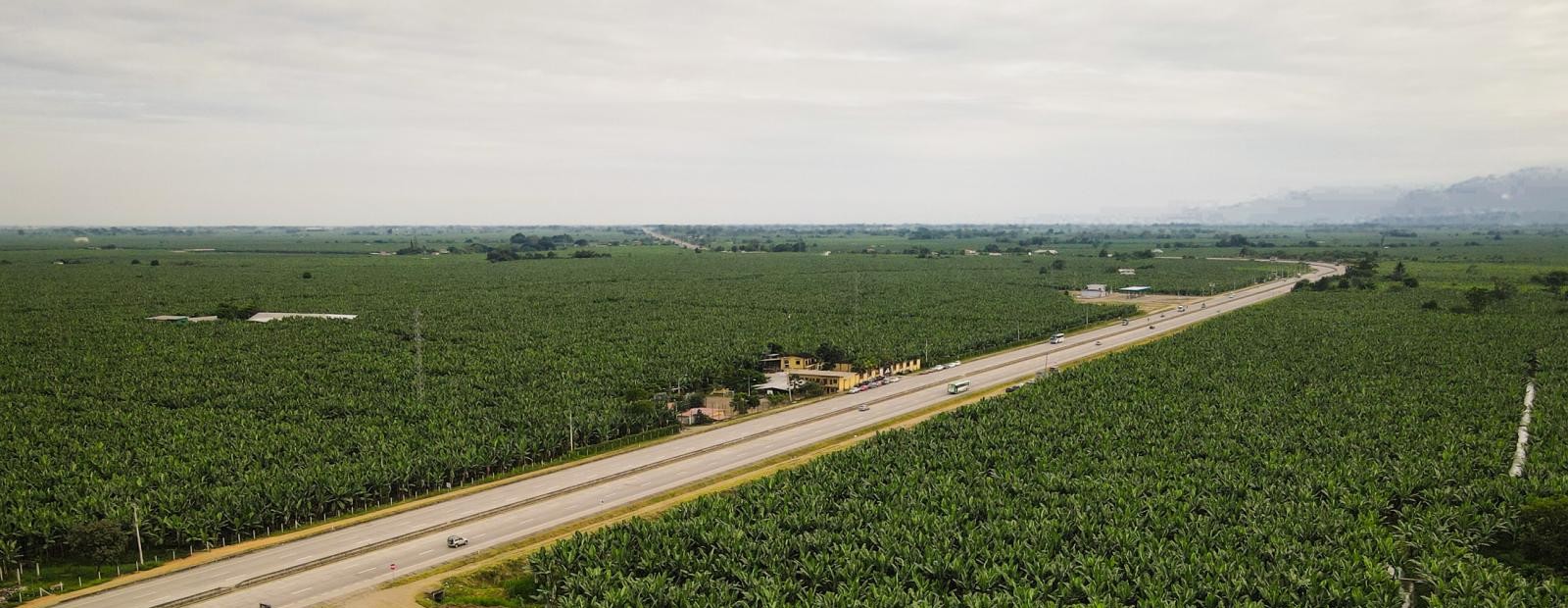
Implementing alternative methods against Pathogen-Ralstonia Solanacearum Raza 4 disease in platain and banana crops with wild bacteria. The identification and extraction of metabolites from wild isolated strain with high efficiency in the inhibition of the symptoms would help to stablish new alternatives
Ecuador is one of the main producers of Banana and platains in the world, registering an income of USD 1.528,7 M in the last year (Fronteras, 2025) . With significant importance, the spread of the MOKO disease caused by Ralstonia Solanacearum in the main crops represents a risk not only for industry but also for civilians due to the cultural use of platain in the Ecuadorian diet. However, due to its resistance and fast adaptation, the standard methods can’t offer a complete solution, involving the complete loss of the contaminated crop.
2. Next, describe one or more governance/policy goals related to ensuring that this application or tool contributes to an “ethical” future, like ensuring non-malfeasance (preventing harm). Break big goals down into two or more specific sub-goals. Below is one example framework (developed in the context of synthetic genomics) you can choose to use or adapt, or you can develop your own. The example was developed to consider policy goals of ensuring safety and security, alongside other goals, like promoting constructive uses, but you could propose other goals for example, those relating to equity or autonomy.
Main governance goal 1: Ensure biosafety and non-maleficence To avoid harm effects to ecosystems, crops, and human health Sub-goals: Prevent unintended spread of wild or engineered bacterial strains into non-target ecosystems. Ensure that extracted metabolites do not negatively affect soil microbiota, non-target plants, or human health. Minimize the risk of horizontal gene transfer between introduced bacteria and native microbial communities.
Main governance goal 2: Promote responsible and sustainable agricultural innovation Sub-goals: Encourage alternatives to chemical pesticides that reduce environmental contamination. Support long-term effectiveness of biological control methods, avoiding resistance development. Align new biotechnological solutions with sustainable agriculture and food security goals.
Main governance goal 3: Ensure equity and accessibility for local farmers Sub-goals: Make biological control solutions affordable and accessible to small and medium-scale producers. Avoid dependence on proprietary or highly patented technologies that exclude local communities. Promote local participation in research, validation, and implementation.
| Does the option: | Option 1 | Option 2 | Option 3 |
|---|---|---|---|
| Enhance Biosecurity | |||
| • By preventing incidents | 1 | 2 | 2 |
| • By helping respond | 1 | 1 | 1 |
| Foster Lab Safety | |||
| • By preventing incident | 1 | 2 | n/a |
| • By helping respond | 2 | 3 | n/a |
| Protect the environment | |||
| • By preventing incidents | 1 | 2 | 1 |
| • By helping respond | 2 | 2 | 1 |
| Other considerations | |||
| • Minimizing costs and burdens to stakeholders | 1 | ||
| • Feasibility? | 1 | 2 | 3 |
| • Not impede research | 3 | 2 | 3 |
| • Promote constructive applications | 1 | 2 | 2 |
- Last, drawing upon this scoring, describe which governance option, or combination of options, you would prioritize, and why. Outline any trade-offs you considered as well as assumptions and uncertainties.
I consider important to take in count the first goal, because in my country we aim to seek for biosafe and sustainable alternatives, due to our policies against GMOs and to ensure the availability of this solutions not only for the industry but also for minor producers
Preparation for 2nd week: Pre-lecture assignment “DNA Read, Write, and Edit"
Homework Questions from Professor Jacobson: 1. Nature’s machinery for copying DNA is called polymerase. What is the error rate of polymerase? How does this compare to the length of the human genome. How does biology deal with that discrepancy? - The error rate of polymerase is 1:10^6. Humans genome have an aproximately lenght of 3.2Gbp and comparing with the error rate of polymerase, the quotient implies an aprox. of 3200 errors per replication (without additional fixes) - First, it is important to understand that polymerase work in three levels. Proofreading allow polymerase detect and stops if an error (wrong base) is detected and activate the self-correction systems. Then, the post-replication checking allow to scan and seek for the restant errors and fix them (working as a double check). Finally, if any damage exists, there will be mechanisms to allow the instant repair of the DNA. So, the rate of errors (or mutations) decrease considerably.
2. How many different ways are there to code (DNA nucleotide code) for an average human protein? In practice what are some of the reasons that all of these different codes don’t work to code for the protein of interest? - An average human proteing have around 1000 aminoacids, because of the nature of the genetic code (it degenerates), each aminoacid can be used by multiple codons. Then, in a simple way, the total number of possible result for encoding an average human protein can be expressed as the result of 3^1000. - In the practice there are a lot of possible sequences for encoding the same protein, but aspects as the codon bias or mRNA structure can affect the translation and proper protein folding.
Homework Questions from Dr. LeProust: i. What’s the most commonly used method for oligo synthesis currently? - The most commonly used method is Solid-phase phosphoramidite synthesis iii. Why is it difficult to make oligos longer than 200nt via direct synthesis? - Each nucleotide addition is not 100% efficient (~99%). - Errors and incomplete couplings accumulate exponentially with length. It leads to many truncated and mutated products. Also,beyond ~200 nt, full-length yield and purity drop dramatically. v. Why can’t you make a 2000bp gene via direct oligo synthesis? - Each synthesis step is <100% efficient, so yield collapses exponentially over 2000 cycles. The accumulated error rate would introduce mutations in most molecules. Also, long chains become chemically unstable during synthesis and are built by assembling shorter oligos, not by direct synthesis.
Homework Question from George Church: 1. (Choosed) What are the 10 essential amino acids in all animals and how does this affect your view of the “Lysine Contingency”? Histidine Isoleucine Leucine Lysine Methionine Phenylalanine Threonine Tryptophan Valine Arginine
How affects my perspective? Lysine is primarily obtained through the diet since it cannot be synthesized by the body. Because of this, low intake or malnutrition can lead to growth problems. This implies limited access to vital resources necessary for proper development, especially in regions with poor access to adequate nutrition.