🧬 Week 02 - DNA Read, Write & Edit
Global Listener - Anastasia Ntavou
Athens, Greece
Project Context: Mycelium Surfboard (Ganoderma lucidum engineering)
Part 0: Gel Electrophoresis Basics
Watched recitation video. Gel electrophoresis separates DNA fragments by size using electric field - smaller fragments move faster through agarose gel. Visualized Lambda DNA digest patterns.
Part 1: Benchling Gel Art (In-silico)
- Imported Lambda DNA sequence in Benchling (free account).
- Simulated restriction digests: EcoRI, HindIII, BamHI, KpnI, EcoRV, SacI, SalI.
- Created surf wave pattern by arranging fragment bands artistically. Benchling project: View sequence
Part 3: DNA Design Challenge
3.1 Protein Choice
Selected Hydrophobin SC16 (Schizophyllum commune, UniProt D8QCG9, PDB 7S7S)
for mycelium surfboard. Class I hydrophobin that self-assembles into
amphipathic rodlet films at hydrophobic interfaces — ideal for
waterproofing Ganoderma lucidum mycelium composites.
3.2 Reverse Translation
Converted protein to DNA using standard genetic code:ATGATCAGAACGTTCTCGTCGATCGCCGTGGCCGCCGCCTTGGTGGTGTCCGTGGGCGCTCAGGCCGAGGTTTCGTCGGCAGCTGCCTCCGCGGCACCGGCAGCTCCTACAGCAGCGCCTGTGGCGCCG
3.3 Codon Optimization
Optimized for Ganoderma lucidum using IDT codon tool (fungal bias). Improved tRNA matching for higher expression:ATGATTCGTACGTTCAGCAGCGCCATCGCCGTGGCCGCCGCCCTGGTGGTGTCGGTGGGCGCGCAGGCCGAGGTCTCGTCGGCAGCTCGCCTCCGCGGCACCGCGCAGCTCCTACAGCAGCGCGGTGGTGCC
3.4 DNA → Protein
DNA → RNA polymerase transcription → mRNA (T→U) → ribosome translation with tRNAs → protein chain. Cell-free option: PureExtract kit.
3.5 Central Dogma Diagram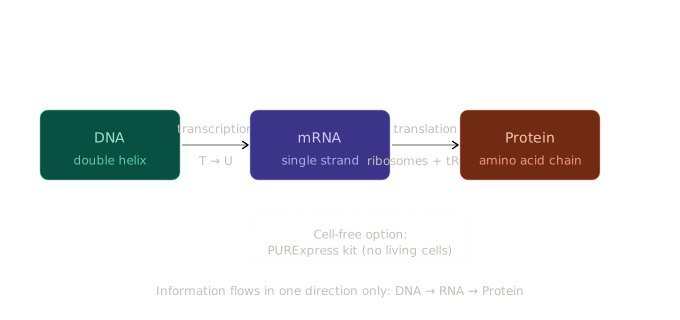
Part 4: Twist DNA Synthesis Order
Built expression cassette in Benchling:J23100 promoter + B0034 RBS + ATG + optimized hydrophobin + 6xHis tag + TAA + B0015 terminator
Twist Bioscience quote: pTwist Amp vector, 350bp insert = ~$35 ($0.09/bp).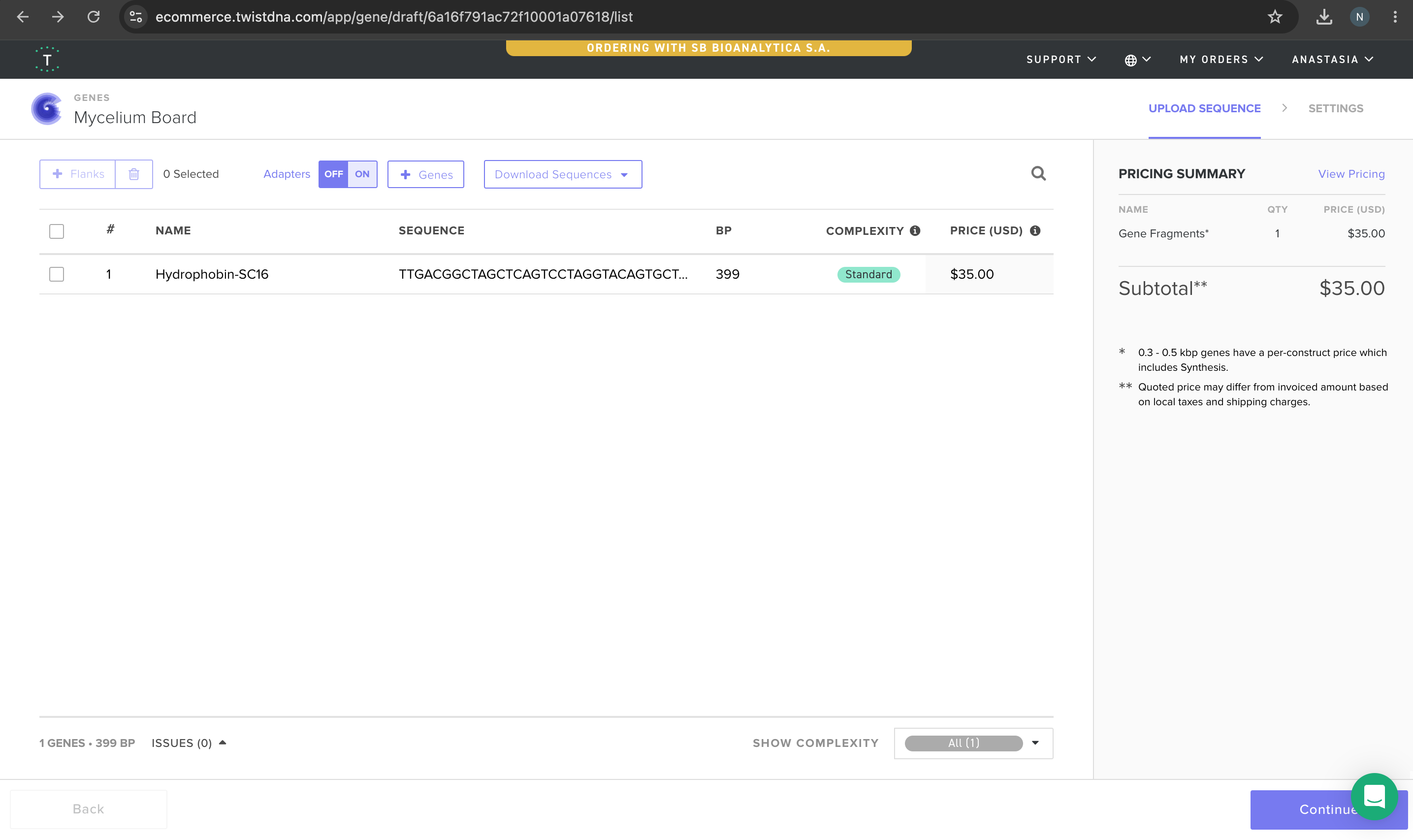
Part 5: DNA Read, Write & Edit
5.1 DNA Read
What: Sequence the native Ganoderma lucidum genome to identify endogenous hydrophobin variants and laccase isoforms relevant to the mycelium surfboard project.
Technology: Illumina NovaSeq (second-generation sequencing)
- Why: High throughput, low cost per base, well-established bioinformatics pipelines for fungal genomes
- Input: High molecular weight genomic DNA extracted from G. lucidum mycelium; fragmented to ~300-500bp; Illumina adapters ligated; PCR amplification
- Essential steps: Fragment DNA → ligate adapters → bridge amplification on flow cell → sequencing-by-synthesis (fluorescent dNTPs) → base calling
- Output: FASTQ files; assembled genome compared to reference G. lucidum genome (GenBank AGFW00000000)
- Generation: Second-generation (Next-Generation Sequencing)
5.2 DNA Write
What: Synthesize the optimized SC16 hydrophobin expression cassette for insertion into G. lucidum.
Sequence: SC16 hydrophobin codon-optimized for G. lucidum (IDT optimization, ~342bp) in pTwist Amp vector with GPD promoter and TrpC terminator.
Technology: Twist Bioscience chemical gene synthesis
- Why: Accurate synthesis up to 5kb, scarless, no cloning artifacts
- Essential steps: Oligo synthesis (phosphoramidite chemistry) → error correction → gene assembly → cloning into vector → sequence verification
- Limitations: Max ~5kb per fragment; $0.09/bp; 10-15 business day turnaround
5.3 DNA Edit
What: Engineer G. lucidum to express SC16 hydrophobin and overexpress LAC2 laccase via CRISPR-Cas9 knock-in.
Technology: CRISPR-Cas9 via Agrobacterium-mediated transformation
- Why: More efficient than protoplast electroporation for filamentous fungi; stable genomic integration
- Design steps: Design sgRNA targeting safe harbor locus (CRISPOR tool, NGG PAM); codon-optimize Cas9 for G. lucidum; design homology-directed repair (HDR) template with ~500bp homology arms
- Input: Cas9 RNP + sgRNA + HDR template plasmid; Agrobacterium tumefaciens as delivery vehicle; hygromycin selection (pAN7-1 backbone)
- Essential steps: Transform Agrobacterium with construct → co-culture with G. lucidum spores → select transformants on hygromycin plates → verify by PCR + sequencing
- Limitations: Low transformation efficiency in fungi (~1-5%); off-target edits ~1-5%; time-consuming (4-6 weeks)