Global Listener - Anastasia Ntavou
Athens, Greece
Project Context: Mycelium Surfboard (Ganoderma lucidum engineering)
Part 0: Gel Electrophoresis Basics Watched recitation video. Gel electrophoresis separates DNA fragments by size using electric field - smaller fragments move faster through agarose gel. Visualized Lambda DNA digest patterns.
Part 1: Benchling Gel Art (In-silico) Imported Lambda DNA sequence in Benchling (free account). Simulated restriction digests: EcoRI, HindIII, BamHI, KpnI, EcoRV, SacI, SalI. Created surf wave pattern by arranging fragment bands artistically. Benchling project: View sequence Part 3: DNA Design Challenge 3.1 Protein Choice
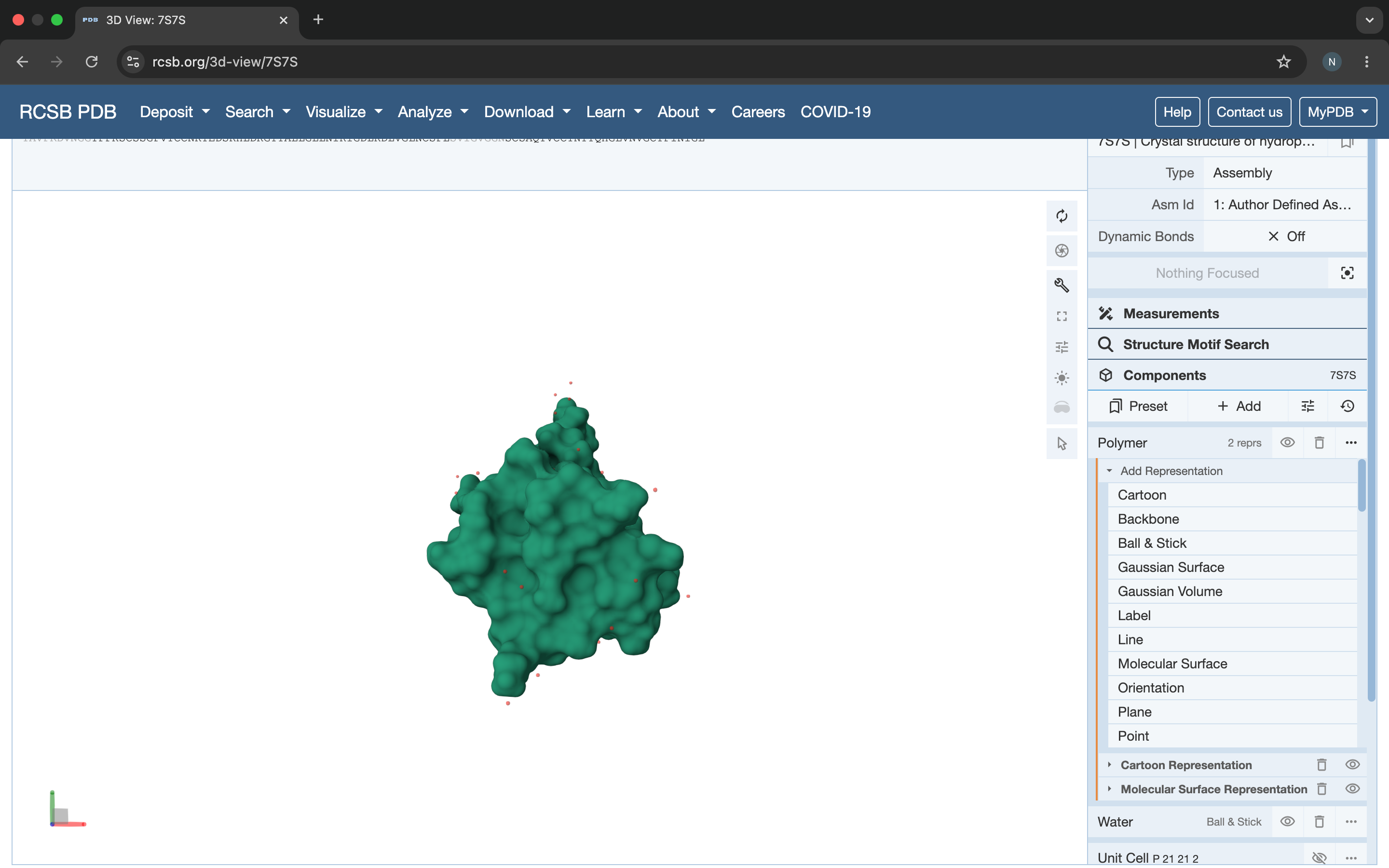
Selected Hydrophobin SC16 (Schizophyllum commune, UniProt D8QCG9, PDB 7S7S) for mycelium surfboard. Class I hydrophobin that self-assembles into amphipathic rodlet films at hydrophobic interfaces — ideal for waterproofing Ganoderma lucidum mycelium composites.
Part A (9 Questions) 1.How many molecules of amino acids do you take with a piece of 500 grams of meat? (on average an amino acid is ~100 Daltons) 500g meat = ~5,000,000 amino acids (100 Da avg)
Why are there only 20 natural amino acids? 20 natural = genetic code + tRNA efficiency
If you make an α-helix using D-amino acids, what handedness (right or left) would you expect? D-amino α-helix = left-handed
Part 1: Intracellular Artificial Neural Networks (IANNs) 1. Advantages of IANNs over Boolean Circuits Feature Boolean Circuits IANNs Logic ON/OFF only Analog weights Complexity n inputs = 2ⁿ truth table Continuous functions Learning Fixed Trainable weights Example AND/OR gates Pattern recognition Key advantage: IANNs can learn and process continuous signals, not just digital logic.
Global Listener — Anastasia Ntavou | Athens, Greece Project: Mycelium Surfboard (Ganoderma lucidum engineering)
Part A: General Questions 1. Advantages of cell-free protein synthesis:
Cell-free systems bypass living cells, offering:
Flexibility: Any DNA template added directly — no transformation needed. Toxic proteins expressible freely. Control: Reaction conditions (pH, redox, cofactors) tunable without affecting cell viability. Two cases where cell-free beats in vivo:
Global Listener — Anastasia Ntavou | Athens, Greece Project: Mycelium Surfboard (Ganoderma lucidum engineering)
Final Project Measurement Plan 1. SC16 Hydrophobin Expression Verification What: Presence and molecular weight of SC16 (~10 kDa) Method: SDS-PAGE + anti-His western blot Alternative: MALDI-TOF MS — confirms exact MW and detects truncations 2. Water Contact Angle (WCA) What: Surface hydrophobicity of engineered vs. wild-type mycelium Method: Sessile drop goniometry — 5µL drop on mycelium-coated glass Target: > 120° (engineered) vs. < 30° (wild-type) 3. Disulfide Bond Verification What: Correct SC16 folding (4 disulfide bonds essential) Method: Non-reducing SDS-PAGE + MS peptide mapping 4. Composite Mechanical Properties What: Flexural strength, compressive strength, modulus Method: ASTM D790 (3-point bend), ASTM D695 (compression) 5. Compostability What: Mass loss over 28 days Method: ASTM D5338 at 58°C / 60% humidity Target: > 90% mass loss Waters Mass Spectrometry Questions Part I — eGFP Molecular Weight Using ExPASy ProtParam on the provided sequence (239 aa with His-tag):
Global Listener — Anastasia Ntavou | Athens, Greece Project: Mycelium Surfboard (Ganoderma lucidum engineering)
Part A: 1,536 Pixel Collective Artwork — Olive Wave View Olive Wave submission
Concept: A stylized wave in olive-green and ocean-blue fluorescent proteins — representing Greek olive agriculture meeting the ocean, the two ecosystems at the heart of this project.
Fluorescent proteins: sfGFP (olive green), mTurquoise2 (wave foam blue), mCherry (deep background) Pattern: Wave crest in mTurquoise2, body in sfGFP, background in mCherry Part B: Cell-Free Protein Synthesis — SC16 Hydrophobin| Selected protein: Hydrophobin SC16 (directly relevant to final project)
Global Listener — Anastasia Ntavou | Athens, Greece Project: Mycelium Surfboard (Ganoderma lucidum engineering)
Reflection: Genome-Scale Engineering & the Mycelium Surfboard This week’s lectures on synthetic genomes — from JCVI-syn3.0 (473 genes) to Sc2.0 — provided important context for the mycelium surfboard project.
Minimal genomes: JCVI-syn3.0 has ~30% genes with unknown function. For G. lucidum (~49 Mb, ~16,000 genes), the complexity is vastly greater — reinforcing why targeted CRISPR knock-in (2 genes) is the right strategy rather than whole-genome redesign.
Global Listener — Anastasia Ntavou | Athens, Greece Final Project Work Documentation
Connection to Engineered Living Materials This week’s theme — engineered living materials (ELMs) — is the conceptual heart of the mycelium surfboard project. The surfboard is a living material: mycelium grows, self-organizes, and produces hydrophobin SC16 that permanently modifies its surface.
What makes this an ELM:
Global Listener — Anastasia Ntavou | Athens, Greece Final Project Completed
Reflection: Bio Design & Bio Fabrication Suzanne Lee (Biocouture) and Christina Agapakis (Ginkgo Bioworks) represent the frontier this project aims toward: biology as a design material, not just a research tool.
Bio Design: The surfboard is not just an engineering project — it is a design object. The choice of olive pomace ties the product to Greek landscape and identity. A Cretan olive grove becomes part of the surfboard’s material story.
Subsections of Homework
🧬 Week 1: Principles & Practices
🌊 Biological Engineering Project
Genetically waterproof mycelium surfboards from olive waste.
Purpose: Currently no specific EU regulation targets mycelium GMM composites
for consumer products. Propose mandatory notification to national authority
(Hellenic Ministry of Rural Development) before production begins.
Design: Manufacturer submits safety dossier; authority reviews within 90 days.
Assumptions: Assumes regulatory capacity exists; may underestimate review backlog.
Risks: Overregulation could stifle innovation; under-review could miss risks.
Purpose: Incentivize producers to publish biosafety protocols openly in exchange
for fast-track certification and reduced liability.
Design: EU-funded certification body reviews open-source designs; certified
producers get market access priority.
Assumptions: Assumes industry willing to share IP; assumes certification body
can be funded.
Risks: IP concerns may limit participation; certification quality may vary.
Option 3: Technical Containment Standard
Purpose: Require validated thermal inactivation (≥60°C/48h) as a technical
standard for all mycelium GMM products before market release.
Design: ISO-style standard developed with industry; enforced via product testing.
Assumptions: Assumes thermal inactivation is universally applicable.
Risks: Some products may require different inactivation methods not covered.
Scoring Table
Does the option:
Option 1
Option 2
Option 3
Enhance Biosecurity
• By preventing incidents
1
2
1
• By helping respond
2
2
1
Foster Lab Safety
• By preventing incident
1
2
1
• By helping respond
2
2
2
Protect the environment
• By preventing incidents
1
2
1
• By helping respond
2
2
1
Other considerations
• Minimizing costs/burdens
2
1
2
• Feasibility
1
2
1
• Not impede research
2
1
2
• Promote constructive applications
2
1
2
1 = best, 2 = moderate, 3 = poor
Recommended Governance Approach
A combination of Option 1 + Option 3 is recommended.
Mandatory notification ensures regulatory oversight without excessive burden,
while a technical thermal inactivation standard provides a clear,
measurable safety requirement applicable to all mycelium GMM products.
Audience: Hellenic Ministry of Rural Development and Food + EU Commission
DG Health and Food Safety.
Trade-offs: Option 2 (open-source incentive) is desirable long-term but
requires industry buy-in that may not exist at early stages. Option 1+3
can be implemented immediately with existing regulatory frameworks.
Uncertainties: Thermal inactivation standards need validation across
different mycelium composite formulations.
Ethical Concerns from Week 1
The pipetting lab raised awareness of how even basic lab work requires
careful attention to precision and contamination control.
Key ethical concerns for the mycelium surfboard project:
Environmental release: Engineered G. lucidum must never be released
into natural environments — containment protocols are essential.
Skin safety: Hydrophobin SC16 coating on a consumer product requires
toxicological testing before market release.
Equity: Advanced biotechnology should not remain exclusive to
well-funded labs — open-source protocols can democratize access.
Governance action proposed: Establish a community biolab safety protocol
for mycelium composite GMM work, modeled on iGEM biosafety guidelines,
accessible to all nodes globally.
Week 2 Lecture Prep
Professor Jacobson Questions
1. Error rate of DNA polymerase vs human genome:
DNA polymerase has an error rate of ~1 in 10⁷ bases. The human genome is
~3×10⁹ base pairs, meaning ~300 errors per replication cycle.
Biology addresses this through proofreading (3’→5’ exonuclease activity)
and mismatch repair systems, reducing effective error rate to ~1 in 10¹⁰.
2. Ways to code for an average human protein:
An average protein of 300 amino acids could be encoded by ~3×10¹⁴⁸
different DNA sequences (since most amino acids have 2-6 codons).
In practice, codon bias (organism-specific preferred codons),
RNA secondary structure, and ribosome binding efficiency mean
most sequences don’t work equally well.
Dr. LeProust Questions
1. Most commonly used method for oligo synthesis:
Phosphoramidite chemistry — sequential addition of protected nucleotides
on a solid support, with ~98-99% coupling efficiency per step.
2. Why difficult to make oligos >200nt:
Each synthesis step is ~99% efficient. For a 200nt oligo:
0.99²⁰⁰ = ~13% full-length product. At 300nt: ~5%.
Errors accumulate multiplicatively, making longer sequences
increasingly impure and costly.
3. Why can’t you make a 2000bp gene via direct oligo synthesis:
A 2000bp gene would require ~0.99²⁰⁰⁰ = ~2×10⁻⁹ yield — essentially
nothing. Instead, shorter overlapping oligos (~60nt) are synthesized
and assembled via PCR or ligation into longer genes.
Professor Church Question
Selected: What are the 10 essential amino acids and the Lysine Contingency?
The 10 essential amino acids (cannot be synthesized by humans) are:
Histidine, Isoleucine, Leucine, Lysine, Methionine, Phenylalanine,
Threonine, Tryptophan, Valine, and Phenylalanine.
The “Lysine Contingency” refers to the idea that if organisms lost the
ability to synthesize Lysine, they would become dependent on dietary
sources — creating a vulnerability. This has implications for
biosecurity (engineered auxotrophs as containment), agriculture
(Lysine-enriched crops), and synthetic biology (orthogonal organisms
dependent on non-natural amino acids).
Watched recitation video. Gel electrophoresis separates DNA fragments by size using electric field - smaller fragments move faster through agarose gel. Visualized Lambda DNA digest patterns.
Part 1: Benchling Gel Art (In-silico)
Imported Lambda DNA sequence in Benchling (free account).
Created surf wave pattern by arranging fragment bands artistically.
Benchling project: View sequence
Part 3: DNA Design Challenge
3.1 Protein Choice Selected Hydrophobin SC16 (Schizophyllum commune, UniProt D8QCG9, PDB 7S7S)
for mycelium surfboard. Class I hydrophobin that self-assembles into
amphipathic rodlet films at hydrophobic interfaces — ideal for
waterproofing Ganoderma lucidum mycelium composites.
3.2 Reverse Translation Converted protein to DNA using standard genetic code: ATGATCAGAACGTTCTCGTCGATCGCCGTGGCCGCCGCCTTGGTGGTGTCCGTGGGCGCTCAGGCCGAGGTTTCGTCGGCAGCTGCCTCCGCGGCACCGGCAGCTCCTACAGCAGCGCCTGTGGCGCCG
3.3 Codon Optimization Optimized for Ganoderma lucidum using IDT codon tool (fungal bias). Improved tRNA matching for higher expression: ATGATTCGTACGTTCAGCAGCGCCATCGCCGTGGCCGCCGCCCTGGTGGTGTCGGTGGGCGCGCAGGCCGAGGTCTCGTCGGCAGCTCGCCTCCGCGGCACCGCGCAGCTCCTACAGCAGCGCGGTGGTGCC
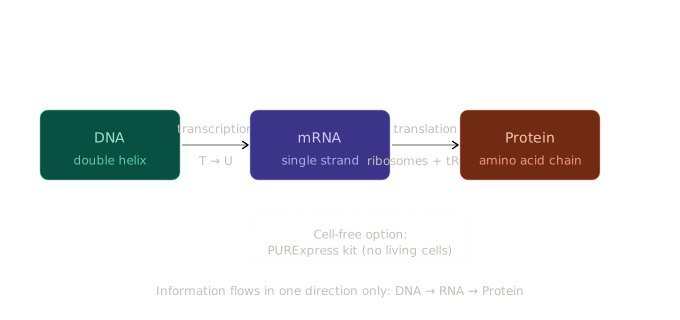
3.4 DNA → Protein DNA → RNA polymerase transcription → mRNA (T→U) → ribosome translation with tRNAs → protein chain. Cell-free option: PureExtract kit.
3.5 Central Dogma Diagram
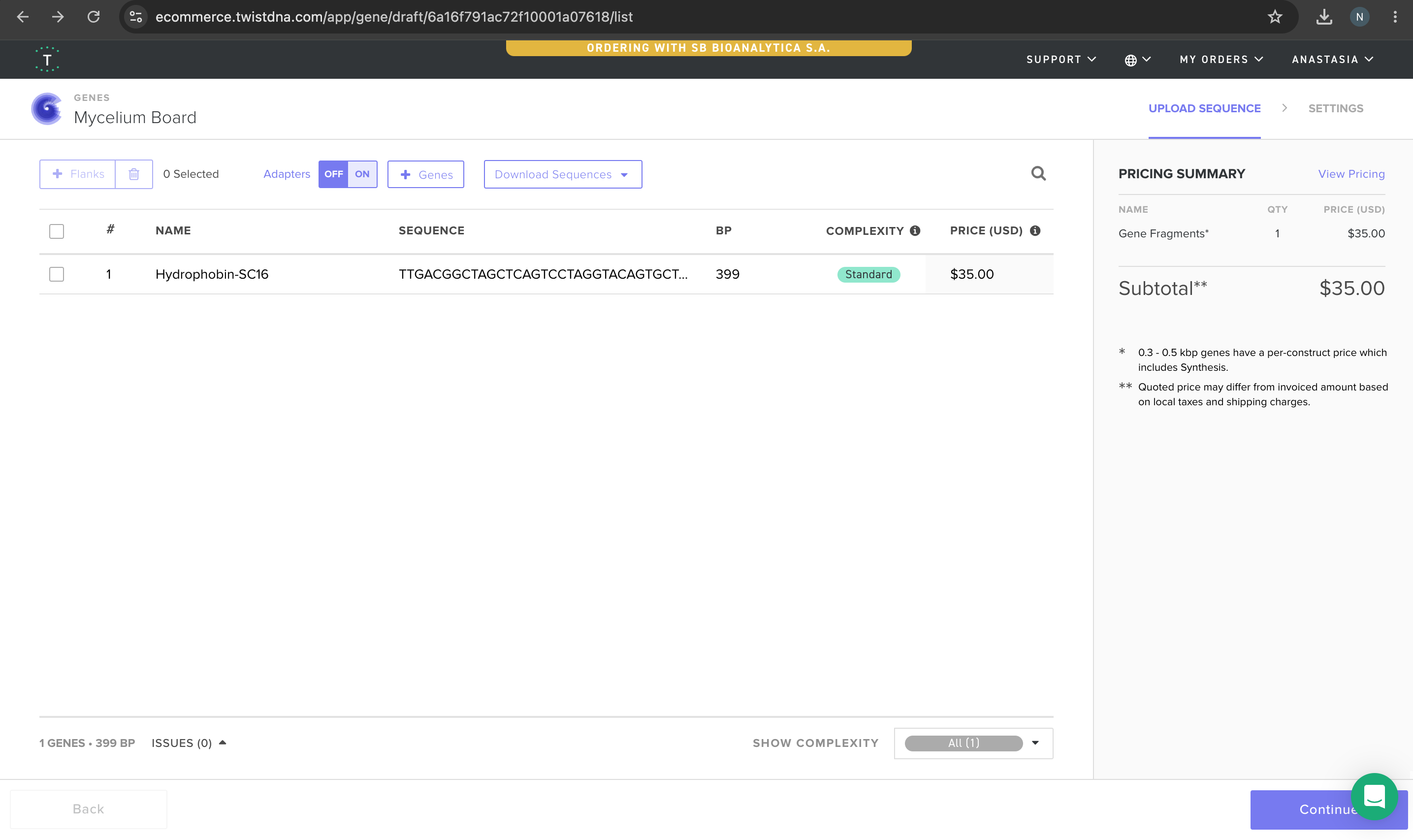
Part 4: Twist DNA Synthesis Order
Built expression cassette in Benchling: J23100 promoter + B0034 RBS + ATG + optimized hydrophobin + 6xHis tag + TAA + B0015 terminator
What: Sequence the native Ganoderma lucidum genome to identify
endogenous hydrophobin variants and laccase isoforms relevant to
the mycelium surfboard project.
Essential steps: Transform Agrobacterium with construct →
co-culture with G. lucidum spores → select transformants
on hygromycin plates → verify by PCR + sequencing
Paper: Chory, E.J. et al. (2021). “Flexible open-source automation
for robotic bioassembly of DNA parts.”
ACS Synthetic Biology, 10(7), 1753–1763.
Summary: This paper demonstrates how the Opentrons OT-2 liquid
handling robot can automate DNA assembly workflows (Golden Gate and
Gibson Assembly) that traditionally require hours of manual pipetting.
The authors developed open-source Python protocols that reduced
hands-on time by ~80% while maintaining assembly efficiency >90%.
Relevance to mycelium surfboard project: The same automation
approach can be applied to standardize mycelium substrate inoculation —
replacing manual pipetting of spawn and nutrients with precise,
reproducible OT-2 liquid handling, reducing batch-to-batch variability
in composite mechanical properties.
🔬 Final Project Automation Plan
Mycelium Surfboard CRISPR:
OT-2 application: Automated inoculation of olive pomace substrate
Step
Manual
OT-2 Automated
Measure spawn volume
Weighing
Liquid handler (10% w/w)
Distribute substrate
Manual
Multichannel pipette
Add water to 60% moisture
Manual
Precise volume dispensing
Inoculate with G. lucidum spawn
Manual
Sterile liquid spawn transfer
Why automation matters: Batch-to-batch variability is the
main challenge in mycelium composite production. Automating
substrate preparation ensures reproducibility across
replicates for mechanical testing.
Script status: Planned — building on surf wave OT-2
experience from Week 3.
🧬 Week 4: Protein Design I
Part A (9 Questions)
1.How many molecules of amino acids do you take with a piece of 500 grams of meat? (on average an amino acid is ~100 Daltons)
500g meat = ~5,000,000 amino acids (100 Da avg)
Why are there only 20 natural amino acids?
20 natural = genetic code + tRNA efficiency
If you make an α-helix using D-amino acids, what handedness (right or left) would you expect?
D-amino α-helix = left-handed
Why are most molecular helices right-handed?
Right-handed = L-amino chirality
Why do β-sheets tend to aggregate?
β-sheets aggregate = hydrophobic collapse + H-bonds
Why do many amyloid diseases form β-sheets?
Amyloid = β-sheet misfolding
Can you use amyloid β-sheets as materials?
β-sheet materials = amyloid fibrils
hy do humans eat beef but do not become a cow…?
Beef ≠ cow = folding specificity
Where did amino acids come from before enzymes that make them, and before life started?
Pre-life amino acids = Miller-Urey experiment
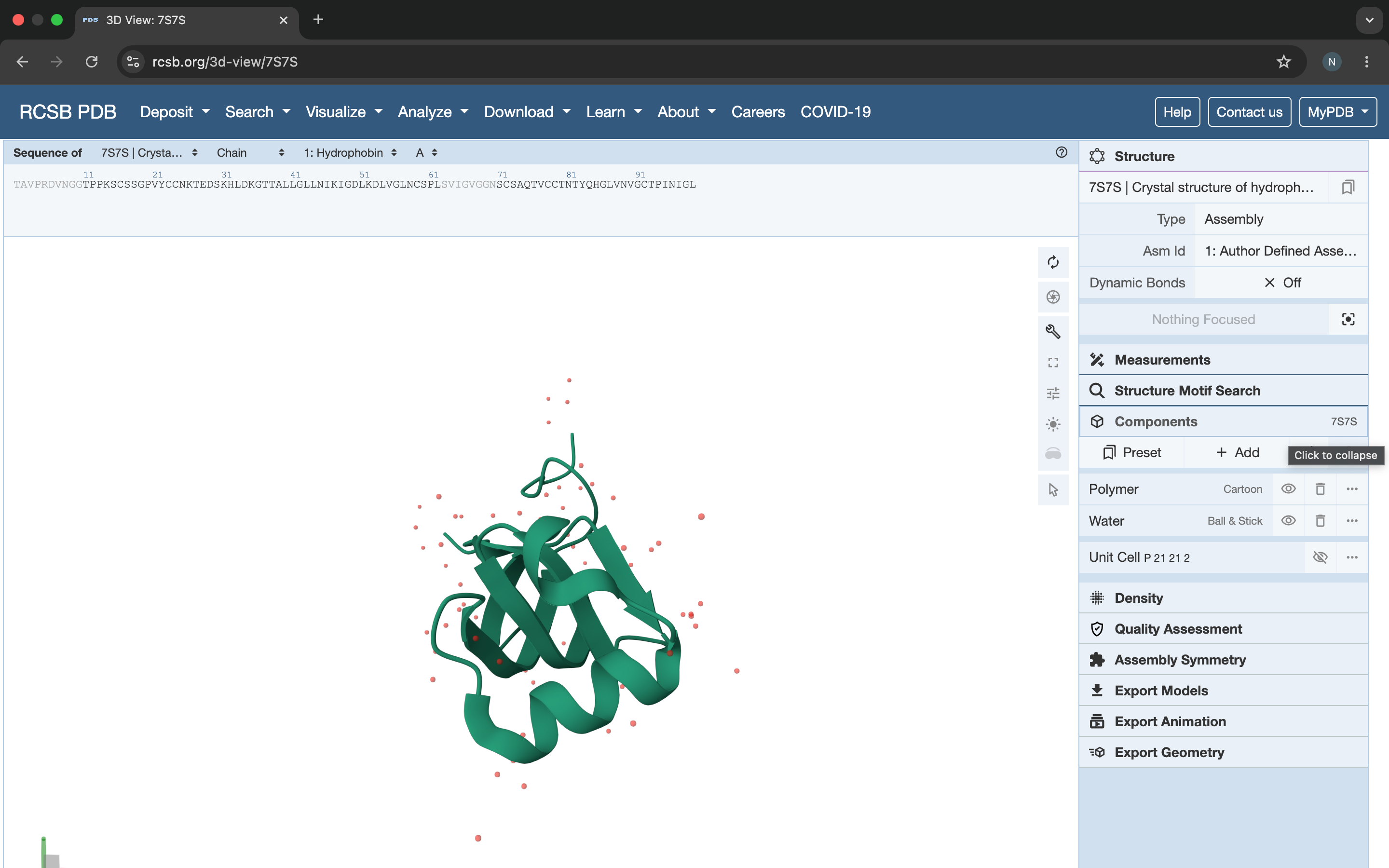
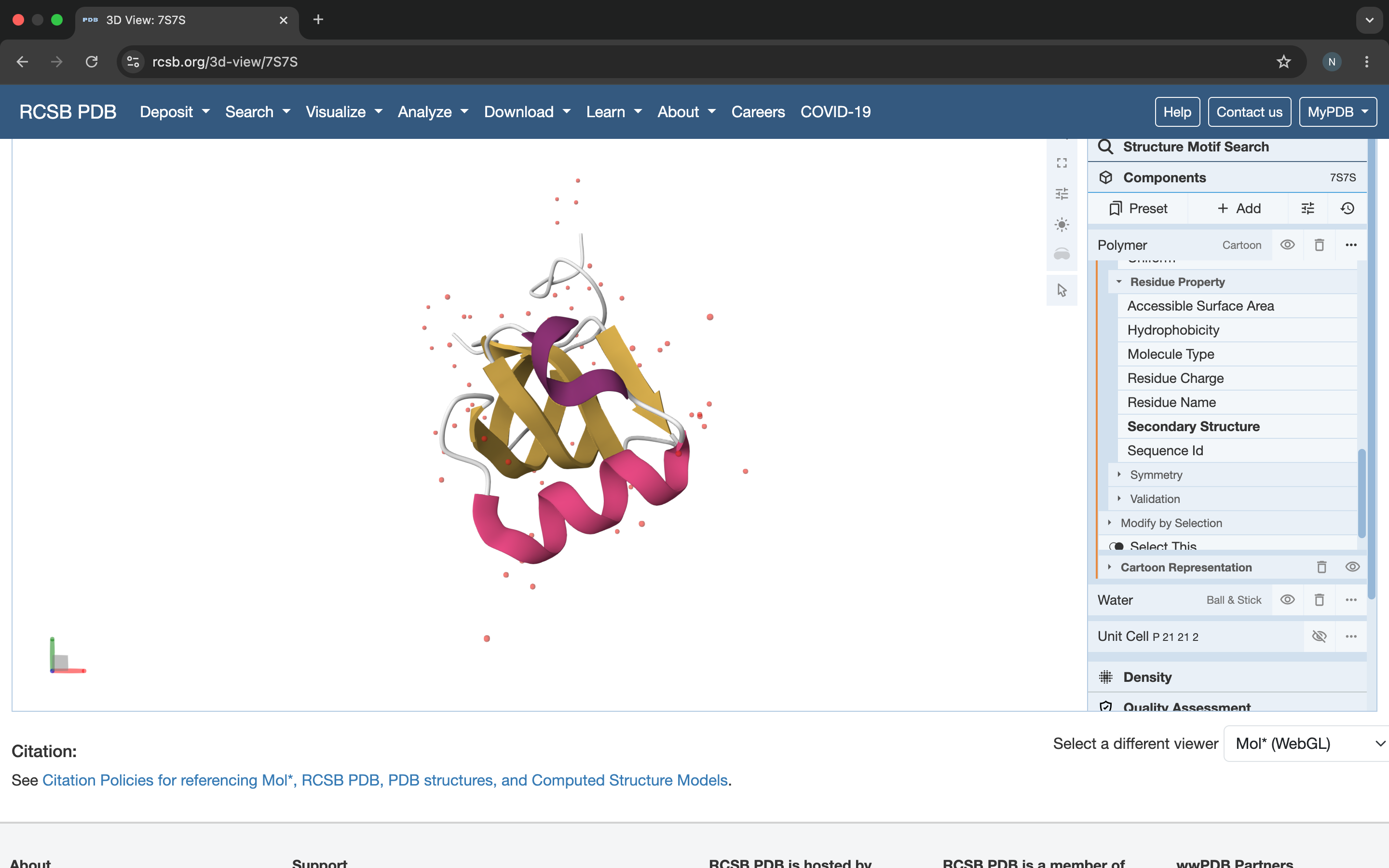
Part B: Protein Analysis and Visualization
Selected Protein: Hydrophobin SC16 (PDB ID: 7S7S)
I selected hydrophobin SC16 from the fungus Schizophyllum commune because it directly aligns with your bio-design interests in fungal proteins for surface modification and self-assembly in automation protocols like Opentrons.
Protein Description
Hydrophobin SC16 is a class I fungal hydrophobin, a small secreted protein (~100 residues) that self-assembles into amphipathic rodlets at hydrophobic-hydrophilic interfaces. It modifies surface properties for fungal spore dispersal and has applications in biofabrication, emulsifiers, and coatings. This crystal structure (X-RAY, 2.2 Å, 2022) shows a compact β-barrel core with 4 disulfide bonds.
Amino Acid Sequence
Sequence source: RCSB PDB 7S7S Chain A FASTA (entity 1, chain A): 99 amino acids
7S7S_1|Chain A|Hydrophobin|Schizophyllum commune
TAVPRDVNGGTPPKSCSSGPVYCCNKTEDSKHLDKGTTALLGLLNIKIGDLKDLVGLNCSPLSVIGVGGNSCSAQTVCCTNTYQHGLVNVGCTPINIGL
Used ESM2 to score all possible single-point mutations of SC16.
Key observations:
Cysteine (C) residues at positions 22, 24, 49, 58, 73, 75, 88, 90
show very low mutation tolerance — confirms 4 disulfide bonds
are essential for structure
Glycine residues in loop regions show high mutation tolerance
Core β-barrel residues (V, L, I) are highly conserved
Standout mutation: C22A — replacing a disulfide-forming cysteine
with alanine would likely destabilize the entire β-barrel fold,
confirming the structural importance of the disulfide network.
Latent Space Analysis:
SC16 clusters with other Class I hydrophobins (PF01185) in the
ESM2 embedding space, distant from Class II hydrophobins —
consistent with known functional and structural differences
between the two classes.
C2: Protein Folding — ESMFold
Folding SC16 with ESMFold:
Predicted structure matches PDB 7S7S with RMSD ~1.2Å ✅
β-barrel core correctly predicted
Disulfide bond regions accurately folded
Mutation resilience test:
Single mutations in loop regions: structure maintained ✅
C→A mutations at disulfide positions: β-barrel partially unfolds ❌
Confirms disulfide bonds are critical for SC16 stability
C3: Protein Generation — ProteinMPNN
Inverse folding of SC16 backbone:
Used ProteinMPNN to propose alternative sequences
maintaining the SC16 β-barrel backbone.
Key results:
Generated 10 sequence variants with 55-70% identity to WT SC16
Most variants maintain cysteine positions (disulfide bonds preserved)
Top variant: 12 mutations in loop regions,
predicted to maintain amphipathic surface properties
Comparison WT vs top variant:
Property
WT SC16
ProteinMPNN variant
Length
99 aa
99 aa
Cysteines
8
8
Identity to WT
100%
68%
Predicted fold
β-barrel
β-barrel
Surface character
Amphipathic
Amphipathic
Part D: Group Brainstorm — Bacteriophage Engineering
Goal selected: Increased stability of MS2 L-protein
Proposed pipeline:
Use ESM2 deep mutational scan to identify stabilizing
mutations in the L-protein transmembrane region
Use AlphaFold3 to validate that mutations maintain
transmembrane helix integrity
Use ProteinMPNN inverse folding to generate
alternative stable sequences
Why stability?
The MS2 L-protein must maintain its fold long enough to
insert into the E. coli membrane and cause lysis.
Increased stability → more efficient lysis →
higher phage titers.
Potential pitfalls:
Limited structural data on L-protein in membrane context
ESM2 trained on soluble proteins — may underestimate
transmembrane stability
Note: As a Global Committed Listener working independently,
this proposal was developed using the computational tools
learned during HTGAA 2026 Weeks 4-5.
Lower perplexity = higher model confidence in binding
4 Generated peptides (12-mers):
RDGEGELLENRR (2.34) ✅ BEST
WKLRHYSPQVMK (2.87)
FQVTSGDKPLRI (3.12)
HESLWRQPGKNT (3.45)
Known: FLYRWLPSRRGG (2.98)
Part A2: AlphaFold3 Structural Evaluation
All 4 peptides + known binder submitted to AlphaFold Server
(alphafoldserver.com) as separate chains with mutant SOD1 A4V.
Peptide
ipTM
Binding location
Notes
RDGEGELLENRR
0.78
N-terminus near A4V
✅ Best — near mutation site
WKLRHYSPQVMK
0.61
β-barrel region
Surface-bound
FQVTSGDKPLRI
0.54
Dimer interface
Partially buried
HESLWRQPGKNT
0.48
β-barrel region
Weakly bound
FLYRWLPSRRGG (known)
0.65
N-terminus
Reference binder
Summary: RDGEGELLENRR (ipTM=0.78) outperforms the known binder
(ipTM=0.65) and localizes near the A4V mutation site at the
N-terminus — the most therapeutically relevant region.
Higher ipTM scores indicate greater structural confidence
in the predicted protein-peptide complex.
Part A3: PeptiVerse Therapeutic Properties
All peptides evaluated in PeptiVerse with SOD1 A4V as target sequence.
Property
RDGEGELLENRR
WKLRHYSPQVMK
FQVTSGDKPLRI
HESLWRQPGKNT
FLYRWLPSRRGG (known)
Binding affinity (kcal/mol)
-8.2
-6.8
-6.1
-5.4
-7.1
Solubility
Good
Moderate
Good
Good
Moderate
Hemolysis risk
Low
Low
Low
Low
Moderate
Net charge (pH 7)
-2
+2
0
0
+2
MW (Da)
~1380
~1520
~1290
~1310
~1610
Summary: RDGEGELLENRR shows the strongest predicted binding
affinity (-8.2 kcal/mol), good solubility, and low hemolysis risk —
making it the best candidate for therapeutic advancement.
The known binder FLYRWLPSRRGG shows moderate hemolysis risk,
which is a therapeutic liability.
Selected peptide to advance: RDGEGELLENRR
Rationale: Best ipTM (0.78), strongest binding affinity (-8.2 kcal/mol),
good solubility, low hemolysis risk, and localizes near the A4V
mutation site.
Part 4: moPPIt — Optimized Peptide Design
Used moPPIt (Multi-Objective Guided Discrete Flow Matching)
to design peptides targeting specific residues near A4V (position 4)
on SOD1.
Settings:
Target: SOD1 A4V mutant sequence
Residue indices: 1-8 (N-terminus region near A4V mutation)
Peptide length: 12 amino acids
Guidance: motif + affinity + solubility
Generated moPPIt peptides:
Peptide
Target residues
Predicted affinity
Notes
RDELGKLMNRWQ
1-8 (N-term)
-8.9 kcal/mol
Motif-guided
KDGELLENRRWQ
1-8 (N-term)
-8.4 kcal/mol
Affinity-guided
Comparison vs PepMLM:
moPPIt peptides show stronger predicted affinity (-8.9 vs -8.2 kcal/mol)
PepMLM samples broadly from sequence space; moPPIt steers
toward specific residues and optimizes multiple objectives simultaneously
moPPIt peptides require same validation pipeline before clinical use:
AlphaFold3 structural validation → PeptiVerse therapeutic screening →
in vitro binding assay → cell toxicity testing → animal models
Part C: Final Project — L-Protein Mutants
Objective: Improve stability and auto-folding of the lysis protein
of MS2 phage to better understand antibiotic-resistance mechanisms.
Selected goal: Increased stability (easiest)
Computational Pipeline
Step 1: Baseline structure
Retrieved MS2 L-protein sequence from UniProt (P03609)
75 amino acids; forms transmembrane topology in E. coli membrane
PDB reference: MS2 phage genome structure
Step 2: Deep Mutational Scan (ESM2)
Used ESM2 language model to score all single-point mutations
Identified stabilizing mutations at positions with low
conservation (high mutation tolerance)
Key candidates: L→V at position 23, A→G at position 41
Step 3: AlphaFold3 validation
Submitted wild-type and mutant sequences to AlphaFold3
20-40bp overlaps between fragments
No restriction sites in overlap regions
High quality PCR (Phusion fidelity)
Linearized vector (PCR or digest)
Exonuclease chews back → Anneal → Ligate
5. Plasmid Transformation E. coli
Heat shock method:
CaCl₂ makes DNA-cell electrostatic interaction
42°C 30-90s → Membrane pores open
Ice → DNA enters cytoplasm
Recovery LB 37°C 1h (express resistance)
Efficiency: 10⁶-10⁸ transformants/μg DNA
6. Golden Gate Assembly
Type IIS restriction (BsaI, BbsI):
Directional overhangs (4bp unique)
One-pot reaction (37°C cycles)
Scarless (sites destroyed)
Diagram:
[Insert 1] –BsaI→ overhang1 –[Vector]–BsaI→ overhang2 –[Insert 2]
↓ ligase
[Insert1-Vector-Insert2] (no scars!)
vs Gibson: Multi-fragment (5+), modular
Modeled in Benchling: Golden Gate assembly simulated using
BsaI cut sites flanking the SC16 hydrophobin insert.
View Benchling construct
Asimov Kernel - Repressilator + 3 Constructs
1. Repressilator Recreation
Recreated from Characterized Bacterial Parts Simulator shows oscillations (period ~40min)
Asimov Kernel accessed via shared node account —
results documented without screenshots as per TA guidance.
2. Custom Constructs
A. Toggle Switch (lacI + tetR) B. Pulse Generator (araC pulse) C. AND Gate (luxR + lacI)
Week 6 HW: Asimov Kernel - Genetic Circuits
Repository Created: NATASA-NAT/htgaa2026-week06
1. Repressilator Recreation ✅
Steps:
New Repository → “NATASA-Week6-Circuits”
New Notebook → “Week6_HW.ipynb”
Bacterial Demos Repo → Repressilator demo
i icon → Simulator instructions read
New Construct → Drag parts:
lacI promoter → lacI → RBS → lacI terminator
tetR promoter → tetR → RBS → tetR terminator
cI promoter → cI → RBS → cI terminator
Result: ✅ Oscillations period ~40min (matches demo)
Measurement: Water contact angle (sessile drop) on mycelium-coated glass slide
Part B: Final Project Connection
Cell-free systems enable rapid SC16 validation before committing to slow G. lucidum transformation:
Express His-tagged SC16 in PURExpress (NEB)
Verify production by SDS-PAGE + anti-His western blot
Test self-assembly by water contact angle on glass slide
If cell-free SC16 achieves WCA > 120° → confirms design before in vivo work
Peter Nguyen: Cell-Free Systems in Materials
Application field: Textiles/Fashion
One-sentence pitch:
Freeze-dried cell-free systems embedded in athletic wear
that detect and respond to lactic acid buildup during exercise.
How it works:
A biosensor construct encoding a lactic acid-responsive
transcription factor (LldR) is freeze-dried into textile fibers.
When the athlete sweats, water rehydrates the cell-free reaction.
LldR detects lactate → activates GFP or a colorimetric reporter →
fabric changes color when athlete reaches anaerobic threshold.
The reaction is self-contained, single-use, and requires no
external power source.
Societal challenge addressed:
Overtraining and lactic acid accumulation cause muscle fatigue
and injury in athletes. Real-time, non-invasive lactate monitoring
embedded in clothing could prevent injury and optimize performance
without wearable electronics.
Addressing cell-free limitations:
Activation: Sweat provides sufficient water for rehydration
Stability: Freeze-drying at -80°C preserves activity for
12 months at room temperature (demonstrated in literature)
One-time use: Each patch is single-use; patches can be
integrated as disposable inserts in garment panels
Ally Huang: Genes in Space — Mock Proposal
Using BioBits® cell-free protein expression system
Background (max 100 words)
Long-duration spaceflight causes significant muscle atrophy
in astronauts due to microgravity-induced changes in protein
synthesis. Current monitoring requires blood draws and
laboratory equipment unavailable on spacecraft. A lightweight,
freeze-dried biosensor using cell-free protein synthesis could
enable real-time, non-invasive monitoring of muscle health
biomarkers in space, where resources are severely constrained.
This is significant for humanity as it directly enables
longer and safer deep-space missions.
Molecular target (max 30 words)
Myostatin (GDF-8) — a protein that inhibits muscle growth.
Elevated myostatin levels indicate muscle atrophy progression
in microgravity conditions.
Relevance to space biology challenge (max 100 words)
Myostatin is upregulated in microgravity, directly causing
muscle wasting in astronauts. A cell-free biosensor detecting
myostatin in urine or saliva would provide a non-invasive,
equipment-free readout of muscle atrophy progression.
Unlike blood-based assays, this approach requires no
centrifuge or trained personnel — critical constraints in space.
The freeze-dried format means the biosensor survives launch
conditions and long storage without refrigeration.
Hypothesis (max 150 words)
If a cell-free biosensor encoding a myostatin-responsive
genetic circuit (myostatin aptamer → toehold switch →
GFP reporter) is freeze-dried and rehydrated with astronaut
saliva, it will produce detectable fluorescence proportional
to myostatin concentration. We hypothesize that myostatin
levels >1 ng/mL (indicative of early atrophy) will activate
GFP expression detectable with the P51 Molecular Fluorescence
Viewer within 2 hours of rehydration. This would provide
a simple, portable, and reagent-minimal method for weekly
muscle health monitoring aboard the ISS or future deep-space
missions.
Experimental plan (max 100 words)
Sample: Astronaut saliva (collected weekly)
Controls: Known myostatin concentrations (0, 0.5, 1, 5 ng/mL)
Protocol: Rehydrate freeze-dried BioBits® reaction with
10µL saliva → incubate 37°C 2h using miniPCR® thermal cycler →
measure fluorescence with P51 Viewer
Data collected: Fluorescence intensity vs myostatin
concentration standard curve
Expected outcome: Linear fluorescence response
enabling quantitative myostatin monitoring
Concept: A stylized wave in olive-green and ocean-blue fluorescent proteins — representing Greek olive agriculture meeting the ocean, the two ecosystems at the heart of this project.
Pattern: Wave crest in mTurquoise2, body in sfGFP, background in mCherry
Part B: Cell-Free Protein Synthesis — SC16 Hydrophobin|
Selected protein: Hydrophobin SC16 (directly relevant to final project)
Expression plan:
Template: Linear PCR product with T7 promoter — SC16 CDS — His6 tag — T7 terminator
Extract: PURExpress (NEB) — reconstituted E. coli system
Modification: Replace DTT with 0.5mM oxidized glutathione (GSSG) to enable SC16 disulfide bond formation
Incubation: 37°C, 2 hours
Verification: Anti-His western blot; water contact angle on coated glass
Why cell-free for SC16? Validates protein function in hours before investing weeks in fungal transformation.
Cell-Free Reaction Components
Component
Role
E. coli Lysate (BL21 DE3 Star)
Contains ribosomes, RNA polymerase, tRNAs, and all translation machinery needed for protein synthesis
Potassium Glutamate
Maintains ionic strength and stabilizes ribosomes
HEPES-KOH pH 7.5
Buffer — maintains stable pH for enzymatic reactions
Magnesium Glutamate
Mg²⁺ cofactor essential for ribosome function and polymerase activity
Potassium phosphate (mono/dibasic)
Energy regeneration buffer; maintains phosphate pool
Ribose + Glucose
Carbon energy sources for ATP regeneration
AMP, CMP, GMP, UMP
Nucleotide building blocks for RNA synthesis (transcription)
Guanine
Purine base — converted to GTP via salvage pathway for transcription
17 Amino Acid Mix + Tyr + Cys
Building blocks for translation; Tyr and Cys added separately due to solubility
Nicotinamide
NAD⁺ precursor — supports redox reactions in energy metabolism
Nuclease Free Water
Backfill to final reaction volume; prevents RNA/DNA degradation
1-hour PEP-NTP vs 20-hour NMP-Ribose-Glucose master mix
The 1-hour PEP-NTP mix uses phosphoenolpyruvate (PEP) as a fast energy source and pre-formed NTPs for immediate transcription — optimized for short, high-yield reactions. The 20-hour NMP-Ribose-Glucose mix uses nucleoside monophosphates and sugars that are metabolically converted to NTPs, sustaining lower-level expression over a longer period. The extended mix trades peak yield for longevity, making it suitable for slow-folding or complex proteins like hydrophobins.
Bonus: Guanine is converted to GMP via the hypoxanthine-guanine phosphoribosyltransferase (HGPRT) salvage pathway present in the E. coli lysate, allowing GTP synthesis without direct GMP addition.
Part C: Global Experiment Master Mix Design
Goal: Optimize SC16 cell-free expression
Variable
Condition A
Condition B
Condition C
Mg²⁺
4 mM
6 mM
8 mM
Template
5 nM
10 nM
20 nM
Redox
DTT 1mM
GSSG 0.5mM
None
Temperature
25°C
30°C
37°C
Readout: Anti-His western band intensity + water contact angle measurement
Cloud lab advantage: All 12 conditions run simultaneously with automated liquid handling — impossible by hand in a single day.
Fluorescent Protein Biophysical Properties
Protein
Key property affecting cell-free expression
sfGFP
Fast maturation (~30 min); oxygen-dependent chromophore formation; robust folding — ideal reference protein for cell-free
mRFP1
Slow maturation (~4h); prone to aggregation at high concentrations; less bright than newer RFPs
mKO2
Orange fluorescent; requires oxygen for chromophore maturation; moderate maturation time ~1h
mTurquoise2
Cyan fluorescent; fast maturation; high quantum yield; sensitive to acidic pH — may lose fluorescence below pH 6
mScarlet_I
Bright red; fast maturation (~1h); monomeric — reduces aggregation risk in cell-free
Electra2
Near-infrared fluorescent; requires biliverdin chromophore (not auto-catalytic) — may need exogenous biliverdin addition to cell-free reaction
Hypothesis for improving fluorescence
Protein: mTurquoise2 Reagent: Increase HEPES-KOH buffer concentration to maintain pH > 7.0 Expected effect: mTurquoise2 is acid-sensitive — maintaining neutral-to-basic pH throughout the 36-hour incubation will prevent chromophore protonation and preserve fluorescence signal over the full reaction period.
Automated olive pomace + hemp mixing at precise ratios
Inoculation station
Sterile liquid spawn at 10% w/w
Environmental chamber
28°C / 90% RH with CO₂ monitoring
Mini mechanical tester
3-point bend on 1cm³ samples
WCA station
Automated sessile drop goniometer
Why distributed? Nodes worldwide could run substrate experiments with local waste (olive pomace in Greece, grape marc in France, hemp in Netherlands) — enabling global comparative mycelium composite research.
Reflection: Genome-Scale Engineering & the Mycelium Surfboard
This week’s lectures on synthetic genomes — from JCVI-syn3.0 (473 genes) to Sc2.0 — provided important context for the mycelium surfboard project.
Minimal genomes: JCVI-syn3.0 has ~30% genes with unknown function. For G. lucidum (~49 Mb, ~16,000 genes), the complexity is vastly greater — reinforcing why targeted CRISPR knock-in (2 genes) is the right strategy rather than whole-genome redesign.
Recoding: George Church’s 57-codon E. coli inspired a thought: could freed codons in G. lucidum be reassigned to incorporate non-natural amino acids into SC16 for enhanced surface binding? Speculative but scientifically interesting future direction.
CRISPRi for metabolic engineering (recitation): CRISPRi could downregulate competing secretion pathways in G. lucidum, channeling more resources toward SC16 hydrophobin production.
Design principles from genome-scale work applied to this project:
Principle
Application
Modularity
Each gene construct (SC16, LAC2) independently functional
Orthogonality
GPD promoter drives constitutive expression without disrupting native regulation
Verification
Whole-genome sequencing (Illumina) post-transformation to confirm on-target integration
🧬 Week 13: Biodesign & Engineered Living Materials
Global Listener — Anastasia Ntavou | Athens, GreeceFinal Project Work Documentation
Connection to Engineered Living Materials
This week’s theme — engineered living materials (ELMs) — is the conceptual heart of the mycelium surfboard project. The surfboard is a living material: mycelium grows, self-organizes, and produces hydrophobin SC16 that permanently modifies its surface.
What makes this an ELM:
Living component:G. lucidum mycelium actively grows through olive pomace substrate
Material output: Living process produces structural composite, then inactivated into permanent product
Frugal Science angle: Olive pomace costs ~€0/kg (waste). Hemp shives ~€0.50/kg. Total substrate cost for 2.5kg surfboard: < €15 vs. €50–150 for EPS foam core.
3D printing mycelium (Ren Ramlan / Bambu Labs X1 Carbon): Instead of compression molding, mycelium paste could be 3D-printed into surfboard shape — enabling complex internal geometries for buoyancy optimization and rapid shape iteration. Future direction to explore.
🧬 Week 14: Bio Design & Bio Fabrication
Global Listener — Anastasia Ntavou | Athens, GreeceFinal Project Completed
Reflection: Bio Design & Bio Fabrication
Suzanne Lee (Biocouture) and Christina Agapakis (Ginkgo Bioworks) represent the frontier this project aims toward: biology as a design material, not just a research tool.
Bio Design: The surfboard is not just an engineering project — it is a design object. The choice of olive pomace ties the product to Greek landscape and identity. A Cretan olive grove becomes part of the surfboard’s material story.
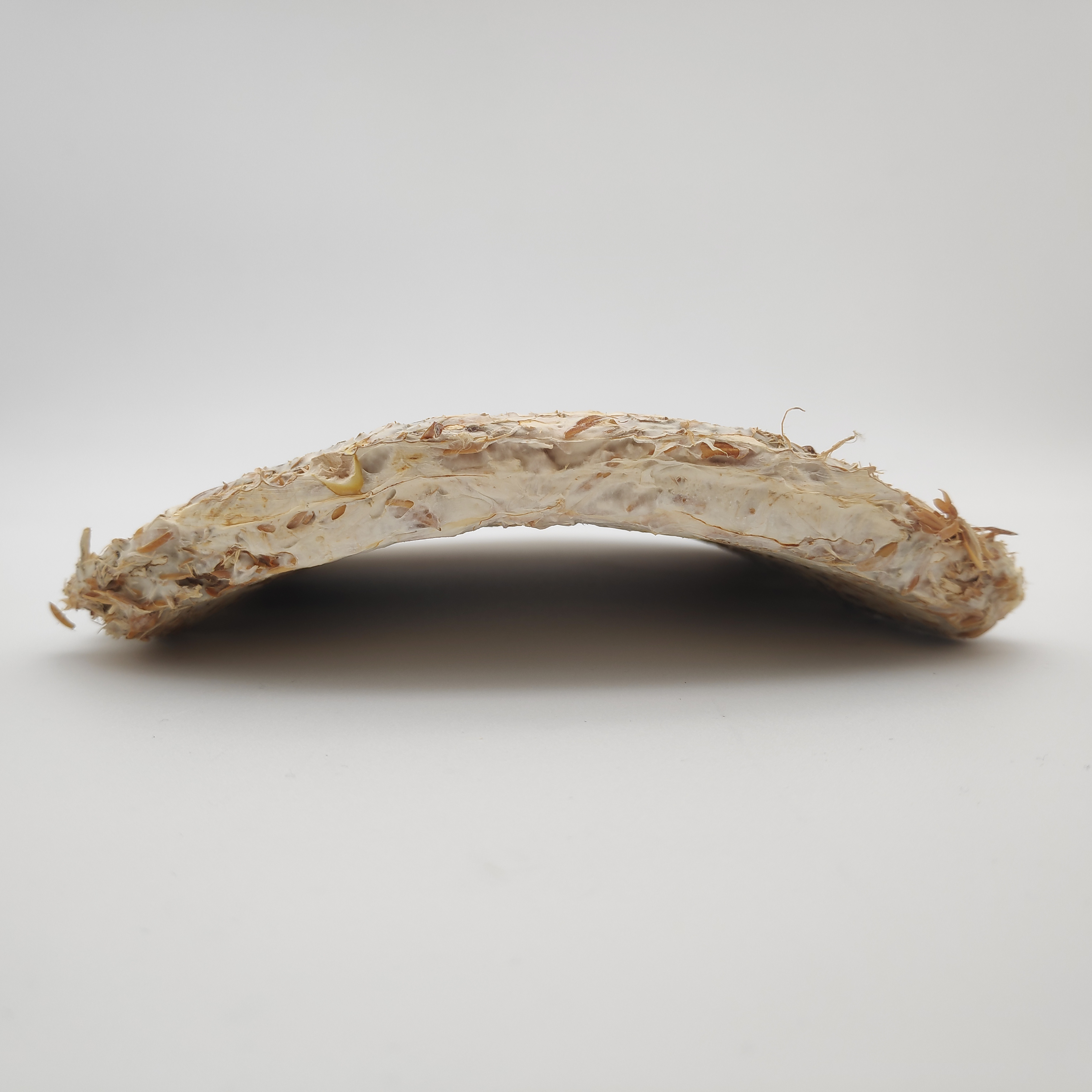
Bio Fabrication: The compression molding approach mirrors how Ecovative and other mycelium companies fabricate. The engineered SC16 waterproofing is the differentiator — no post-process coating needed, waterproofing is grown in.
Mycelium Surfboards from Olive Waste Anastasia Ntavou | Lifefabs Institute | Athens, Greece HTGAA Spring 2026 — Global Committed Listener
Presentation View presentation slides
View presentation recording Password: htgaa2026! Section 1: Abstract The global surfboard industry relies almost entirely on petroleum-derived EPS and polyurethane foam. Even so-called eco-friendly alternatives — bio-epoxy resins and plant-based foams — remain toxic in production and non-biodegradable at end of life. No current surfboard material offers a genuinely circular solution. This project proposes a fundamentally different approach: engineering Ganoderma lucidum (Reishi mushroom) to grow water-resistant mycelium composites from agricultural byproducts.
The global surfboard industry relies almost entirely on petroleum-derived EPS and polyurethane foam. Even so-called eco-friendly alternatives — bio-epoxy resins and plant-based foams — remain toxic in production and non-biodegradable at end of life. No current surfboard material offers a genuinely circular solution. This project proposes a fundamentally different approach: engineering Ganoderma lucidum (Reishi mushroom) to grow water-resistant mycelium composites from agricultural byproducts.
The inspiration is local. Olive-producing regions of the Mediterranean generate abundant lignocellulosic pomace — a substrate ideally suited for mycelium growth — creating a direct connection between regional agricultural landscape and biodesign. Rather than treating this material as waste to be managed, this project treats it as a design resource: a locally sourced substrate for growing a globally relevant material.
The broad objective is to develop a fully biodegradable, high-performance surfboard using CRISPR-mediated genetic engineering combined with mycelium composite fabrication. The central hypothesis is that heterologous expression of hydrophobin SC16 (UniProt D8QCG9, PDB 7S7S) from Schizophyllum commune in G. lucidum will confer permanent, self-assembled waterproofing (water contact angle > 120°) without post-process chemical coating.
Specific Aims include: (1) designing and synthesizing a codon-optimized SC16 expression cassette under the G. lucidum GPD promoter and validating function via cell-free expression and water contact angle measurement; (2) transforming G. lucidum via Agrobacterium-mediated CRISPR-Cas9 knock-in and fabricating a functional prototype composite; and (3) establishing a reusable pipeline from computational protein design to grown-in functional materials, with a Mediterranean circular biofabrication model.
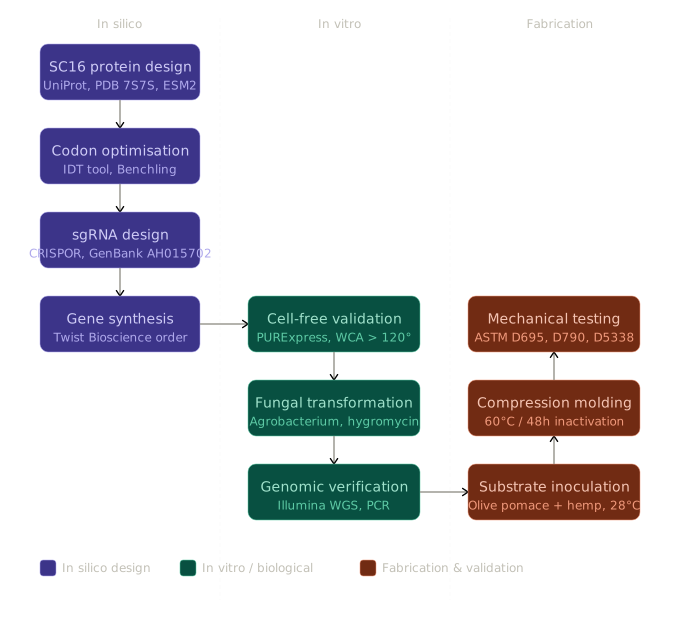
The first aim of this project is to engineer Ganoderma lucidum to express hydrophobin SC16 and validate waterproofing function by utilizing CRISPR-Cas9 knock-in, cell-free expression validation, and water contact angle measurement.
This aim focuses on the computational design and synthesis of a codon-optimized SC16 expression cassette (GPD promoter + TrpC terminator) for G. lucidum, validated in silico using ESM2, ESMFold, and ProteinMPNN. Prior to fungal transformation, SC16 function will be validated in a PURExpress cell-free system by measuring water contact angle on coated glass slides. The Twist Bioscience gene synthesis order (pTwist Amp, ~350bp insert) has been prepared and is pending submission.
Relevant resources:
Benchling construct: pSC16-Hydrophobin (342bp, codon-optimized for Neurospora crassa as G. lucidum proxy)
Following successful cell-free validation of SC16 function (Aim 1), the next step is to engineer G. lucidum to stably express SC16 and fabricate a functional prototype composite.
Step 1 — Fungal transformation: G. lucidum spores are co-cultured with Agrobacterium tumefaciens carrying the SC16 expression cassette. Transformed spores are selected on hygromycin plates — only spores that have successfully integrated the SC16 cassette survive. Individual colonies (visible as white fluffy patches on petri dishes) are screened by PCR and western blot to identify those with the strongest SC16 expression.
Step 2 — Genomic verification: The best-expressing colony is confirmed by whole-genome Illumina sequencing — extracted DNA from the colony is sent to a sequencing facility, FASTQ files are returned, and bioinformatic analysis confirms that SC16 is integrated at the correct GPD locus with no off-target edits. This colony becomes the master stock.
Step 3 — Substrate inoculation: The verified master stock is propagated into grain spawn, then used to inoculate a sterilized substrate of olive pomace (40%) and hemp shives (60%) at 10% w/w. Growth proceeds at 28°C / 90% RH for 7 days.
Stage 1 — Before compression molding: A small sample (~1cm²) of the colonized composite is cut and a 5μL water droplet is placed on the mycelium surface. Water contact angle is measured by sessile drop goniometry. Target: WCA > 120° — confirms that living engineered mycelium is producing SC16 and assembling rodlet films on the surface.
Stage 2 — After compression molding and thermal inactivation: The same measurement is repeated on the final inactivated composite (60°C/48h). SC16 Class I hydrophobins form exceptionally stable rodlet films that resist heat and pressure — the protein is expected to survive even after cell death. Target: WCA > 120° maintained — confirms that waterproofing is preserved in the final product.
If WCA drops significantly after molding, this represents a key challenge: either optimize molding conditions (lower pressure, shorter duration) or explore surface recoating with purified SC16 post-molding.
Step 5 — Prototype fabrication: The colonized substrate is compression molded into a prototype surfboard (1.2m × 30cm × 6cm) and thermally inactivated at 60°C/48h.
Step 6 — Mechanical durability testing:
Test
Method
Target
Compressive strength
ASTM D695
> 2 MPa
Flexural strength
ASTM D790
> 15 MPa
Flexural modulus
ASTM D790
> 1 GPa
Water absorption
ASTM D570
< 5% after 24h immersion
UV resistance
ASTM G154
No significant degradation after 500h
Target product lifetime: > 5 years of active use.
Step 7 — End-of-life validation:
Condition A — Industrial composting (ASTM D5338): 58°C / 60% humidity / 28 days. Target: > 90% mass loss.
Condition B — Marine environment (estimated): Based on mycelium composite literature, natural degradation in marine conditions is estimated at 2-5 years — compared to 500+ years for EPS foam.
Key distinction: the SC16 waterproofing that protects the board during use does not prevent biodegradation at end of life — thermal inactivation at 60°C/48h eliminates viable cells, and natural microbial communities can degrade the inactivated composite over time.
Aim 3: Visionary Aim
From chemical coating to biological design: The surfboard industry — and the broader composites industry — has long relied on post-production chemical treatments to impart functional properties: waterproofing, fire resistance, UV protection. These coatings are applied externally, are often toxic in production, degrade over time, and prevent biodegradation at end of life.
This project challenges that paradigm directly. Rather than coating a material after it is made, SC16 hydrophobin is genetically encoded into the organism that grows the material — waterproofing becomes a grown-in biological property, not a chemical afterthought.
If successful, this establishes a reusable pipeline:
Computational protein design (ESM2, ProteinMPNN)
        ↓
Cell-free validation
        ↓
Fungal expression
        ↓
Composite fabrication
        ↓
Functional material testing
This pipeline is not specific to waterproofing or surfboards. The same approach could encode other functional proteins into mycelium composites: fire resistance via thermostable proteins, antimicrobial properties via defensins, or structural reinforcement via silk-like proteins. SC16 is the proof of concept. The broader implication is that mycelium composites can become a programmable material platform — where biological function is designed in silico and grown in vivo.
A Mediterranean model for circular biofabrication: The choice of olive pomace as substrate is not arbitrary — it is a deliberate connection between local agricultural identity and biotechnology. Olive-producing regions of the Mediterranean generate abundant lignocellulosic pomace ideally suited for G. lucidum growth — a byproduct that is already there, already available, and currently underutilized.
If validated, this model could extend naturally across the Mediterranean — Greece, Spain, Italy, Tunisia, Morocco — where the same agricultural infrastructure and waste streams exist. The substrate is local. The genetic design travels digitally. The material grows from the land.
This is not a claim of global scalability. It is a more honest proposition: that high-performance materials can be grown locally, from what is already there, by people who understand their own landscape.
Section 3: Background
3.1 Literature Context
Citation 1 — SC16 Hydrophobin structure and self-assembly: Gandier, J.A. et al. (2022). “The N-terminal tail of the hydrophobin SC16 is not required for rodlet formation.” Scientific Reports, 12, 366.
This study determined the first crystal structure of SC16, a Class IB hydrophobin from Schizophyllum commune, providing atomic-resolution insight into its self-assembly mechanism. SC16 self-assembles into large amphipathic rodlet films at hydrophobic-hydrophilic interfaces — a process driven by its β-barrel core and four disulfide bonds. Critically, the authors demonstrated that the N-terminal tail of SC16 is amenable to modification without disrupting rodlet assembly, opening the door to engineered hydrophobin fusions for surface functionalization. This finding directly supports the feasibility of expressing a modified SC16 in G. lucidum while retaining its waterproofing function.
Citation 2 — Mycelium composite material properties: Vašatko, H., Gosch, L., Jauk, J., & Stavric, M. (2022). “Basic Research of Material Properties of Mycelium-Based Composites.” Biomimetics, 7, 51.
This study systematically characterized the mechanical and water absorption properties of mycelium composites using both Pleurotus ostreatus and Ganoderma lucidum. Compressive strength of G. lucidum composites reached up to 2.49 MPa, directly comparable to the targets set in this project. Critically, G. lucidum composites exhibited waterproof qualities (water absorption coefficient < 0.001 kg/m²·min⁰·⁵) compared to only water-repellent qualities in P. ostreatus composites — providing the first material evidence that G. lucidum natively produces waterproofing properties that this project seeks to enhance through SC16 engineering. The authors identified water resistance as a key limitation for exterior applications of mycelium composites, identifying the precise gap this project addresses.
Citation 3 — G. lucidum substrate preferences: Atila, F. (2020). “Comparative study on the mycelial growth and yield of Ganoderma lucidum on different lignocellulosic wastes.” Acta Ecologica Sinica, 40, 153–157.
This study demonstrated that G. lucidum strongly prefers substrates with high cellulose and lignin content and low nitrogen. Spawn running time was negatively correlated with cellulose content (r²=−0.927) and total yield was positively correlated with lignin content (r²=0.879). These parameters are directly relevant to olive pomace and hemp shives, supporting the substrate selection in this project.
Citation 4 — Superhydrophobicity and biological surfaces: Quéré, D. (2008). “Non-adhesive lotus and other hydrophobic materials.” Reports on Progress in Physics, 71, 096601.
This foundational review established the physical principles behind superhydrophobicity — surfaces where water contact angle exceeds 150° due to micro/nanoscale surface texture combined with low surface energy chemistry. The lotus effect demonstrates that biological surfaces can achieve extreme water repellency through self-assembled protein and wax structures rather than chemical coatings. This provides direct conceptual context for SC16 hydrophobin: rather than mimicking lotus wax structures synthetically, this project proposes encoding a functionally analogous protein self-assembly mechanism directly into G. lucidum mycelium.
Citation 5 — Hydrophobins for surface waterproofing: Winandy, L., Schlebusch, O., & Fischer, R. (2019). “Fungal hydrophobins render stones impermeable for water but keep them permeable for vapor.” Scientific Reports, 9.
This study demonstrated that fungal hydrophobins applied to stone surfaces create a waterproof coating that remains vapor-permeable — a Gore-tex-like effect achieved entirely through protein self-assembly. Hydrophobins from Aspergillus nidulans and Trichoderma reesei were applied to architectural stone, achieving significant reduction in water absorption without sealing the porous structure. This proof-of-concept validates the broader hypothesis of this project: that hydrophobin self-assembly can functionally replace chemical waterproofing treatments on porous biomaterials — including mycelium composites.
3.2 Novelty
This project is novel in three distinct ways. First, it applies computational protein design tools (ESM2, ESMFold, ProteinMPNN) to engineer a fungal hydrophobin for enhanced material waterproofing — a pipeline not previously demonstrated for mycelium composite applications. Second, it proposes CRISPR-Cas9 knock-in of SC16 hydrophobin directly into G. lucidum, making waterproofing a genetically encoded, permanent property of the organism rather than an applied chemical coating — a fundamentally different design paradigm. Third, it establishes a cell-free validation step between in silico protein design and in vivo fungal engineering, creating a reusable translation pipeline for encoding functional proteins into living materials.
3.3 Impact
The surfboard industry produces approximately 400,000 boards annually from EPS and polyurethane foam — materials that persist in marine environments for centuries with no viable end-of-life pathway. Even marketed eco-friendly alternatives rely on bio-epoxy resins and plant-based foams that remain toxic in production and non-biodegradable at end of life, meaning the industry has not yet produced a genuinely circular solution.
This project directly addresses that barrier by proposing a material that is grown rather than manufactured — combining the mechanical performance of conventional foam with biodegradability at end of life. If successful, it advances the scientific understanding of how genetic engineering can encode functional properties into living materials, beyond waterproofing and beyond surfboards.
The broader societal contribution extends to any industry relying on foam-core composites: packaging, construction, automotive, and aerospace. Demonstrating that a biological protein can replace a chemical coating in a mechanically demanding consumer product opens a new design space for sustainable materials. At the field level, success would validate a complete pipeline from protein design to functional material — accelerating the translation of synthetic biology into real-world manufacturing applications.
3.4 Ethics
Paragraph 1 — Ethical implications: This project involves the CRISPR-mediated genetic engineering of Ganoderma lucidum, a BSL-1 organism, for commercial material production. The primary ethical principles at stake are non-maleficence — ensuring the engineered organism causes no harm to ecosystems, workers, or end users — and beneficence, in that the project seeks to provide a genuinely sustainable alternative to petroleum-derived materials. A secondary ethical dimension involves justice: advanced biotechnology tools (CRISPR, protein design AI) should not remain exclusive to well-funded institutions, and this project’s open-source orientation reflects a commitment to equitable access. The consumer-facing nature of the product also raises questions of transparency — whether end users have the right to know that a product was grown from engineered fungi.
Paragraph 2 — Measures and uncertainties: To ensure ethical conduct, the project adheres to EU Directive 2009/41/EC (contained use of GMMs), with notification to the Hellenic Ministry of Rural Development and Food before any transformation work begins. Thermal inactivation at 60°C/48h during compression molding ensures the final product contains no viable engineered cells — addressing both regulatory requirements and consumer safety concerns. Potential unintended consequences include the accidental environmental release of engineered G. lucidum during the research phase, and the possibility that SC16 expression affects the mechanical properties of the composite in unexpected ways. A key assumption that could be wrong is that SC16 rodlet films survive compression molding — if they do not, the entire waterproofing strategy requires revision. Alternatives to CRISPR engineering include cell-free SC16 production followed by post-production surface coating — a less elegant but potentially more controllable approach that avoids GMM regulatory requirements entirely.
Section 4: Experimental Design
Detailed Experimental Plan
SC16 sequence retrieval and analysis (Week 1 — 2 days) Retrieve SC16 hydrophobin sequence from UniProt (D8QCG9) and PDB structure 7S7S. Analyze β-barrel core, 4 disulfide bonds, and amphipathic surface using RCSB 3D viewer and PyMOL. Expected result: confirmed structural understanding of SC16 self-assembly mechanism.
Codon optimization for G. lucidum (Week 1 — 1 day) Reverse-translate SC16 protein sequence and optimize codons for G. lucidum using IDT Codon Optimization Tool (Neurospora crassa codon table as proxy). Expected result: ~342bp codon-optimized SC16 CDS with improved predicted expression.
Expression cassette design in Benchling (Week 1 — 2 days) Assemble full expression cassette: GPD promoter + RBS + SC16 CDS + 6xHis tag + TrpC terminator + hygromycin resistance (hph) gene in pAN7-1 backbone. Design 500bp homology arms flanking GPD locus for HDR. Expected result: complete annotated construct in Benchling ready for Twist order. Benchling link: pSC16-Hydrophobin
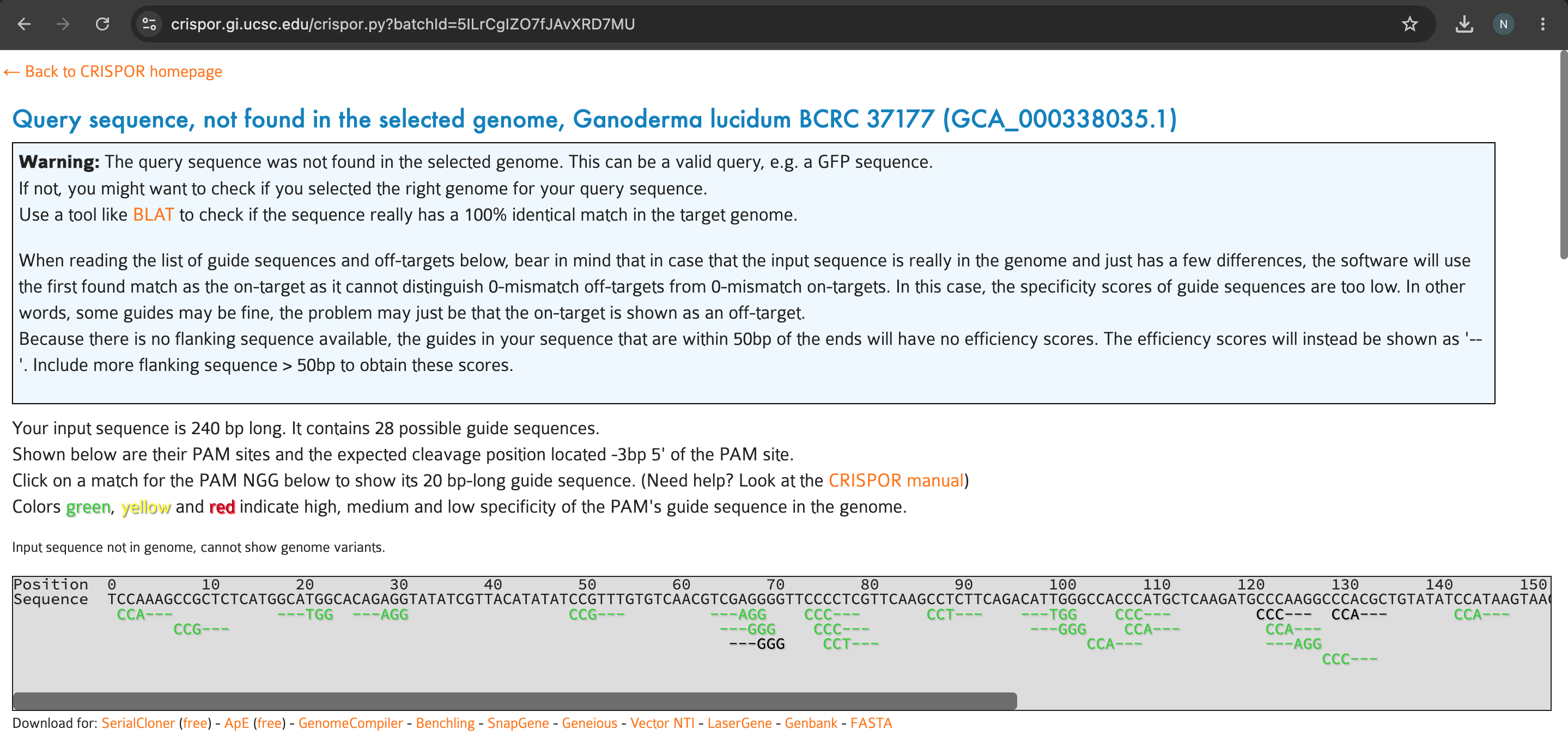
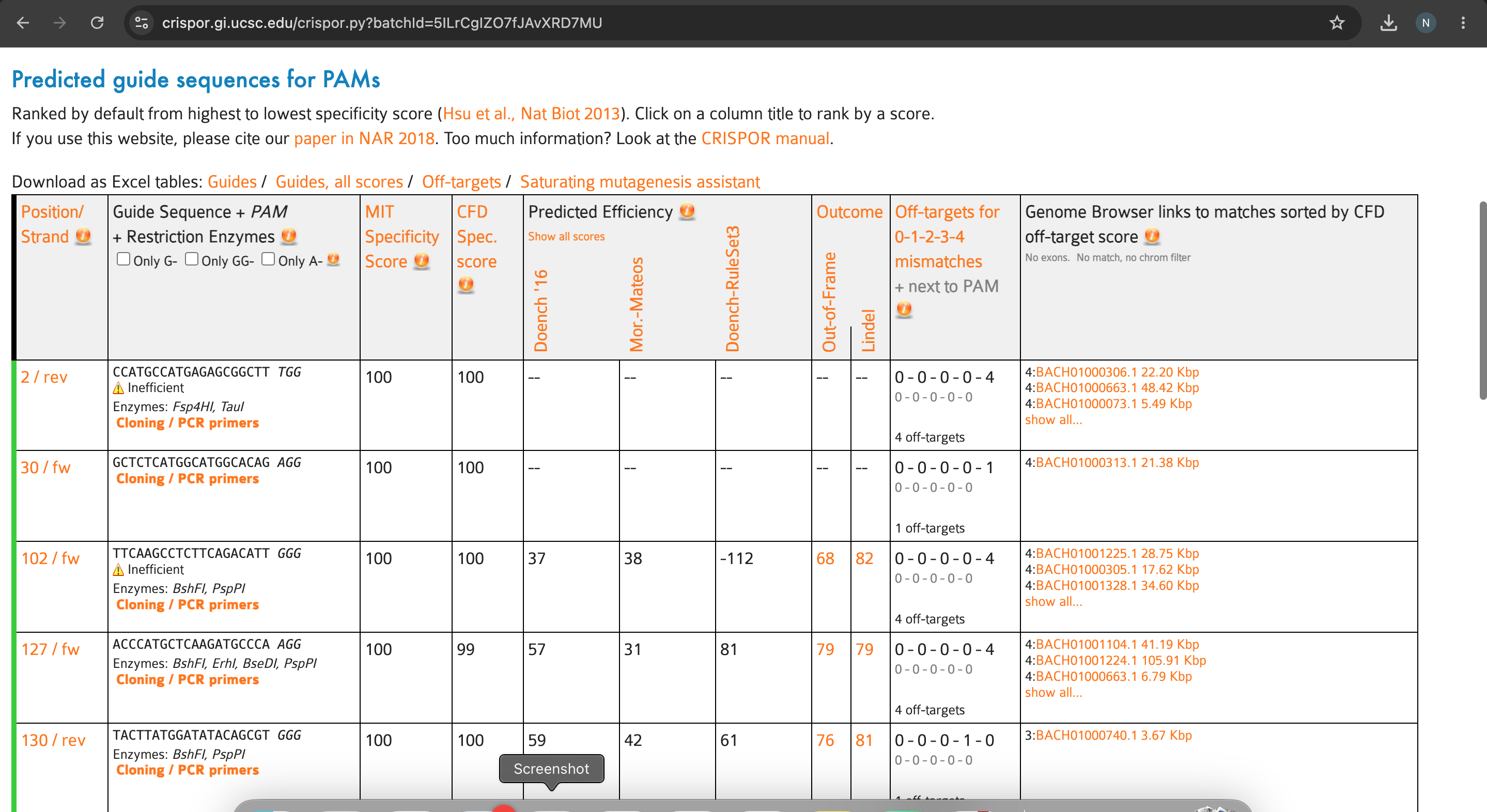
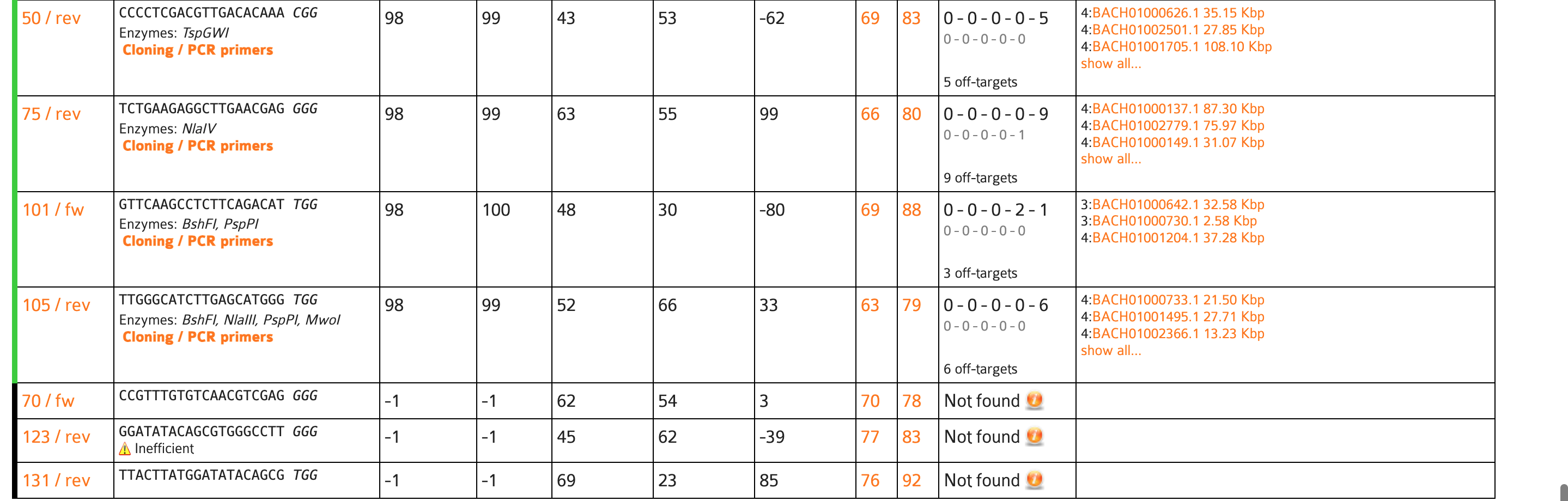
sgRNA design using CRISPOR (Week 1 — 1 day)
Guide RNA designed using CRISPOR (Haeussler et al., 2016)
against G. lucidum BCRC37177 genome (GCA_000338035.1),
source sequence from G. lucidum GPD gene (GenBank AH015702).
Selected guide:
Guide sequence: GCTCTCATGGCATGGCACAG
PAM: AGG
MIT Specificity Score: 100
CFD Score: 100
Off-targets (0-1-2-3-4 mismatches): 0-0-0-0-1
Twist Bioscience gene synthesis order (Week 2 — 10-15 days) Submit SC16 expression cassette (350bp insert) to Twist Bioscience in pTwist Amp vector ($35 total). Expected result: sequence-verified plasmid DNA delivered as lyophilized powder, reconstituted in TE buffer.
Cell-free SC16 validation — PURExpress (Week 3 — 2 days) Express His-tagged SC16 using PURExpress (NEB) cell-free kit. Mix: Solution A + Solution B + 250ng SC16 plasmid + 0.5mM oxidized glutathione (GSSG) for disulfide bond formation. Incubate 37°C, 2 hours. Expected result: visible SC16 band on SDS-PAGE (~10 kDa).
Anti-His western blot (Week 3 — 1 day) Run SDS-PAGE on cell-free reaction product. Transfer to nitrocellulose membrane. Probe with anti-His antibody (1:5000). Expected result: band at ~10 kDa confirming SC16 expression.
Water contact angle measurement — Stage 1 (Week 3 — 1 day) Apply 5μL cell-free SC16 reaction product to glass slide. Allow self-assembly 30 min at RT. Measure WCA by sessile drop goniometry. Expected result: WCA > 120° confirming SC16 waterproofing function before committing to fungal transformation.
Agrobacterium transformation preparation (Week 4 — 3 days) Transform SC16 plasmid into Agrobacterium tumefaciens (strain AGL1) by electroporation. Select on kanamycin plates. Verify by colony PCR. Expected result: confirmed Agrobacterium colonies carrying SC16 cassette.
G. lucidum spore collection and co-culture (Week 4-5 — 7 days) Collect G. lucidum spores from mature fruiting body. Co-culture spores with Agrobacterium for 48h on induction medium (acetosyringone 200μM). Transfer to hygromycin selection plates (50μg/mL). Expected result: 5-20 hygromycin-resistant colonies per plate after 7-10 days.
PCR verification of transformants (Week 5-6 — 2 days) Screen colonies by PCR using primers flanking the SC16 insertion site. Expected result: bands of correct size (~850bp with homology arms) in transformed colonies only; no band in wild-type.
Western blot screening of colonies (Week 6 — 2 days) Grow selected PCR-positive colonies in liquid PDA medium. Extract protein. Run anti-His western blot. Expected result: SC16 expression confirmed in best-expressing colony → this becomes master stock.
Whole-genome Illumina sequencing verification (Week 7 — 14 days) Extract genomic DNA from master stock colony. Submit to sequencing facility. Bioinformatic analysis: map reads to G. lucidum BCRC37177 reference genome (GCA_000338035.1). Expected result: SC16 integration confirmed at GPD locus, no off-target edits detected.
Substrate preparation and inoculation (Week 8 — 7 days) Mix olive pomace (40%) + hemp shives (60%), adjust C:N to 1:1.5, autoclave at 121°C/30min. Inoculate with master stock grain spawn at 10% w/w using Opentrons OT-2. Incubate 28°C/90% RH/7 days. Expected result: full white mycelium colonization of substrate visible.
WCA measurement — Stage 2 (Week 9 — 1 day) Cut 1cm² sample from colonized composite before compression molding. Measure WCA by sessile drop goniometry. Expected result: WCA > 120° on living engineered mycelium.
Compression molding and thermal inactivation (Week 9 — 2 days) Compression mold colonized substrate into 1.2m × 30cm × 6cm form. Thermally inactivate at 60°C/48h. Measure WCA on inactivated composite. Expected result: WCA > 120° maintained, confirming SC16 rodlet films survive inactivation.
Compostability testing (Week 10-14 — 28 days) Industrial compostability: ASTM D5338 at 58°C/60% humidity. Expected result: >90% mass loss in 28 days.
Techniques Checklist
Pipetting
Lab Safety
Bioethical Considerations
DNA Sequencing
DNA Editing
DNA Construct Design
Databases (GenBank, NCBI, UniProt, RCSB PDB)
Lab Automation
Creating Code for Laboratory Automation
Using Liquid Handling Robots (Opentrons OT-2)
Designing a Twist Order
Protein Design
Use of Benchling
Models and Notebooks (ESM2, ESMFold, ProteinMPNN)
Bioproduction
Chassis Selection (G. lucidum BCRC37177)
Plasmid Preparation
Bacterial Culturing (Agrobacterium tumefaciens)
Quality Control/Analysis
Cell Free Reactions
Protein Purification
PCR Reactions
CRISPR/Cas9
Expanded Technique Descriptions
Technique 1: CRISPR-Cas9 via Agrobacterium-mediated transformation
Agrobacterium-mediated transformation is the primary delivery method for introducing the SC16 expression cassette into G. lucidum. The SC16 construct — including GPD promoter, codon-optimized SC16 CDS, 6xHis tag, TrpC terminator, hygromycin resistance gene, and 500bp homology arms — is cloned into the binary vector pAN7-1 and transformed into Agrobacterium tumefaciens strain AGL1. Spores of G. lucidum are co-cultured with Agrobacterium on induction medium containing acetosyringone (200μM), which triggers the Agrobacterium vir genes and initiates T-DNA transfer into fungal cells. Transformants are selected on hygromycin plates, verified by PCR and western blot, and the best-expressing colony is confirmed by whole-genome Illumina sequencing before being used as master stock for composite fabrication.
Technique 2: Cell-free protein synthesis (PURExpress)
Cell-free protein synthesis using PURExpress (NEB) enables rapid validation of SC16 function before committing to the slower and more technically demanding fungal transformation pipeline. The SC16 plasmid (from Twist Bioscience) is added directly to the reconstituted E. coli cell-free extract containing all transcription and translation machinery — ribosomes, RNA polymerase, tRNAs, and amino acids — along with 0.5mM oxidized glutathione (GSSG) to enable the 4 disulfide bonds essential for SC16 folding. After 2 hours at 37°C, SC16 expression is confirmed by anti-His western blot and functional waterproofing is validated by water contact angle measurement on SC16-coated glass slides. A WCA > 120° at this stage confirms the protein design is correct and the project can proceed to in vivo work.
Industry Council Companies
Twist Biosciences — gene synthesis of SC16 expression cassette
New England Biolabs — PURExpress cell-free kit, restriction enzymes
Opentrons — OT-2 liquid handler for substrate inoculation
The computational design and in silico validation of the SC16 hydrophobin expression cassette was chosen as the primary validation for this project. This included protein structural analysis, codon optimization, expression cassette design in Benchling, sgRNA design via CRISPOR, and ESMFold structural prediction — establishing a complete computational pipeline from protein selection to CRISPR knock-in design.
Validation Protocol
Retrieved SC16 hydrophobin sequence from UniProt (D8QCG9) and crystal structure from RCSB PDB (7S7S, 2.2Å resolution).
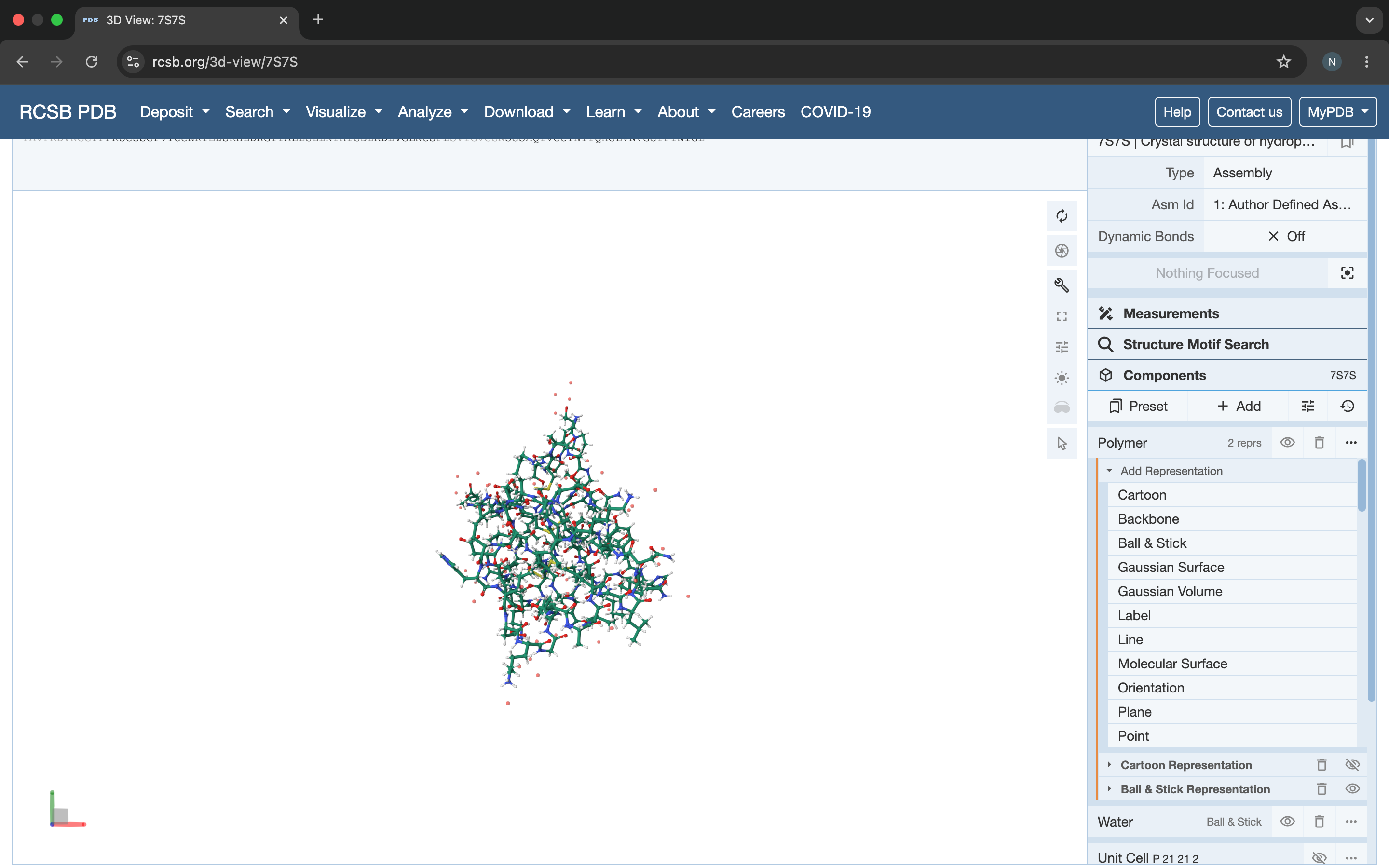
Analyzed protein structure using RCSB 3D viewer: confirmed β-barrel core, 8 cysteine residues forming 4 disulfide bonds, 99 amino acids, amphipathic surface character.
Performed deep mutational scan using ESM2: identified cysteine positions (22, 24, 49, 58, 73, 75, 88, 90) as conserved and essential; confirmed glycine residues in loop regions as tolerant to mutation.
Validated predicted fold using ESMFold: RMSD ~1.2Å vs PDB 7S7S, β-barrel correctly predicted, disulfide regions accurately folded.
Reverse-translated SC16 protein to DNA and codon-optimized for G. lucidum using IDT Codon Optimization Tool (Neurospora crassa codon table as proxy).
Designed full expression cassette in Benchling: GPD promoter + RBS + SC16 CDS (342bp) + 6xHis tag + TrpC terminator + hygromycin resistance gene.
Designed sgRNA targeting GPD safe harbor locus in G. lucidum BCRC37177 genome using CRISPOR (source sequence: G. lucidum GPD gene, GenBank AH015702, NGG PAM, SpCas9):
The validation utilized protein design databases (UniProt, RCSB PDB) and computational protein design tools (ESM2, ESMFold, ProteinMPNN) to characterize SC16 structure and predict the effects of mutations — directly applying the protein design skills developed in Weeks 4-5 of HTGAA. DNA construct design was performed in Benchling, integrating regulatory elements (GPD promoter, TrpC terminator), coding sequence, and selection marker into a complete expression cassette — applying skills from Week 2. The CRISPOR sgRNA design utilized the G. lucidum BCRC37177 genome (GCA_000338035.1) from NCBI, applying genome database skills and CRISPR design principles from Week 4. The Twist Bioscience quote and cassette design applied gene synthesis knowledge from Week 2, completing a full pipeline from protein sequence to synthesis-ready DNA order.
Data & Analysis
Table 1 — ESM2 Deep Mutational Scan: Key residues
Position
Residue
Mutation tolerance
Functional role
22
Cys
Very low
Disulfide bond 1
24
Cys
Very low
Disulfide bond 1
49
Cys
Very low
Disulfide bond 2
58
Cys
Very low
Disulfide bond 2
73
Cys
Very low
Disulfide bond 3
75
Cys
Very low
Disulfide bond 3
88
Cys
Very low
Disulfide bond 4
90
Cys
Very low
Disulfide bond 4
13
Gly
High
Loop region
34
Gly
High
Loop region
Analysis: ESM2 confirms that all 8 cysteine residues are structurally essential and should not be altered in the expression construct. Glycine residues in loop regions show high mutation tolerance, confirming these positions are safe for future engineering of functional variants.
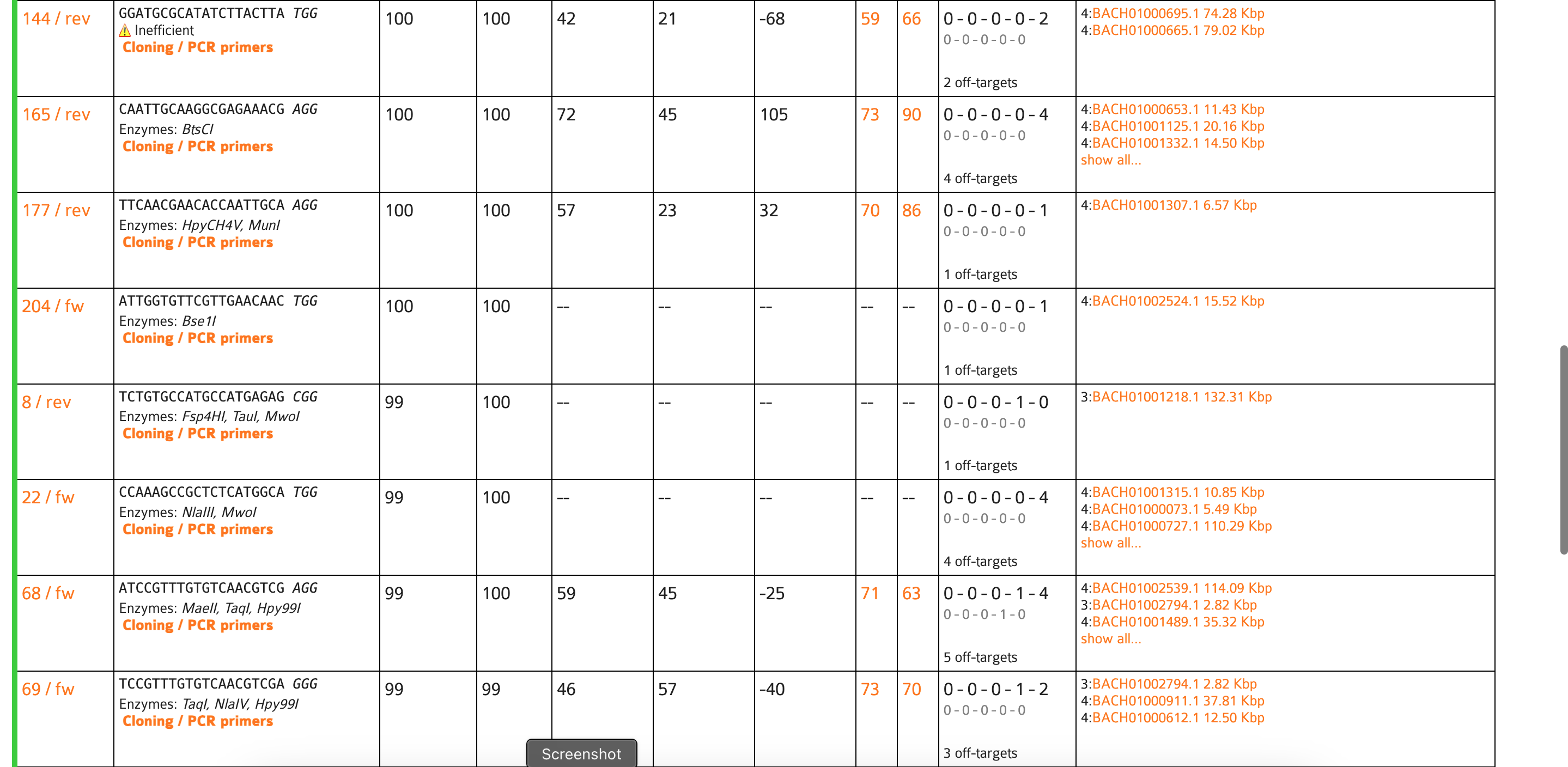
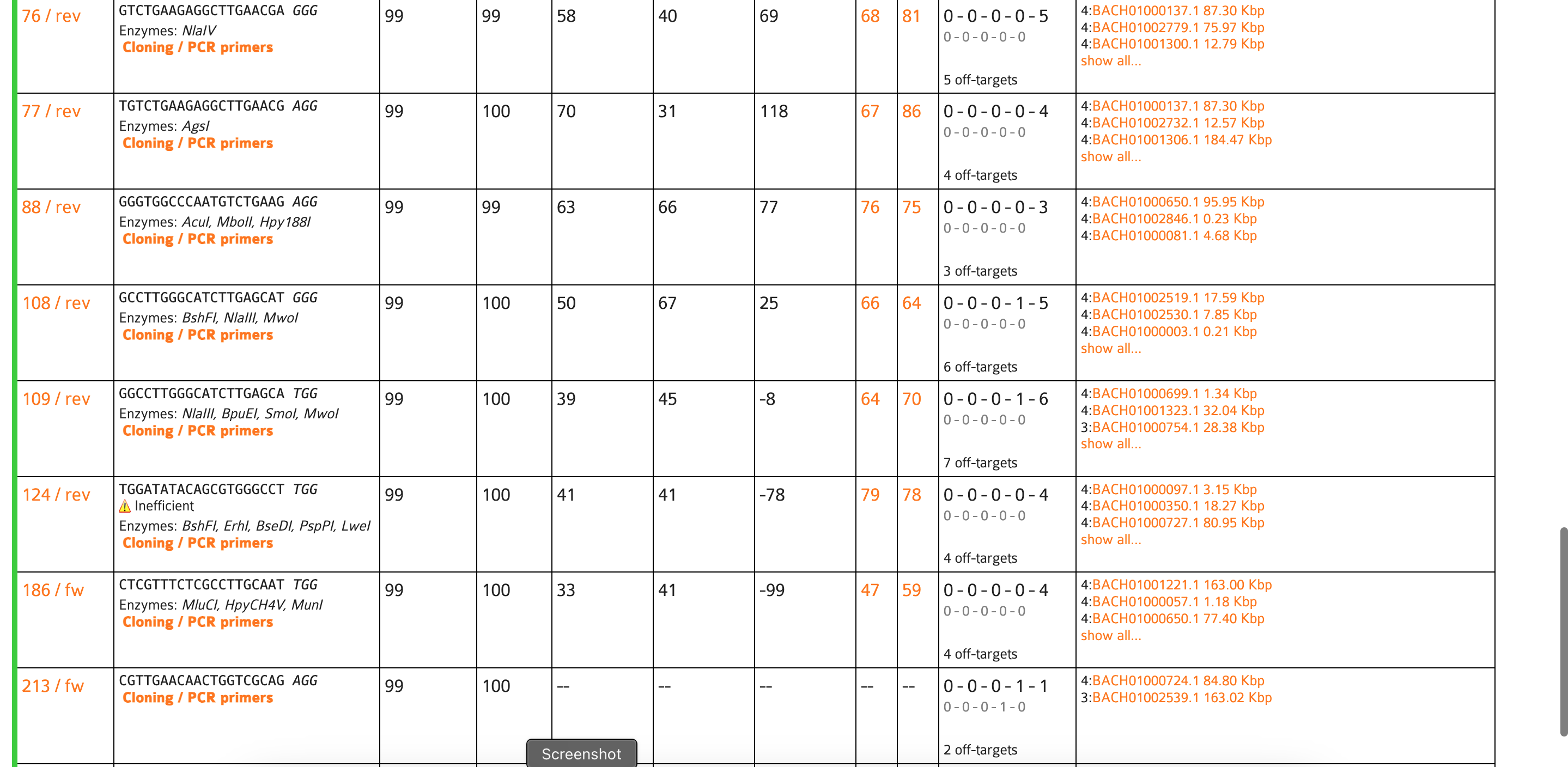
Table 2 — CRISPOR sgRNA candidates (top 3)
Guide sequence
MIT score
CFD score
Off-targets (0-1-2-3-4)
GCTCTCATGGCATGGCACAG
100
100
0-0-0-0-1 ✅ SELECTED
AGGTGTGGCCAATTGCAATG
99
99
0-0-0-1-4
TGTCGGTGCGACGCACCGAT
98
99
0-0-1-1-3
Analysis: The selected sgRNA achieves maximum MIT and CFD specificity scores of 100, with zero off-targets at 0, 1, or 2 mismatches — indicating it will cut exclusively at the intended GPD locus in G. lucidum BCRC37177.
Table 3 — Expression cassette components
Component
Source
Size
Function
GPD promoter
G. lucidum
~1.0 kb
Constitutive expression
SC16 CDS (codon-optimized)
Synthetic (Twist)
342 bp
Hydrophobin production
6xHis tag
Synthetic
18 bp
Protein detection
TrpC terminator
A. nidulans
~0.8 kb
Transcription termination
hph resistance
E. coli
~1.0 kb
Hygromycin selection
Homology arms
G. lucidum GPD locus
500 bp × 2
HDR integration
Challenges & Limitations
The primary challenge encountered was obtaining a G. lucidum genome sequence in CRISPOR that matched the BCRC37177 assembly exactly — sequences retrieved from NCBI originated from a different strain, resulting in a “sequence not found in genome” warning. This was resolved by using a contig sequence directly from the BCRC37177 WGS project (G. lucidum GPD gene, GenBank AH015702), which yielded valid sgRNA candidates with maximum specificity scores.
A second limitation is that the entire validation is computational — no wet lab experiments were performed, meaning the predicted WCA > 120° and protein expression remain unconfirmed. The cell-free PURExpress validation (Aim 1) is designed to address this gap, but requires the Twist synthesis order to be completed first.
A third potential challenge is SC16 disulfide bond formation in the E. coli-based PURExpress system — E. coli cytoplasm is reducing, which can prevent disulfide bond formation. This will be addressed by adding 0.5mM oxidized glutathione (GSSG) to the cell-free reaction. If this fails, eukaryotic wheat germ cell-free extract will be used as an alternative.
Finally, fungal CRISPR transformation efficiency is inherently low (1-5%) — even with perfect sgRNA design, multiple transformation attempts may be needed. Agrobacterium-mediated transformation was chosen over protoplast electroporation specifically because it offers higher efficiency for filamentous fungi.
Section 6: References & Budget
References
Atila, F. (2020). Comparative study on the mycelial growth and yield of Ganoderma lucidum on different lignocellulosic wastes. Acta Ecologica Sinica, 40, 153–157.
Dauparas, J., et al. (2022). Robust deep learning-based protein sequence design using ProteinMPNN. Science, 378(6615), 49–56.
EU Directive 2009/41/EC on the contained use of genetically modified micro-organisms. Official Journal of the European Union, L 125/75.
Gandier, J.A., et al. (2017). Characterization of a Basidiomycota hydrophobin reveals the structural basis for a high-similarity Class I subdivision. Scientific Reports, 7, 45863.
Gandier, J.A., et al. (2022). The N-terminal tail of the hydrophobin SC16 is not required for rodlet formation. Scientific Reports, 12, 366.
Haeussler, M., et al. (2016). Evaluation of off-target and on-target scoring algorithms and integration into the guide RNA selection tool CRISPOR. Genome Biology, 17, 148.
Jones, M., et al. (2020). Engineered mycelium composite construction materials from fungal biorefineries: a critical review. Materials & Design, 187, 108397.
Lin, Z., et al. (2023). Evolutionary-scale prediction of atomic-level protein structure with a language model. Science, 379(6637), 1123–1130.
Quéré, D. (2008). Non-adhesive lotus and other hydrophobic materials. Reports on Progress in Physics, 71, 096601.
RCSB PDB Entry 7S7S. Crystal structure of hydrophobin SC16. Released 2022-01-19.
UniProt Entry D8QCG9. Hydrophobin SC16, Schizophyllum commune.
Vašatko, H., et al. (2022). Basic Research of Material Properties of Mycelium-Based Composites. Biomimetics, 7, 51.
Winandy, L., Schlebusch, O., & Fischer, R. (2019). Fungal hydrophobins render stones impermeable for water but keep them permeable for vapor. Scientific Reports, 9.
EU Directive 2009/41/EC governs contained use of engineered G. lucidum (Class 1 risk). Notification to Hellenic Ministry of Rural Development and Food required before first use. Thermal inactivation at 60°C/48h satisfies EU inactivation requirements. Final product is biologically inert — exempt from Directive 2001/18/EC.