Week 1 HW: Principles and Practices
Step 1. First, describe a biological engineering application or tool you want to develop and why.
Something we are interested in is reading and biology, and we wanted to find a way to combine these two interests. We thought about creating bioluminescent bookmarks. These bookmarks would produce light naturally, because of the engineered microorganisms or biological materials that glow in different colors, without the need for batteries, which makes them environmentally friendly.
Other motivations are to add a little more aesthetic while reading and to explore safe applications of bioluminescence outside the lab.
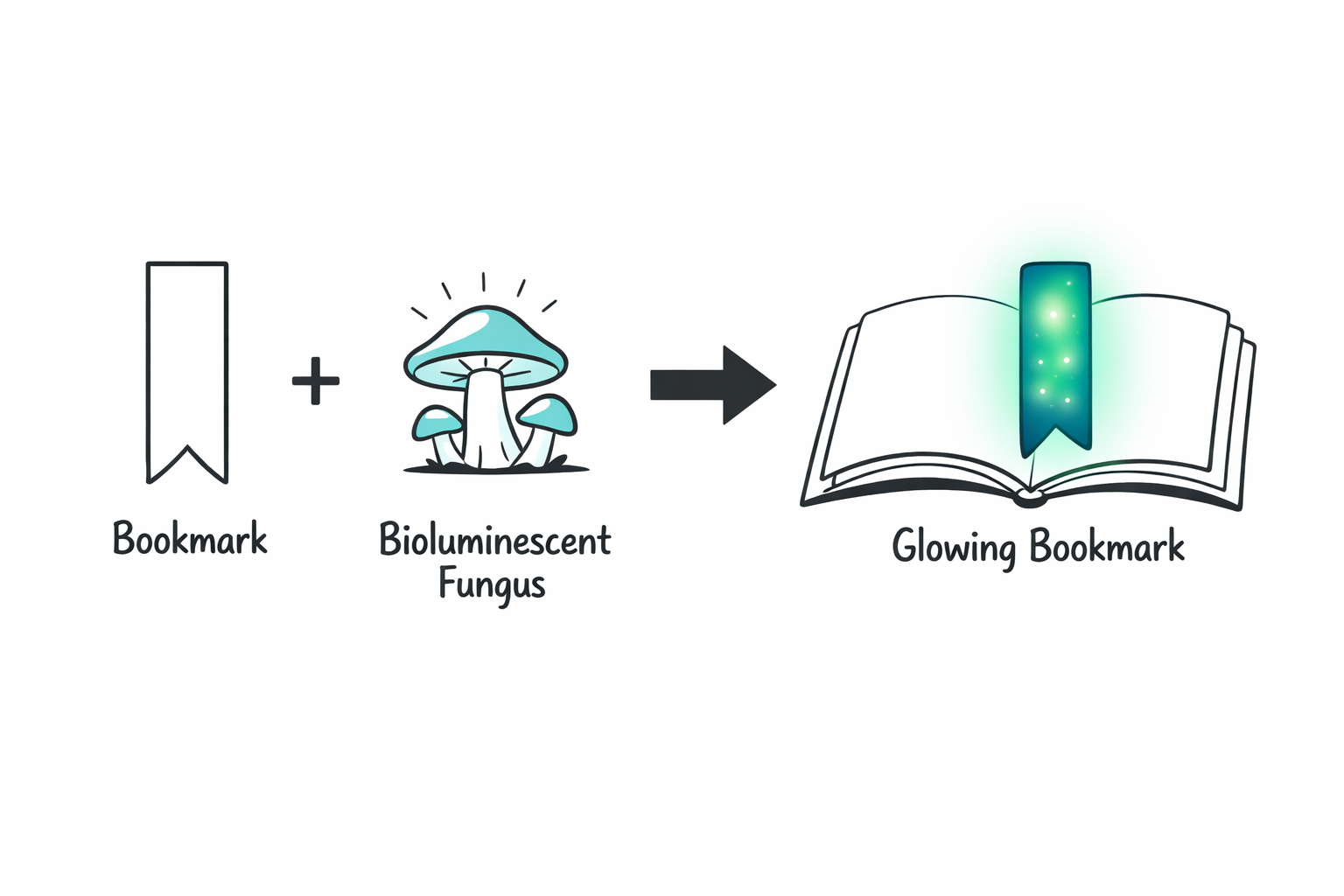 AI generated
Step 2. Next, describe one or more governance/policy goals related to ensuring that this application or tool contributes to an “ethical” future, like ensuring non-malfeasance (preventing harm). Break big goals down into two or more specific sub-goals.
The main ethical goal would be to reduce environmental impact by avoiding traditional batteries, while making sure the user is safe and minimizing risks from the materials used in the bookmark (plastic or glass). This big goal can be break down into:
- For environmental protection, the bookmarks should be made from biodegradable materials so that they help reduce plastic waste and are less harmful to the environment.
- To make sure users are safe, the bioluminescent organisms used in the bookmarks need to be tested carefully, and if necessary, they could be genetically modified to prevent them from having any harmful or toxic genes.
Step 3. Next, describe at least three different potential governance “actions” by considering the four aspects below (Purpose, Design, Assumptions, Risks of Failure & “Success”).
- Purpose: Right now, light-up bookmarks exist, but they use batteries that can damage the environment. We want to replace them with bookmarks that produce light without harmful batteries.
- Design: We thought to make the bookmark thin enough so that the book can close properly, while still being made from a biodegradable material that is resistant to falling or damage. Inside the bookmark, bioluminescent organisms would be placed to provide light without using batteries.
- Assumptions: The autonomy of the bookmark depends on how long the bioluminescent organism can live, which might be a relatively short time. It is also assumed that the production costs could be high, making the bookmark expensive to produce and buy, even though it might only be used for a limited period of time.
- Risks of Failure: The bioluminescence may fail due to lack of oxygen, poor organism survival, or degradation of the material.
- Success: The bookmark is visually appealing, functional, and draws attention while being eco-friendly, providing a safer alternative to battery-powered bookmarks.
Step 4. Next, score (from 1-3 with, 1 as the best, or n/a) each of your governance actions against your rubric of policy goals. The following is one framework but feel free to make your own:
| Does the option: | Purpose | Design | Assumptions |
|---|---|---|---|
| Enhance biosecurity | |||
| 1. Preventing incidents | 2 | 2 | 3 |
| 2. Helping respond | 3 | 3 | 3 |
| Foster lab safety | |||
| 1. Improving procedures | 2 | 1 | 2 |
| 2. Encouraging safe behavior | 2 | 2 | 2 |
| Protect the environment | |||
| 1. Reducing waste | 1 | 1 | 2 |
| 2. Designing safer materials | 1 | 1 | 2 |
| Other considerations | |||
| 1. Cost & feasibility | 2 | 2 | 3 |
| 2. Social impact | 1 | 1 | 2 |
🌟 Short explanation of the scoring choices
I gave the highest scores to environmental protection because the bookmarks are made from biodegradable materials that reduce waste. Lab safety scored well since testing the organisms helps prevent accidents. Biosecurity scored lower because this project isn’t focused on biological risks. Cost and social impact were moderate: the bookmarks might be a bit expensive, but they are attractive and eco-friendly. Overall, the scores reflect a balance between safety, environmental benefits, and practicality.
Step 5. Last, drawing upon this scoring, describe which governance option, or combination of options, you would prioritize, and why. Outline any trade-offs you considered as well as assumptions and uncertainties.
I would prioritize a combination of the bookmark’s aesthetic appeal and environmental safety. A visually attractive bookmark will draw attention and encourage people to buy and use it. At the same time, using biodegradable materials and safe bioluminescent organisms helps protect the environment and ensures user safety.
The main trade-off is cost and production complexity. Making a thin, eco-friendly, and visually appealing bookmark with tested organisms could be more expensive and harder to produce. Another assumption is that the organisms will live long enough to provide visible light, but their lifespan might be limited.
I would recommend this approach to companies that make educational or novelty products and to environmental regulators, because they can make sure the product is safe, sustainable, and still attractive.