Week 3 Homework: Lab automation
Lab Automation Homework Assignment:
“Your task this week is to Create a Python file to run on an Opentrons liquid handling robot. Review this week’s recitation and this week’s lab for details on the Opentrons and programming it. Generate an artistic design using the GUI at opentrons-art.rcdonovan.com. Using the coordinates from the GUI, follow the instructions in the HTGAA26 Opentrons Colab to write your own Python script which draws your design using the Opentrons.”
Colab code:
Generated Design:
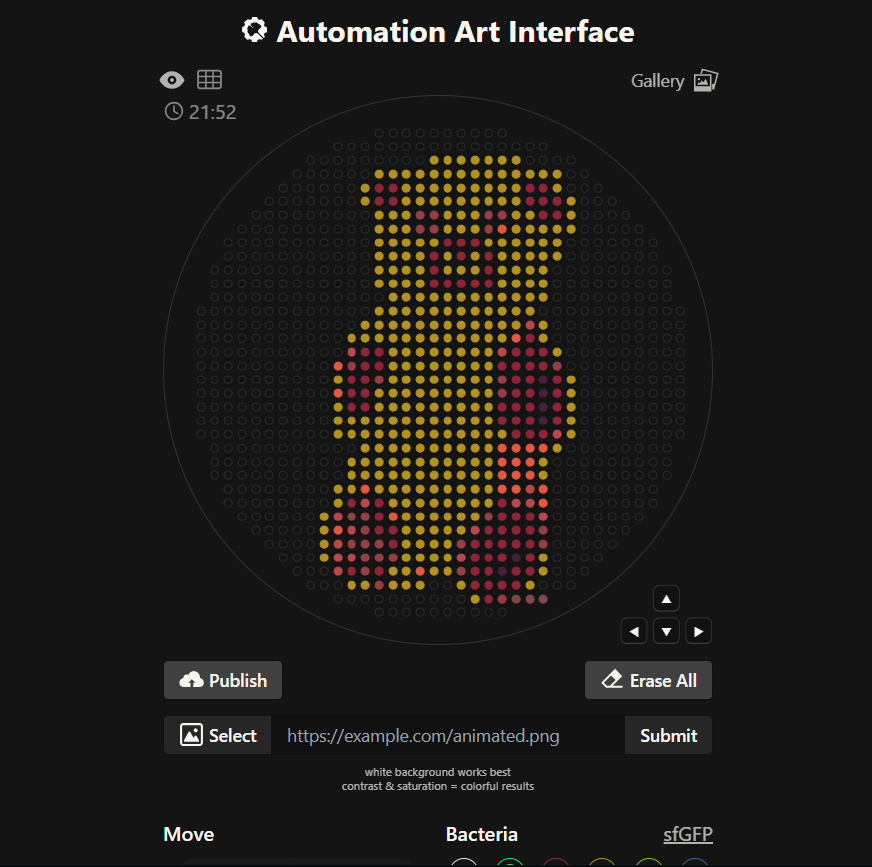
Final Colab Barni design:
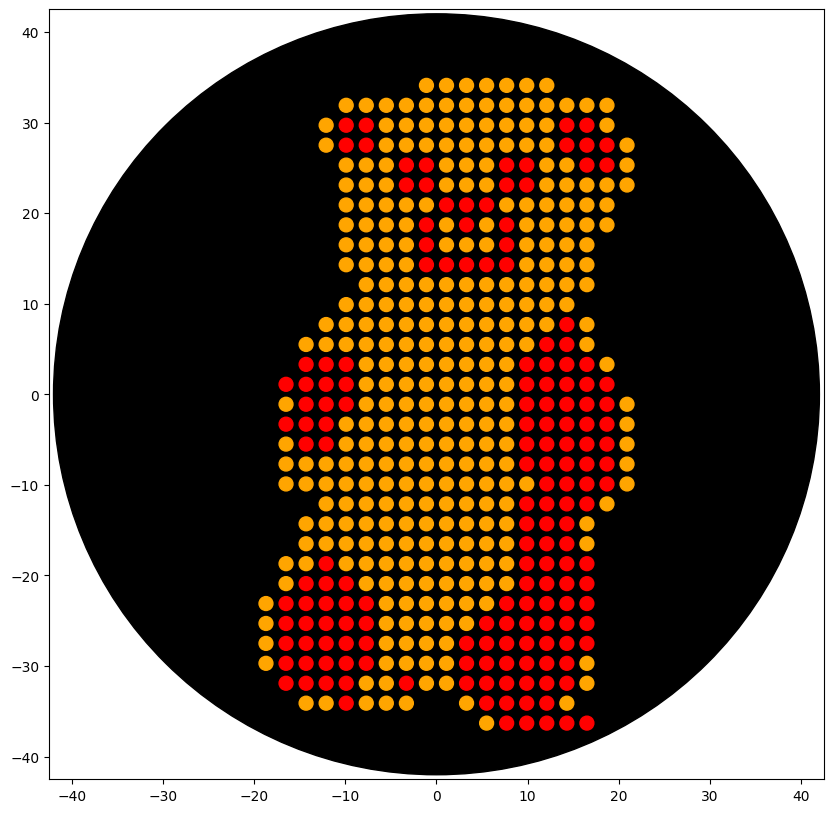
It is to be noted that I have used Gemini AI thinking mode for the generation of the entire script.
1. Find and describe a published paper that utilizes the Opentrons or an automation tool to achieve novel biological applications.
Paper name: “BOTany Methods: Accessible Automation for Plant Synthetic Biology” by Mingqi Xie and Qian de la Tour (bioRxiv, August 22, 2025) Short description: democratizing access to laboratory automation in plant synthetic biology by developing a suite of modular protocols called BOTany Methods, which leverage the affordable Opentrons OT-2 liquid-handling robot to streamline common molecular biology workflows. The authors highlight how traditional biofoundries are costly and inaccessible, limiting high-throughput experimentation, reproducibility, and the Design-Build-Test-Learn (DBTL) cycle in plant science. By using the OT-2, they enable automation for tasks that are typically manual and error-prone, making them suitable for educational settings and nre researchers.
2. Write a description about what you intend to do with automation tools for your final project. You may include example pseudocode, Python scripts, 3D printed holders, a plan for how to use Ginkgo Nebula, and more. You may reference this week’s recitation slide deck for lab automation details.
For my final project, I plan to automate the development and testing of an aptamer-based electrochemical biosensor integrated into a portable electrical device for automatic detection of heavy metals in water samples. The biosensor will use DNA aptamers as the biorecognition element, immobilized on gold screen-printed electrodes, to bind target metals and produce measurable changes in electrical impedance or current. This will be integrated into a compact, Arduino-based device with a microfluidic channel for sample flow, enabling automatic sensing: water is drawn in via a pump, interacts with the biosensor, and triggers real-time readout via a potentiostat module, with data logged to a cloud app for alerts if thresholds are exceeded. The goal is to create a low-cost, field-deployable system for environmental monitoring, optimizing aptamer sequences and immobilization for high sensitivity (sub-ppb levels). I’ll use the Opentrons OT-2 for local automation to handle high-throughput screening of aptamer variants and electrode functionalization, while leveraging Ginkgo Nebula’s cloud lab for large-scale DNA synthesis and initial validation. Specifically:
Aptamer design and synthesis: Design aptamer libraries targeting heavy metals using tools like SELEX simulation software, then submit to Ginkgo Nebula for automated synthesis and amplification. Nebula’s high-throughput platform can produce 96-384 variants in plates, shipped for local use. Local automation with Opentrons: The OT-2 will prepare functionalization solutions (e.g., thiol-modified aptamers mixed with linkers), deposit them precisely onto electrode arrays in a 96-well format for immobilization, and perform washing/incubation steps. It will also simulate testing by dispensing metal-spiked water samples and cofactors, allowing batch optimization of binding conditions.
Final project ideas:
1. Cristalin clearance:
- the inner cells that made up the crystalline keep accumulating glucose molecules that, over time, leading to decreased lens clarity.
- these cells autodestroyed their organelles to become almost completely transparent, therefore they no longer possess the internal machinery for doing basically anything;
- they still have some types of chaperone cells, but unlike normal chaperones that are degraded by ubiquitin-proteosome complexes, the chaperones inside these cells enter “kamikaze mode” and once they capture a denatured protein, they sacrifice themselves and remain in the cell captive.
- Glycolization occurs when a glucose molecule binds to the N-terminal of a protein (this happens to chaperones in crystallin cells).
- the cells membrane still has a few “ports” where molecules smaller than 1200 daltons can enter (like glucose)
If I were to choose these subject for my final project I would research a way for how we could use engineered viruses (VLPs) to inject proteins (not nucleic acid) into the cristallin cells. The proteins injected can range from proteases to any protein that can help the crystallin become clear again. Or if the virus method fails I would most likely try using perforin or similar substances to introduces the proteins in the cell and out of the cell.
2. Aging neurons:
- Neurons in the brain rely heavily on mitochondria for energy production, but over time these organelles accumulate mutations in their DNA, leading to impaired function and cellular senescence.
- Unlike nuclear DNA, mitochondrial DNA lacks robust repair mechanisms, making it prone to oxidative damage from reactive oxygen species generated during metabolism.
- Aging neurons exhibit reduced mitophagy, the process where damaged mitochondria are selectively degraded and recycled, resulting in a buildup of dysfunctional units.
- Certain proteins like Parkin and PINK1 play key roles in tagging damaged mitochondria for removal, but their activity declines with age due to factors like protein misfolding.
- Neurons have limited ability to divide, so they must maintain long-term homeostasis through mechanisms like mitochondrial fusion and fission to distribute healthy organelles.
- If I were to choose this subject for my final project I would research a way to enhance mitophagy using CRISPR-based gene editing to upregulate Parkin and PINK1 expression in neuronal cell models. This could involve delivering the editing tools via adeno-associated viruses (AAVs) targeted to brain tissue. Or if gene editing proves inefficient, I would explore small molecule activators that mimic the effects of these proteins to clear damaged mitochondria and restore neuronal energy levels.
3. Bacterial biofilms
- Bacterial biofilms form protective communities on surfaces where cells are embedded in a matrix of extracellular polymeric substances, making them highly resistant to antibiotics. Within biofilms, bacteria enter a dormant state with slowed metabolism, reducing the effectiveness of drugs that target active processes like cell wall synthesis.
- Quorum sensing allows bacteria in biofilms to communicate and coordinate behaviors, including the upregulation of efflux pumps that expel antibiotics from cells.
- Persister cells, a subpopulation in biofilms, survive antibiotic treatment by entering a non-replicating phase and can repopulate the community once the threat is gone.
- The biofilm matrix acts as a physical barrier, limiting antibiotic penetration and binding to charged components that neutralize drug activity.
- If I were to choose this subject for my final project I would research a way to disrupt biofilm integrity using engineered bacteriophages that deliver enzymes like dispersin B to degrade the extracellular matrix. This could expose bacteria to standard antibiotics for better efficacy. Or if phage delivery is challenging, I would investigate nanoparticle carriers loaded with quorum-sensing inhibitors to prevent communication and weaken the biofilm structure from within.