Gradially A path toward signal-guided marbling in cultivated meat Asaf Balaga
HTGAA, Spring 2026
MIT Media Lab
Section 1: Abstract Cultivated meat is not only a challenge of growing cells, but of organizing them into convincing food. Recent work suggests that realistic cultivated meat products will depend on internal muscle–fat structure, because they must approach conventional meat not only in cellular composition, but also in taste, texture, nutritional profile, and visual familiarity. This project addresses the problem of how internal structure in cultivated meat might eventually be guided rather than passively produced.
A path toward signal-guided marbling in cultivated meat
Asaf Balaga HTGAA, Spring 2026 MIT Media Lab
Section 1: Abstract
Cultivated meat is not only a challenge of growing cells, but of organizing them into convincing food. Recent work suggests that realistic cultivated meat products will depend on internal muscle–fat structure, because they must approach conventional meat not only in cellular composition, but also in taste, texture, nutritional profile, and visual familiarity. This project addresses the problem of how internal structure in cultivated meat might eventually be guided rather than passively produced.
The overall goal of this project is to investigate whether engineered sender–receiver signaling logic can serve as a foundation for future signal-guided marbling in cultivated meat. The central hypothesis is that spatially organized signaling systems, first reduced to a tractable bacterial platform, can eventually be translated into more biologically relevant contexts in which localized signaling biases fat-related outputs and, in the long term, tissue-level organization.
The present work focuses on an early experimental reduction of that broader ambition. Specifically, the first experimental step is a bacterial proof-of-concept assay in which an externally introduced chemical signal is used to activate a receiver construct, with eGFP serving as the first measurable output and ‘TesA included as a fat-related proxy. The project combines literature framing around cultivated-meat structure, DNA construct design in Benchling, synthesis planning, receiver-plasmid design based on an Addgene backbone, wet-lab preparation, exploratory cell-free eGFP tests, and a defined first-pass assay plan. Together, these efforts establish the conceptual, genetic, and experimental groundwork for a future progression from bacterial signal-response logic toward spatial patterning, mammalian translation, and ultimately signal-guided fat–muscle organization in cultivated meat.
Section 2: Project Aims
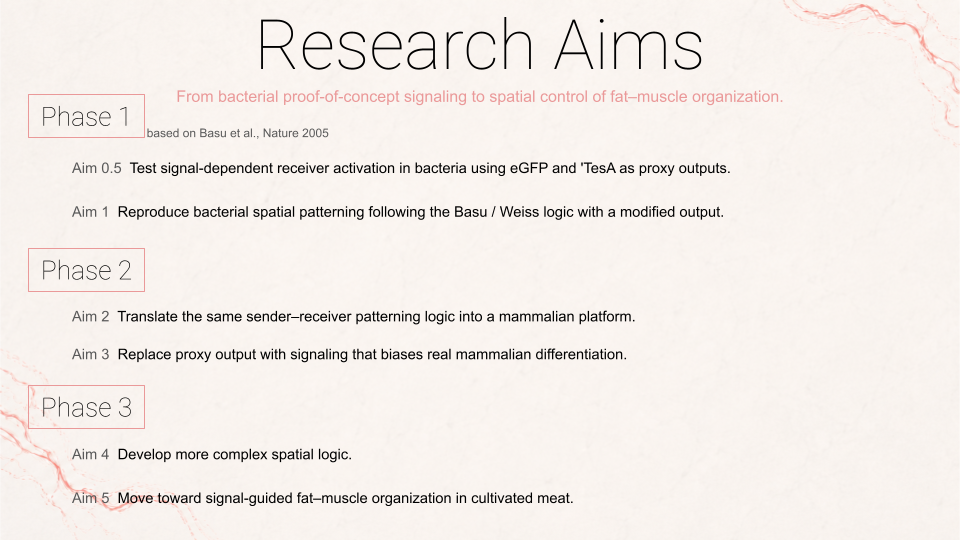
Aim 1 — Experimental Aim
The first aim of my final project is to establish a bacterial proof-of-concept for signal-dependent receiver activation by using externally added AHL to activate a receiver construct and produce a measurable eGFP output, with ‘TesA included as a fat-related proxy. This aim represents a reduced experimental version of the broader project question: whether engineered sender–receiver signaling can eventually be used to guide spatially biased fat-related outputs as a step toward marbling control in cultivated meat. The immediate goal is not to reproduce tissue differentiation or marbling directly, but to test whether the signaling logic can function reliably in a tractable bacterial system before attempting more complex biological contexts.
To support this aim, I designed a receiver-focused plasmid in Benchling based on an Addgene backbone, prepared a synthesis-ready construct, defined a first-pass assay using externally introduced AHL as the signal input, and identified eGFP fluorescence as the primary measurable output. I also carried out preliminary wet-lab preparation, including bacterial culture setup and exploratory cell-free eGFP testing, in order to de-risk the assay while waiting for the ordered DNA to arrive. Together, these efforts establish the first experimentally accessible layer of the project.
Aim 2 — Development Aim
Following successful completion of Aim 1, the next stage of the project will focus on extending the bacterial signal-response logic into more spatially organized and biologically relevant forms. The first development step would be to reproduce bacterial spatial patterning behavior inspired by the Basu/Weiss sender–receiver framework, but with an output architecture more closely aligned with the present project’s fat-related proxy logic. The next developmental step would be to translate that signaling framework into a mammalian platform, where a bacterial proxy such as ‘TesA would be replaced with a more appropriate mammalian functional analogue.
A major goal of this aim is to move from simple signal-dependent activation toward signaling that can bias differentiated states across space. This would involve addressing both technical and conceptual challenges, including how to preserve communication logic across a platform shift, how to choose a biologically meaningful mammalian output, and how to begin connecting signaling to internal structure rather than reporter expression alone. If Aim 1 establishes that the reduced bacterial system works, Aim 2 would transform that result into a pathway toward spatial patterning as a developmental tool rather than only a proof of activation.
Aim 3 — Visionary Aim
The long-term vision of this project is to develop signal-guided patterning into a framework for controllable fat–muscle organization in cultivated meat, treating marbling as a programmable tissue property rather than a passive byproduct of growth. In this vision, signaling gradients and engineered spatial logic would not only trigger expression but help organize where different biological states emerge within a growing tissue-like system. The broader objective is to move from the idea of cultivated meat as undifferentiated biomass toward cultivated meat as structured, compositionally intentional food.
If fully realized, this project could contribute to a new design layer in cultivated meat production: one in which internal structure, sensory quality, and nutritional architecture are not left entirely to scaffold geometry or post-processing, but can be influenced through engineered biological communication. More broadly, the project asks whether tools from synthetic multicellular pattern formation can be redirected toward food engineering, opening a path toward programmable marbling and more realistic cultivated-meat products.
Phased Research Roadmap
These three project aims are further broken down below into a phased research roadmap, which maps the experimental reduction, developmental progression, and long-term vision across six sequential sub-aims.
Phase 1 — Experimental Reduction
Sub-aim 0.5: Establish bacterial signal-to-output activation The first sub-aim is to test whether externally added AHL can activate a receiver construct in bacteria and produce a measurable output. In this reduced system, eGFP serves as the primary readout, while ‘TesA is included as a fat-related proxy linked to the same output logic. The goal is to establish that the signaling architecture functions reliably before attempting spatial patterning or translation into more complex biological contexts.
Sub-aim 1: Reproduce bacterial spatial patterning The second sub-aim is to move beyond uniform signal-dependent activation and reproduce bacterial spatial patterning behavior inspired by the Basu/Weiss sender–receiver framework. At this stage, the objective is not only to turn the system on, but to generate localized or gradient-like expression behavior across space. This would establish the first direct link between the project’s signaling logic and the broader question of how internal structure might eventually be guided rather than passively produced.
Phase 2 — Development
Sub-aim 2: Translate the logic into mammalian cells The third sub-aim is to port the sender–receiver patterning logic from a bacterial platform into a mammalian one. This transition would require replacing the bacterial expression context and adapting the signaling framework to a system with more biologically relevant outputs and constraints. The purpose of this step is to preserve the communication logic while moving closer to a platform that could eventually support tissue-level organization relevant to cultivated meat.
Sub-aim 3: Link signaling to differentiation-relevant behavior The fourth sub-aim is to move from proxy-linked output toward signaling that begins to bias real differentiation-related processes in mammalian cells. Rather than using fluorescence or a bacterial fat-related proxy alone, this stage would require selecting outputs that more directly reflect meaningful biological state changes. The goal is to establish that signaling can do more than report activation: it can begin to organize where different biological behaviors emerge across space.
Phase 3 — Vision
Sub-aim 4: Increase patterning complexity The fifth sub-aim is to develop more complex spatial logic beyond focal or single-gradient activation. This could include multi-attractor systems, threshold-dependent responses, or behaviors that depend on combinations and directions of signals rather than one signal alone. The purpose of this step is to expand the expressive and structural complexity of the patterning system so that it can support richer forms of internal organization.
Sub-aim 5: Move toward signal-guided marbling The final sub-aim is to apply engineered patterning logic toward controllable fat–muscle organization in cultivated meat. At this stage, marbling would be approached not as a passive byproduct of scaffold design or growth conditions, but as a programmable tissue property shaped by biological communication. The long-term aim is to help define a new layer of cultivated-meat design in which internal structure, sensory quality, and compositional organization can be influenced through engineered signaling.
Section 3: Background and Literature Context
The problem of internal structure in cultivated meat
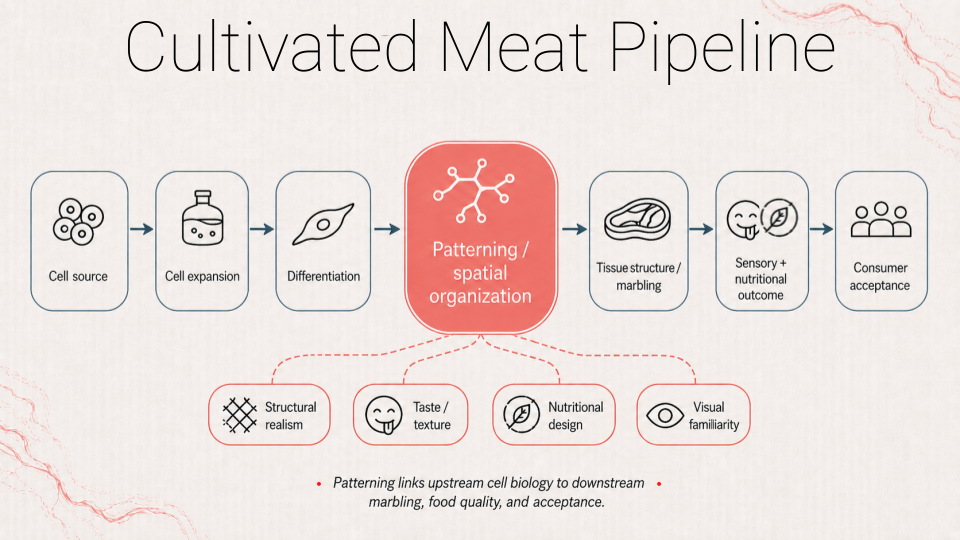
Cultivated meat is often framed as a problem of cell growth, but realistic food products depend on more than the successful expansion of cells in culture. Conventional meat is not compositionally uniform: its sensory qualities emerge in part from the spatial relationship between muscle, fat, connective structure, and water distribution. Marbling is therefore not merely a visual surface effect. It contributes to texture, flavor perception, lipid composition, and the recognizability of meat as a familiar food rather than as undifferentiated biomass.
This project is motivated by the idea that cultivated meat will require new methods for internal spatial organization if it is to move beyond bulk tissue production toward more convincing and controllable architectures. In that framing, the challenge is not only how to grow relevant cell types, but how to influence where different biological states emerge in space. The specific question addressed here is whether engineered biological signaling, first reduced to a tractable bacterial platform, could eventually serve as one route toward signal-guided marbling.
Peer-reviewed literature context
Recent cultivated-meat literature suggests that realism in cultivated meat depends on more than simply matching the correct cell types. Piantino et al. argue that future cultivated meat products will require bioengineering approaches that better address structural complexity and tissue-level realism, rather than focusing only on cell expansion and scaffold occupancy. Similarly, Xie et al. emphasize that cultivated meat must approach conventional meat not only in composition, but also in quality-relevant properties such as taste, texture, nutritional value, and public acceptance. Taken together, these works frame cultivated meat as a structural design challenge in addition to a cell-culture challenge.
A second relevant body of literature concerns the role of fat and appearance in how cultivated meat is evaluated as food. Kardas et al. discuss cultured meat reformulation through the lens of health potential and lipid composition, reinforcing the idea that fat-related design is not only sensory but also nutritional. Motoki et al. further show that the visual appearance of cultured meat strongly shapes consumer preference, indicating that appearance is not secondary to function but part of the product’s acceptability. These papers support the view that marbling should be understood as a meaningful structural, sensory, and nutritional target rather than as a decorative afterthought.
A separate but complementary scientific lineage comes from synthetic biology and programmed pattern formation. Basu et al. demonstrated that engineered multicellular sender–receiver systems can generate spatial patterning in bacteria through chemical communication and threshold-dependent responses. That work is foundational not because this project aims to reproduce it as an endpoint, but because it provides a proof that biological signaling can be used to create organized differences across space. The present project takes that logic as a starting point and asks whether a related signaling framework could eventually be redirected toward cultivated-meat patterning problems.
Gap in knowledge or capability addressed by this project
These two domains—cultivated-meat structure and synthetic biological pattern formation—have not yet been meaningfully integrated in the context addressed here. The cultivated-meat literature makes clear that internal structure, fat distribution, and realism matter, but it does not yet offer a mature signaling-based strategy for guiding those features through engineered biological communication. Conversely, synthetic biology has demonstrated spatial signaling and pattern formation in simplified biological systems, but these systems have generally not been developed in relation to cultivated-meat composition, marbling, or food architecture.
This project addresses that gap by proposing a staged bridge between the two fields. Rather than attempting to engineer marbling directly in a complex mammalian tissue context from the outset, the project first reduces the problem to a bacterial proof-of-concept for signal-dependent receiver activation. The broader contribution of this approach is conceptual as well as technical: it tests whether the logic of engineered spatial signaling can be repositioned from a synthetic-patterning context toward a cultivated-meat design problem.
Key references discussed in this project
Piantino et al., Trends in Biotechnology 2025
Xie et al., The Journal of Nutrition 2025
Kardas et al., Comprehensive Reviews in Food Science and Food Safety 2025
Motoki et al., Food Quality and Preference 2026
Basu et al., Nature 2005
Novelty
The novelty of this project does not lie in inventing sender–receiver biology from scratch. Rather, it lies in repositioning spatial-patterning logic toward a cultivated-meat design problem. The project asks whether the conceptual and technical lineage of engineered biological pattern formation can be redirected toward future control of internal food structure, beginning with a deliberately reduced bacterial assay.
At the current stage, the project is also novel in how it decomposes the problem. Instead of attempting to jump directly into mammalian differentiation or cultivated tissue engineering, it isolates the first question: can a signal reliably activate a receiver and a fat-related proxy-linked output? This reduction is intentional. It is meant to create an experimentally tractable first step that can later support more complex translation.
Why this matters
If cultivated meat is to become structurally convincing, it will need ways to control where distinct biological states appear in space. A future ability to guide fat-related outputs or differentiated cellular states spatially could have implications for texture, flavor, nutrition, and consumer acceptance. More broadly, the project proposes that signal-guided organization may become a missing layer between cell growth and tissue-level realism.
Ethical and Societal Considerations
This project is currently a proof-of-concept synthetic biology effort and does not involve human or animal subjects. However, it exists within a broader food-technology context that carries ethical and societal implications. One ethical responsibility is to avoid overstating what an early bacterial signaling assay can demonstrate. A successful Aim 0.5 would not prove cultivated-meat marbling; it would only establish one experimentally grounded step toward a possible future patterning framework.
A second ethical consideration concerns the framing of future applications. Cultivated meat is often discussed through narratives of sustainability, animal welfare, and technological progress, but these claims should not be assumed automatically at the level of a laboratory proof-of-concept. Any eventual translation from microbial patterning logic to food systems would require careful consideration of feasibility, public trust, regulatory responsibility, and the social consequences of highly engineered food technologies. In this project, the ethical priority is therefore precision of claims, transparency about limitations, and responsible staging of future ambitions.
Section 4: Experimental Design, Techniques, Tools, and Technology
Experimental Design Overview
The current project is designed as a first-pass bacterial assay for signal-dependent receiver activation. The central experimental question is whether externally added AHL can activate a receiver construct strongly enough to produce a detectable eGFP signal above relevant controls. This assay is intended as the earliest experimental reduction of the broader project hypothesis: that engineered sender–receiver signaling can eventually be used to guide spatially biased fat-related outputs as a step toward marbling control in cultivated meat.
Because the long-term project moves through bacterial proof-of-concept, spatial patterning, and eventual mammalian translation, the present experimental design is deliberately narrow. It focuses only on establishing whether the reduced bacterial signaling logic functions at all in a measurable and reproducible way. At this stage, eGFP is the primary readout, while ‘TesA is included as a fat-related proxy within the same output architecture rather than as a direct demonstration of fat differentiation.
Broad Workflow of the Experimental Plan
The current experimental plan can be divided into six discrete tasks:
finalize and verify the receiver construct design;
obtain the DNA construct and prepare the bacterial system;
execute a first-pass induction assay with AHL;
compare induced and control conditions using fluorescence measurement;
interpret results against predefined success criteria;
use the outcome to determine readiness for subsequent spatial-patterning experiments.
Detailed Experimental Plan
Task 1: Finalize receiver construct design and order DNA
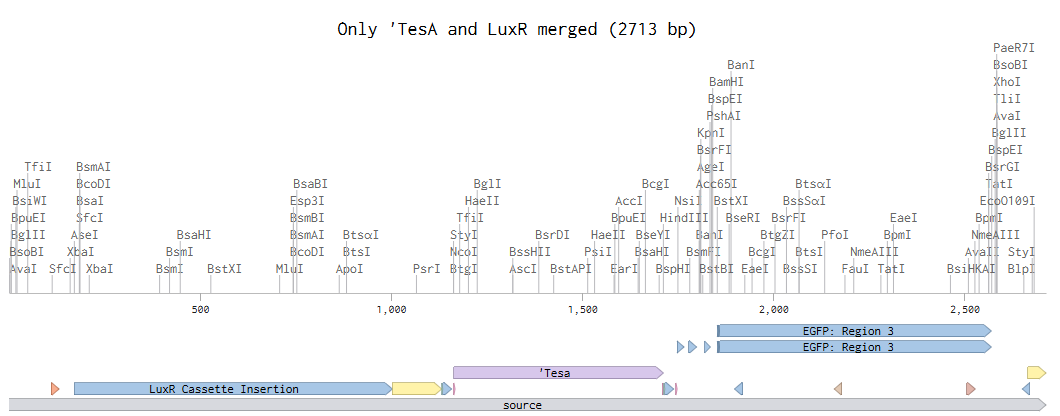
The first task is to finalize the bacterial receiver construct in Benchling and ensure that the design is appropriate for a first-pass signal-response assay. This includes verifying the overall plasmid architecture, checking the relationship between the T7-driven LuxR cassette, the LuxR–AHL-responsive promoter, the ‘TesA proxy component, and the downstream eGFP reporter, and confirming that the construct is synthesis-ready. This stage also includes confirming sequence logic, reading frames, junctions, and general feasibility prior to placing the order through Twist.
Methods / tools / concepts used: Benchling DNA construct design, Addgene backbone adaptation, Twist order planning.
Expected result: a synthesis-ready receiver construct whose architecture matches the intended logic of the Aim 0.5 assay.
Task 2: Prepare the bacterial assay system
Once the construct is available, the next task is to prepare the bacterial assay system. This includes selecting the appropriate bacterial host, transforming or otherwise introducing the construct, initiating bacterial culture, and preparing cultures for the induction experiment. If transformation is required after construct arrival, this stage would also include plating, colony selection, and preparation of overnight cultures from the resulting colonies.
The purpose of this step is to generate a clean and reproducible bacterial context for testing the receiver logic under induced and control conditions. If multiple colonies are available, a small amount of screening may be needed to identify a colony with the expected construct and reasonable growth behavior.
Expected result: viable bacterial cultures carrying the receiver construct and ready for induction testing.
Task 3: Define assay conditions and control matrix
Before running the induction assay, the conditions and controls must be explicitly defined. The minimum condition matrix for the first-pass experiment includes:
receiver + AHL
receiver – AHL
blank host + AHL
optional plasmid backbone or additional negative control, if available
These controls are necessary to distinguish true signal-dependent activation from background fluorescence, host effects, or nonspecific readout. Ideally, all conditions would be run in biological or technical replicate so that the readout is not interpreted from a single culture alone.
Expected result: a clear control matrix that makes the experiment interpretable even if the output is weak or ambiguous.
Task 4: Run the first-pass AHL induction assay
Expected timeline: 1 day active work, plus any required culture growth time before induction; induction and readout window likely several hours to overnight depending on expression kinetics.
The core experimental step is to expose the receiver culture to externally added AHL and compare its output to the no-AHL and blank-host controls. Cultures would be prepared under matched conditions, with the only major variable being the presence or absence of AHL and the presence or absence of the receiver construct. The receiver + AHL condition tests whether the engineered signaling logic turns on the output cassette, while the receiver – AHL condition establishes the baseline signal when the system is uninduced.
At this stage, the assay is not yet testing spatial patterning. It is testing whether the receiver architecture behaves as a functional signal-responsive system in bulk culture. If practical, the induced samples would be monitored over time rather than only at endpoint, since that would give a better sense of expression kinetics and help distinguish delayed activation from complete failure.
Expected result: the induced receiver culture should show greater eGFP output than the no-AHL and blank-host controls if the system is working as designed.
Task 5: Measure fluorescence and normalize signal
Expected timeline: 1–3 hours for measurement, depending on instrument access and number of conditions; additional time for analysis.
The primary readout for this experiment is eGFP fluorescence. The most appropriate measurement method for bacterial liquid culture is a fluorescence plate reader, ideally paired with an OD600 measurement so that fluorescence can be normalized to cell density. This yields a more interpretable signal than raw fluorescence alone, since a brighter sample may otherwise reflect more cells rather than stronger expression per cell.
The preferred reporting metric is therefore normalized eGFP fluorescence (RFU / OD600). If a plate reader is not available, alternative imaging-based readout methods could be used as a lower-resolution backup, but plate-reader-based fluorescence remains the clearest and most rigorous first measurement strategy.
Methods / tools / concepts used: fluorescence plate reader, RFU measurement over OD600 normalization, endpoint or time-course fluorescence analysis.
Expected result: the receiver + AHL condition should produce a higher normalized fluorescence signal than the receiver – AHL and blank-host + AHL controls.
Task 6: Interpret results against success criteria
Expected timeline: approximately 2–4 hours for first-pass interpretation and documentation after data collection.
The success criterion for Aim 0.5 is a reproducible visible or measurable eGFP signal in the induced receiver condition above the no-AHL and blank-host controls. If the induced receiver shows a clear signal increase above controls, the experiment supports the conclusion that the signaling architecture is functioning in a reduced bacterial context. If fluorescence is not observed, that does not immediately invalidate the overall project hypothesis, but it does indicate that one or more components of the construct, induction conditions, host context, or measurement workflow require revision.
This stage should also include documenting whether the result is strong enough to justify progression toward bacterial spatial-patterning experiments. If the assay produces only weak or ambiguous output, follow-up troubleshooting would be needed before treating the receiver logic as established.
Methods / tools / concepts used: data interpretation for threshold-based success criteria, comparison of induced versus control conditions, documentation of assay outcome.
Expected result: a clear determination of whether Aim 0.5 was successfully validated, partially supported, or requires redesign and troubleshooting.
Preliminary and Adjacent Work Completed During the Course
Because the ordered construct did not arrive in time for full execution of the intended assay, several preparatory and adjacent tasks were performed during the course in order to de-risk the project and convert it into a bench-ready workflow.
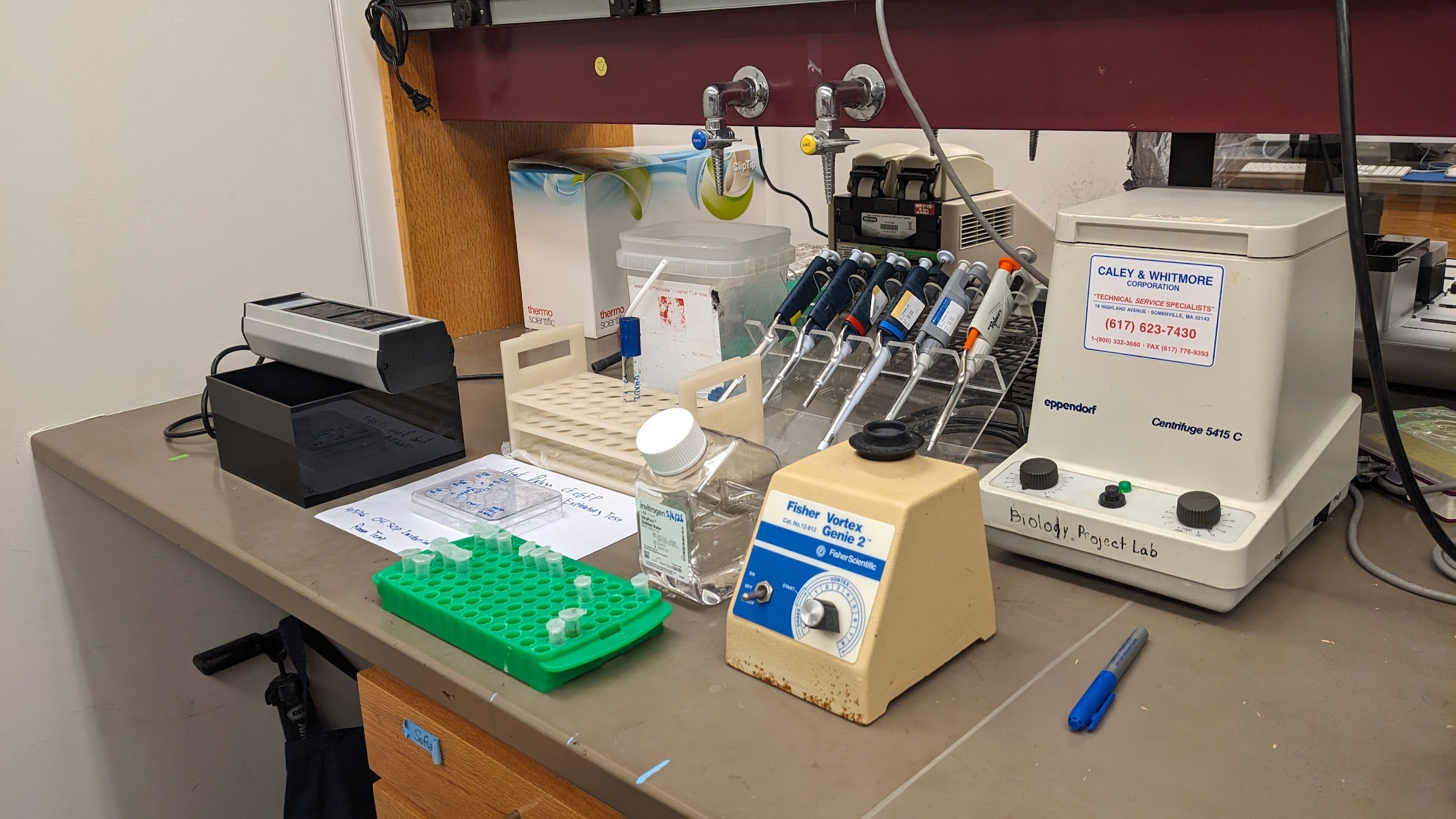
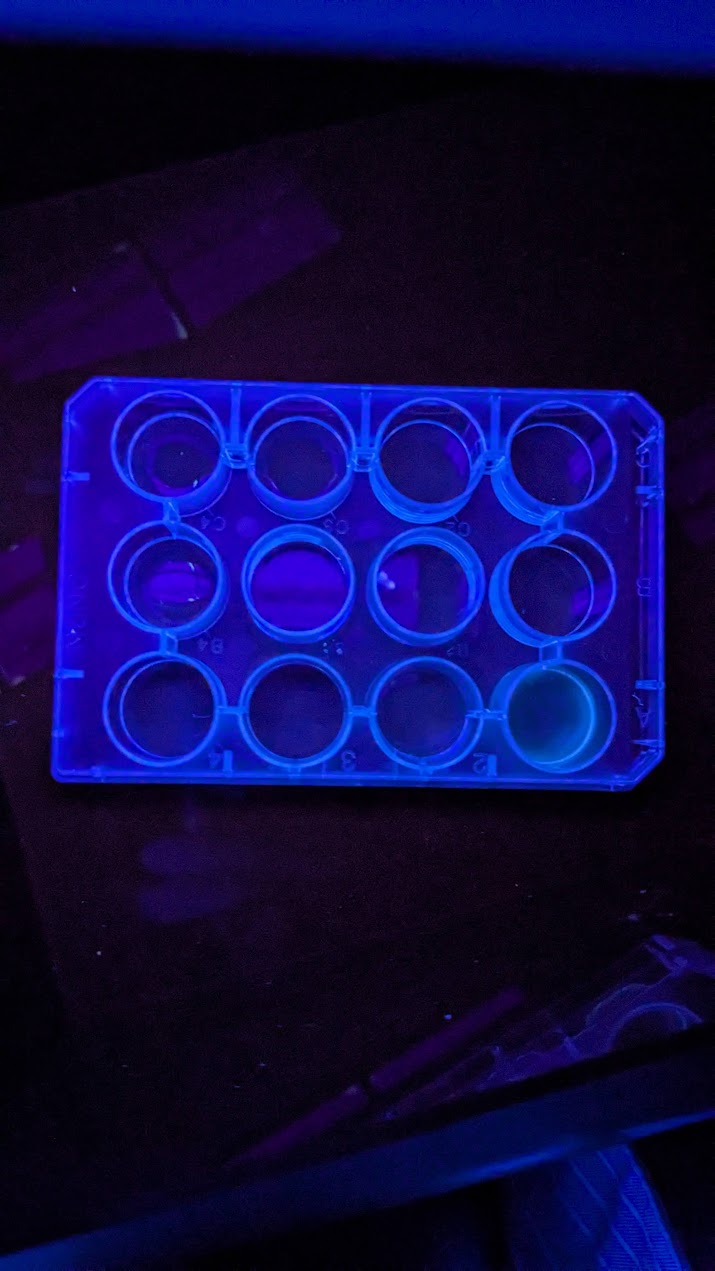
First, I designed the receiver construct in Benchling based on an Addgene-derived backbone and prepared it for synthesis. Second, I initiated bacterial culture preparation so that the overall experimental workflow would not remain purely conceptual. Third, I ran an exploratory cell-free eGFP expression test as an adjacent expression-oriented study, partly to maintain practical engagement with the output logic and partly to explore how localized input might eventually relate to spatially biased expression. Finally, I developed a first-pass experimental plan and control matrix for the Aim 0.5 receiver assay.
Although these steps do not replace the full bacterial induction experiment, they constitute meaningful groundwork for the intended validation phase.
Relevant Techniques, Tools, and Technologies
The following techniques, tools, and technologies are directly relevant to this project:
DNA construct design
Use of Benchling
Designing a Twist order
Bacterial culturing
Experimental controls and assay planning
Cell-free reaction preparation
Fluorescence measurement logic
Literature-guided construct engineering
Two especially important techniques in the present stage of the project are DNA construct design and bacterial culturing. DNA construct design is central because the current project depends on building a receiver plasmid whose architecture correctly connects signal input, response logic, and output. Bacterial culturing is equally important because the first experimental question is being asked in a bacterial context, and reliable induction measurements depend on clean culture preparation, matched growth conditions, and interpretable comparison across induced and control states.
Feasibility and Expected Outcome
This experimental plan is intentionally modest in scope. It does not attempt to solve cultivated-meat patterning directly within the timeframe of the course. Instead, it focuses on the smallest experimentally meaningful step that can test the broader project logic: whether engineered sender–receiver signaling can activate a measurable output in a reduced bacterial system.
If successful, this experiment would justify moving into the next development stage of the project, including bacterial spatial patterning and eventual mammalian translation. If unsuccessful, it would still provide useful information by clarifying whether the limitation lies in construct design, induction conditions, host context, or measurement strategy. In either case, the experiment is feasible, interpretable, and appropriately matched to the current stage of the project.
Section 5: System Design and Construct Logic
Conceptual logic of Aim 0.5
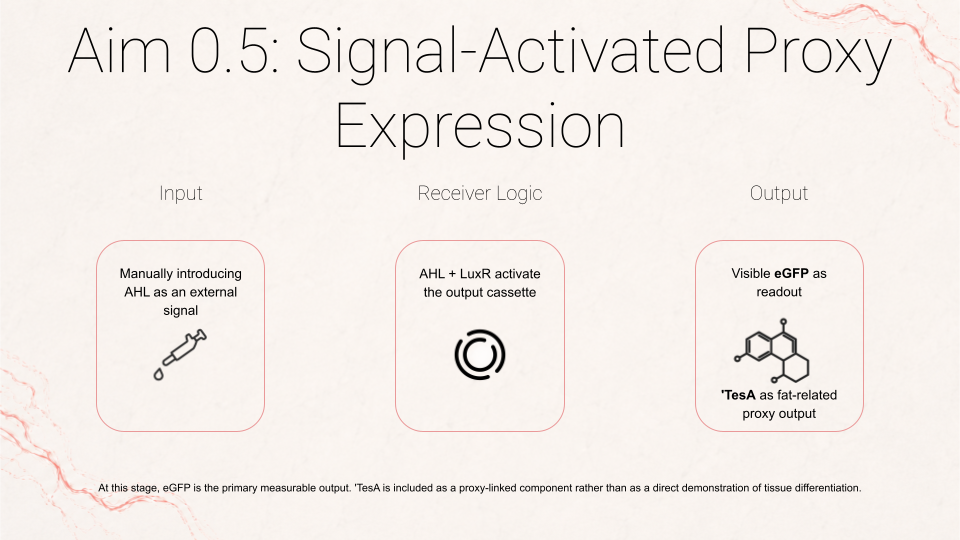
The present experimental reduction focuses on a receiver-centered bacterial system. An external chemical signal is added manually, the receiver logic is expected to turn on in response, eGFP serves as the primary visible readout, and ‘TesA is included as a fat-related proxy within the output program.
At this stage, eGFP is the primary measurable output. ‘TesA is not being treated as a full demonstration of lipid differentiation, but as a proxy-linked component that connects the signaling logic to a fat-related function.
Design basis
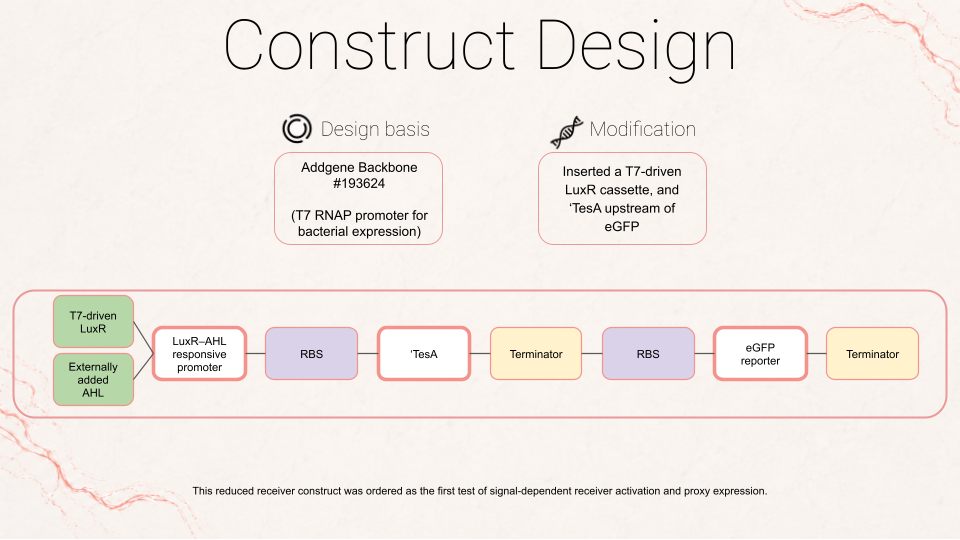
The construct design was based on an Addgene receiver backbone (#193624) and modified in Benchling. The reduced construct was designed as the fastest tractable first test of signal-dependent receiver activation before attempting more complex patterning behavior.
Construct modification
The working receiver construct design includes:
T7-driven LuxR
externally added AHL
LuxR–AHL responsive promoter logic
‘TesA
eGFP reporter
terminators and RBS elements required for expression logic
Benchling and sequence-design workflow
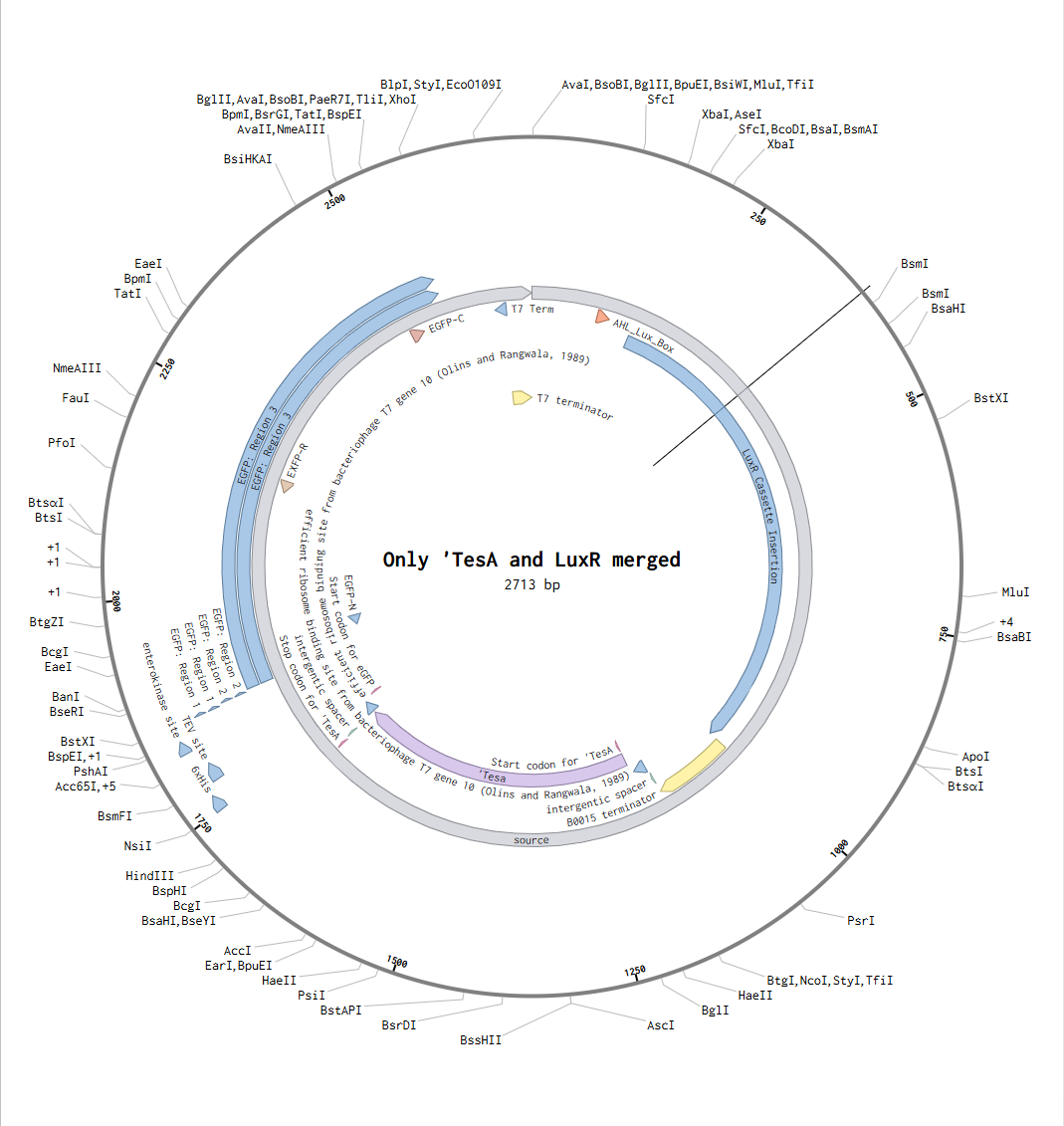
Benchling was used to modify the receiver backbone, define the orderable construct, and simplify the system into a receiver-focused first assay. The design process involved deciding what to preserve from the existing plasmid architecture, what to insert upstream of eGFP, and how to reduce the original broader sender–receiver vision into a first synthesis-ready construct.
Section 6: Experimental Design, Techniques, Tools, and Technologies
Experimental design overview
The current project is designed as a first-pass bacterial assay for signal-dependent output activation. The central question is whether externally added AHL can activate the receiver output program strongly enough to produce a detectable eGFP signal above controls.
Planned assay logic
The minimum first-pass assay includes:
receiver + AHL
receiver – AHL
blank host + AHL
optional backbone or additional negative control if available
Success criterion
The key success criterion for Aim 0.5 is visible or measurable eGFP output in the induced receiver condition above the no-AHL and blank-host controls.
Measurement strategy
The primary readout is eGFP fluorescence. The most appropriate measurement method for bacterial liquid culture is a fluorescence plate reader, ideally with signal reported as normalized eGFP fluorescence (RFU / OD600) to account for differences in cell density across conditions.
Relevant synthetic biology techniques and tools
This project draws on the following techniques and tools:
DNA construct design
Benchling
Designing a Twist order
Bacterial culturing
Cell-free reaction preparation
Fluorescence measurement logic
Experimental controls and assay planning
Literature-guided construct engineering
Section 7: While Waiting for DNA — Interim Validation and Wet-Lab Preparation
A major practical constraint of this project was timing: the ordered construct did not arrive in time for the full planned experimental workflow. Rather than leaving the project at the level of design only, I used this period to define the assay in bench-ready terms and to perform adjacent exploratory work that would de-risk the first experiment once DNA arrived.
Wet-lab readiness
This included:
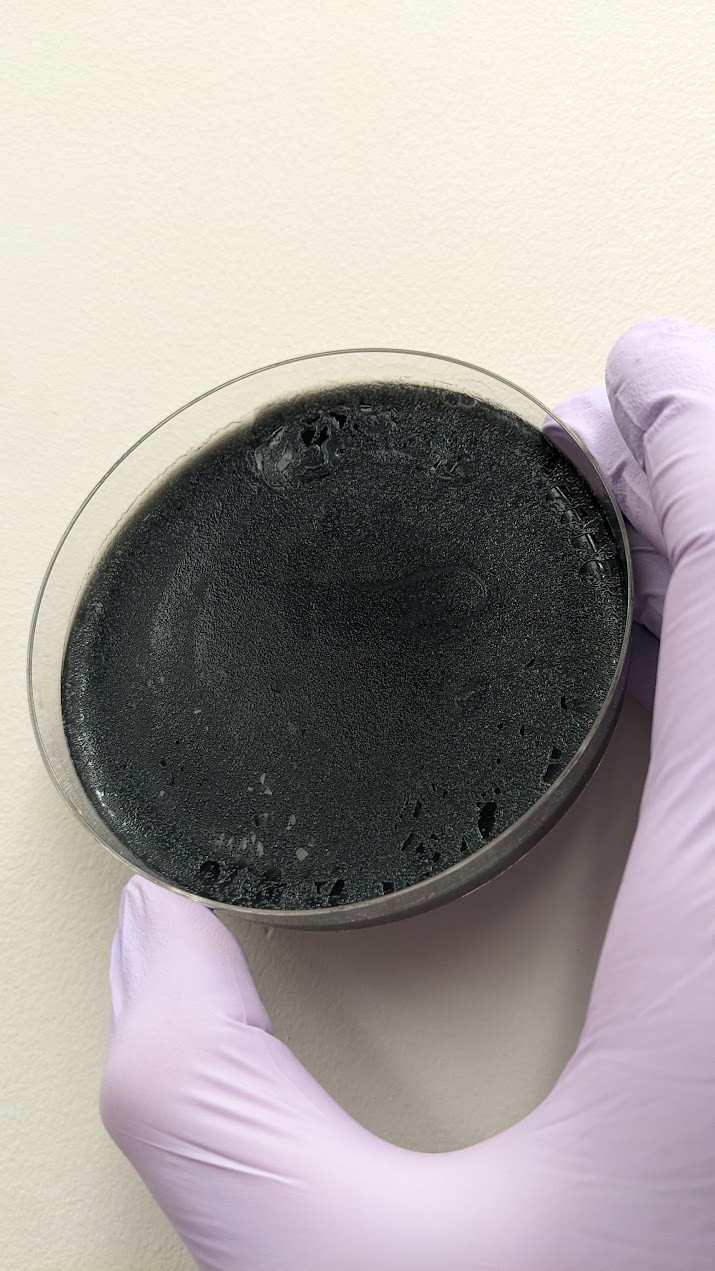
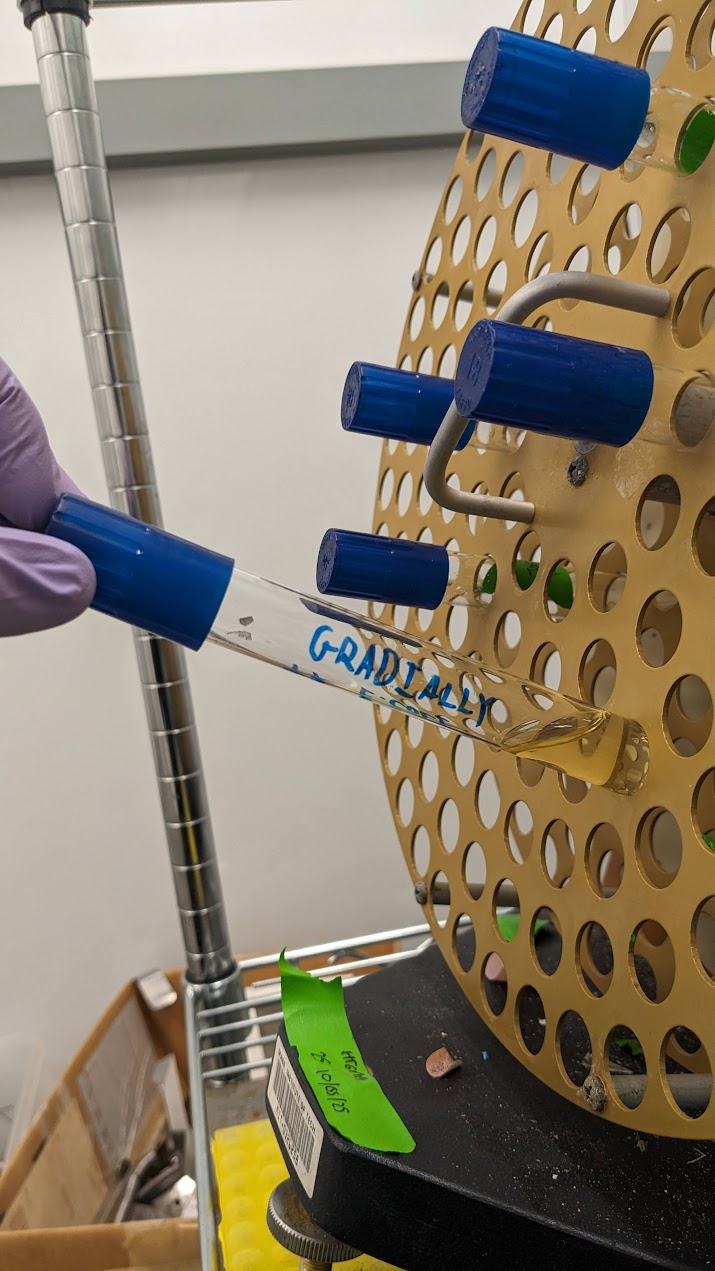
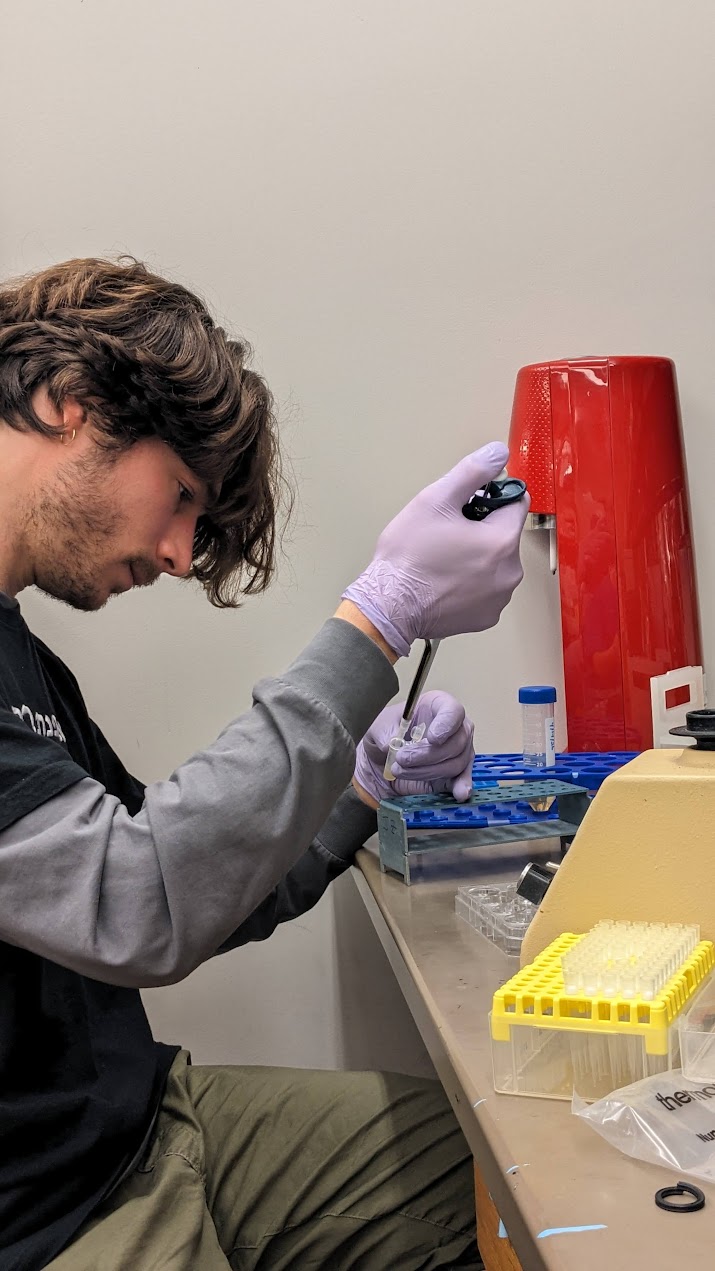
starting E. coli culture work aligned with the first receiver-focused workflow
preparing a first-pass experimental plan with explicit controls and success criteria
running an exploratory cell-free eGFP expression test as an adjacent proxy for spatially biased expression behavior
Why this mattered
These interim actions did not replace the core Aim 0.5 assay, but they served to:
convert the project from concept into executable protocol logic
clarify control conditions and measurement expectations
establish a first physical relationship to the system before the central construct arrived
Section 8: Expected Results and Quantitative Expectations
Expected system behavior
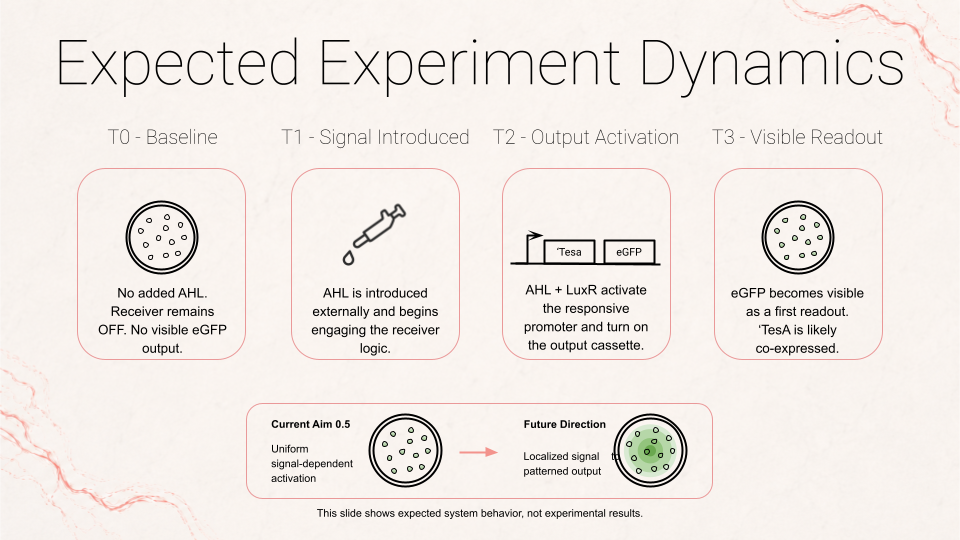
The current expected-dynamics model for Aim 0.5 is:
T0 — Baseline: no added AHL; receiver remains off
T1 — Signal introduced: AHL is added externally
T2 — Output activation: responsive promoter activates the output cassette
T3 — Visible readout: eGFP becomes visible; ‘TesA is likely co-expressed within the same program
This figure shows expected system behavior, not experimental results.
Section 9: Limitations and What Happened This Term
The main limitation of the present work is that the central construct did not arrive in time for full wet-lab execution of the intended Aim 0.5 assay. As a result, this project currently documents:
a fully developed conceptual and literature framework
a defined construct design
a synthesis-ready plasmid logic
wet-lab preparation
exploratory adjacent validation
explicit expected dynamics and success metrics
What it does not yet document is a completed biological result from the receiver construct itself. This limitation is important and should be stated clearly. The present work should therefore be understood as a serious first-stage project record and experimental launch point rather than as a completed proof of signal-guided biological patterning.
Section 10: What Success Unlocks / Next Steps
If Aim 0.5 succeeds, the next steps are clear.
Immediate next step
Once the ordered construct arrives:
introduce the receiver construct
apply externally added AHL
run control conditions
measure and document eGFP output
What counts as success
A reproducible visible or plate-reader-detectable eGFP signal above controls would indicate successful signal-dependent activation of the receiver output cassette.
What that unlocks
A successful Aim 0.5 would enable:
bacterial spatial-patterning experiments based on Basu et al., Nature 2005
translation of the logic into mammalian systems
future work toward signal-guided fat–muscle organization in cultivated meat
Section 11: References
Piantino, M., Muller, Q., Nakadozono, C., Yamada, A., & Matsusaki, M. (2025). Towards more realistic cultivated meat by rethinking bioengineering approaches. Trends in Biotechnology, 43(2), 364–382. https://doi.org/10.1016/j.tibtech.2024.08.008
Xie, Y., Cai, L., Ding, S., Wang, C., Wang, J., Ibeogu, I. H., Li, C., & Zhou, G. (2025). An overview of recent progress in cultured meat: Focusing on technology, quality properties, safety, industrialization, and public acceptance. The Journal of Nutrition, 155(3), 745–755. https://doi.org/10.1016/j.tjnut.2025.01.010
Kardas, M., Staśkiewicz-Bartecka, W., & Kołodziejczyk, A. (2025). Cultured meat reformulation: Health potential and sustainable food challenges—Narrative review. Comprehensive Reviews in Food Science and Food Safety, 24, e70262. https://doi.org/10.1111/1541-4337.70262
Motoki, K., Ishikawa, S.-i., & Velasco, C. (2026). Appealing or disgusting? How the visual appearance of cultured meat shapes consumer preference. Food Quality and Preference, 136, 105767. https://doi.org/10.1016/j.foodqual.2025.105767
Basu, S., Gerchman, Y., Collins, C. H., Arnold, F. H., & Weiss, R. (2005). A synthetic multicellular system for programmed pattern formation. Nature, 434(7037), 1130–1134. https://doi.org/10.1038/nature03461