Week 1 HW: Principles and Practices
Here you will see a proposal in which I attempt to overstep my bounds in the field of microbiology with my identity as an artist and designer. If any of my statements are incorrect, incomplete, or biased, I would like to point out that this is due to my inexperience in the field, and I would gladly accept your support in correcting them.
Q1. Describe a biological engineering application or tool you want to develop and why. This could be inspired by an idea for your HTGAA class project and/or something for which you are already doing in your research, or something you are just curious about.
After my master’s thesis research on pattern recognition and fractal thinking in art and design, I wanted to explore the potential application of these methods to biological anomalies. Following my mother’s diagnosis, I found papers exploring these possibilities. One of those studies proposed the use of fractal geometry to identify cellular anomalies associated with cancer (Dokukin et al., 2015). I would like to develop a tool in this area.
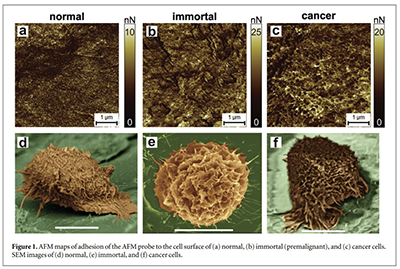
AFM-based fractal analysis for an early-stage cancer cell screening system which is a diagnostic tool that distinguishes normal, premalignant, and malignant cells by measuring changes in multi-fractality on the cell surface.
Q2. Describe one or more governance/policy goals related to ensuring that this application or tool contributes to an “ethical” future, like ensuring non-malfeasance (preventing harm). Break big goals down into two or more specific sub-goals.
Building on the personal and academic motivation described above, this proposed tool is an integrated software + data analysis system that quantifies the fractal properties of the cell surface at specific stages of cancer progression using AFM or similar high-resolution imaging methods. By relying on fractal indicators of anomalous (chaotic) surface behavior in early stages, it can generate signals prior to clinical disease progression, potentially providing new biomarkers for early clinical diagnosis. This offers quantitative biomonitoring capabilities beyond conventional histopathological assessment. In this section (regarding how the tool can be implemented technologically), I drew support from large language models (ChatGPT by OpenAI; Claude by Anthropic, 2026).
Q3. Describe at least three different potential governance “actions” by considering the four aspects below (Purpose, Design, Assumptions, Risks of Failure & “Success”). Try to outline a mix of actions (e.g. a new requirement/rule, incentive, or technical strategy) pursued by different “actors” (e.g. academic researchers, companies, federal regulators, law enforcement, etc). Draw upon your existing knowledge and a little additional digging, and feel free to use analogies to other domains (e.g. 3D printing, drones, financial systems, etc.).
- Purpose:
- Traditional medicine focuses on treating patients after they become ill rather than preventing disease. Morphological changes at the cellular and tissue levels are evaluated based on pathologists’ qualitative observations. This approach is largely dependent on human interpretation and cannot quantitatively capture micro-scale surface dynamics. The chance of early diagnosis is low. Here, however, there is a chance of early diagnosis.
- Design:
- An ethics committee composed of representatives from academia, industry, and the public sector. Due to the high cost of the method, democratization of access among different demographic groups in the future.
- Assumptions: If the software is open source, it may be misinterpreted in non-clinical settings (Bennett et al., 2009).
- Risks of Failure & “Success”:
- Dokukin’s study was conducted only with cervical epithelial cells; validation in different cancer types and populations is required (Dokukin et al., 2015).
- Fractal behavior has only been observed at a specific stage of development, and there is a deviation from this characteristic in more advanced stages.
Q4. Score (from 1-3 with, 1 as the best, or n/a) each of your governance actions against your rubric of policy goals. The following is one framework but feel free to make your own:
| Does the option: | Option 1 | Option 2 | Option 3 |
|---|---|---|---|
| Enhance Biosecurity | |||
| • By preventing incidents | 1 | 2 | 2 |
| • By helping respond | 2 | 1 | 2 |
| Foster Lab Safety | |||
| • By preventing incident | 1 | 2 | 3 |
| • By helping respond | 1 | 2 | - |
| Protect the environment | |||
| • By preventing incidents | 2 | - | - |
| • By helping respond | 2 | - | - |
| Other considerations | |||
| • Minimizing costs and burdens to stakeholders | 3 | 2 | 2 |
| • Feasibility? | 2 | 1 | 2 |
| • Not impede research | 3 | 1 | 2 |
| • Promote constructive applications | 2 | 1 | 1 |
Q5. Drawing upon this scoring, describe which governance option, or combination of options, you would prioritize, and why. Outline any trade-offs you considered as well as assumptions and uncertainties. For this, you can choose one or more relevant audiences for your recommendation, which could range from the very local (e.g. to MIT leadership or Cambridge Mayoral Office) to the national (e.g. to President Biden or the head of a Federal Agency) to the international (e.g. to the United Nations Office of the Secretary-General, or the leadership of a multinational firm or industry consortia). These could also be one of the “actor” groups in your matrix.
Working with cancer patients requires that the legal process be conducted ethically. Patients must provide informed consent regarding whether their screening results will be used for research purposes, and their “right not to know” must be protected. Cell surface maps are biometric data and contain personal health information. Strong data protection protocols are required for the collection, storage, and sharing of this data. In particular, institutions such as insurance companies must be prevented from accessing this data without the patient’s consent, thereby protecting the scope of health insurance coverage or the patient’s right to work. Luigi Mangione, who was convicted in the UnitedHealthcare case, criticized the American healthcare system with a manifesto similar to that of “Unabomber” Ted Kaczynski (Kaczynski, 1995). This was a period when patients began to be excluded from health insurance coverage based on AI decisions (Mello et al., 2026).
Images
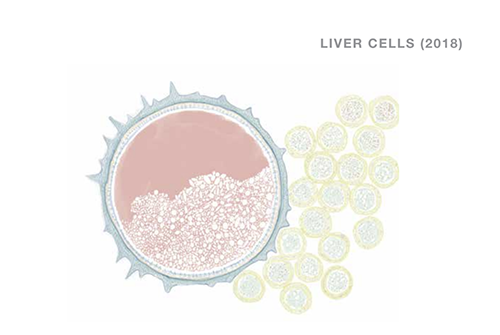
- Image1. Liver Cells, Beyza Batır, 2018
- Image2. AFM maps of adhesion of the AFM probe to the cell surface of (a) normal, (b) immortal (premalignant), and (c) cancer cells. SEM images of (d) normal, (e) immortal, and (f) cancer cells., in ‘Emergence of fractal geometry on the surface of human cervical epithelial cells during progression towards cancer’, Dokukin, M.E. et al., 2015
References
- Bennett, G. et al. (2009) ‘From synthetic biology to biohacking: Are we prepared?’, Nature Biotechnology, 27(12), pp. 1109–1111. doi:10.1038/nbt1209-1109.
- Dokukin, M.E. et al. (2015) ‘Emergence of fractal geometry on the surface of human cervical epithelial cells during progression towards cancer’, New Journal of Physics, 17(3), p. 033019. doi:10.1088/1367-2630/17/3/033019.
- Kaczynski, T. (1995) ‘Industrial society and its future’ Available at: https://web.cs.ucdavis.edu/~rogaway/classes/188/materials/Industrial%20Society%20and%20Its%20Future.pdf (Accessed: 6 February 2026).
- Mello, M.M. et al. (2026) ‘The Ai Arms Race in Health Insurance Utilization Review: Promises of efficiency and risks of supercharged flaws’, Health Affairs, 45(1), pp. 6–13. doi:10.1377/hlthaff.2025.00897.
- Todorovic, V. (2020) ‘Reimagining life (forms) with generative and Bio Art’, AI & SOCIETY, 36(4), pp. 1323–1329. doi:10.1007/s00146-020-00937-9.