Week 2 HW: DNA Read, Write, & Edit
Part 1: Benchling & In-silico Gel Art
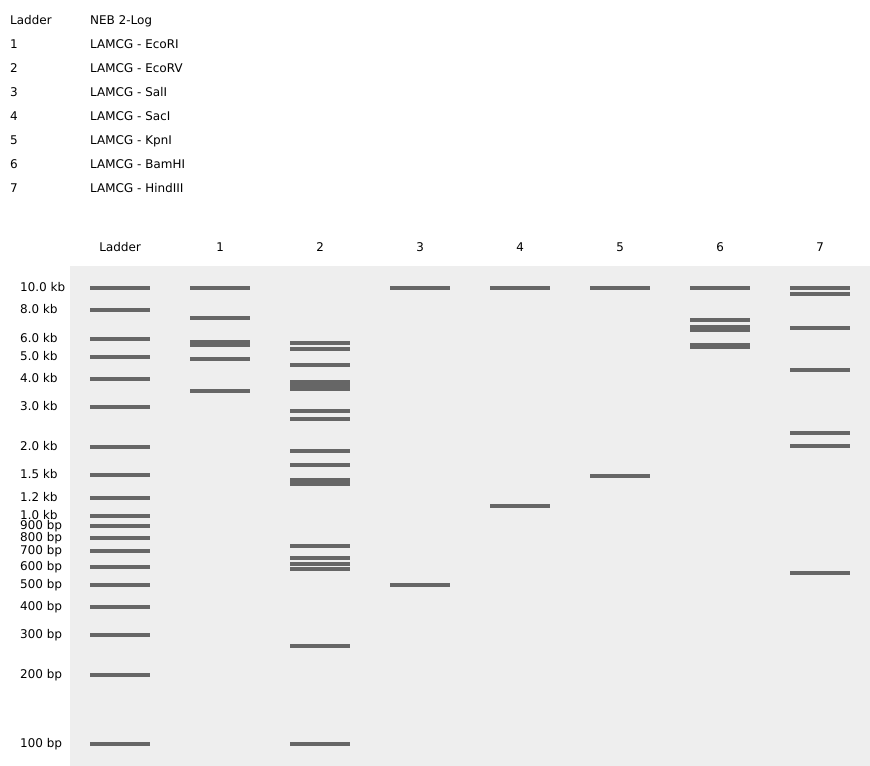
Simulate Restriction Enzyme Digestion with the following Enzymes:
- EcoRI
- HindIII
- BamHI
- KpnI
- EcoRV
- SacI
- SalI
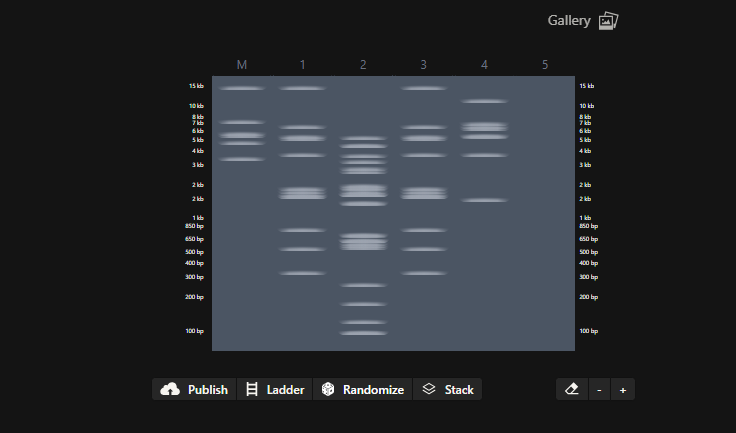
Create a pattern/image in the style of Paul Vanouse’s Latent Figure Protocol artworks.
Part 3: DNA Design Challenge
3.1. Choose your protein.
I have chosen collagen type I alpha 1 chain (COL1A1).
I chose this protein because it plays a fundamental role in tissue regeneration. It is a major component of collagen type I, the most abundant structural protein in the human body. It provides mechanical strength and structural support to tissues such as bone, skin, and tendons.
Therefore, I believe that genetic modification of bromelain could serve a more appropriate purpose in my research, as rational DNA design may improve its stability, enzymatic efficiency, and resistance to environmental conditions. However, since it functions primarily as a proteolytic and anti-inflammatory enzyme, its role in wound healing remains supportive rather than directly regenerative.
Although recombinant engineering may enhance bromelain’s activity and bioavailability, it does not alter its fundamental mechanism of action as a protease; therefore, it cannot independently stimulate cell proliferation or extracellular matrix synthesis. By optimizing its gene sequence, bromelain expression and catalytic performance could be increased; nevertheless, its biological function would remain mainly associated with tissue debridement and inflammation control.
During wound healing, collagen type I replaces the temporary collagen type III and helps form a strong and stable extracellular matrix, which is essential for proper tissue remodeling.
sp|P02452|CO1A1_HUMAN Collagen alpha-1(I) chain OS=Homo sapiens OX=9606 GN=COL1A1 PE=1 SV=6 MFSFVDLRLLLLLAATALLTHGQEEGQVEGQDEDIPPITCVQNGLRYHDRDVWKPEPCRI CVCDNGKVLCDDVICDETKNCPGAEVPEGECCPVCPDGSESPTDQETTGVEGPKGDTGPR GPRGPAGPPGRDGIPGQPGLPGPPGPPGPPGPPGLGGNFAPQLSYGYDEKSTGGISVPGP MGPSGPRGLPGPPGAPGPQGFQGPPGEPGEPGASGPMGPRGPPGPPGKNGDDGEAGKPGR PGERGPPGPQGARGLPGTAGLPGMKGHRGFSGLDGAKGDAGPAGPKGEPGSPGENGAPGQ MGPRGLPGERGRPGAPGPAGARGNDGATGAAGPPGPTGPAGPPGFPGAVGAKGEAGPQGP RGSEGPQGVRGEPGPPGPAGAAGPAGNPGADGQPGAKGANGAPGIAGAPGFPGARGPSGP QGPGGPPGPKGNSGEPGAPGSKGDTGAKGEPGPVGVQGPPGPAGEEGKRGARGEPGPTGL PGPPGERGGPGSRGFPGADGVAGPKGPAGERGSPGPAGPKGSPGEAGRPGEAGLPGAKGL TGSPGSPGPDGKTGPPGPAGQDGRPGPPGPPGARGQAGVMGFPGPKGAAGEPGKAGERGV PGPPGAVGPAGKDGEAGAQGPPGPAGPAGERGEQGPAGSPGFQGLPGPAGPPGEAGKPGE QGVPGDLGAPGPSGARGERGFPGERGVQGPPGPAGPRGANGAPGNDGAKGDAGAPGAPGS QGAPGLQGMPGERGAAGLPGPKGDRGDAGPKGADGSPGKDGVRGLTGPIGPPGPAGAPGD KGESGPSGPAGPTGARGAPGDRGEPGPPGPAGFAGPPGADGQPGAKGEPGDAGAKGDAGP PGPAGPAGPPGPIGNVGAPGAKGARGSAGPPGATGFPGAAGRVGPPGPSGNAGPPGPPGP AGKEGGKGPRGETGPAGRPGEVGPPGPPGPAGEKGSPGADGPAGAPGTPGPQGIAGQRGV VGLPGQRGERGFPGLPGPSGEPGKQGPSGASGERGPPGPMGPPGLAGPPGESGREGAPGA EGSPGRDGSPGAKGDRGETGPAGPPGAPGAPGAPGPVGPAGKSGDRGETGPAGPAGPVGP VGARGPAGPQGPRGDKGETGEQGDRGIKGHRGFSGLQGPPGPPGSPGEQGPSGASGPAGP RGPPGSAGAPGKDGLNGLPGPIGPPGPRGRTGDAGPVGPPGPPGPPGPPGPPSAGFDFSF LPQPPQEKAHDGGRYYRADDANVVRDRDLEVDTTLKSLSQQIENIRSPEGSRKNPARTCR DLKMCHSDWKSGEYWIDPNQGCNLDAIKVFCNMETGETCVYPTQPSVAQKNWYISKNPKD KRHVWFGESMTDGFQFEYGGQGSDPADVAIQLTFLRLMSTEASQNITYHCKNSVAYMDQQ TGNLKKALLLQGSNEIEIRAEGNSRFTYSVTVDGCTSHTGAWGKTVIEYKTTKTSRLPII DVAPLDVGAPDQEFGFDVGPVCFL
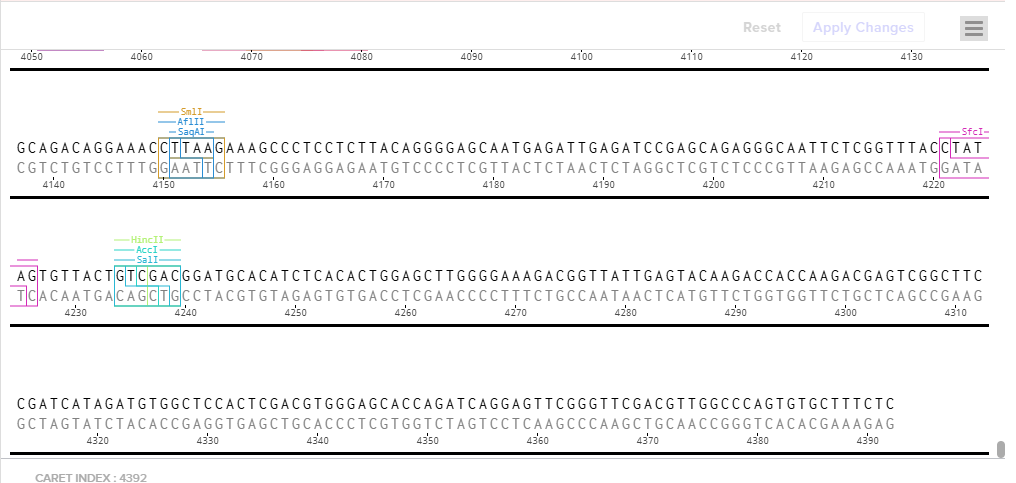
Reverse Translate: Protein (amino acid) sequence to DNA (nucleotide) sequence.
3.3. Codon optimization.
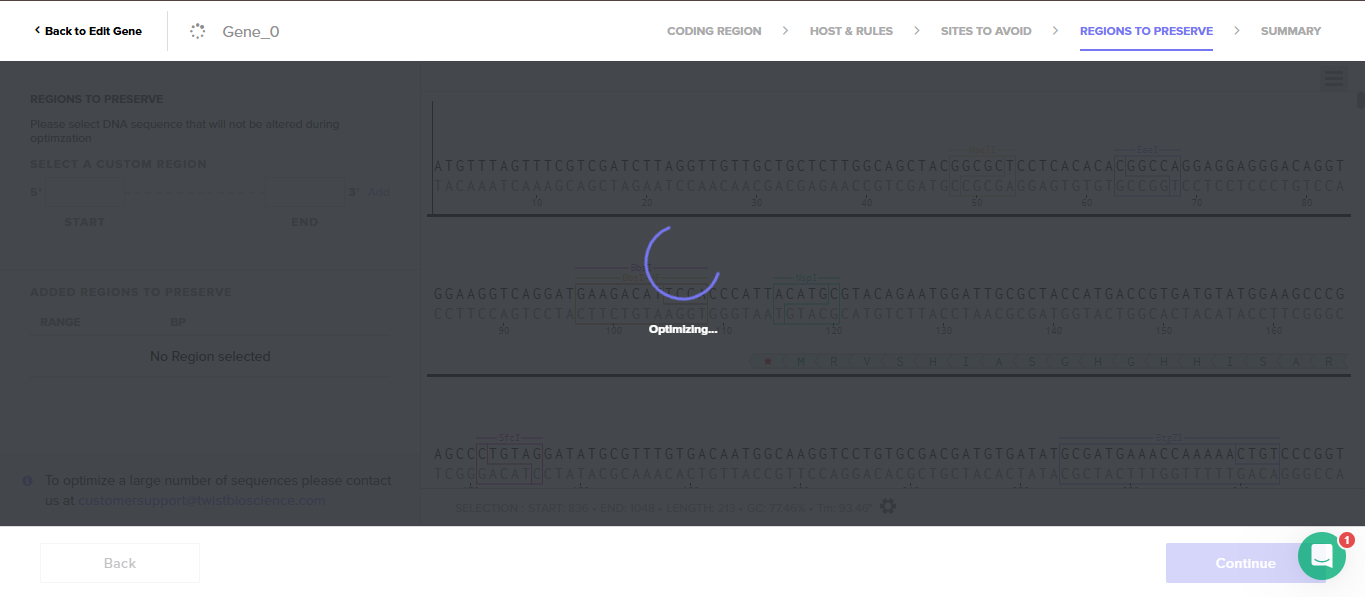
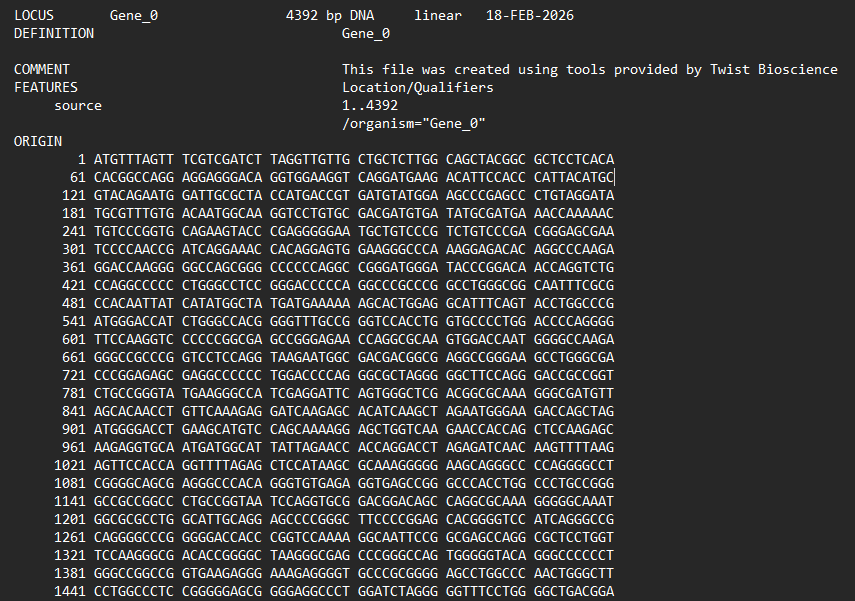 In your own words, describe why you need to optimize codon usage. Which organism have you chosen to optimize the codon sequence for and why? Codon optimization is necessary because different organisms prefer specific codons to produce proteins efficiently. Even though multiple codons can code for the same amino acid, some are used more frequently in certain species. Optimizing the codon usage improves translation efficiency and increases protein production. I optimized the sequence for Homo sapiens because the protein naturally functions in human cells and requires proper folding and post-translational modifications for correct biological activity.
3.4. You have a sequence! Now what? What technologies could be used to produce this protein from your DNA? Describe in your words the DNA sequence can be transcribed and translated into your protein. You may describe either cell-dependent or cell-free methods, or both. To produce this protein in Homo sapiens, the DNA sequence encoding COL1A1 can be inserted into a suitable expression vector and introduced into human cells. Inside the cell, the DNA is transcribed into messenger RNA (mRNA) by RNA polymerase in the nucleus. The mRNA is then transported to the cytoplasm, where ribosomes translate it into the collagen protein according to the genetic code. After translation, the protein undergoes proper folding and post-translational modifications necessary for its biological function. This process follows the central dogma of molecular biology: DNA → RNA → Protein.
Part 4: Prepare a Twist DNA Synthesis Order ## Part 5: DNA Read/Write/Edit
5.1 DNA Read What DNA would you want to sequence (e.g., read) and why? I would sequence DNA used for digital data storage. DNA-based data storage encodes digital information into synthetic nucleotide sequences (A, T, C, G). I am interested in this because DNA is extremely stable, has very high storage density, and could preserve information for thousands of years, making it a revolutionary alternative to traditional storage systems. In lecture, a variety of sequencing technologies were mentioned. What technology or technologies would you use to perform sequencing on your DNA and why?
5.2 DNA Write What DNA would you want to synthesize (e.g., write) and why? These could be individual genes, clusters of genes or genetic circuits, whole genomes, and beyond. As described in class thus far, applications could range from therapeutics and drug discovery (e.g., mRNA vaccines and therapies) to novel biomaterials (e.g. structural proteins), to sensors (e.g., genetic circuits for sensing and responding to inflammation, environmental stimuli, etc.), to art (DNA origamis). If possible, include the specific genetic sequence(s) of what you would like to synthesize! You will have the opportunity to actually have Twist synthesize these DNA constructs! :) - What technology or technologies would you use to perform this DNA synthesis and why? 5.3 DNA Edit
What DNA would you want to edit and why? What technology or technologies would you use to perform these DNA edits and why?