Week 1 HW: Principles and Practices
Week 1 Biological Engineering application: governance, policy;
Abstract: Raising the same crop species over large areas and long time periods increases the risk of disease and pest outbursts, limits biodiversity and requires huge amounts of amendments and fertilizers. By genetically modifying the already socially approved off and profitable maize specie, global warming can be slowed down.
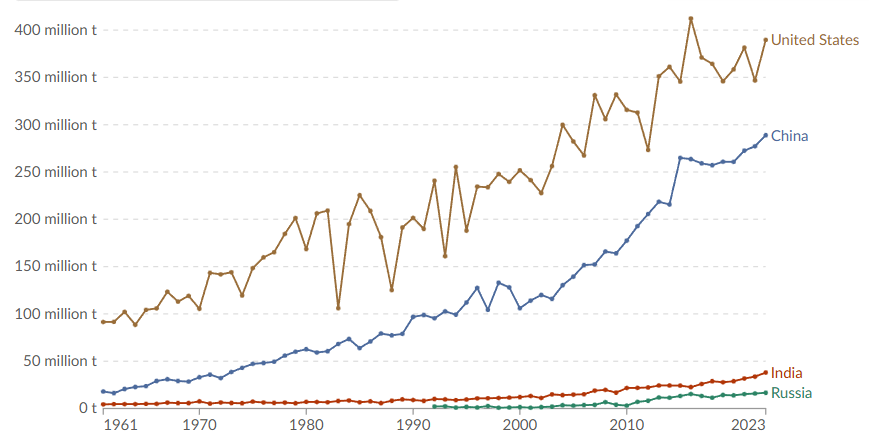
Context: Maize, also known as corn is a tall stout grass that produces cereal grain. As 2020, world production measured about 594 million tons grain from about 139 million ha. Its economic and cultural impact, now being the most cultivated crop globally, is undeniably one of the biggest driving factors of the human consumption companies and their effect on Earth’s wellbeing. Maize’s usage ranges from direct and indirect (processed victuals) human consumption, livestock feed and fabrication of biomaterial- monocultures fulfil the following criteria: they are large, focus on a single product (thus being easily farmed and harvested), and cater to distant markets.
Corn production, 1961 to 2023:
Important problems posing maize monocultures include the susceptibility to pathogens: bacteria such as Bacillus thuringiensis, viruses; insects- caterpillars, wireworms (forcing farmers to spend huge amounts of money to buy and use insecticides, in hope of avoiding a pest disaster; also harming the environment by doing so); and diseases originating from the lack of specific nutrients, in turn, needing regular fertilizers that may not be fully absorbed by the plants and making their way into running waters, groundwater and poisoning them, the soil and worms that could have served as soil fertilizers themselves and aerate the soil for better root growth, as well as food for birds useful to crops. Addressing the problem of common corn pests, profit seeking company, Bayer Global made accessible today’s most grown type of corn- a GMO, capable of withstanding B. thuringiensis, claiming a patent for it, having farmers buy new seeds every year. Even so, a problem arises: once the prokaryote evolves and learns how to parasite the so-used GMO, it’s over.

*Today’s Musa acuminata’s “Gros Michel” cousin- the Cavendish banana- grown specifically for its tolerance against Fusarium oxysporum fungi (the pathogen responsible for Gros Michel’s decline) seems to face an evolved version of the same fungi, possibly causing a massive shortage in banana production in the next 5 years. With this in mind, it isn’t impossible to assume that todays’ most grown crop may have to face a dangerous, hard to stop pathogen. Corn monoculture can spam over hundreds of hectares, but they all share the same genetic material, the same DNA- so all the pathogen needs to do is “hack” a single corn plant, and it can spread to the next, until it takes over the whole plantation. So, farmers have to spend a lot of money on insecticides, fungicides and fertilizers, heavily harming the environment meanwhile. Monocultures may therefore also lead to soil exhaustion when the soil becomes depleted of nutrients.
Plant communication is one of the most debated topics in modern research of vegetal life, as its proper understanding may change everything we now know (or think we do) about how plants perceive their surroundings and how they respond to threats such as drought and pest attacks. claim that plants may fabricate and use special molecules, and ions to send chemical and electric signals to one another; be it interspecific- mutualism or intraspecific (own specie). Some plants rely on these volatile organic compounds, root exudates and phytohormones to recognize their own kin. And seem to show “altruistic” traits, not only alert neighboring plants of approaching pests or harm already done by bacteria on their self, but also to signal where specific mineral deposits are in the underground. A defiance to “survival of the fittest”, plants seem to prioritize the survival of their kin (their genes), instead of itself- sometimes, assuring enough sunlight also reaches plants of its species (as long as the individual has enough to grow with no problems). As interesting as this idea is, it has not yet been researched completely; even so, plant cooperation has been documented in corn plants as well.
Status Quo: Capitalism is presented as the main reason for the thirst for money, thus further encouraging environmentally harmful technological and agricultural processes. This is why climate change has failed to be eradicated, or at least slowed down considerably. As effects of global warming and the increase in average global temperature (+1.60 °C), I list the increase in the number of floods, extreme heat, increased food and water shortages, more diseases (and a longer and more difficult process of combating them) and massive economic losses- which will most likely cause more damage, due to the need for large companies to maintain themselves.
As for the European Union, a significant stigma overshadows all the possibilities for GMO development and financial gain; even so, legal and actually grown, dent corn (MON810) stands out for being not only consumed, but also grown hugely in Portugal and Spain. Due to lack of incentive to educate themselves and being prone to believe misinformation, especially when it comes to genetically modified organisms, people tend to fear and often reject them. *MON810 seems to be an exception. Public opinion of modified crops, in the USA, do not seem to be perfect, but is significantly better than in the EU.
Proposed engineering application: Genetically modified dent corn, not for higher yield or pest resistance, but for something unique. Practically the same plant, this modified version of MON810, an already g. modified, socially accepted and harvested, can serve as the diversity needed in monocultures, practically the same plant, it can still produce phytohormones used in plant communication and recognize the “traditional” GMO and not harm it, rather helping it by guiding it to underground nutrients it needs- all with the help of chemical signals. The genomic change proposed determines it to use, and so, seek, different nutrients than the original.
As all plants, the now grown corn uses a specific ratio of minerals, macronutrients and micronutrients for its metabolic processes. Everything from the fruit’s nutritional proprieties to its leaves capability of photosynthesizing is decided by what enzymes, proteins and other molecules the plant DNA codes for. All life (and nonlife: viruses) make use simple molecules to build new ones, more complicated, plants are like green, autotrophic factories running nonstop. Plants differentiate nutrients when absorbing them from the soil through highly selective mechanisms, primarily using specific transporter proteins and ion channels embedded in their root cell membranes. Instead of simply absorbing everything in the soil, root hairs use energy to actively pick up essential mineral ions.
Macronutrient removal in forage maize:
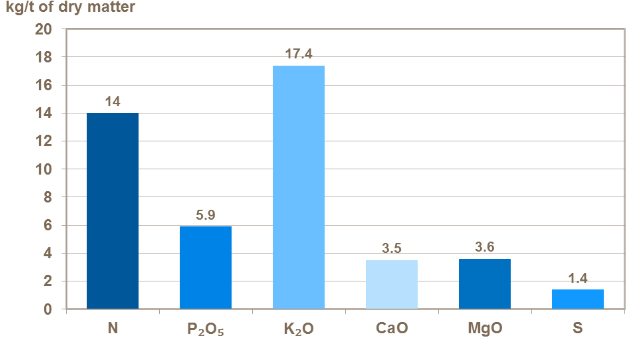
plant macronutrients: N, P, K.
Micronutrient removal in forage maize:
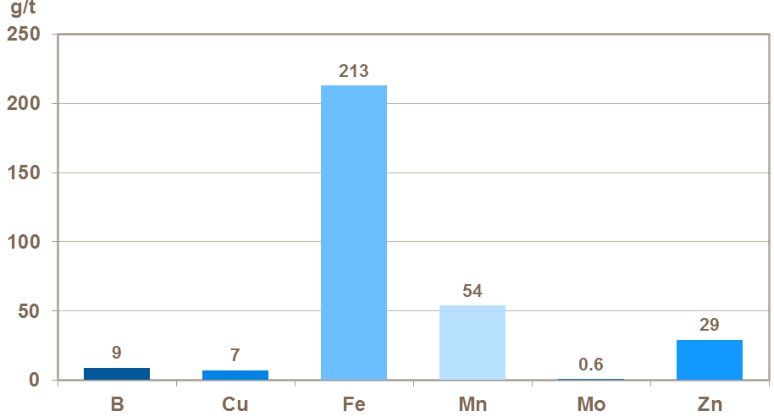
With the help of genomic editing technology, the proposed corn plant may be designed to make different proteins and substances, thereby making use of different nutrients, the ones that the original maize doesn’t use. Assuming it behaves the same, so it’s recognized as the same species, what does the modified corn use them for?
Make up the same, well-known corn, but nutritionally different; contain more phosphorus-based molecules, different ratios, even different vitamins all throughout. Possibly, make its molar weight different so it can be separated from original corn fruits by density.
Make fruits for the sole reason of them being composed and used for plants needing more of the nutrients corn doesn’t use- be it as legume plants and phosphorous.
Make the plant give up on producing fruit altogether and focus on chemical making phytohormones for improved senses and comprehension of surroundings for itself and the original, at the same time: insecticides/fungicides to ward away/ kill possible pests from the original corn plants, thus reducing the necessity for industrially-made harmful chemicals.
DNA “balance”: Hard to nail, but possible, close enough so the original corn recognizes the new specie as its own kin, but different enough so that pathogens have to double the effort, giving bio-friendly pesticides more time to act. Downsides: Cutting corn production to almost half. Endangering profit seeking companies, risk coups and legal loopholes to be used against developing the GMO. The GMO may not show willing to help the original corn, prioritize itself/ their “new” kin- kill, damage the original. Horizontal gene flow via winds or pollen carrying insects; proposed GM may not produce it.
Incentive to implement & superiority amongst alternatives: Lowers the risk of plantation eradication by single pathogen- farmers feel safer, more relieved. Can be planted, taken care of, and harvested the same as the plant famers are used to growing, no new gear, machines, procedures needed. Lowers the total costs, no insecticides, pesticides needed. Fertilizers usage not mandatory, less targeted substances used- soil pH, proprieties changed, deranged. More ecofriendly- large companies want the world to know that they’re willing to help fight global warming.
Alternatives to monocultures do exist, but they’re harder to manage and ultimately, harvest: parallel rows of corn, thyme, rosemary, etc. Other approaches include alternative rows of different types of corn- most of the time they have the same density, in turn, making their separation really hard, so not economically advantageous and costumers do now want their corn produce diverse.
Legislative analysis:
Policy goals: Prevent harm or help deal with harm already done. Make proposed GMO as safe as possible; assure it manages to do the thing it was projected to do- reduce environmental impact of agriculture, especially maize cultures. Acting similar to modern companies, regulate seed commerce under patent. Insecticides produced by GMO must be biodegradable and harmless to plantation biome and close to it (including useful prokaryotes, such as chemoautotroph nitrogen-fixing bacteria, other weeds, insects, little mammals, etc.) Proposed corn interaction with traditional GM corn should be researched and be considered cooperative, not harmful- even with evolution interfering. Soil proprieties should be conserved (be not changed more than 98.0%) all throughout growing season, during harvest and after.
Governance actions: Laboratory research and design: proteins/ genetic material made by GM maze should not leave assigned wet laboratory until declared safe by scientists. GM maze DNA should not interact with any bacteria/ virus until declared stable- laboratory, instruments sterile at all times. Assure no harm to humans by direct contact, breath, ingestion of less than 0.5L in time span under 24h. After health-related requirements met, proposed GM crop may be grown in regulated terrain. After satisfying results, GMO can be produced in larger quantities and sold under patent. Should correspond to EU/SUA/global/local legislation.
Requirement: Planting distance treatment- proposed GMO and original corn should be planted in alternating (1:1), parallel rows, without intersecting. Ideal distance suggested after research, tests and wet lab confirmation, (ex: each maize plant: 75 cm x 40 cm, strip cropping 40 cm x 20 cm). The purpose is assuring healthy distance between specimens as extreme closeness can trigger a more competitive approach by both sides. Seasonal check-ups can assure following of rule, deviation from which can lead to legal act- suing responsible farmer for not respecting agreed (by buying seeds under patent) on rule. Meeting the requirement can still result in fines under pretext of overwatering and movement of soil thus reducing distance between crops.
Requirement: usage of fertilizers- only the ones approved by developers of GM corn, according to research, tests and wet lab confirmation. Dose of fertilizers allowed to use should be regulated so it assures no significant soil/ water pollution or damage to local life. Regulate under fertilizer market propose so availability guaranteed- not expensive (tho, not necessary fertilizers/ amendments)- important actor. Hard to regulate and check with smaller farmers.
Act under patent- seeds cannot be harvested with the scope of germination and regrowing, GM corn should only be grown alongside traditional corn. Substances that can cause harm to life (animals/ plants/ fungi/ eukaryote/ prokaryotes), viruses, alter organic produce such as plant-bases compost, produce meant for human consumption approved by local/ national food and drug administration committee/ regulating legal body produced by proposed plant should not be collect- it should not be grown for this scope. Hard to regulate and check with smaller farmers. Biosecurity should not be put in hazard; copyright for GM crop should be assured. Overly burdensome requirements could discourage smaller research groups and concentrate development in large corporations.
Scoring rubric:
Does the option: Option 1 Option 2 Option 3 Enhance Biosecurity n/a n/a 2 • By preventing incidents n/a n/a 1 • By helping respond n/a n/a 2 Foster Lab Safety 3 3 1 • By preventing incident 2 2 1 • By helping respond 3 3 2 Protect the environment 1 1 2 • By preventing incidents 1 1 2 • By helping respond 2 n/a 2 Other considerations • Minimizing costs and burdens to stakeholders n/a 2 1 • Feasibility? 1 3 2 • Not impede research 2 2 n/a • Promote constructive applications 1 n/a n/a Prioritizing: Act under patent as its deviance can cause direct biological, chemical damage to human organs. Consumer and farmer health above all. Ethical concerns: Monopole and distancing from main scope- lower global warming.
By original/ traditional corn I mean: GM dent corn MON810; by GM corn/proposed GMO I mean the genetically edited plant described to be dependent of different nutrients than MON810.
Bibliography/ sources: (in no particular order)
1. 2. 3. 4. 5. 6. 7. 8. 9. 10. 11. 12. 13. 14. 15. 16. 17. 18. 19. 20. 21. The Light Eaters: How the Unseen World of Plant Intelligence Offers a New Understanding of Life on Earth- Zoe Schlanger (with citations mentioned in book)

HW, part. 2:
Week 2 lecture prep
Professor Jacobson
Nature’s machinery for copying DNA is called polymerase. What is the error rate of polymerase? How does this compare to the length of the human genome. How does biology deal with that discrepancy?
The error rate of polymerase is presented to be 1:106- not only is it accurate, rarely changing bases. Also making use of an error correcting mechanism, assuring extremely low chances of wrong doing. The human genome contains approximately 3 billion base pairs (3x10⁹), meaning that ~3000 base pairs get screwed up, making their gene prone to being unable to be expressed correctly or at all. With some of them being proofread, thus corrected, and considering ~30% of human DNA is made up by introns, every cell also having about 99% DNA “dormant” (unused), noticeable problems rarely appear. Sizing up to millions of cells, problems do appear- cancer, spontaneous hazardous genetic mutations, etc. The human body evolved to deal with these problems, biology itself, deals with this discrepancy via proofreading (when an incorrect base gets detected, the polymerase enzyme makes a cut in the chemical bonds, releasing incorrect nucleotide). Also, cells can resort to apoptosis if genetic mutation cause messing up in chemical ratios- as seen in cancer prone cells. And finally, evolution gets driven by genetic drift that can be caused by polymerase’s “wrongdoing”.
How many different ways are there to code (DNA nucleotide code) for an average human protein? In practice what are some of the reasons that all of these different codes don’t work to code for the protein of interest?
The average human protein has around 1036bp, those coding for about 330 amino acids; On average, there are about 3 codons per amino acid, the number of different DNA sequences that can encode for the same average human protein is roughly 10157. Why don’t all these sequences work in practice? Coding for a protein doesn’t mean expression is sure to work in a cell. 1.Codon bias: different organisms prefer different codons (for the same protein), rare codons are usually translated too slow to be efficient. 2. DNA sequence determines mRNA folding resulting in poor translation and premature termination due to slow ribosome movement.
Dr. LeProust
- What’s the most commonly used method for oligo synthesis currently?
The solid-phase phosphoramidite chemical synthesis is the most used technology used today for making custom DNA oligonucleotides.
- Why is it difficult to make oligos longer than 200nt via direct synthesis?
Because of accumulating stepwise errors and yield drop; side reactions and chemical limitations. Each addition cycle in phosphoramidite syn. is ~99% efficient at best, at over 200 bases, the probability of having a correct product drops to max 14%. In traditional porous supports, the growing long chain can block reagent access, further lowering efficiency.
- Why can’t you make a 2000bp gene via direct oligo synthesis?
Based on previous answer, accumulating errors make a 2000 base pair gene (4000 nucleotides) almost impossible to synthesize. It is just not feasible.
George Church 1. [Using Google & Prof. Church’s slide #4] What are the 10 essential amino acids in all animals and how does this affect your view of the “Lysine Contingency”?
   The 10 essential amino acids are histidine- H, leucine- L, lysine- K, methionine- M, phenylalanine- F, threonine- T, tryptophan- W, valine- V, and arginine- R.

   *The Lysine Contingency was a genetic alteration Henry Wu performed in the dinosaur genome. The modification knocked out the ability of the dinosaurs to produce the amino acid Lysine. This forced the dinosaurs to depend on lysine supplements provided by the park's veterinary staff.* It makes no sense since vertebrates do not synthesize these amino acids anyhow, they get it from their surroundings and later use it in protein synthesis, no apparent change is made by making the dinosaurs “dependent” on the park’s plants.