Week 7 HW: Genetic circuits II
Week 7 Genetic circuits part II: Neuromorphic Circuits;
Part 1)
1. What advantages do IANNs have over traditional genetic circuits, whose input/output behaviors are Boolean functions?
IANNs allow for designing circuits that can process multiple types of input signals at once to execute sophisticated, non-linear tasks (logic pathways); traditional genetic circuits operate on linear Boolean logic (yes/no, 0/1), and are inefficient for mapping complex goals or biological relationships. Furthermore, IANNs adapt and learn: (or at least have the potential for it) they enable the execution of complex decision boundaries by approximating any continuous function on a bounded domain.
2. Describe a useful application for an IANN; include a detailed description of input/output behavior, as well as any limitations an IANN might face to achieve your goal.
Intracellular diagnostic biosensor that discriminates early‑stage oncogenic signaling from normal cellular behavior and triggers a therapeutic response only when a cancerous state is detected. The IANN takes multiple molecular biomarkers as inputs, each represented by a separate TX/TL factor (or, for eg, metabolite-sensitive promoters). Each input is translated into a graded regulatory signal, that makes up the first layer of the NN. The output is a graded effector response.
Actual IANNs may become unstable and exhibit crosstalk between promoters and unpredictable behavior (cellular noise).
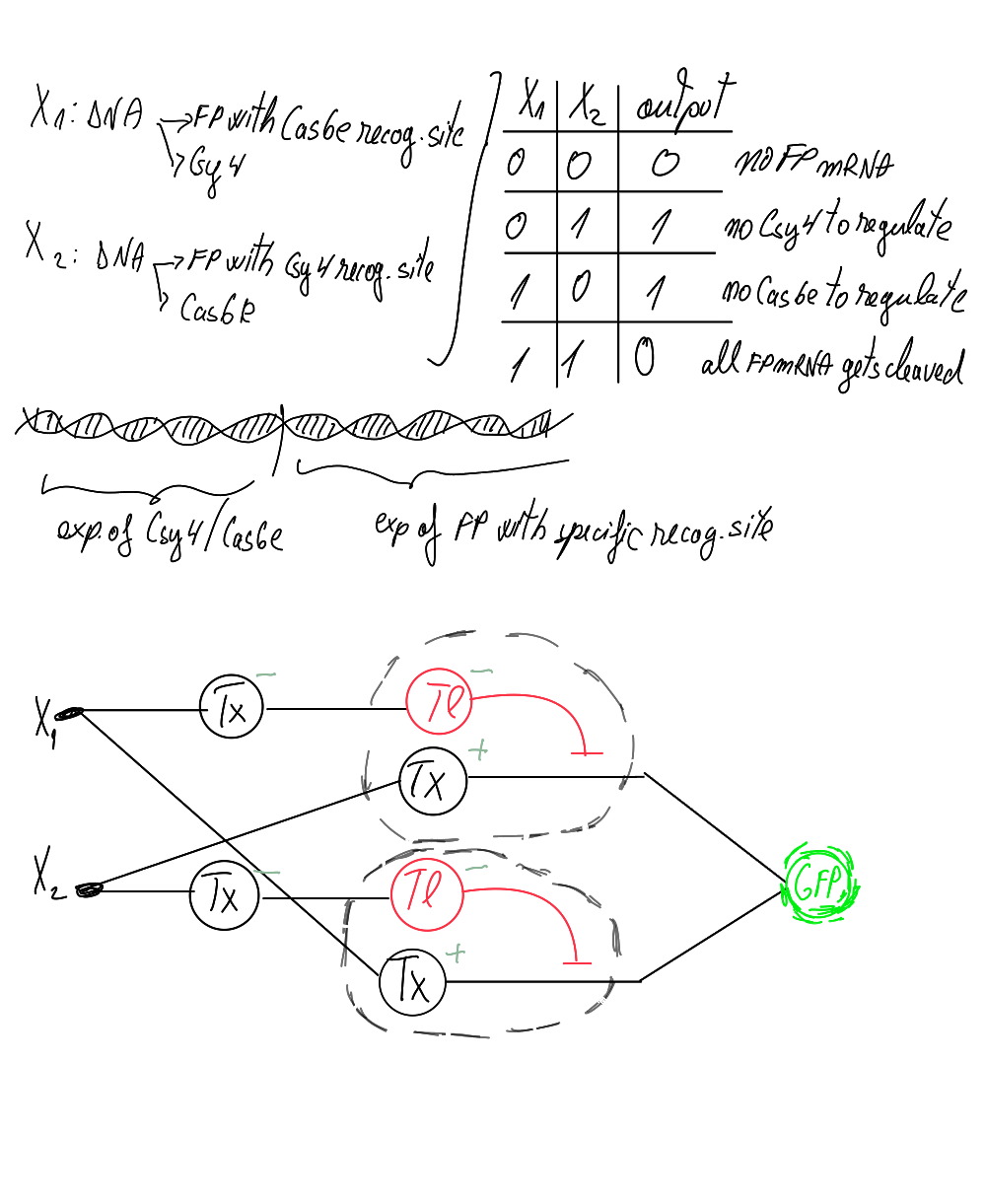
3. Below is a diagram depicting an intracellular single-layer perceptron where the X1 input is DNA encoding for the Csy4 endoribonuclease and the X2 input is DNA encoding for a fluorescent protein output whose mRNA is regulated by Csy4. Tx: transcription; Tl: translation.
Draw a diagram for an intracellular multilayer perceptron where layer 1 outputs an endoribonuclease that regulates a fluorescent protein output in layer 2.
Template shows regulating XOR function, where if input x1 and x2 are both present or absent, no FP gets translated, but if one is absent and the other present, fluorescent protein gets synthesized.
Part 2)
1. What are some examples of existing fungal materials and what are they used for? What are their advantages and disadvantages over traditional counterparts?
Fungal materials are pretty much produce that form from the mycelium part of a fungi (the mushroom part is just the reproductive organ responsible for maturing and dispersing spores) and mostly grown on a substrate that is later removed. Depending on the specie used, the physical and chemical proprieties may be selected so that it mimics rubber, polyethene, polyvinylchloride, leather and even wood; it can be manipulated to take shapes such as fungal packages, containers used instead of PET or other conventionally used polymers. They can decompose naturally, so they’re an ecofriendly variant of plastics. Their applicability ranges from insulation, packaging, and construction materials.
Actual examples:
- ecoative - packaging, foam, leather, insulation and even food;
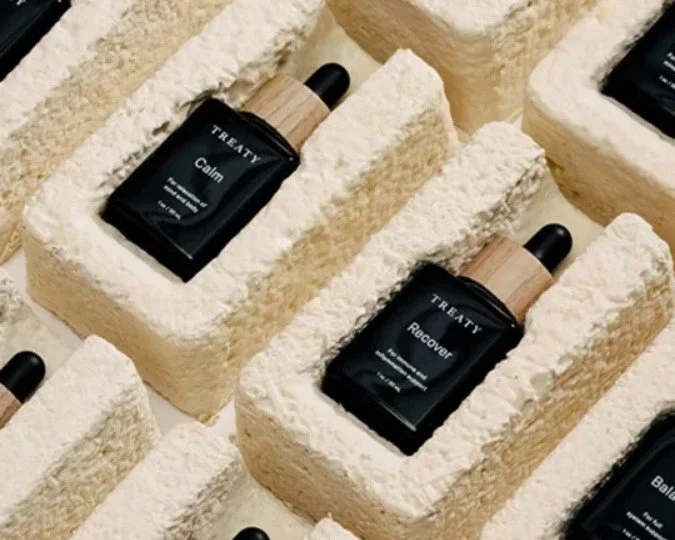
- mycoworks - furniture, decor materials;
- loop-biotech - coffins.
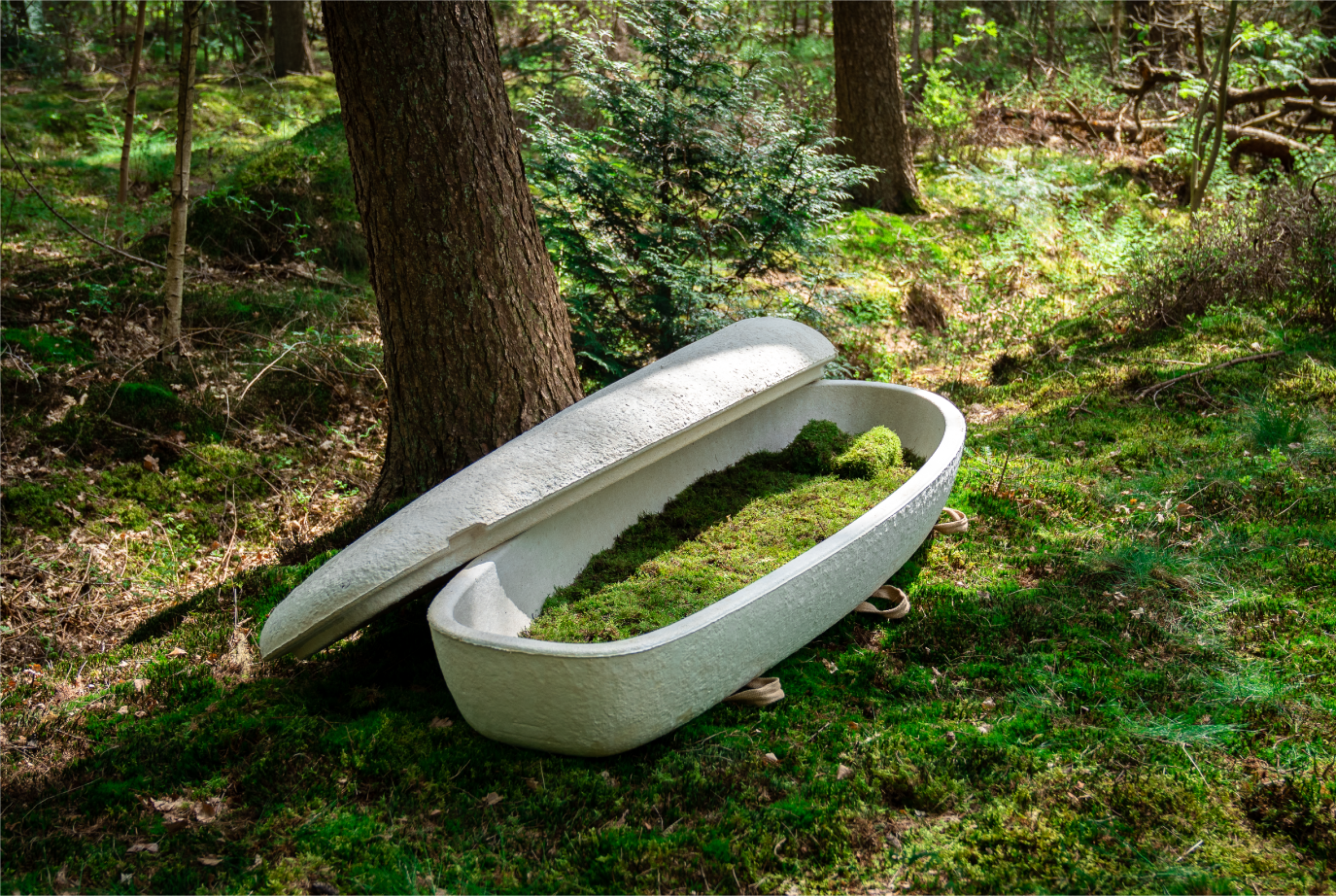
My personal favorite brand, they enrich soil quality by making coffins out of saprophytic mycelium that later develops and decomposes organic matter (dead bodies), promoting nature’s cycle of life. The nutrients made available by fungi can later be used by photosynthesizing plants to fix carbon and filter out the atmosphere.
- biohm.uk - construction materials, packaging and furniture
another use of bioengineered fungi is replacement of meet by enhancing metabolism so production of fibrous structures with lots of protein is increased, while also redirecting the chitin from the cell walls to reduce their toughness; Crispr can also be used to change taste to be more meat-like: increasing heme molecules.
2. What might you want to genetically engineer fungi to do and why? What are the advantages of doing synthetic biology in fungi as opposed to bacteria?
For once, being able to synthesize more complex proteins. Fungi are largely used nowadays to synthesize several more complex molecules and even proteins (mostly via fermentation); Unicellular fungi (like Saccharomyces cerevisiae and Aspergillus niger) are still eukaryotic cells so their metabolic pathways are more stable (that also means they’re harder to engineer) because of the presence of organelles: the endoplasmic reticulum (+ chaperones) and Golgi apparatus to fold proteins more efficiently and can perform complex glycosylation, being able to synthesize things like antibodies and insulin; mitochondria, vacuoles can also pose a huge advance due to more organised and controlled anabolic activity.
Also, fungi evolved to secrete a lot of stuff often (in the wild, they survive by pumping enzymes into their environment to break down organic matter), fungi, especially filamentous, can secrete massive amounts of proteins directly into growth medias- they just diffuse the product out, without the industrial need of cell kill, and later distillation.
But! Fungi grow slower, and are more stable + have bigger genomes, which means they’re harder to modify and keep them stable.
Opposed to bacteria, I would use fungi to synthesize complex proteins or ferment, instead of simpler chemicals such as ethanol (alcoholic ferm. in fungi).
- genetically engineering S. cerevisiae, it could ferment toxic substrate into fertiliser or other helpful dispersible macronutrients in absorbable form (insecticidal organophosphates into inorganic (di)hydrogen phosphate, depending on soil pH – fungi are also really tolerant to acidic media;
- synthesis of specific antibodies to use in diagnostics (BlyS/BAFF) or bio-therapy (belimumab); *both examples are provided from SLE care.
Part 3)
Review the Individual Final Project documentation guidelines.
Submit this Google Form with your draft Aim 1, final project summary, HTGAA industry council selections, and shared folder for DNA designs.
Review Part 3: DNA Design Challenge of the week 2 homework. Design at least 1 insert sequence and place it into the Benchling/Kernel/Other folder you shared in the Google Form above. Document the backbone vector it will be synthesized in on your website.