ABSTRACT Zea Mays, or the common maize plant has been cultivated for feeding purposes for roughly over 9 ‘000 years, since when humans domesticated it, and now is a true symbol for agriculture and farming. Modern monocultures have hugely impacted the way plants are grown, introducing the practice of efficient, yet harmful chemical usage. By genetically engineering corn to overproduce specific volatile compounds, its defence against pests could heavily be enhanced; leading to more stable yields, and slower pathogen adaptation. Green leaf volatiles (GLVs) and terpenes play a significant role in moderating plant response to biotic and abiotic stress, furthermore, being also used as signaling molecules for plant intercommunication. The advantage of their mix stands in the synergy that could theoretically be taken advantage of and the increased diversity of compounds pests have to adapt to, which will certainly take longer as not only are they chemically different, but also pose different effects upon herbivory. Neither impacts the environment or surrounding beneficial fauna at the aimed concentrations, as opposed to industrially used harmful pesticides.
Additional Information and resources Proposal and presentation slides Proposal Modern crop growing techniques mainly revolve around monoculturing and industrial-scale usage of different chemical compounds, ranging from synthetic fertilisers to pesticides. Because regulating exact pest attacks on crops like corn is rather inefficient, farmers tend to have tons of pesticides sprayed atop of their cultures, more than often resulting in undesired pollution and other ecosystematic side effects which the present genetic engineering plan aims to diminish. Genetically modified plants such as MON810 (BT-corn) defend themselves by using specific compounds; specifically a protein expressed in Bacillus thuringiensis; similar alternatives are considerably better than reckless spraying of harmful insecticides, fungicides etc, however they still have to confront the problem of adapting pests.
Find a group of ~3–4 students Read through the Phage Reading material listed under “Reading & Resources” below. Review the Bacteriophage Final Project Goals for engineering the L Protein: Increased stability (easiest) Higher titers (medium) Higher toxicity of lysis protein (hard) Brainstorm Session Choose one or two main goals from the list that you think you can address computationally (e.g., “We’ll try to stabilize the lysis protein,” or “We’ll attempt to disrupt its interaction with E. coli DnaJ.”). Write a 1-page proposal (bullet points or short paragraphs) describing: Which tools/approaches from recitation you propose using (e.g., “Use Protein Language Models to do in silico mutagenesis, then AlphaFold-Multimer to check complexes.”). Why do you think those tools might help solve your chosen sub-problem? Name one or two potential pitfalls (e.g., “We lack enough training data on phage–bacteria interactions.”). Include a schematic of your pipeline. This resource may be useful: HTGAA Protein Engineering Tools Each individually put your plan on your HTGAA website Include your group’s short plan for engineering a bacteriophage High level summary: The objective of this assignment is to improve the stability and auto-folding of the lysis protein of a MS2-phage. This mechanism is key to the understanding of how phages can potentially solve antibiotic-resistance.
Subsections of Projects
Zea anti-pest
ABSTRACT
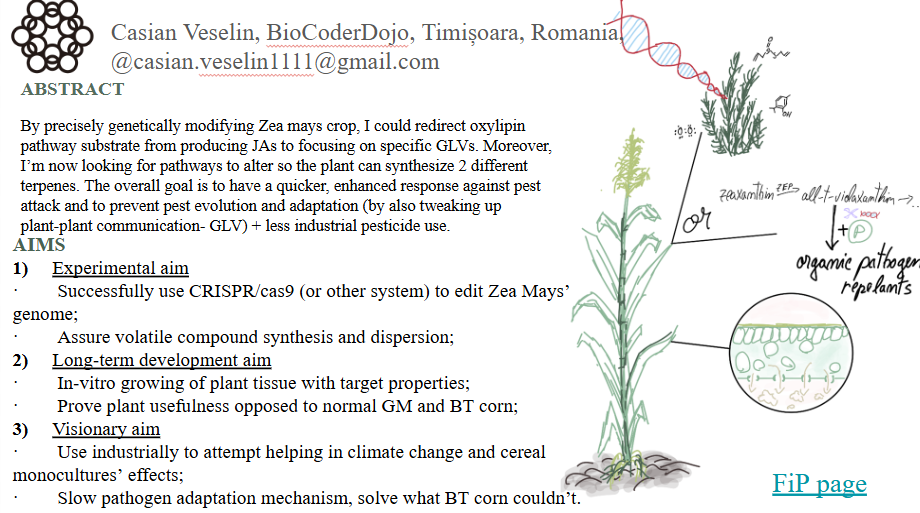
Zea Mays, or the common maize plant has been cultivated for feeding purposes for roughly over 9 ‘000 years, since when humans domesticated it, and now is a true symbol for agriculture and farming. Modern monocultures have hugely impacted the way plants are grown, introducing the practice of efficient, yet harmful chemical usage. By genetically engineering corn to overproduce specific volatile compounds, its defence against pests could heavily be enhanced; leading to more stable yields, and slower pathogen adaptation. Green leaf volatiles (GLVs) and terpenes play a significant role in moderating plant response to biotic and abiotic stress, furthermore, being also used as signaling molecules for plant intercommunication. The advantage of their mix stands in the synergy that could theoretically be taken advantage of and the increased diversity of compounds pests have to adapt to, which will certainly take longer as not only are they chemically different, but also pose different effects upon herbivory. Neither impacts the environment or surrounding beneficial fauna at the aimed concentrations, as opposed to industrially used harmful pesticides.
The genetic design approach for the green leaf volatiles engineering is determined by the already present genes of responsible enzymes (LOXs and HPLs) in Zea mays plant cells, and, depending on the success of the experimental approaches, can be adjusted. The deterring factors are plant metabolic stability and autonomy, efficient, non-distructive biosynthesis of VOCs and genomic editing technologies. For starters, I plan to edit the promoters of ZmLOX10 and ZmHPL1 so that they amp up the expression to as much as triple, and give the type 2 13-LOX10 a cTP so it can bind to chloroplasts, closer to their substrate, in turn enhancing accessibility and kcat (turnover number). More options are provided in the experimental section.
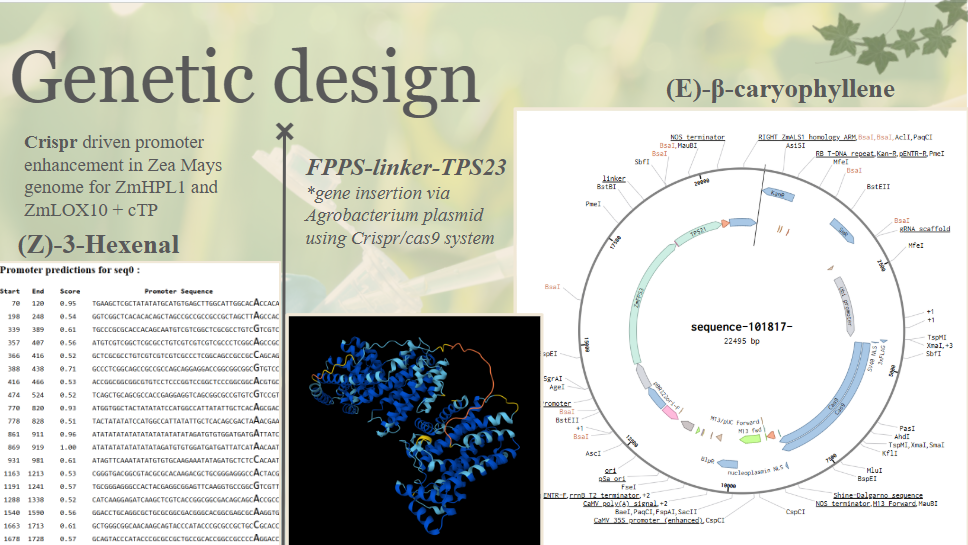
Terpene overproduction is a desired outcome for the harmless nature of chosen terpenes- (E)-β-caryophyllene, linalool, (E)-β-farnesene, A1 Zealexin to corn, beneficial (/symbiotic) organisms and human physiology. For a simplified design, I am going to aim (E)-β-caryophyllene oversynthesis and address the metabolic burdens it may encounter. In a GSH (genomic safe harbor), a Crispr/cas9 system will insert genes responsible for encoding terpene synthase 23 (TPS23), a linker with the means of metabolic channeling of substrate and farnesyl diphosphate synthase (the enzyme providing it); .
Note: current approach proposes a broad effect against various types of pathogens and insects, a more specific target can be set during the experimental undertakes.
CONTEXT
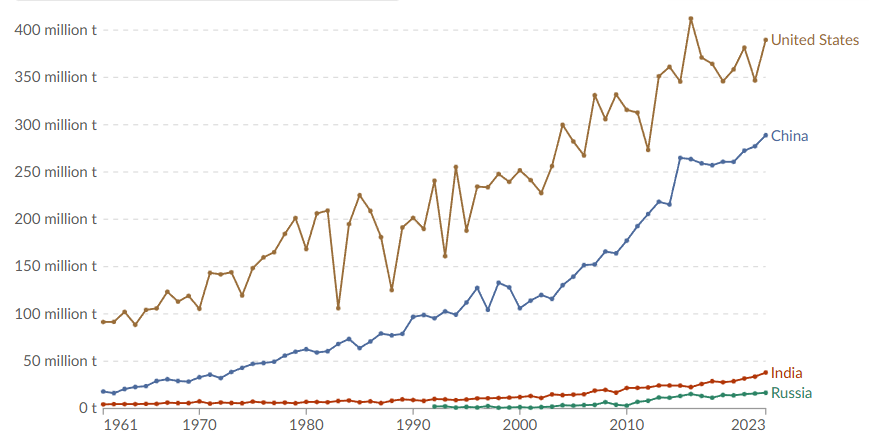
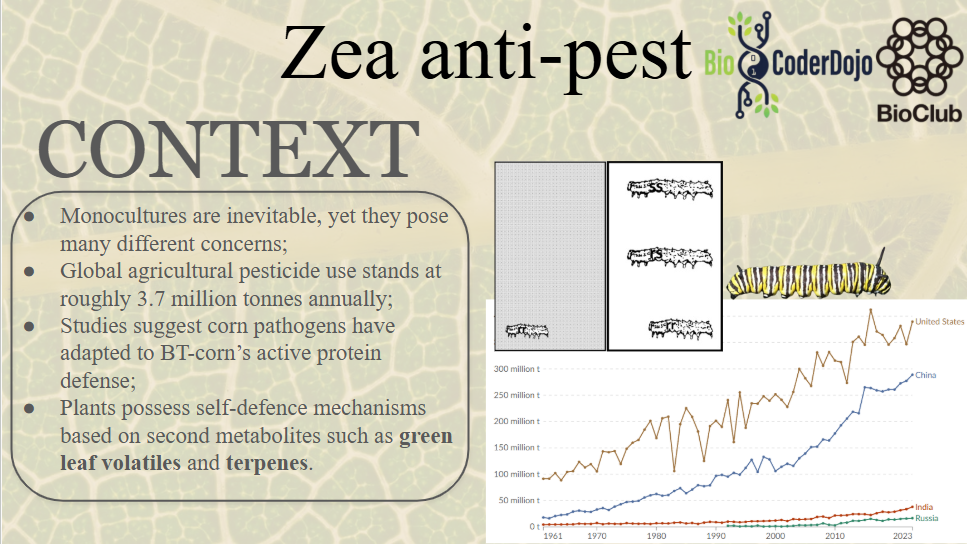
Maize, also known as corn, is a tall stout grass that produces cereal grain. As of 2020, world production measured about 594 million tons grain from about 139 million ha Maize Production. Its economic and cultural impact, now being the most cultivated crop globally, is undeniably one of the biggest driving factors of the human consumption companies and their effect on Earth’s wellbeing. Maize’s usage ranges from direct and indirect (processed victuals) human consumption, livestock feed and fabrication of biomaterial.
1. monoculture problem
Monocultures are agricultural systems where a single type/ specie of plant gets cultivated and grown (often year after year), being the main choice and representative trait of modern agronomy as they fulfil the following criteria: they are large, focus on a single product- thus being easily farmed and harvested, and cater to distant markets.
Important problems posing maize monocultures include the susceptibility to pathogens: bacteria such as Clavibacter nebraskensis, viruses; insects- caterpillars, wireworms (forcing farmers to spend huge amounts of money to buy and use insecticides, fungicides etc, in hope of avoiding a pest disaster; also harming the environment by doing so); and diseases originating from the lack of specific nutrients, in turn, needing regular fertilizers that may not be fully absorbed by the plants and making their way into running waters, groundwater and poisoning them, the soil and worms that could have served as soil fertilizers themselves and aerate the soil for better root growth, as well as food for birds useful to crops.
It is believed that the global human population will not stall until it reaches 10 billion people, with an average of 2000 kcal intake per day- it is fair to assume that a stable plan for providing a considerable amount of energy in the form of food must be provided in less than ~20 years. Presuming the corn trend holds on, the amount of corn needed to be produced in ~2060 could hover around 1.6 billion metric tons. Traditional agricultural methods have long been updated, and hydroponic cultures can not, yet, maintain maize growth, so the monoculture ethos will not die soon.
2. Pest damage
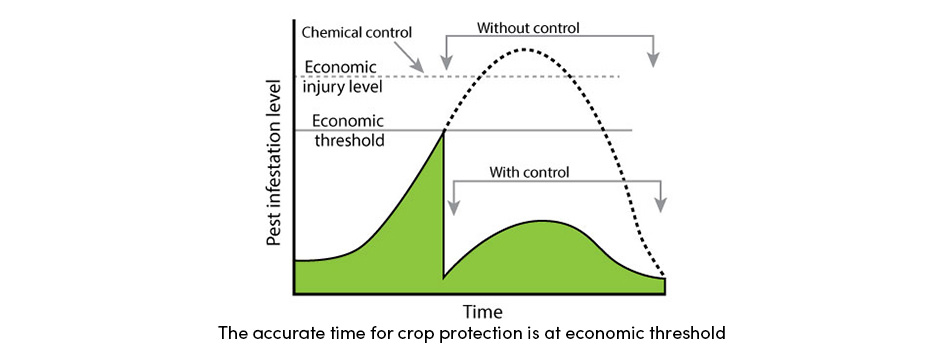
Pests, considerably more hazardous and effective in monoculture settings can affect yield and economical gain heavily, with $2 Billion total estimated annual financial toll in produce losses and management costs caused by corn rootworm alone in the United States. With 10% to 30% average annual crop yield reduction worldwide caused by the combined forces of insect pests, diseases, and weeds. Forcing farmers to use chemicals- pesticides to keep damage under control and avoid bankruptcy.
3. Pollution crisis and health effects of pesticides
Addressing the one of the biggest societal burdens, usage of monoculture regulating chemicals is proven to cause serious damage to the surrounding biotope and biocenosis, not only harming and reducing the reproduction rates of beneficial organisms, from viruses to insects and other plants, but also dealing permanent damage in the form of residual chemicals.
Pesticides not only have significant effects on human health and well-being, but excessive use (as in the case of monoculturing) leads to crop dependency on human intervention and increased susceptibility of plant damage in the context of resilient pests, further impacting overall yield and farmland stability.
4. GM plants - BT corn
As for the European Union, a significant stigma overshadows all the possibilities for GMO development and financial gain; even so, legal and actually grown, dent corn (MON810) stands out for being not only consumed, but also grown hugely in Portugal and Spain. Still, there is a considerable fear and rejection due to the lack of understanding of how genetically engineered organisms actually work and the rigorous trials they have to go through to prove they are as safe as they can be, and so, people tend to avoid them. Public opinion of modified crops, in the USA, does not seem to be perfect, but is significantly better than in the EU.
MON810 or BT corn is a genetically modified corn maize plant with genes selected and inserted from Bacillus thuringiensis (Cry3Bb1), which makes it harmful towards many types of insects, primarily representatives of the order Lepidoptera (butterflies and moths). It was specifically designed to combat crop loss due to pests, but its repeated usage over an extended period of time increased the chances of pest resistance and evolution to withstand BT poison. Documented cases of such instances exist and are proof of pest resilience, but also a warning of what could happen next, even though Corn Rootworms aren’t prokaryotes that multiply incredibly fast.
5. research of GLVs and Terpenes
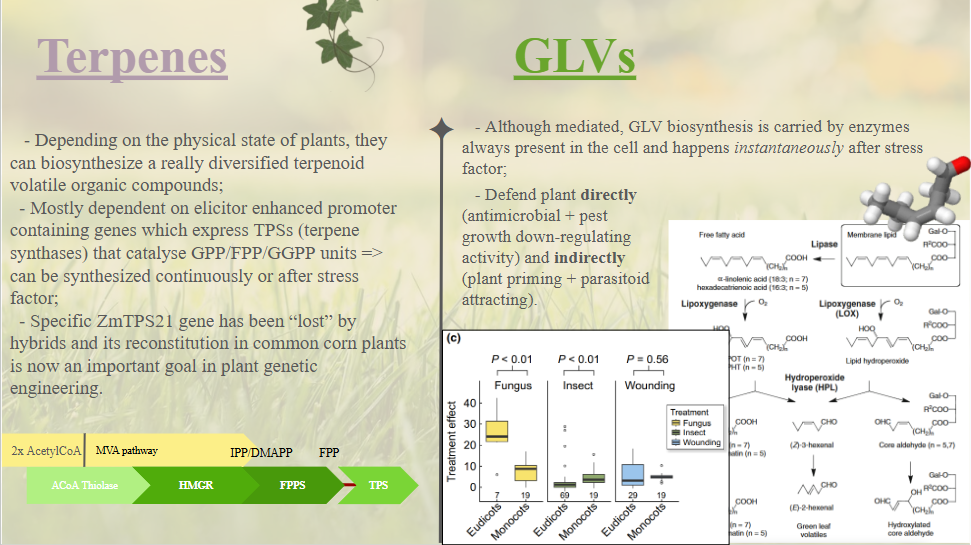
Plants are not motile, hence, they cannot escape from their enemies. However, they possess various defense mechanisms, including using second metabolites: volatile organic compounds (VOCs) such as green leaf volatiles (GLVs) and terpenes. Over millions of years, plants have gained the ability to use as many as 300’000 discovered substances, from which 55’000 are terpenes, for which prescriptive biology could have the key to refine and recombinantly use, as substituents to the ever so harmful pesticides humans industrially use.
Due to the fact that plants have exponentially more genetic material compared to bacteria, less practical experiments that conclude to actual numbers have been conducted, but that doesn’t imply the synbio community hasn’t found ways to genetically engineer plants, and for the means of this project, Zea mays.
1. Green Leaf Volatiles
Why?
Plants have evolved to defend themselves and deal with both biotic and abiotic stress factors, and not in a single isolated manner, but rather by using diversified metabolic pathways to synthesize organic compounds that work in synergies not just with each other, but with the medium the plant is in. The oxylipin pathways yields jasmonates, divinylethers and green leaf volatiles (GLVs) through the peroxidation of polyunsaturated fatty acids. As it is fueled by (mostly) PUFAs and (secondarily) free membrane lipids 1., its backbone mechanism relies on local compartmentation, having JAs produced inside the chloroplast stroma and GLVs by the chloroplast envelope-bound enzymes. Green leaf volatiles have been first studied for their aromatic nature (hence the name): not quite floral or fruity, but “green”, later studies placing them responsible for plant priming and interspecific signaling. Furthermore, Arabidopsis mutants lacking genes responsible for hydroperoxide refining showed increased tendencies in pest damage and harsher effects of abiotic stressors such as drought and intense wind 2., proving GLVs are directly and indirectly involved in defensive gene upregulating and pest control. Some GLVs inhibit the growth and propagation of pathogens including bacteria, viruses and fungi, show allelopathic activity towards multiple weed types, in certain cases even employing parasitoid organisms such as naive parasitic wasps and entomopathogenic nematodes to consume, leisure herbivores. Plants that receive GLV signals through catalytic activity and phosphorylation cascades act and adapt in preparation for any neighbouring pests and pathogens, lowering the risk of them spreading to another host plant.
Genetic design logic
An increased concentration of certain GLVs should model the way herbivores interact with maize cultures; an even faster response with higher concentrations of “poisons” can deter and leave the pathogen no chance to further wreck havoc or even have the time to adapt to the conditions, ulteriorly passing down the resistant genes to offsprings.
The main goal of this approach is to overexpress LOX and HPL genes, in turn having more of the enzymes necessary for synthesis of lipid hydroperoxide, (Z)-3-hexenal respectively.
The chosen type II 13-lipoxygenase is ZmLOX10, major control point for GLV biosynthesis; with a substrate specificity to PUFAs (polyunsaturated fatty acids) such as linolenic acid (18:3) and linoleic acid (18:2) 4., 5. and with the main product 13-hydroperoxides: 13-hydroperoxy octadecatrienoic acid (13-HPOT) and 13-hydroperoxy octadecadienoic acid (13-HPOD). It has the advantage of being able to associate with damaged membranes and make use of them, inclining to minimal lipase dependency. ZmLOX10 is the specialized 13-LOX responsible for the GLV fast synthesis and is physically separated from the JA-producing ZmLOX8. Specifically, LOX10 is localized to organelles lacking chlorophyll (confirmed as peroxisomes), whereas the JA machinery is in the chloroplast stroma 6. so the native WT ZmLOX10 gene should be neighbored by a peroxisome transit peptide sequence, which, in the specific genes that will be inserted, I plan to replace with a cTP, as chloroplasts present with more free PUFAs.
Further, overexpression of 13-hydroperoxide lyase ZmHPL10, aims to provide the surplus lipid hydroperoxides an enzyme to biocatalyse it into (Z)-3-hexenal. Both the LOX and the HPL will be provided with a peroxisomal tag with the intended purpose of substrate splitting.
The green leaf volatile (GLV) (Z)-3-hexenal is essential to the biosynthesis of many other potent alcohols and aldehydes, and can spontaneously isomerize into (E)-2-hexenal, a more stable compound with higher efficiency as an antifungal agent. Its role as a gene expression regulator is currently researched 7.. Endogenous Alcohol Dehydrogenases (ADHs) can also easily convert this primary precursor into (Z)-3-hexenol, another up-regulation agent of different defence mechanisms, a defense primer, parasitoids attractant, and a potential human anxiolytic.
Addressing the first substrate, the presented tendency is independence of engineering lipase overexpression as it can easily damage cells even if they are not under direct stress factors. And so, phospholipases are present in Zm cells anyhow, I aim to use the substrate they can provide plus any residual materials resultant from the bilayer after disruption, damage, double as fast so the concentration highly rises when the pest comes into direct contact with any internal lining of corn tissue. //the plan is to use the available PUFAs twice as fast, i dont want to get lipases involved into this (yet)
Another specific aim the GM corn should satisfy is conservation of regular WT JAs pathway and drawing towards intactness.There already are lipoxygenases whose jasmonic acid pathway feeding trait is more pronounced, such as LOX8 8..
The genetic engineer strategy for changing the biosynthesis pathway of (Z)-3-hexenal is conditioned by an hesitation of choice: replacement/ alteration of promoter present in Zea Mays’ genome so I can try to double the expression rate of both ZmHPL1 and ZmLOX10 + change of transit peptide sequence of LOX10 so it matches my chloroplast positioned aim, or try to insert self-designed nucleotide sequences in genomic safe harbor (GSH) sites 9..
Best method should be confirmed via experimental trials, but for a start, I plan on trying GSH gene insertion first as it is modular and easier to design. Due to lack of experience in plant genetic engineering and the ambiguity of many articles regarding the subject, after multiple hours I decided to give up on crispr/cas9 system driven fragment insertion in safe harbors, and instead try modifying/ complete replace ZmLOX10, ZmHPL1 promoters with one with a higher expression rate, TP replacement in LOX. I intend on using crispr/cas9.
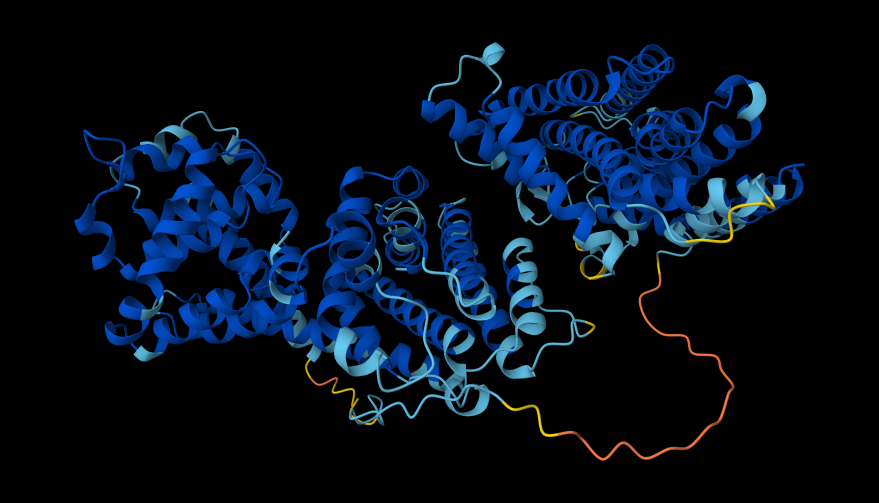
expected AlphFold2 structure of ZmTPS3-link-AtTPS21 :
2. Terpenes
Why?
Terpenes are a massive class of flavonoids that possess different structures and priorities. They have long been studied for their aromatic characteristic traits- smell and taste, newer studies show they are effective phytopheromones and can even have antipathogenic attributes (reason for which they can be used as household disinfectant agents incorporated in solutions). Nearly 40 years ago, pathogen-inducible diterpenoid production was described in rice, and these compounds were shown to function as antimicrobial phytoalexins. Now, scientific breakthroughs support the ever so many tries to engineer plants to overproduce terpenes to defend themselves; along with trying to bring TPS23 gene corn plants have lost along the years. Similarly, I am looking for a “terpene cocktail” which’s over-biosynthesis I want to achieve to support the GM plant efficiency at diminishing pest adaptation by engaging various active chemicals. Moreover, the ability to simultaneously invoke tritrophic chains (plant-pest-predator) lessens the direct chemical involvement. Monoculture-context parasitoid entity dependence will be discussed later.
There are many more terpenes and terpenoid compounds responsible for plant “immune system”, with many being more recognisable (thanks to their flavours), like linalool, limonene (citrus), nootkatoone (grapefruit), menthol (mint) etc. A broad class of biochemical defense compounds, termed phytoalexins, are loosely defined as any ‘low molecular weight, anti-microbial compounds that are both synthesized and accumulated in plants after exposure to micro-organisms or abiotic agents’ 3..
Genetic design logic
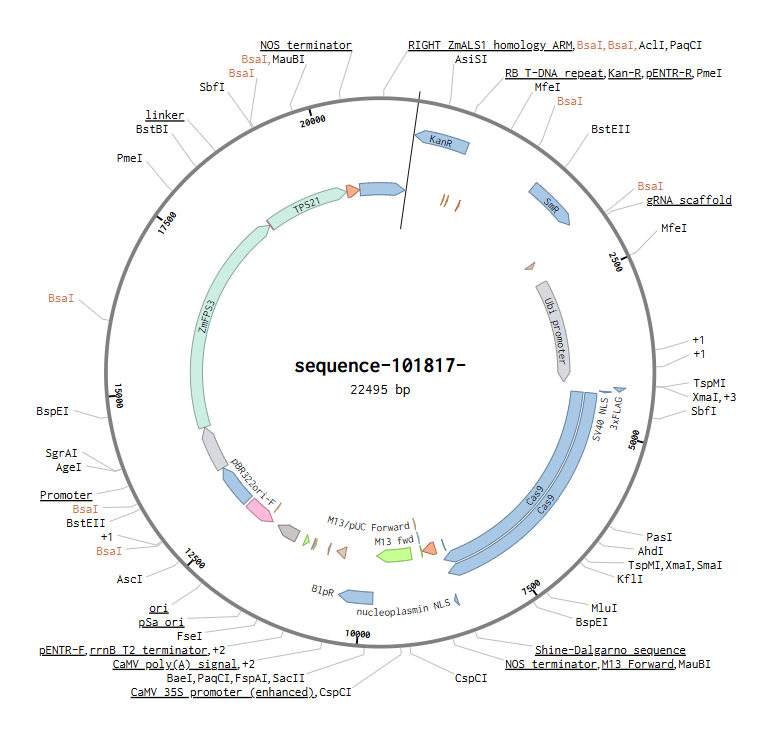
For the means of the first experimental path, for making sure the plasmid design is concise and can be used further, I will only describe the integration of an elicitor particles/ stress-induced expression system of farnesyl diphosphate synthase and terpene synthase 23 enzymes. Present model proposes metabolic channeling via linking ZmFPPS and TPS23 isolated from mays subsp. huehuetenangensis and codon optimized for commonly cultivated zea mays with a triple GGGGS flexible peptide. The gene for TPS23, responsible for direct biosynthesis of (E)-β-caryophyllene from FPP substrate has been studied for the properties of the sesquiterpene dependent on it, but also for the fact that in modern maize hybrids it is no longer actively expressed due to possible genic mutations.
The involvement of terpenes on plant defense although explained previously, can be accentuated by the characteristic traits of linalool, (E)-β-caryophyllene, (E)-β-farnesene and A1 zealexin, a combination I would personally advocate for due to their multi-front approach. Linalool is a monoterpene dependent on the MEP plastid pathway fur substrate and product of multiple ZmTSPSs: ZmTPS1, ZmTPS2, ZmTPS6, ZmTPS11 ‘10.’ proving antifungal activity and broad-spectrum volatile defense; the sesquiterpenes (E)-β-caryophyllene and (E)-β-farnesene both are derived from FPP and indirectly ward away dangerous pathogens and herbivores by recruiting nematodes and parasitoid aphids respectively, while A1 is defined as a terpenoid phytoalexin synthesis as mediately-delayed response to pathogen infection, specifically fungal treatments.
There will always be a metabolic burden determined by substrate synthesis, presence and natural diffusion, but I plan on going against the flow because trying to change over 20 genes to assure enough substrate for a singular chemical to be oversynthesized can go south in a million different ways, thus the present genetic plan aims to achieve main goal without too much genomic editing. 3-hydroxy-3-methylglutaryl-coenzyme A reductase (HMGR) is the bottleneck factor of the MVA metabolic pathway (E)-β-caryophyllene depends on, and is self-downregulated by a motif with affinity to free FPPs in the cytosol, drastically reducing activity under the accentuated presence of feranyl diphosphate as well as, minimally, sterols. The suggested metabolic channeling approach should hypothetically transform FPPs consequently into the aimed sesquiterpene before diffusion, without expected noticeable short term impact on cell physiology and activity.
Although plasmid lack selection marker, it could be inserted one such as hpll with own promoter, I wanted to emphasize the genetic logic behind the plasmid which should be hosted by Agrobacterium tumefescens and inserted in genomic safe harbor (GSH) using Crispr/cas9 system recognising ZmALS1 locus via the provided left and right homologous arms.
NOS terminator: ‘gatctagtaacatagatgacaccgcgcgcgataatttatcctagtttgcgcgctatattttgttttctatcgcgtattaaatgtataattgcgggactctaatcataaaaacccatctcataaataacgtcatgcattacatgttaattattacatgcttaacgtaattcaacagaaattatatgataatcgtcgcaagaccggcaacaggattcaatcttaagaaactttattgccaaatgtttgaacgatc
//selection marker? (hptII (with its own promoter, e.g., CaMV35S or ZmUbi)
Biosafety considerations
With the continuous innovation and breakthroughs made in the domain of biotechnology, security concerns shall exist and be a clear delimitant of actual practices and attitude. Facility safeguards and regulatory policies are designed to keep researchers, laboratory workers, engineers as well as the community safe by preventing accidental exposure to hazardous biological materials, not only toxins or pathogens, but genetically modified organisms with unintended ecological effects could potentially affect ecological or biological systems, especially humans.
For the present proposal, bioethical (*) and biosecurity (**) concerns can regard the impact on 1. working personnel, 2. ecosystems, 3. human society.
(1.) Exposure to specific materials should always be supervised and regulated depending on working grounds, although it includes genetic editing, any plasmid/system design for my project is not expected to directly affect human physiology at proposed exposure levels, but exposure to some materials could- so handle with precaution (*). Herbivores or pathogens may evolve adaptive resistance due to the repeated exposure to organic compounds GM corn may synthesize, so proper disinfection of working equipment and space must be a priority until trials guarantee safety. (**).
(2.) Long-term adaptive resistance in pest and pathogen populations remains difficult to completely prevent. Researched studies imply that the plant secondary metabolites are not realistically harmful to the environment in aimed concentrations.
(3.) The overall economic implications the product may cause are not clearly determinable, but can be assumed, homologous to Monsanto’s (now Bayer) 1993, MON810.
Societal acceptance is not guaranteed, as GMO skepticism is still ongoing in the status quo, and laws against usage have been passed even as soon as 2012 MON810, Wikipedia.
Experimental design, techniques, tools and technology
Experimental aims
Experimental aim 1
First and primary experimental goal will be to explicitly support the genetic logic proposed under the scopes of real and interpretable data, thus I shall begin this section with the intended purpose of generating a protocol step-by-step.
The first mechanism I need to achieve (even if it is proved to work) is the generation and assembly of the plasmids I desire to use: the GLV and the terpene one- both having a crispr backbone. Terpene plasmid has been designed in benchling, and now conditioned for twist synthesis. Because it is quite large I may need to refer to assembly see hw6 of more smaller fragments.
Afterwards, I may move on with the proper integration in plant genome and growing: the plasmid, once bought, can be amplified, i.e. PCR, RCA (Rolling Circle Amplification), and inserted in Agrobacterium organisms. The design of interest (along with a selectable marker) is inserted into a small, easily manageable plasmid. This plasmid holds the T-DNA (Transfer DNA), which is flanked by two 25-base-pair border sequences that tell the bacteria what to cut and transfer. A second plasmid (the “helper”) stays inside the Agrobacterium; it contains the vir (virulence) genes, which act as the molecular machinery to process and transport the T-DNA.
Due to the presence of a selectable marker (i.e. kanamycin), only the plant cells that have the “alien dna” will survive selection. Plant tissue (like leaf discs, cotyledons, or immature embryos) is wounded to release chemical signals that attract the Agrobacterium. The tissue is submerged in a liquid culture containing the engineered bacteria. Ulteriorly, the vir genes in the Agrobacterium activate, cut the T-DNA at the border sequences, and transfer the CRISPR/Cas9 plasmid DNA out of the bacterium and directly into the plant cell’s nucleus.
Experimental aim 2
After using in-vitro plant tissue culture propagation, I can end up with a whole corn plant that should present with the modified genome.
The biosynthesis of desired compounds will be measured using solvent extraction/ headspace SPME sampling GC-MS. (-not only for the products, but for other substances as well; e.g. JAs, other phytohormones, pyruvate, Acetyl CoA. The plant needs to operate normally).
Experimental aim 3
Under a more hopeful approach, gravitating towards a more efficient chemical complex can be possible, but, after what I have researched, harder and would probably also take more time and resources.
The features I would find useful and also fun to design:
using other terpenes: (E)-β-farnesene, linalool, A1 zealexin;
using ZmLOX12 instead of LOX10 as it may possess membrane-binding structural features that enhance access to membrane-derived PUFA substrates during membrane damage- N-terminal PLAT domain;
use other ways (ligands, aggregating HPLs and LOXs, vesicles) to separate GLVs - engineer a way to ensure JA pathways aren’t altered significantly.
Modern crop growing techniques mainly revolve around monoculturing and industrial-scale usage of different chemical compounds, ranging from synthetic fertilisers to pesticides. Because regulating exact pest attacks on crops like corn is rather inefficient, farmers tend to have tons of pesticides sprayed atop of their cultures, more than often resulting in undesired pollution and other ecosystematic side effects which the present genetic engineering plan aims to diminish. Genetically modified plants such as MON810 (BT-corn) defend themselves by using specific compounds; specifically a protein expressed in Bacillus thuringiensis; similar alternatives are considerably better than reckless spraying of harmful insecticides, fungicides etc, however they still have to confront the problem of adapting pests.
The approach I have designed primes two different classes of plant second metabolites: green leaf volatiles (GLVs) and terpenes, for the means of feasibility and time-imposed limitations, only (Z)-3-hexenal and (E)-β-caryophyllene respectively biosynthesis’ will be followed by an enhancing plan. Planned novelty comes from the diversity of chemical activity and structure present in the substances, but also from the genetic approach.
GLVs’ action has been defined as antimicrobial, gene upregulating, allelopathic and plant priming thus proving distinct techniques to deal with biotic and abiotic stress factors. Moreover, they are synthesized instantly after damage from released PUFA (polyunsaturated fatty acids) substrate from membrane phospholipid bilayer via the catalytic activity of lipoxygenase enzymes already present in the cytosol or chloroplast envelope-bound; one of the most notable examples is the type II 13-ZmLOX10 - main actor in (Z)-3-hexenal synthesis and ZmLOX12, capable of attaching to free membrane lipids using specific N-terminus PLAT domain. Ulteriorly, the lipid hydroperoxides are directly catalysed by representatives of the HPL family enzymes, such as hydroperoxide lipase1. They must be present in the cell at all times to assure immediate response to environmental factors via the synthesis of (mainly) (Z)-3-hexenal, which can spontaneously isomerize into (E)-2-hexenal or hydroxylated by aldehyde reductases with the usage of NADPH; all three GLVs possess antifungal, plant interspecific signaling priming and other pest repellent properties described further in this proposal. The genetic design is determined by Agrobacterium transported plasmid with a Crispr/cas9 system integrated with the purpose of ZmLOX10, ZmHPL1 promoters cleaving (knock-out) and replacement with higher-expression rate promoters and the addition of a cTP (chloroplast transit peptide) to lipoxygenase as in WT it is peroxisome-bound, this way limiting substrate diffusion and possible impact of JAs synthesis.
There are over 20’000 known terpenes, all synthesized by plants to deter pest damage and encourage symbiotic tritrophic relationships. Their synthesis depends on either the MVA or MEP metabolic pathway products: isopentenyl diphosphate (IPP) or dimethylallyl diphosphate (DMAPP), terpene precursors. Genetic design proposal is as well, based on plasmid insertion in embryonic Zea mays plant cells and tissue culturing until fully grown and experimentally-proofed metabolically stable GMO. Crispr/cas9 should insert FPPS linked to terpene synthase 23 native to WT teosinte and codon optimised for expression in globally grown maize via a flexible peptide chain, metabolically channeling substrate, avoiding interference with other cell systems and primarily to keep HMGR from self-downregulating its activity. The reasoning is the preference of a clearer, more efficient and robust metabolic engineering manner, as many undesired side effects can emerge from reckless genetic editing.
Read through the Phage Reading material listed under “Reading & Resources” below.
Review the Bacteriophage Final Project Goals for engineering the L Protein:
Increased stability (easiest)
Higher titers (medium)
Higher toxicity of lysis protein (hard)
Brainstorm Session
Choose one or two main goals from the list that you think you can address computationally (e.g., “We’ll try to stabilize the lysis protein,” or “We’ll attempt to disrupt its interaction with E. coli DnaJ.”).
Write a 1-page proposal (bullet points or short paragraphs) describing:
Which tools/approaches from recitation you propose using (e.g., “Use Protein Language Models to do in silico mutagenesis, then AlphaFold-Multimer to check complexes.”).
Why do you think those tools might help solve your chosen sub-problem?
Name one or two potential pitfalls (e.g., “We lack enough training data on phage–bacteria interactions.”).
Each individually put your plan on your HTGAA website
Include your group’s short plan for engineering a bacteriophage
High level summary: The objective of this assignment is to improve the stability and auto-folding of the lysis protein of a MS2-phage. This mechanism is key to the understanding of how phages can potentially solve antibiotic-resistance.
This homework requires computation that might take you a while to run, so please get started early.