Week 11 HW OverviewPart A: The 1,536 Pixel Artwork Canvas | Collective Artwork[!info] Note that this homework is due a week later than it ordinarily would due to its release a week later than normal. [x] Contribute at least one pixel to this global artwork experiment before the editing ends on Sunday 4/19 at 11:59 PM EST.
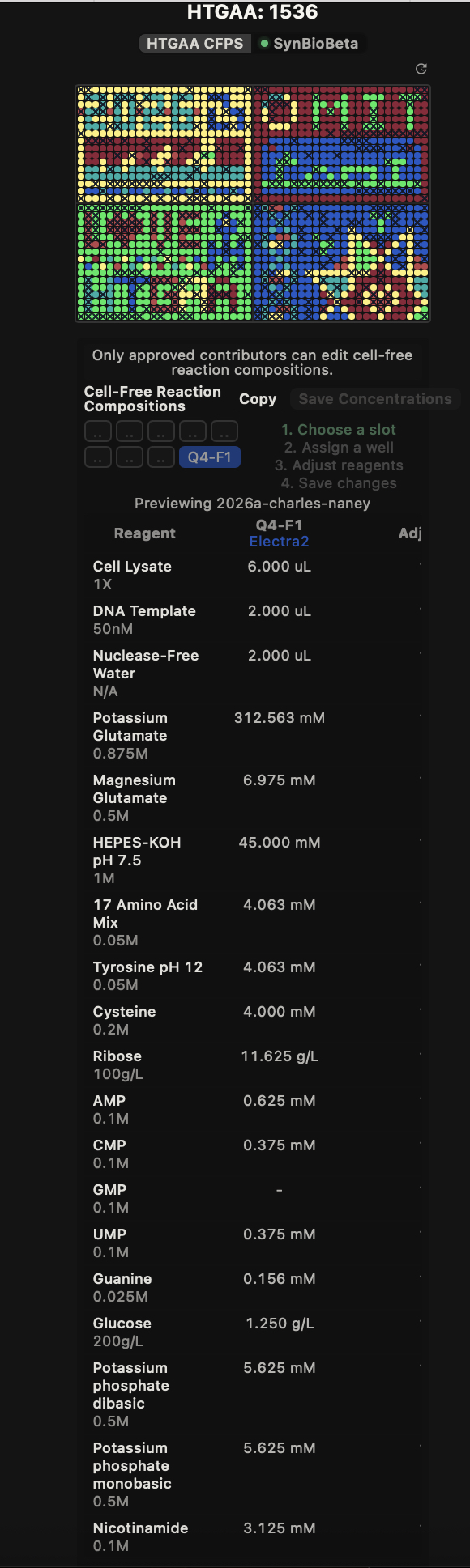
A personalized URL was sent to the email address associated with your Discourse account, and you can discuss the artwork on the Discourse.
[x] If you did not have a chance to contribute, it’s okay, just make sure you become a TA this fall! 😉
Make a note on your HTGAA webpages including: what you contributed to the community bioart project
(e.g., “I made part of the DNA on the bottom right plate”)?

What you liked about the project?
My favorite part about the project was when different people started collaborating or interacting on a design. I liked the timer and not knowing if someone else recognized the pattern and the opportunity to scale up quickly on a design when different contributors stepped up and worked on the same art. Then at some point in the process, I started to see the maker space as a giant multi-threaded game of GO in color, and it even seemed like some folks started picking up on that and making better shapes. Initially, the competitive streak triggered and I thought game on. Then, I remembered, wait, we are supposed to be working together here. Now, there was a point when the exercise was not as cool. Specifically, when it was first unveiled, everyone was talking about an Egyptian flag, for example, and I was thinking I didn’t see a flag and there were these sections where it was like someone just painted over everything else. However, it was then unveiled (maybe I was just slow on all these details, but it was all a surprise to me:) that there was this hysteresis process built into the application which I thought was brilliant. Then I was right as rain about the whole exercise and better appreciated all of the evolutions.
What about this collaborative art experiment could be improved next year?
Well, here’s the thing, now that I know about the hysteresis slider, I’m just going to wait until the end of the lab to start plotting. Seriously, though, one idea might be to make it like an archaeological dig or a puzzle. No, I’ve got it. I think we need to make it like a massive mind-sweeper puzzle, and add a component so a portal square can be detected, revealing a new chamber that leads to another massive mind-sweeper puzzle. Alternatively, if we don’t want to just digress into a video game, the next iteration could be a 96-well plate or a gel or a bacterial plasmid,and we could all receive an invitation to make contributions (even redesign experiments), almost like an interactive collaborative Wiki. They also have chemistry and microbe simulators. For example, there is the BEAKER application by THIX (https://thix.co/beaker). Of course, the dream would be an HTGAA BEAKER collaboration with a history slider, so we could scroll backward through experimental changes, including the lab notebook. The great thing about BEAKER is that it also lets you auto-document reaction steps, which could scroll as well. Then, if we could add more organic and biochemical molecules and run an electric pulse through water, we could even run Miller-Laurie (sp?) experiments. I also thought there were a number of lab assignments and demonstrations from the lecture that could have been run in a similar collaborative sandbox. I could also the promise in benchling to support this process. For example we could all be given a link to set-up our own lab notebooks based on a template which was already there this semester but we could just build on that.
Part B: Cell-Free Protein Synthesis | Cell-Free Reagents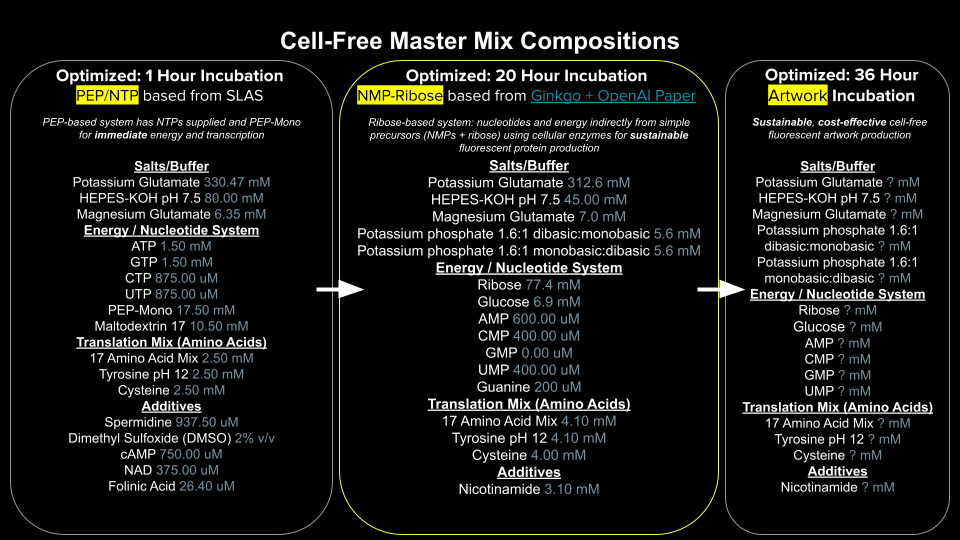
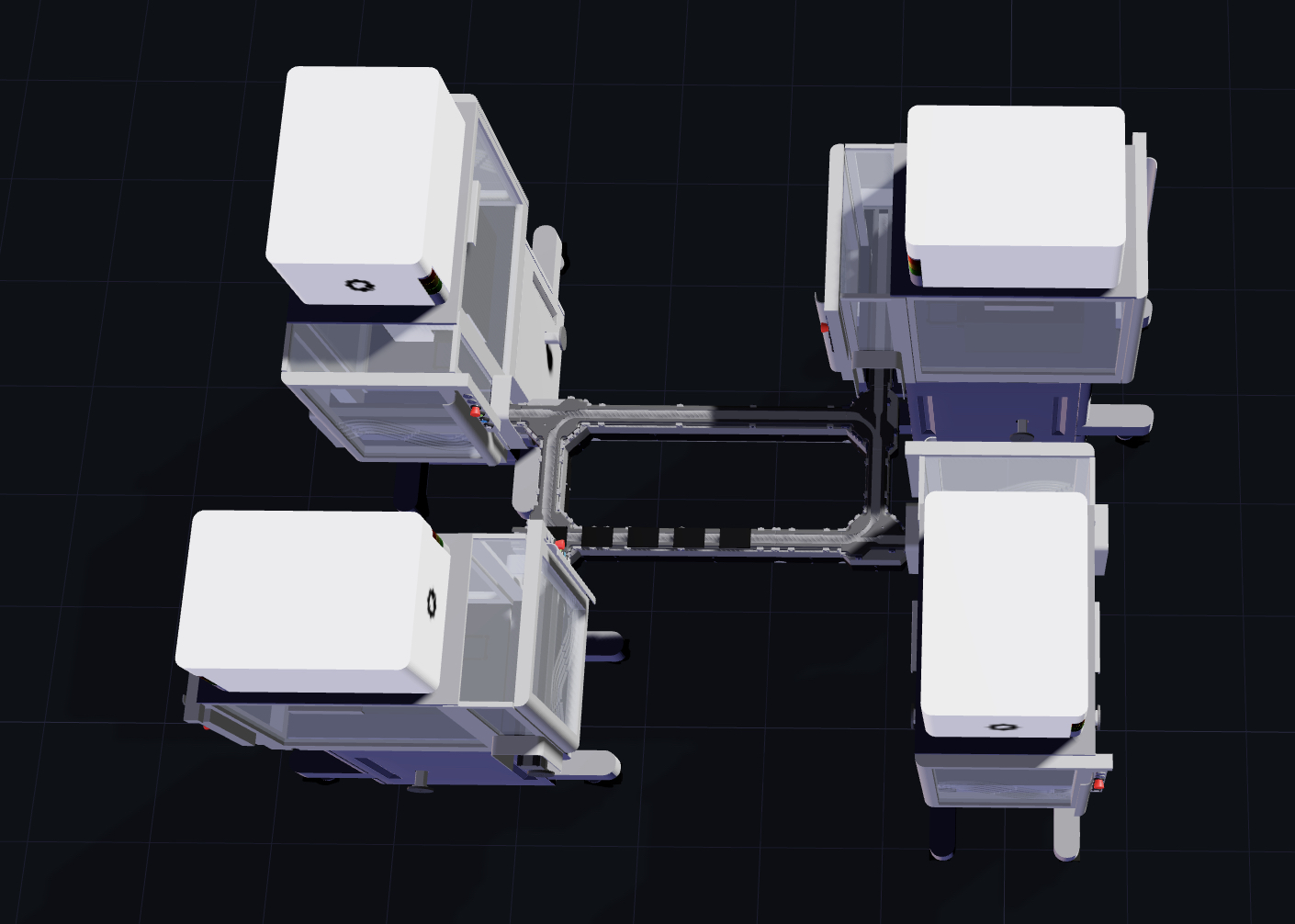
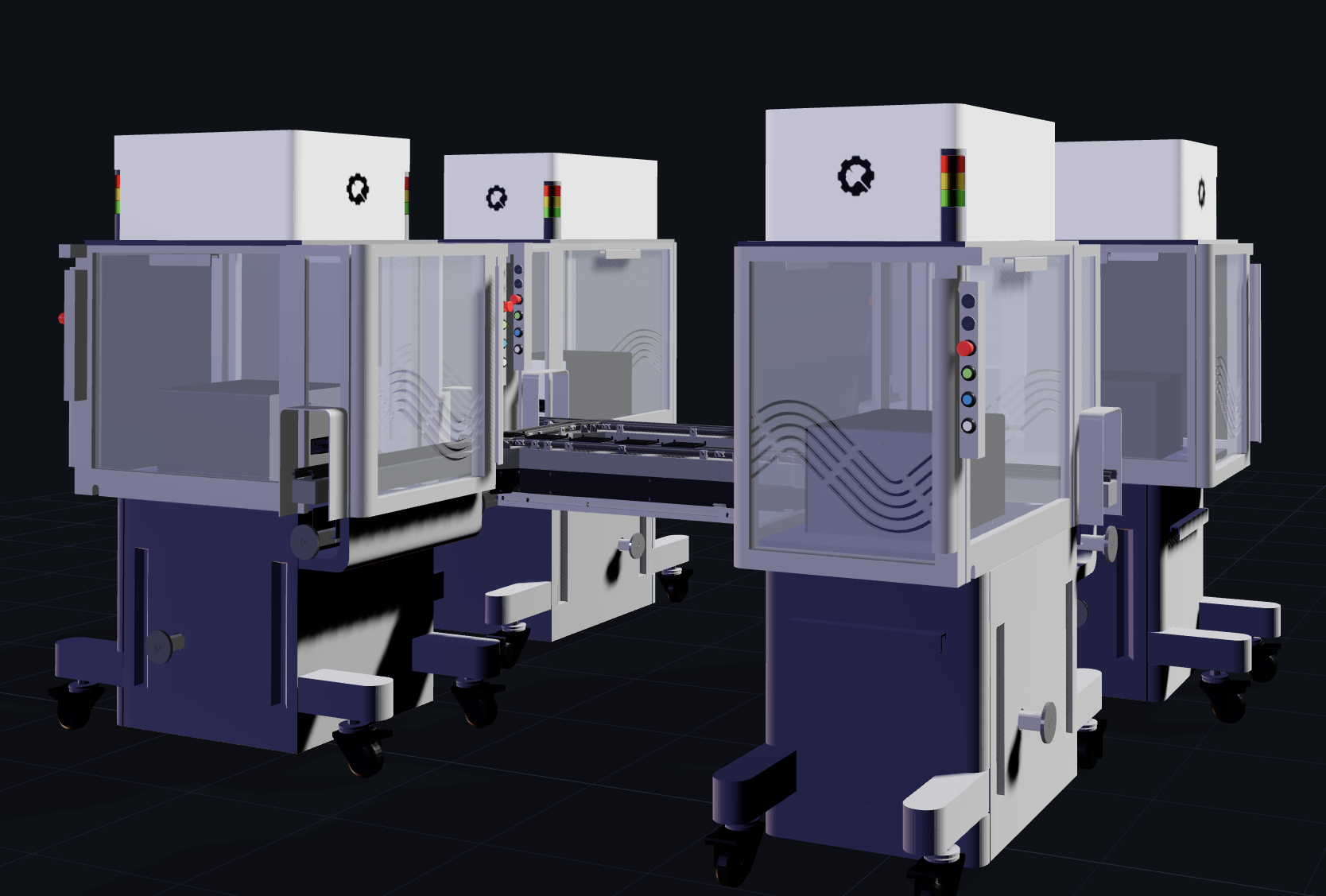
Getting It Done Note: Ronan provides a link in lab slide deck to a simulation tool We are transported to a virtual engineering space where we can design a floor plan, an assembly model, and in the assembly model variables. In addition, radio buttons were included to set the preferences for the simulation space. We can even adjust camera views to observe the cloud lab setup we design.
Ronan provides a link in lab slide deck to Benchling directory 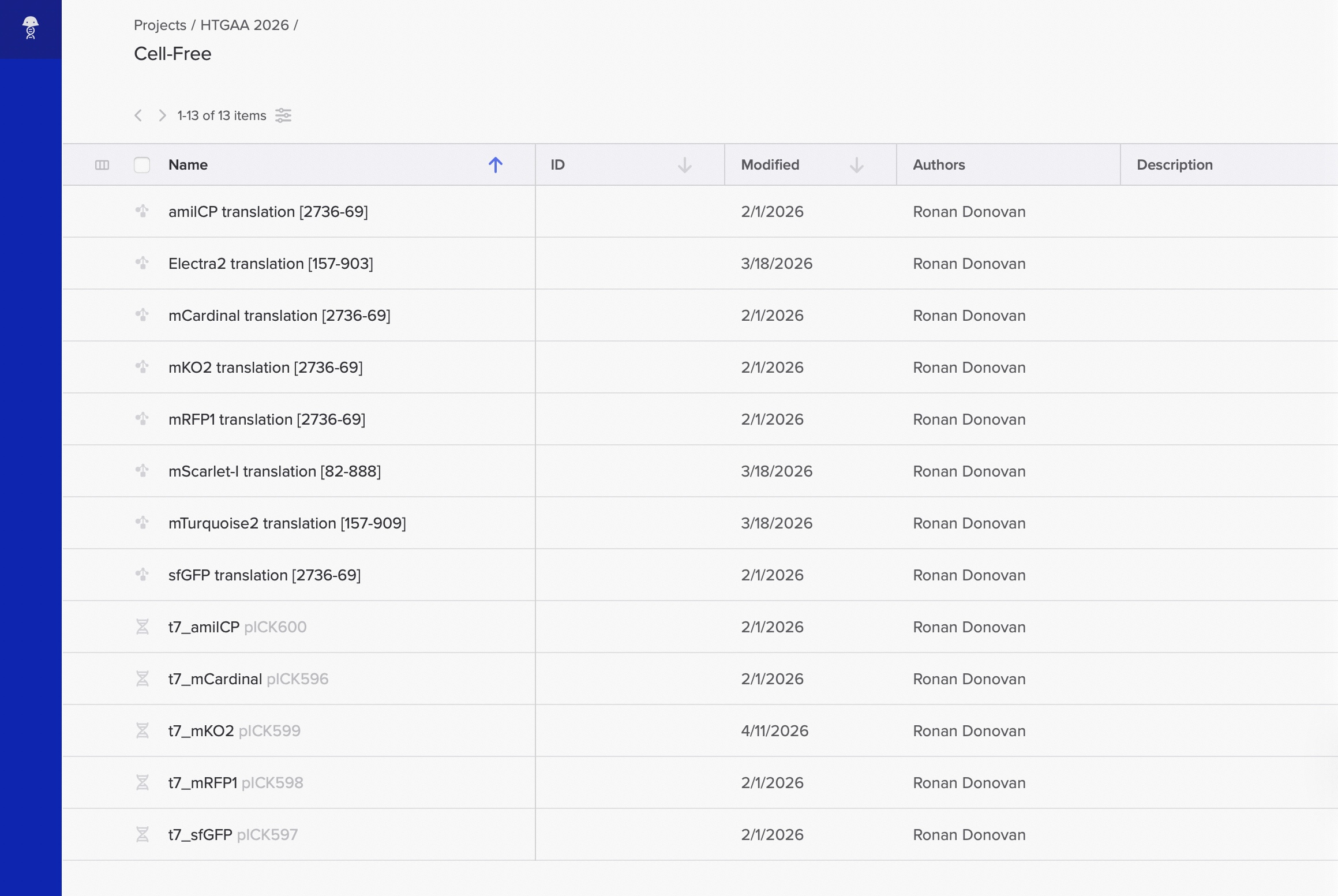
- Referencing the cell-free protein synthesis reaction composition (the middle box outlined in yellow on the image above, also listed below), provide a 1-2 sentence description of what each component’s role is in the cell-free reaction.
E. coli Lysate BL21 (DE3) Star Lysate (includes T7 RNA Polymerase)
Karim_&_Jewett_paper
The role will involve protein overexpression and the preparation of extracts.
Agrawal_et_al_paper
BL21 (DE3) is a distinct and mildly adapted strain of E. coli bacteria. In this experiment, the bacteria’s chromosome is a chassis for the T7 (bacteriophage) RNA Polymerase gene. What really makes this particular bacterium useful for us as well is its likelihood to exhibit leaky expression Hayat et al_paper.
Salts/Buffer A necessary component of cell-free protein synthesis, according to Bartsch et al (2024) is salts and buffers Bartsch_et_al_2024. For example, Potassium Glutamate Following protocol in Karim and Jewett paper (2016) 60mM (note our concentration too) was added to cold wash before centrifugation to prepare E. coli cell for extraction
HEPES-KOH pH 7.5 Just like in a saltwater aquarium, included in a buffer which is used to maintain a pH neutral at 7.5, external to internal environment, during cellular transcription, translation, and other metabolic biochemical pathways.
Magnesium Glutamate In Karim and Jewett paper (2016), 8mM was added (note our concentration too) to a CFME reaction assay mixture that contained 5 extracts – each with its own unique twist in the form of an enzyme overexpressed to represent a step in a bio-synthetic enzymatic pathway for n-butanol production before and after CFME assay enhancement.
Potassium phosphate monobasic is also introduced in Karim and Jewett paper (2016) as an additive in the 2 YTPG growth media for E. coli BL21(DE3) cells.
Potassium phosphate dibasic s also introduced in Karim and Jewett paper (2016) as an additive in the 2 YTPG growth media for E. coli BL21(DE3) cells.
Energy / Nucleotide System Ribose Serves a salvage role as precursor for nucleotide biosynthesis and ATP generation.
Glucose First energy substrate to generate ATP from pyruvate without any additional enzymes following reactions with nicotinamide adenine dinucleotide (NAD) and coenzyme A (CoA) Hunt_et_al_2025.
AMP Another salvage metabolism functional small molecule. Adenosine Monophosphate (AMP) needed to generate Adenosine Diphosphate (ADP) which required to synthesize Adenosine Triphosphate (ATP) through endogenous kinase mechanism.
CMP Supports transcription-like synthesis of mRNA intermediates where Cytidine Monophosphate (CMP) is a precursor to Cytidine Diphosphate (CDP) and then Cytidine Triphosphate (CTP).
GMP Guanosine Monophosphate (GMP) Using Bio-MOD (biologically derived medicines on demand) platform can be produced (Hunt et al, 2025). Synthesized from Guanine to form Guanosine Diphosphate (GDP) and then Guanosine Triphosphate (GTP) which is necessary for ribosome translocation and support of translation.
UMP Uridine Monophosphate (UMP) is another salvage metabolism precusor essential for synthesis of Uridine Diphosphate (UDP) and then Uridine Triphosphate (UTP). Elongates RNA and supports the transcription phase of CFS.
Guanine On a basic level is the Nucleotide used to synthesize GMP, then GDP, and GTP.
Translation Mix (Amino Acids)
17 Amino Acid Mix Standard mixture for translation of amino acids to proteins in CFS, where a sufficient quantity of nonreactive essential amino acids is thus bioavailable. This mix only includes 1mM of tyrosine and cysteine.
Tyrosine One of two nucleotides, along with
Cysteine that are synthesized separately because of degradation concerns and their contribution to oxidation.
Additives Nicotinamide Supplement added to glucose to simulate glycolysis to generate initial ATP in the cell-free synthesis technique (Hunt et al, 2025).
Backfill Nuclease Free Water Both deep eutectic solvents (DES) and polyethylene glycol (PEG) are utilized in pre-delution for pipettablity according to Bartsch et al (2024).
2. Describe the main differences between the 1-hour optimized PEP-NTP master mix and the 20-hour NMP-Ribose-Glucose master mix shown in the Google Slide above. (2-3 sentences)
In addition to the ratio of time 1:20 hour master process
3. Bonus question: How can transcription occur if GMP is not included but Guanine is?
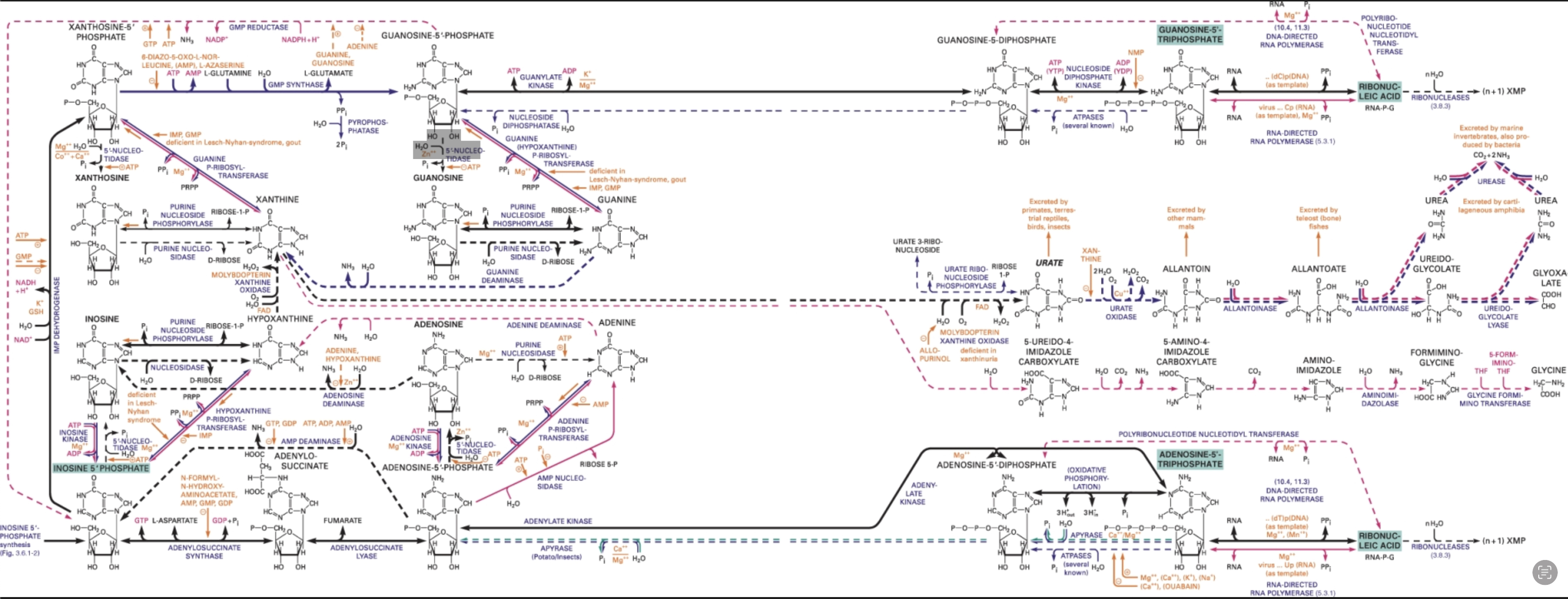
I am going to guess looking at the biochemical synthesis pathway and say it’s because there appears to be a DNA-Directed and RNA-Directed Synthesis loop…in progress
C: Planning the Global Experiment | Cell-Free Master Mix Design1. Given the 6 fluorescent proteins we used for our collaborative painting, identify and explain at least one biophysical or functional property of each protein that affects expression or readout in cell-free systems. (Hint: options include maturation time, acid sensitivity, folding, oxygen dependence, etc) (1-2 sentences each)
- sfGFP
- mRFP1
- mKO2
- mTurquoise2
- mScarlet_I
- Electra2
The amino acid sequences are shown in the HTGAA Cell-Free Benchling folder. I am going to use a markdown table to organize my answer:
| fluorescent proteins | maturation time | acid sensitivity | folding | oxygen dependence | brightness higher extinction coefficient greater brightness | color | photostability LTE 40 are stable | properties | AAS | emission wavelength |
|---|
| sfGFP | 13.6 min | moderate | excellent | yes | 24410.00 [bright level 2] | green | 26.24 stable | 29540.28 Da | MSKGEELFTG VVPILVELDG DVNGHKFSVR GEGEGDATNG KLTLKFICTT GKLPVPWPTL VTTLTYGVQC FSRYPDHMKR HDFFKSAMPE GYVQERTISF KDDGTYKTRA EVKFEGDTLV NRIELKGIDF KEDGNILGHK LEYNFNSHNV YITADKQKNG IKANFKIRHN VEDGSVQLAD HYQQNTPIGD GPVLLPDNHY LSTQSVLSKD PNEKRDHMVL LEFVTAAGIT HGMDELYK | 499 - 519 nm | | mRFP1 | 60 min | low | moderate | yes | 38390.00 [bright level 4] | red | 30.89 stable | 28182.79 Da | MASSEDVIKE FMRFKVRMEG SVNGHEFEIE GEGEGRPYEG TQTAKLKVTK GGPLPFAWDI LSPQFQYGSK AYVKHPADIP DYLKLSFPEG FKWERVMNFE DGGVVTVTQD SSLQDGEFIY KVKLRGTNFP SDGPVMQKKT MGWEASTERM YPEDGALKGE IKMRLKLKDG GHYDAEVKTT YMAKKPVQLP GAYKTDIKLD ITSHNEDYTI VEQYERAEGR HSTGA | 574 - 610 nm | | mKO2 | 108 min | moderate | good | yes | 31400.00 [bright level 3] | orange | 46.21 unstable | 27214.65 Da | MVSVIKPEMK MRYYMDGSVN GHEFTIEGEG TGRPYEGHQE MTLRVTMAEG GPMPFAFDLV SHVFCYGHRV FTKYPEEIPD YFKQAFPEGL SWERSLEFED GGSASVSAHI SLRGNTFYHK SKFTGVNFPA DGPIMQNQSV DWEPSTEKIT ASDGVLKGDV TMYLKLEGGG NHKCQMKTTY KAAKEILEMP GDHYIGHRLV RKTEGNITEQ VEDAVAHS | 559 - 572 nm | | mTurquoise2 | 33.5 min | very low | excellent | yes | 31400.00 [bright level 3] | cyan | 27.33 stable | 29673.49 Da | MVSKGEELFT GVVPILVELD GDVNGHKFSV SGEGEGDATY GKLTLKFICT TGKLPVPWPT LVTTLSWGVQ CFARYPDHMK QHDFFKSAMP EGYVQERTIF FKDDGNYKTR AEVKFEGDTL VNRIELKGID FKEDGNILGH KLEYNYFSDN VYITADKQKN GIKANFKIRH NIEDGGVQLA DHYQQNTPIG DGPVLLPDNH YLSTQSKLSK DPNEKRDHMV LLEFVTAAGI TLGMDELYK | 474 - 492 nm | | mScarlet_I | 36 min | moderately low | excellent | yes | 39880.00 [bright level 5] | Far-red | 26.84 stable | 26000 Da or 31571 Da | MVSKGEAVIK EFMRFKVHME GSMNGHEFEI EGEGEGRPYE GTQTAKLKVT KGGPLPFSWD ILSPQFMYGS RAFIKHPADI PDYYKQSFPE GFKWERVMNF EDGGAVTVTQ DTSLEDGTLI YKVKLRGTNF PPDGPVMQKK TMGWEASTER LYPEDGVLKG DIKMALRLKD GGRYLADFKT TYKAKKPVQM PGAYNVDRKL DITSHNEDYT VVEQYERSEG RHSTGGMDEL YK | 625 - 659 nm | | Electra2 | 10-20 min | moderate | excellent | yes | 31400.00 [bright level 3] | blue | 35.09 stable | 29204.13 Da | MVSKGEELIE ENMRMKVVME GSVNGHQFKC TGEGEGRPYE GVQTMRIKVI EGGPLPFAFD ILATSFLFGS KTFIKYPADI PDFFEQSFPE GFTWERVTRY EDGGVVTVTQ DTSLEDGGLV YNVKVRGVNF HSKGPVMQKK TEGWEPFTEM MYPADGGLRG YTDIALKVDG GGHLHANIVT TYRSKKTVGN IKMPGVHAVD YRLERIEESD NETYVVLREV AVAKYSNLGG GMDELFK | | | ~ Source: FBASE (https://www.fpbase.org), all other information comes from the HTGAA Cell-Free Benchling folder and Chat-GPT used for answers that could not be found on FBASE. | | | | | | | | | | |
2. Create a hypothesis for how adjusting one or more reagents in the cell-free mastermix could improve a specific biophysical or functional property you identified above, in order to maximize fluorescence over a 36-hour incubation. Clearly state the protein, the reagent(s), and the expected effect.

3. The second phase of this lab will be to define the precise reagent concentrations for your cell-free experiment. You will be assigned artwork wells with specific fluorescent proteins and receive an email with instructions this week (by April 24). You can begin composing master mix compositions
here. 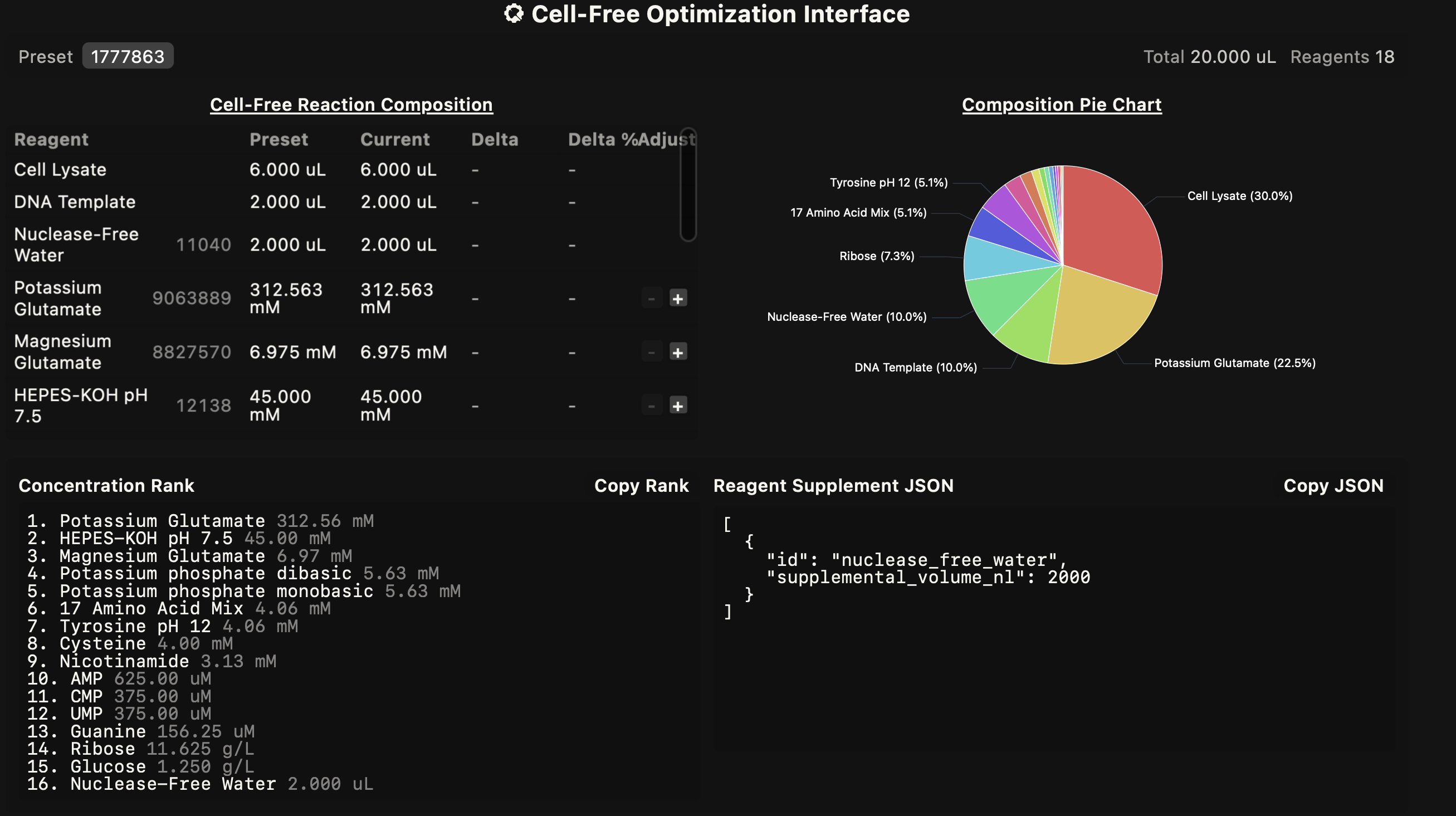
[X] In order to be eligible for this, make sure that your final project slide is in the “2026 Committed Listener ONE FINAL PROJECT IDEA” slide deck. The final phase of this lab will be analyzing the fluorescence data we collect to determine whether we can draw any conclusions about favorable reagent compositions for our fluorescent proteins. This will be due a week after the data is returned (date TBD!). The reaction composition for each well will be as follows: 6 μL of Lysate
10 μL of 2X Optimized Master Mix from above
2 μL of assigned fluorescent protein DNA template
2 μL of your custom reagent supplements
Total: 20 μL reaction
Part D: Build-A-Cloud-Lab | (optional) Bonus Assignment 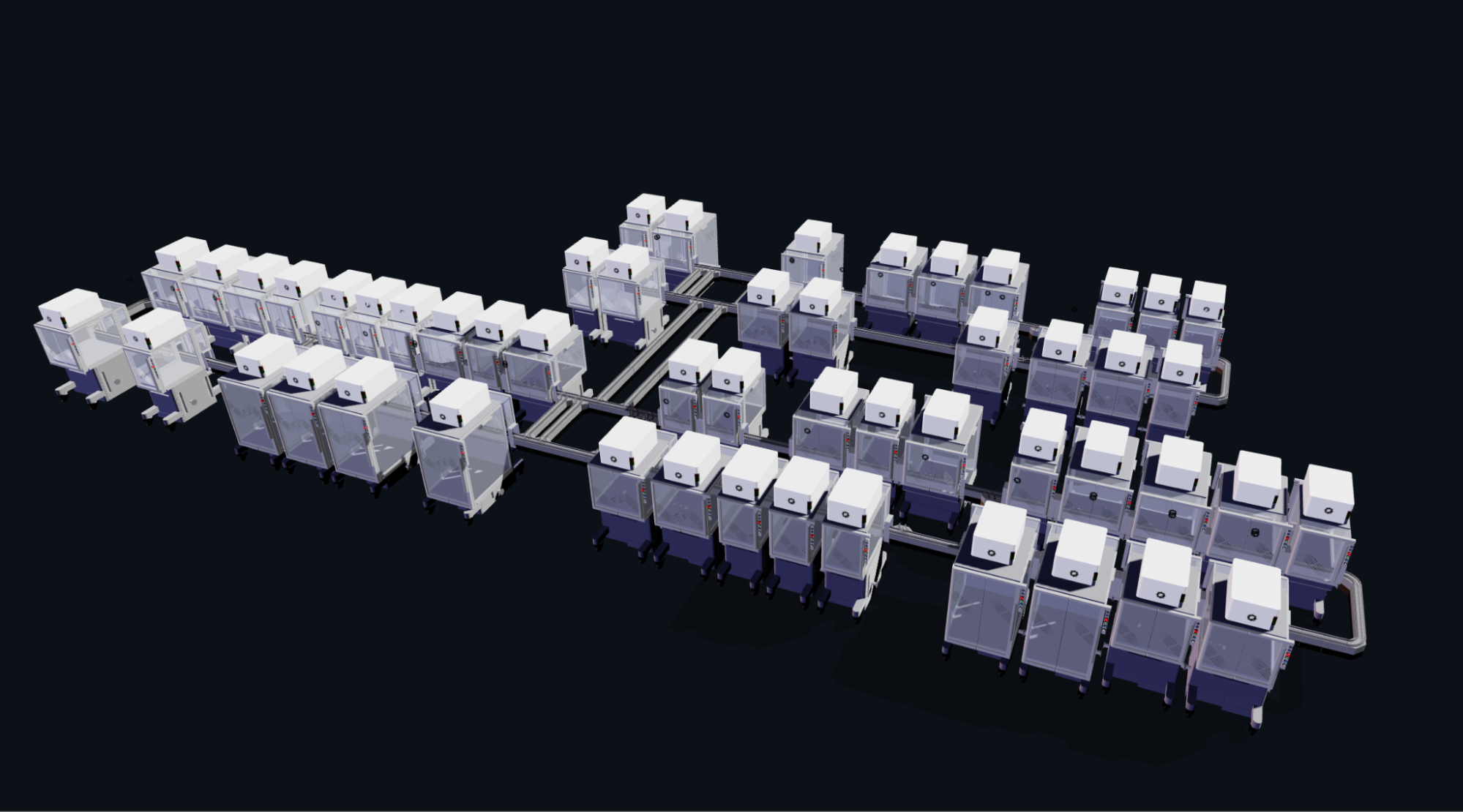
Use this simulation tool to create an interesting looking cloud lab out of the Ginkgo Reconfigurable Automation Carts. This is just a minimal implementation so far, but I would love to see some fun designs!
Tip [x] Note from Ronan: If you are interested in helping me build out future HTGAA cloud lab software, please fill out this form! Reading: Recitation slides from week 3
Nebula RACs TA Onboarding slides from HTGAA Summer Research
Using a GPT-5-driven autonomous lab to optimize the cost and titer of cell-free protein synthesis
Design-driven optimization of low-cost reagent formulations for reproducible and high-yielding cell-free gene expression
Common Nebula protocols & their parameters Reading & Resources
|
