Week 7 HW: Genetic Circuits Part 2
HTGAA Week 7 Genetic circuits part 2
Part 1: Intracellular Artificial Neural Networks
1.What advantages do IANNs have over traditional genetic circuits, whose input/output behaviors are Boolean functions? The advantage of IANNs over Boolean genetic circuits is their analog sensing and nonlinear processing capabilities, while traditional genetic circuits function as an On and Off system the IANNs can work in a continuous way due to its broader and stronger range of nonlinear inputs. Additionally, the IANNs have better pattern recognition and generalization technology, they can detect more complex patterns in data and can organise them better than the Boolean can.The IANNs are also less likely to fail and have a better error tolerance than the Boolean which is very susceptible to fail if there is a single issue with a gate. Moreover, the IANNs have a better scalable capacity due to the protein splicing mechanism allowing to create a multiple input-output circuit. The IANN technology can also better adapt and evolve to its environment compared to the Boolean which has a fixed function in its environment. Finally, IANNs have a strong memory quality that can be passed through to subsequent generations within the cell due stoichiometric cleavage and splicing which is irreversible.
Reference list
Ana Halužan Vasle and Miha Moškon (2024). Synthetic biological neural networks: From current implementations to future perspectives. Biosystems, 237, pp.105164–105164. doi:https://doi.org/10.1016/j.biosystems.2024.105164. Anastassov, S., Filo, M. and Khammash, M. (2024a). Inteins: A Swiss army knife for synthetic biology. Biotechnology Advances, 73, p.108349. doi:https://doi.org/10.1016/j.biotechadv.2024.108349. Anastassov, S., Filo, M. and Khammash, M. (2024b). Inteins: A Swiss army knife for synthetic biology. Biotechnology Advances, 73, p.108349. doi:https://doi.org/10.1016/j.biotechadv.2024.108349. Claus Kadelka, Taras-Michael Butrie, Hilton, E., Kinseth, J. and Haris Serdarevic (2024). A meta-analysis of Boolean network models reveals design principles of gene regulatory networks. Science Advances, 10(2). doi:https://doi.org/10.1126/sciadv.adj0822. Gao, Y., Wang, L. and Wang, B. (2023). Customizing cellular signal processing by synthetic multi-level regulatory circuits. Nature communications, [online] 14(1). doi:https://doi.org/10.1038/s41467-023-44256-1. Ilia, K. and Del Vecchio, D. (2022). Squaring a Circle: To What Extent Are Traditional Circuit Analogies Impeding Synthetic Biology? GEN Biotechnology, 1(2), pp.150–155. doi:https://doi.org/10.1089/genbio.2021.0014. Karkalos, N.E. and Markopoulos, A.P. (2017). Modeling of hard machining. [online] Available at: https://www.sciencedirect.com/topics/mathematics/artificial-neural-network. Wang, H., Wang, L., Zhong, B. and Dai, Z. (2022). Protein Splicing of Inteins: A Powerful Tool in Synthetic Biology. Frontiers in Bioengineering and Biotechnology, 10. doi:https://doi.org/10.3389/fbioe.2022.810180.
2.Describe a useful application for an IANN; include a detailed description of input/output behavior, as well as any limitations an IANN might face to achieve your goal. The IANN genetic circuit can be use in cancer theranostics as they have the ability to process multiple biomarkers simultaneously and within a tumour can clearly identify and distinguish a cancerous cell from a healthy one. Additionally, the IANN is able to recognise the cancer patterns and can trigger the synthesis of an anti-cancer drug.
The IANN circuit used for cancer theranostics requires many inputs in order to increase precision: MicroRNAs which allow to classify cancerous cells TSAs which are Tumor Specific Antigens TAAs which are Tumor Associated Antigens, they work specifically on the cancerous tissue TME which is a Tumor Microenvironment Enzymes NIR which is an external stimuli such as light, magnetic field or ultrasounds which server a switch to trigger the therapy is a specific area of the body The outputs for an IANN circuit used for cancer theranostics presents itself as a localized response: Apoptosis triggering which leads to the programmed cell death induced by the drug delivery Drug delivery of anticancer agents in a controlled and chosen way and area Bioimaging through fluorescence, NIR signals or MRI PTT or PDT heat generated chemical reaction which kills tumor cells Creation of immune stimulatory proteins and antibodies
The IANN faces many limits however in cancer theranostics use, firstly, it is a very costly technology and is difficult to scale as it requires using and reproducing many inorganic nanoparticles in a consistent way. One of the main issues the IANN presents is the biosafety issue as it uses inorganic nanoparticles which lack biodegradability which cause systemic toxicity and long-term retention in the liver, spleen and kidney which can lead to further toxic side effects. Furthermore, because some nanoparticles do not degrade it can cause premature drug release or loss of diagnostic functionality. The IANN also does not provide very clear imagery. Moreover, the IANN faces difficulties penetrating deep cancerous tissue, this physiological barrier issue is made worse by the binding of nanoparticles to the cancerous cells on the outer edge of a tumour which restrict even more the penetration into inner areas of the tumor tissue. Lastly, IANN can lead to skin discoloration because of its high concentration of metallic nanoparticles.
Reference List Aminolroayaei, F., Shahbazi‐Gahrouei, D., Shahbazi‐Gahrouei, S. and Rasouli, N. (2021). Recent nanotheranostics applications for cancer therapy and diagnosis: A review. IET Nanobiotechnology, 15(3), pp.247–256. doi:https://doi.org/10.1049/nbt2.12021. Ausländer, S. and Fussenegger, M. (2016). Engineering Gene Circuits for Mammalian Cell–Based Applications. Cold Spring Harbor Perspectives in Biology, 8(7), p.a023895. doi:https://doi.org/10.1101/cshperspect.a023895. Brijendra Kumar Kashyap, Singh, V., Manoj Kumar Solanki, Kumar, A., Janne Ruokolainen and Kavindra Kumar Kesari (2023). Smart Nanomaterials in Cancer Theranostics: Challenges and Opportunities. ACS omega, 8(16), pp.14290–14320. doi:https://doi.org/10.1021/acsomega.2c07840. Chen, H. and Zhao, Y. (2018). Applications of Light-Responsive Systems for Cancer Theranostics. ACS Applied Materials & Interfaces, 10(25), pp.21021–21034. doi:https://doi.org/10.1021/acsami.8b01114. Chen, J., Fu, S., Zhang, C., Liu, H. and Su, X. (2022). DNA Logic Circuits for Cancer Theranostics. Small, 18(20). doi:https://doi.org/10.1002/smll.202108008. Jiang, L., Fu, Z., Ye, B., Feng, X., Chen, Z., Chen, Q., Long, Y., Wang, S. and Deng, G. (2025). Metal nanoparticles in cancer theranostics: from synthesis to tumor microenvironment-responsive applications. Drug Delivery, 32(1). doi:https://doi.org/10.1080/10717544.2025.2565480. Kang, S., Gil, Y.-G., Min, D.-H. and Jang, H. (2020). Nonrecurring Circuit Nanozymatic Enhancement of Hypoxic Pancreatic Cancer Phototherapy Using Speckled Ru–Te Hollow Nanorods. ACS Nano, 14(4), pp.4383–4394. doi:https://doi.org/10.1021/acsnano.9b09974. Li, Y., Zhang, X., Wang, J., Wang, K., Li, B., Qiao, X., He, W., Cai, J., Liu, D. and Yang, L.-L. (2025). Leveraging adenosine triphosphate for cancer theranostics. Theranostics, [online] 15(10), pp.4708–4733. doi:https://doi.org/10.7150/thno.106291. Moon Sung Kang, Kwon, M., Jang, H.-S., Jeong, S., Han, D.-W. and Ki Su Kim (2022). Biosafety of inorganic nanomaterials for theranostic applications. Emergent materials, 5(6), pp.1995–2029. doi:https://doi.org/10.1007/s42247-022-00426-3. Sergeeva, O.V., Luo, L. and Guiseppi-Elie, A. (2025). Cancer theragnostics: closing the loop for advanced personalized cancer treatment through the platform integration of therapeutics and diagnostics. Frontiers in Bioengineering and Biotechnology, 12. doi:https://doi.org/10.3389/fbioe.2024.1499474. Tânia F.G.G. Cova, Freitas, D. and Odebrecht, S. (2019). Computational Approaches in Theranostics: Mining and Predicting Cancer Data. 11(3), pp.119–119. doi:https://doi.org/10.3390/pharmaceutics11030119. Weranga Rajapaksha, Riya Khetan, Ian, Blencowe, A., Garg, S., Albrecht, H. and Gillam, T.A. (2024). Future theranostic strategies: emerging ovarian cancer biomarkers to bridge the gap between diagnosis and treatment. Frontiers in Drug Delivery, 4. doi:https://doi.org/10.3389/fddev.2024.1339936. Xie, Z., Wroblewska, L., Prochazka, L., Weiss, R. and Benenson, Y. (2011). Multi-input RNAi-based logic circuit for identification of specific cancer cells. Science (New York, N.Y.), [online] 333(6047), pp.1307–11. doi:https://doi.org/10.1126/science.1205527. Zuo, Y., Li, P., Wang, W., Xu, C., Xu, S., Herman, Sun, J., Jin, G., Wang, W., Ryan, Jacky and Tang, B.Z. (2024). Tumor Site‐Specific In Vivo Theranostics Enabled by Microenvironment‐Dependent Chemical Transformation and Self‐Amplifying Effect. Advanced Science, 12(4), pp.e2409506–e2409506. doi:https://doi.org/10.1002/advs.202409506.
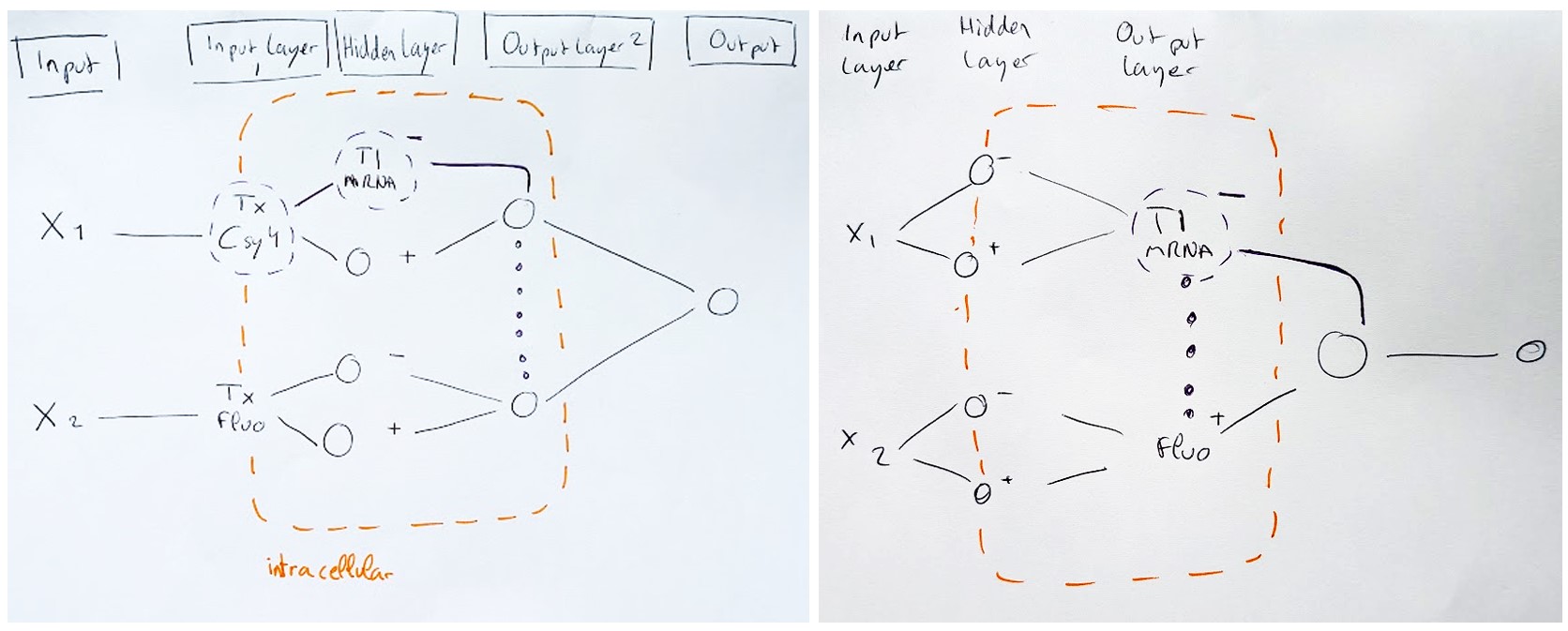
3.Draw a diagram for an intercellular multilayer perceptron where layer 1 outputs an endoribonuclease that regulates a fluorescent protein output in layer 2.
Part 2 Fungal Materials
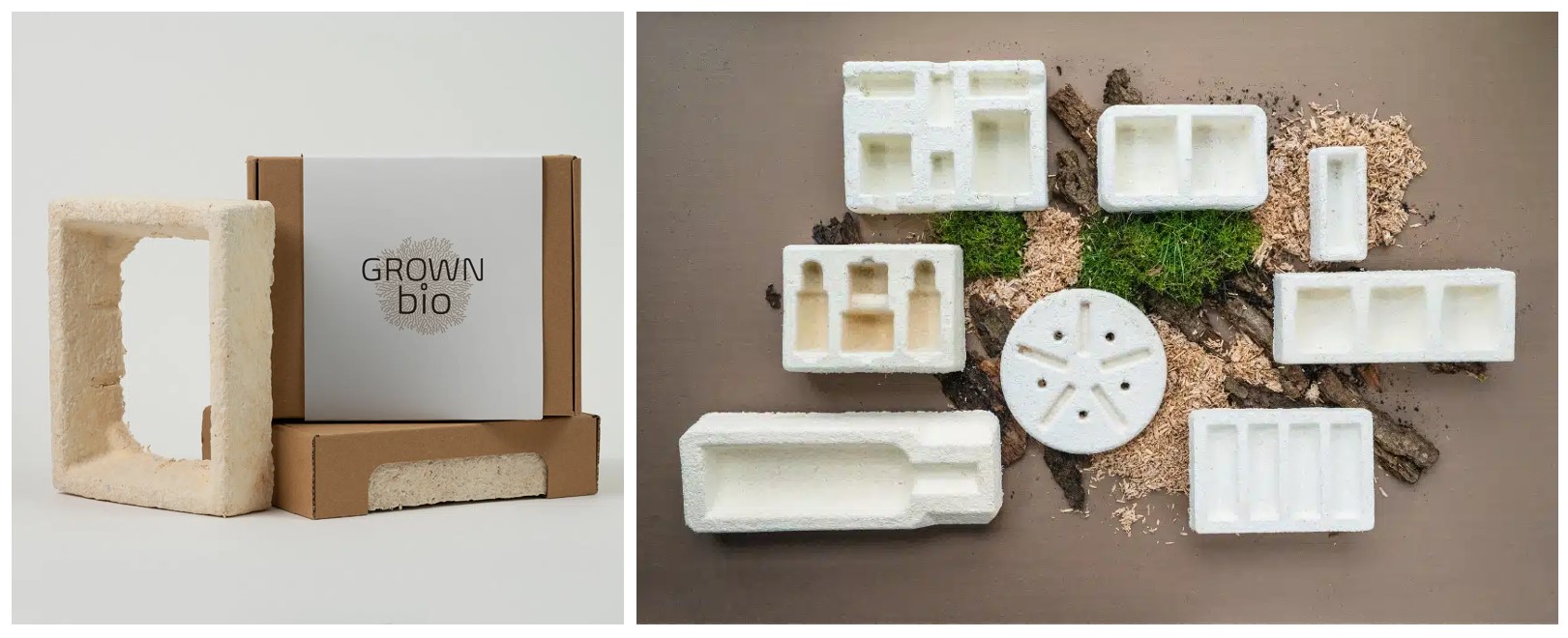
1.What are some examples of existing fungal materials and what are they used for? What are their advantages and disadvantages over traditional counterparts? One of the most common examples of fungal materials today is mycelium packaging, mycelium is the main fungal strand used in biodesign. It is able to grow within a mold and once cooked it dies but the shape given is preserved. Mycelium is non harmful to the environment and biodegradable which has inspired many companies to launch mycelium packaging with the aim to replace and reduce plastic use in packaging. Mycelium grows rapidly but still requires the time to grow compared to plastic packaging which can be produced instantly. Mycelium is a living organism and holds a higher risk in production. Mycelium materials however require no chemical input which is better for the environment, the producer and the consumer, eliminating the risk of chemicals and microplastics. Furthermore, mycelium material packaging is currently more costly than producing plastic but the cost gap is reducing as mycelium materials are being scaled up according to a mycelium packaging market report of 2025. Companies such as Grown Bio already offer viable alternatives to packaging of all sorts. They offer a range of packaging of all shapes and qualities (some with reinforced protective design) which one could buy directly or they offer the possibility to grow one’s own packaging.
Reference list hugohek (2022). Grown-design | Beautiful products with fungus and biomass. [online] Grown.bio. Available at: https://www.grown.bio/. Market Intelo (2025). Market Intelo. [online] Marketintelo.com. Available at: https://marketintelo.com/report/mycelium-packaging-market [Accessed 25 Mar. 2026].
2.What might you want to genetically engineer fungi to do and why? What are the advantages of doing synthetic biology in fungi as opposed to bacteria? In the continuation of mycelium packaging I would love to explore whether one could genetically modify the mycelium to have active properties as well. Maybe mycelium packaging could also have cold properties allowing to store products which require to be kept in the cold. Many mycelium species, such as the most commonly used oyster mushroom (Pleurotus ostreatus), can withstand freezing temperatures and simply go into a dormant state. Typically in packaging mycelium would be killed with heat to stop its growth and preserve its shape, however, could the mycelium be kept alive, genetically modified with ice nucleation proteins, put in a dormant state because of the freezing temperature which would still stun its growth and therefore preserve its shape and then be used a cold packaging system, which in its end of life could still be biodegradable or contribute actively to nature. It appears there would be two ways to genetically modify mycelium to produce cold. Mycelium is already used successfully as a host in synthetic biology. Additionally, it seems that one could introduce ice nucleotides to the genetic code of mycelium DNA and the mycelium would accept it. An experiment of adding ice nucleotide proteins to water which was then fed to mycelium has already been done, with the aim to study freezing in mycelium (Schwidetzky et al., 2023). Secondly, certain mycelium strands (including the commonly used oyster mushroom) already appear to contain ice nucleotide allowing them to resist freezing temperatures, one could explore genetically modifying the mycelium to express this protein in a more active way allowing it to produce a freezing quality.
Fungi can produce complex molecules and proteins better than bacteria, they are also able to produce much more enzymes than bacteria making purification processes easier. Fungi are also eukaryotic organisms which allows them to perform complex post-translational modifications like protein folding offer a bigger potential for synthetic biology. Additionally, fungi naturally produce more secondary metabolites than bacteria such as terpenoids, polyketides and alkaloids which are commonly used in pharmaceutical research and development. Moreover, fungi genomes naturally contain biosynthetic gene clusters (BGCs) which are used in synthetic biology to engineer new-to-nature chemicals. Fungi can be easier to work with as they are able to live off a wider range of feedstock and grow rapidly as well as being robust cultures able to adapt to harsh environments and withstand a range of PH levels or a range of temperatures.
Reference list Awasthi, S., Alam, M.I. and Pal, D.B. (2025). Importance of Utilizing Fungus Rather Than Bacteria for Biomass Valorization. Fungal Biology, pp.107–140. doi:https://doi.org/10.1007/978-3-031-82599-6_5. CATALEX BIO. (2025). Fungal vs Bacterial Enzymes: Industrial Applications & Selection Guide | Catalex Bio Enzyme Manufacturer & Supplier. [online] Available at: https://catalexbio.com/fungal-vs-bacterial-enzymes-comparison-guide/. Cordero, B., Ellie Rose Mattoon, Ramos, Z. and Casadevall, A. (2023). The hypothermic nature of fungi. PNAS, 120(19). doi:https://doi.org/10.1073/pnas.2221996120. Eufemio, R.J., Rojas, M., Shaw, K., de Almeida Ribeiro, I., Guo, H.-B., Renzer, G., Belay, K., Liu, H., Suseendran, P., Wang, X., Fröhlich-Nowoisky, J., Pöschl, U., Bonn, M., Berry, R.J., Molinero, V., Vinatzer, B.A. and Meister, K. (2026). A previously unrecognized class of fungal ice-nucleating proteins with bacterial ancestry. Science Advances, 12(11). doi:https://doi.org/10.1126/sciadv.aed9652. Garg, S. (2025a). The importance of fungal biotechnology for sustainable applications. Trends in Biotechnology, [online] 0(0). doi:https://doi.org/10.1016/j.tibtech.2025.06.010. Garg, S. (2025b). The importance of fungal biotechnology for sustainable applications. Trends in Biotechnology, [online] 0(0). doi:https://doi.org/10.1016/j.tibtech.2025.06.010. Hinneburg, H., Gu, S. and Naseri, G. (2025). Fungal Innovations—Advancing Sustainable Materials, Genetics, and Applications for Industry. Journal of Fungi, 11(10), p.721. doi:https://doi.org/10.3390/jof11100721. Jo, C., Zhang, J., Tam, J.M., Church, G.M., Khalil, A.S., Segrè, D. and Tang, T.-C. (2023a). Unlocking the magic in mycelium: Using synthetic biology to optimize filamentous fungi for biomanufacturing and sustainability. Materials Today Bio, 19, p.100560. doi:https://doi.org/10.1016/j.mtbio.2023.100560. Jo, C., Zhang, J., Tam, J.M., Church, G.M., Khalil, A.S., Segrè, D. and Tang, T.-C. (2023b). Unlocking the magic in mycelium: Using synthetic biology to optimize filamentous fungi for biomanufacturing and sustainability. Materials Today Bio, 19, p.100560. doi:https://doi.org/10.1016/j.mtbio.2023.100560. Ma, D., Yang, G., Mu, L. and Li, C. (2011). Tolerance of ectomycorrhizal fungus mycelium to low temperature and freezing–thawing. Canadian Journal of Microbiology, 57(4), pp.328–332. doi:https://doi.org/10.1139/w11-001. Moreno-Giménez, E., Mónica Gandía, Zara Sáez, Manzanares, P., Yenush, L., Orzáez, D., Marcos, J.F. and Garrigues, S. (2023). FungalBraid 2.0: expanding the synthetic biology toolbox for the biotechnological exploitation of filamentous fungi. Frontiers in Bioengineering and Biotechnology, 11. doi:https://doi.org/10.3389/fbioe.2023.1222812. Nielsen, J. (2013). Production of biopharmaceutical proteins by yeast. Bioengineered, 4(4), pp.207–211. doi:https://doi.org/10.4161/bioe.22856. Raymond, J.A. and Janech, M.G. (2009). Ice-binding proteins from enoki and shiitake mushrooms. Cryobiology, 58(2), pp.151–156. doi:https://doi.org/10.1016/j.cryobiol.2008.11.009. Sanitá Lima, M. and Coutinho de Lucas, R. (2022). Co-cultivation, Co-culture, Mixed Culture, and Microbial Consortium of Fungi: An Understudied Strategy for Biomass Conversion. Frontiers in Microbiology, 12. doi:https://doi.org/10.3389/fmicb.2021.837685. Schwidetzky, R., Ingrid, Bothen, N., Backes, A.T., DeVries, A.L., Bonn, M., Fröhlich-Nowoisky, J., Molinero, V. and Meister, K. (2023a). Functional aggregation of cell-free proteins enables fungal ice nucleation. Proceedings of the National Academy of Sciences of the United States of America, 120(46). doi:https://doi.org/10.1073/pnas.2303243120. Schwidetzky, R., Ingrid, Bothen, N., Backes, A.T., DeVries, A.L., Bonn, M., Fröhlich-Nowoisky, J., Molinero, V. and Meister, K. (2023b). Functional aggregation of cell-free proteins enables fungal ice nucleation. Proceedings of the National Academy of Sciences of the United States of America, 120(46). doi:https://doi.org/10.1073/pnas.2303243120. Shankar, M.P., Hamza, A., Khalad, A., Shanthi, G., Kuppireddy, S. and Kumar, D.S. (2024). Engineering mushroom mycelium for a greener built environment: Advancements in mycelium-based biocomposites and bioleather. Food Bioscience, [online] 62, p.105577. doi:https://doi.org/10.1016/j.fbio.2024.105577.