Week 11 HW: Building genomes
Week 11 Bioproduction & Cloud Lab
Part A - The 1.536 pixel art work canvas, collective artwork
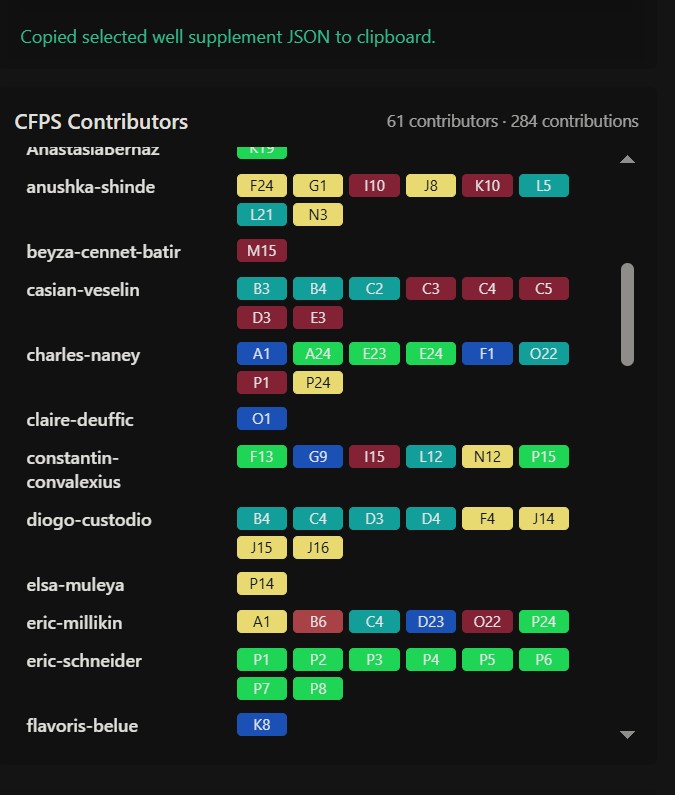
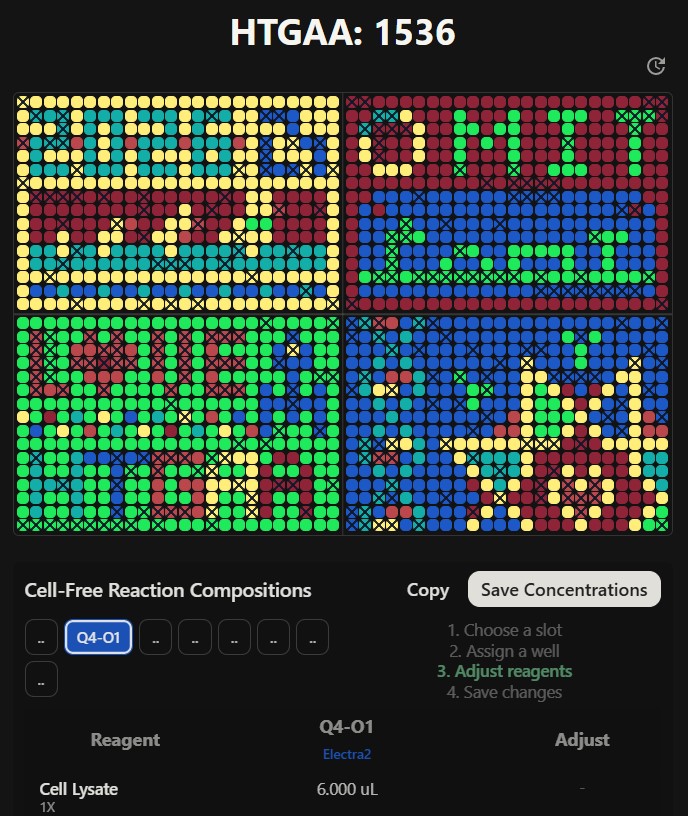
1.Contribute at least one pixel to the global artwork
I added early on a pixel towards the top left corner. I do not have much to say about this section of the work except maybe understanding the full purpose of this exercise.
Part B - Cell Free protein synthesis, cell free reagents
- Referencing the cell-free protein synthesis reaction composition (the middle box outlined in yellow on the image above, also listed below), provide a 1-2 sentence description of what each component’s role is in the cell-free reaction.
E. coli Lysate
- BL21 (DE3) Star Lysate (includes T7 RNA Polymerase) : offers the base molecular machinery such as ribosomes, tRNAs and enzymes for translation, the Star Lysate strain reduces mRNA degradation, and, the T7 Polymerase drives high level transcription from T7 promoters
Salts / Buffer
- Potassium Glutamate : primary salt that maintains ionic strength and provides potassium ions essential to ribosomal function and protein to nucleic acid exchange
- HEPES-KOH pH 7.5 : chemical buffer which helps maintain a stable physiological pH which affects enzymatic function of the transcription and translation machinery
- Magnesium Glutamate : magnesium ions are vital contributors to stabilizing the ribosome structure and enabling catalytic activity of the polymerases kinases
- Potassium phosphate, monobasic and dibasic : functions as a secondary pH buffer and a source of inorganic phosphate essential for the regeneration of high energy molecules such as ATP
Energy / Nucleotide system
- Ribose : serve as a carbon backbone precursor for the synthesis of nucleotides, allowing for regeneration of NTPs essential for transcription and energy transfer
- Glucose : primary metabolic energy source fueled through glycolysis allowing to regenerate the ATP and GTP essential to the good functioning of protein synthesis
- AMP / CMP / UMP : offers nucleotide building blocks for RNA synthesis and can be converted into triphosphate such as ATP, CTP, UTP needed in transcription
- GMP : from the lack of GMP might demonstrate a dependency on salvage pathways to generate GTP essential to translation
- Guanine : precursor for GMP/GTP synthesis through salvage pathways helpful to RNA synthesis and ribosomal function Translation Mix (Amino acids)
- 17 Amino Acid Mix : provide the base building blocks to synthesize the polypeptide chain
- Tyrosine : supplied separately because of its solubility limitations, becomes an essential building block for protein synthesis once it is adapted into a usable form
- Cysteine : added separately due to its oxidation limitations, it is an essential compound in forming disulfide bonds in proteins Additives
- Nicotinamide : serves as a precursor for NAD+ / NADH synthesis reinforcing redox balance and metabolic reactions occurring in energy regeneration Backfill
- Nuclease Free Water : is used to adjust all the components to the desired the final reaction volume while it avoids degradation of DNA / RNA by nuclease and ensures stable transcription and translation processes
- Describe the main differences between the 1-hour optimized PEP-NTP master mix and the 20-hour NMP-Ribose-Glucose master mix shown in the slide.
The main difference between the two master mix results in found in the energy and nucleotide sourcing a the 1-hour mix makes use of the PEP and pre-synthesized NTPs for instant and high burst protein synthesis compared to the 20-hour mix uses the ribose, glucose and NMPs as precursors to regenerate energy and nucleotides throughout time. Therefore, the 1-hour mix is designed for speed and rapid prototyping in contrast to the 20-hour mix allows to better optimize the cost for effectiveness by using the Lysate’s metabolic pathway to support the reaction for an extended period of time.
Part C - Planning the global experiment, cell-free master mix design
1.Given the 6 fluorescent proteins we used for our collaborative painting, identify and explain at least one biophysical or functional property of each protein that affects expression or readout in cell-free systems. (Hint: options include maturation time, acid sensitivity, folding, oxygen dependence, etc) (1-2 sentences each)
- sfGFP : provides robust and rapid protein folding therefore the protein is less likely to aggregate enabling it to offer a strong fluorescent readout even if fused to complex proteins
- mRFP1 : is a protein with a longer maturation time signifying the fluorescence develops slower after translation and might have a delayed signaling time in shorter experiments, it has a low acidity tolerance
- mKO2 : is fast maturing and has a relative acidity tolerance, meaning the fluorescence will be less visible in a lower pH context but the fluorescence could increase in longer cell free reactions
- mTurqoise2 : is a cyan protein with for a high quantum yield and high photostability making the fluorescence outread a great signal no matter the length of the reaction, it is very sensitive to pH
- mScarlet_I : engineered for fast maturing and high brightness allowing for stronger fluorescence signals compared to older red proteins
- Electra2 : protein engineered for very fast maturation making it very useful for fast consuming energy systems in an experiment where a rapid output is needed before the mix’s energy is used up
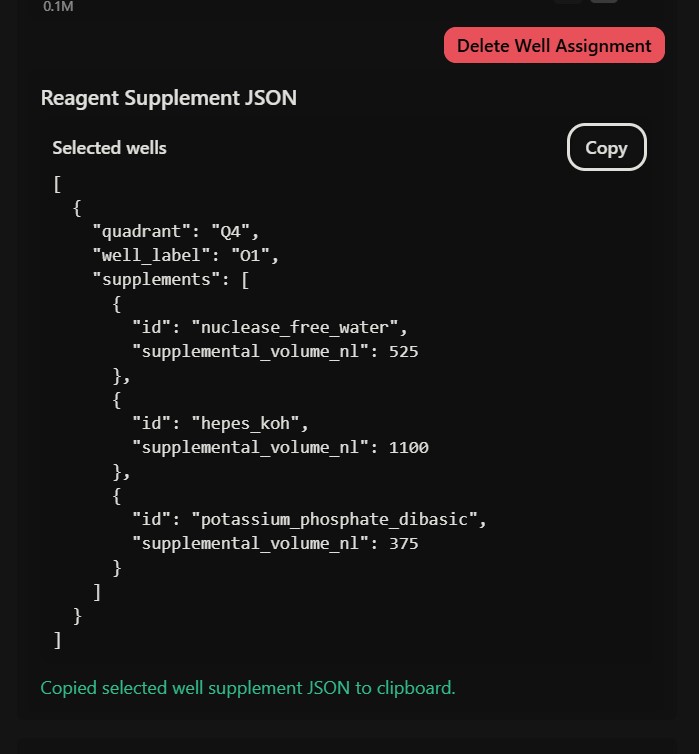
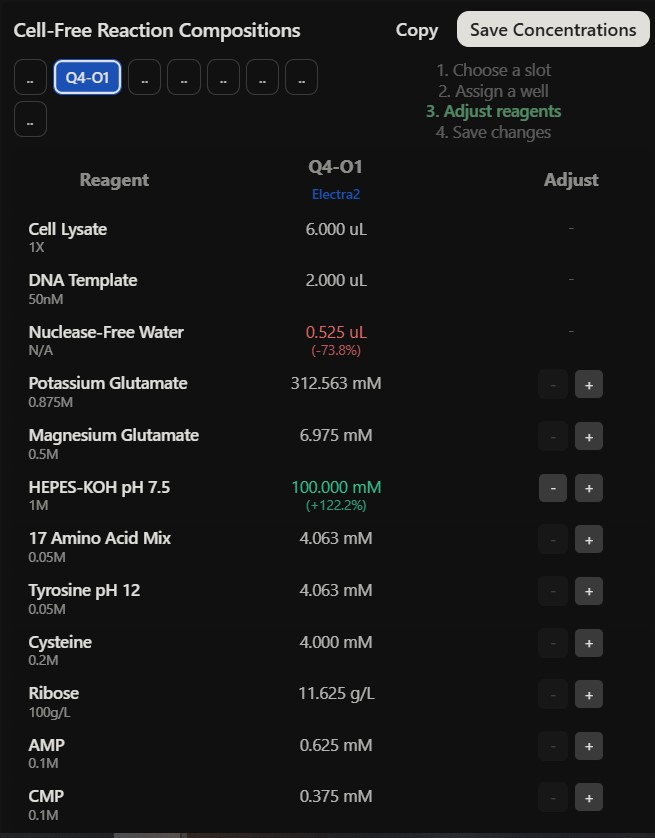
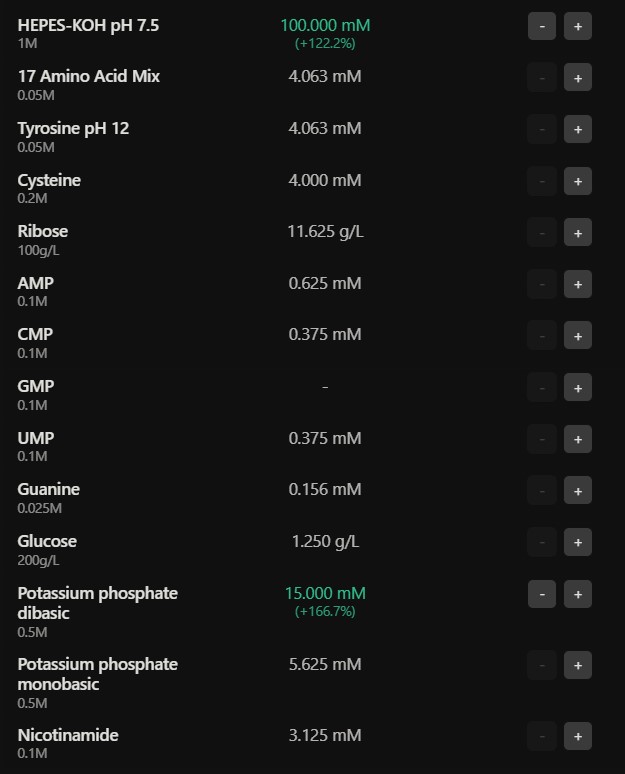
2.Create a hypothesis for how adjusting one or more reagents in the cell-free mastermix could improve a specific biophysical or functional property you identified above, in order to maximize fluorescence over a 36-hour incubation. Clearly state the protein, the reagent(s), and the expected effect. Could the mTurquoise2 yield be increased or accelerated through pH stabilisation. The reagents HEPES-KOH would be increased to 100mM and Potassium Phosphate would be increased to 15mM. This adjustment should increase the capacity of the buffer within the mater mix and should neutralize organic acid by products such as lactate and acetate generated during the 36-hour metabolism of glucose and ribosome. Because mTurquoise2 is very reactive to pH, preserving the pH environment at 7.5 would prevent the typically occurring rapid cooling of the cyan signal which usually occurs as the mix acidifies over time. Therefore, the high quantum of yield of mTurquoise2 is complete and optimized leading to a bright and stable cyan readout which won’t dim as the energy levels decrease.
3.The second phase of this lab will be to define the precise reagent concentrations for your cell-free experiment. You will be assigned artwork wells with specific fluorescent proteins and receive an email with instructions this week (by April 24). You can begin composing master mix compositions here.
 )
)
 )
)
 )
)
 )
)
 )
)
Copy of reagent doses
Reagent Preset:
Variant 1 Variant 2 (O1) Variant 3 Variant 4 Variant 5 Variant 6 Variant 7 Variant 8 Cell Lysate 6.000 uL 6.000 uL (-) 6.000 uL (-) 6.000 uL (-) 6.000 uL (-) 6.000 uL (-) 6.000 uL (-) 6.000 uL (-) 6.000 uL (-) DNA Template 0.000 mM 2.000 uL (-) 2.000 uL (-) 2.000 uL (-) 2.000 uL (-) 2.000 uL (-) 2.000 uL (-) 2.000 uL (-) 2.000 uL (-) Nuclease-Free Water 2.000 uL 2.000 uL (-) 0.525 uL (-73.8%) 2.000 uL (-) 2.000 uL (-) 2.000 uL (-) 2.000 uL (-) 2.000 uL (-) 2.000 uL (-) Potassium Glutamate 312.563 mM 312.563 mM (-) 312.563 mM (-) 312.563 mM (-) 312.563 mM (-) 312.563 mM (-) 312.563 mM (-) 312.563 mM (-) 312.563 mM (-) Magnesium Glutamate 6.975 mM 6.975 mM (-) 6.975 mM (-) 6.975 mM (-) 6.975 mM (-) 6.975 mM (-) 6.975 mM (-) 6.975 mM (-) 6.975 mM (-) HEPES-KOH pH 7.5 45.000 mM 45.000 mM (-) 100.000 mM (+122.2%) 45.000 mM (-) 45.000 mM (-) 45.000 mM (-) 45.000 mM (-) 45.000 mM (-) 45.000 mM (-) 17 Amino Acid Mix 4.063 mM 4.063 mM (-) 4.063 mM (-) 4.063 mM (-) 4.063 mM (-) 4.063 mM (-) 4.063 mM (-) 4.063 mM (-) 4.063 mM (-) Tyrosine pH 12 4.063 mM 4.063 mM (-) 4.063 mM (-) 4.063 mM (-) 4.063 mM (-) 4.063 mM (-) 4.063 mM (-) 4.063 mM (-) 4.063 mM (-) Cysteine 4.000 mM 4.000 mM (-) 4.000 mM (-) 4.000 mM (-) 4.000 mM (-) 4.000 mM (-) 4.000 mM (-) 4.000 mM (-) 4.000 mM (-) Ribose 11.625 g/L 11.625 g/L (-) 11.625 g/L (-) 11.625 g/L (-) 11.625 g/L (-) 11.625 g/L (-) 11.625 g/L (-) 11.625 g/L (-) 11.625 g/L (-) AMP 0.625 mM 0.625 mM (-) 0.625 mM (-) 0.625 mM (-) 0.625 mM (-) 0.625 mM (-) 0.625 mM (-) 0.625 mM (-) 0.625 mM (-) CMP 0.375 mM 0.375 mM (-) 0.375 mM (-) 0.375 mM (-) 0.375 mM (-) 0.375 mM (-) 0.375 mM (-) 0.375 mM (-) 0.375 mM (-) GMP - - (-) - (-) - (-) - (-) - (-) - (-) - (-) - (-) UMP 0.375 mM 0.375 mM (-) 0.375 mM (-) 0.375 mM (-) 0.375 mM (-) 0.375 mM (-) 0.375 mM (-) 0.375 mM (-) 0.375 mM (-) Guanine 0.156 mM 0.156 mM (-) 0.156 mM (-) 0.156 mM (-) 0.156 mM (-) 0.156 mM (-) 0.156 mM (-) 0.156 mM (-) 0.156 mM (-) Glucose 1.250 g/L 1.250 g/L (-) 1.250 g/L (-) 1.250 g/L (-) 1.250 g/L (-) 1.250 g/L (-) 1.250 g/L (-) 1.250 g/L (-) 1.250 g/L (-) Potassium phosphate dibasic 5.625 mM 5.625 mM (-) 15.000 mM (+166.7%) 5.625 mM (-) 5.625 mM (-) 5.625 mM (-) 5.625 mM (-) 5.625 mM (-) 5.625 mM (-) Potassium phosphate monobasic 5.625 mM 5.625 mM (-) 5.625 mM (-) 5.625 mM (-) 5.625 mM (-) 5.625 mM (-) 5.625 mM (-) 5.625 mM (-) 5.625 mM (-) Nicotinamide 3.125 mM 3.125 mM (-) 3.125 mM (-) 3.125 mM (-) 3.125 mM (-) 3.125 mM (-) 3.125 mM (-) 3.125 mM (-) 3.125 mM (-)
- The final phase of this lab will be analyzing the fluorescence data we collect to determine whether we can draw any conclusions about favorable reagent compositions for our fluorescent proteins. This will be due a week after the data is returned (date TBD!). The reaction composition for each well will be as follows:
- 6 μL of Lysate
- 10 μL of 2X Optimized Master Mix from above
- 2 μL of assigned fluorescent protein DNA template
- 2 μL of your custom reagent supplements Total : 20 μL reaction
N/A as we were not given the data.