Designing a Conceptual Ambulatory Biosensor to Detect A118G in OPRM1 for Personalized Addiction Risk
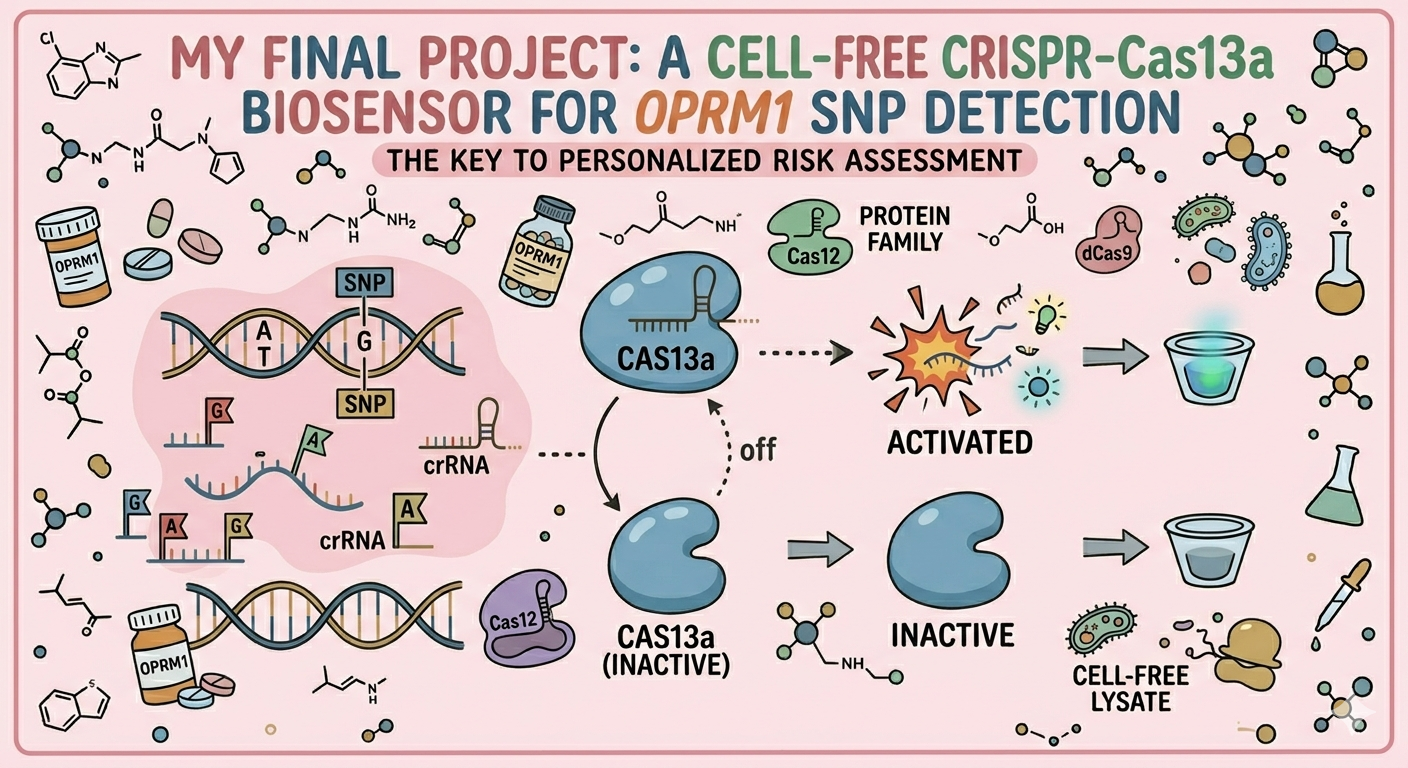
This project proposes a proof-of-concept design of a biosensor to detect the A118G mutation in the OPRM1 gene. This gene encodes the mu-opioid receptor (OPRM1) to which opioids bind and exert their therapeutic effect. Studies have shown that single nucleotide polymorphism (SNP) in the OPRM1 gene is associated with dependence related behavioral changes. The specific mutation (OPRM1 A118G or rs1799971), alters receptor binding affinity towards opioid ligands and consequently generates elevated positive reinforcement that may contribute to the susceptibility for developing opioid dependence. Furthermore, the area of this mutation is fundamental for the success of maintenance pharmacotherapies such as; methadone, naltrexone, buprenorphine and buprenorphine-naloxone.
There are several reasons why addictions are an important concern at this time:
- Addictions are multifactorial issues
- The recent opioids crisis in the United States
- Once exposed to opioids, approximately 23% of individuals may go on to develop opioid addiction
- This polymorphism plays an important role in the outcomes of use of this type of medication in some patients.
- Addictions have a great cost, in terms of money and family
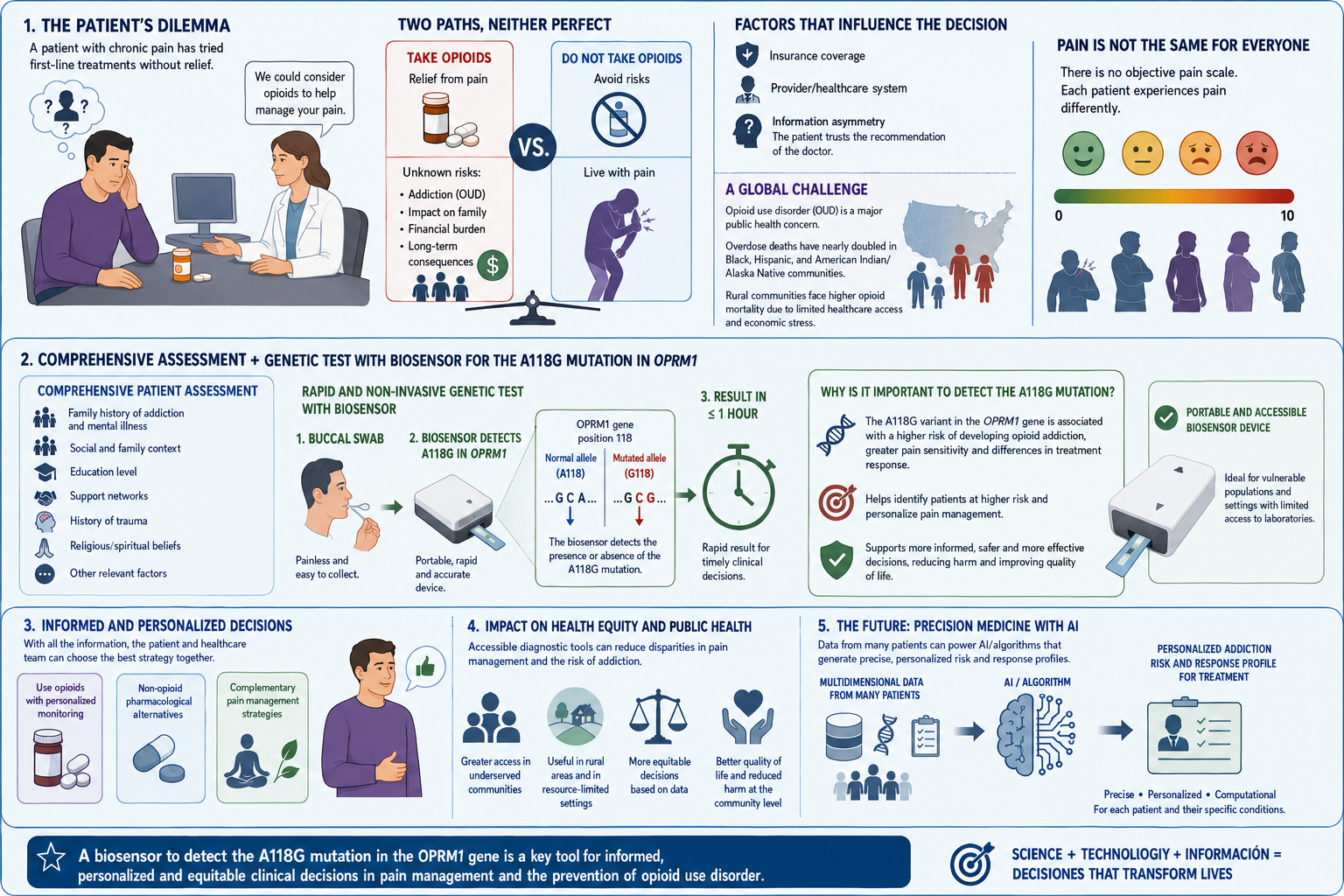
Consequently it is important to develop new methods to reach personalized medicine, especially using this high risk medications. This biosensor addresses this issue by using the sample of a patient who is candidate for use opioids as option to manage chronic pain, according to medical opinion based on paraclinical examinations, additional to other evidence, and evaluate if the patient has or not the mutation (OPRM1 A118G or rs1799971), and provide genetic information for a personalized profile of risk of addictions, that includes family history of addictions, social, and individual factors contributing to risk for substance use. By using this profile doctors, patients and families might make informed decisions, taking a more realistic approach about the risk of addictions instead of only deciding to use the medication and trust that the patient will not develop any addiction.
Objective: The overall objective of this project is to develop a proof of concept biosensor using CRISPR-Cas13 to detect the A118G mutation in the OPRM1 gene, and translate that detection into a fluorescent signal using a Broccoli RNA aptamer as a reporter.
Hypothesis: I hypothesize that if the A118G mutation in OPRM1 is present, the Cas13-based system will be activated and lead to a fluorescent signal through the Broccoli RNA aptamer, while no signal will be produced if the mutation is not present.
Aim 1: Experimental Aim
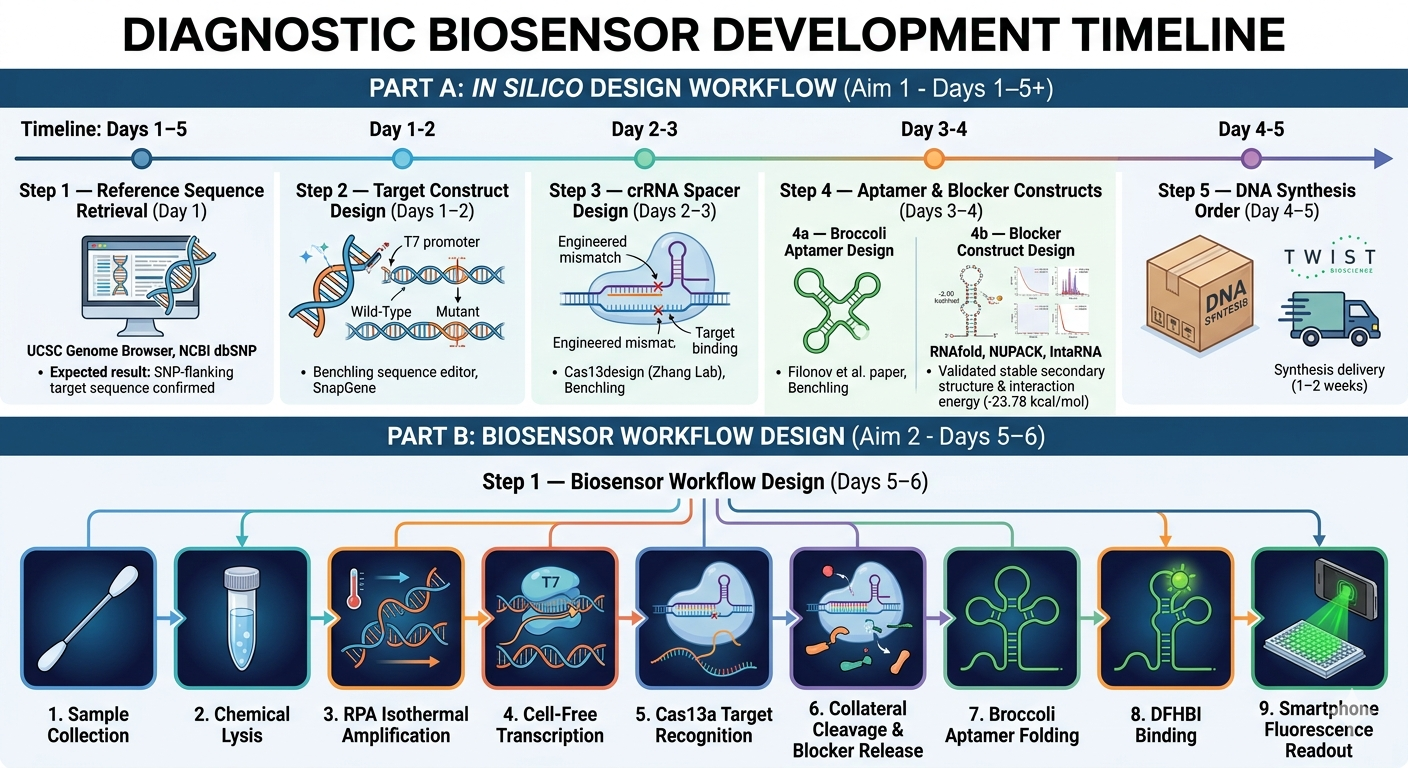
The first aim of this project is to design conceptual DNA constructs that serve as the basis of a biosensor for detecting the A118G mutation in the OPRM1 gene using a CRISPR-Cas13 system. This will be done using DNA design tools such as Benchling and publicly available sequence resources. This aim involves designing five main components of the system: a wild-type target sequence, a mutant target sequence (A118G), a Cas13 guide RNA (crRNA), a Broccoli RNA aptamer reporter, and an aptamer blocker sequence. These constructs will be evaluated in silico using tools such as NUPACK, RNAfold, IntaRNA, and VectorBuilder to ensure structural feasibility and interaction compatibility.
Aim 2: Development Aim
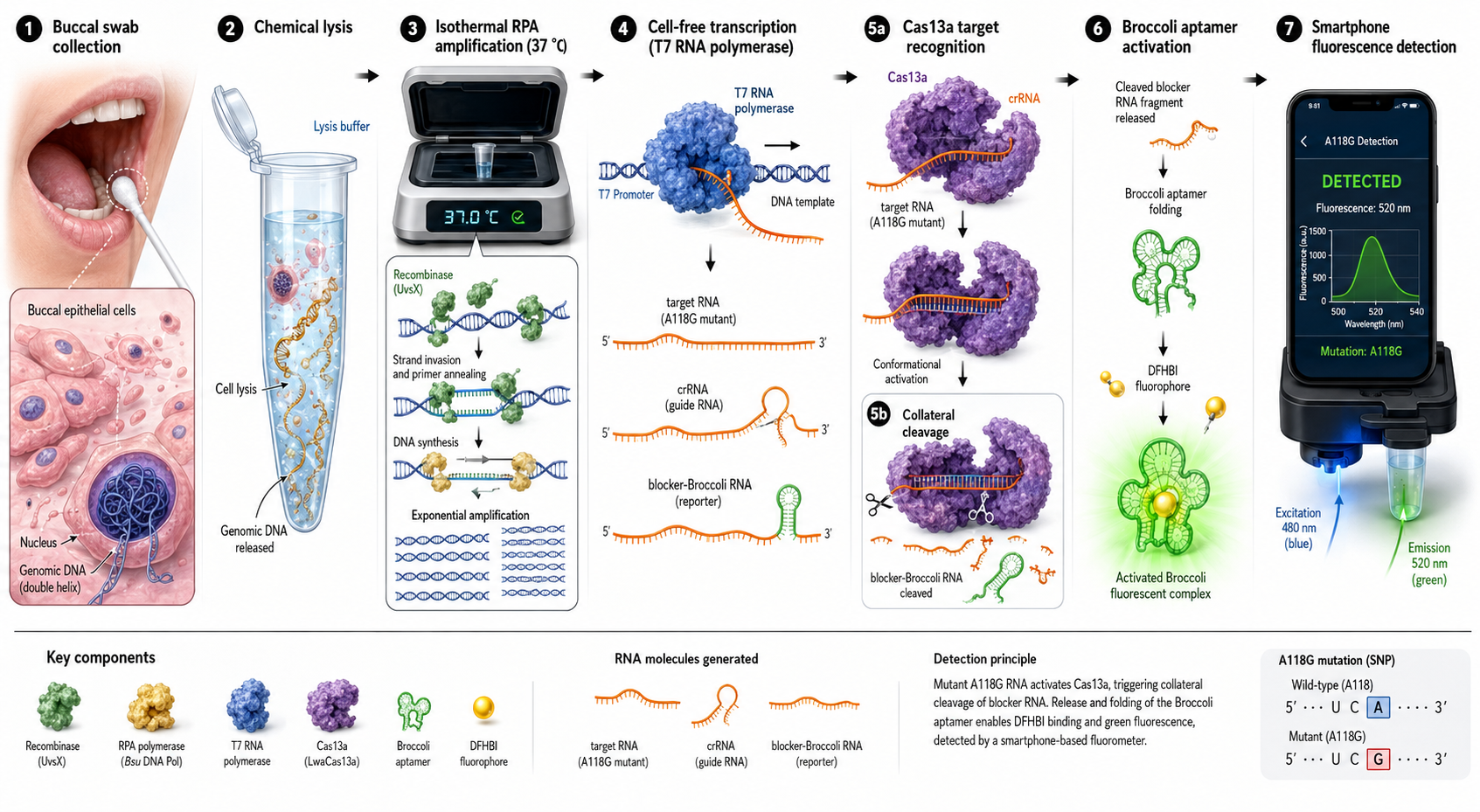
The second aim of this project is to define the functional workflow of the biosensor by mapping its input, detection, and output stages in a cell-free CRISPR-Cas13 system. This aim focuses on describing the operational logic of the system, from target RNA recognition to signal generation using the Broccoli RNA aptamer, in order to establish a clear framework for its functional performance in a real-world setting.
Aim 3: Visionary Aim
The long-term vision of this project is to develop a functional ambulatory biosensor capable of detecting the A118G variant in the OPRM1 gene, which is associated with susceptibility to addiction, in a portable format. This system aims to contribute to more personalized and informed clinical decision-making in the context of opioid use and addiction risk assessment.
Scientific Foundation of the Biosensor
The biosensor is based on the same core principles as SHERLOCK, combining RPA pre-amplification with CRISPR-Cas13 detection. This platform achieves single-molecule sensitivity in 1 µL sample volumes and can distinguish single-nucleotide differences, making it ideal for specific A118G SNP detection, all within under one hour, offering an advantage over conventional genotyping methods that require days and specialized laboratory equipment. The detection mechanism relies on Cas13a, which features two cleavage activities: cis-cleavage for precise target RNA recognition, and trans-cleavage (collateral cleavage), which amplifies the signal by degrading nearby RNA reporters upon activation. This activity is compatible with multiple reporter systems, including the fluorescent Broccoli aptamer used in this project. This is a well-documented approach in cell-free biosensors for nucleic acid detection.
This project is innovative because conventional genotyping methods require days and specialized equipment, whereas this biosensor offers a portable, reliable and accurate method to determine whether a patient carries the SNP A118G, with results that can be integrated with other clinical data to obtain a personalized addiction risk assessment. To our knowledge, this is the first application of a cell-free system combined with CRISPR-Cas13a and a Broccoli aptamer reporter for pharmacogenomic SNP detection, representing a novel combination of synthetic biology tools applied to personalized medicine. This approach also expands the use of CRISPR-based diagnostics beyond pathogen detection into addiction risk profiling, opening new possibilities for accessible and personalized genetic testing.
Why does the project matters?
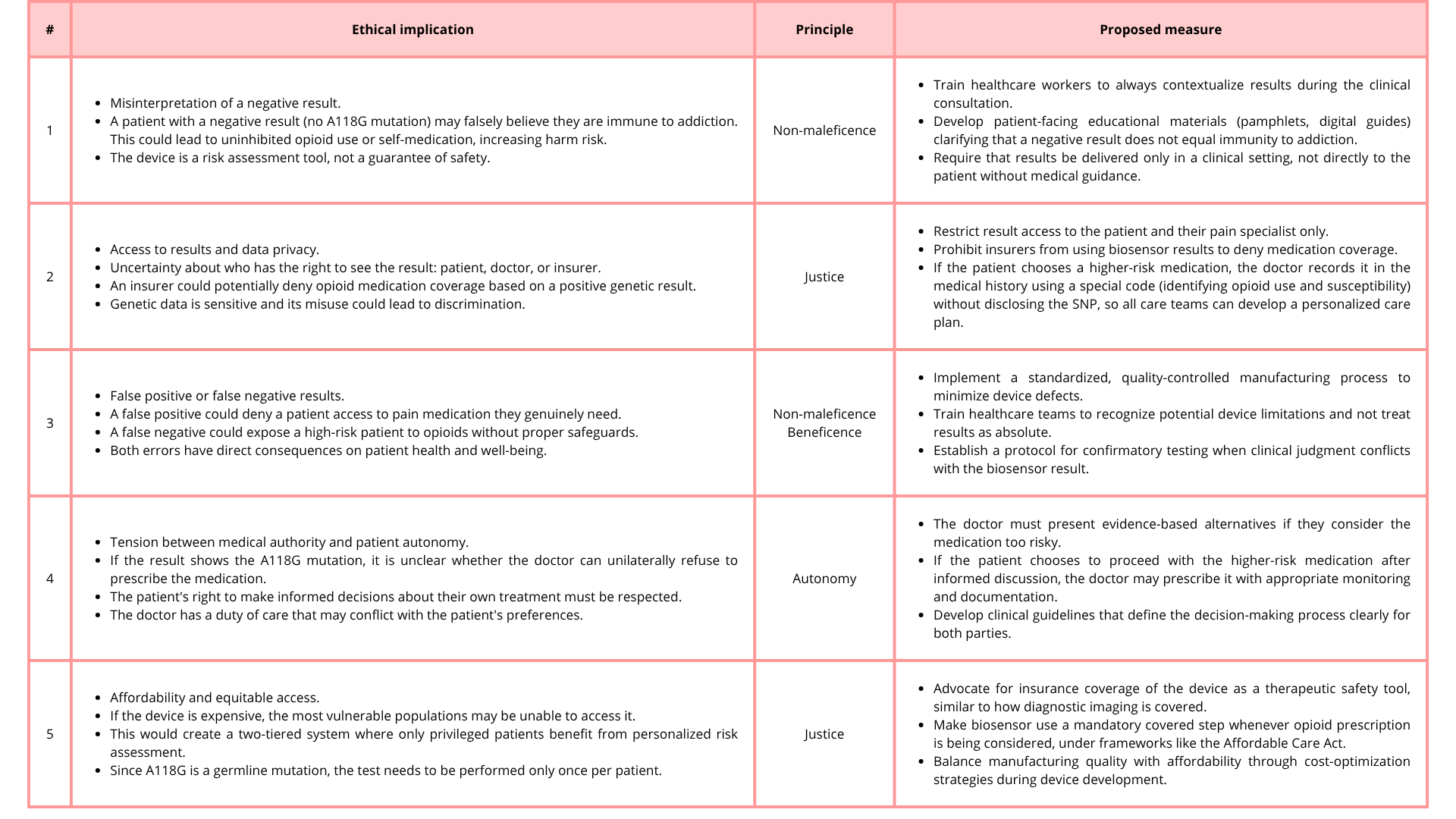
Ethical implications
Timeline development Aim 1 and 2
Important techniques
In my project, two fundamental techniques are SHERLOCK-based Cas13 detection and the cell-free system, although they represent only part of the overall biosensor design. Cas13 was selected because, unlike Cas9 and Cas12 that target DNA, it specifically recognizes RNA and has collateral cleavage activity, which is highly advantageous for diagnostics. In this biosensor, after T7 RNA polymerase transcribes the DNA target into RNA, Cas13 recognizes the A118G mutation with single-nucleotide specificity. Through the SHERLOCK mechanism, Cas13 collateral cleavage breaks the aptamer blocker, allowing the aptamer to fold and generate a fluorescent signal only when the mutation is present.
Another essential component is the cell-free system, which enables the transcription step required for Cas13 recognition. The T7 RNA polymerase within the extract transcribes the DNA constructs into RNA targets, while the system itself provides stability, flexibility, and independence from living cells. Additionally, freeze-drying technologies can further improve portability and reliability, supporting the use of cell-free systems as a robust platform for biosensing applications.
Protocol
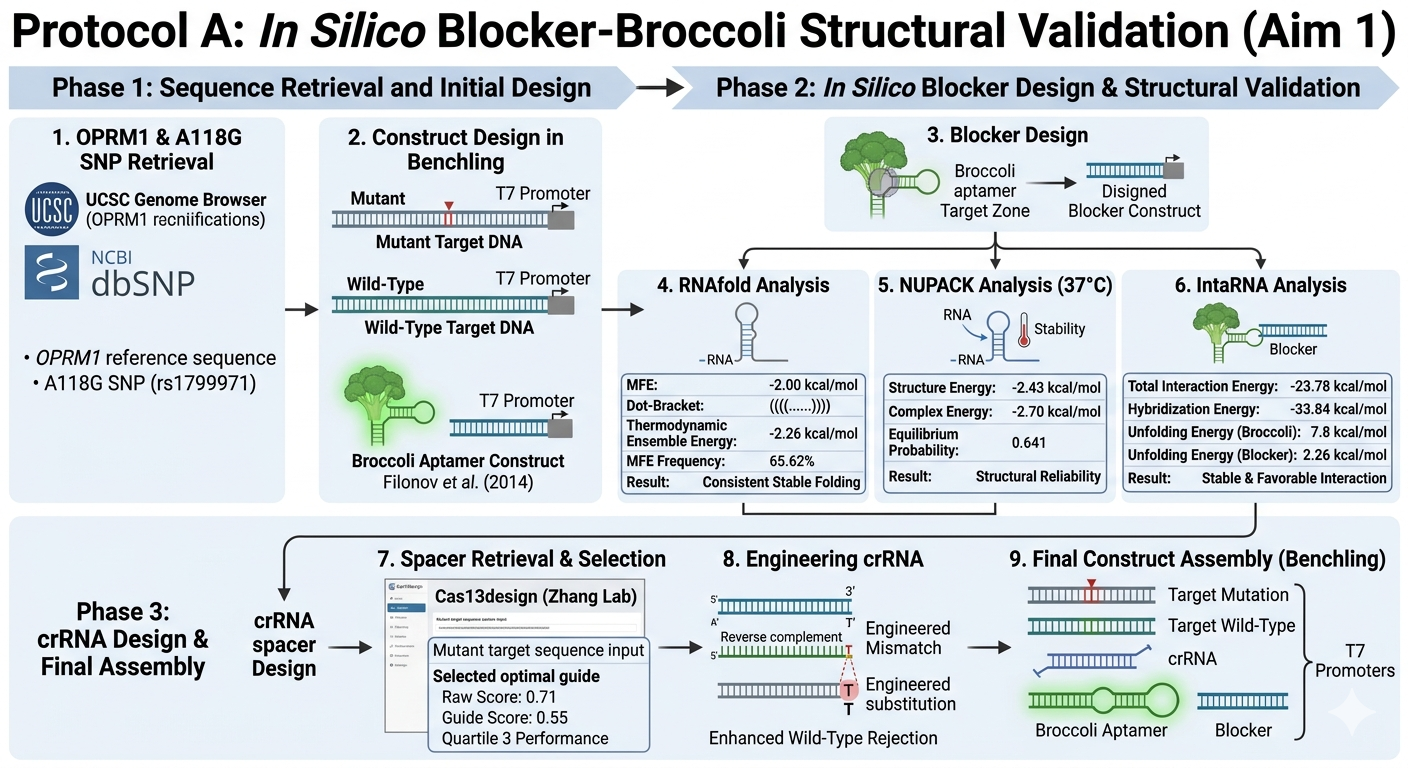
The validation of this project includes three techniques: DNA Construct Design, Databases, and Computational Analysis.
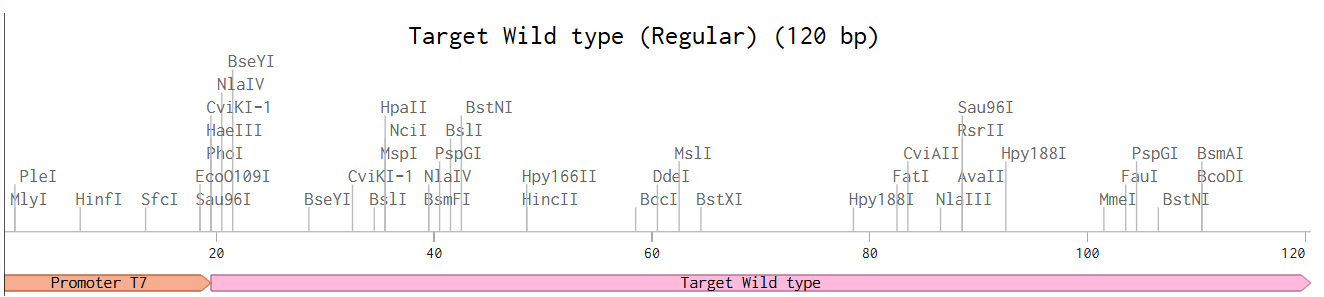
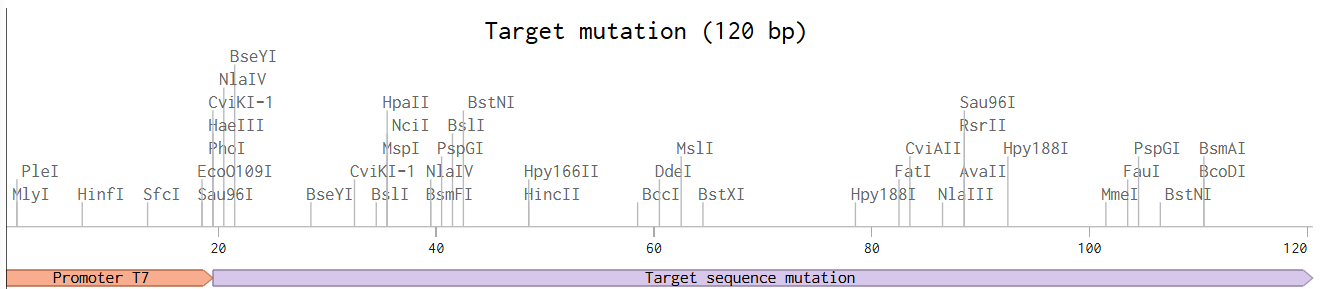
First of all, DNA Construct Design was fundamental, as I designed 5 DNA constructs as the basis for the biosensor, each construct was annotated in Benchling with a T7 promoter, with the final objective that the machinery from the cell-free system will transcribe the DNA into RNA.
Second, biological databases were extensively used in the design process, including UCSC Genome Browser and NCBI dbSNP to retrieve and confirm the OPRM1 reference sequence and the A118G SNP position, and Cas13design to identify and select the optimal crRNA spacer based on performance metrics including raw score, guide score, and quartile ranking.
Third, computational analysis was fundamental for the in silico validation of the project. RNAfold confirmed that the blocker construct adopts a stable independent secondary structure with a minimum free energy of -2.00 kcal/mol and a MFE frequency of 65.62% in the thermodynamic ensemble. NUPACK further confirmed this structural stability at 37°C, yielding a structure free energy of -2.43 kcal/mol and an equilibrium probability of 0.641, consistent with RNAfold predictions. Finally, IntaRNA confirmed a thermodynamically favorable interaction energy of -23.78 kcal/mol between the blocker and the Broccoli aptamer, supporting the feasibility of the signal transduction mechanism without laboratory access.
Results and analysis
The primary validation for this project is the in silico structural and thermodynamic confirmation of the blocker construct design, demonstrating computationally that the blocker effectively inhibits the Broccoli aptamer in the absence of the target mutation and that the interaction energy is compatible with Cas13a collateral cleavage activity upon target detection. This validation was achieved using IntaRNA, NUPACK and RNAfold, and directly tests the central design hypothesis of the biosensor without requiring laboratory access. Additionally, five DNA constructs relevant to the project were designed and annotated in Benchling, representing a complete and ready-to-synthesize molecular toolkit for the experimental phase of the project.
DNA Constructs
Target wild type
Target mutation
Broccoli aptamer

crRNA

Aptamer blocker
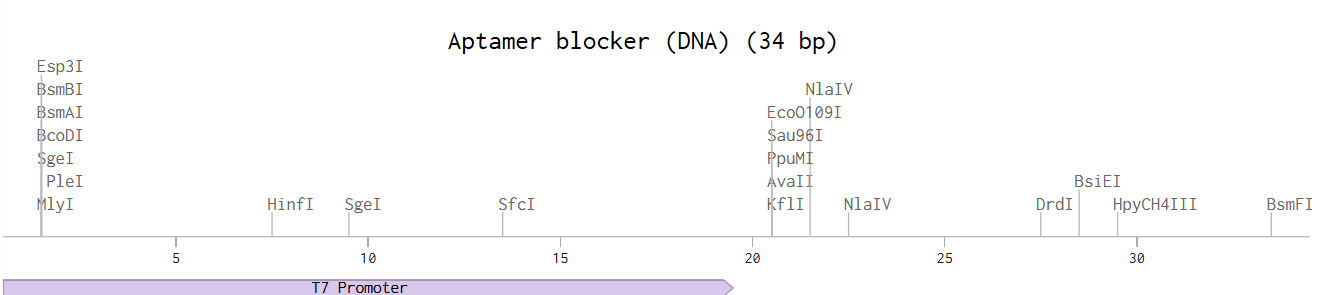
Table 1
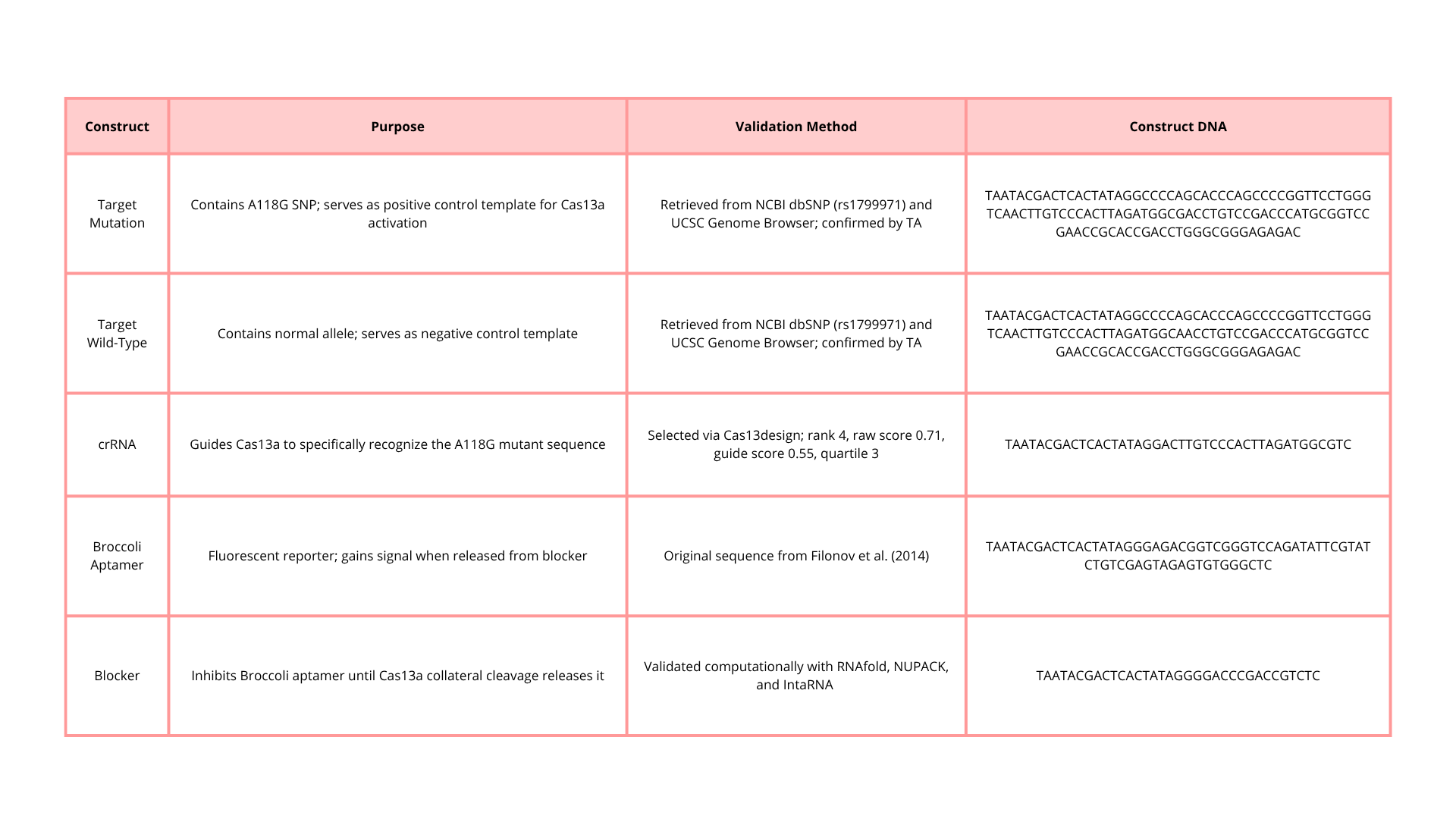
Table 2
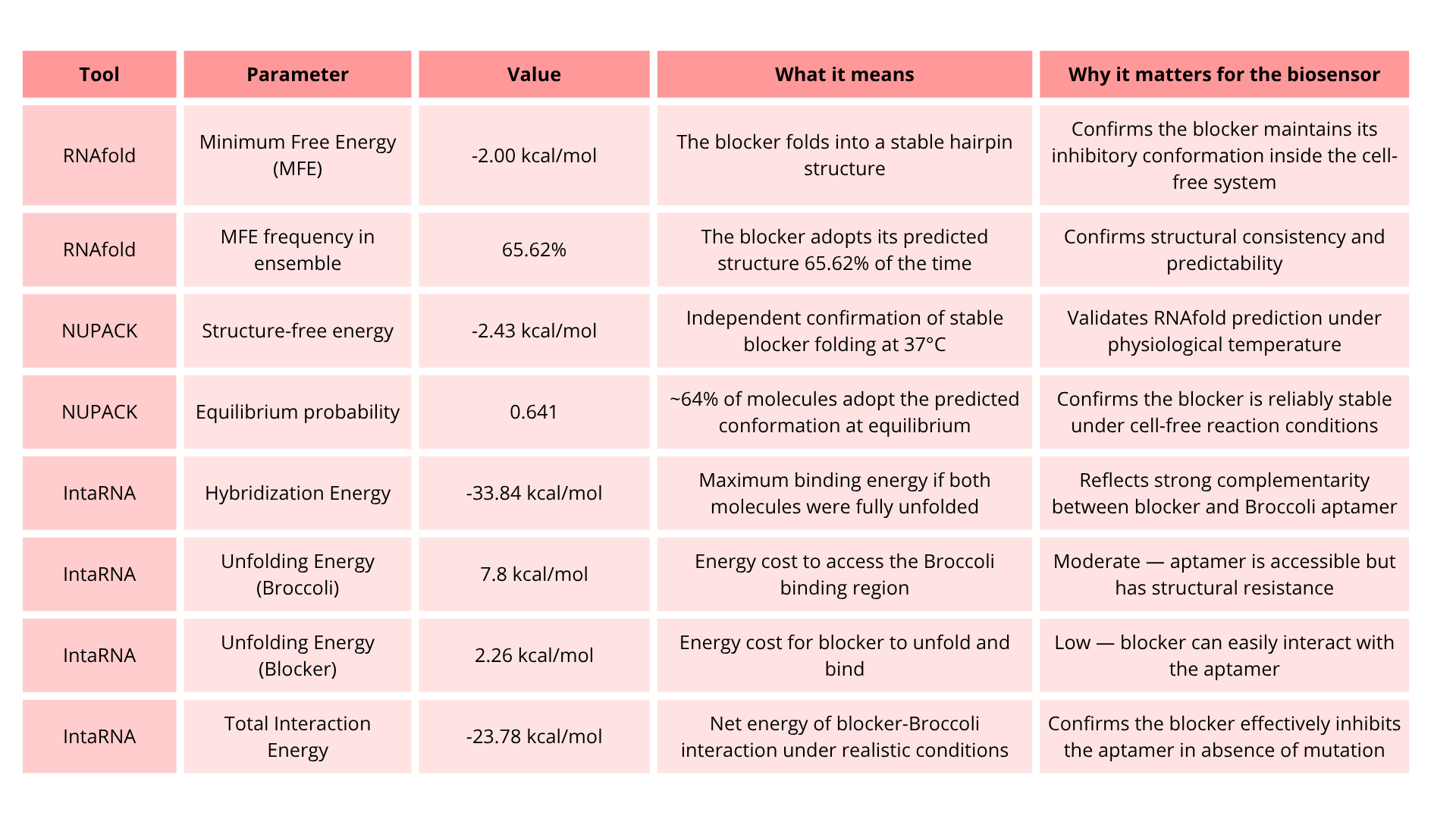
The computational validation data collectively confirm that the blocker construct is thermodynamically viable for the proposed biosensor mechanism. The stable independent folding confirmed by both RNAfold (-2.00 kcal/mol) and NUPACK (-2.43 kcal/mol, equilibrium probability 0.641), combined with the favorable blocker-Broccoli interaction energy (-23.78 kcal/mol) confirmed by IntaRNA, support the central hypothesis that the blocker will maintain the Broccoli aptamer inactive in absence of the mutation and will be released upon Cas13a collateral cleavage activation.
Aim 2 - Workflow design
Limitations and next steps
The main limitations of this project include both technical and experimental constraints. First, as this was my initial experience designing DNA constructs and performing in silico validation, there was a significant learning curve. To address this, I relied on literature review, TA guidance, and cross-validation using tools such as RNAfold, NUPACK, and IntaRNA to ensure consistency across predictions.
A major limitation was the lack of wet lab access, which prevented experimental validation of the designed constructs and their integration into a functional system. In addition, while computational results showed favorable binding between the blocker and the Broccoli aptamer, the interaction energy (-23.78 kcal/mol) is close to the upper limit of the optimal range, meaning Cas13 collateral cleavage may not always efficiently disrupt it. This suggests that redesigning a shorter blocker could improve performance.
Finally, it is important to note that all results are based on in silico models, which assume ideal conditions and may not fully reflect behavior in a real cell-free system, where environmental factors such as temperature, ionic strength, and molecular crowding could significantly affect folding and interactions
The third and most ambitious aim of this project was the development of a functional ambulatory biosensor capable of detecting the A118G variant in the OPRM1 gene in a portable format, with the long-term goal of supporting more personalized and informed clinical decision-making in opioid use and addiction risk assessment.
Building on this objective, the next steps focus on experimental and translational development. This includes wet lab validation of the five designed constructs using a cell-free fluorescence assay to assess mutant versus wild-type discrimination. Subsequently, the system would be integrated into a single portable prototype through lyophilized components to improve stability, shelf-life, and field usability. In the longer term, this platform could enable the aggregation of patient-derived data to support the development of AI-based models for personalized addiction risk profiling.
The complete project documentation is available here:
https://docs.google.com/document/d/1_hSLoJSpYfMy9lfnjrfCo_qN90HIIPzm64g-aW5JVZA/edit?usp=sharing
References
- “Broccoli Aptamer.” Ribocentre.org, 2025, aptamer.ribocentre.org/_posts/Broccoli-aptamer. Accessed 14 May 2026.
- Filonov, Grigory S., et al. “Broccoli: Rapid Selection of an RNA Mimic of Green Fluorescent Protein by Fluorescence-Based Selection and Directed Evolution.” Journal of the American Chemical Society, vol. 136, no. 46, 5 Nov. 2014, pp. 16299–16308, https://doi.org/10.1021/ja508478x.
- Ghouneimy, Ahmed, et al. “CRISPR-Based Diagnostics: Challenges and Potential Solutions toward Point-of-Care Applications.” ACS Synthetic Biology, vol. 12, no. 1, 12 Dec. 2022, https://doi.org/10.1021/acssynbio.2c00496.
- Kellner, Max J., et al. “SHERLOCK: Nucleic Acid Detection with CRISPR Nucleases.” Nature Protocols, vol. 14, no. 10, 23 Sept. 2019, pp. 2986–3012, https://doi.org/10.1038/s41596-019-0210-2.
- Strang, John, et al. “Opioid Use Disorder.” Nature Reviews Disease Primers, vol. 6, no. 1, 2020, pp. 1–28, www.nature.com/articles/s41572-019-0137-5, https://doi.org/10.1038/s41572-019-0137-5.
- Wandera, Katharina G, and Chase L Beisel. “Rapidly Characterizing CRISPR-Cas13 Nucleases Using Cell-Free Transcription-Translation Systems.” Methods in Molecular Biology (Clifton, N.J.), vol. 2404, 2022, pp. 135–153, pubmed.ncbi.nlm.nih.gov/34694607/, https://doi.org/10.1007/978-1-0716-1851-6_7.
- Wijekumar, P. J., et al. “A Novel Tetra-Primer ARMS-PCR for Genotyping of the OPRM1 Gene Rs1799971 Variant Associated with Opioid Use Disorders.” BMC Research Notes, vol. 16, no. 1, 14 Nov. 2023, p. 333, pubmed.ncbi.nlm.nih.gov/37964305/, https://doi.org/10.1186/s13104-023-06578-7.
- Zakiyyah, Salma Nur, et al. “CRISPR-Cas13a-Powered Electrochemical Biosensors for RNA-Based Disease Diagnostic and Monitoring.” Sensors and Actuators Reports, vol. 10, 1 July