Week 1 HW: Principles and Practices

Class Assignment
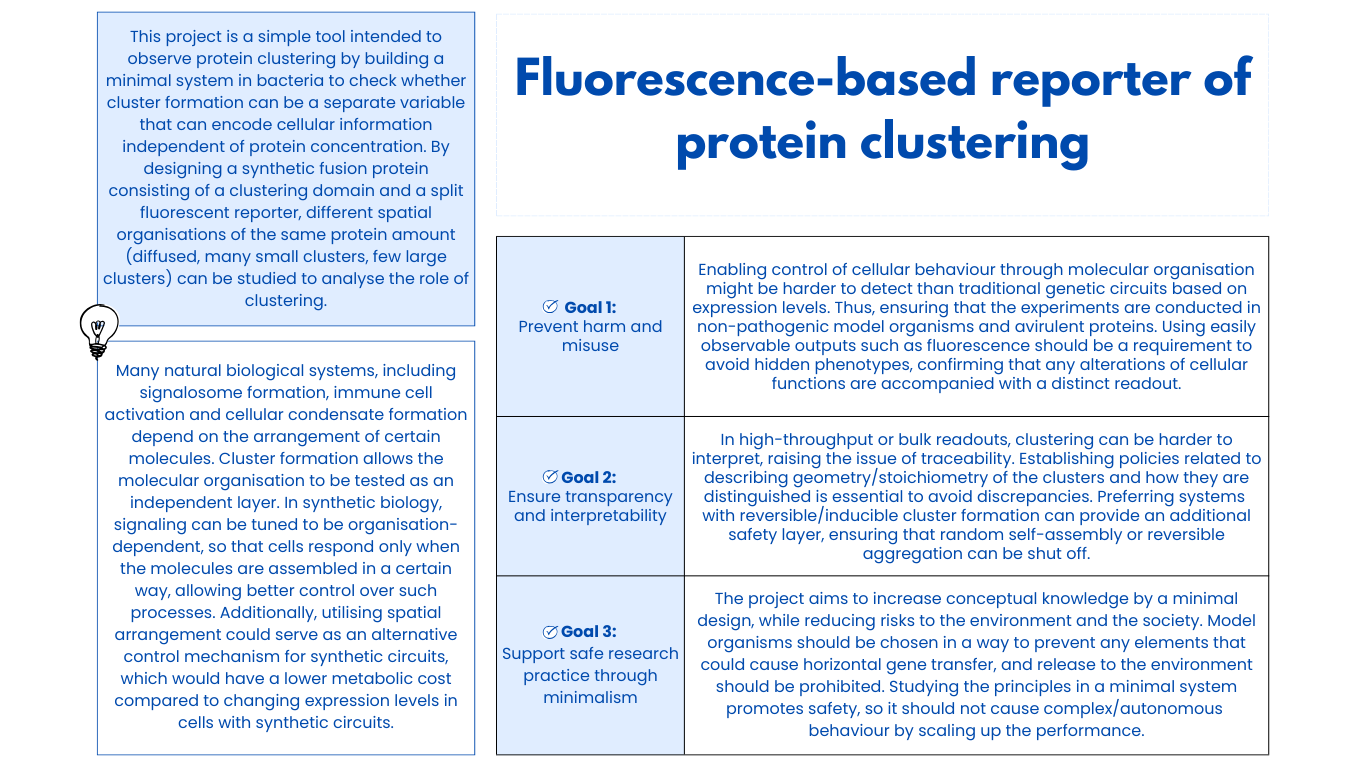
- First, describe a biological engineering application or tool you want to develop and why.
- Next, describe one or more governance/policy goals related to ensuring that this application or tool contributes to an “ethical” future, like ensuring non-malfeasance (preventing harm). Break big goals down into two or more specific sub-goals.
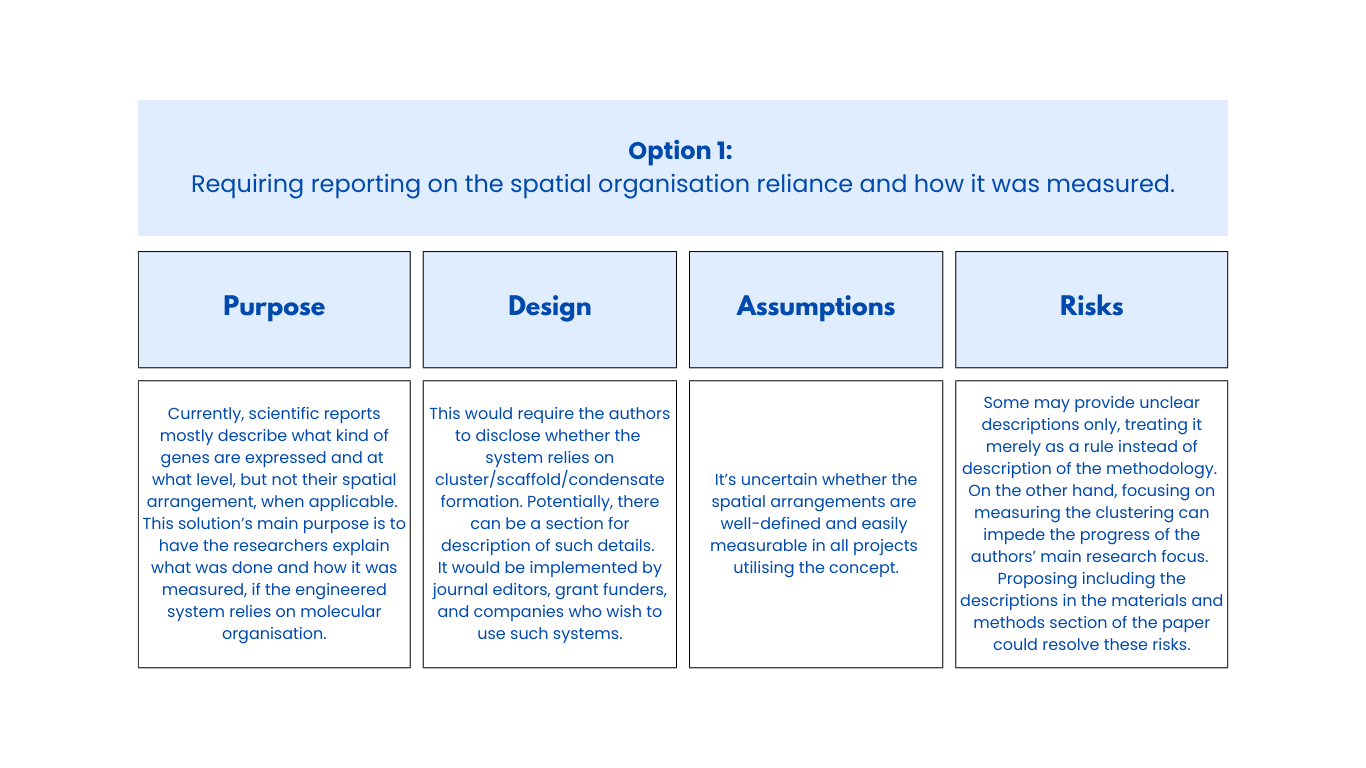
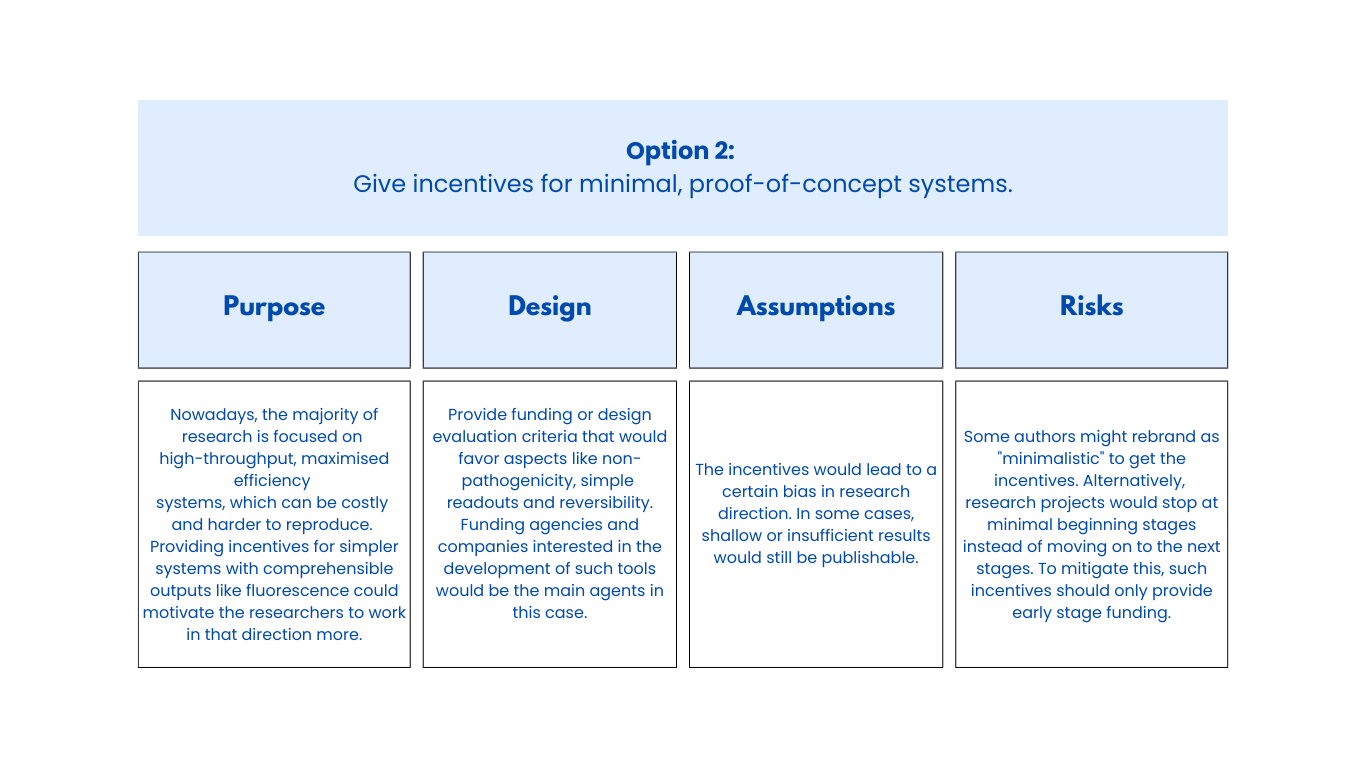
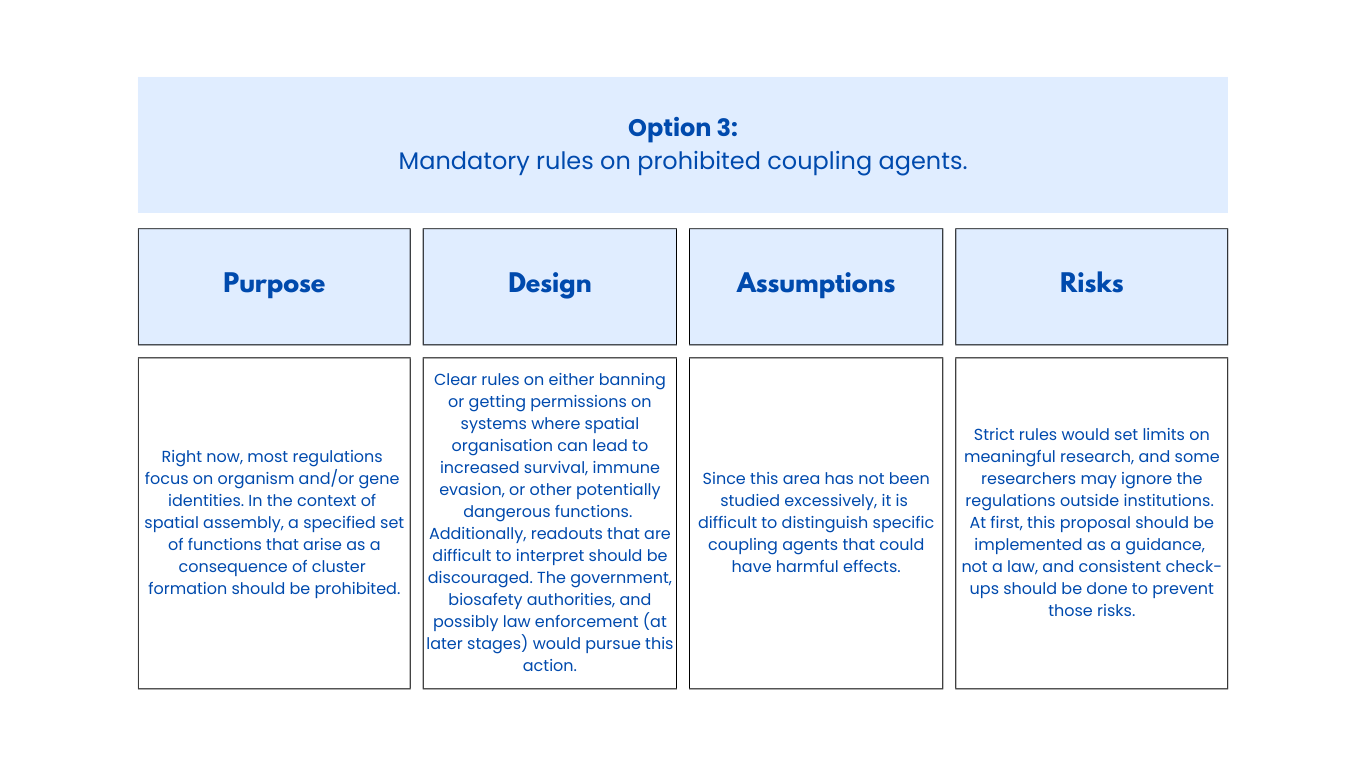
- Next, describe at least three different potential governance “actions” by considering the four aspects below (Purpose, Design, Assumptions, Risks of Failure & “Success”).
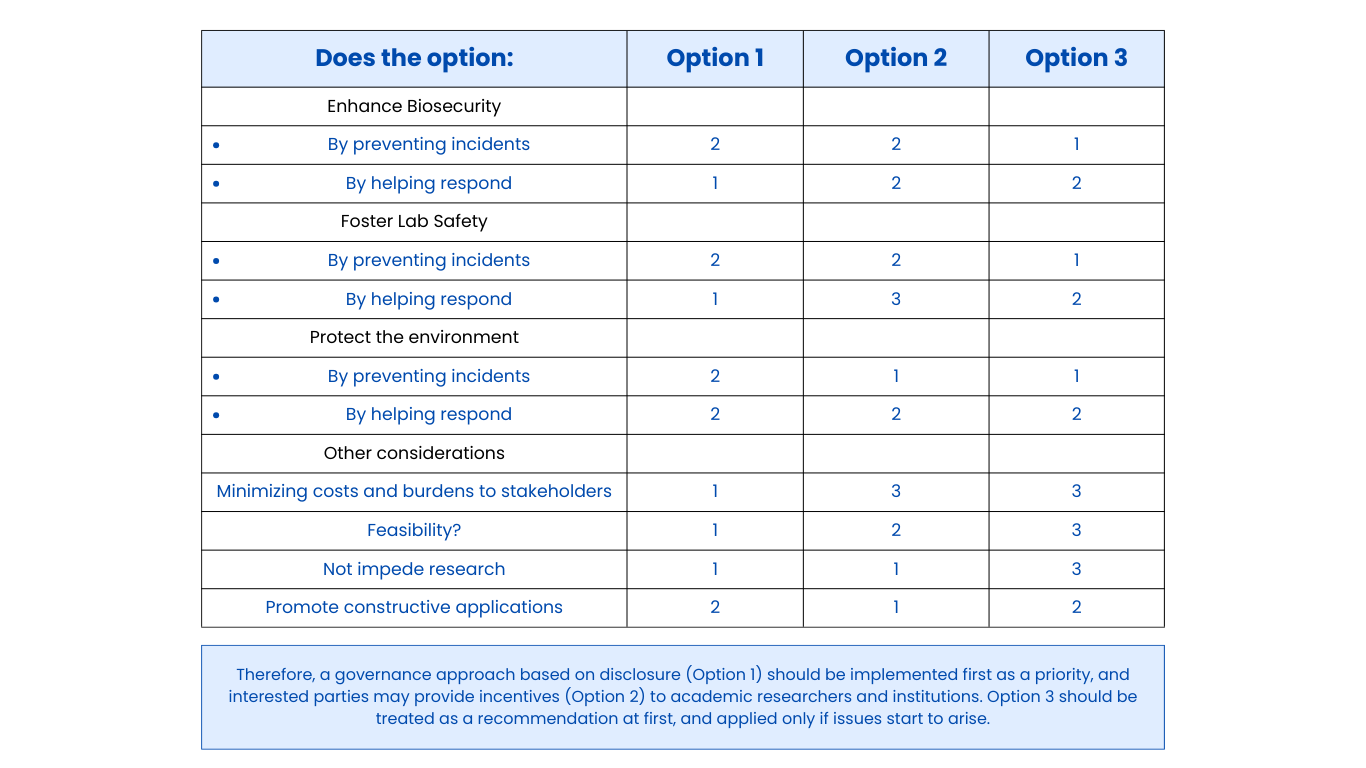
- Next, score (from 1-3 with, 1 as the best, or n/a) each of your governance actions against your rubric of policy goals.
- Last, drawing upon this scoring, describe which governance option, or combination of options, you would prioritize, and why. Outline any trade-offs you considered as well as assumptions and uncertainties.
Week 2 Lecture Prep
- Homework Questions from Professor Jacobson:
- Nature’s machinery for copying DNA is called polymerase. What is the error rate of polymerase? How does this compare to the length of the human genome. How does biology deal with that discrepancy?
A: The error rate of polymerase is 1:106. The human genome is approximately 3 billion base pairs long. DNA Polymerases have a proofreading mechanism, and remaining errors can also be fixed through mismatch repair after DNA synthesis.
- How many different ways are there to code (DNA nucleotide code) for an average human protein? In practice what are some of the reasons that all of these different codes don’t work to code for the protein of interest?
A: The average size of a human protein is 1036 bp ≈ 345 amino acids, and if we consider that the codon size is 3, the possibility would be 3345, which is approximately 10164. Some codes don’t work due to phenomena like codon bias, degeneracy, and even the GC content.
- Homework Questions from Dr. LeProust:
- What’s the most commonly used method for oligo synthesis currently?
A: The most commonly used method for oligo synthesis currently is phosphoramidite DNA synthesis.
- Why is it difficult to make oligos longer than 200nt via direct synthesis?
A: With each step, the yield decreases, meaning that the resulting product will have only a small ratio of the intended oligo. Even though the error rate is not very high, incorrect sequences will accumulate.
- Why can’t you make a 2000bp gene via direct oligo synthesis?
A: Similar to the reasons described above, yield drops, and synthesis of long genes becomes expensive. The risks of errors increase with each step. Additionally, longer sequences are more prone to forming secondary structures.
- Homework Question from George Church:
- What are the 10 essential amino acids in all animals and how does this affect your view of the “Lysine Contingency”?
A: The 10 essential amino acids are isoleucine, leucine, lysine, threonine, tryptophan, methionine, histidine, valine, and phenylalanine. “Lysine Contingency” is a concept from the Jurassic Park, in which the scientist introduced a genetic modification to prevent the dinosaurs from synthesising lysine, thus making them reliant on lysine supplements. However, dinosaurs would survive by consuming food that contains lysine.