Week 3 HW: Lab Automation
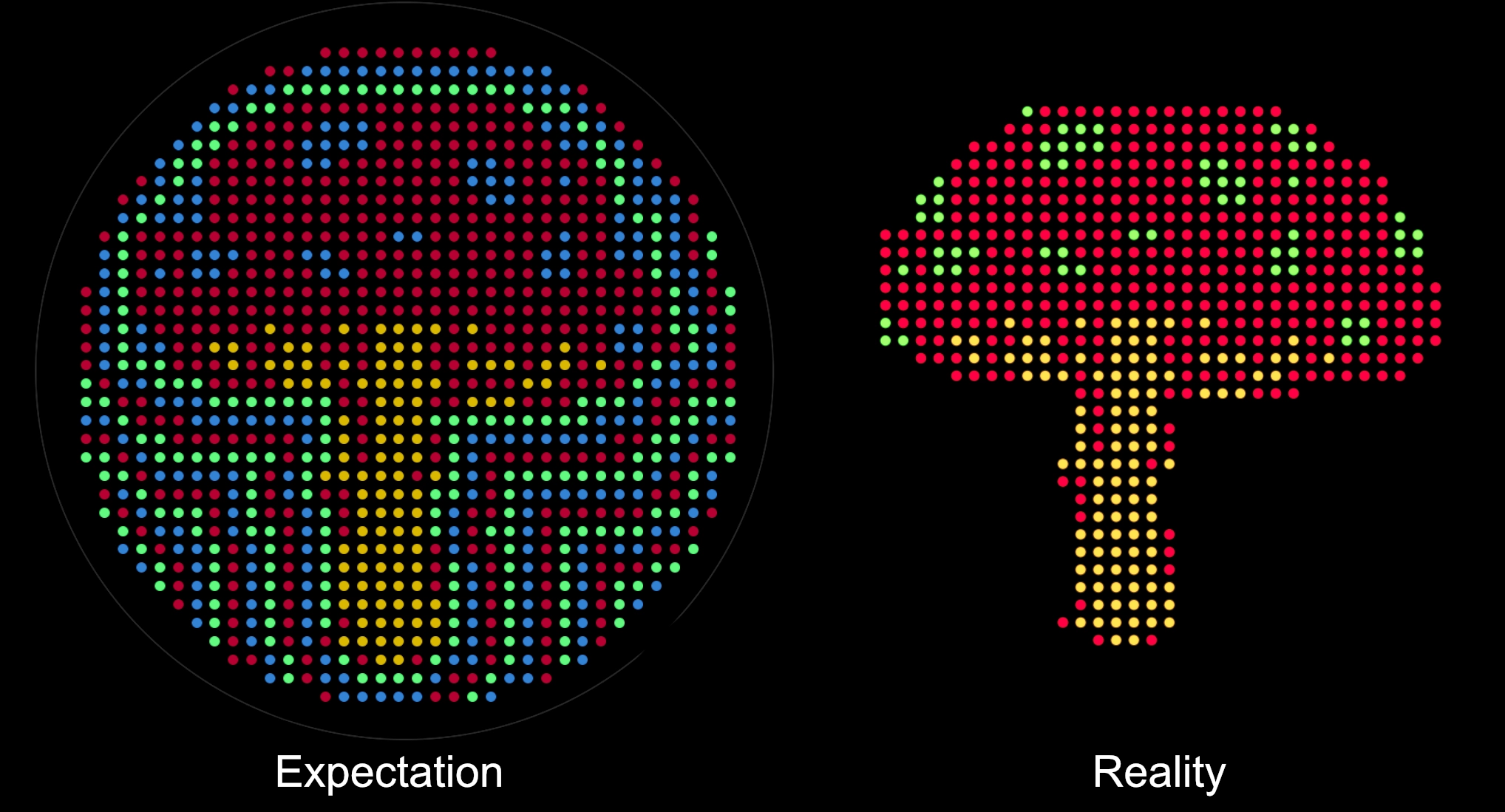
Assignment: Python Script for Opentrons Artwork
Documentation
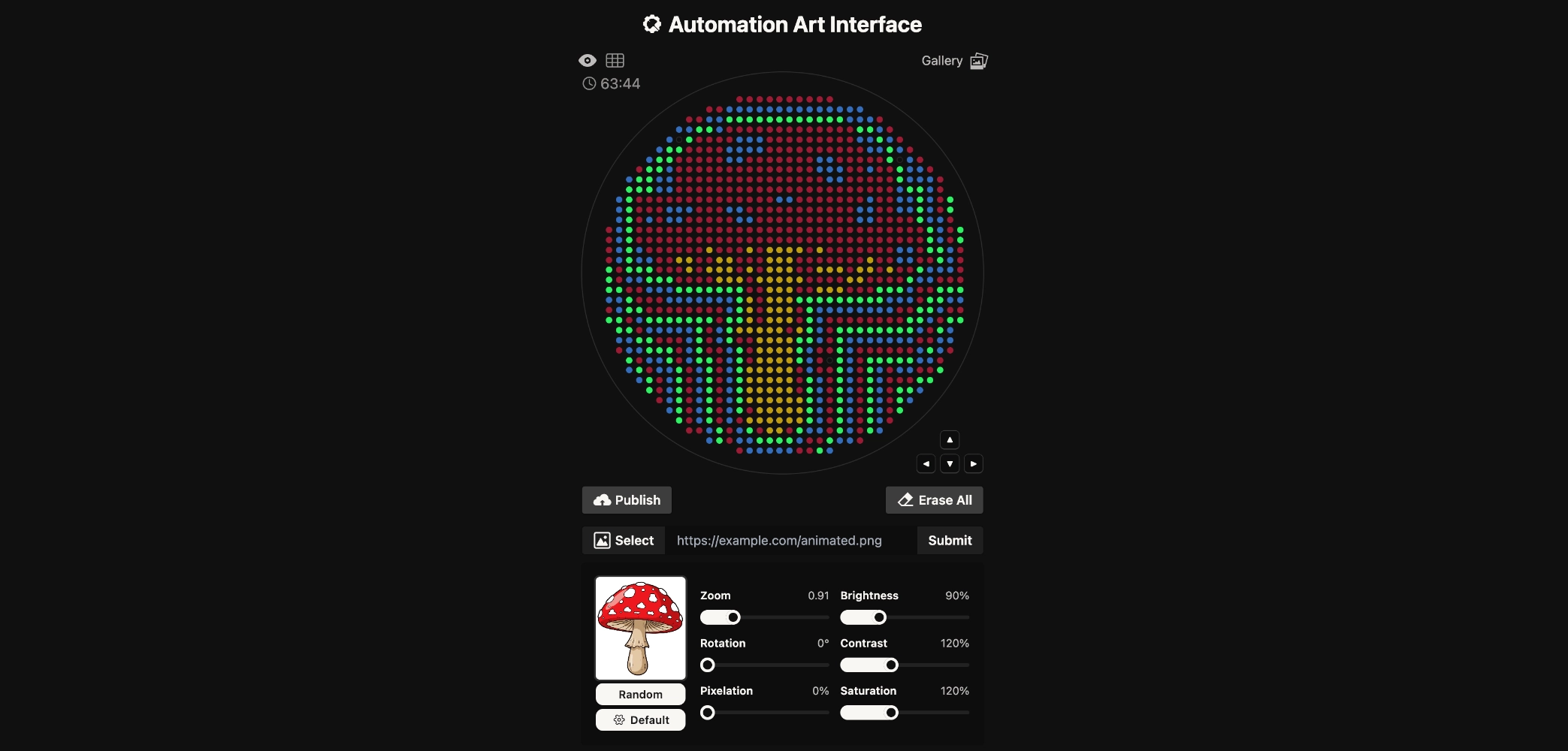
First of all I used opentrons-art.rcdonovan.com to generate a base design with an image from “vecteezy.com” and then modified it manually to reach the final design
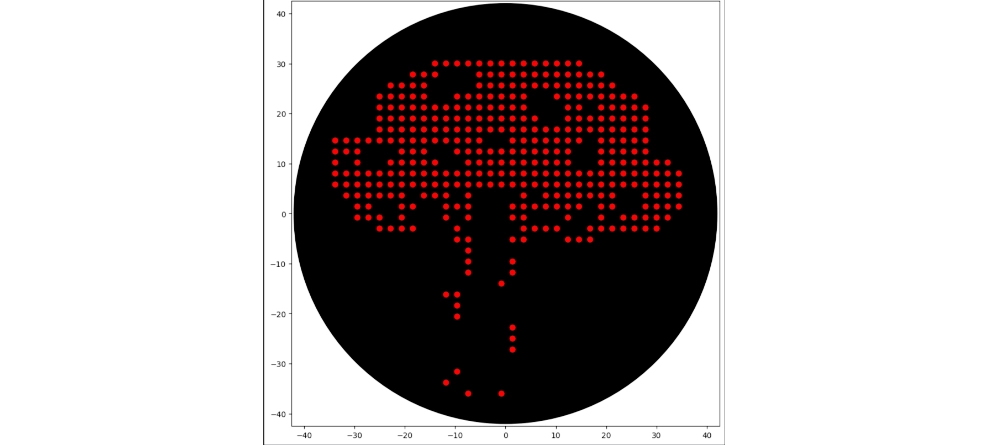
Then created the zones in red with the following logic (adapting from Example 5 and 7):
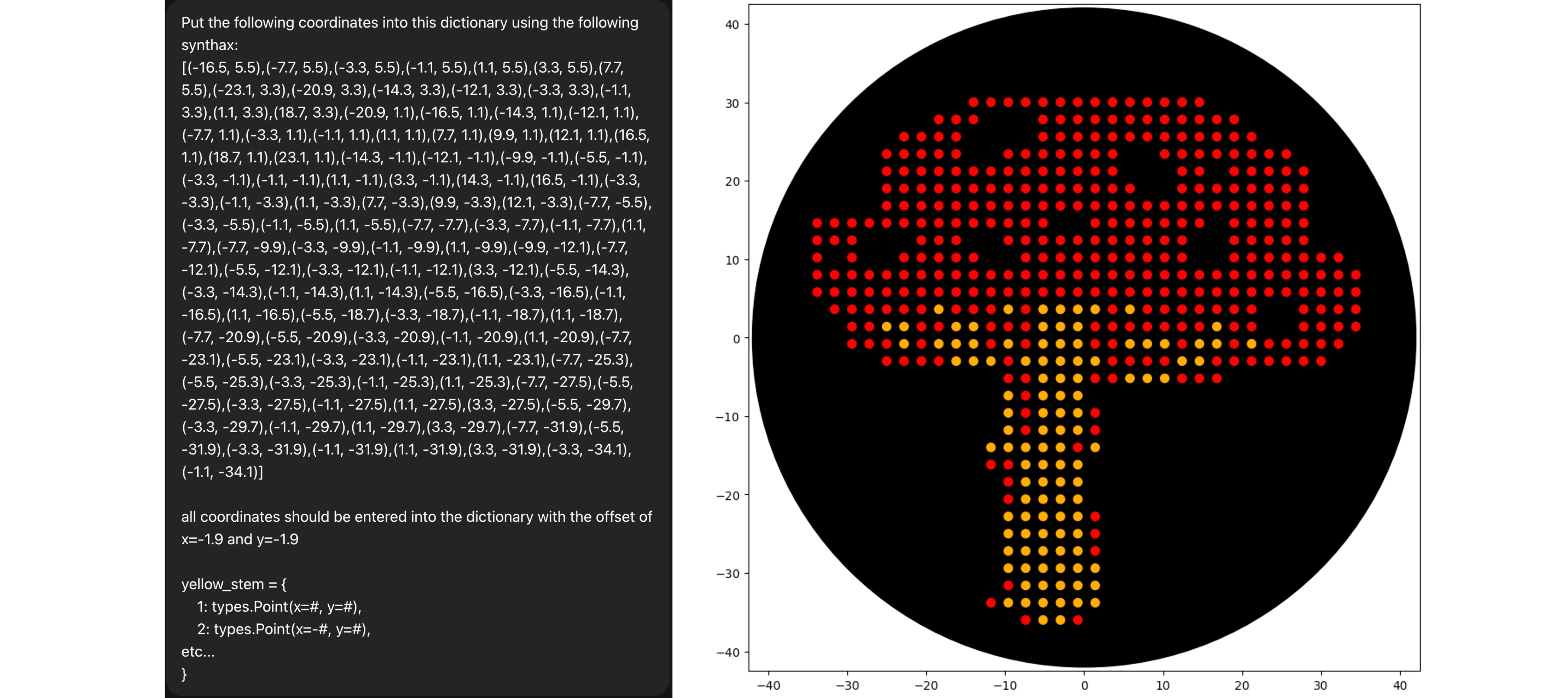
Used Chat GPT to write all the coordinates using a “template dictionary” I wrote, and then adapted the logic I used before to work with the dictionary instead of a range:
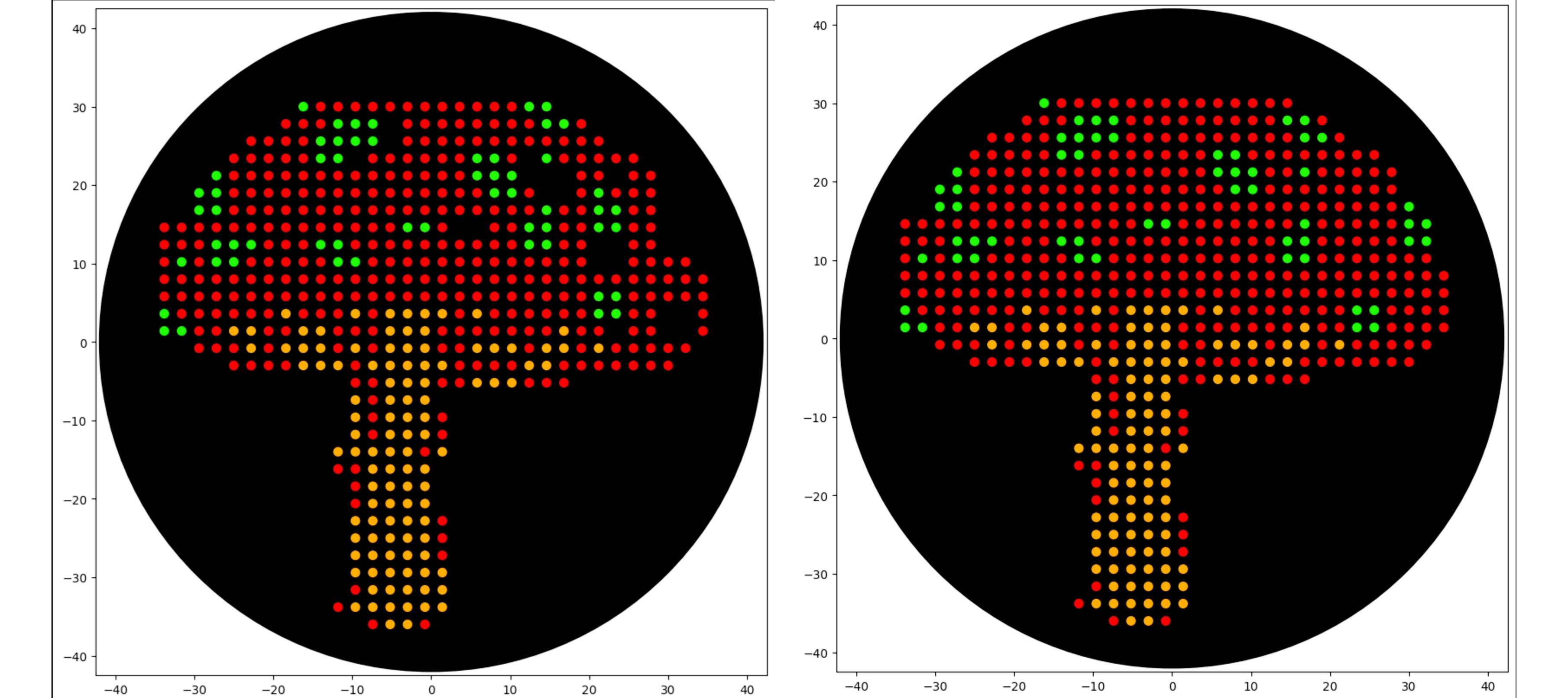
Repeated the same process for the green spots, but because I made some mistake in the red dots the coordinates from the green weren’t matching as they should, so I solved that by manually adjusting the red dots to the placement of the green spots
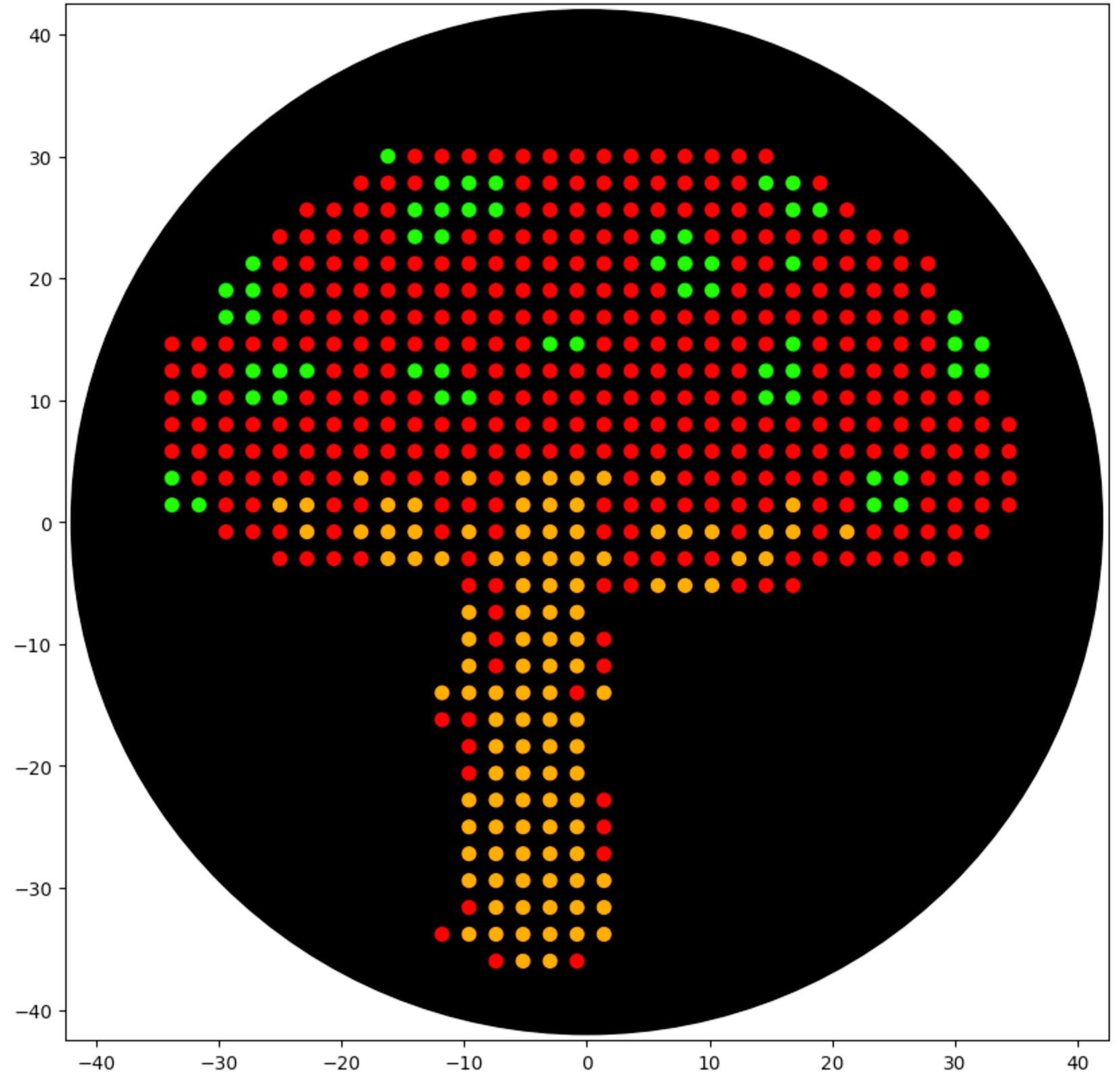
Final Result
Post-Lab Questions
1. Find and describe a published paper
I found and was interested in two articles: The first one “Automation and Optimization of Protein Expression and Purification on a Novel Robotic Platform” published by Journal of Laboratory Automation (October 2006) that describes an automated robotic system for expression and purification of recombinant proteins grown both in E. coli and other bacterial cells and eukaryotic cells. The second “APEX: Automated Protein EXpression in Escherichia coli” published by ACS Synthetic Biology (September 2, 2025) describes an automated pipeline for recombinant protein production in E. coli, leveraging the open-source Opentrons OT-2 platform to handle microbe culturing and protein expression.
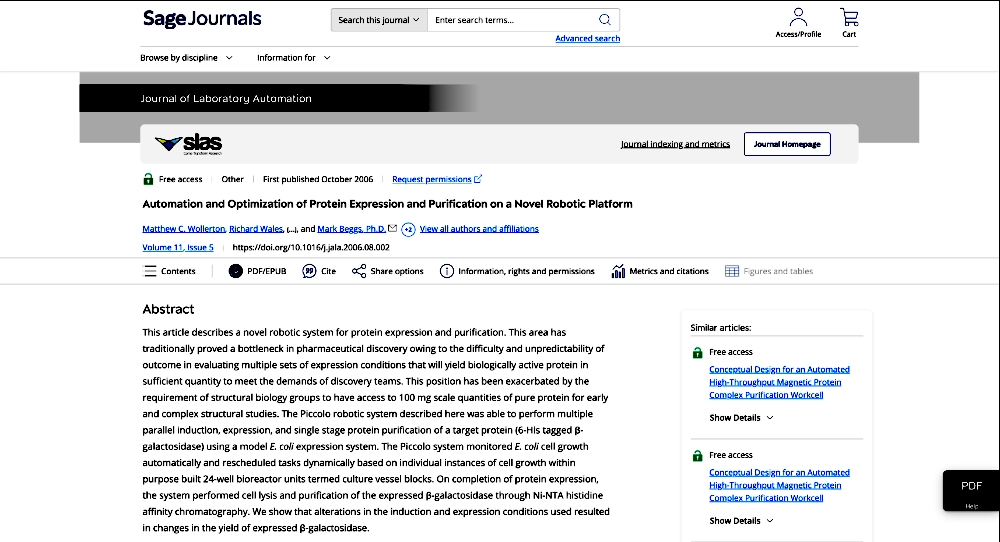
Automation and Optimization of Protein Expression and Purification on a Novel Robotic Platform published by Journal of Laboratory Automation (October 2006)
Overview:
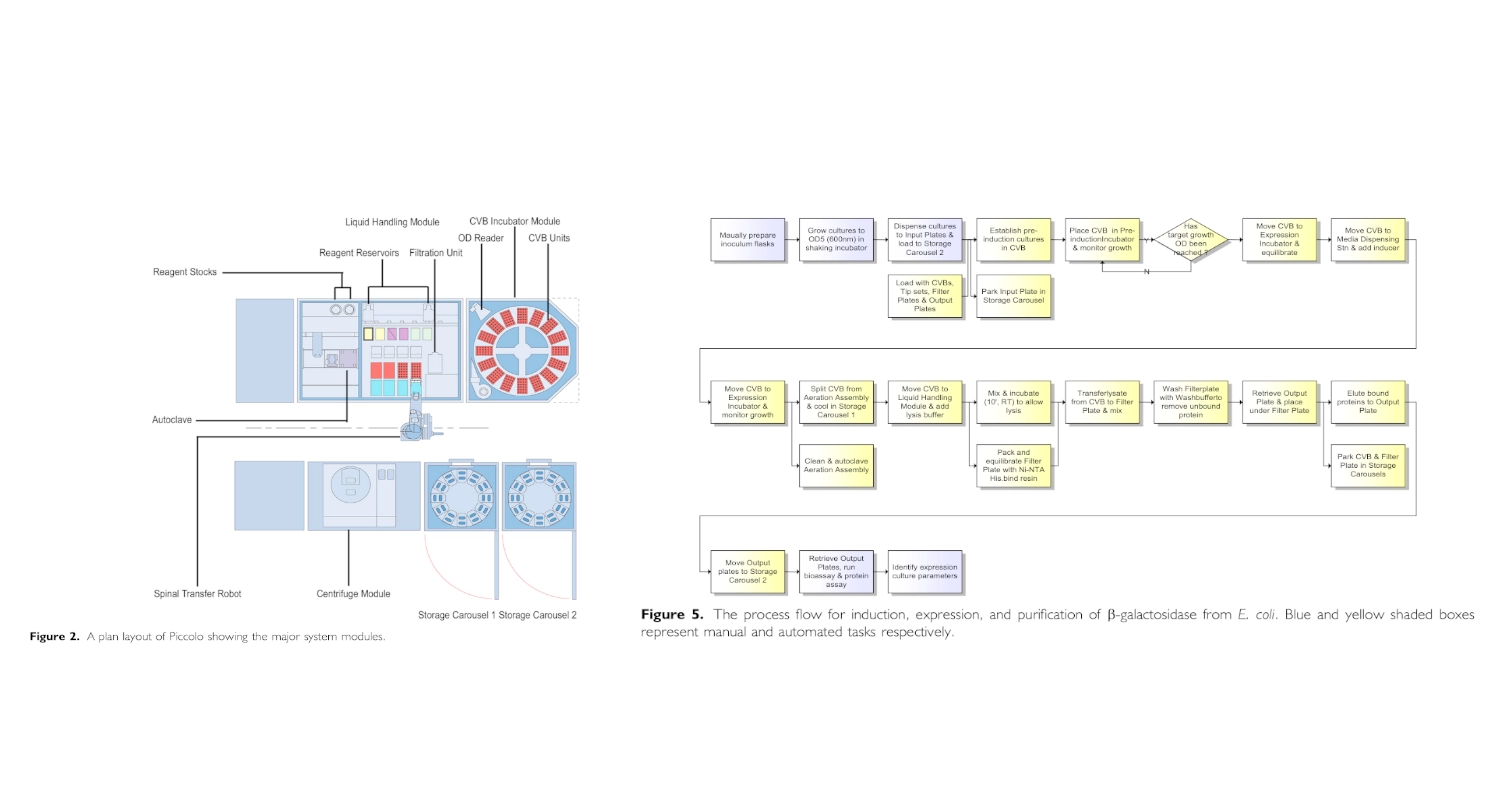
This paper describes the development of a robotic system designed to automate the process of recombinant protein production and purification. Protein expression optimization is traditionally labor-intensive, requiring repeated manual adjustments to growth conditions, induction timing, and purification steps. The authors introduce a robotic platform capable of coordinating bacterial culture growth, induction, cell harvesting, lysis, and affinity purification within a same workflow.
A key innovation of the platform is its ability to conduct parallel experiments that test different expression conditions in a controlled and automated manner. Instead of performing expression trials sequentially, the robotic system enables simultaneous evaluation of variables such as induction timing and culture density. The workflow integrates liquid handling, incubation, and affinity purification into a continuous process, reducing manual intervention and variability. By linking culture monitoring with automated downstream purification, the system demonstrates how laboratory automation can streamline workflows that are typically fragmented across separate instruments and manual steps.
Findings:
The study demonstrates that automation in parallel significantly increases experimental throughput and improves the efficiency of identifying optimal protein expression conditions. Compared with traditional manual workflows, the automated approach reduced hands-on time and enabled rapid exploration of a large experimental space. Overall, the findings support the use of integrated robotic systems to accelerate protein production workflows and reduce bottlenecks in research requiring purified recombinant proteins.
(Chat GPT was used to assist in the summarization of this paper)
Automation and Optimization of Protein Expression and Purification on a Novel Robotic Platform published by Journal of Laboratory Automation (October 2006)
Overview: This paper describes the development of a robotic system designed to automate the process of recombinant protein production and purification. Protein expression optimization is traditionally labor-intensive, requiring repeated manual adjustments to growth conditions, induction timing, and purification steps. The authors introduce a robotic platform capable of coordinating bacterial culture growth, induction, cell harvesting, lysis, and affinity purification within a same workflow.
A key innovation of the platform is its ability to conduct parallel experiments that test different expression conditions in a controlled and automated manner. Instead of performing expression trials sequentially, the robotic system enables simultaneous evaluation of variables such as induction timing and culture density. The workflow integrates liquid handling, incubation, and affinity purification into a continuous process, reducing manual intervention and variability. By linking culture monitoring with automated downstream purification, the system demonstrates how laboratory automation can streamline workflows that are typically fragmented across separate instruments and manual steps.
Findings: The study demonstrates that automation in parallel significantly increases experimental throughput and improves the efficiency of identifying optimal protein expression conditions. Compared with traditional manual workflows, the automated approach reduced hands-on time and enabled rapid exploration of a large experimental space. Overall, the findings support the use of integrated robotic systems to accelerate protein production workflows and reduce bottlenecks in research requiring purified recombinant proteins.
(Chat GPT was used to assist in the summarization of this paper)
- Although this paper might be outdated since it was published 20 years ago it helped me better understand automation of experimentation in living cells.
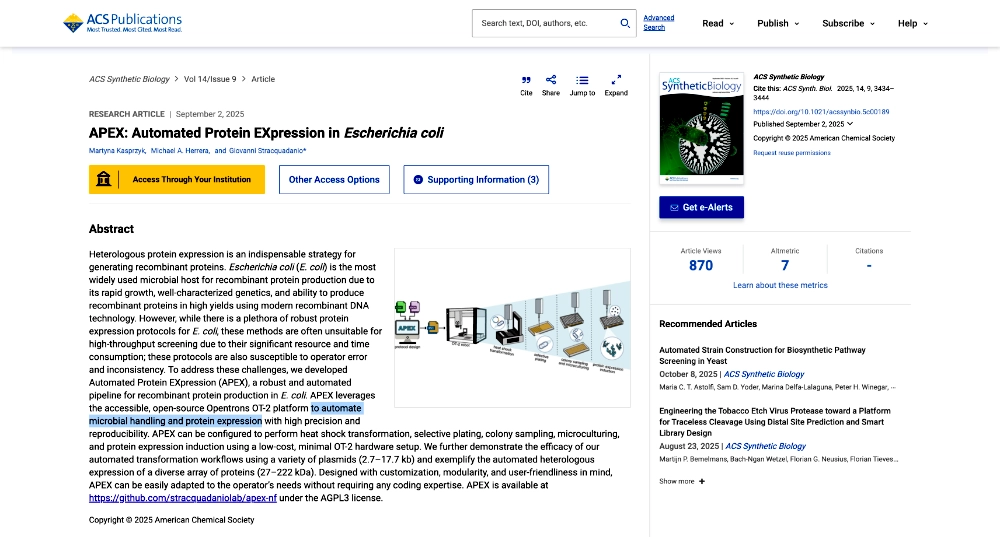
APEX: Automated Protein EXpression in Escherichia coli published by ACS Synthetic Biology (September 2, 2025)
Overview:
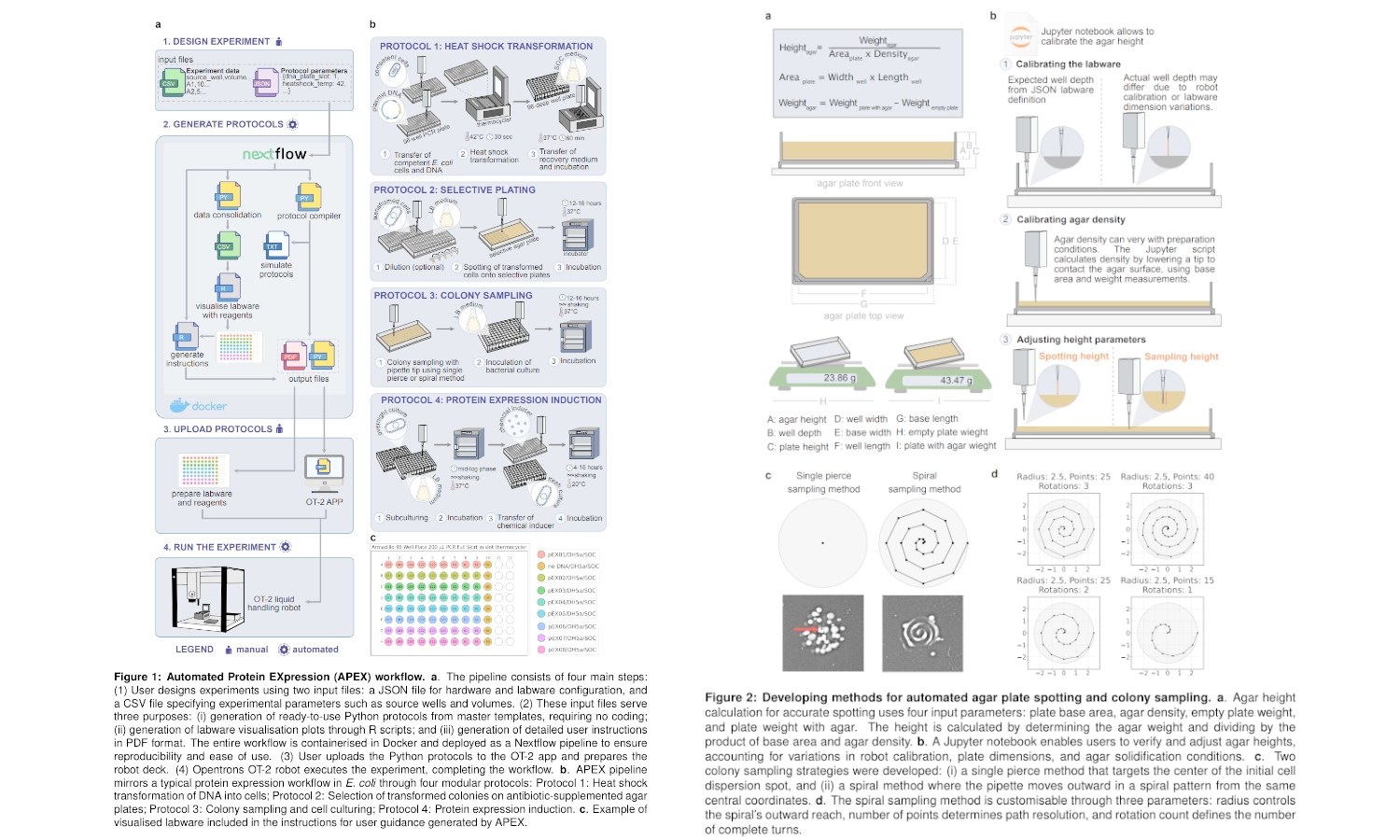
This paper presents APEX (Automated Protein EXpression), an end-to-end automation pipeline designed to streamline recombinant protein production in E. coli using the open-source Opentrons OT-2 platform to automate microbial handling and protein expression. Protein expression workflows are traditionally labor-intensive and prone to variability due to repeated manual steps such as heat shock transformation, plating, colony picking, culturing, and induction. APEX integrates these processes into four modular automated protocols: heat shock transformation; selective plating; colony sampling and microculturing; and protein expression. The system is designed to operate on a minimal OT-2 configuration, requiring only the thermocycler module and standard pipettes, making automation accessible to smaller laboratories without specialized robotics infrastructure.
A defining feature of APEX is its emphasis on reproducibility and usability. Rather than requiring programming expertise, experiments are configured using spreadsheet-based input files (JSON and CSV), which are processed through a Nextflow computational pipeline to automatically generate robot-ready Python protocols and user documentation. The workflow also includes automated spotting and colony sampling (illustrated in Figure 2).
Findings:
The authors validated APEX across multiple experimental scenarios and compared its performance to manual workflows. Transformation efficiency remained comparable to manual methods even when transformation volumes were miniaturized, and the expected decrease in efficiency with increasing plasmid size was observed in both automated and manual conditions. Automated colony sampling methods were tested under varying colony densities, with a spiral sampling strategy demonstrating improved robustness. Finally, the complete automated workflow successfully expressed soluble proteins spanning a wide molecular weight range (29 kDa to 222 kDa), with results comparable to manual processing. These results demonstrate that APEX maintains reliability while increasing throughput and reducing hands-on time.
(Chat GPT was used to assist in the summarization of this paper)
APEX: Automated Protein EXpression in Escherichia coli published by ACS Synthetic Biology (September 2, 2025)
Overview: This paper presents APEX (Automated Protein EXpression), an end-to-end automation pipeline designed to streamline recombinant protein production in E. coli using the open-source Opentrons OT-2 platform to automate microbial handling and protein expression. Protein expression workflows are traditionally labor-intensive and prone to variability due to repeated manual steps such as heat shock transformation, plating, colony picking, culturing, and induction. APEX integrates these processes into four modular automated protocols: heat shock transformation; selective plating; colony sampling and microculturing; and protein expression. The system is designed to operate on a minimal OT-2 configuration, requiring only the thermocycler module and standard pipettes, making automation accessible to smaller laboratories without specialized robotics infrastructure.
A defining feature of APEX is its emphasis on reproducibility and usability. Rather than requiring programming expertise, experiments are configured using spreadsheet-based input files (JSON and CSV), which are processed through a Nextflow computational pipeline to automatically generate robot-ready Python protocols and user documentation. The workflow also includes automated spotting and colony sampling (illustrated in Figure 2).
Findings: The authors validated APEX across multiple experimental scenarios and compared its performance to manual workflows. Transformation efficiency remained comparable to manual methods even when transformation volumes were miniaturized, and the expected decrease in efficiency with increasing plasmid size was observed in both automated and manual conditions. Automated colony sampling methods were tested under varying colony densities, with a spiral sampling strategy demonstrating improved robustness. Finally, the complete automated workflow successfully expressed soluble proteins spanning a wide molecular weight range (29 kDa to 222 kDa), with results comparable to manual processing. These results demonstrate that APEX maintains reliability while increasing throughput and reducing hands-on time.
(Chat GPT was used to assist in the summarization of this paper)
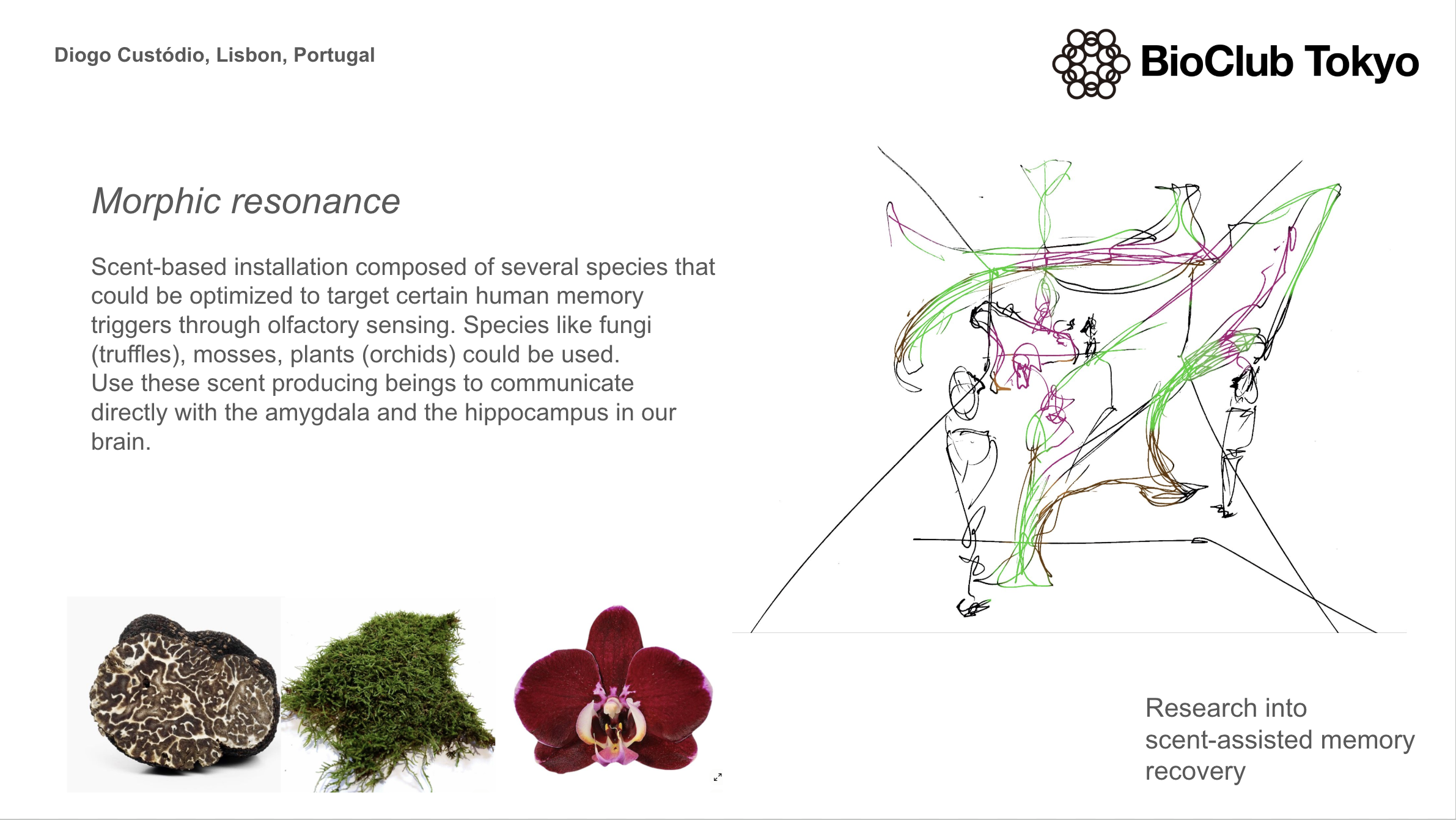
- Write a description about what you intend to do with automation tools for your final project.
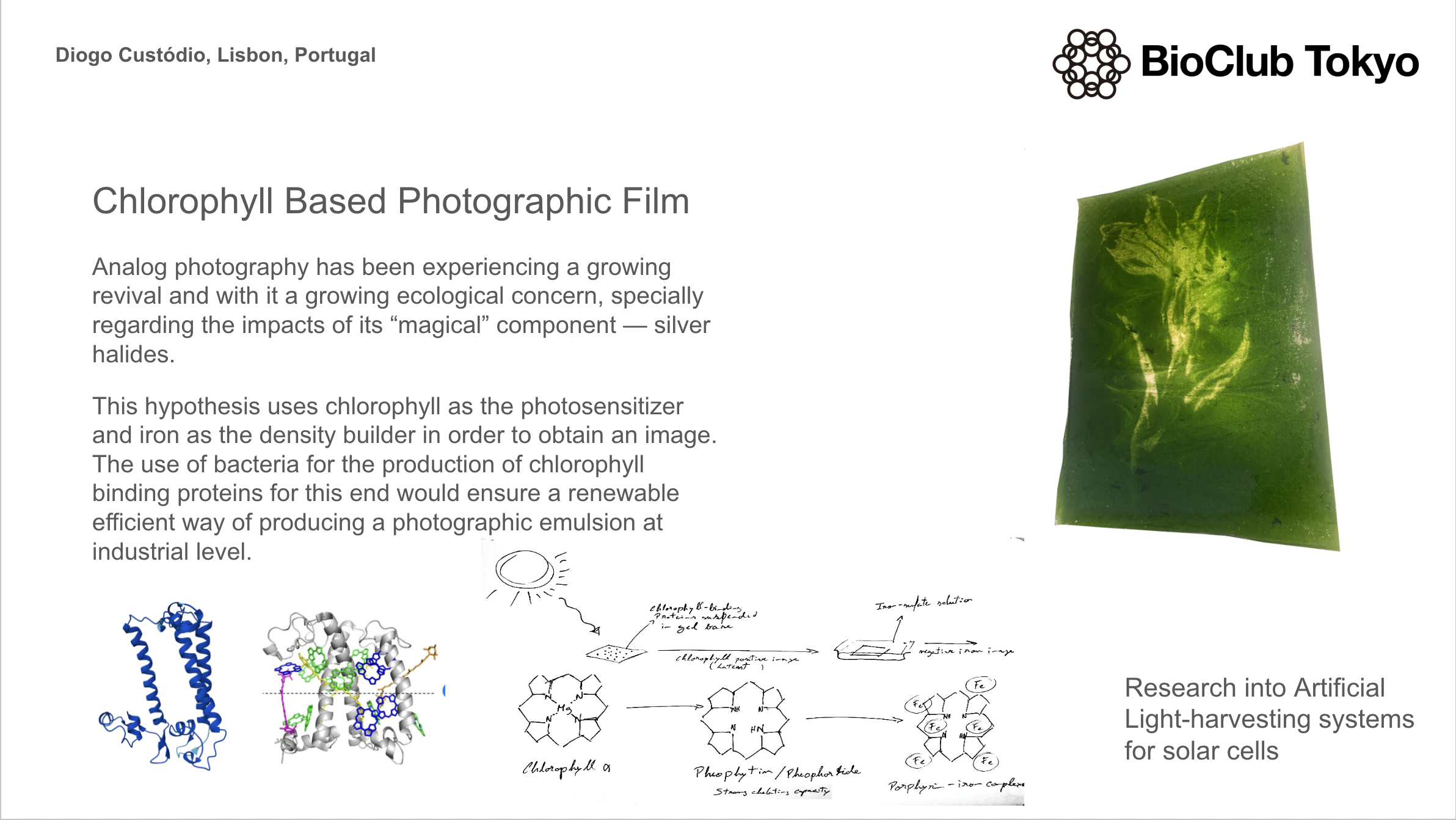
The development on photographic emulsions has an added difficulty of them being light-sensitive. So having an automated workflow to produce iterations of different possibilities would largely make the process more efficient
- Automation for culturing of e coli and synthesis of an array of modified and non-modified chlorophyll binding proteins.
- Lipid-induced folding of those different proteins by combining with chlorophyll extract
- Combination of the different final proteins with an agarose base to allow dispersion onto a base surface
- 3d printed holder for the base supports for the chlorophyll protein emulsion to be dispersed on
- Drying of the emulsion in dark conditions
For the purpose of this exercise, I tried to create a comprehensible workflow for the following operations that I think would be essential for this project:
Workflow for expression of chlorophyll-binding proteins
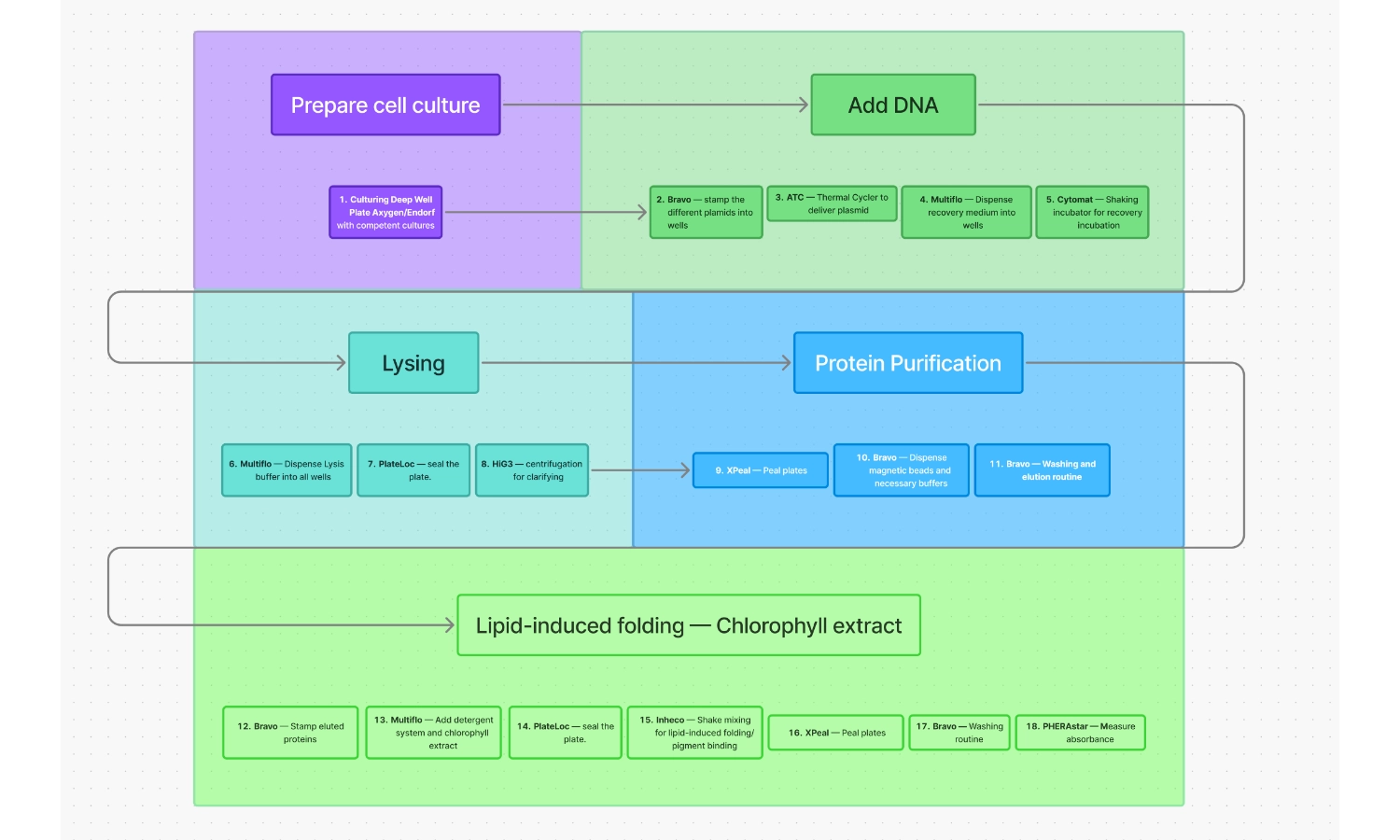
- Culturing Deep Well Plate Axygen/Endorf with competent cultures
- Bravo — Stamp the different plasmids into wells
- ATC — Thermal Cycler to deliver plasmid via thermo shock
- Multiflo — Dispense recovery medium into wells
- Cytomat — Shaking incubator for recovery incubation
- Multiflo — Dispense Lysis buffer into all wells
- PlateLoc — Seal the plate
- HiG3 — Centrifugation for clarifying
- XPeal — Peal plates
- Bravo — Dispense magnetic beads and necessary buffers
- Bravo — Washing and elution routine
- Bravo — Stamp eluted proteins
- Multiflo — Add detergent system and chlorophyll extract
- PlateLoc — Seal the plate
- Inheco — Shake mixing for lipid-induced folding/pigment binding
- XPeal — Peal plates
- Bravo — Washing routine
- PHERAstar — Measure absorbance
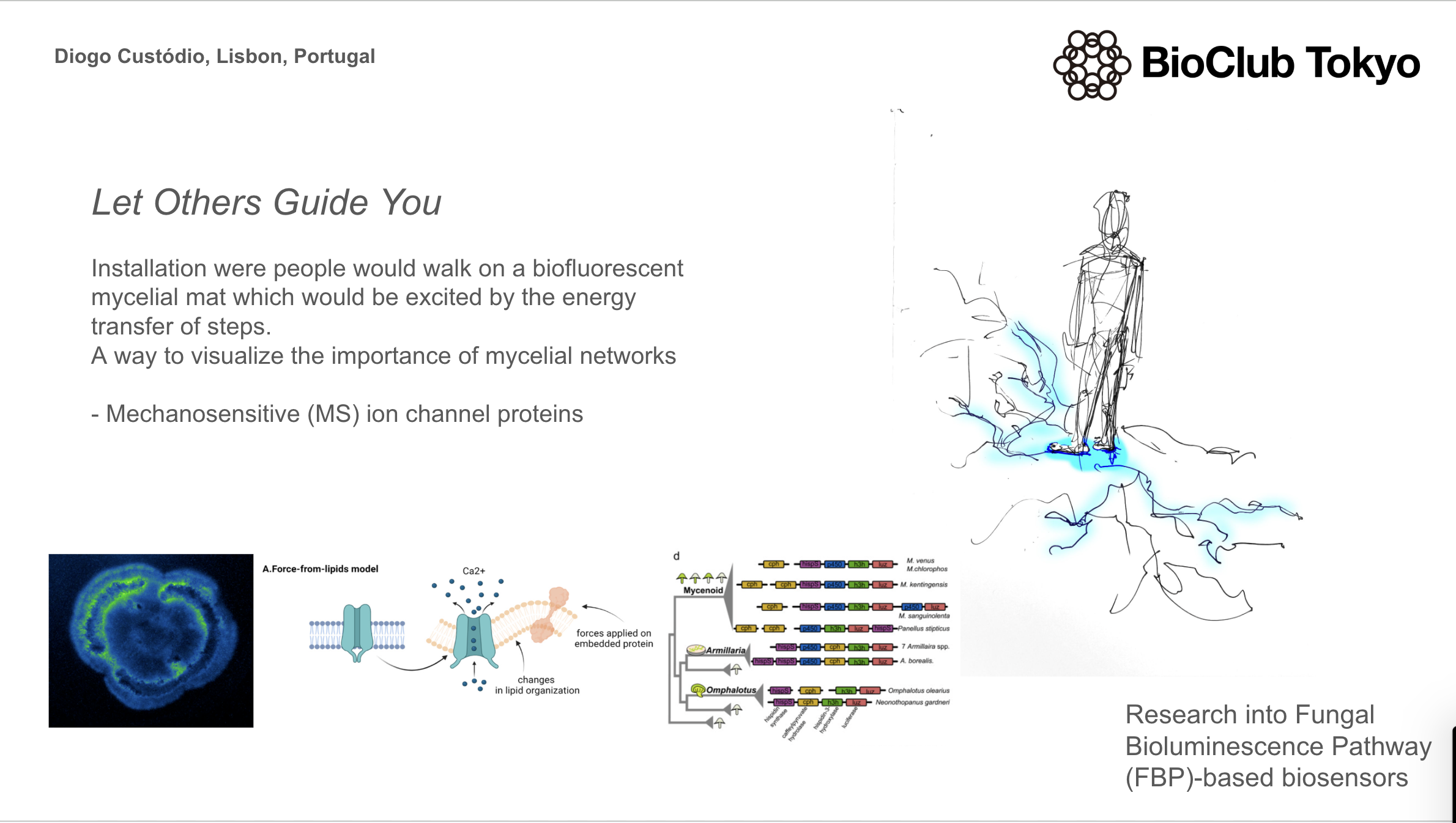
- After completing this part of the homework, I realized that CFPS might be a better bet, using an automated system, for the expression and testing of this particular kind of protein since the open system nature of this method would allow the direct addition of chlorophyll into the reaction mixture and allow for instant protein folding. Further along the progression of this project, when the chemistry of the proteins is optimized, living cells — like cyanobacteria — could be used to express them in larger quantities
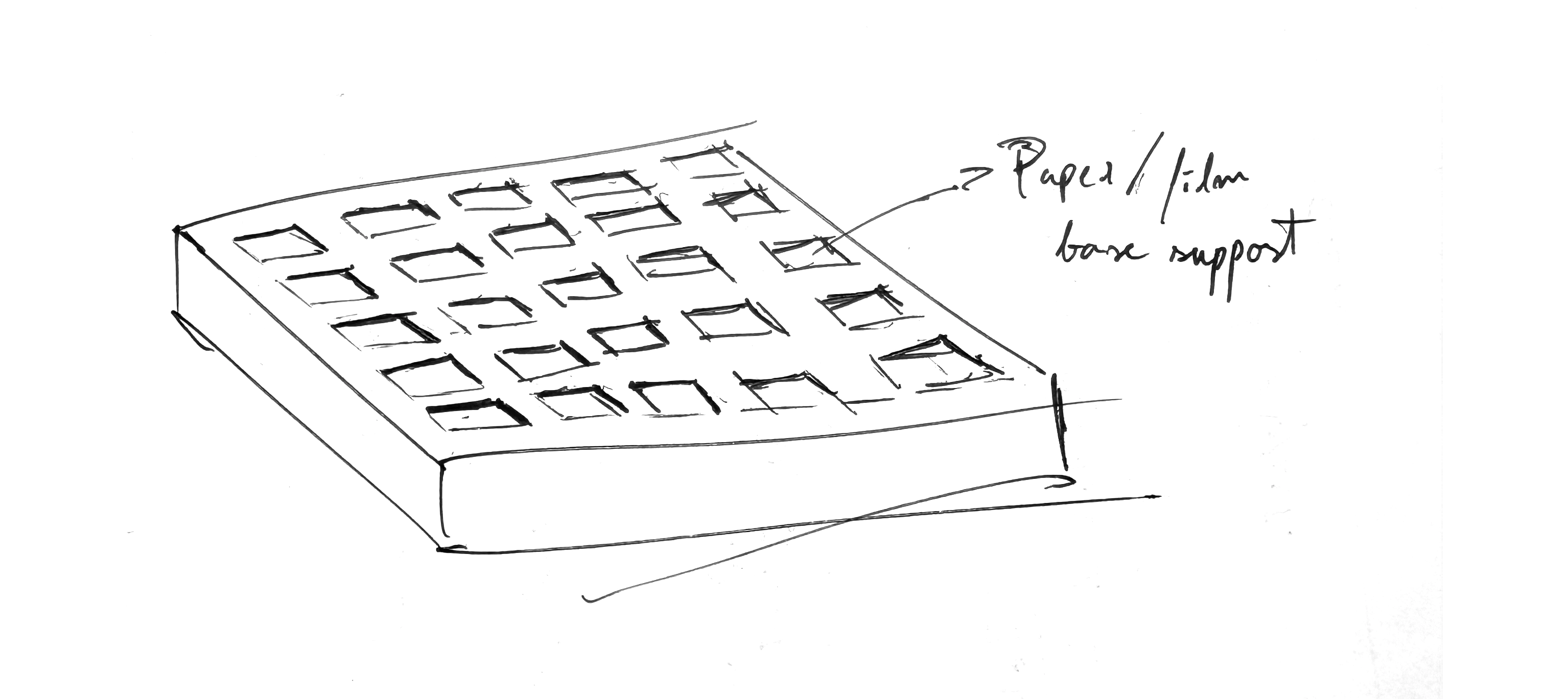
3D printing of a holder for base supports for the chlorophyll emulsion For the chlorophyll proteins (suspended in some kind of gelling agent like agar) to be dispersed on, so field tests could be performed with pinhole cameras (for the testing of an array of photographic emulsion iterations). Bellow a quick sketch of what it could be.
Final Project Ideas
References
APEX: Automated Protein EXpression in Escherichia coli
Automation and Optimization of Protein Expression and Purification on a Novel Robotic Platform
Bacterial Transformation Workflow
Folding in vitro of light-harvesting chlorophyll a/b protein is coupled with pigment binding
High-throughput, Microscale Magnetic Bead Protein Purification … Ginkgo … (RAC) Platform
Combining In vitro Folding with Cell-Free Protein Synthesis for Membrane Protein Expression