Week 1 HW: Principles and Practices
(The Challenge)
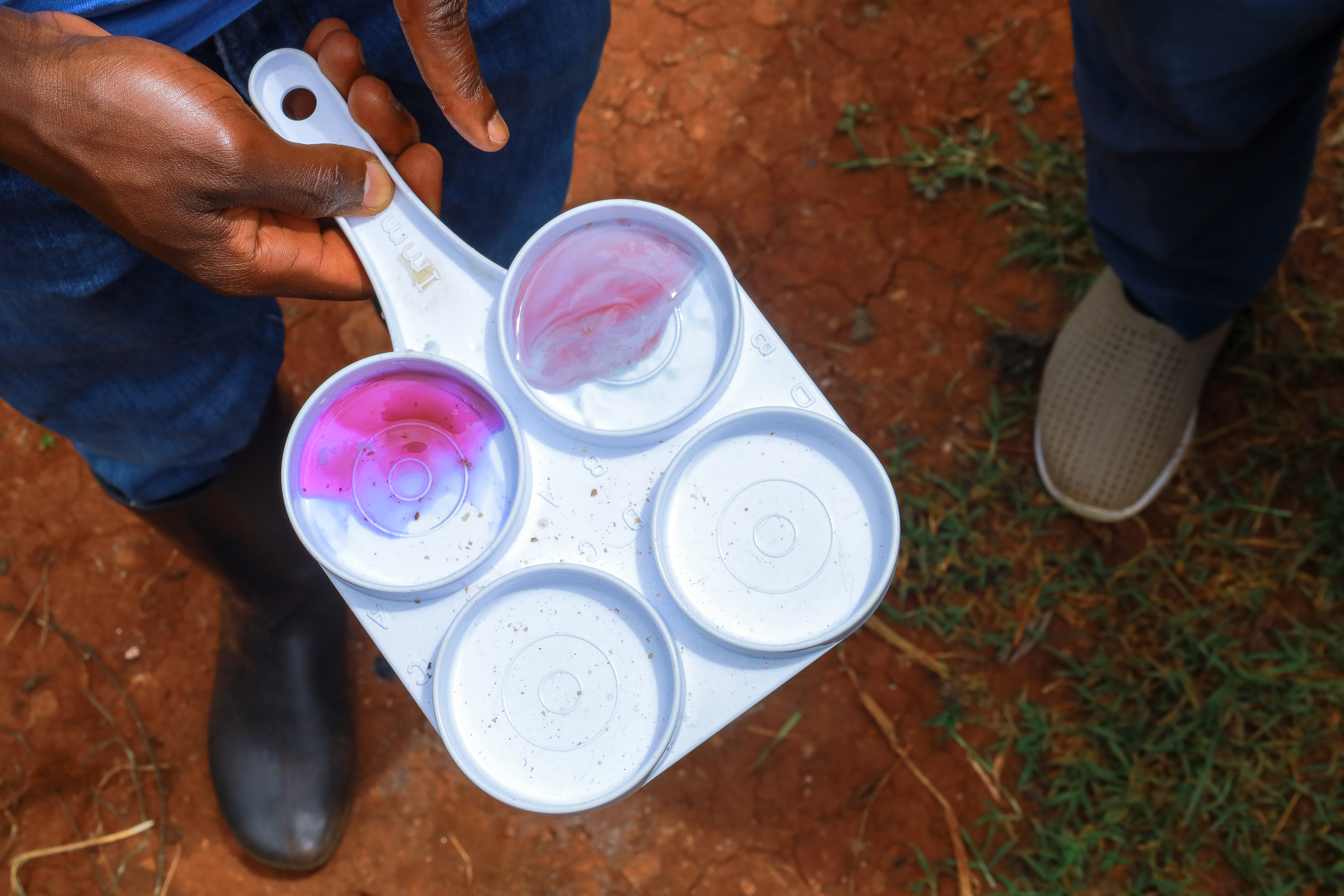
Mastitis is an inflammation of the mammary gland in dairy cows, often caused by bacterial pathogens. It is a common and costly issue in dairy farms, leading to significant economic losses and affecting overall milk quality(Damasceno et al., 2025). The condition can arise from various factors, including poor hygiene, stress, and injuries to the udder. Common bacterial pathogens responsible for mastitis include Staphylococcus aureus, Escherichia coli, and Streptococcus uberis, which can enter the udder through damaged skin or during milking. Mastitis presents in either clinical or subclinical form. Coliforms from Escherichia coli, Klebsiella spp., and Enterobacter spp. account for 40% of clinical mastitis cases.
While antibiotics remain the primary treatment for clinical mastitis, improper use contributes to antimicrobial resistance (AMR), making infections harder to control. The overuse and misuse of antibiotics in farms contribute to the emergence of drug-resistant mastitis-causing pathogens, further complicating disease management. Mastitis is difficult to eradicate, but its prevalence can be significantly reduced through proper farm management and preventive measures to ensure profitable production in dairy farms. One of such methods is the use of teat dipping disinfectants before and after milking. Current post-milking disinfectants are designed to reduce bacterial exposure and control infections. However, their effectiveness can vary, and there are limitations to their use.
Commercial teat dips typically contain active ingredients such as iodine, chlorhexidine, and lactic acid, each chosen for their bactericidal properties. Iodine-based products have long been favored for their broad-spectrum efficacy; however, concerns about iodine residues in milk are prompting farmers to consider alternatives. Chlorhexidine is another common disinfectant known for its effectiveness against various pathogens, but its performance can vary significantly depending on the formulation. Lactic acid is gaining popularity as well, particularly when combined with hydrogen peroxide, which has shown promising results in reducing bacterial loads. Nevertheless, these traditional disinfectants are not without limitations. For example, their effectiveness might diminish in the presence of organic matter, which can inhibit their action on bacteria (Fitzpatrick et al., 2021).
Reliance on these products may lead to issues such as the development of resistant bacterial strains, raising questions about their long-term efficacy(Damasceno et al., 2025). Given these challenges, the dairy industry is increasingly looking for innovative solutions to enhance mastitis control. This exploration includes synthetic antimicrobial peptides, which could provide a more effective and safer alternative to conventional disinfectants, addressing both efficacy and the concerns associated with traditional products (Ózsvári & Ivanyos, 2022)
(The Intervention)
Synthetic antimicrobial peptides (AMPs) is a promising substitute for traditional post-teat dips in dairy farming. The peptides can be designed to control a broad range of bacteria, making them effective against the pathogens responsible for mastitis. The mechanism of action of AMPs can involve disrupting the bacterial cell membranes, which leads to cell death. This method of attack is different from that of many conventional disinfectants that often rely on chemical reactions.
(The Promise)
A safer, more effective preventative solution to control mastitis.
‘Week 1 HW: Governance Policy Goals’

‘Week 1 HW: ‘Current Status & Potential Governance Actions’
In Kenya, currently, there are no defined regulations for products developed through synthetic biology. Medicines and veterinary products are regulated mainly through the Pharmacy and Poisons Board and the Directorate of Veterinary Services. For products that may have foreign DNA they would be considered as GMOs and therefore would be regulated by the National Biosafety Authority.
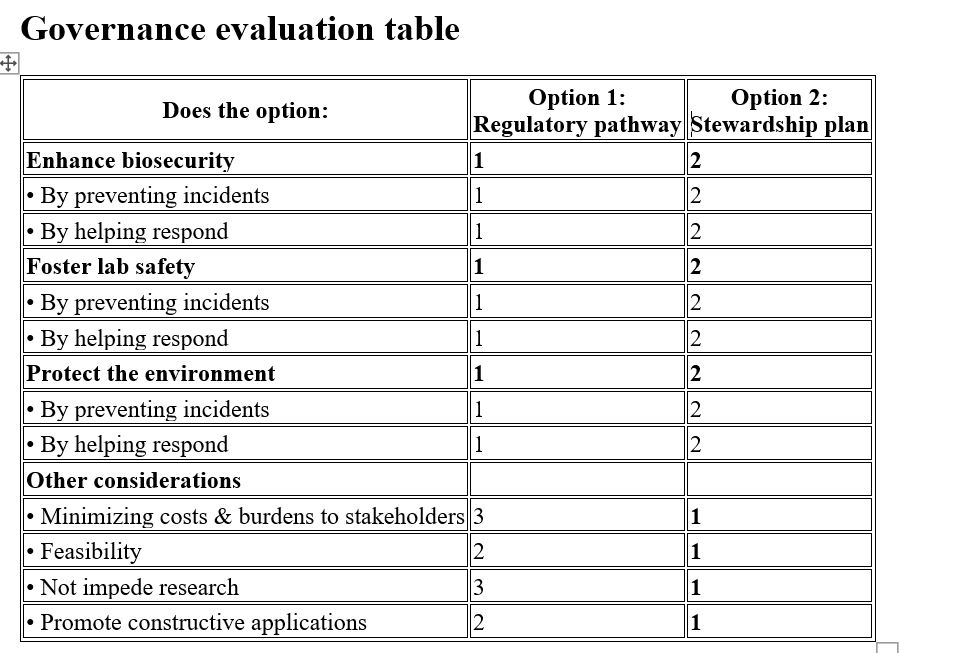
There is a need to explore the development of a regulatory pathway within existing Kenyan institutions for synthetic biology-based products. This will ensure that the products meet all safety requirements and that there is public confidence in their safety. However, there is concern that the introduction of these regulations may over-extend approval timelines and regulatory processes, potentially delaying research progress and the deployment of synthetic biology–derived products. The following governance actions are meant to help balance building public trust and ensuring that the products from synthetic biology reach the end users.
Development of a regulatory pathway for the regulation of Syn-Bio products
Picking lessons from the development of gene editing regulatory products, the same aspect can be used to decide on how syn-bio products are regulated. It can be 2-phased, where level 1 is those that do not incorporate foreign DNA, and level 2 is those that involve incorporated foreign DNA. In terms of regulation, a clear pathway can be developed for the two levels, whereby the different government agencies can work together to develop factors such as setting the maximum residue limit in Milk & Milk products, as in the case of antimicrobial peptides.
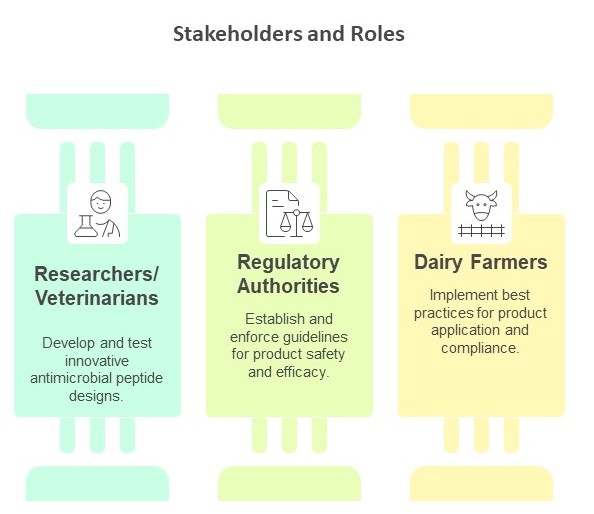
For this to be achieved, there is a need for buy-in from the National Government, researchers, and regulatory bodies such as NBA-Biotech regulation, NEMA- environment regulation, and directorate of Veterinary Service, and the Public Health Institutes.
One of the main assumptions is that the various organizations have the technical capacity and know-how to regulate synthetic biology products. There is also an assumption that there is an existing risk assessment structure that can easily be adapted for antimicrobial peptides and even those for ranking syn-bio products as high, moderate, and low risk.
Develop and Implement a stewardship plan
Drawing from best practices from stewardship plans from biotech products, a detailed stewardship plan can be developed by regulators and researchers to ensure that farmers use the products as stipulated and that there is a way of ensuring that they are not abused. A quick example would be guidelines on how to ensure traceability and compliance, and use AMP-based dips as part of integrated mastitis management plans and not as the magic bullet that would solve all the problems.
The assumptions made are that the products can be easily traceable and that the farmers would be willing to keep proper records without tokenism involved. The expectation is that the farmers will follow the farm management and record-keeping plan provided, and that they will be honest and not falsify the records.
‘Week 1 HW: ‘Week 2 Lecture Prep’
Homework Questions from Professor Jacobson
Nature’s machinery for copying DNA is called polymerase. What is the error rate of polymerase? How does this compare to the length of the human genome. How does biology deal with that discrepancy? Error Rate: 1:106 Biology deals with this through proofreading and replacing the mismatched base pairs.
How many different ways are there to code (DNA nucleotide code) for an average human protein? In practice what are some of the reasons that all of these different codes don’t work to code for the protein of interest?
Homework Questions from Dr. LeProust
What’s the most commonly used method for oligo synthesis currently? Phosphoramidite synthesis
Why is it difficult to make oligos longer than 200nt via direct synthesis? There would be compounding inefficiencies, since the addition process is not perfect
Why can’t you make a 2000bp gene via direct oligo synthesis? There would be higher error rates
Homework Question from George Church
What are the 10 essential amino acids in all animals and how does this affect your view of the “Lysine Contingency”?
Arginine, Histidine, Isoleucine, Leucine, Lysine, Methionine, Phenylalanine, Threonine, Tryptophan, and Valine.
Lysine is an essential amino acid, meaning that we have to eat certain foods to obtain it. Based on the story from Jurassic Park, the scientist inserted a gene that created a single faulty enzyme in protein metabolism. The animals could therefore not manufacture the amino acid lysine. This technically does not matter because with or without the engineered enzyme, the dinosaurs would still be dependent on the food they consume to get the nutrients. In the event they escaped, they would still eat other lysine-rich foods in nature and would get lysine and therefore survive without being in captivity.