Week 3 HW: Lab Automation
Python Script for Opentrons Artwork
I first designed the sunflower using the Opentrons-Art Website. For the design, I went with a sunflower design. https://opentrons-art.rcdonovan.com/?id=e3z1i8r73863y1k
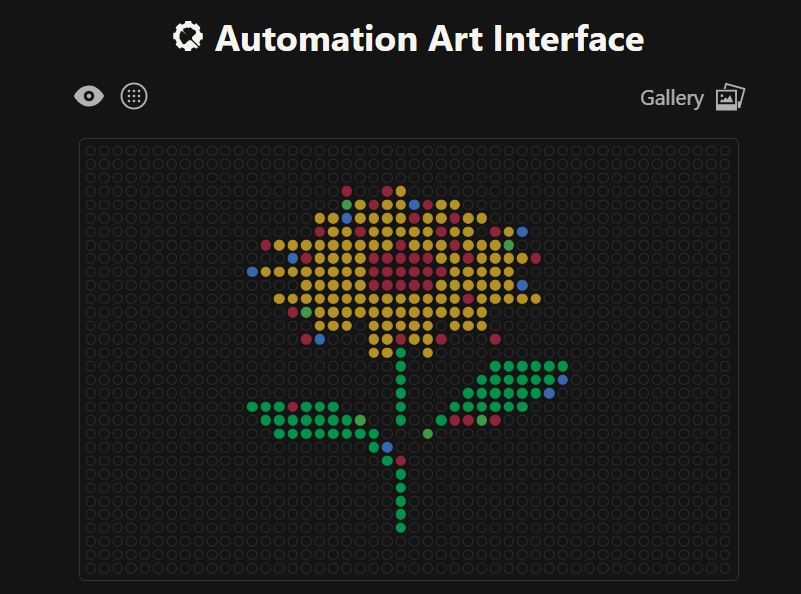
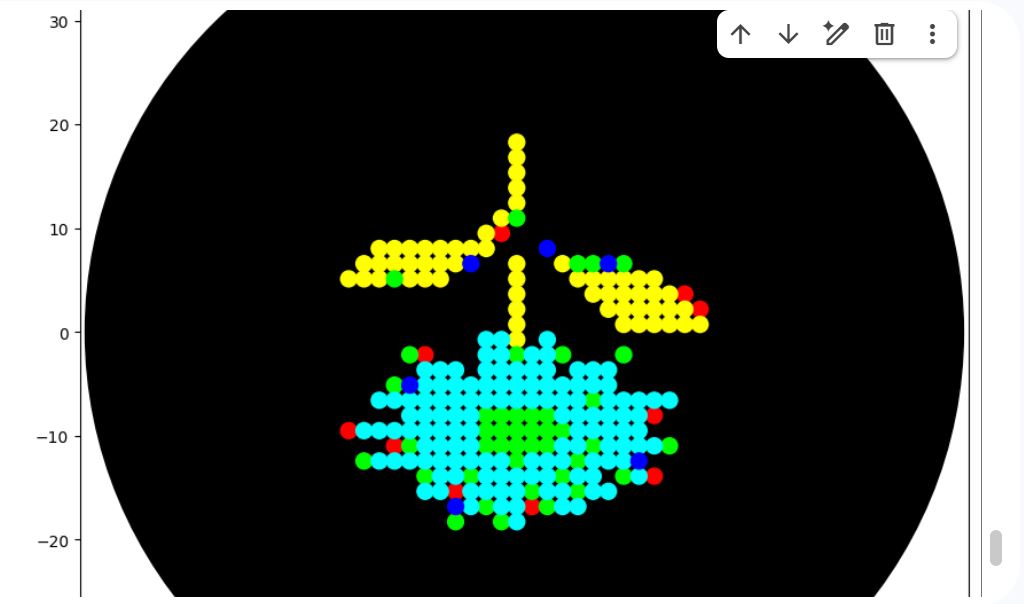
I then downloaded the Excel file, and on HTGAA26 Opentrons Colab, I leveraged Gemini assistance to be able to write the Python script. I uploaded the Excel sheet and promted gemini to assist in developing a script that would give me the sunflower design. Link to the Colab:https://colab.research.google.com/drive/1arsozAVNQhs-4Ol0LMIRKZ4QGVld0Kgf?usp=sharing
Publication Title: Automation of biochemical assays using an open-sourced, inexpensive robotic liquid handler
While going through the paper, I analyzed two things.
- How the Opentrons OT-2 was used.
- How was it making it easier?
The Opentrons OT-2 was being used to automate biochemical assays for protein and DNA measurement. Specifically, the researchers developed two assays: the Bradford assay for protein quantification and the PicoGreen assay for double-stranded DNA measurement. These assays are highly relevant to vaccine development, as they provide information on efficacy, potency, safety, and quality control.
Based on this article, the OT-2 simplifies laboratory automation in several ways:
- Cost-effective: Unlike traditional commercial liquid handlers that cost over $250,000, this system costs under $10,000, making automation accessible to smaller labs.
- User-friendly programming: It uses Python programming language with open-source flexibility, reducing training requirements.
- Accurate and precise: The study found the pipettes exhibited excellent accuracy and precision, with relative inaccuracy of 1.30% for the P20 pipette and 0.53% for the P300 pipette.
- Time-saving: The Bradford assay completed in 75 minutes and the PicoGreen assay in 41 minutes, reducing manual labor.
How would I leverage this for my work
Based on the work I want to do that is aimed at prpoducing Antimicrobial Peptide at industrial scaled there are several ways I can leverage it to my advantage.
The OT-2 could be adapted for this application in the following ways:
Quality control testing: The automated protein and DNA quantification assays demonstrated here could monitor protein expression levels and detect residual DNA contamination during antimicrobial peptide synthesis and purification.
Assay automation: The system’s ability to run customized Python protocols means I could develop automated workflows for peptide synthesis optimization, mixing reagents, and conducting potency assays.
High-throughput screening: The medium-throughput capability would allow testing multiple peptide variants or production conditions simultaneously to identify the most effective formulations.