Week 7 HW: Genetic Circuits Part II: Neuromorphic Circuits
Part 1
What advantages do IANNs have over traditional genetic circuits, whose input/output behaviors are Boolean functions?
Traditional genetic circuits implement Boolean logic gates (AND, OR, NOT, NAND, etc.), hence their input/output relationships are discrete - a gene is either ON or OFF. This allows only binary decision-making and makes it difficult to represent graded, continuous, or context-dependent responses. IANNs provide continuos computation where inputs and outputs exist on a continuum, allowing cells to integrate multiple signals simultaneously.
Describe a useful application for an IANN; include a detailed description of input/output behavior, as well as any limitations an IANN might face to achieve your goal. IANNS would be best implemented in the monitroing procedures in metabolic conditions. In my particular exmaple, the IANNS would be good to monitor and asses PMOS (polyendocrine metabolic ovarian syndrome). Since this disease is characterised by three co-occuring signals that can be read intracellularly: elevated androgens, insulin resistance and chronic low-grade inflammaiton. The IANN’s strength is integrating all three continuously, which a Boolean circuit cannot do.
Some limitations:
Using multiple Csy4 variants risks cross-reactivity — they may cleave each other’s targets.
Cell-type specificity/Biological noise: A diagnostic device would need to specify the cellular context.
Baseline variability: Hormone levels fluctuate across the menstrual cycle even in healthy individuals, so the IANN would need calibration thresholds per individual rather than universal cutoffs.
Delivery: Getting the genetic construct into the relevant cells non-invasively remains an unsolved challenge for any in-vivo IANN.
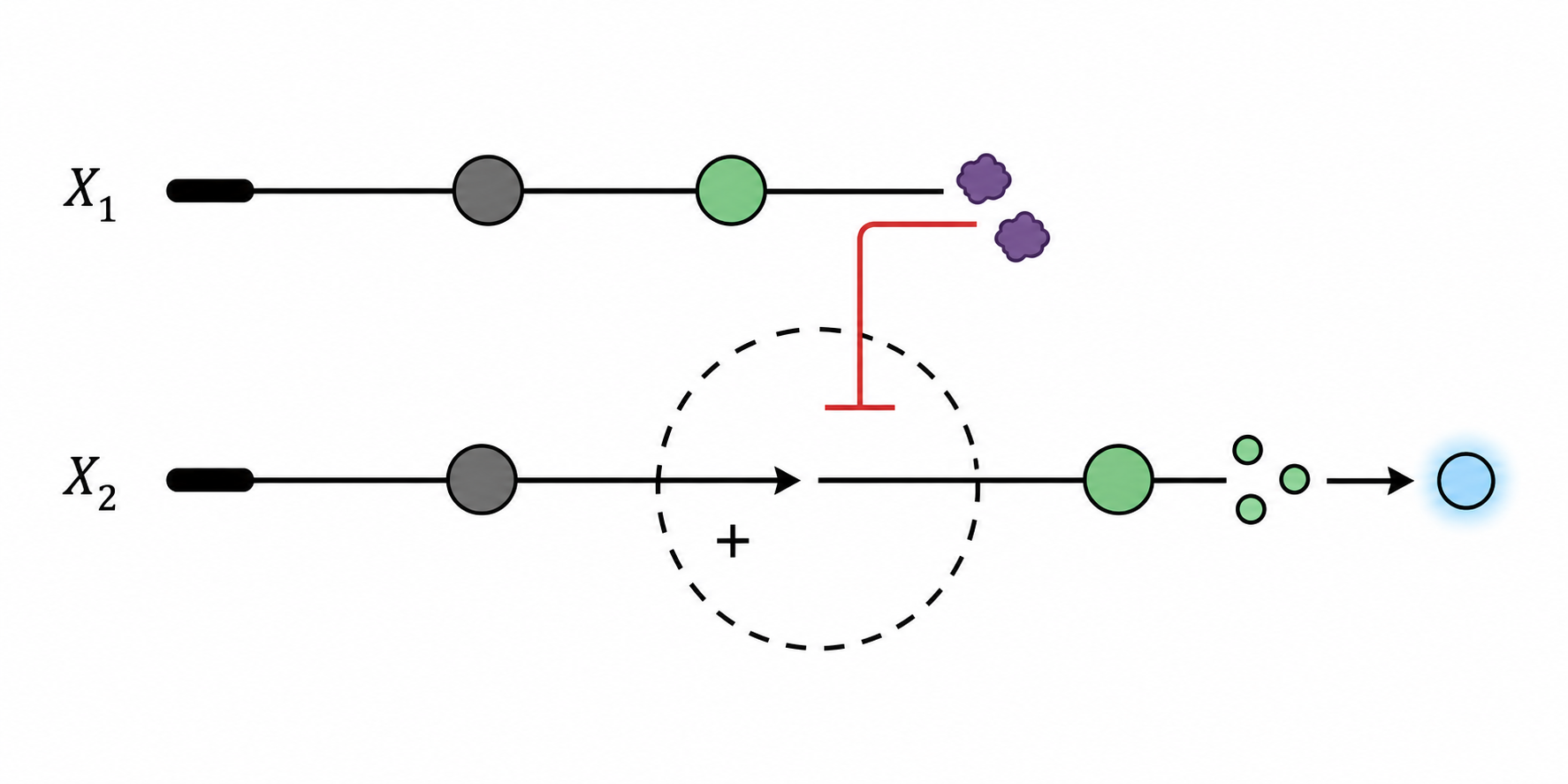
Draw a diagram for an intracellular multilayer perceptron where layer 1 outputs an endoribonuclease that regulates a fluorescent protein output in layer 2.
Part 2
What are some examples of existing fungal materials and what are they used for?
Fungal materials utilize mycelium - the vegetative root network of fungi. Currently, Alaska (AK) has emerged as a top user of fungal materials in daily life, pioneering their implementation to address specific environmental challenges.
One example is how fungal biocomposites are being used to manufacture insulated container materials designed to replace traditional plastic packaging, drastically helping with the persistent plastic pollution problem.
In Alaska, where the seafood export industry relies heavily on lightweight insulation, researchers have developed mycelium-based container materials combined with local wood pulp. These containers serve as biodegradable shipping boxes, directly replacing expanded polystyrene (Styrofoam) and preventing non-degradable plastic waste from accumulating in maritime ecosystems.
The second exmaple, would help with high heating costs and environmental degradation, by implementing fungus based insulation. These insulation panels are grown locally by feeding fungal strains on cellulose substrates harvested from beetle-killed spruce trees, transforming a major forest fire hazard into high-performance, sustainable housing insulation. (tap on the pink text to see the supplementary links)
The core advantages are:
Drastic Reduction in Plastic Pollution: Unlike traditional plastics that persist in landfills and oceans for centuries, fungal materials are completely biodegradable and compostable, breaking down naturally after their operational lifespan.
Fire Retardancy: The natural presence of chitin in fungal cell walls gives mycelium-based insulation excellent fire-resistant properties, making it safer during combustion events compared to plastic foams, which release toxic volatile organic compounds (VOCs).
Moisture Breathability: Fungus-based insulation is vapor-permeable. In cold climates like AK, this allows trapped structural moisture to escape, preventing the structural rot and toxic mold growth often caused by vapor-impermeable plastic barriers.
Couple of disadvatages that I thought of were:
- Production Time Constraints: Traditional plastics can be manufactured instantaneously via high-throughput chemical extrusion. Fungal materials, however, require a biological incubation period of several days to weeks to grow, making rapid mass production challenging.
- Material variance and potential structural decay over time: The strength, density, and insulating properties of a mycelium block depend heavily on how evenly the fungus grew throughout its wood-pulp substrate. In highly humid environments or if a container gets scratched or punctured, dormant fungal spores or ambient microbes can re-activate.
What might you want to genetically engineer fungi to do and why? What are the advantages of doing synthetic biology in fungi as opposed to bacteria?
For me, it would be interesting to see how fungal materials can benefit human health by acting as living therapeutics. If we use safe fungi such as yeast, they can be engineered to act as drug-delivery vehicles in the intestine. These engineered fungi could sense specific metabolites like bile acids or glucose and then release insulinotropic peptides, vitamins, or other compounds when needed.
Another promising application is using fungi as living wound dressings in hydrogel bandages. In this case, the fungi could secrete growth factors or antimicrobial peptides to help accelerate wound healing and prevent infection.
Fungi are also excpetionally beneficial for synthetic biology because they share more cellular features with human cells than bacteria, which can make them better at producing complex human proteins in a functional form. They also have rich metabolic capacity because they often have larger genomes and more enzymes. In addition, fungi coexist with the bacterial microbiota in the gut, so they could potentially provide beneficial functions without completely disrupting the existing microbial community.