Week 6 Lab: Gibson Assembly Prelab, use a codon table and convert the following figure to a table of colors of DNA sequences.
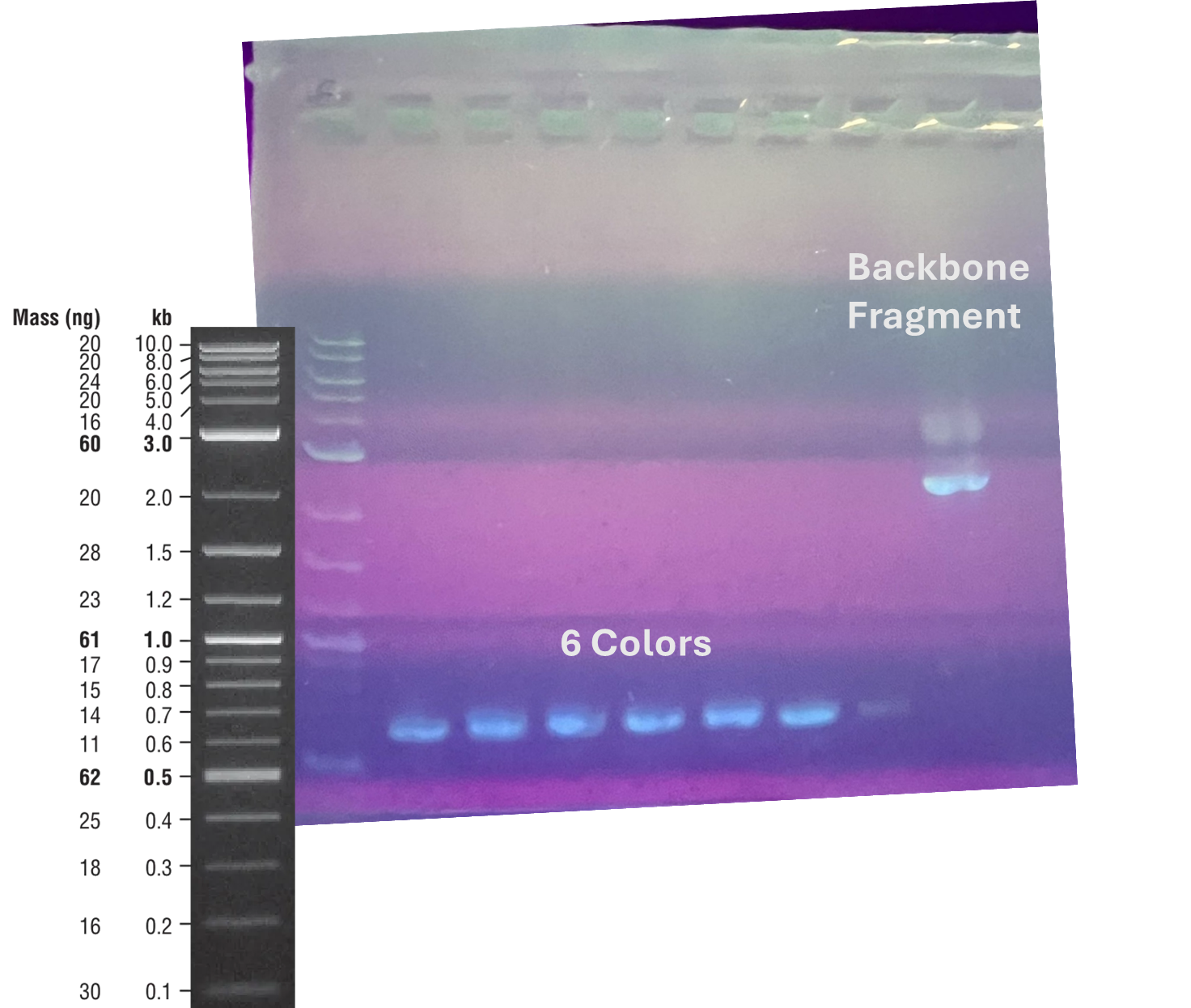
Variant Bases Original TGTCAG Orange GTTGGA ? Pink GCATGT ? Some photos from lab …
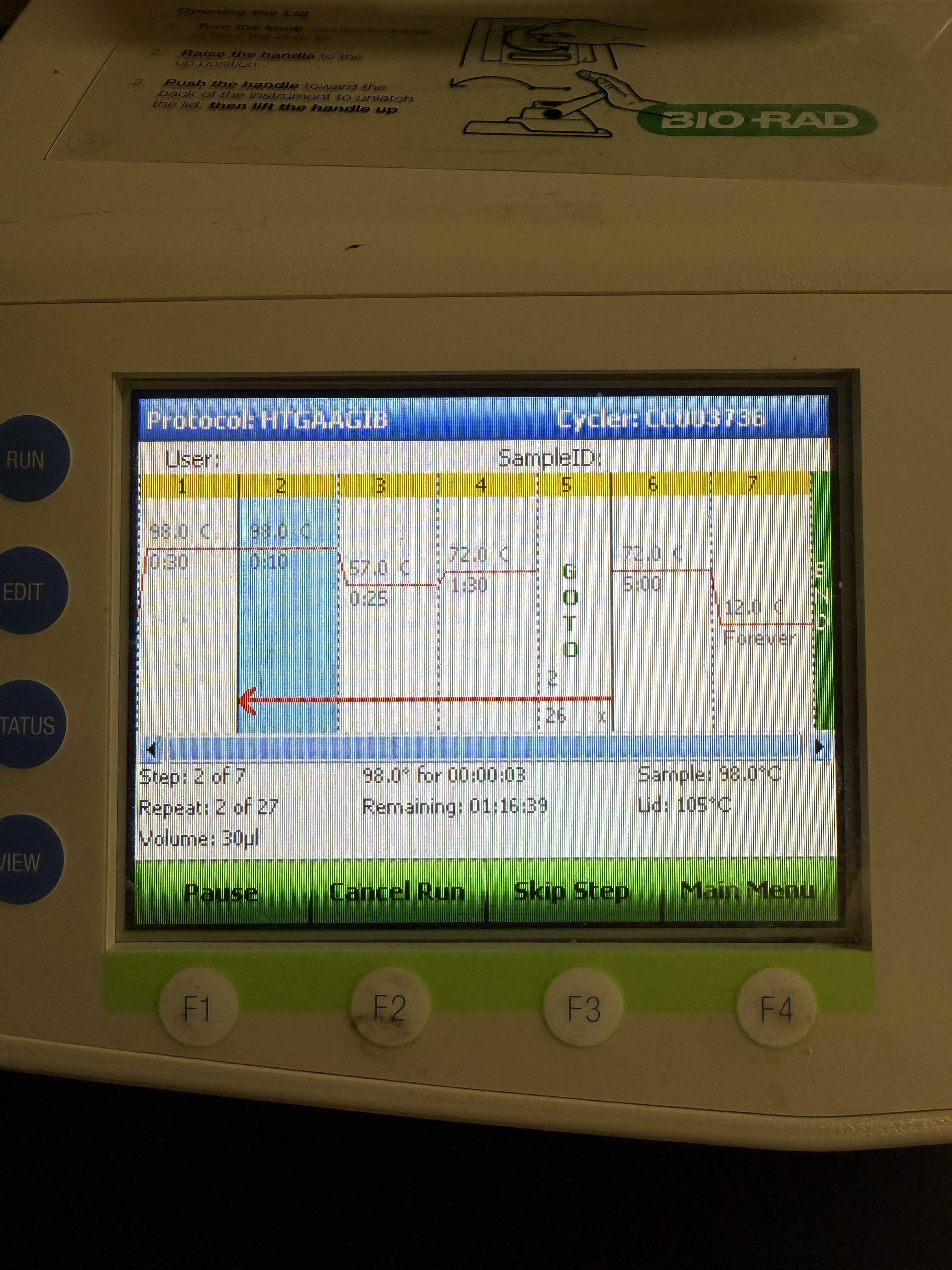
Polymerase Chain Reaction (PCR) Above is a photo of our Bio-Rad C1000 PCR Thermal cycler, set for the Backbone Fragment PCR, with Initial Denature: 98 C, 30 seconds, then for 26 Cycles: Denature: 98 C, 10 seconds; Anneal: 57 C, 25 seconds; Extend: 72 C, 1.5 minutes, hen afteer the 26 Cycle: Final Extension: 72 C, 5 minutes; Hold: 12 C, Forever.
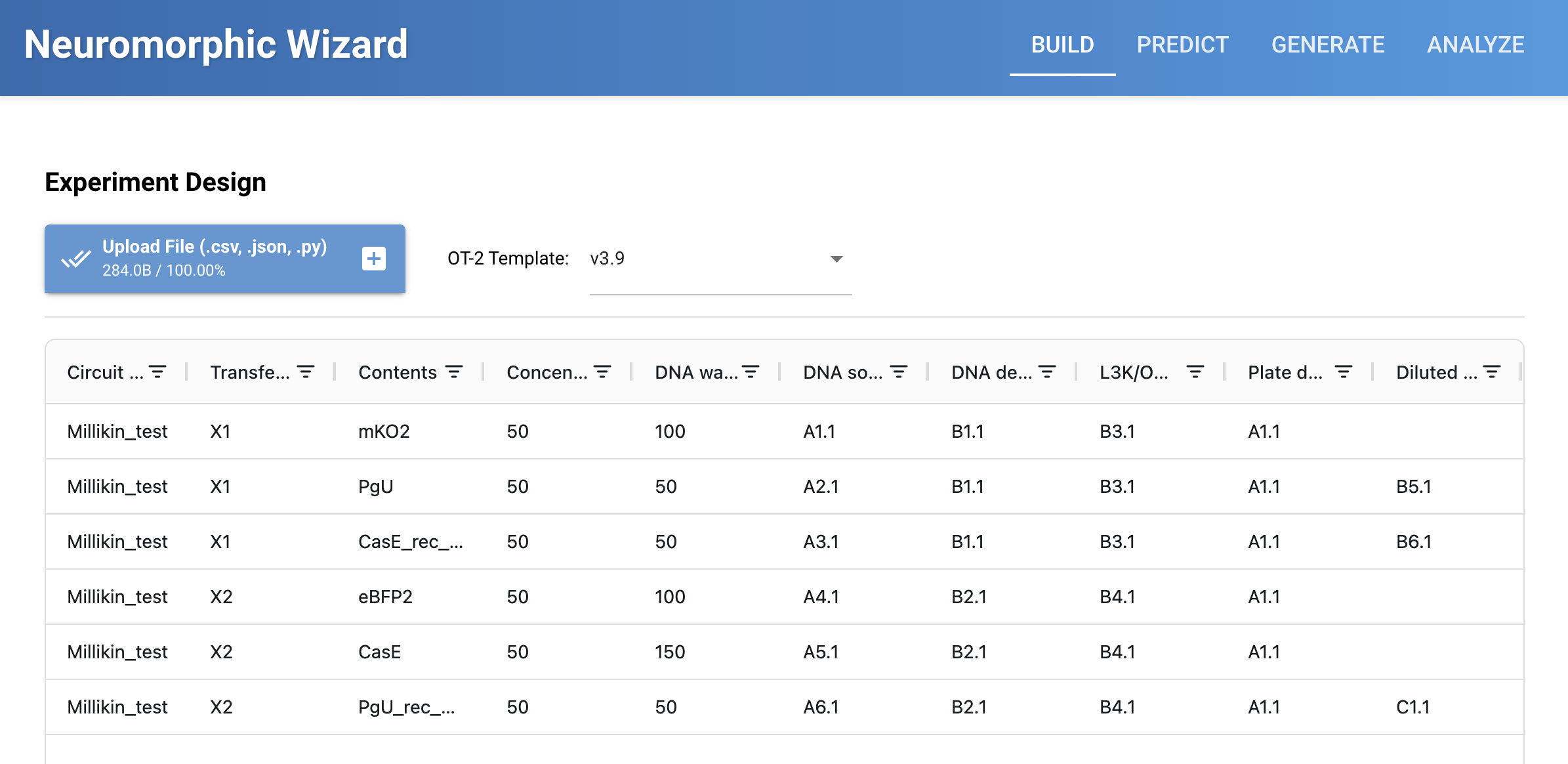
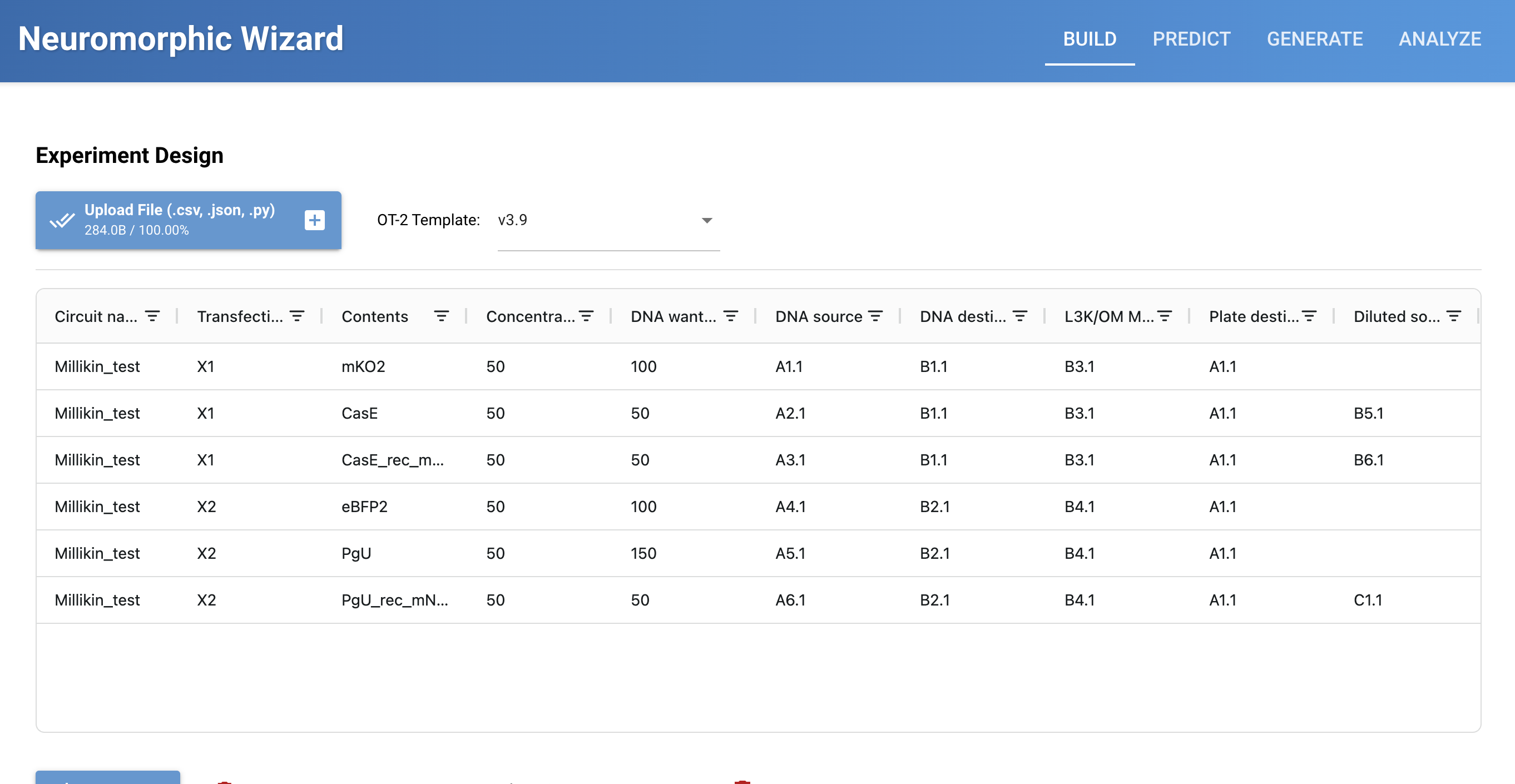
Day 1: Write instructions for the OT-2 to execute. I made a few of these, working on getting different results. I tested over 30 of these! I had a few that returned errors!
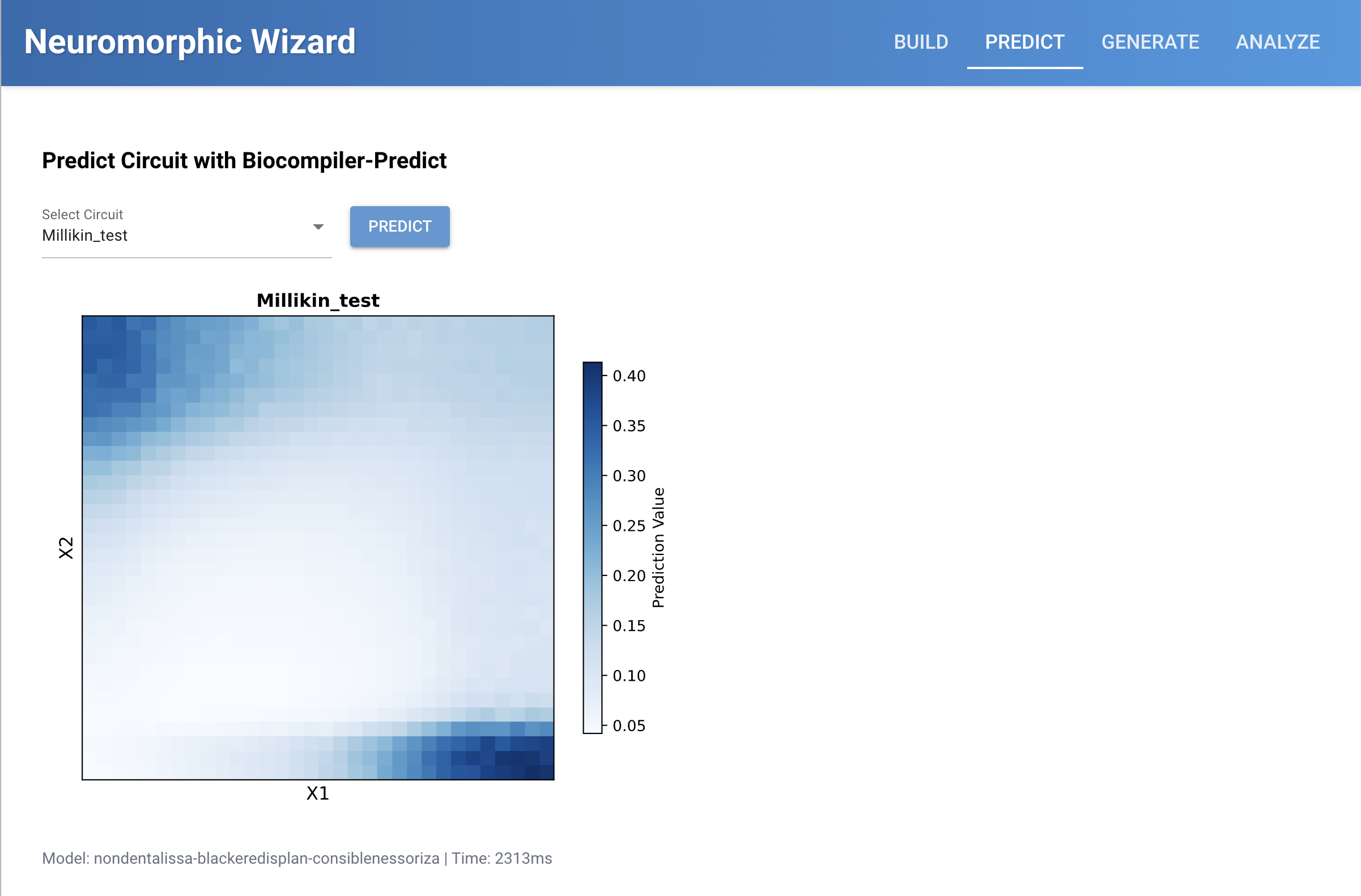
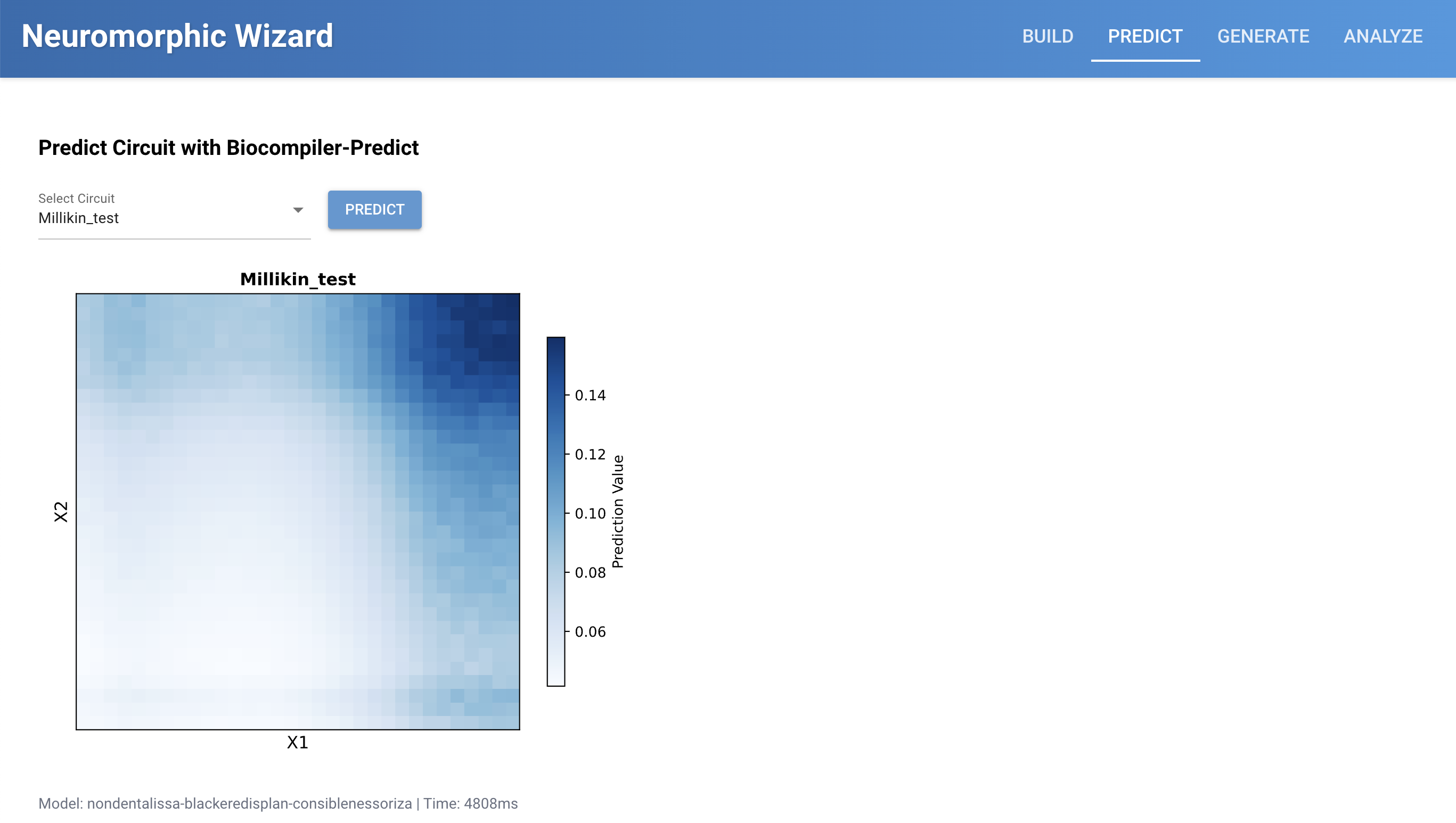
Another design test:
Explain the main advantages of cell-free protein synthesis over traditional in vivo methods, specifically in terms of flexibility and control over experimental variables. Name at least two cases where cell free expression is more beneficial than cell production. Describe the main components of a cell-free expression system and explain the role of each component.
Why is energy provision regeneration critical in cell-free systems? Describe a method you could use to ensure continuous ATP supply in your cell-free experiment.
Questions etc. are here: https://2026a.htgaa.org/2026a/course-pages/weeks/week-12/lab/index.html
Post Lab Questions | Mandatory for All Students
Which genes when transferred into E. coli will induce the production of lycopene and beta-carotene, respectively? Why do the plasmids that are transferred into the E. coli need to contain an antibiotic resistance gene? What outcomes might we expect to see when we vary the media, presence of fructose, and temperature conditions of the overnight cultures? Generally describe what “OD600” measures and how it can be interpreted in this experiment. OD600 is optical density at 600 nanometer wavelngth … this helps measure how cloudy the liquid is, to determine cell growth.
Subsections of Labs
Week 1 Lab: Pipetting
Week 6 Lab: Gibson Assembly
Week 6 Lab: Gibson Assembly
Prelab, use a codon table and convert the following figure to a table of colors of DNA sequences.
Variant
Bases
Original
TGTCAG
Orange
GTTGGA ?
Pink
GCATGT ?
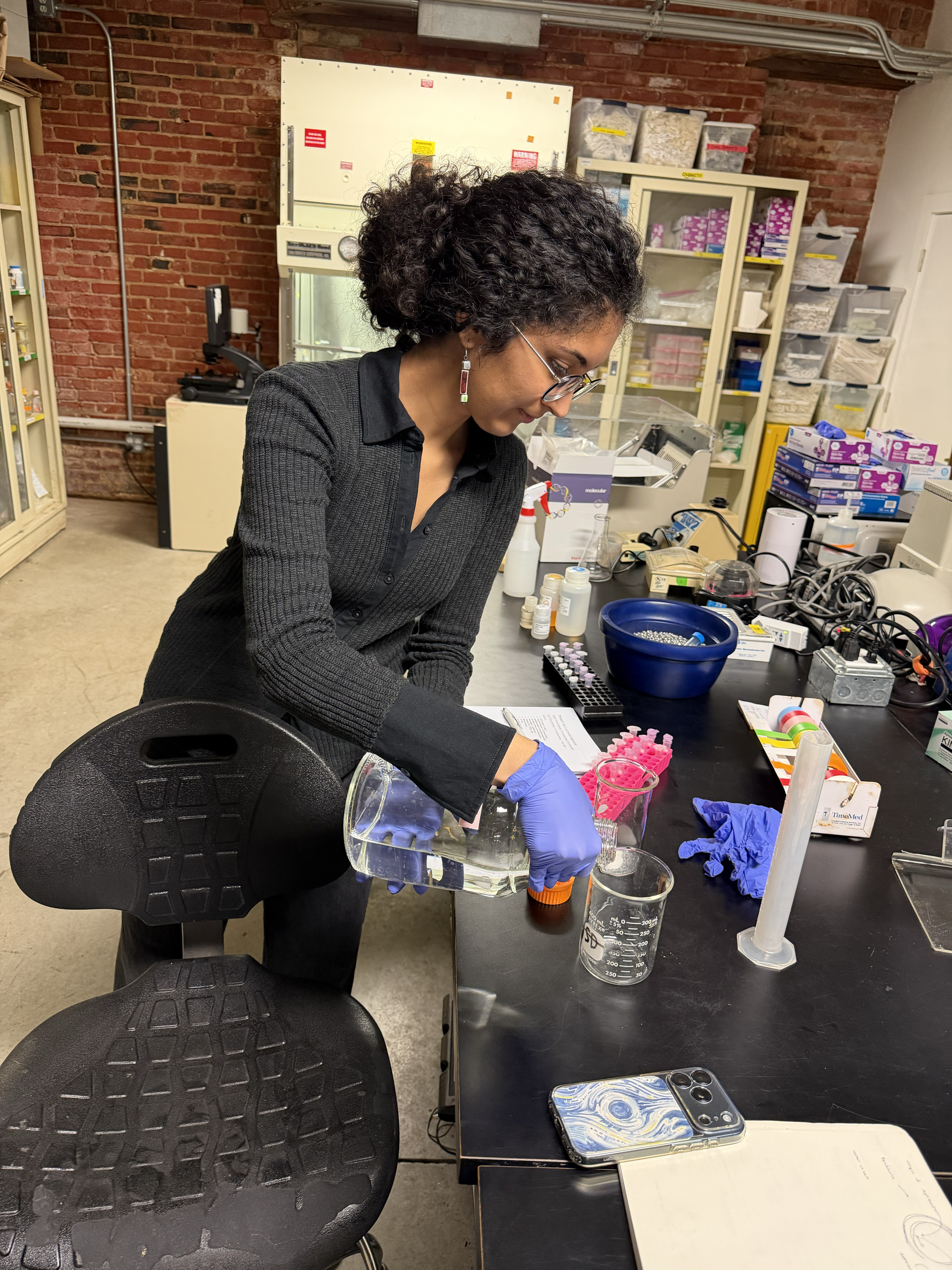
Some photos from lab …
Polymerase Chain Reaction (PCR)
Above is a photo of our Bio-Rad C1000 PCR Thermal cycler, set for the Backbone Fragment PCR, with Initial Denature: 98 C, 30 seconds, then for 26 Cycles: Denature: 98 C, 10 seconds; Anneal: 57 C, 25 seconds; Extend: 72 C, 1.5 minutes, hen afteer the 26 Cycle: Final Extension: 72 C, 5 minutes; Hold: 12 C, Forever.
Day 1: Write instructions for the OT-2 to execute.
I made a few of these, working on getting different results. I tested over 30 of these! I had a few that returned errors!
Another design test:
Week 9 Lab: Cell-Free Systems
Explain the main advantages of cell-free protein synthesis over traditional in vivo methods, specifically in terms of flexibility and control over experimental variables. Name at least two cases where cell free expression is more beneficial than cell production.
Describe the main components of a cell-free expression system and explain the role of each component.
Why is energy provision regeneration critical in cell-free systems? Describe a method you could use to ensure continuous ATP supply in your cell-free experiment.
Compare prokaryotic versus eukaryotic cell-free expression systems. Choose a protein to produce in each system and explain why.
How would you design a cell-free experiment to optimize the expression of a membrane protein? Discuss the challenges and how you would address them in your setup.
Imagine you observe a low yield of your target protein in a cell-free system. Describe three possible reasons for this and suggest a troubleshooting strategy for each.
what outcomes might we see at different temperatures and – if we change growht conditiosn we will see difference in gorowth and pigment productionn
OD600 – optical density at 600 wavelngth helps easure how cloudy the liquid is, to determine cell growth.
other experimental setups use acetone to separate … can do protein percipitate analysis … could also use ethanol or isopropyl alcohol to separate diferent pieces from one another …
why might we want to engineer e coli to produce pigments … because … e coli grows fast and because it does fewer cellular functions
biosynthetic pathway knowckout experiments … knock out one gene at a time to see
which should you modify e coli to sacrromycese – maybe stick with what uis easiest to modify – also how large is your gene insert – sometimes have to put into e coli before getting into yeast – e coli grows fast and is cheaper … sacrromycese is slower and constructs may have to simplified … yeast might be better if maybe trying to modify another fungus …
chose one enzyme and outline – main peices we need when making a construct – promoter (ex. T7, conducive, on all the time), RBS (Rhibozome binding site), your coding sequence, terminator, plasmid origin of replication (tells cell to allow plasmid to copy into host), and antibiotic resistance marker
Week 12 Lab: Bioproduction of Beta-Carotene and Lycopene
Which genes when transferred into E. coli will induce the production of lycopene and beta-carotene, respectively?
Why do the plasmids that are transferred into the E. coli need to contain an antibiotic resistance gene?
What outcomes might we expect to see when we vary the media, presence of fructose, and temperature conditions of the overnight cultures?
Generally describe what “OD600” measures and how it can be interpreted in this experiment.
OD600 is optical density at 600 nanometer wavelngth … this helps measure how cloudy the liquid is, to determine cell growth.
What are other experimental setups where we may be able to use acetone to separate cellular matter from a compound we intend to measure?
We could also use acetone to separate out proteins …
Why might we want to engineer E. coli to produce lycopene and beta-carotene pigments when Erwinia herbicola naturally produces them?
Post Lab Questions | For Committed Listeners Only
Let’s get in touch with our metabolic pathway!
What are the enzymes of the carotene pathway?
Within this pathway, which is the rate determining step (the step that takes the longest)? Which enzyme is responsible for this step?
Notes for design of a DNA construct for bioproduction
The first thing to do is to decide what organism you are going to use for this (E. coli or S. cerevisiae) for production. Which would you choose and why (emphases on production differences)?
Now choose one of the enzymes and lets outline the parts of the construct for expression.
For E. coli lets create a expression vector that works as a plasmid you choose E. coli let’s create a expression vector that works as a plasmids