Section One - Abstract
HTGAA 2026 Final Project Documentation Eric Schneider · BioArt Studio, Makerspace Charlotte · Genspace NYC node
Section 1 — Abstract
Provide a concise, self-contained summary of your project (minimum 150 words). The abstract should allow a reader to understand the purpose, approach, and expected outcomes without referring to other sections.
Your abstract should briefly address the following elements:
- Significance: What problem or question does the project address, and why is it important?
- Broad Objective: What is the overall goal of the project?
- Hypothesis: What prediction or principle is the project testing or demonstrating?
- Specific Aims: What key steps or milestones will be completed to achieve the objective?
- Methods: What experimental or technical approaches will be used?
1 — Significance
What problem or question does the project address, and why is it important?
The history of imaging offers a precise precedent for what synthetic biology must now accomplish. When Ferdinand Hurter and Vero Charles Driffield published their foundational sensitometry work in 1890, they did not merely characterize the photographic emulsion — they transformed an artisanal practice into a reproducible, industrially scalable system by rigorously quantifying the relationship between light exposure and material response. Their H&D curve made photography accessible at mass scale by encoding complexity into a predictable, designed workflow. BioLight proposes an analogous translation: applying the logic of exposure science to living cells, using controlled light as the variable input and protein expression as the measurable output — not in isolation from the research community, but in direct collaboration with it, extending and accelerating the outreach of institutional synthetic biology into the hands of designers, makers, and educators who are ready to engage.
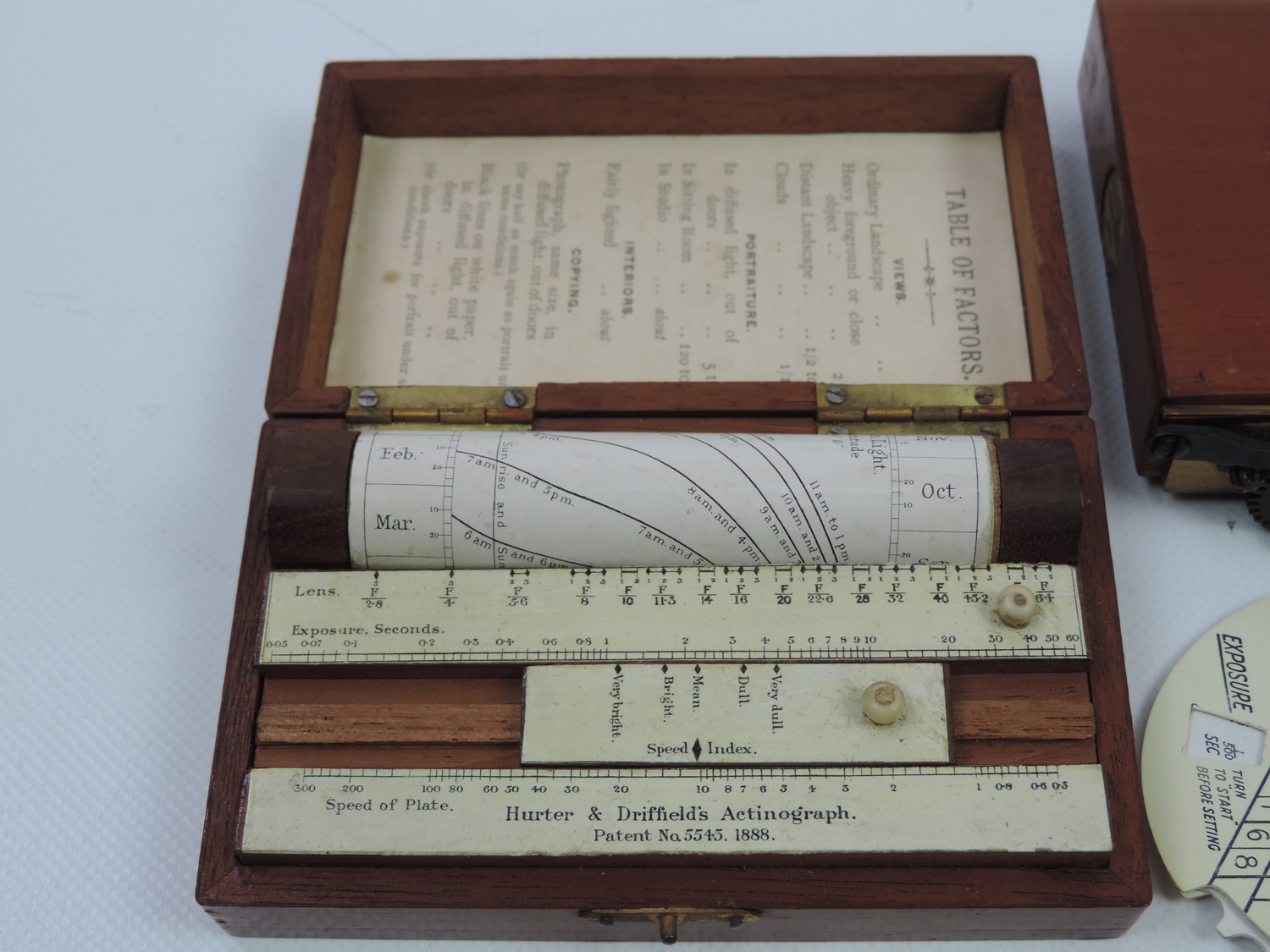 Photograph of Hurter & Driffield “Actinograph,” a photographic exposure calculator using a logarithmic curve to predict light levels.
2 — Broad Objective, Hypothesis, and Aim 1
What is the overall goal of the project? What prediction or principle is the project testing or demonstrating?
The primary objective of BioLight is to engineer and validate a light-activated gene expression system in E. coli, and to develop Photoplasm — a purpose-designed labware device that delivers high-resolution, spatially controlled analog light exposure directly onto living cell cultures. The project tests the hypothesis that a research-grade optogenetic system can be reframed as an imaging instrument with measurable sensitometric properties — that bacterial cultures, like photographic emulsion, can be characterized by a dose-response curve relating light exposure to expressed signal, and that this characterization makes spatially patterned biological imaging reproducible at community scale. Aim 1 establishes the biological and hardware foundations through two parallel tracks. The experimental track employs BioLightV5, a derivative of the eLightOn optogenetic system¹ in which the RsLOV photoreceptor is fused to a LexA408 DNA-binding domain to drive sfGFP expression from the pColE408 promoter under 470 nm illumination. BioLightV5 is designed in Benchling and submitted for synthesis via Twist Biosciences. The control track uses pDawn-sfGFP (Addgene #107741), a well-characterized blue-light-repressible system, as a validated comparator for expression behavior under identical illumination conditions.
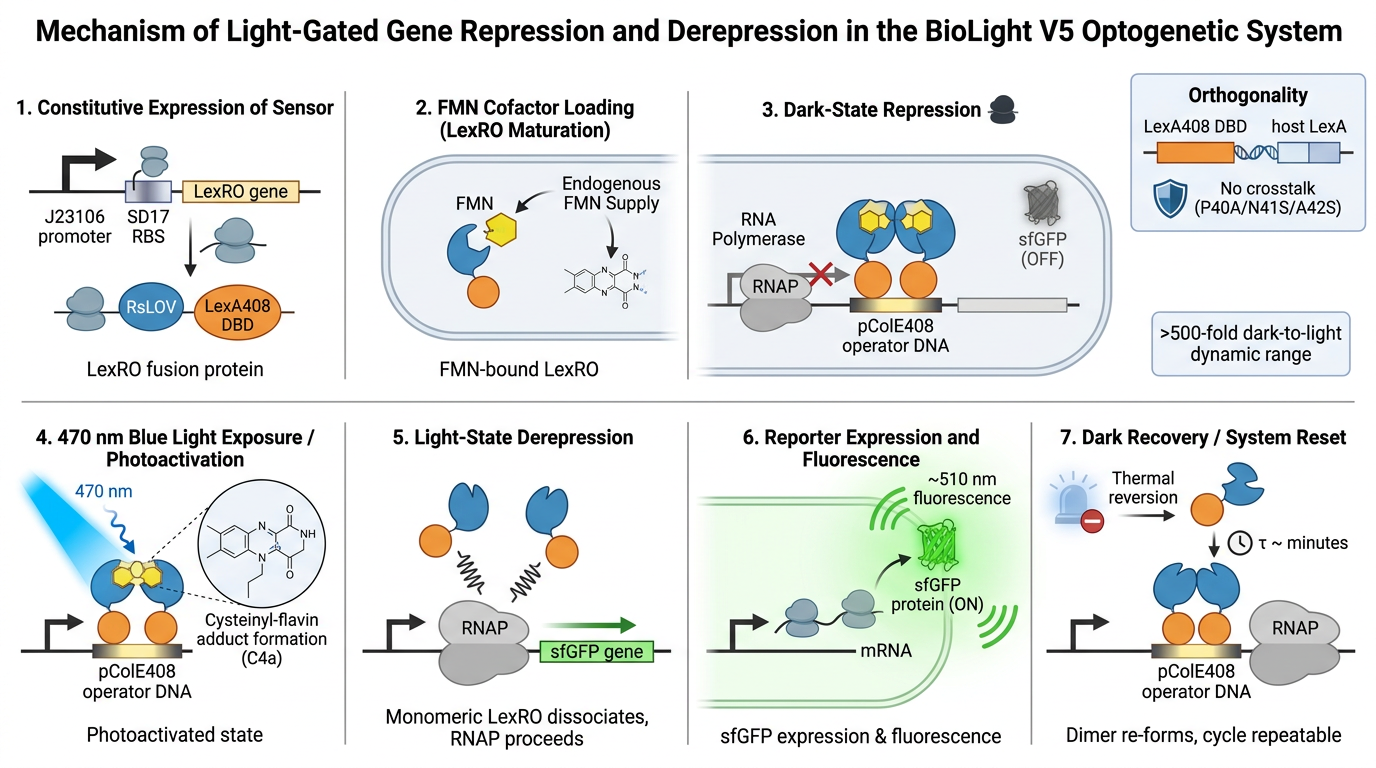 Illustration generated via FigureLabs: BioLight V5 - a blue-light activated sensor, based on eLightOn (Li, et al 2020)
3 — Methods / Photoplasm Device
What experimental or technical approaches will be used?
Photoplasm — described as “a darkroom enlarger reinvented as a programmable bio-imaging instrument” — comprises a Raspberry Pi 5 microcontroller, 470 nm LED light ring, light collimator, OLED digital image mask used for projection of selected images to create a variable density map (like a film negative or positive print), focusing lens, dark chamber cone, removable wavelength sensor, bacterial plate holder, and plate heater for incubation.
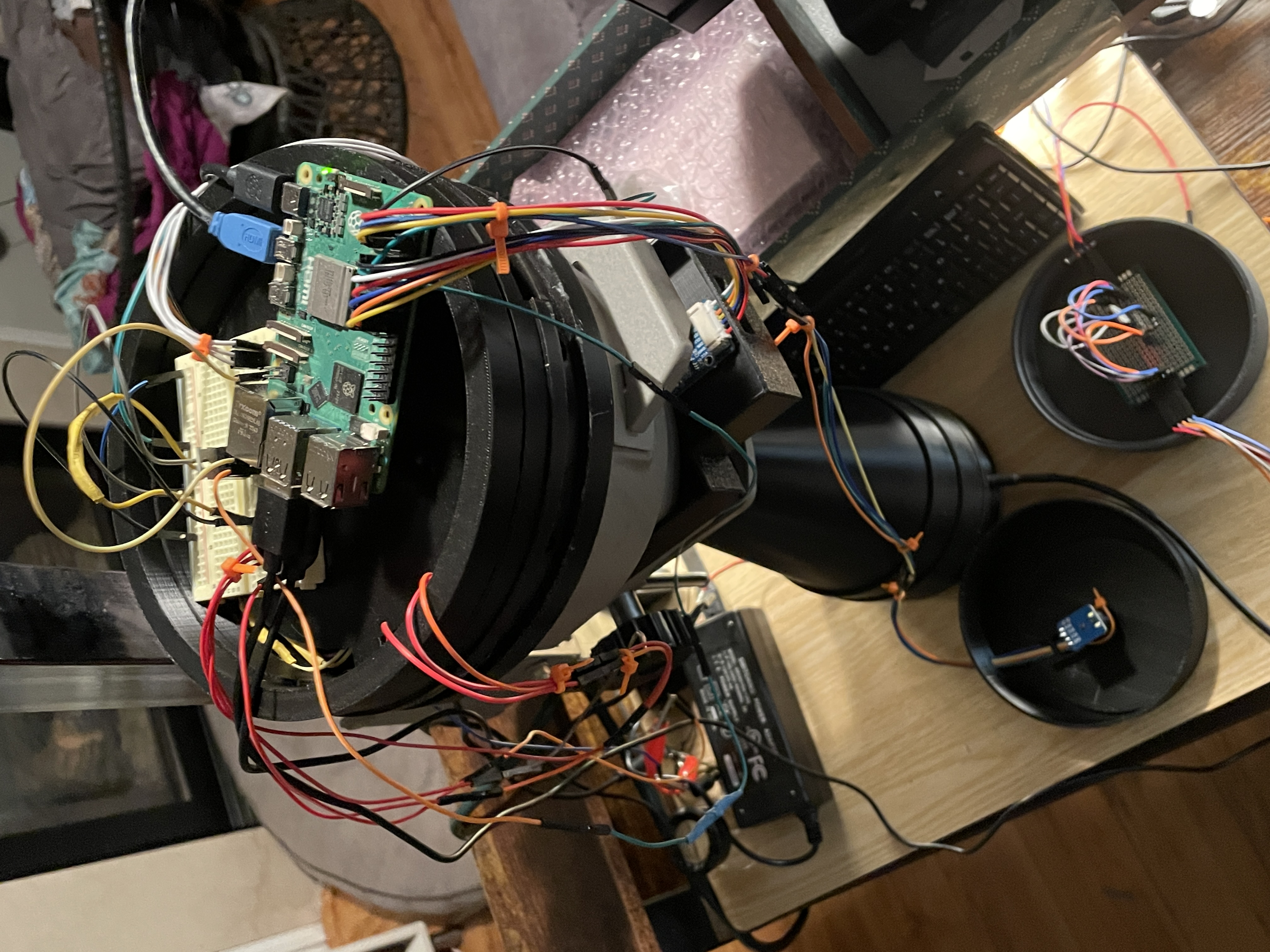 Photoplasm traditional darkroom enlarger modified for spatial image mapping onto light-reactive biosensors.
The device delivers spatially programmable 470 nm light exposures through a digital image mask projected onto live bacterial slabs (mixed and poured lawns in agarose), with calibrated step-wedge protocols generating a bacterial H&D curve that quantifies the dose-response relationship between light exposure and sfGFP expression intensity.
 Photoplasm 470nm light projection test with step-wedge calibration image target
The biological design pipeline was built and simulated in Asimov Kernel (circuit-level logic), Benchling (sequence assembly using sfGFP as the reporter), AlphaFold (structural prediction of the RsLOV–LexA408 fusion fold), ChimeraX (visualization of the dark-state PDB 4HJ4 dimer and light-state monomer hypothesis), and Twist Biosciences (gene synthesis). The construct uses pUC19 backbone for high-copy sfGFP signal and AmpR selection on LB+Amp, and incorporates SD17 RBS to keep LexRO matched to FMN supply.
4 — Specific Aim 2 / Community Lab Project / Cell-Free Migration / Biomanufacturing
What key steps or milestones will be completed to achieve the broad objective? (Aim 2 development path)
Aim 2 begins with the receipt of the Biolight V5 clonal gene from Twist Bioscience, for transformation into a living cell system at Genspace, my designated node. We will verify the construct through a well defined protocol that includes a minimally viable functionality test with blue light to observe sfGFP illumination, and calibrate the device. We plan to relaunch the Genspace Optogenetics Community Lab Project, introducting and testing a host of light-responsive cellular systems through the Photoplasm labware device.
My parallel Aim 2 track is to migrate BioLightV5 from a live-culture wet-lab system into a cell-free protein synthesis (CFPS) variant, executed via Ginkgo Bioworks’ cloud-lab CFPS service. The migration to cell-free reactions removes the containment requirements and cold-chain logistics that govern live-organism distribution, transforming BioLight outputs into stable, shippable consumables. The same Photoplasm device that drives Aim 1 slab exposures also drives the cell-free reactions in Aim 2 — same hardware, two biological substrates. This architecture explicitly invokes the Eastman/Kodak distribution model: George Eastman’s breakthrough was not photochemistry but the system — standardized cartridges, global distribution, and a participant experience so simple the tagline became “you press the button, we do the rest.” BioLightV5 in CFPS form, manufactured by Ginkgo, paired with the open-source Photoplasm device, completes the analogous translation for synthetic biology: complexity lives in the consumable, while the participant loads, exposes, and observes.
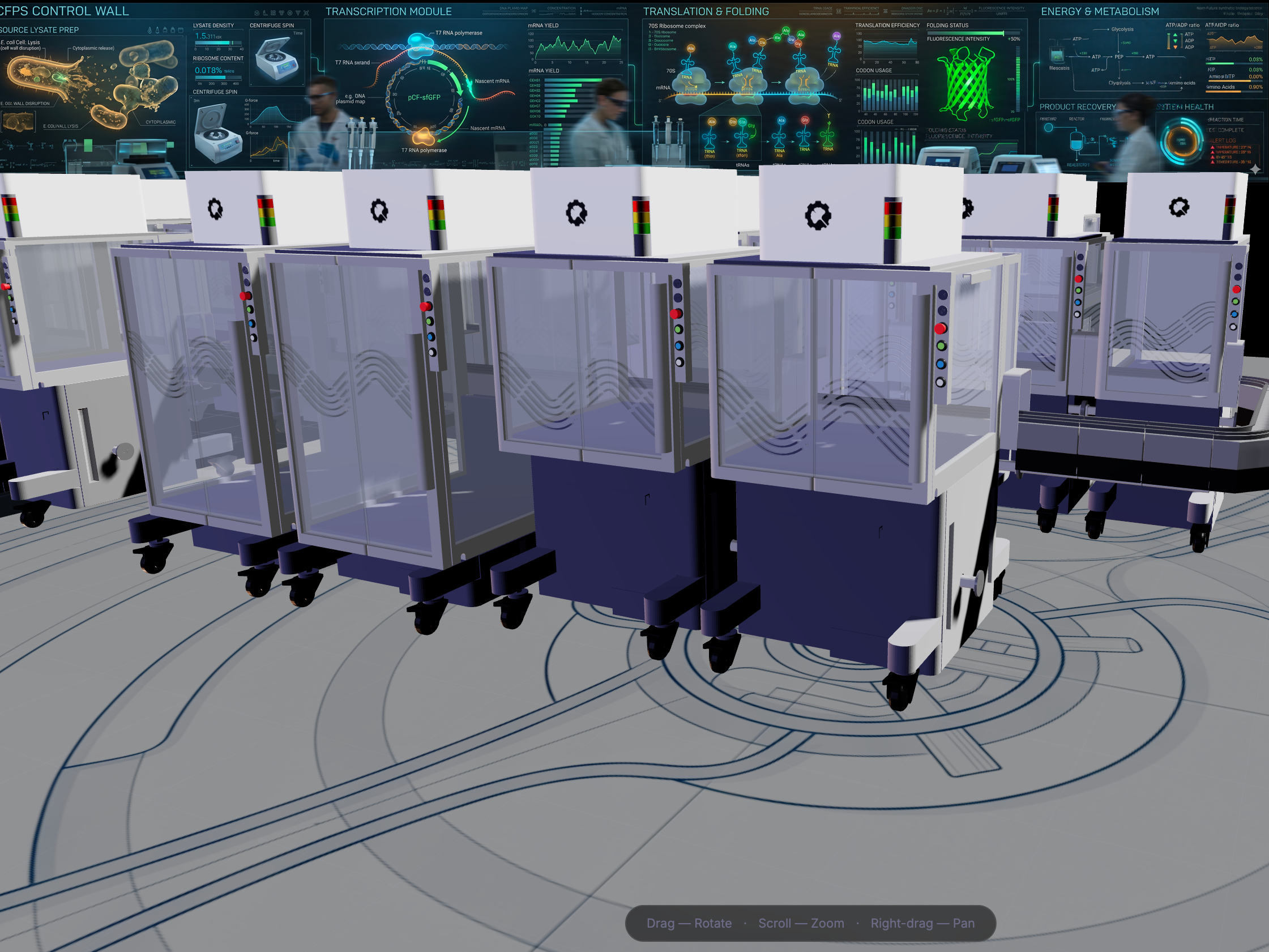 Illustration of Ginko Bioworks producing light-sensing cell-free protein systems for use in Photoplasm labware
5 — Specific Aim 3 / Long-Term Vision / Makerspace Distribution
What key steps or milestones will be completed to achieve the broad objective? (Aim 3 visionary path)
The long-term vision of BioLight is wide distribution through the community makerspace network — motivated by a conviction that biological art and design offer one of the most effective entry points into an industry standing on the threshold of a transformation whose scope may equal or exceed the industrial and digital revolutions combined. Aim 3 is realized through a newly formed collaboration between the MakerSpace Charlotte BioArt Studio and the Genspace community wetlab, establishing a multi-node network through which protocols, plasmids, hardware files, and educational frameworks flow openly between an institutional community lab and a community makerspace. This collaboration is itself the prototype of the distribution model — if it works between two nodes, it scales to twenty, then two hundred or more. The result is a data-driven framework for democratized biotechnology that mirrors how Eastman/Kodak democratized photography: not by simplifying the science, but by engineering the system around it so that anyone curious enough to join can do so without first becoming a specialist.
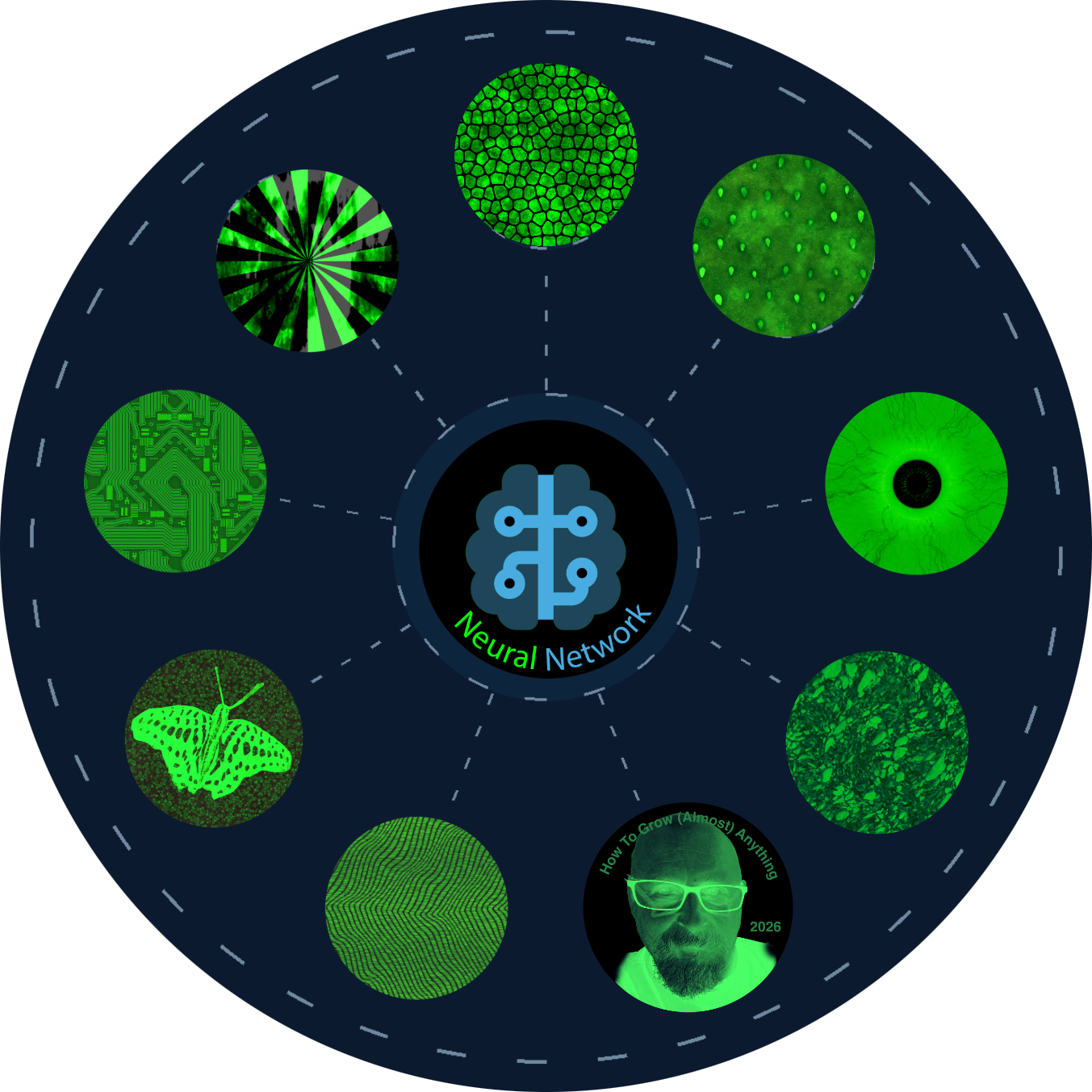 Photoplasm Neural Network - Connected nodes with shared protocol data