Section Three - Background & Literature
Author: Eric Schneider · 2026a-eric-schneider Node: Genspace NYC Affiliation: BioArt Studio, MakerSpace Charlotte
Q1 — Citation Summaries
Briefly summarize two peer-reviewed research citations relevant to your research (minimum four sentences).
I first experienced bacterial BioArt at MakerSpace Charlotte during a demonstration by Karen Ingram, scientific illustrator and co-author of BioBuilder,¹ where fluorescent proteins were being transcribed into colorful cells in agar using hand-drawn patterns and OpenTrons microliter pipettes. As a photographer, I asked the fundamental question: what is the resolution? That question started the entire journey into HTGAA and the scientific literature that followed.
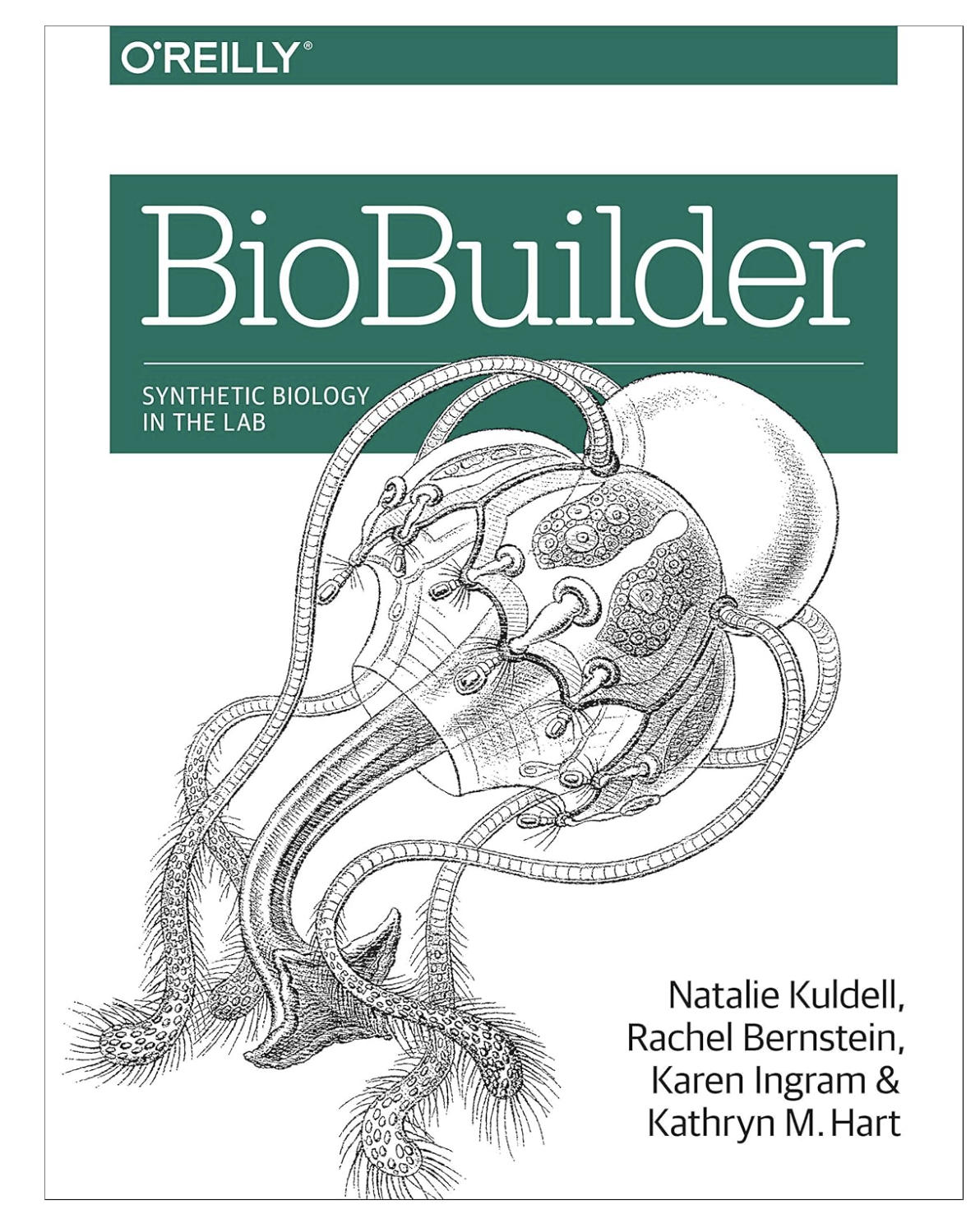 BioBuilder
I quickly found Levskaya et al. 2005² — Engineering Escherichia coli to see light — the paper that demonstrated a complete bacterial photography system in which E. coli was engineered with a chimeric photoreceptor (Cph8) to respond to red light, producing spatially patterned gene expression across a plate with a resolution of approximately 100 megapixels per square inch. The Levskaya paper answered my resolution question empirically: the biological limit of the system was not optical, but cellular — the size of the bacteria itself. What it did not answer was the tonal question. The Levskaya system was binary — fully on in the light, fully off in the dark — producing sharp edges but no continuous grayscale gradation. For a photographer, that is the equivalent of a lithographic system, not a photographic one.
The paper that changed the trajectory of the project was Li et al. 2020,³ A single-component light sensor system allows highly tunable and direct activation of gene expression in bacterial cells — the eLightOn system. eLightOn uses a fusion of the RsLOV photoreceptor from Rhodobacter sphaeroides with a LexA408 DNA-binding domain to create a single-component, single-plasmid optogenetic switch with a reported ON/OFF dynamic range exceeding 500-fold under blue light activation at approximately 470 nm. That dynamic range — the biological equivalent of a photographic characteristic curve with a measurable toe, linear region, and shoulder — is what makes continuous-tone bacteriographic imaging a plausible scientific goal rather than a theoretical aspiration. The eLightOn system uses FMN as its chromophore, which is produced endogenously by E. coli, requiring no external cofactor supplementation. It fits within the 5 kbp synthesis limit for a single Twist Biosciences clonal gene order. And it had not, at the time of this project’s inception, been applied to spatially patterned photographic image production — which is the gap BioLight and Photoplasm are designed to fill.
Q2 — Novelty
Explain the novelty of your project (minimum three sentences). What makes it different from or an improvement upon existing work in the field?
The novelty of BioLight begins with a reframe: the darkroom enlarger is not a photography instrument — it is a precision optical projector capable of delivering spatially resolved, calibrated light at a defined wavelength to any photosensitive substrate placed at its focal plane. That substrate does not have to be silver halide paper. It can be a bacterial lawn embedded in an agarose slab, expressing a light-responsive genetic circuit that responds to blue photons the way a silver halide crystal responds to visible light. The traditional darkroom instrument is ideal for modification; the substrate is what changes to replace photographic paper.
My background is specific and relevant here. I have been a working photographer and photographic chemist for over forty years — I processed film for Time Inc. publications from 1987 to 1990 in the NYC Color Photo Lab, at mass-media publishing scale. During the analog-to-digital transformation of the photography industry, I learned to operate the Kodak Light Valve Technology (LVT) digitial-to-film printer and high-resolution film-to-digital drum scanners . I even built a panoramic film camera out of Lego bricks as my industrial design Master’s Degree thesis project at North Carolina State University.
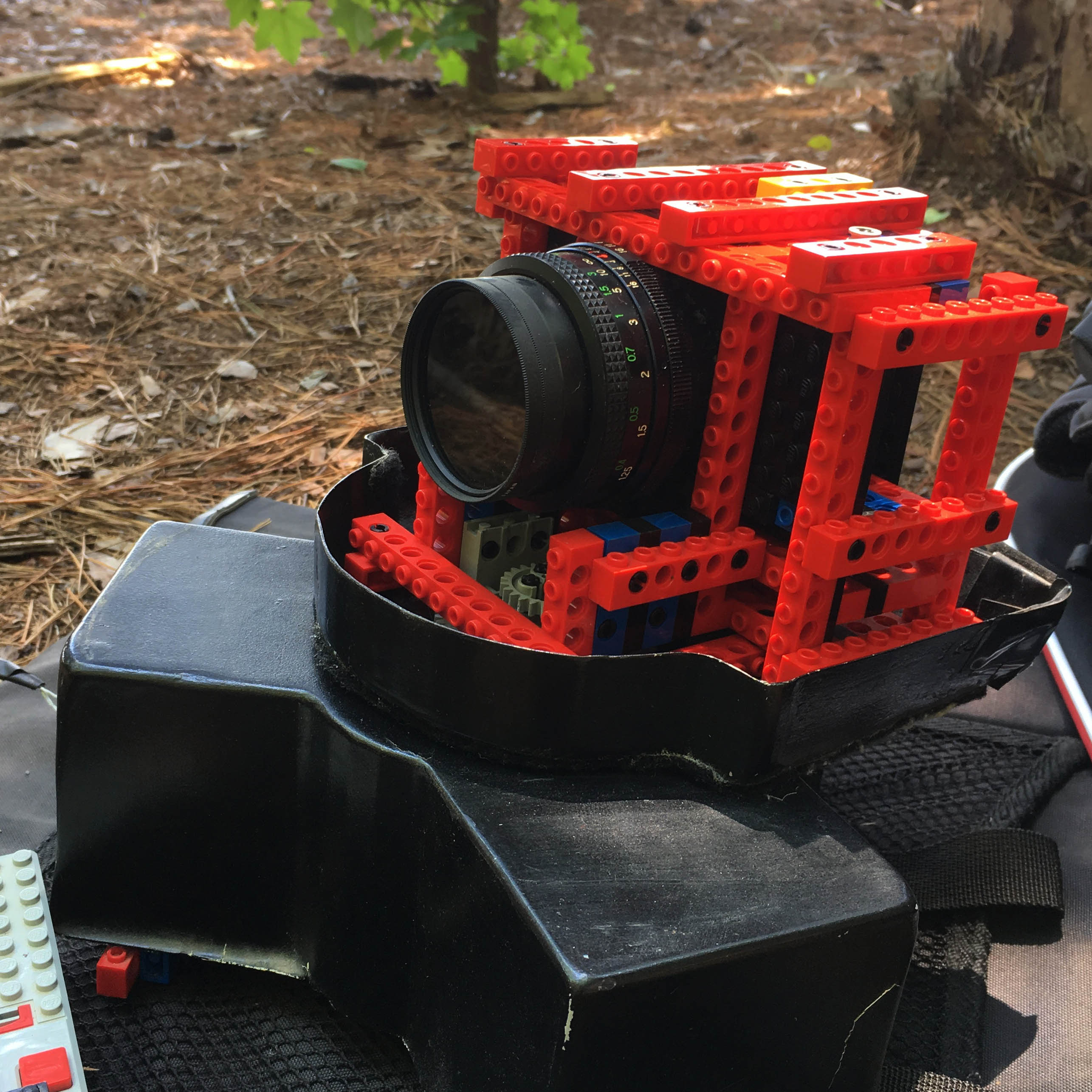 Lego-based Panoramic Camera by Eric Schneider
I understand sensitometry — the H&D characteristic curve, the Zone System, the relationship between exposure and density — not as abstract science but as craft knowledge applied in darkrooms and imaging labs. When I look at the eLightOn dynamic range specification, I see a film emulsion with a measured contrast index. When I designed the Photoplasm device, I imagined an enlarger with a programmable negative.⁴
Three specific novelties distinguish BioLight from the existing bacterial photography literature. First, modularity: the Photoplasm device is designed as a stackable, component-based instrument whose throw distance, aperture, and mask format can be reconfigured for different plate geometries and biosensor substrates — extending the fixed-geometry flood illumination approach of the Levskaya and Tabor experiments into a variable, calibrated optical platform. Second, openness: every component is released under an MIT-style open-source license with full version-controlled documentation, inviting the kind of iterative community improvement that made the Arduino ecosystem what it is. Third, substrate independence: the optical stack does not presuppose any particular biosensor circuit — it delivers 470 nm light through a digital image mask, and any optogenetically responsive chassis that activates under blue light can be placed at the focal plane. As the Photoplasm platform matures toward full RGB capability, that substrate independence will extend across wavelengths, opening the system to the full diversity of characterized optogenetic tools in the synthetic biology database.
Q3 — Impact
Explain the impact of your project (minimum five sentences). Why does it matter? Who does it benefit?
Astro Teller, Captain of Moonshots at X (formerly Google X), has observed that today is the slowest rate of change we will ever experience.⁵ The convergence of artificial intelligence, accessible fabrication tools, and open-source biological parts registries is creating conditions in which community makerspaces and university laboratories alike can become meaningful nodes in the synthetic biology ecosystem — each contributing distinct capabilities, and each made stronger by collaboration with the other. BioLight and Photoplasm are designed specifically for that moment.
The direct beneficiaries are what Gartner Research has called citizen bioscientists⁶ — people with domain expertise in adjacent fields (design, photography, engineering, education, medicine) who are entering the biological sciences through community labs, accelerator programs, and initiatives like HTGAA. These participants bring non-standard perspectives that complement and enrich the formal research community. A photographer who asks “what is the resolution?” is asking a different question than a molecular biologist who asks “what is the fold-change?” Both questions are scientifically valid; both produce useful data. The Photoplasm platform is designed to make the photographer’s question answerable in a BSL-1 community wetlab setting with accessible, affordable tools.
The design philosophy of BioLight and Photoplasm draws explicitly on Universal Design principles, first articulated by Ron Mace at North Carolina State University.⁷ Mace’s central insight — that designs optimized for users at the margins of capability tend to work better for everyone — applies directly to community biology tools. A device that can be built, calibrated, and operated by a designer with no prior wetlab experience, following open-source documentation, is a device that will also work reliably in the hands of an experienced molecular biologist. Accessibility is not a constraint on rigor; it is a design specification that produces more robust and reproducible tools.
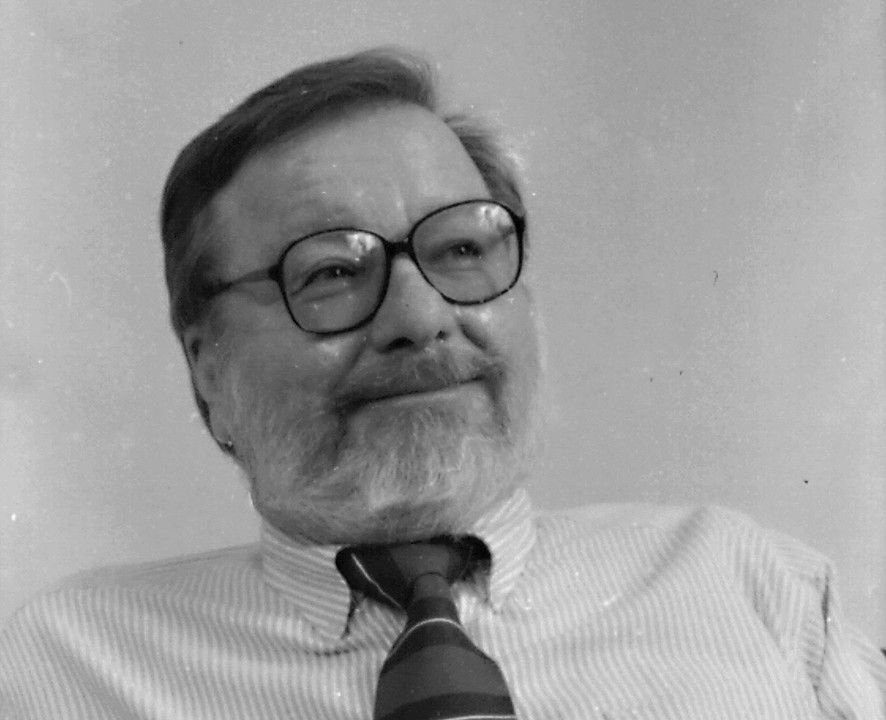 *Ron Mace (1940-1998) - Visonary of “Universal Design” (Tribute to a friend, colleauge and Mentor from 1996-1998)
The partnership between Genspace (Brooklyn, NY) and MakerSpace Charlotte is not incidental to BioLight — it is the proof-of-concept for the distribution model Aim 3 proposes to scale. Genspace provides certified BSL-1 infrastructure, institutional knowledge, and the HTGAA Node authorization framework. MakerSpace Charlotte provides fabrication capability, community design culture, and a student population drawn from manufacturing, industrial design, and biotech industry backgrounds. Together they demonstrate that the Photoplasm platform can operate across two geographically distributed sites with different institutional profiles — which is exactly what a national or international distribution network would require. Fun matters too: a biological imaging platform that produces gallery-ready bacteriographs — art objects made from living organisms expressing fluorescent proteins — creates an entry point into synthetic biology that no textbook or lecture can replicate.
Q4 — Ethics
Describe the ethical considerations relevant to your project (minimum two paragraphs).
The ethical framework for BioLight is drawn from the governance principles introduced in HTGAA Week 1, applied specifically to the context of community makerspace synthetic biology. The four bioethics principles — Beneficence, Non-maleficence, Justice, and Responsibility — map directly onto the three aims of this project. Beneficence is expressed through the open-source learning and making ethos of the platform: every protocol, hardware design, and calibration dataset is released publicly with the explicit goal of enabling others to replicate, extend, and improve the work. Non-maleficence is expressed through the BSL-1 containment framework: BioLightV5 uses DH5α E. coli with ampicillin selection, a strain and antibiotic combination with no pathogenic potential and no environmental persistence beyond standard autoclave disposal. Justice is expressed through the Universal Design commitment: the platform is specifically engineered to be accessible to participants without prior wetlab experience, lowering the barrier to meaningful synthetic biology practice. Responsibility is expressed through the open-source governance model: MIT licensing, version-controlled public repositories, and a commitment to documenting not just what works but what failed and why.
The primary ethical risk in BioLight is not biosafety — it is intellectual property and data governance. As the Photoplasm platform scales toward a distributed network of connected devices running optogenetic experiments and reporting results to a shared data model, questions of data ownership, attribution, and dual-use screening become real. The current approach addresses these risks in three ways. First, all primary wetlab work occurs at Genspace under their certified BSL-1 protocols and institutional oversight — no biological work is conducted at MakerSpace Charlotte until the HTGAA Node authorization pathway is complete. Second, all DNA synthesis passes through Twist Biosciences’ standard screening pipeline, which includes dual-use sequence review. Third, the Aim 3 data model — similar to a Transfyr.ai observational learning analytics integration — is designed to capture experimental outcomes and learner engagement data, and raw sequence data or unpublished results, minimizing the surface area for misuse. The device itself is inert and substrate-independent: the Photoplasm hardware delivers light, not biology, and has no inherent dual-use concern independent of the biological substrate placed at its focal plane.⁸ ⁹
Another potential risk worth exploring in scientific methodology, is the bias and influence of Ai models on engineering and design. What is the risk to snynthetic biology if erroneous assumptions and generative claims are accepted as fundamental truth? There are certainly rewards gained through trained data sets and accelerated data access. I have experienced the positive and negative implications of an artifical agent in the flow of design work, and we are still at the beginning of our interactive technology journey with artificial intelligence. I will continue to cautiously embrace Ai as a tool, for the purpose of acclerating and improving outcomes.
Footnotes
¹ Kuldell N, Bernstein R, Ingram K, Hart KM. BioBuilder: Synthetic Biology in the Lab. O’Reilly Media (2015). ISBN 978-1491904299.
² Levskaya A et al. Engineering Escherichia coli to see light. Nature 438:441–442 (2005). doi:10.1038/nature04405
³ Li Y et al. A single-component light sensor system allows highly tunable and direct activation of gene expression in bacterial cells. Nucleic Acids Research 48(6):e33 (2020). doi:10.1093/nar/gkaa044
⁴ Eric Schneider, personal statement — industrial design thesis, North Carolina State University; Time Inc. Color Lab photographic processing 1987–1990.
⁵ Teller E, quoted in Friedman TL. Thank You for Being Late. Farrar, Straus and Giroux (2016).
⁶ Gartner Research. Term “citizen data scientist” ca. 2016. https://www.gartner.com/en/information-technology/glossary/citizen-data-scientist
⁷ Mace RL. Universal Design: Barrier-Free Environments for Everyone. Designers West 33(1):147 (1985). Center for Universal Design, NCSU.
⁸ HTGAA 2026 Week 1 — Bioethics governance framework.
⁹ The MIT License. https://opensource.org/licenses/MIT