Class Assignment Question 1: Biological Engineering Application First, describe a biological engineering application or tool you want to develop and why.
Class Assignment Part 1: Benchling & In-silico Gel Art Make a Benchling account. Import Lambda DNA. Simulate RE digestion using EcoRI, HindIII, BamHI, KpnI, EcoRV, SacI, and SalI. Create a Gel Art Pattern
Automation Art: https://opentrons-art.rcdonovan.com/?id=ipo5wv9ww1wwm0c
Post-lab Questions 1. Find and describe a published paper that utilizes the Opentrons or an automation tool to achieve novel biological applications.
I picked this paper by the Baker Lab because its definition of automation drew my attention. The paper developed what the authors refer to as a “partial automation instead of complex end-to-end robotics”, claiming that, although they did integrate robotic liquid handlers for some of the characterizations, the workflow should be widely adoptable to streamline workflows, even without the robotic liquid handlers. The argument that a many wet lab workflows are time, energy, and resource intensive resonated with my work.
First, describe a biological engineering application or tool you want to develop and why.
Coral Reefs are the Rainforests of the Sea
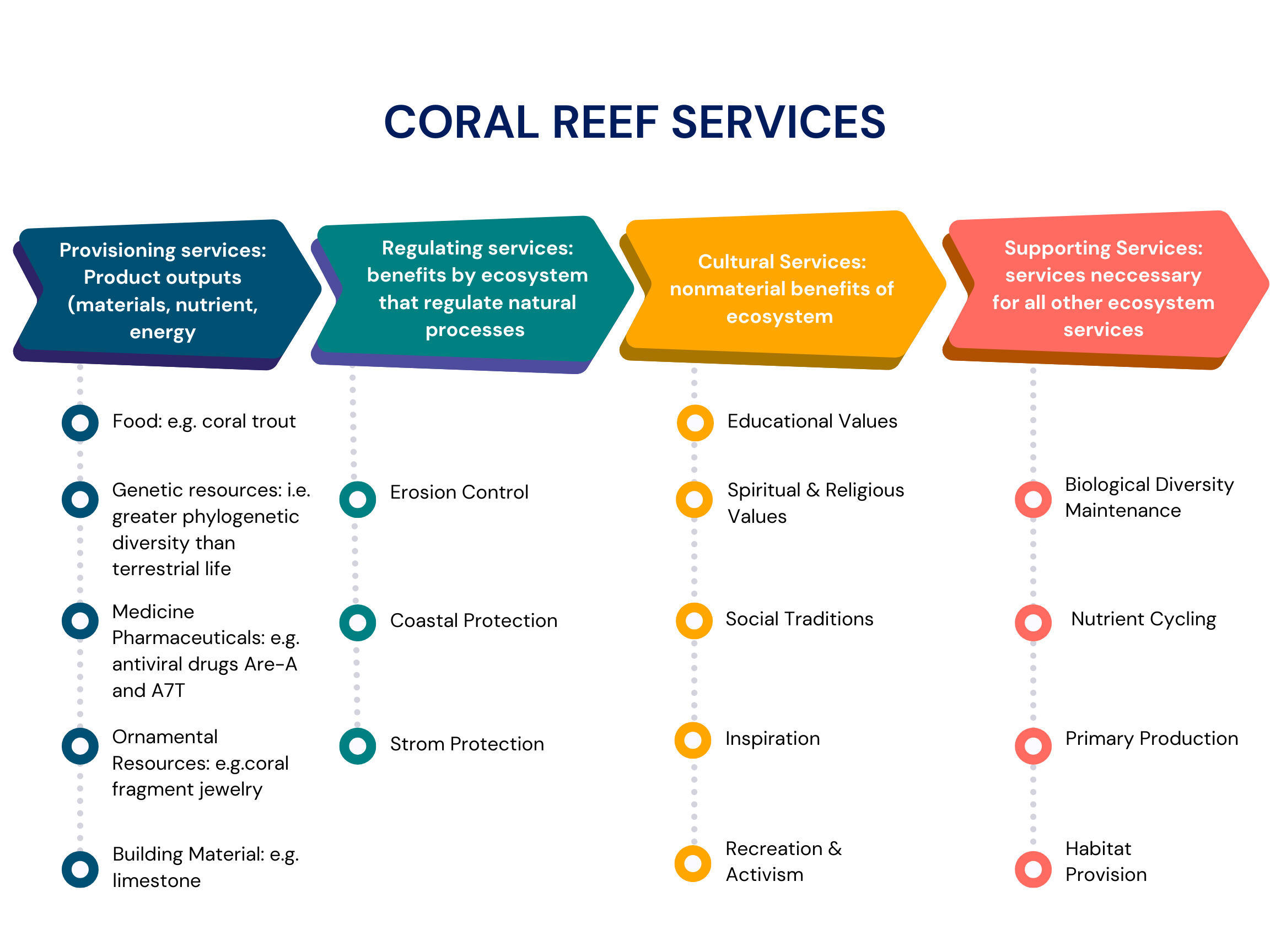
Coral reefs cover roughly 284,300 km² of the ocean — an area larger than the United Kingdom — and are the only living structures visible from space. Named the “rainforests of the sea,” they support nearly a quarter of all marine life, encompassing more than 830,000 multicellular species, despite occupying less than one percent of the ocean’s surface. Their importance extends far beyond marine ecosystems: coral reefs contribute an estimated $11 trillion annually to the global economy and sustain the livelihoods of around one billion people, making their health tightly linked to that of the planet as a whole.
Threats to Coral Reefs
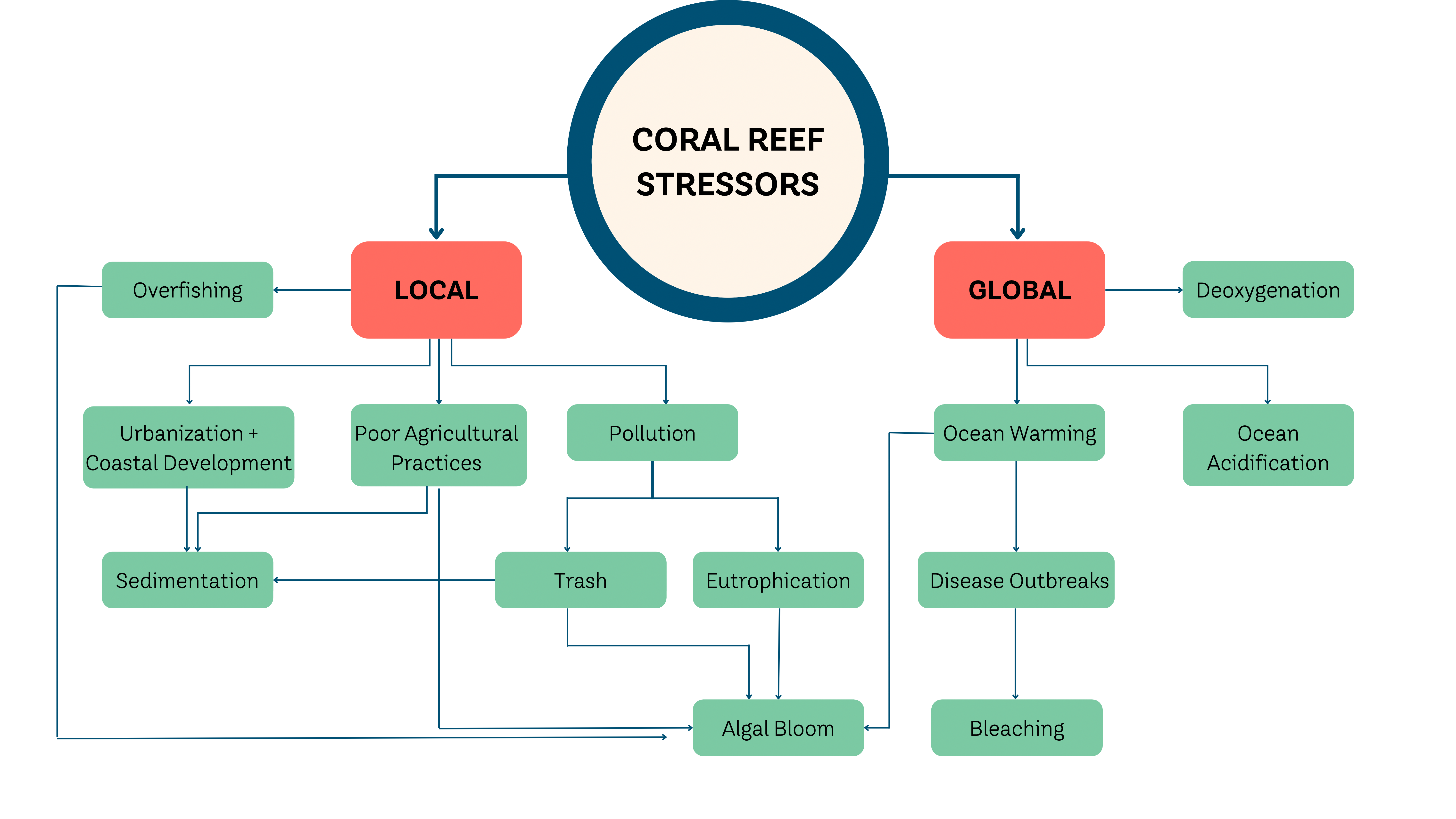
Despite this wealth of ecological and economic value, coral reefs are in rapid decline. Approximately 50% of global coral reef cover has been lost since the 1950s, and ongoing anthropogenic pressures —particularly rising CO₂ emissions and ocean warming —threaten the extinction of most corals by 2070. Among the most devastating consequences of these stressors is coral bleaching. Since the late 20th century, reefs have experienced four mass bleaching events, each more severe than the last, highlighting severity of this issue.
The Microbial Hypothesis of Bleaching
A stable microbiome is critical for coral health, but it is highly sensitive to environmental change. The microbial hypothesis of coral bleaching proposes that warming oceans drive a dysbiosis in the coral microbiome, shifting it toward opportunistic and pathogenic communities that increase susceptibility to disease. While elevated temperatures and microbiome shifts are strongly correlated with coral disease, disease emergence ultimately depends on the disease triad, which include a causative agent. Members of the genus Vibrio are strongly implicated in bacterial bleaching, as they can disrupt the coral–algal symbiosis. Notably, their virulence is temperature-dependent, intensifying under thermal stress and exacerbating bleaching outcomes.
The Solution: Engineered Probiotics
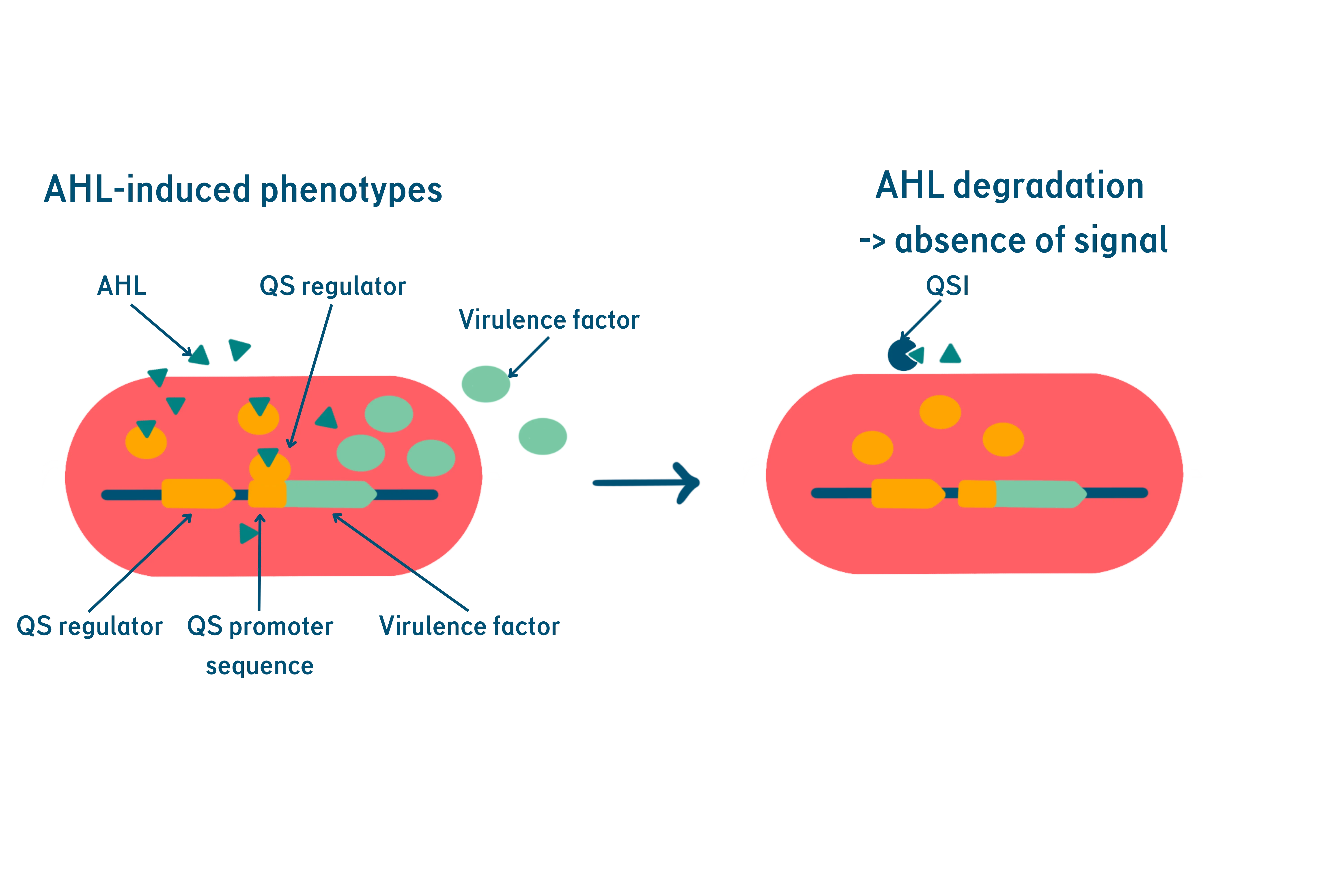
Engineered probiotics offer a promising strategy to counteract these challenges by enabling targeted manipulation of beneficial coral-associated microbes. Endozoicomonas, a dominant symbiont in healthy corals, is widely regarded as an indicator of coral health, offering corals with a host of benefits. By engineering Endozoicomonas to express oxidoreductase systems, heat shock proteins for thermal resilience, and narrow-spectrum quorum-sensing inhibitors that disrupt pathogenic signaling, it may be possible to enhance coral resistance to thermal stress and bacterial bleaching, thereby stabilizing the coral microbiome and supporting reef survival in a warming ocean. Furthermore, expressing the aforementioned genes under a heat-sensitive genetic switch both reduces burden and increases specificity.
Question 2: Governance Policy & Goals
Next, describe one or more governance/policy goals related to ensuring that this application or tool contributes to an “ethical” future, like ensuring non-malfeasance (preventing harm). Break big goals down into two or more specific sub-goals.
Improves coral health
Maintains or promotes healthy coral ecosystem
Minimizes burdens on stakeholders
Balances risks and benefits
Minimizes dual-use risk
Minimizes breached containment
Fosters collaboration
Includes stakeholder voices
Establishes monitoring protocols
Feasible
Question 3: Governance Actions
Next, describe at least three different potential governance “actions” by considering the four aspects below (Purpose, Design, Assumptions, Risks of Failure & “Success”).
Purpose: What is done now and what changes are you proposing?
Design: What is needed to make it “work”? (including the actor(s) involved - who must opt-in, fund, approve, or implement, etc)
Assumptions: What could you have wrong (incorrect assumptions, uncertainties)?
Risks of Failure & “Success”: How might this fail, including any unintended consequences of the “success” of your proposed actions?
Action
Purpose
Design
Assumptions
Risks of Failure & “Success”
Coral Farming
What is done now: Coral larvae are harvested and farmed underwater or on land in designated nurseries, before being outplanted onto reefs
What changes are you proposing? • Standardizing coral aquaculture methodologies for more efficient scale-up • Integration with research institutions
• Impacted communities have the resources to continuously support coral nurseries
How might this fail: • Coral larvae may not mature • Outplanting/engraftment may not be successful
Unintended consequences of “success”: • Ecosystem shift • Reduces urgency to address root cause of bleacing
Artificial Reefs
What is done now: Man-made benthic structures are placed on the ocean floor to support coral reef restoration and/or provide marine life with a ‘replacement’ niche.
What changes are you proposing? • Replacing inert artificial reefs with reef-supporting materials • Monitoring population changes and artificial reef stability over time
• Research prior to deployment • Intentional design considerations
How might this fail: • Acts as a fish-aggregating device (FAD) rather than stimulating an increase in marine populations • Overtake the local ecosystem
What is done now: Beneficial Microorganisms (BMCs) are screened, identified, and inoculated with corals to confer health benefits such as heat and disease resistance. What changes are you proposing? • Generate unique ‘blends’ of probiotics, rather than consortia, with desired functionalities • Introduce synbiotics: probiotics + prebiotics
• Microbiome flexibility and persistence of introduced microbes • Probiotics confer tangible health outcomes
How might this fail: • Engraftment may not be successful • Genetic mutations may occur in so-called probiotics
Unintended consequences of “success”: • Introduction of potential pathogens or opportunists • Enhanced fitness and subsequent ecosystem shift
Question 4: Governance Rubric
Next, score (from 1-3 with, 1 as the best, or n/a) each of your governance actions against your rubric of policy goals. The following is one framework but feel free to make your own:
Rank each option:
Coral Farming
Artificial Reefs
Coral Probiotics
Beneficence
• Improves coral health
1
2
1
• Maintains or pormotes healthy coral ecosystems
1
2
2
Non-malfeasance
• Minimizes burdens on stakeholders
1
2
1
• Balances risks and benefits
2
3
2
Safety
• Minimizes dual-use risk
2
2
1
• Minimizes breached containment
1
2
3
Community
• Fosters collaboration
1
2
1
• Includes stakeholder voices
2
2
2
Management
• Establishes monitoring protocols
1
2
1
• Feasible
2
1
3
Question 5: Prioritized Options
Last, drawing upon this scoring, describe which governance option, or combination of options, you would prioritize, and why. Outline any trade-offs you considered as well as assumptions and uncertainties.
Keeping in mind both the current coral conservation research state and the rapid decline in coral health, a dual-pronged approach would be ideal. Specifically, an approach that combines both a well-established governance option yielding modest effects with a high-risk, high-reward governance option will result in both short-term and long-term effects. Thus, given the governance rubric above, I would prioritize coral farming as the well-established option and coral probiotics as the high-risk, high-reward option. I think aritifical reefs should will likely not result in the optimal end (i.e. coral conservation) and may in fact lead to off-tagret effects; thus, they should not be pursued at this time. Coral farming, which has yielded positive results, should be scaled-up to areas susceptible to bleaching, while including local stakeholders. On the other hand, a call-to-action for research into the more radical coral probiotics approach should be initiated and ongoing research supported.
Reflections
Reflecting on what you learned and did in class this week, outline any ethical concerns that arose, especially any that were new to you. Then propose any governance actions you think might be appropriate to address those issues. This should be included on your class page for this week.
A point of both interest and concern is the concept of bio-futures. With any given technology – be it developed beneficently or otherwise – there is a chance for a destructive future in place of the constructive future it was (hopefully) intended for; and with that, a greater ethical obligation on scientists to be intentional in their endeavors and critical in what they consider ‘safe’, as dual-use is always a possibility in research. Therefore, conversations regarding responsible conducts and biosafety measures should be initiated, and regulations should keep up with rapidly changing fields, such as synthetic biology.
Assignment (Week 2 Lecture Prep)
Homework Questions from Professor Jacobson:
Nature’s machinery for copying DNA is called polymerase. What is the error rate of polymerase? How does this compare to the length of the human genome. How does biology deal with that discrepancy?
Polymerase error rate: 1:10^6
The length of the human genome is 3.2 billion base pairs, resulting in approximately 3,200 errors per genome copy
Biology has evolved multiple strategies to deal with mutations. Some of these strategies include the polymerase proofreading capability and DNA repair systems, such as the MMR/MutS repair system
How many different ways are there to code (DNA nucleotide code) for an average human protein? In practice what are some of the reasons that all of these different codes don’t work to code for the protein of interest?
An average human protein is ~345 amino acids (1,036 bp ) long. Because the genetic code is degenerate, most amino acids can be encoded by multiple synonymous codons (on average ~3 per amino acid, since there are 64 codon triplets yet 20 amino acids). Therefore, the number of distinct DNA sequences that can encode the same protein is approximately 3^400. However, not all of these may be functional due to factors, such as codon bias and splicing, that limit their efficient translation.
Homework Questions from Dr. LeProust:
What’s the most commonly used method for oligo synthesis currently?
Phosphoramidite DNA Synthesis Cycle
Why is it difficult to make oligos longer than 200nt via direct synthesis?
The error rate is 1 per 10^2 steps, so many of the oligos larger than 200 nt will have decreased accuracy and fidelity.
Why can’t you make a 2000bp gene via direct oligo synthesis?
The error rate 1 per 10^2 steps, so it is highly unlikely that any of the 2000 bp genes will be accurate.
Homework Question from George Church:
What are the 10 essential amino acids in all animals and how does this affect your view of the “Lysine Contingency”?
The 10 essential amino acids are valine, isoleucine, leucine, methionine, phenylalanine, tryptophan, threonine, histidine, and lysine, and, for children and those under stress, arginine. The lysine contingency is used as a biocontainment strategy in the movie Jurassic Park in which dinosaurs are engineered to lack the lysine production gene and thus only survive if they are fed lysine; however, this does not make sense as no animal can make their own lysine.
Week 2 HW: DNA: Read, Write, and Edit
Class Assignment
Part 1: Benchling & In-silico Gel Art
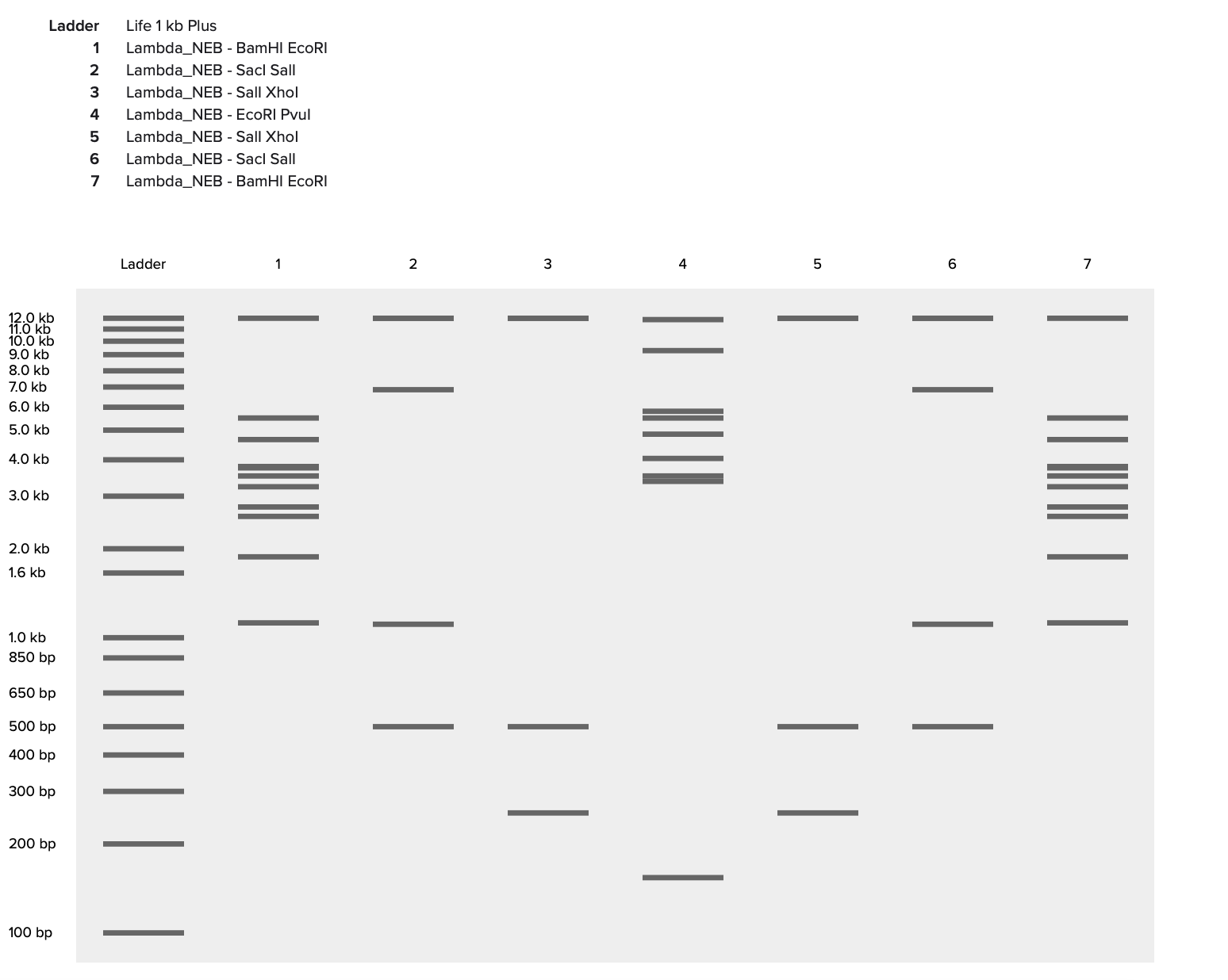
Make a Benchling account. Import Lambda DNA. Simulate RE digestion using EcoRI, HindIII, BamHI, KpnI, EcoRV, SacI, and SalI. Create a Gel Art Pattern
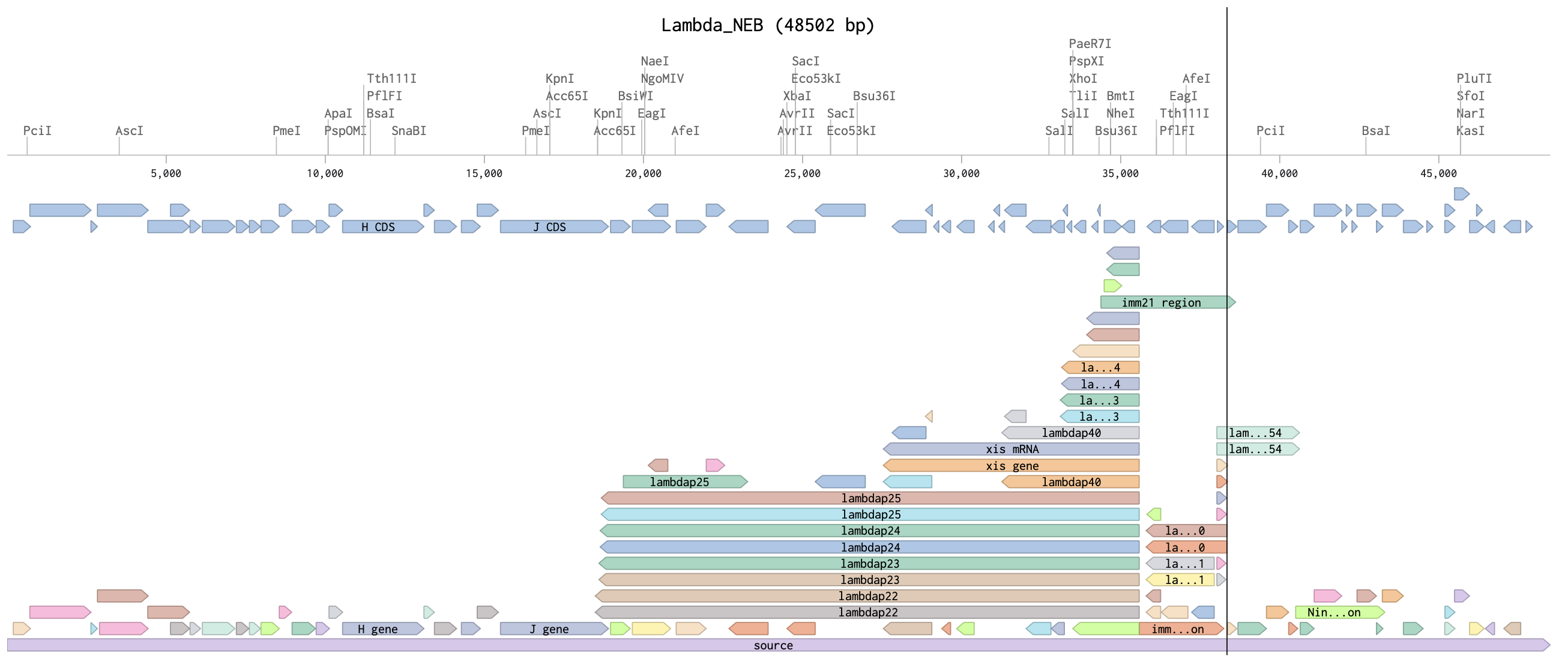
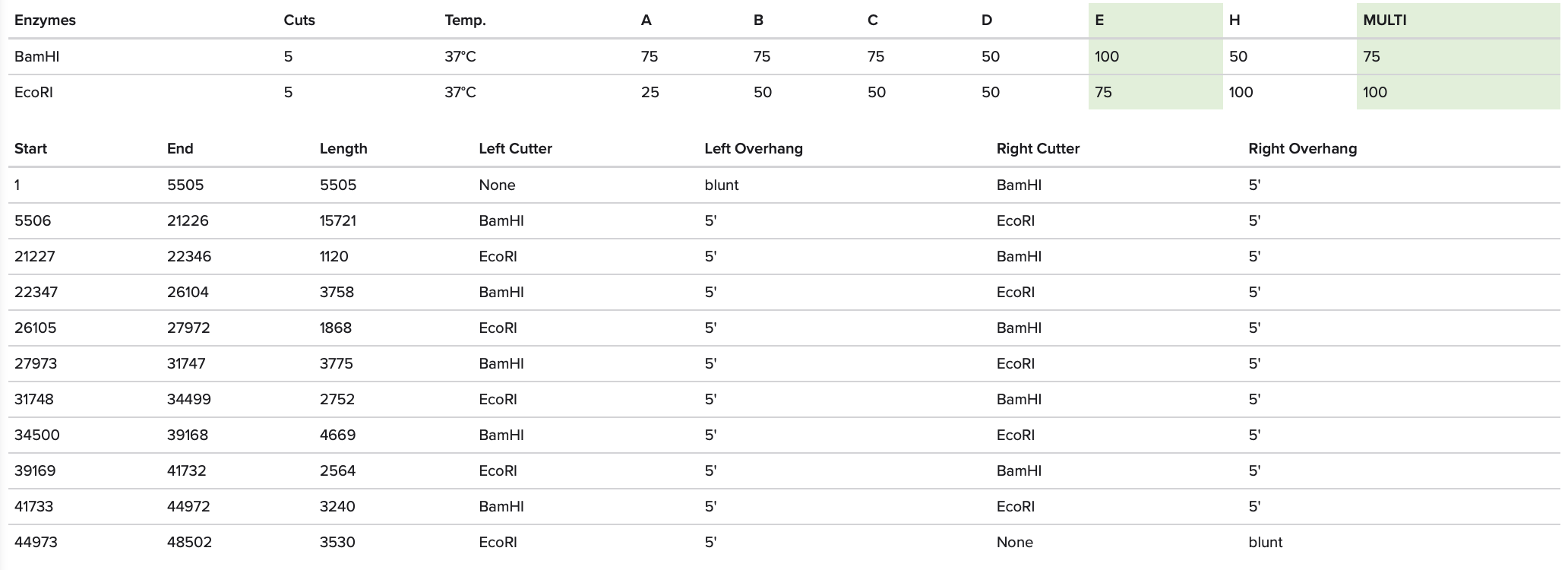
I imported the annotated Lambda DNA and ran a digest using the enzymes listed above.
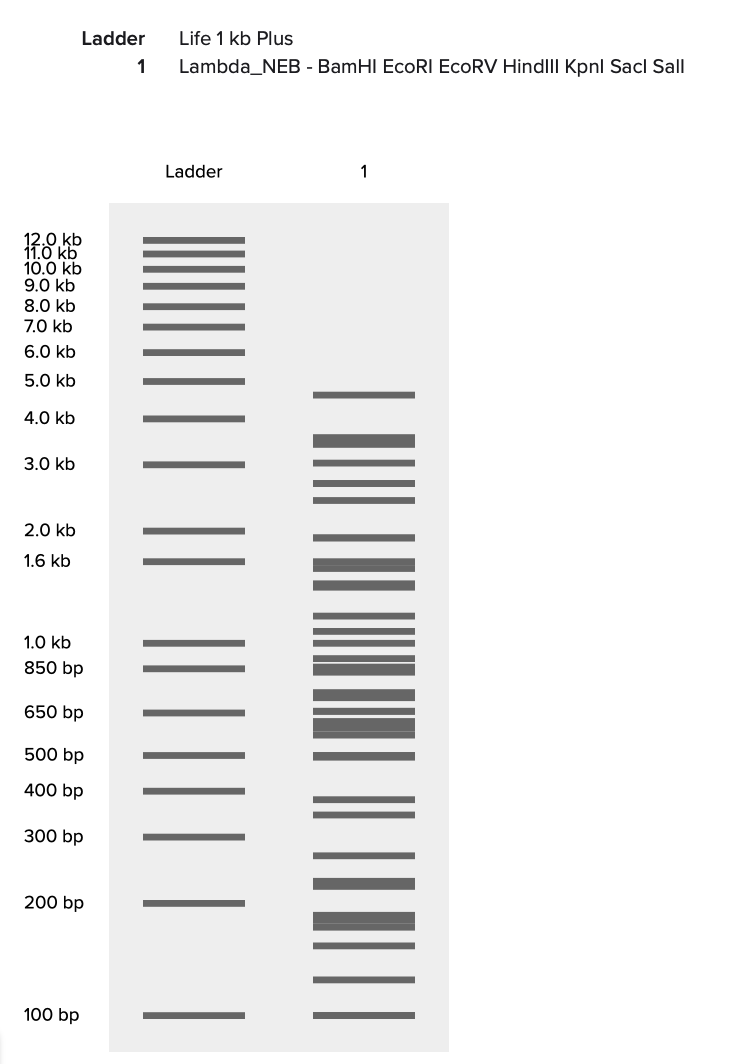
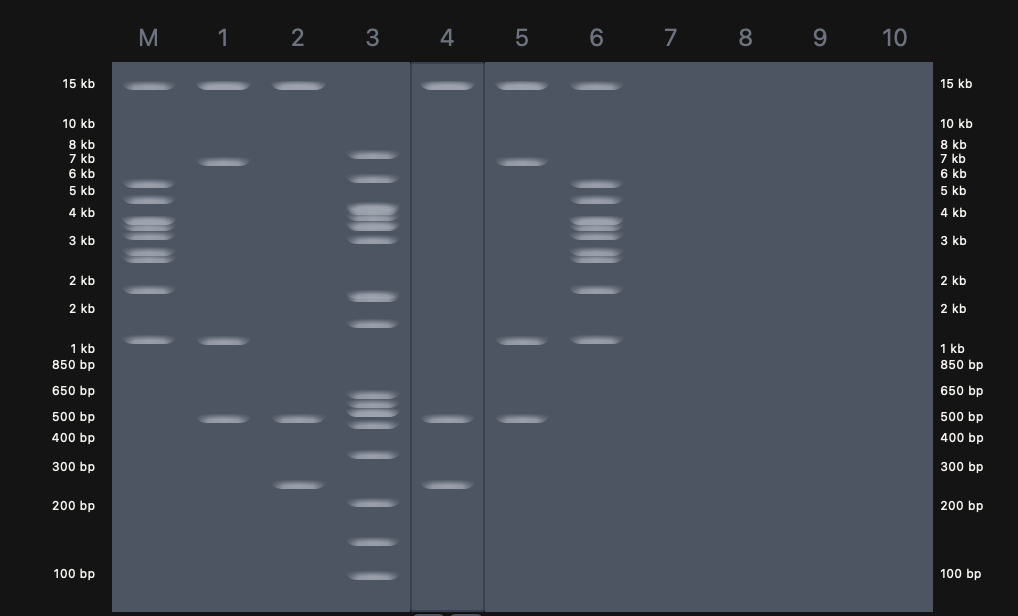
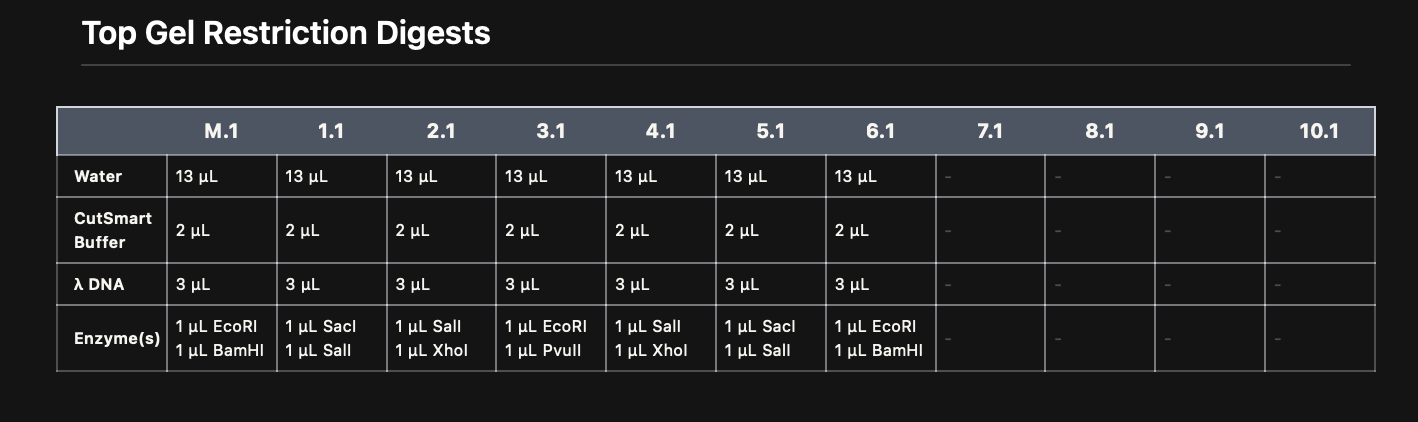
I then created a gel art pattern resembling a heart (to the best of my abilities!!!). To do so, I first simulated the gel run using DNA Gel Art Interface, before replicating the experiment on Benchling.
Part 3: DNA Design Challenge
In recitation, we discussed that you will pick a protein for your homework that you find interesting. Which protein have you chosen and why? Using one of the tools described in recitation (NCBI, UniProt, google), obtain the protein sequence for the protein you chose.
3.1. Choose your protein.
The protein I picked is luciferase, a bioluminescent protein that offers a sustainable, highly efficient alternative to high-intensity, artificial lighting any can aid in tackling light pollution.
The NCBI accession of luciferase from Armillaria gallica is A0A2H3E985.
3.2. Reverse Translate: Protein (amino acid) sequence to DNA (nucleotide) sequence.
Codon optimization is a pre-processing step in recombinant DNA design which takes into account the chassis’s codon bias – the non-random, preferential use of specific synonymous codons over others to encode the same amino acid – in order to optimize the expressed protein’s translation, folding, and quantity. This works because, although the genetic code is degenerate, different organisms favor different codons. If a cognate tRNA is unavailable during protein synthesis, the amino acid’s translation may halt and impact the final product.
Since A. gallica is not typically used industrially, E. coli will be used. Thus, the nucleotide sequence will be codon optimized to E. coli.
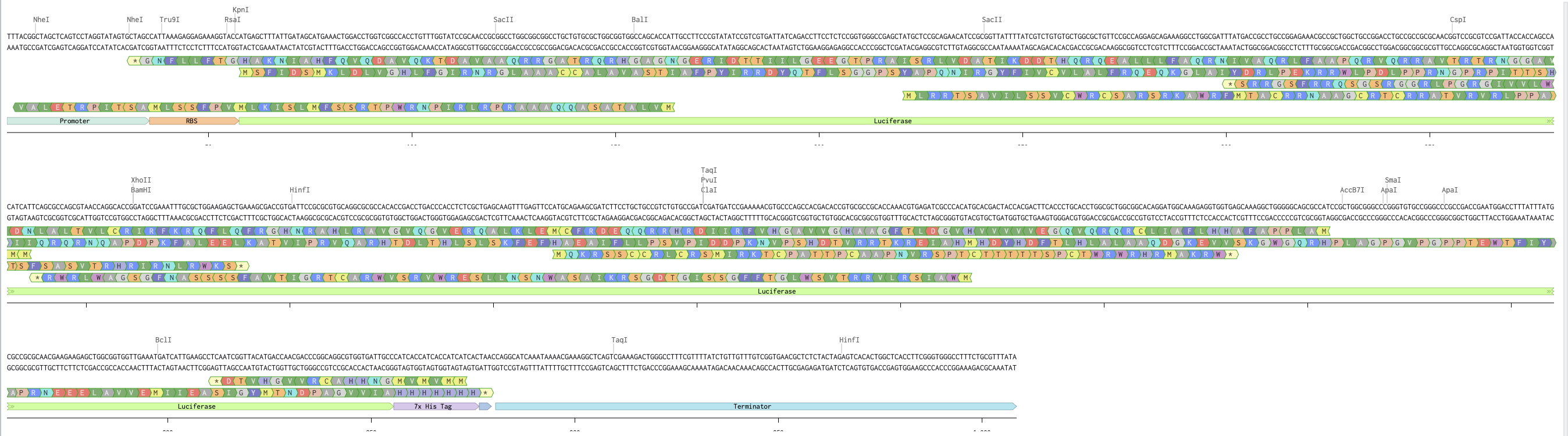
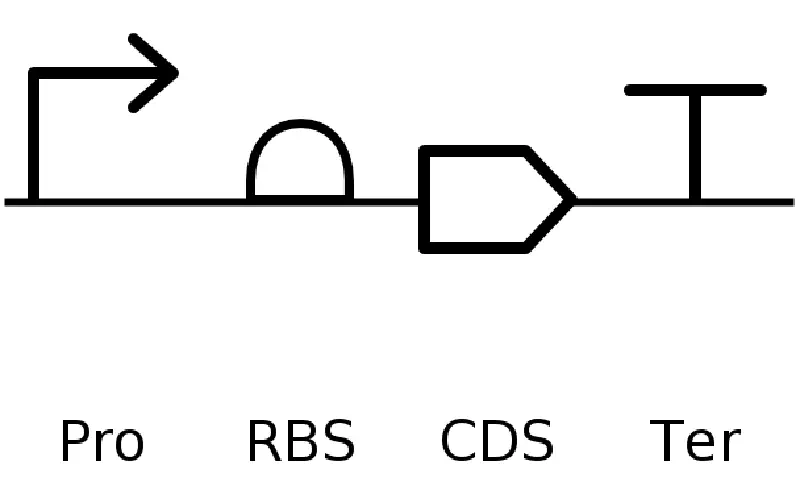
Using the listed promtoer, RBS, 7x His-tag, and terminator, I assembled and annotated the gene expression casette below.
Part 5: DNA Read, Write, Edit
5.1 DNA Read
(i) I would want to sequence the microbiome (MB) associated with a specific niche, such as the gut, focusing on both species abundance and functionalities. Bacteria co-evolved with a lot of species and thus play crucial roles in their health. In humans, this involves digestion, immunity, and even gut-brain health.
(ii) I would use Illumina sequencing for shotgun metagenomics. This is second-generation sequencing, where input DNA is extracted from stool, fragmented, adapter-ligated, PCR-amplified, and sequenced. Bases are decoded via fluorescence (Illumina), producing FASTQ files for downstream taxonomic and functional analysis.
5.2 DNA Write
(i) I would synthesize a genetic circuit in gut bacteria that senses inflammation and responds by producing a therapeutic molecule, such as an anti-inflammatory peptide or short-chain fatty acid. This enables localized, on-demand treatment of gut disorders while minimizing systemic side effects. The circuit would include a sensor promoter, regulatory logic, and an effector gene.
(ii) I would use phosphoramidite-based DNA synthesis to generate individual circuit components, followed by Gibson Assembly.
Essential steps include gene and oligo synthesis, genetic parts assembly, cloning, and validation (in vitro and in vivo). Limitations include sequence length constraints, synthesis errors, and batch-to-batch variations.
5.3 DNA Edit
(i) I would edit the genomes of gut-resident microbes to improve circuit stability, safety, and therapeutic performance. This could include knocking out competing pathways, tuning promoter strength, or enhancing stress tolerance to ensure reliable function in the gut environment.
(ii) I would utilize various forms of CRISPR technolgoies (e.g. Cas9, CRISPRa/CRISPRi) to introduce edits of different magnitdues as needed.
1. Find and describe a published paper that utilizes the Opentrons or an automation tool to achieve novel biological applications.
I picked this paper by the Baker Lab because its definition of automation drew my attention. The paper developed what the authors refer to as a “partial automation instead of complex end-to-end robotics”, claiming that, although they did integrate robotic liquid handlers for some of the characterizations, the workflow should be widely adoptable to streamline workflows, even without the robotic liquid handlers. The argument that a many wet lab workflows are time, energy, and resource intensive resonated with my work.
Problem
Standard biochemistry workflows are the major bottleneck in de novo protein design.
Protein production and characterization are:
Time-intensive
Labor-intensive
Expensive
Poorly standardized
Iterative design–build–test cycles are slow, limiting throughput and innovation.
Solution: Semi-Automated Protein Production (SAPP)
A rapid, modular, scalable, cost-effective, assay-agnostic workflow
Enables end-to-end protein production and characterization in 48 hours
~6 hours active bench time
Designed to be broadly adoptable across academic labs
Standardized pipeline reduces variability and cost
Demonstration
Applied to design and test de novo inhibitors of respiratory syncytial virus (RSV)
Validated high-throughput screening of large design libraries
Demonstrated robustness across multiple constructs and tagging formats
Major Workflow Components
1. Computational Design & DNA Preparation
Software for automated plasmid design
Sequence optimization using:
Codon Adaptation Index (CAI)
Suppression of alternative start sites
Modular architecture enables vector swapping for downstream applications
2. Scalable Demultiplexing Protocol (DMX)
Uses oligo pools as input DNA
Enables arrayed, clonal recovery of individual constructs
1000 designs processed in parallel
~5-fold cost reduction
~$5 per construct (expression-ready format)
3. Cloning & Expression
One-pot Golden Gate Assembly (GGA)
Direct transformation into E. coli expression strain
Modular tagging compatibility:
His-tag
Strep-tag
Avi-tag
NanoBiT
Halo-tag
MBP
Single design → multiple downstream functional assays.
Automation
Software-Level Automation
Python scripting to automate plasmid design and sequence processing
Automated construct annotation and tracking
Programmatic primer and part design
Standardized digital handoff between design and wet lab
Write a description about what you intend to do with automation tools for your final project. You may include example pseudocode, Python scripts, 3D printed holders, a plan for how to use Ginkgo Nebula, and more. You may reference this week’s recitation slide deck for lab automation details.
Below is a protocol for a protein-agnostic directed evolution protocol:
Python: Generate library of starting proteins
DMX: Generate genetic parts
Python: Reverse translate
Python: Codon optimize and remove stop codons
Python: Design PCR primers
DMX: Generate PCR primers
Echo: Perform error-prone PCR
Multiflo: dispense the PCR products to all wells containing competent cells to start protein expression.
PlateLoc: seal plates.
Inheco: incubate.
Xpeel: remove seal.
Identify variants with desired features (e.g. PHERAstar: measure and compare fluorescence )
Echo525: Amplify best-performing variants via PCR and use these as templates
Repeat