Week 3 HW: Lab automation
PART 1. 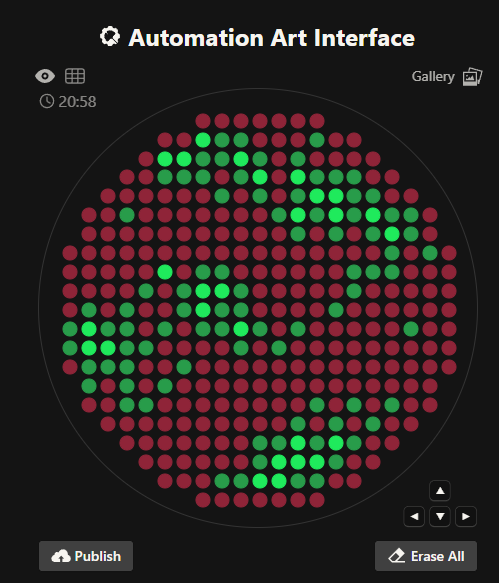 artistic design using the GUI LINK: https://opentrons-art.rcdonovan.com/?id=98conne30870554
PART 2. ARTICLE “An Automated Versatile Diagnostic Workflow for Infectious Disease Detection in Low-Resource Settings” DOI: https://doi.org/10.3390/mi15060708
The article highlights how implementing Opentrons for automated workflows in hospital and clinical settings helps significantly reduce turnaround times and accelerates overall logistics. By increasing sample throughput and enabling the simultaneous processing of multiple samples, the system greatly enhances operational efficiency. Furthermore, automation reduces the risk of human error inherent in manual repetitive tasks and minimizes the possibility of sample contamination or compromising the diagnostic process, ensuring more reliable results.
The system OpenTrons was demonstrated through a test for Neisseria meningitidis (meningitis) and consists of four integrated modules:
- DNA Isolation: Utilizing magnetic beads to purify pathogen DNA.
- DNA Amplification: Performing isothermal Recombinase Polymerase Amplification (RPA) at 37°C, which avoids the need for complex thermal cycling.
- DNA Digestion: Using exonucleases to convert double-stranded amplicons into single-stranded DNA.
- DNA Detection: Employing a vertical flow microarray (VFM) on paper, where gold nanoparticles create a colorimetric signal for visual results. The automated process takes 110 minutes, making it approximately 18% faster than manual processing. Additionally, the cost is roughly $16 per sample, which is significantly more affordable than the estimated $94 for a standard PCR test
PART 3. Final Project Automation Plan: “Bio-Hybrid Designer”
My plan to use automation to optimize hybrid biosynthetic pathways for complex drugs like paclitaxel. The goal is to identify the most efficient “transition point” where biological synthesis (producing precursors like baccatina III) should end and selective chemical synthesis should begin.
- Cloud Lab Implementation (Ginkgo Nebula) To achieve high-throughput screening of enzymatic variants and chemical cofactors, I will utilize the Ginkgo Nebula platform. The workflow will follow these steps:
- Acoustic Liquid Handling: Use the Echo 525 to transfer nanoliter-scale droplets of DNA constructs and cofactors into destination plates.
- Reagent Stamping: Use the Bravo system to stamp cell-free protein synthesis (CFPS) master mixes into 384-well plates.
- Incubation: Seal plates with PlateLoc and incubate in Inheco modules at 37°C to express the enzymes.
- Detection: After unsealing with XPeel, use the PHERAstar to measure fluorescence from biosensors, providing data for the next Design-Build-Test-Learn (DBTL) cycle.
- Local Prototyping (Opentrons OT-2) I will use the Opentrons OT-2 for initial protocol validation and mixing of chemical precursors. I will use a standardized layout:
- Slot 5: Agar plate or reaction plate for the final output.
- Slot 6: Source plate for bacterial cultures or chemical reagents.
- Slot 9: Tip rack for the P20 pipette.
a) Python Script / Pseudocode Example (maybe use, I´m not sure right now)
My script will incorporate the dispense_and_jog function to ensure the pipette moves horizontally before dispensing vertically, preventing the tip from scratching the agar surface.