Gel Electrophoresis
1. Principle
Gel electrophoresis is a laboratory technique used to separate molecules such as DNA, RNA, or proteins. Samples are loaded into wells and begin migrating through the gel when an electric current is applied. The speed of migration varies depending on the charge, mass, and length of the molecule. The smaller and more highly charged the molecule, the faster it moves.
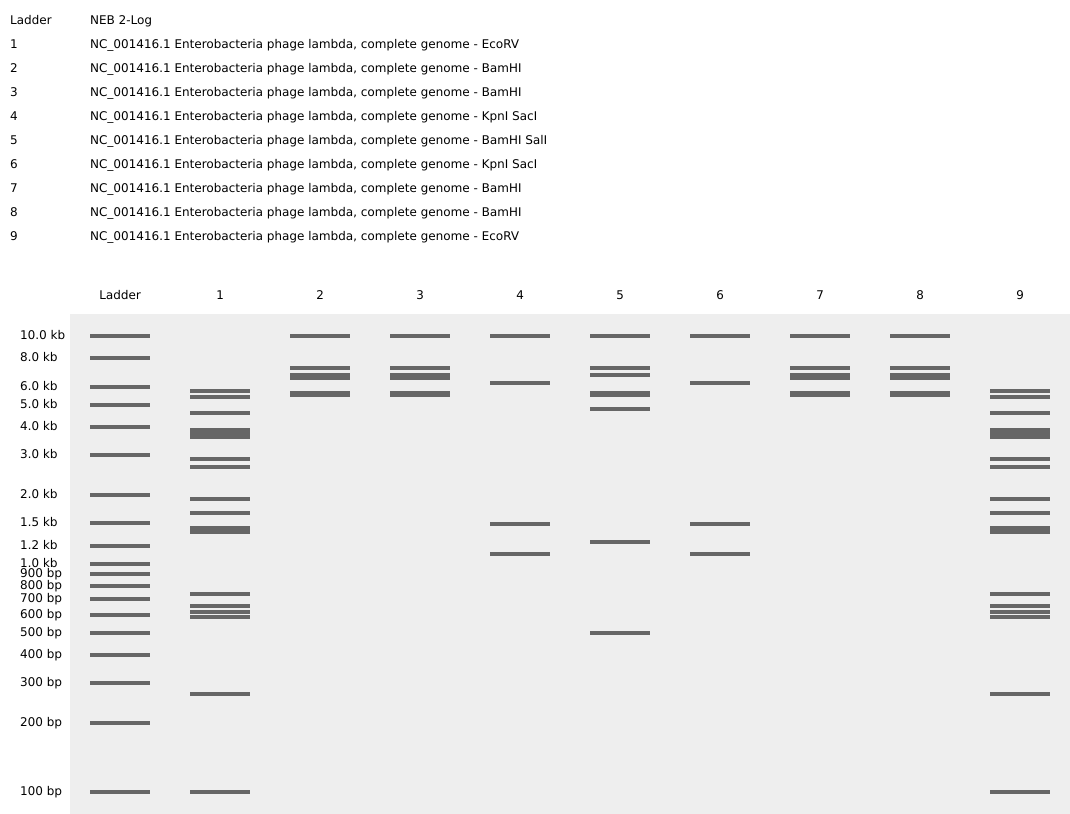
Restriction enzymes (REs) are “molecular scissors” that cut DNA at specific recognition sequences. When a DNA sequence is digested by REs, it is cut into fragments of different lengths depending on the enzyme used, leading to a different “ladder pattern.” This concept has been used by Paul Vanouse to create artwork.
Reference Recitation Week 02
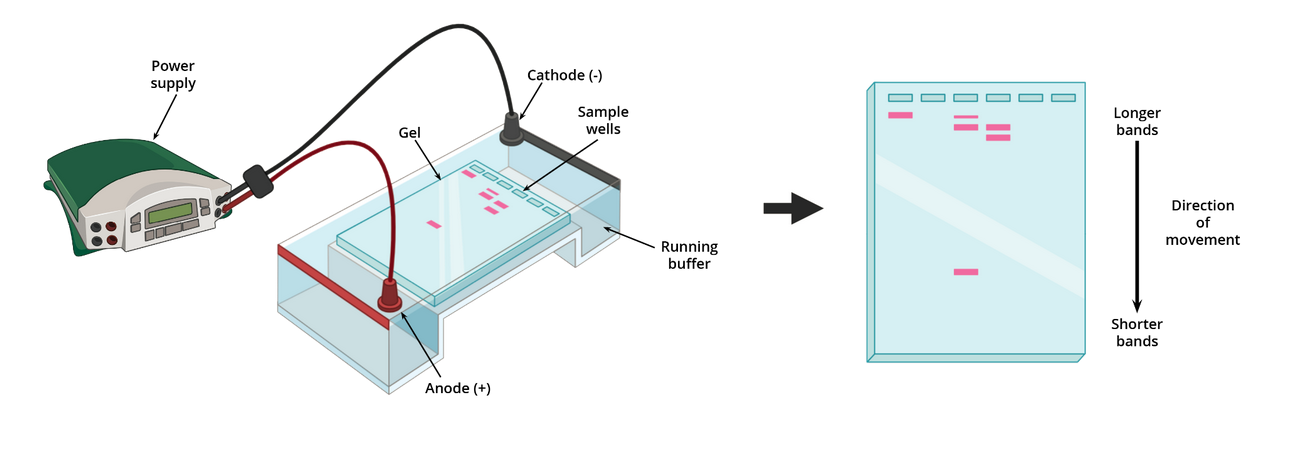
Image source: Gel Electrophoresis
2. Benchling
Step 01: Retrieving DNA of Escherichia phage Lambda (complete genome) from Database
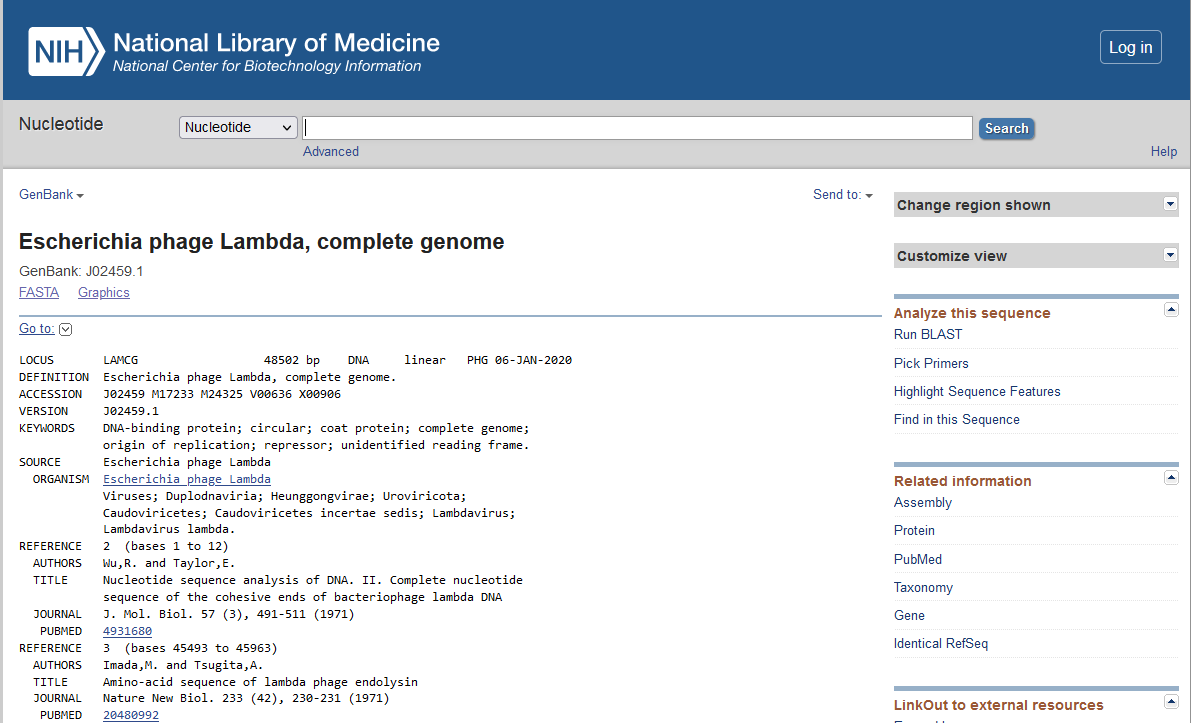
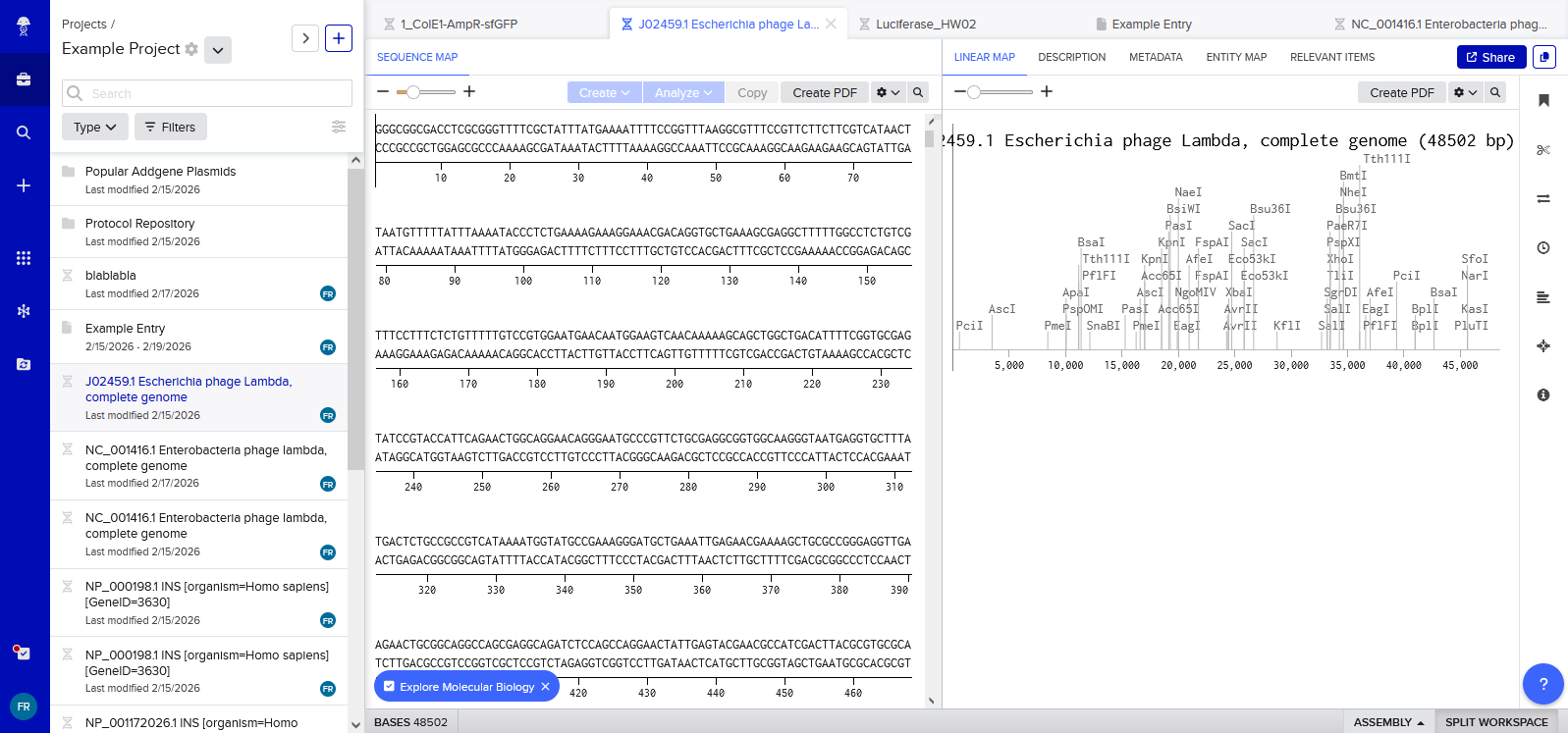
Step 02: Import Lambda fasta file in Benchling
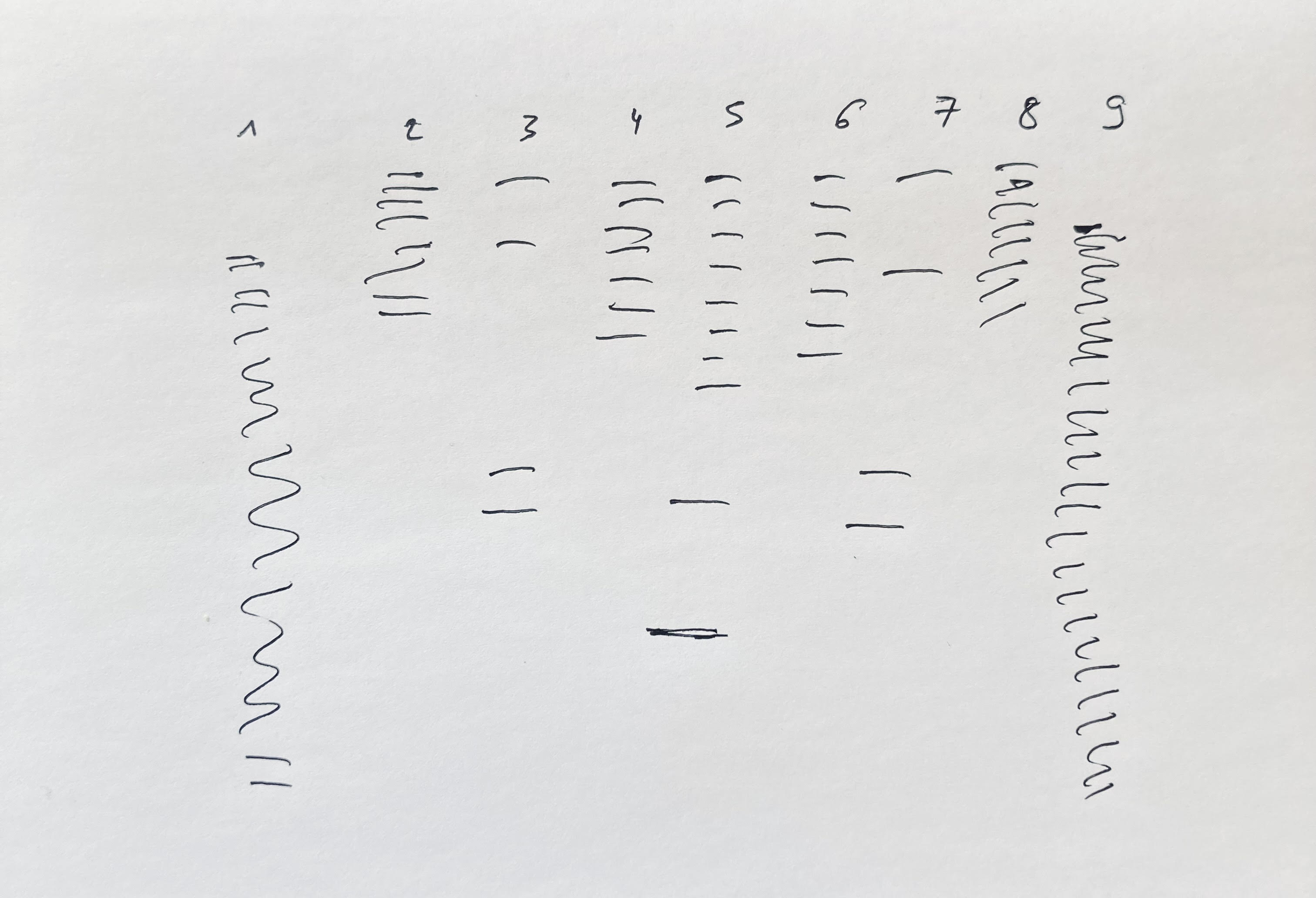
Step 03: Create a visual design using the “ladder patterns” from Ronan’s DNA Gel Art Interface.
Process: I first tried to create the shape of a uterus but the pattern options available were limited so I switched to a Kawaii animal face. When running the digests, I accidentally switched the ERs for wells 3-4 and 7-8, which turned the visual into a M shape instead.
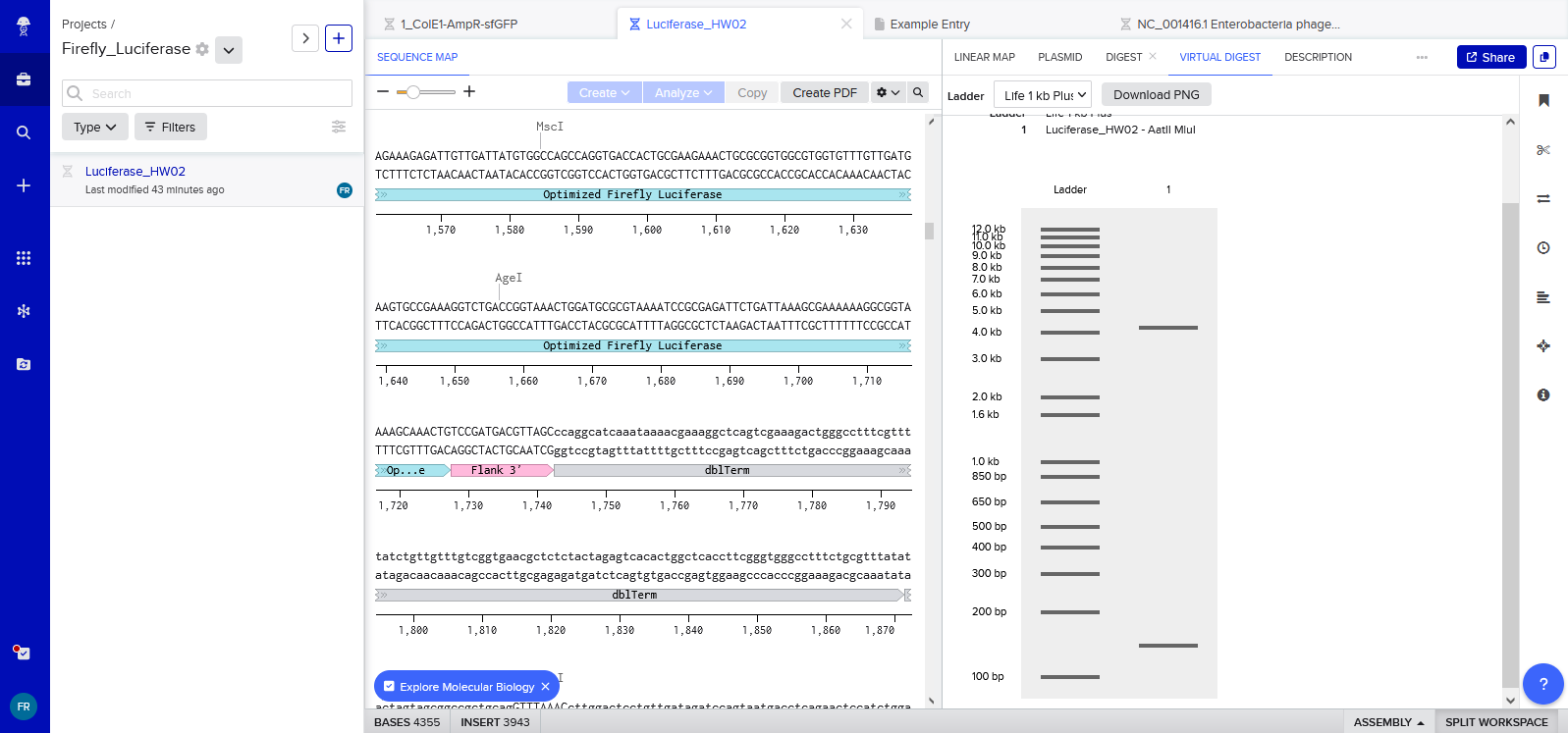
Step 04: Running the digests for each well to create the visual pattern in Benchling
3. In-silico Gel Art