Freeze-Dried CFS
1. Bioluminescent TSS-Toxin Biosensor Tampons
Toxic shock syndrome (TSS) is a rare, life-threatening, toxin-mediated infectious process linked, in the vast majority of cases, to toxin-producing strains of Staphylococcus aureus or Streptococcus pyogenes. The project aim is to integrate a freeze-dried cell-free biosensor system into mycelium-based menstrual products to produce real-time bioluminescent signals upon detecting TSS-toxin-producing bacterial metabolites, enabling users to identify dangerous pathogenic activity before clinical symptoms emerge.
2. Mechanism
The tampon is made from biocompatible mycelium that forms a soft, porous, and absorbent material similar to the coton material used in conventional tampons. A cell-free biological system designed to detect the early signs of infection is embedded within this structure. The material contains the molecular components needed for sensing, including ribosomes, amino acids, and synthetic DNA instructions that activate the detection process when exposed to menstrual fluid. See Synthetic Cell Design HW section for details about the molecular biosensing principle.
The biosensor is designed to detect two harmful bacterial toxins: (1) Staphylococcus aureus toxic shock syndrome toxin-1 (TSST-1) and Streptococcus pyogenes streptococcal pyrogenic exotoxins (SPEs). It can do this either directly, by responding to bacterial toxins, or indirectly, by sensing bacterial byproducts that build up in the menstrual environment. When the tampon is inserted, menstrual fluid naturally rehydrates the freeze-dried biological components inside the material. This activates the monitoring of the vaginal environment and the detection of potential signs of infection.
3. Societal challenge
TSS remains a serious and often overlooked health risk. Although it is relatively rare in developed countries, it still carries a mortality rate of around 5–15%, and some survivors experience long-term damage to multiple organs (incl. amputation). One of the biggest challenges is that the early symptoms are vague and can look similar to the flu, making TSS difficult to recognise quickly. By the time it is diagnosed, severe complications may already have developed. The critical opportunity for intervention is within the 12–48 hour period after toxin exposure, before widespread inflammation and organ failure occur, but this window is often missed by both users and healthcare providers.
Current gap: There is currently no simple, accessible early warning system available. The existing vaginal health apps can only track symptoms after they appear and cannot detect harmful bacteria or toxins in real time. Biomarker testing is not currently available for home use. The diagnosis still depends on laboratory cultures, which can take 3–5 days for results.
The project can have a positive clinical impact. Detecting sepsis even 12 hours earlier can make a major difference: earlier diagnosis improves patient outcomes and helps reduce healthcare costs.
It can also improve health equity. The tampon-based warning system offers a simple, non-invasive way for menstruating people to detect early signs of infection. It could be especially helpful in low-resource areas where access to hospitals or medical care may be delayed.
Finally, the project seems to be a good fit with the current market needs. Indeed, the success of personal health products such as glucose monitors, ovulation trackers and pregnancy tests shows that people are comfortable using health diagnostics in private settings.
Sources: Claude + Toxic Shock Syndrome: A Literature Review. Antibiotics (2024) https://pubmed.ncbi.nlm.nih.gov/38247655
4. Cell-free system limitations
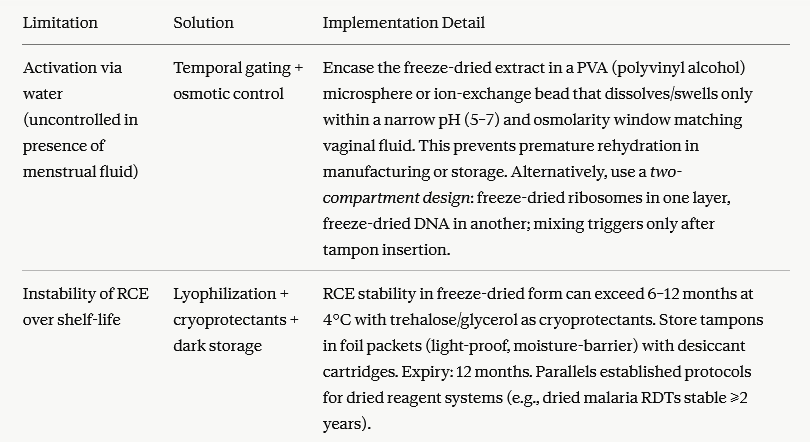
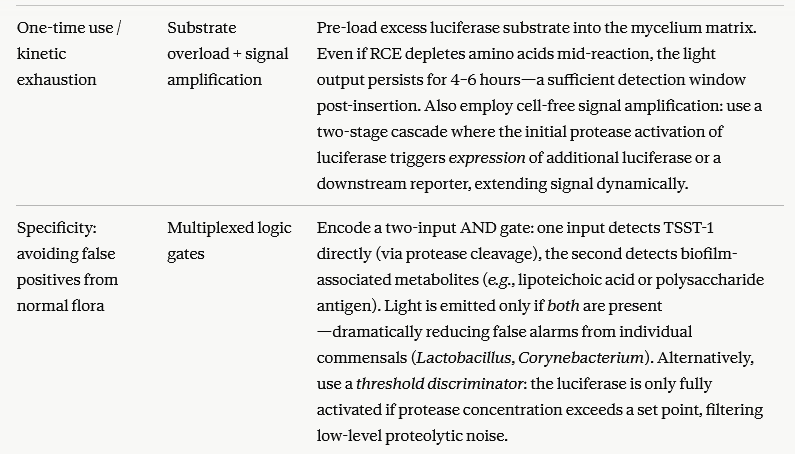
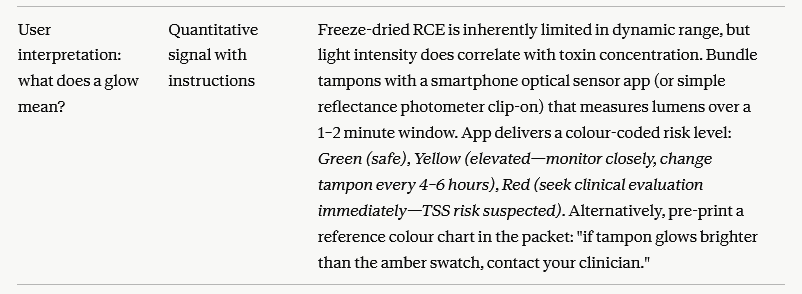
Table created with Claude.