Week 11 HW: Bioproduction & Cloud Labs
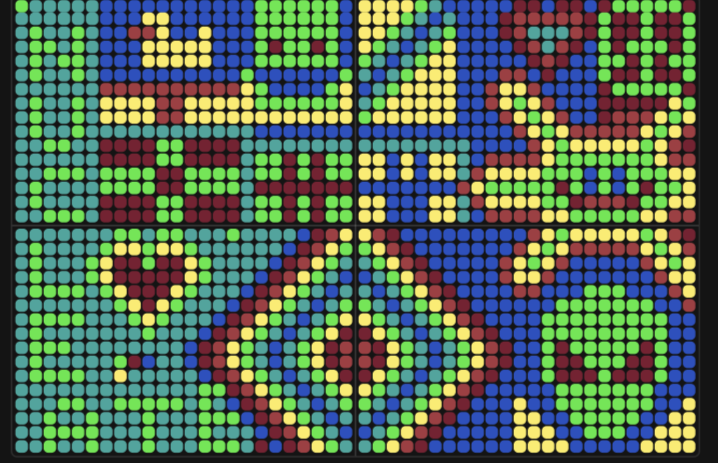
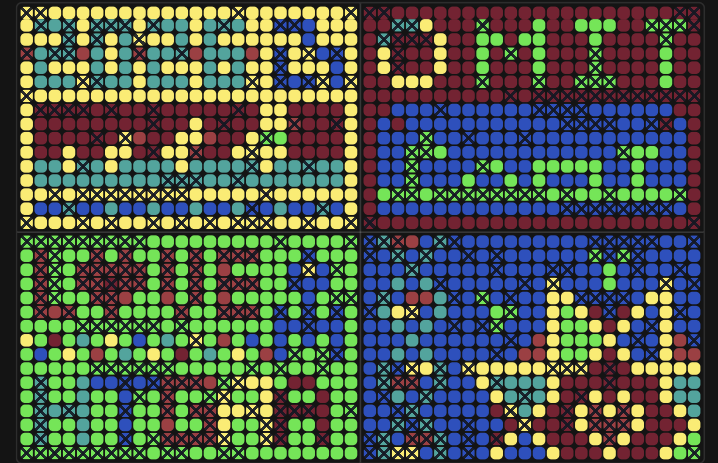
Part A: The 1,536 Pixel Artwork Canvas | Collective Artwork
Contribute at least one pixel to this global artwork experiment before the editing ends on Sunday 4/19 at 11:59 PM EST.
A personalized URL was sent to the email address associated with your Discourse account, and you can discuss the artwork on the Discourse.
If you did not have a chance to contribute, it’s okay, just make sure you become a TA this fall! 😉
Let me try to become a TA for How to biomanufacture almost anything
Make a note on your HTGAA webpages including:
what you liked about the project
The final bioart project looked crazy cool. I love seeing all my contributers
what about this collaborative art experiment could be made better for next year.
Focusing more on the protocol generation for Gingko Nebula. While the artwork is a cool and visually stimulating project, it would be cooler to understand the automated lab part.
Part B: Cell-Free Protein Synthesis | Cell-Free Reagents
Referencing the cell-free protein synthesis reaction composition (the middle box outlined in yellow on the image above, also listed below), provide a 1-2 sentence description of what each component’s role is in the cell-free reaction.
E. coli Lysate
BL21 (DE3) Star Lysate (includes T7 RNA Polymerase) The lysate contains the cellular machinery required for transcription and translation, including ribosomes, tRNAs, translation factors, metabolic enzymes, and cofactors extracted from E. coli. The incorporated T7 RNA polymerase drives strong transcription from T7 promoters, enabling high protein production in the cell-free system.
Salts/Buffer
Potassium Glutamate Potassium glutamate makes sure that the the major intracellular ionic environment and helps stabilize ribosomes and enzymatic activity are provided. Glutamate also mimics the natural cytoplasmic conditions of E. coli, improving protein synthesis efficiency.
HEPES-KOH pH 7.5 HEPES is a buffering agent that maintains a stable pH during the reaction. Stable pH is essential because transcription, translation, and energy metabolism enzymes are highly pH sensitive. Magnesium Glutamate HEPES is a buffering agent that maintains a stable pH during the reaction. Stable pH is essential because transcription, translation, and energy metabolism enzymes are highly pH sensitive. Potassium phosphate monobasic This phosphate salt contributes to phosphate buffering capacity and helps maintain ionic strength. It also participates in maintaining phosphate availability for metabolic reactions. Potassium phosphate dibasic The dibasic phosphate form works together with the monobasic form to create a phosphate buffer system. This stabilizes pH and supports phosphate-dependent enzymatic reactions during long incubations.
Energy / Nucleotide System
Ribose Ribose acts as a precursor for nucleotide regeneration through endogenous salvage pathways present in the lysate. It supports sustained RNA synthesis over long reaction times.
Glucose Glucose serves as a slow-release energy substrate that fuels glycolytic metabolism within the lysate. This enables continuous ATP regeneration during extended incubations.
AMP AMP is a nucleotide precursor that can be enzymatically converted into ATP inside the lysate. This reduces the need to directly add expensive high-energy triphosphates.
CMP CMP serves as a precursor for cytidine nucleotide regeneration. Cellular enzymes recycle it into higher-energy nucleotide forms needed for RNA synthesis.
GMP Although listed as 0 µM in the formulation, GMP would normally function as a guanosine nucleotide precursor for RNA synthesis and energy metabolism.
UMP UMP is a precursor for uridine nucleotides used in RNA synthesis. Lysate enzymes convert it into higher phosphorylated nucleotide forms as needed.
Guanine Guanine can be salvaged by endogenous enzymes to generate GMP and eventually GTP. This provides a cheaper and potentially more stable alternative to directly supplying guanosine nucleotides.
Translation Mix (Amino Acids)
17 Amino Acid Mix This mixture supplies most amino acids required for protein synthesis. Providing amino acids externally prevents depletion during translation and improves protein yield.
Tyrosine Tyrosine is added separately because of its relatively low solubility and instability in standard amino acid mixes. Separate optimization allows higher effective concentrations without precipitation.
Cysteine Cysteine is also supplied separately because it is chemically reactive and prone to oxidation. Independent addition improves stability and availability for protein synthesis.
Additives
Nicotinamide Nicotinamide is a precursor for NAD⁺ biosynthesis and supports redox metabolism in the lysate. Sustaining cellular redox balance is particularly important during long-duration reactions.
Backfill
Nuclease Free Water Nuclease-free water is used to bring the reaction to the desired final volume while preventing degradation of RNA and DNA templates by contaminating nucleases.
Describe the main differences between the 1-hour optimized PEP-NTP master mix and the 20-hour NMP-Ribose-Glucose master mix shown in the Google Slide above. (2-3 sentences)
The 1-hour PEP-NTP system relies on directly supplying high-energy molecules such as phosphoenolpyruvate (PEP) and fully phosphorylated nucleoside triphosphates (ATP, GTP, CTP, UTP), enabling very rapid and high initial protein production. However, this approach is relatively expensive and less sustainable because energy substrates are consumed quickly and inhibitory byproducts can accumulate. In contrast, the 20-hour NMP-ribose-glucose system uses lower-energy nucleotide precursors (AMP, CMP, UMP, guanine), along with ribose and glucose, allowing the endogenous metabolic enzymes in the lysate to slowly regenerate nucleotides and ATP over time. This creates a more metabolically self-sustaining and cost-effective reaction optimized for long-duration protein expression.
Bonus question: How can transcription occur if GMP is not included but Guanine is?
Transcription can still occur because the lysate contains nucleotide salvage enzymes that convert guanine into GMP, then GDP, and finally GTP through sequential phosphorylation reactions. The system therefore generates the required GTP internally rather than adding GMP or GTP directly to the reaction mixture.
Part C: Planning the Global Experiment | Cell-Free Master Mix Design
Given the 6 fluorescent proteins we used for our collaborative painting, identify and explain at least one biophysical or functional property of each protein that affects expression or readout in cell-free systems. (Hint: options include maturation time, acid sensitivity, folding, oxygen dependence, etc) (1-2 sentences each)
sfGFP
sfGFP is engineered for very efficient folding and rapid chromophore maturation, making it highly robust in cell-free systems even under partially stressful reaction conditions. Its strong folding stability usually gives high fluorescence output and reliable expression readouts.
mRFP1
mRFP1 has a relatively slower chromophore maturation process compared to GFP variants, so fluorescence can lag behind actual protein synthesis in cell-free reactions. Red fluorescent proteins also tend to have lower brightness and more complex folding pathways.
mKO2
mKO2 is known for fast maturation among orange fluorescent proteins, which improves early signal detection in cell-free systems. However, its fluorescence can be somewhat sensitive to pH changes, affecting readout consistency if reaction conditions fluctuate.
mTurquoise2
mTurquoise2 has very high quantum yield and brightness, making it excellent for sensitive fluorescence detection in low-expression cell-free reactions. Like many CFPs, proper chromophore formation depends strongly on correct folding and oxygen availability.
mScarlet_I
mScarlet-I was engineered for rapid maturation and exceptionally high brightness among red fluorescent proteins, which improves signal intensity in cell-free systems. Nevertheless, red chromophore formation still generally requires more maturation time than GFP-like proteins.
Electra2
Electra2 is a more functionally specialized fluorescent protein whose optical behavior depends on conformational or environmental changes, making its readout potentially more sensitive to membrane mimicry, folding efficiency, and reaction composition in cell-free systems. Its larger and more complex architecture may also reduce expression efficiency relative to simpler fluorescent proteins.
Create a hypothesis for how adjusting one or more reagents in the cell-free mastermix could improve a specific biophysical or functional property you identified above, in order to maximize fluorescence over a 36-hour incubation. Clearly state the protein, the reagent(s), and the expected effect.
For mScarlet-I, increasing the energy regeneration system and maintaining adequate magnesium/potassium salt balance in the cell-free mastermix will improve total fluorescence over 36 hours by sustaining translation longer and supporting proper folding/chromophore maturation. Specifically, slightly increasing 3-PGA or PEP as the energy substrate, together with optimized Mg-glutamate/Mg²⁺ and K-glutamate, should extend protein production and help mScarlet-I reach its high-brightness mature state. The expected effect is higher final red fluorescence after 36 hours, because more protein is synthesized and more of it has time to mature into the fluorescent chromophore.
The second phase of this lab will be to define the precise reagent concentrations for your cell-free experiment. You will be assigned artwork wells with specific fluorescent proteins and receive an email with instructions this week (by April 24). You can begin composing master mix compositions here.
I did not receive an email.
The final phase of this lab will be analyzing the fluorescence data we collect to determine whether we can draw any conclusions about favorable reagent compositions for our fluorescent proteins. This will be due a week after the data is returned (date TBD!). The reaction composition for each well will be as follows:
6 μL of Lysate 10 μL of 2X Optimized Master Mix from above 2 μL of assigned fluorescent protein DNA template 2 μL of your custom reagent supplements Total: 20 μL reaction
I haven’t received any data on the experiment.