I am a biologist, science writer, communicator and avid reader based in Pune, India. I completed my graduate studies from MGM Institute of Biosciences, receiving a Master’s degree in Biotechnology. I also hold a postgraduate diploma in Clinical Research. I have worked on research projects in reproductive, maternal and child health on finding biomolecular markers for preducting ovarian response in women undergoing FSH hormone stimulation, managed a clinical trial site as part of a global clinical trial on gestational diabetes and PCOS and evaluating efficacy of drugs for encephalitis viruses. Recently, I have been based at the Department of Biotechnology, Ministry of Science and Technology, Govt. of India as a consultant in strategizing science and policy communications, outreach and public engagement.
Homework Questions from Professor Jacobson: Nature’s machinery for copying DNA is called polymerase. What is the error rate of polymerase? How does this compare to the length of the human genome. How does biology deal with that discrepancy? DNA polymerases used to amplify targets during PCR cloning are high fidelity enzymes with error frequencies typically in the range of 10^6 mutations/bp amplified
Programming Bacteriophage to Detect Bacterial Pathogens in Neonatal Sepsis Access to newborn health care is important for ensuring that every child survives. In early days of their life, newborns are at risk of developing neonatal infections resulting in life-threatening conditions in some cases. These infections are primarily bacterial in origin, and include pneumonia, sepsis, and meningitis, resulting in over 550,000 neonatal deaths every year. Among these infections, neonatal sepsis is the third leading cause of newborn mortality and presents a major public health concern. While most of these deaths can be averted by preventive measures and early diagnosis, a major challenge is timely diagnosis especially in resource constraint settings.
Programming Bacteriophage to Detect Bacterial Pathogens in Neonatal Sepsis
Access to newborn health care is important for ensuring that every child survives. In early days of their life, newborns are at risk of developing neonatal infections resulting in life-threatening conditions in some cases. These infections are primarily bacterial in origin, and include pneumonia, sepsis, and meningitis, resulting in over 550,000 neonatal deaths every year. Among these infections, neonatal sepsis is the third leading cause of newborn mortality and presents a major public health concern. While most of these deaths can be averted by preventive measures and early diagnosis, a major challenge is timely diagnosis especially in resource constraint settings.
Neonatal sepsis is categorised as either early-onset (if symptoms start before 72 h of life) or late-onset (if symptoms start afterward). While early-onset sepsis is caused by maternally transmitted pathogens, late-onset sepsis is more common in preterms and in newborns with prolonged hospitalizations, use of central lines, parenteral feeding and mechanical ventilation and is caused by nosocomial infections.
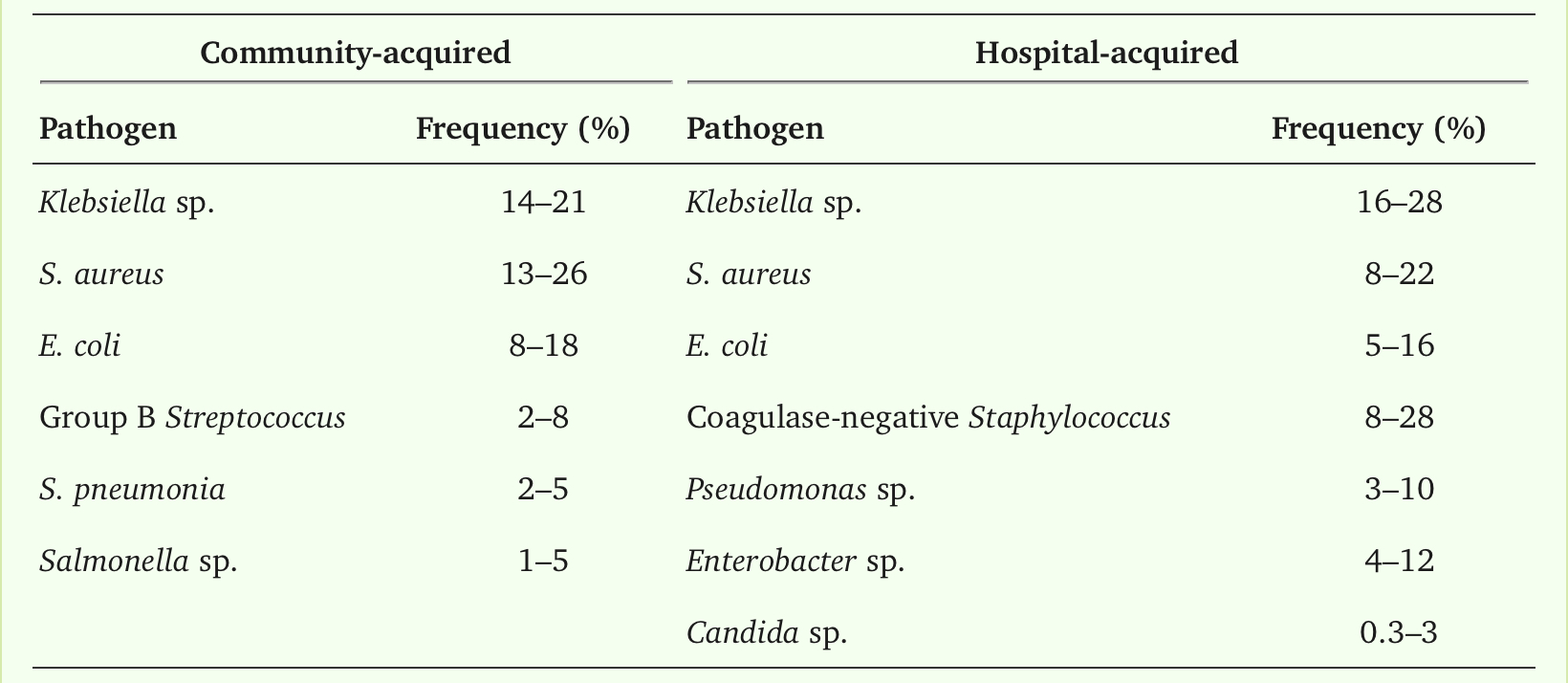
Common bacterial pathogens in neonatal sepsis:
Challenges in the diagnosis of neonatal sepsis:
One of the major difficulties in the management of neonatal sepsis is getting an accurate diagnosis. Unlike older patients, newborns have very subtle presentations, and multiple conditions resemble neonatal sepsis.
Non-reliable blood culture test: Though blood culture is the gold standard for diagnosing sepsis in neonates, its positivity rate is low and is affected by blood volume inoculated, prenatal antibiotic use, level of bacteremia and laboratory capabilities (there are reported evidence of culture-negative sepsis responsible for the majority of episodes).
Contamination risk - ribosomal RNA: Ribosomal RNA unique to bacteria are detected by 16 s RNA. Though it has a high sensitivity, it has a high frequency of contamination, and it cannot determine bacterial antibiotic sensitivities.
Lack of availability of trained professionals and need of sophisticated instruments- PCRs: Molecular diagnosis for the identification of pathogens, including polymerase chain reaction (PCR), real-time PCR require advanced molecular biology laboratories and special equipment, which are not available in many hospital settings.
Potential solution:
These challenges can be addressed using a synthetic biology approach, engineering bacteriophages to detect common bacterial pathogens found in neonatal sepsis. Bacteriophage based detection offers several benefits for rapid bacterial detection:
They are highly specific towards their host organism
Resist high temperatures (90–97 °C),
Stable across a wide range of pH values (3–14) and organic solvents
In comparison to antibodies, phages can be produced in large quantities easily and non-expensively.
Safe to use since they do not infect humans
Phage-based biosensors are one of the electrochemical sensors that have received much attention due to their simplicity, high sensitivity, specificity, and suitability for field testing. In this proposed idea, the potential solution is to develop a screening and detection test to identify Klebsiella sp., S. aureus and E.coli and CoNS in a single device-based test.
It can either be point-of-care sensors used with colorimetric outputs that can be read by eye, such as enzymatic reactions and chromoproteins or are interfaced with small electronic devices for digital readouts.
Next, describe one or more governance/policy goals related to ensuring that this application or tool contributes to an “ethical” future, like ensuring non-malfeasance (preventing harm). Break big goals down into two or more specific sub-goals.
In the recent years, synthetic biology has gained momentum due to its applications in solving pressing global challenges. Technically, it is engineering and redesigning of biological systems (which do not already exist in nature), but which could have a range of applications from therapeutics to conservation to biomanufacturing. Synthetic biology has firmly stepped on the global agenda. As synthetic biology enables creation of novel organisms and are different from typical genetically modified organisms (GMOs), biosecurity and biosafety issues have major ramifications for Biological Weapons Convention. It is therefore important to have national and international policies in governance and regulation.
In India, synthetic biology is taking its shape in not only research and development but also in policy documents. India’s recently released BioE3 Policy is to set forth a framework that ensures the adoption of cutting-edge advanced technologies, and aligning innovative research for promoting Biomanufacturing. In it, active approach has been put forth in using synthetic biology approaches in developing sustainable bio-based production of high-value specialty chemicals, enzymes and biopolymer, smart proteins, etc.
Under Biosafety Guidelines:
In the proposed idea, the aim to develop a biosensor that can detect bacterial pathogens from samples from neonates. Thus, one of the initial biosafety requirements is to have safer sampling method. In this proposed solution, it could either be stool sample or blood which would be easier on the patient as well as clinician or healthcare giver side.
Next is to screen and identify bacteriophages and further design a either a cocktail of bacteriophages or integrate genetic sensors in one bacteriophage that can detect two-three bacterial pathogens in a single test. This will be under BSL-1/2 category and is safe for laboratory handle. While the development will be under less risk zone, initial tests using Klebsiella or E. coli will require higher biosafety protocols.
For assembly of the kit, safe materials will be used, further categorizing the test under biosafety guidelines.
This also does not involve any genetic modification of any human or animal or inserting any genes from one to another.
Next, describe at least three different potential governance “actions” by considering the four aspects below (Purpose, Design, Assumptions, Risks of Failure & “Success”).
Purpose: Synthetic biology-based tools and applications are already being developed at research level at pilot scales, considering biosafety and biosecurity guidelines. However, given the risk of misusing technology for self-motives and profits, strict regulations should be convened for ensuring biosecurity starting from laboratory level to the government and international policy level.
Design: To make this design work, it is essential for different stakeholders to actively participate and monitor progress for long-term goal of deploying this synthetic biology technology into public health settings. One of the foremost actions is securing funding to develop this project. I think, independent researchers/institutions can be involved to co-develop this project. Experts from scientific background, biosafety and ethics background, public health professionals, clinicians and healthcare practitioners (specialty- maternal and child health) and one from government can come together for scientific and technical review of the project. Following this, and after the development of the test, potentially can be reached to public-private enablers that can help with large scale validation, deployment and implementation at sites.
Assumptions: I think at the laboratory level, I feel uncertainties (maybe due to lack of any supervisor/mentor) to progress onto developing this project.
Risks of Failure and Success: Any unintended consequence of this might be detecting three to four bacterial pathogens in one go. More in-detail research will be required to refine the idea and project.
Next, score (from 1-3 with, 1 as the best, or n/a) each of your governance actions against your rubric of policy goals. The following is one framework but feel free to make your own:
Last, drawing upon this scoring, describe which governance option, or combination of options, you would prioritize, and why. Outline any trade-offs you considered as well as assumptions and uncertainties.
Given the scoring, I would want to prioritize on two aspects: one is enhancing biosecurity and another one is promoting constructive applications. I feel that it is essential for us to ensure that the modified organisms are not employed for acts that puts the globe at risk of any type of harm. Another aspect is to protect the ecosystem as we should be careful that the organism does not escape into the environment and pose risk to any of the animals. In order to for enabling science and technology-backed innovations for public good, I feel that certain initiatives should be actively undertaken to promote constructive applications of synthetic biology.
For the same, I would seek consultation first with own research institution and local authorities and then expanding it to state and national level for recommendations. And reflecting on these, I feel that government can initiate actionable deliberations not just for stricter biosecurity guidelines but also public engagement and understanding of constructive applications of synthetic biology.
Subsections of Homework
Week 02 Pre HW:
Homework Questions from Professor Jacobson:
Nature’s machinery for copying DNA is called polymerase. What is the error rate of polymerase? How does this compare to the length of the human genome. How does biology deal with that discrepancy?
DNA polymerases used to amplify targets during PCR cloning are high fidelity enzymes with error frequencies typically in the range of 10^6 mutations/bp amplified
Ref: McInerney P, Adams P, Hadi MZ. Error Rate Comparison during Polymerase Chain Reaction by DNA Polymerase. Mol Biol Int. 2014;2014:287430. doi: 10.1155/2014/287430. Epub 2014 Aug 17. PMID: 25197572; PMCID: PMC4150459.
How many different ways are there to code (DNA nucleotide code) for an average human protein? In practice what are some of the reasons that all of these different codes don’t work to code for the protein of interest?
I will have to understand this in more detail to answer this question.
Homework Questions from Dr. LeProust:
What’s the most commonly used method for oligo synthesis currently?
Phosphoramidite based synthesis process
Why is it difficult to make oligos longer than 200nt via direct synthesis?
Time-consuming
Expensive
Energy and processes
Why can’t you make a 2000bp gene via direct oligo synthesis?
Making 2000bp gene via direct oligo synthesis - there is a potential for increased error rate
Purification from mixture
Homework Question from George Church:
Choose ONE of the following three questions to answer; and please cite AI prompts or paper citations used, if any.
What are the 10 essential amino acids in all animals and how does this affect your view of the “Lysine Contingency”?
Lysine contingency:
Lysine is an essential amino acid and given that humans and animals do not have gene to make lysine, they have to be dependent on food source to acquire lysine. If this is the case then how would lysine contingency be true? Or did dinosaurs had an ability to make lysine? as an exceptional case?
Week 1 HW: Principles and Practices
Programming Bacteriophage to Detect Bacterial Pathogens in Neonatal Sepsis
Access to newborn health care is important for ensuring that every child survives. In early days of their life, newborns are at risk of developing neonatal infections resulting in life-threatening conditions in some cases. These infections are primarily bacterial in origin, and include pneumonia, sepsis, and meningitis, resulting in over 550,000 neonatal deaths every year. Among these infections, neonatal sepsis is the third leading cause of newborn mortality and presents a major public health concern. While most of these deaths can be averted by preventive measures and early diagnosis, a major challenge is timely diagnosis especially in resource constraint settings.
Neonatal sepsis is categorised as either early-onset (if symptoms start before 72 h of life) or late-onset (if symptoms start afterward). While early-onset sepsis is caused by maternally transmitted pathogens, late-onset sepsis is more common in preterms and in newborns with prolonged hospitalizations, use of central lines, parenteral feeding and mechanical ventilation and is caused by nosocomial infections.
Common bacterial pathogens in neonatal sepsis:
Image credit: A.Z. Vera et.al, 2015
Challenges in the diagnosis of neonatal sepsis:
One of the major difficulties in the management of neonatal sepsis is getting an accurate diagnosis. Unlike older patients, newborns have very subtle presentations, and multiple conditions resemble neonatal sepsis.
Non-reliable blood culture test: Though blood culture is the gold standard for diagnosing sepsis in neonates, its positivity rate is low and is affected by blood volume inoculated, prenatal antibiotic use, level of bacteremia and laboratory capabilities (there are reported evidence of culture-negative sepsis responsible for the majority of episodes).
Contamination risk - ribosomal RNA: Ribosomal RNA unique to bacteria are detected by 16 s RNA. Though it has a high sensitivity, it has a high frequency of contamination, and it cannot determine bacterial antibiotic sensitivities.
Lack of availability of trained professionals and need of sophisticated instruments- PCRs: Molecular diagnosis for the identification of pathogens, including polymerase chain reaction (PCR), real-time PCR require advanced molecular biology laboratories and special equipment, which are not available in many hospital settings.
Potential solution:
These challenges can be addressed using a synthetic biology approach, engineering bacteriophages to detect common bacterial pathogens found in neonatal sepsis. Bacteriophage based detection offers several benefits for rapid bacterial detection:
They are highly specific towards their host organism
Resist high temperatures (90–97 °C),
Stable across a wide range of pH values (3–14) and organic solvents
In comparison to antibodies, phages can be produced in large quantities easily and non-expensively.
Safe to use since they do not infect humans
Phage-based biosensors are one of the electrochemical sensors that have received much attention due to their simplicity, high sensitivity, specificity, and suitability for field testing. In this proposed idea, the potential solution is to develop a screening and detection test to identify Klebsiella sp., S. aureus and E.coli and CoNS in a single device-based test.
It can either be point-of-care sensors used with colorimetric outputs that can be read by eye, such as enzymatic reactions and chromoproteins or are interfaced with small electronic devices for digital readouts.
Next, describe one or more governance/policy goals related to ensuring that this application or tool contributes to an “ethical” future, like ensuring non-malfeasance (preventing harm). Break big goals down into two or more specific sub-goals.
In the recent years, synthetic biology has gained momentum due to its applications in solving pressing global challenges. Technically, it is engineering and redesigning of biological systems (which do not already exist in nature), but which could have a range of applications from therapeutics to conservation to biomanufacturing. Synthetic biology has firmly stepped on the global agenda.
As synthetic biology enables creation of novel organisms and are different from typical genetically modified organisms (GMOs), biosecurity and biosafety issues have major ramifications for Biological Weapons Convention. It is therefore important to have national and international policies in governance and regulation.
In India, synthetic biology is taking its shape in not only research and development but also in policy documents. India’s recently released BioE3 Policy is to set forth a framework that ensures the adoption of cutting-edge advanced technologies, and aligning innovative research for promoting Biomanufacturing. In it, active approach has been put forth in using synthetic biology approaches in developing sustainable bio-based production of high-value specialty chemicals, enzymes and biopolymer, smart proteins, etc.
Under Biosafety Guidelines:
In the proposed idea, the aim to develop a biosensor that can detect bacterial pathogens from samples from neonates. Thus, one of the initial biosafety requirements is to have safer sampling method. In this proposed solution, it could either be stool sample or blood which would be easier on the patient as well as clinician or healthcare giver side.
Next is to screen and identify bacteriophages and further design a either a cocktail of bacteriophages or integrate genetic sensors in one bacteriophage that can detect two-three bacterial pathogens in a single test. This will be under BSL-1/2 category and is safe for laboratory handle. While the development will be under less risk zone, initial tests using Klebsiella or E. coli will require higher biosafety protocols.
For assembly of the kit, safe materials will be used, further categorizing the test under biosafety guidelines.
This also does not involve any genetic modification of any human or animal or inserting any genes from one to another.
Next, describe at least three different potential governance “actions” by considering the four aspects below (Purpose, Design, Assumptions, Risks of Failure & “Success”).
Purpose: Synthetic biology-based tools and applications are already being developed at research level at pilot scales, considering biosafety and biosecurity guidelines. However, given the risk of misusing technology for self-motives and profits, strict regulations should be convened for ensuring biosecurity starting from laboratory level to the government and international policy level.
Design: To make this design work, it is essential for different stakeholders to actively participate and monitor progress for long-term goal of deploying this synthetic biology technology into public health settings. One of the foremost actions is securing funding to develop this project. I think, independent researchers/institutions can be involved to co-develop this project. Experts from scientific background, biosafety and ethics background, public health professionals, clinicians and healthcare practitioners (specialty- maternal and child health) and one from government can come together for scientific and technical review of the project. Following this, and after the development of the test, potentially can be reached to public-private enablers that can help with large scale validation, deployment and implementation at sites.
Assumptions: I think at the laboratory level, I feel uncertainties (maybe due to lack of any supervisor/mentor) to progress onto developing this project.
Risks of Failure and Success: Any unintended consequence of this might be detecting three to four bacterial pathogens in one go. More in-detail research will be required to refine the idea and project.
Next, score (from 1-3 with, 1 as the best, or n/a) each of your governance actions against your rubric of policy goals. The following is one framework but feel free to make your own:
Does the option:
Option 1
Option 2
Option 3
Enhance Biosecurity
• By preventing incidents
2
• By helping respond
2
Foster Lab Safety
• By preventing incident
1
• By helping respond
1
Protect the environment
• By preventing incidents
2
• By helping respond
2
Other considerations
• Minimizing costs and burdens to stakeholders
1
• Feasibility?
2
• Not impede research
• Promote constructive applications
1
Last, drawing upon this scoring, describe which governance option, or combination of options, you would prioritize, and why. Outline any trade-offs you considered as well as assumptions and uncertainties.
Given the scoring, I would want to prioritize on two aspects: one is enhancing biosecurity and another one is promoting constructive applications. I feel that it is essential for us to ensure that the modified organisms are not employed for acts that puts the globe at risk of any type of harm. Another aspect is to protect the ecosystem as we should be careful that the organism does not escape into the environment and pose risk to any of the animals. In order to for enabling science and technology-backed innovations for public good, I feel that certain initiatives should be actively undertaken to promote constructive applications of synthetic biology.
For the same, I would seek consultation first with own research institution and local authorities and then expanding it to state and national level for recommendations. And reflecting on these, I feel that government can initiate actionable deliberations not just for stricter biosecurity guidelines but also public engagement and understanding of constructive applications of synthetic biology.