Phase 8: Full Construct Assembly (insert into pCAMBIA1300 and pCAMBIA2300)
Full Construct Assembly:
After successfully assembling the Structural and Maturation multicassette inserts in Phase 7, I moved to the final cloning step where I inserted each complete multicassette block into its corresponding binary vector backbone using in silico Gibson Assembly in Benchling.
For this phase, I followed the same general Gibson Assembly workflow previously used for multicassette reconstruction. However, instead of assembling several independent fragments together, I assembled only two major components: the linearized pCAMBIA vector backbone and the complete multicassette insert.
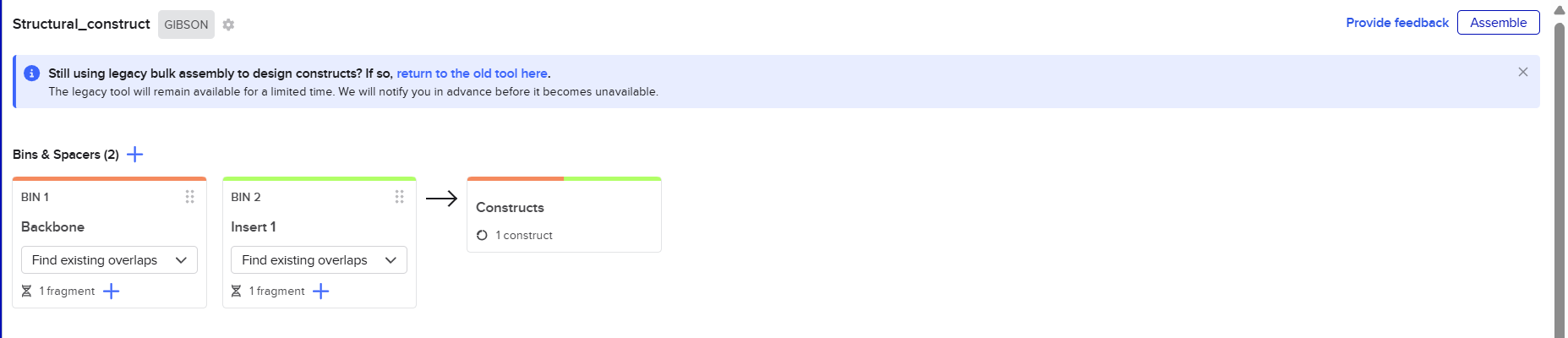
I first opened the Benchling Assembly tool by selecting Create (+) → Assemble DNA sequences by cloning. Then, I configured the assembly parameters similarly to the previous phase. The cloning method was set to Gibson Assembly, and the overlap detection mode remained configured on “Find existing overlaps.”
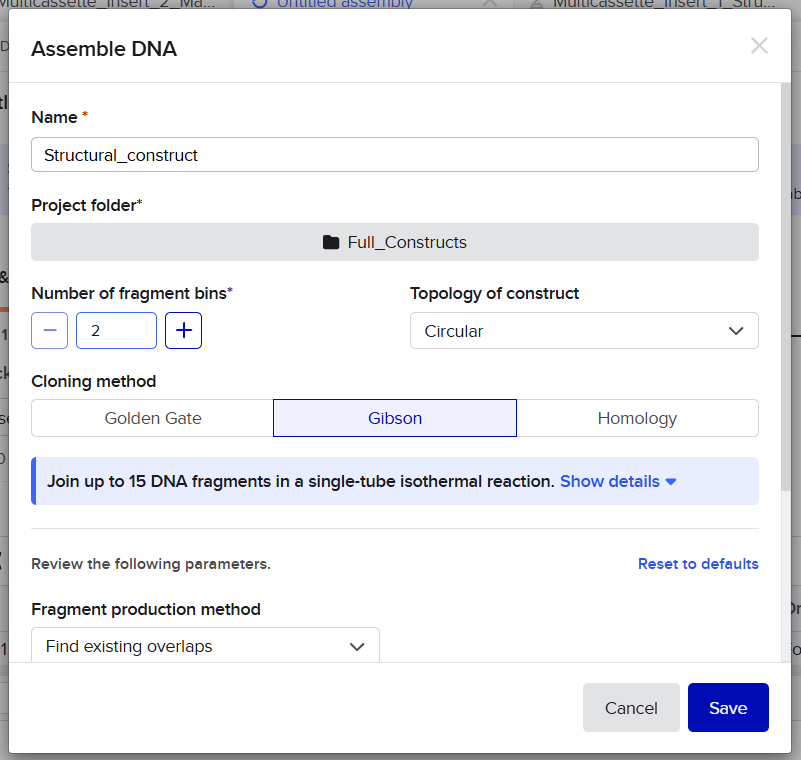 Unlike Phase 7, where the constructs were generated as linear inserts, I configured the topology of the final constructs as Circular because the insert and vector backbone needed to re-circularize to form complete binary plasmids.
For the Structural construct, I imported:
- –> The linearized pCAMBIA2300 backbone digested at the XbaI site
- –> The complete Structural multicassette insert assembled in Phase 7
For the Maturation construct, I imported:
- –> The linearized pCAMBIA1300 backbone digested at the XbaI site
- –> The complete Maturation multicassette insert assembled in Phase 7
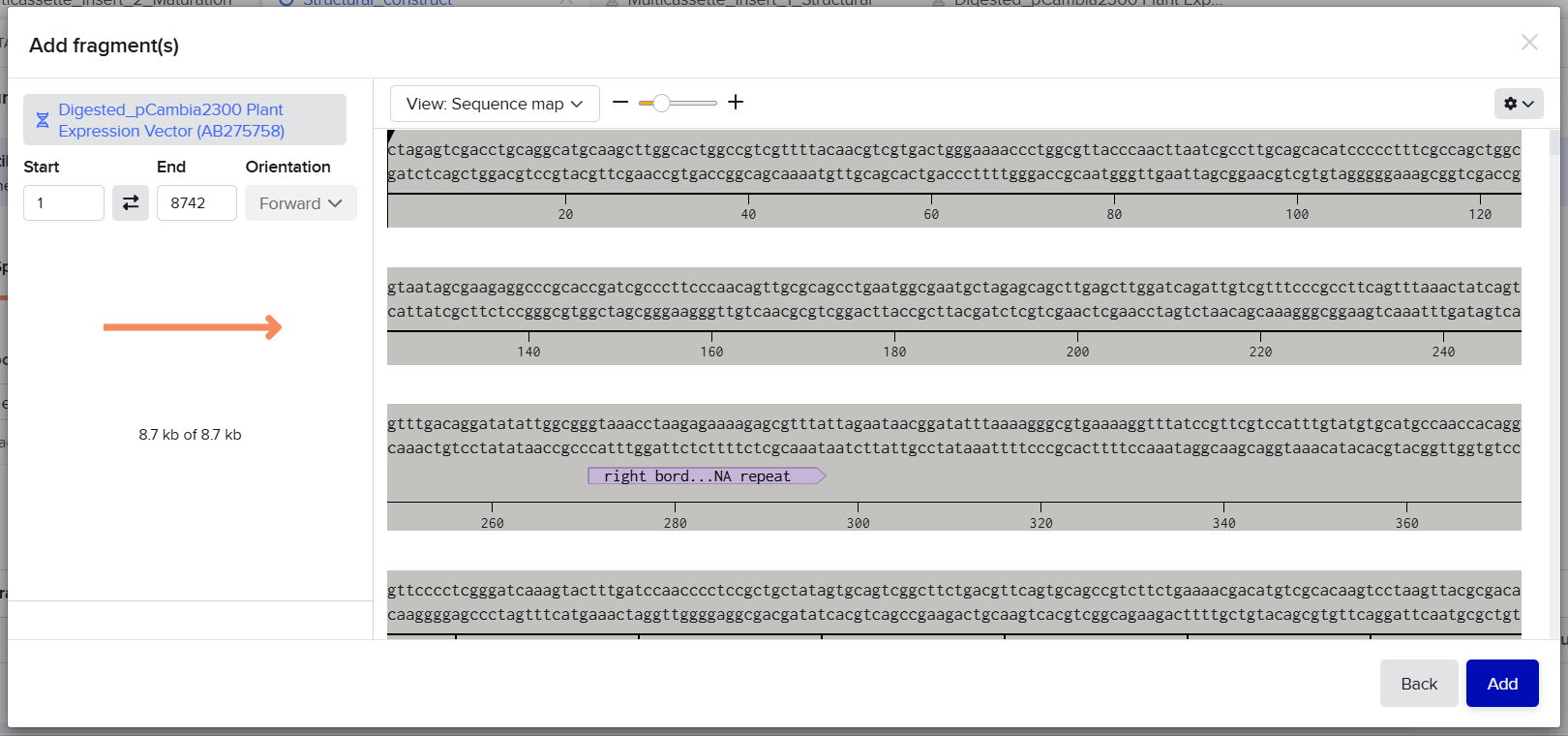
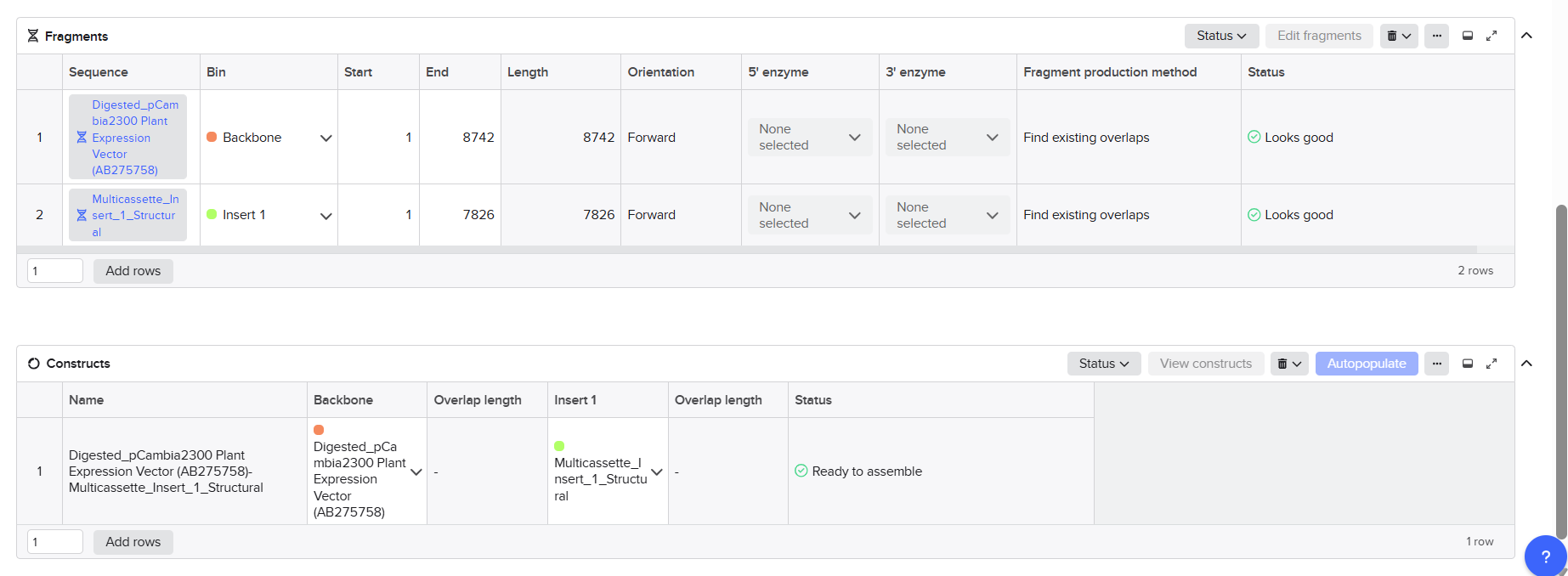
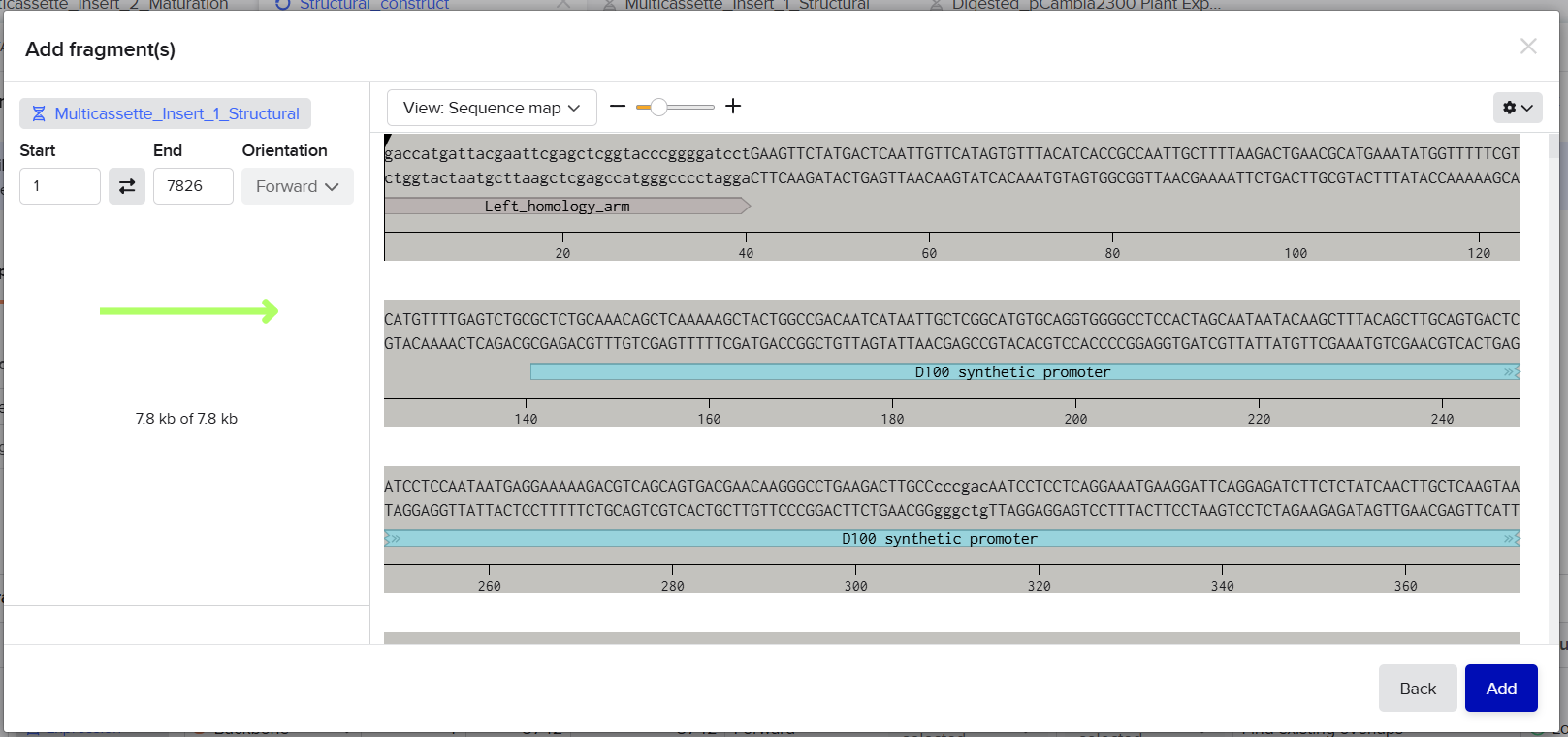 Benchling automatically analyzed the homology regions between the insert ends and the vector backbone extremities to validate correct assembly compatibility.
Once both components were loaded into the assembly bins, Benchling successfully detected the overlap regions and generated one valid construct for each assembly. I then clicked the “Assemble” button to create the final circular plant expression plasmids.

 The resulting constructs were then analyzed using both the Plasmid Map and Linear Map visualization modes in Benchling. This final verification step allowed me to confirm that the multicassette inserts were correctly integrated into the vectors without inversions, sequence interruptions, or junction mismatches.
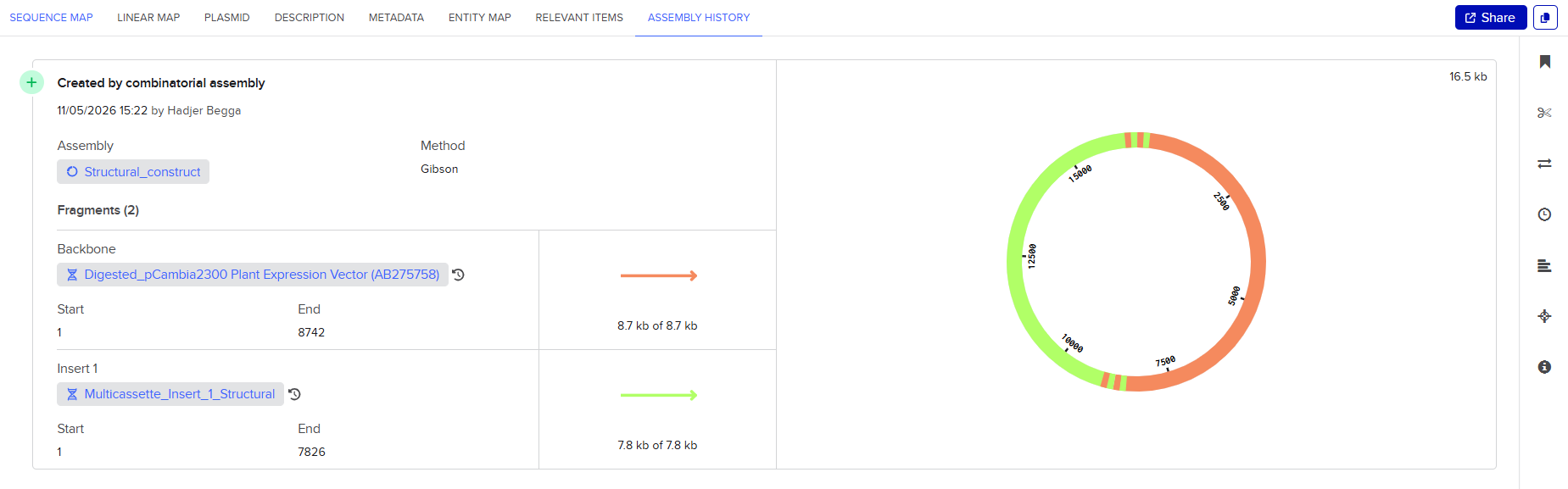 The final Structural construct generated a circular plasmid of approximately 16,488 bp, while the final Maturation construct generated a circular plasmid of approximately 18,070 bp.
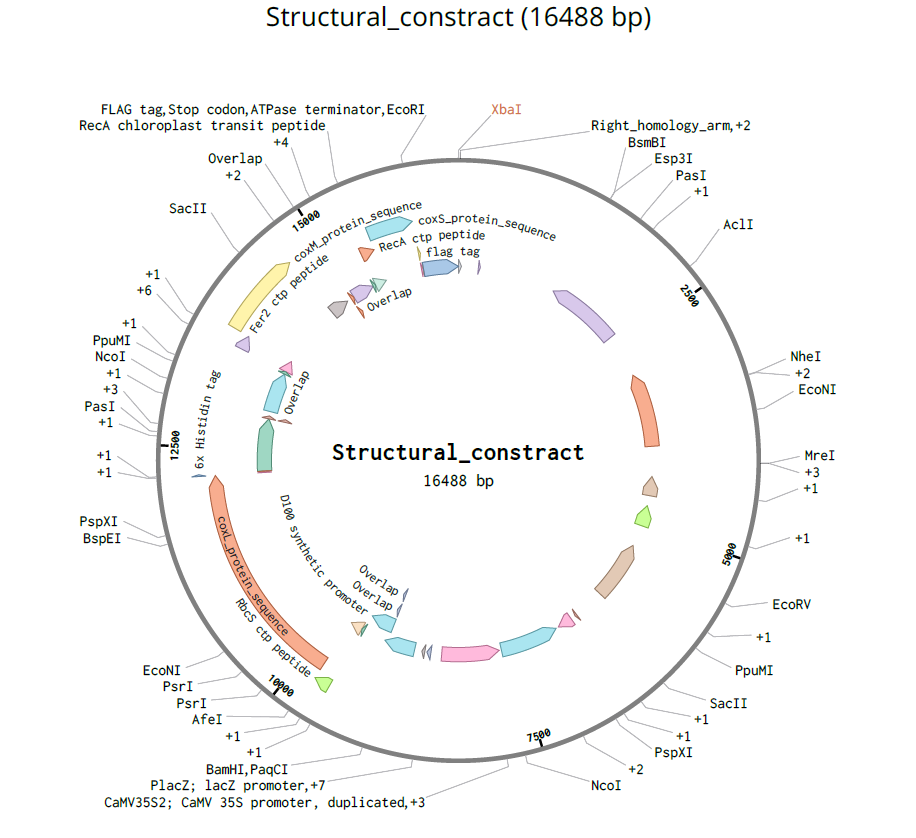
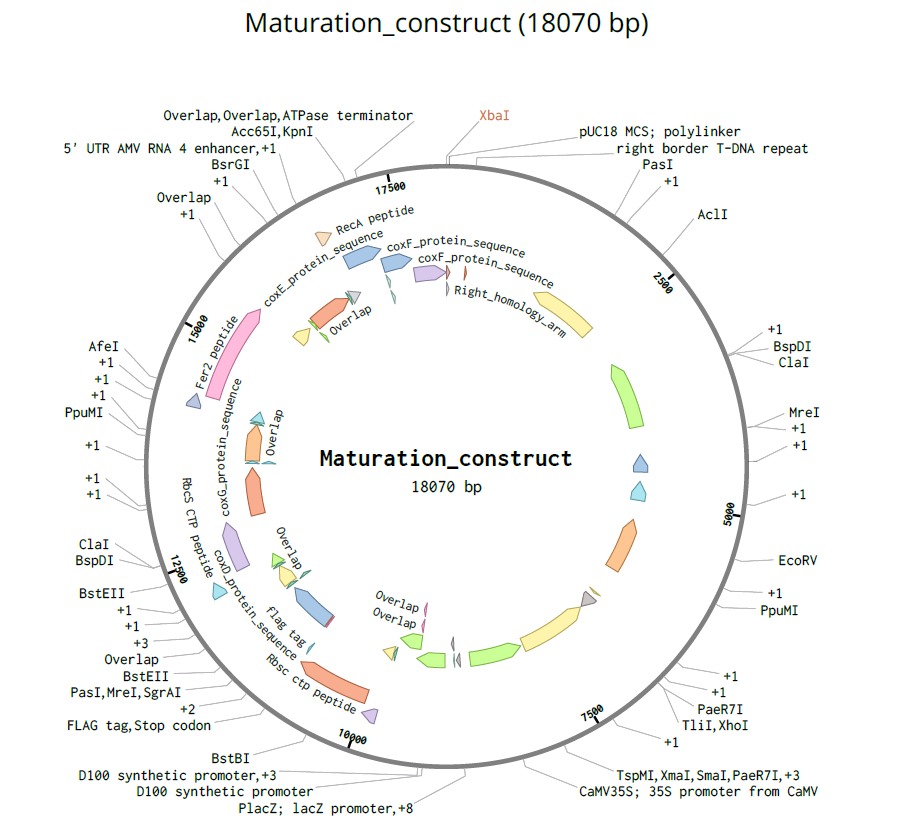
During the final quality-control inspection, I verified that the entire multicassette payload was correctly positioned between the Left Border (LB) and Right Border (RB) T-DNA sequences, ensuring compatibility with future Agrobacterium-mediated plant transformation.
I also confirmed that all original backbone features remained intact after assembly. In pCAMBIA2300, the nptII kanamycin resistance cassette used for plant selection was preserved correctly. Similarly, the hygromycin resistance cassette of pCAMBIA1300 remained unaffected.
Finally, I checked the integrity of the essential bacterial backbone elements outside the T-DNA region, including the pVS1 replication/stability regions, the pBR322 origin of replication, and the bacterial antibiotic resistance marker. All these elements remained fully conserved after circularization of the final plasmids.
The objective of this phase was to digitally assemble the fully reconstructed Structural and Maturation multicassette inserts into their corresponding binary plant expression vectors, pCAMBIA2300 and pCAMBIA1300, using in silico Gibson Assembly in Benchling. This step aimed to generate complete circular plant transformation plasmids, verify the integrity of all assembly junctions and vector backbone elements, and confirm that the final constructs were fully compatible with downstream cloning, bacterial propagation, and Agrobacterium-mediated plant transformation applications.