Week 7 HW: Genetic Circuits Part II
“Cancer wil ultimately be a chronic disease.” - Rob Weiss
I have to say this was one of my favourite lectures.
1. What advantages do IANNs have over traditional genetic circuits, whose input/output behaviors are Boolean functions?
Boolean functions are binary, representing either on or off. Whereas the logic of IANNS (Interfering RNA-based Analog Neural Networks or Intracellular Artificial Neural Networks?) is more nuanced and geared towards more brain-like information processing. They can detect not merely whether a signal is present or not, but how strong it is. This is important because, in short, biology is messy!
Advantages of IANNs include:
Utilising analog as opposed to digital signalling: Whereas a binary system requires a precise threshold to signal either yes or no, IANNs operate using graded continuous intracellular signals. This allows for a greater degree of control over gene expression.
Robustness to noise: Boolean circuits are more brittle. IANNs can handle the stochastic noise of biology which is essensial within cellular environments
Reduced metabolic burden: IANNs can conduct complex decision-making with less genetic components than traditional genetic circuits
Complex Signal Capabilities: IANNs are able to weight and combine multiple inputs at the same time. This is comparable to neural networks, as opposed to simple AND/OR logic gates.
Greater Complexity: IANNs can carry out non-linear functions and adapt to protean environments. This leads to greater scalability for complex biological tasks.
2. Describe a useful application for an IANN; include a detailed description of input/output behavior, as well as any limitations an IANN might face to achieve your goal.
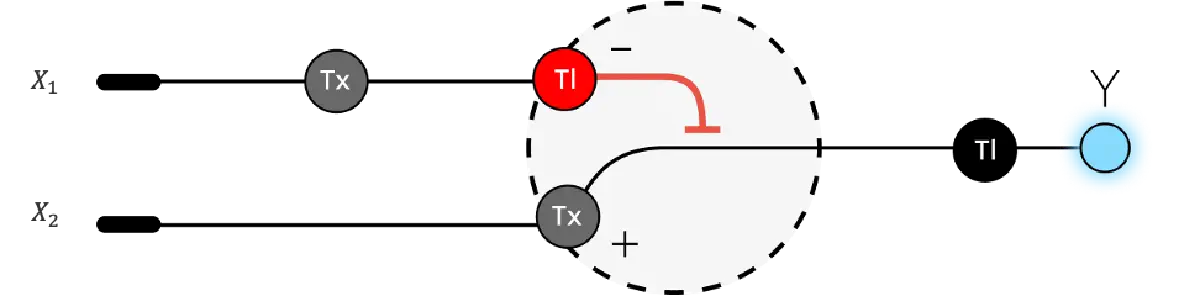
In the lecture Rob Weiss mentioned IANNs could be used for cancerous cell detection. I keep getting ill these days so I think an IANN could be used for oxidative stress detection.
Input: ROS-sensitive transcription factors or riboswitches Output: Antioxidant enzyme action Limitations: Stochastic gene expression (noise) and metabolic burden
1. What are some examples of existing fungal materials and what are they used for? What are their advantages and disadvantages over traditional counterparts?
Here is an interesting paper on this which came out last October: Fungal Innovations—Advancing Sustainable Materials, Genetics, and Applications for Industry (Hinneburg et al. 2025)
Packaging! Nowadays luxury brands are using mycelium to replace polystyrene packaging.
Textiles: People are increasingly beginning to experiment with leather made from fungi.
Fungal materials even have industrial applications are they are being used in accoustic sound panelling 🎶 🎀 🐈 .
Advantages: Sustainable/renewable, biodegradable, energy efficient
Disadvantages: Lack of consistency (mechanical properties depend on growth conditions, species, and substrate types), slower production speed than high-throughput synthetic material manufacturing, lack of durability due to sensitivity to moisture 💦
2. What might you want to genetically engineer fungi to do and why? What are the advantages of doing synthetic biology in fungi as opposed to bacteria?
I could engineer it to be flame resistant for textile applications. Or thinking about industrial or art applications I could engineer the fungi to produce certain pigments. Another idea is engineering fungi to produce specialised antioxidants or medicinal compounds for use in pharmaceutical 💊 contexts.
Fungi have the potantial to be more robust and secrete larger quantities of enzymes.
Review Part 3: DNA Design Challenge of the week 2 homework. Design at least 1 insert sequence and place it into the Benchling/Kernel/Other folder you shared in the Google Form above. Document the backbone vector it will be synthesized in on your website.
Here is the link to my Benchling