Week 1 HW: Principles and Practices
Governance
1. Bioengineering Tool
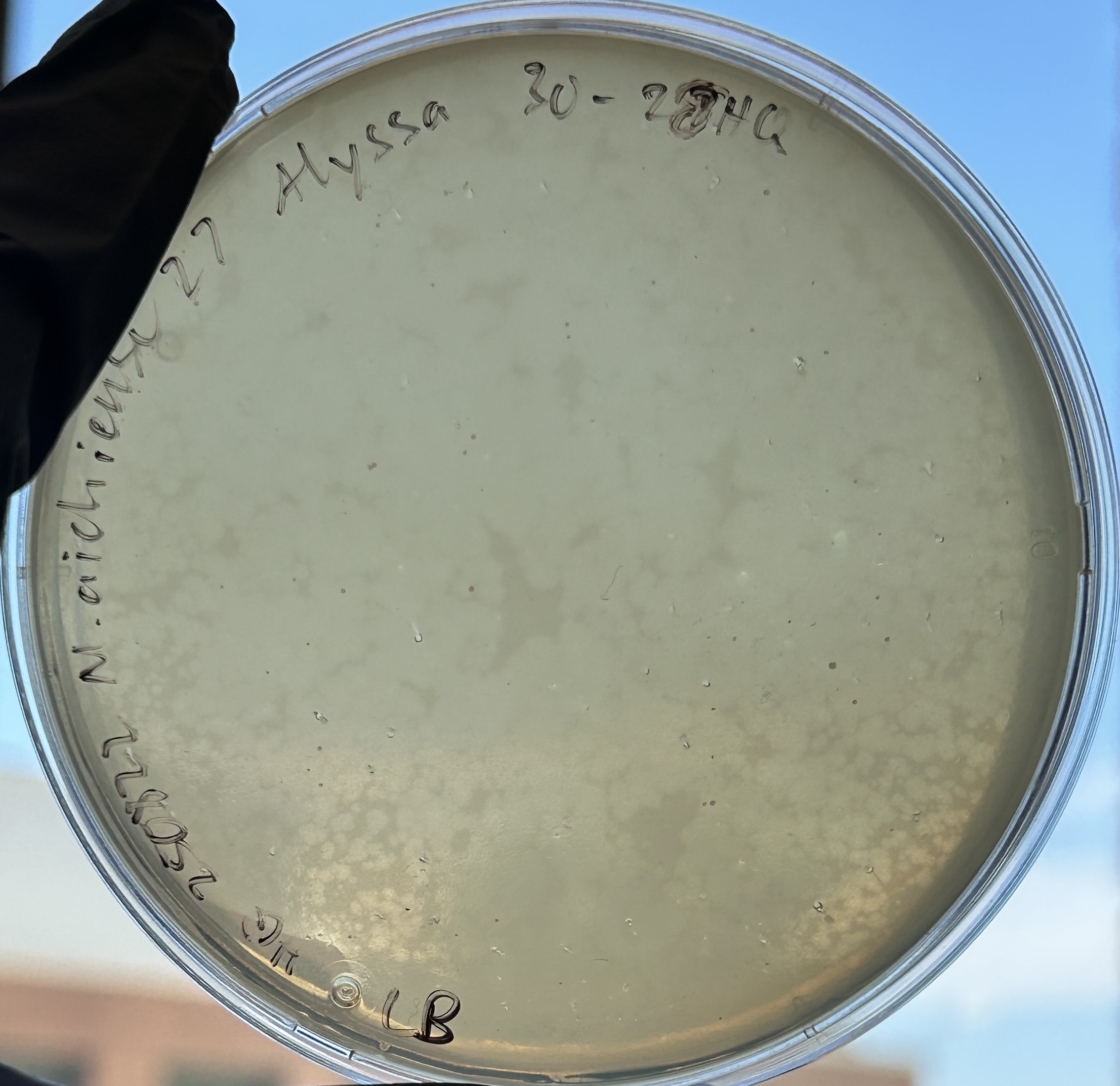
Phage satellites are a diverse class of mobile genetic elements that parasitize a phage. Extracellular Prophage-Inducing Particles (EPIPs), are a novel class of phage satellite discovered by the Saha Lab that induces the extremely stable prophage, HerbertWM, in Mycolicibacterium aichiense. Due to their novelty, much of their mechanisms of action are unknown, but it is hypothesized that they contain antirepressors or partial antirepressors due to annotated genes that bear resemblance to BRO domains which have been noted to have some influence over transcription (Zemskov et al., 2000).
Because of the observed ability of EPIPs to induce a stable prophage, developing a lytic-lysogenic switch from their putative antirepressors would be valuable for many applications including medical and environmental applications. This switch could ensure that a temperate phage lyses bacterial pathogens in phage therapy or control the transcription of engineered constructs in the soil.
2. Governance/Policy Goals
- Enhancebiosecurity: making sure this tool won’t activate genes or viruses that could harm people
- Preventing incidents
- Helping respond
- Foster lab safety: while M. aichiense is BSL-1, safety precautions should still be used
- Preventing incidents
- Helping respond
- Protect the environment: monitor how using this tool in the environment effects ecology
- Preventing incidents
- Helping respond
- Other considerations
- Minimizing costs/burdens to stakeholders
- Feasibility
- Not impede research
- Promote constructive applications
3. Actions
Option 1: Make grant funding easier to obtain if the researcher is working toward using this tool in a beneficial application
- Purpose: encourage beneficence
- Design: funding sources such as the NIH or NSF must agree to this. These sources also must have enough money allocated by the government to give out, so the government must also agree to this.
- Assumptions: researchers want money; it is already required of researchers to discuss potential applications of their work when applying for funding
- Risks of failure and “success”: this could accidentally discourage basic science research—research for the sake of knowledge or a better understanding of the world that could benefit more people in the long run.
Option 2: Ensure individuals are well-trained to prevent contamination by more harmful microbes
- Purpose: policies regarding BSL-1 waste disposal are already in place; however, in the past, M. aichiense cultures have become contaminated with bacteria that could have been a higher BSL level (but thankfully were not)
- Design: more senior researchers should give newer researchers more hands-on focused training
- Assumptions: senior researchers have the time to give newer researchers this training
- Risks of failure and “success”: this could detract from the time spent researching, making the lab less productive
Option 3: Researchers must study long-term effects of using this tool in the environment
- Purpose: ensure the application the tool is used for does not harm the environment
- Design: researchers must have the means to track environmental changes over time. Some regulatory agency must enforce this standard.
- Assumptions: researchers will do this to some extent anyway to see how durable/effective their work is in the environment
- Risks of failure and “success”: researchers may not have the resources or time to allocate to study this. They may feel that their resources are better spent elsewhere
4. Scoring
| Does the option: | Option 1 | Option 2 | Option 3 |
|---|---|---|---|
| Enhance Biosecurity | 2 | 1 | 1 |
| • By preventing incidents | 1 | 1 | 2 |
| • By helping respond | 3 | 2 | 1 |
| Foster Lab Safety | n/a | 1 | n/a |
| • By preventing incidents | n/a | 1 | n/a |
| • By helping respond | n/a | 1 | n/a |
| Protect the environment | 2 | n/a | 1 |
| • By preventing incidents | 2 | n/a | 2 |
| • By helping respond | 3 | n/a | 1 |
| Other considerations | |||
| • Minimizing costs and burdens to stakeholders | 2 | 2 | 3 |
| • Feasibility? | 2 | 1 | 3 |
| • Not impede research | 1 | 2 | 2 |
| • Promote constructive applications | 1 | 3 | 2 |
5. Prioritization
Options 1 and 2 should be prioritized because they are more easily enforced and are based on pre-existing regulations and practices, making them fairly feasible. Option 3 is difficult to enforce and offers researchers no incentive to comply, whereas option 1 provides incentive and works through positive reinforcement. Additionally, both options 1 and 2 focus on preventing incidents by offering incentives toward beneficence (option 1) or providing better safety training (option 2). Meanwhile, option 3 prioritizes reacting to possible incidents by tracking environmental changes, noticing damage to the environment, and responding. Lastly, option 3 most obviously hinders research by dictating what resaerchers must investigate, while option 1 does not hinder research and option 2 will help research in the long run, even if it initially takes time away from research to teach good practices.
Pre-Lecture Work
Professor Jacobson
- DNA polymerase’s error rate is 1:106. The human genome is ~3 billion bp, so on average, there would be 3000 mistakes made per round of DNA replication. Biology deals with this by destroying misfolded proteins and/or killing cells with too many mutations.
- Due to third-base wobble, there are many ways to code for a protein of interest. In real life, many of these don’t work because certain organisms have a bias toward particular tRNAs, so mRNA codons must match the tRNA anticodons.
Dr. LeProust
- The most common method of oligo synthesis uses phosphoramidite.
- Chemical errors accumulate, so making fragments longer than 200 bp is difficult with direct synthesis.
- Errors have accumulated so much that there are basically no fragments with the correct sequence.
George Church
- 10 essential amino acids: histidine, isoleucine, leucine, lysine, methionine, phenylalanine, threonine, tryptophan, valine, and arginine. The “lysine contingnecy” suggests that humans (and other animals) must eat plants because they are our only source of lysine, but they are also the only source of all of these amino acids, not just lysine.
- I would use slide 4, the NA to AA conversion to know what nucleotides to use that would result in amino acids that would chemically interact.
- BoSS: It would be great to find a way to store medications/treatments at room temperature; however, this could lead to unintended consequences such as vulnerability to contamination. As someone who works in a lab with bacteria, although the bacteria I work with could survive at room temperature, we store them in a fridge to help prevent contamination. I would also be concerned about using protective molecules from organisms that have adapted to survive at extreme temperatures to store medications/treatments, as these protective molecules could harm humans if they contaminate the treatment.
HTGAA Website
I added information about me, my email, and a cover image to the home page of the website. I have also learned the basics of markdown (including how to embed links and add images) during that process and have added this homework assignment to the website as well.