Week 2 HW: DNA Read, Write, and Edit
Part 0: Basics of Gel Electrophoresis
Attend or watch all lecture and recitation videos. YES Optionally watch bootcamp. YES
Part 1
Benchling & In-silico Gel Art
Make a free account at benchling.com Import the Lambda DNA. Simulate Restriction Enzyme Digestion
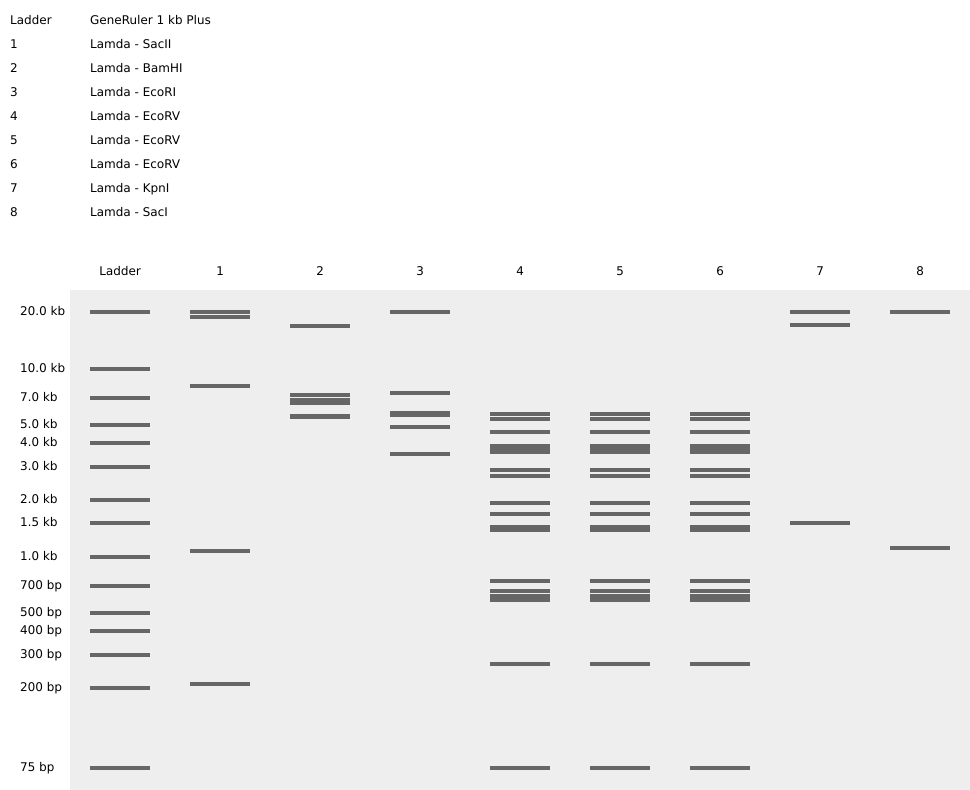
I imported Lambda DNA into Benchling and simulated restriction enzyme digestion with EcoRI, HindIII, BamHI, KpnI, EcoRV, SacI, and SalI. Using the predicted band sizes from each digest, I selected enzyme combinations that would produce bands at specific positions to form a simple geometric pattern in the style of Paul Vanouse’s Latent Figure Protocol work.
Output attempt of a dog! (with tail on the right)
Part 2
No wet lab access
Part 3
DNA Design Challenge
Choose Protein
I chose the amino acid sequence of VioC - Chromobacterium violaceum for Violacein pigment.
I will reverse translate and codon optimize to amplify pigment production and thus its antimicrobial, UV-resistant properties.
sp|Q9S3U9|VIOC_CHRVO Violacein synthase OS=Chromobacterium violaceum (strain ATCC 12472 / DSM 30191 / JCM 1249 / CCUG 213 / NBRC 12614 / NCIMB 9131 / NCTC 9757 / MK) OX=243365 GN=vioC PE=1 SV=2 MKRAIIVGGGLAGGLTAIYLAKRGYEVHVVEKRGDPLRDLSSYVDVVSSRAIGVSMTVRG IKSVLAAGIPRAELDACGEPIVAMAFSVGGQYRMRELKPLEDFRPLSLNRAAFQKLLNKY ANLAGVRYYFEHKCLDVDLDGKSVLIQGKDGQPQRLQGDMIIGADGAHSAVRQAMQSGLR RFEFQQTFFRHGYKTLVLPDAQALGYRKDTLYFFGMDSGGLFAGRAATIPDGSVSIAVCL PYSGSPSLTTTDEPTMRAFFDRYFGGLPRDARDEMLRQFLAKPSNDLINVRSSTFHYKGN VLLLGDAAHATAPFLGQGMNMALEDARTFVELLDRHQGDQDKAFPEFTELRKVQADAMQD MARANYDVLSCSNPIFFMRARYTRYMHSKFPGLYPPDMAEKLYFTSEPYDRLQQIQRKQN VWYKIGRVN
Reverse translate
sp|Q9S3U9|VIOC_CHRVO Violacein synthase OS=Chromobacterium violaceum (strain ATCC 12472 / DSM 30191 / JCM 1249 / CCUG 213 / NBRC 12614 / NCIMB 9131 / NCTC 9757 / MK) OX=243365 GN=vioC PE=1 SV=2 ATGAAGCGAGCGATTATTGTCGGGGGGGGTTTAGCTGGAGGTCTAACTGCGATATACTTGGCTAAACGTGGATACGAGGT ACATGTGGTCGAGAAACGGGGCGACCCACTCAGGGACCTGTCTAGCTATGTTGATGTGGTTTCATCACGCGCAATCGGGG TCAGCATGACTGTAAGAGGCATCAAGTCAGTTTTAGCGGCCGGTATCCCCCGAGCTGAATTAGATGCCTGTGGTGAGCCA ATAGTTGCCATGGCGTTTTCCGTCGGGGGACAATATCGCATGCGGGAACTTAAACCACTCGAAGACTTCCGACCGCTTTC GCTTAACCGAGCAGCCTTCCAGAAGCTTTTGAACAAGTACGCAAACCTTGCCGGCGTACGGTACTATTTCGAACATAAAT GCCTGGATGTAGACCTGGATGGGAAATCCGTACTGATCCAAGGGAAGGACGGACAGCCGCAGCGACTTCAAGGAGATATG ATTATCGGCGCAGATGGGGCACACAGTGCAGTTCGCCAAGCGATGCAGTCAGGATTGCGGCGCTTTGAGTTTCAACAAAC GTTCTTTAGGCACGGGTATAAAACGCTGGTCCTACCCGACGCCCAAGCACTCGGGTATCGAAAGGACACGTTATATTTTT TTGGAATGGACAGCGGAGGGTTGTTCGCAGGCCGAGCCGCAACAATACCCGATGGTAGCGTGTCCATAGCTGTGTGTCTG CCCTACTCCGGCTCCCCCAGTTTGACAACCACAGATGAACCGACTATGCGTGCATTTTTCGACAGGTACTTTGGAGGTCT TCCACGGGATGCGAGGGACGAGATGCTTAGACAATTTTTAGCCAAGCCGTCTAATGATCTAATAAATGTGCGATCTTCAA CTTTTCATTACAAAGGTAACGTTCTGCTTTTAGGCGACGCCGCACATGCTACCGCGCCATTTTTAGGACAAGGCATGAAT ATGGCGTTAGAGGATGCGCGAACATTCGTAGAATTACTTGATCGCCACCAAGGCGATCAGGATAAAGCGTTTCCAGAGTT CACGGAGCTTAGAAAGGTGCAAGCGGACGCGATGCAAGATATGGCCCGGGCGAATTACGATGTTCTATCTTGCTCCAACC CGATTTTTTTTATGAGGGCGCGGTATACCCGCTACATGCACAGCAAGTTTCCGGGACTGTACCCGCCGGATATGGCCGAG AAACTGTATTTCACGTCAGAGCCGTACGATCGATTACAACAAATACAGCGCAAGCAAAACGTATGGTACAAGATAGGCAG AGTTAAT
Codon Optimize
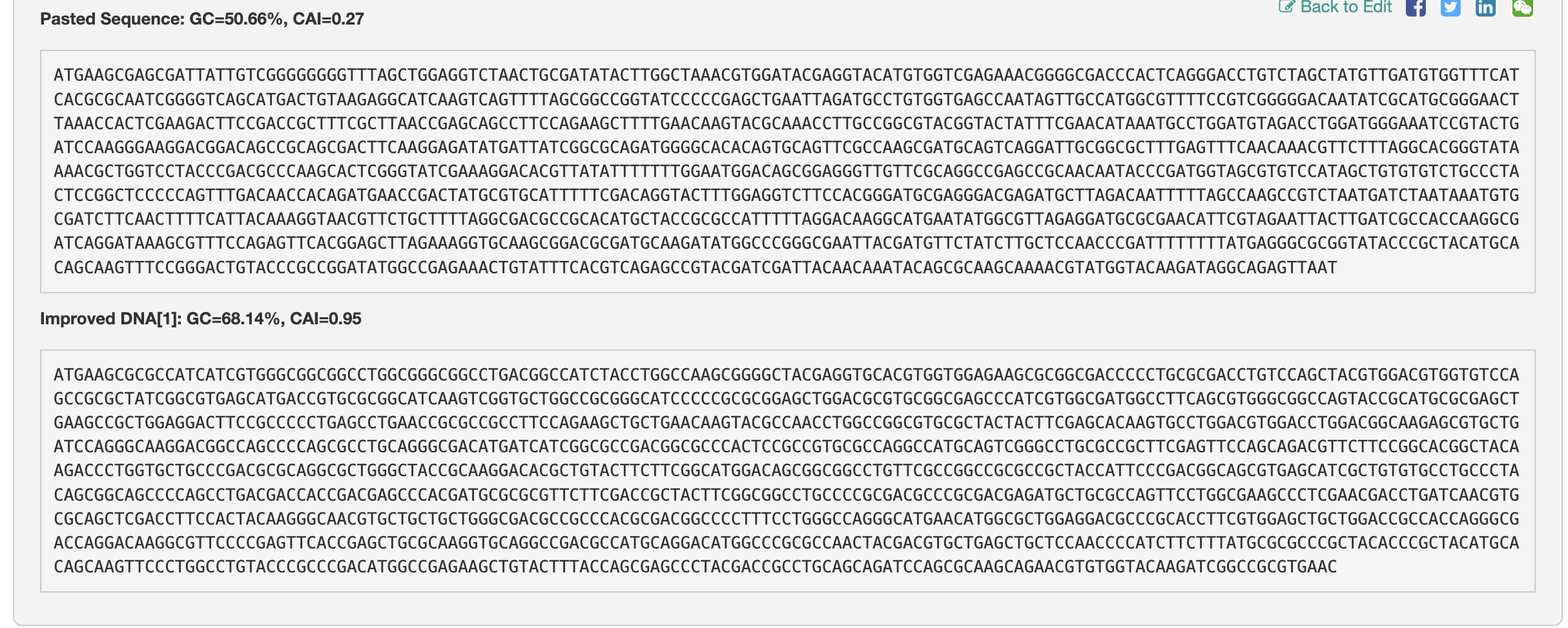
https://en.vectorbuilder.com/tool/codon-optimization/b93b7790-7536-4d9b-a72e-02d62c3944e8.html
Next Next steps would be to embed into a seaweed matrix.
The VioC coding sequence can be transcribed into mRNA and then translated into protein using either a cell-dependent or cell-free method. In a cell-dependent approach, the codon-optimized sequence is cloned into an expression plasmid, transformed into E. coli, and protein production is induced by adding IPTG. The bacteria read the DNA, transcribe it into mRNA, and their ribosomes translate it into the VioC enzyme. In a cell-free approach, the DNA template is added directly to a prepared lysate containing ribosomes, enzymes, and amino acids, and protein is synthesised in a test tube without any living cell.
Part 4
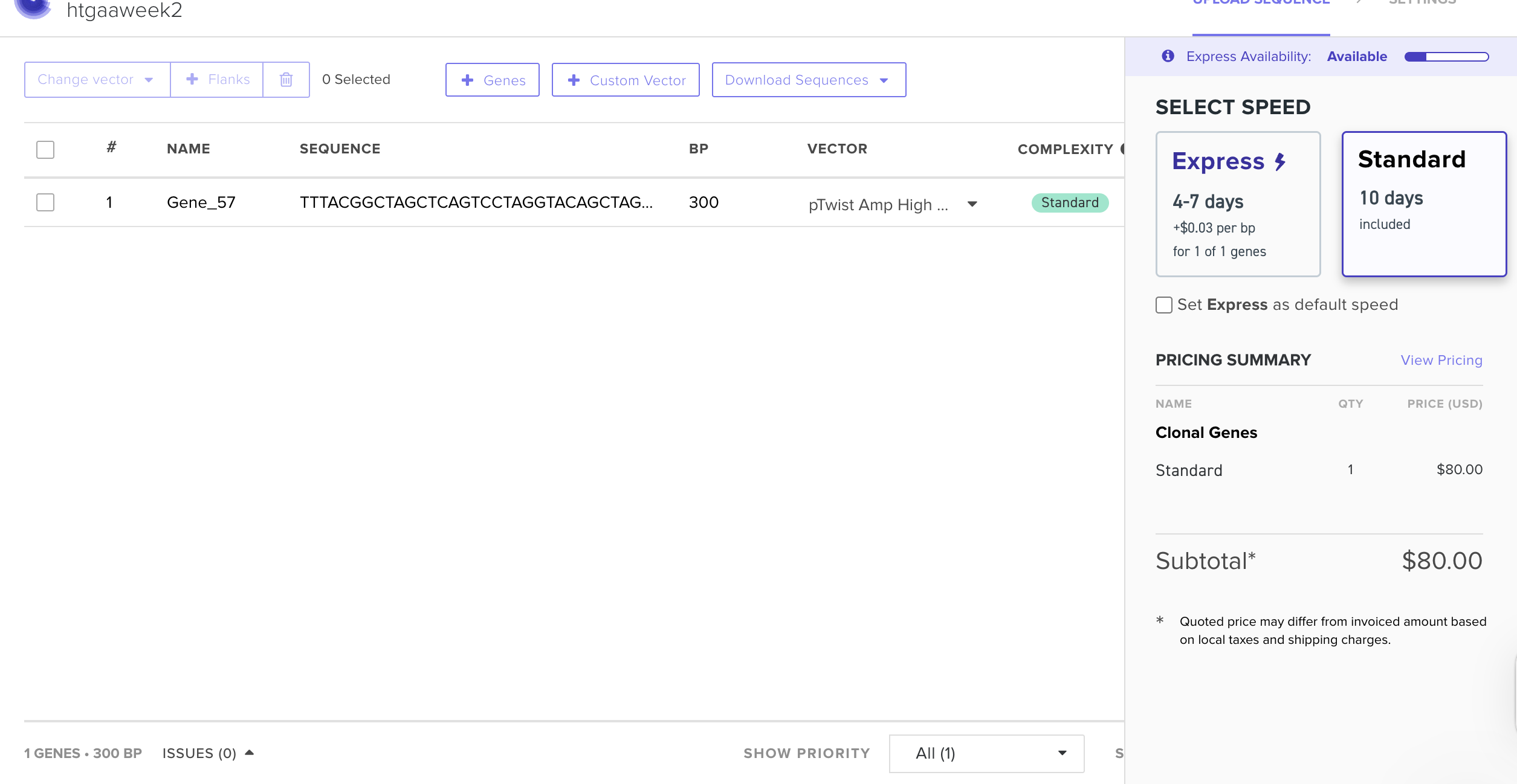
Prepare a Twist DNA Synthesis Order
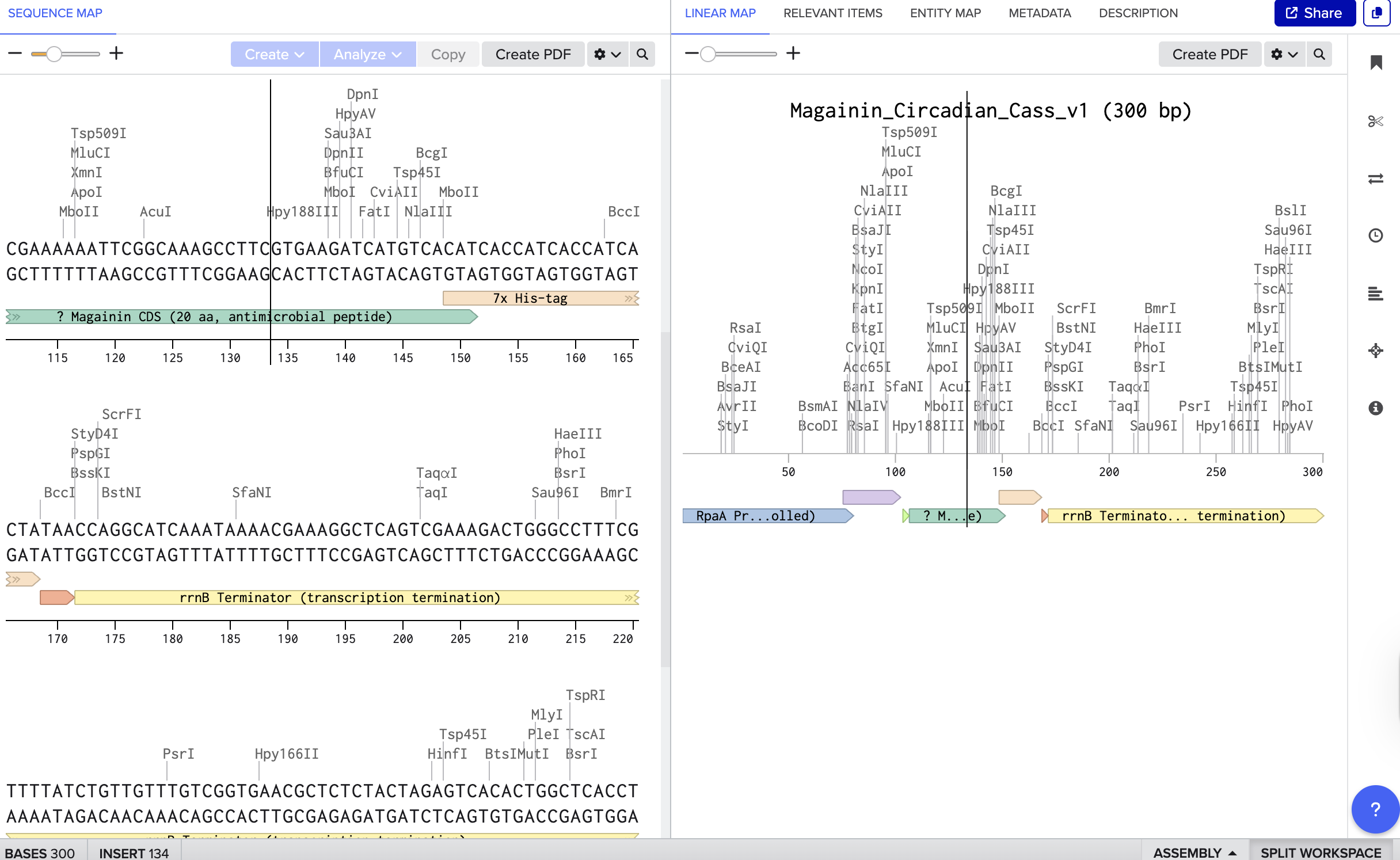
After reading more on living materials, bacterial pigments, and connecting it to my interest in light and circadian rhythms, I wanted to explore how to make a simple biological system that expresses anti-microbial or other elements only when needed, rather than all the time. So building a ’temporal’ antimicrobial system that produces a bacteria-killing peptide Magainin on a 24-hour schedule controlled by a circadian promoter RpaA. I started with just learning how to design the Magainin peptide and annotate properly.
Benchling
Twist
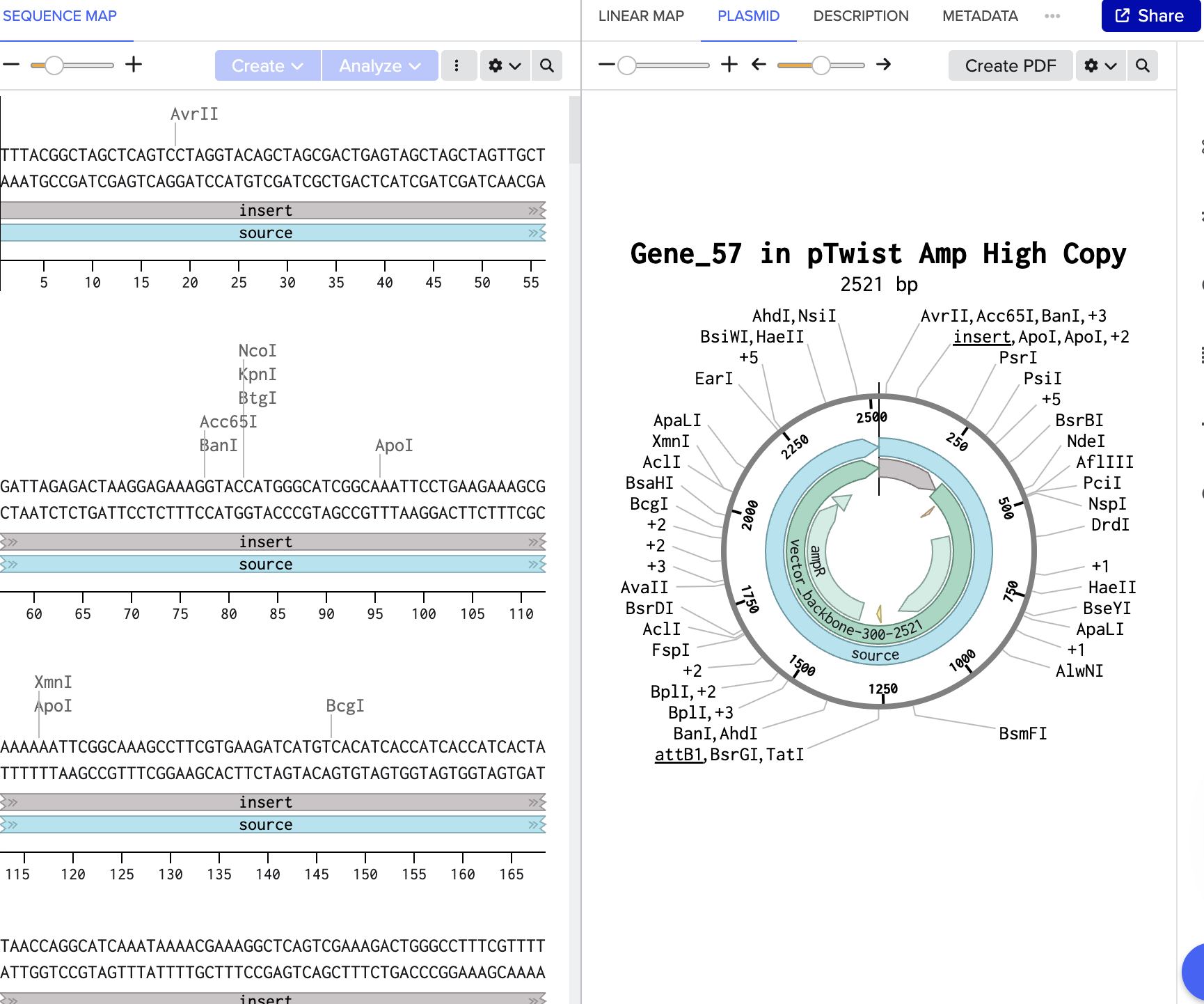
REF:
- Fang et al. (2025) - “Mechanism and reconstitution of circadian transcription in cyanobacteria”
- Salis et al. (2009) - “Automated Design of Synthetic Ribosome Binding Sites”
- Westerhoff et al. (2008) - “Structure, Membrane Orientation, Mechanism, and Function of Pexiganan (Magainin derivative)”
Part 5
DNA Read/Write/Edit
DNA Read (Sequencing)
5.1 Sequencing Technology: Sub-questions Generation: Sanger sequencing is first-generation. It sequences one DNA fragment at a time using chain-terminating dideoxynucleotides, predating the massively parallel approaches of second-generation (e.g. Illumina) and third-generation (e.g. Oxford Nanopore) methods. Input and preparation: The input is purified plasmid DNA. Preparation involves a PCR step using a single primer to amplify the target region, followed by a cleanup to remove unused nucleotides and primers before the sequencing reaction. Essential steps and base calling: The cleaned PCR product is mixed with a single primer and four fluorescently labelled dideoxynucleotides. A polymerase extends the primer until it randomly incorporates a dideoxynucleotide and terminates. This produces fragments of every possible length, each ending in a fluorescent base. The fragments are separated by capillary electrophoresis and a laser reads the fluorescent colour at each length, which is converted into a base sequence. Output: A chromatogram showing peaks of four colours corresponding to A, T, C, and G, along with a text sequence file. Read length is typically 700-1000 bases.
5.2 Synthesis Technology: Sub-questions
Technology: I would use solid-phase phosphoramidite synthesis via Twist Bioscience to synthesise the pLight-Circadian-Color plasmid, as it offers high accuracy and fast turnaround for sequences up to several kilobases. Essential steps: The sequence is designed in Benchling, codon-optimised, and uploaded to Twist. Twist synthesises overlapping oligos on a silicon chip, assembles them into the full gene fragment, clones the insert into the chosen backbone vector, and sequences the final construct to confirm accuracy before shipping. Limitations: Direct oligo synthesis has a practical length limit of around 200 nucleotides per oligo due to error accumulation, meaning longer genes require assembly from many fragments. Error rates, while low (around 1 in 3,000 bases for Twist), mean some clones may contain mutations and must be sequence-verified before use.
What DNA would you want to sequence and why?
I would sequence my pLight-Circadian-Color plasmid (which contains the RpaA gene from Synechococcus elongatus, an anthocyanin color gene, and a light sensor) to check that it was made correctly before testing if bacteria with this plasmid change color on a 24-hour schedule when exposed to light.
What sequencing technology would you use?
I would use Sanger sequencing because it’s most accurate.
DNA Write (Synthesis)
What DNA would you synthesize and why?
I would synthesize my yet-to-be-completed pLight-Circadian-Color plasmid containing three genes (RpaA from Synechococcus elongatus for timing, anthocyanin for color, light sensor for activation) to test if bacteria can change color on a 24-hour schedule in response to light.
DNA Edit
What DNA would you edit and why?
After I verify the plasmid works, I would edit the RpaA promoter to make it stronger so the color changes are brighter and more noticeable on a 24-hour schedule.
What editing technology would you use?
I would use site-directed mutagenesis to make small changes to the RpaA promoter because it’s precise.
Editing Technology: Sub-questions
How it works: Site-directed mutagenesis uses PCR with primers that contain the desired mutation in their sequence. The polymerase copies the entire plasmid incorporating the mutation, and the original methylated template is then digested away with DpnI, leaving only the mutated version.
Preparation and inputs: I would design primers containing the specific base changes I want in the RpaA promoter region, using a tool like NEB’s primer design tool. The inputs are the original plasmid, the two mutagenic primers, a high-fidelity polymerase such as Phusion, dNTPs, and DpnI enzyme for template removal.
Limitations: Site-directed mutagenesis only makes small, precise changes and cannot introduce large insertions or deletions efficiently. It also requires the plasmid to already be available, and each round of mutagenesis must be followed by sequencing to confirm the correct change was made and no unintended errors were introduced.
References & Resources
Lecture Materials
- Week 2 Lecture - DNA Read, Write, & Edit, George Church, Joe Jacobson, Emily Leproust
- Week 2 Lab - DNA Gel Art, February 12-13, 2026
Required Readings
- Fang et al. (2025). “Mechanism and reconstitution of circadian transcription in cyanobacteria.” Journal of Biological Chemistry
- Salis et al. (2009). “Automated Design of Synthetic Ribosome Binding Sites to Control Protein Expression.” Nature Biotechnology, 27, 946-950
- Westerhoff et al. (2008). “Structure, Membrane Orientation, Mechanism, and Function of Pexiganan (Magainin derivative).” Biochemistry
Software & Tools Used
- Benchling - DNA sequence design, annotation, and in-silico gel electrophoresis
- Twist Bioscience - DNA synthesis order preparation and optimization
- VectorBuilder Codon Optimization Tool - Reverse translation and codon optimization for violacein synthase
- UniProt - Protein sequence database (VioC entry: sp|Q9S3U9|VIOC_CHRVO)
- Imgur - Image hosting for documentation
Sequences Worked With
- VioC (Violacein synthase) from Chromobacterium violaceum strain ATCC 12472
- RpaA circadian promoter from Synechococcus elongatus
- Magainin antimicrobial peptide sequence
AI Assistance
- Claude (Anthropic) - DNA design and sequencing strategy
- Model: Claude Sonnet 4.5
- Date(s) used: February, 2026
- Tasks: Assisted with reverse translation strategy for VioC, guidance on codon optimization principles, clarified Sanger sequencing vs synthesis tradeoffs
Project Development
- Circadian-controlled antimicrobial system design (RpaA + Magainin)
- Violacein pigment amplification through codon optimization
- pLight-Circadian-Color plasmid conceptual design
Additional Resources
- Twist Bioscience synthesis guidelines and specifications
- Benchling annotation standards
- Circadian rhythm gene expression literature
Acknowledgments
- Course instructors