Week 7 HW: Genetic Circuits Part II: Neuromorphic Circuits
Assignment Part 1: Intracellular Artificial Neural Networks (IANNs)
What advantages do IANNs have over traditional genetic circuits, whose input/output behaviors are Boolean functions?
IANNs (Intracellular Artificial Neural Networks) have several advantages over traditional genetic circuits. Booleans inherently work in a binary fashion: there is either a statement ment that makes it true/false, and therefore, either on/off. IANNs have the ability to process continuous signals, allowing for inputs to be weighted against each other before an output. This makes the system more sensitive to differences, not just whether something is true or false. This is great for cells as molecular concentrations exist on a spectrum. Another reason is its reconfigurability: you can reprogram the IANN circuit without needling to completely rebuild it. IANNs also make multi-input easier to configure, as an arbitrary number of inputs can be collapsed into one step, instead of building onto each other in booleans. Lastly, boolean circuits are static, with inherently fixed behaviour after it is built. IANNs are defined by weights, allowing for greater flexibility if you were to modify the weight thresholds.
Describe a useful application for an IANN; include a detailed description of input/output behavior, as well as any limitations an IANN might face to achieve your goal.
IANNs are very applicable to my final project of autonomously, bioluminescent plants. My plan has five constructs, where my enzymes will likely be fixed due to my promoter choices, when optimal ratios of expression depend on the plant, not my assembly. Hypothetically, an IANN that senses multiple metabolic signals, and therefore adjusts expression levels of each enzyme pathway would be more efficient. Inputs could be luciferin precursors, ATP concentrations, CoA levels, reactive oxygen species, sensed by engineered biosensor modules, that can convert concentrations into molecular signals for the IANN to read. For an example of an output, if low luciferin is detected, its precursors would be upregulated, allowing for a graded output that adjusts expression levels. This would work better than boolean logic, as I have several metabolic signals all interacting with various variables. Optimal response to one metabolic process depends on the others. The limitations of this idea include training (no training in living plant cells has been mentioned or achieved), sensor availability for my specific metabolic pathways, signal crosstalk and noise (as many other pathways are being performed in a plant cell at all times), and scalability (the paper doesn’t mention five inputs). Another limitation is metabolic burden, (on top of an already pre-existing problem of bioluminescence metabolically loading the plant cells).
Draw a diagram for an intracellular multilayer perceptron where layer 1 outputs an endoribonuclease that regulates a fluorescent protein output in layer 2.
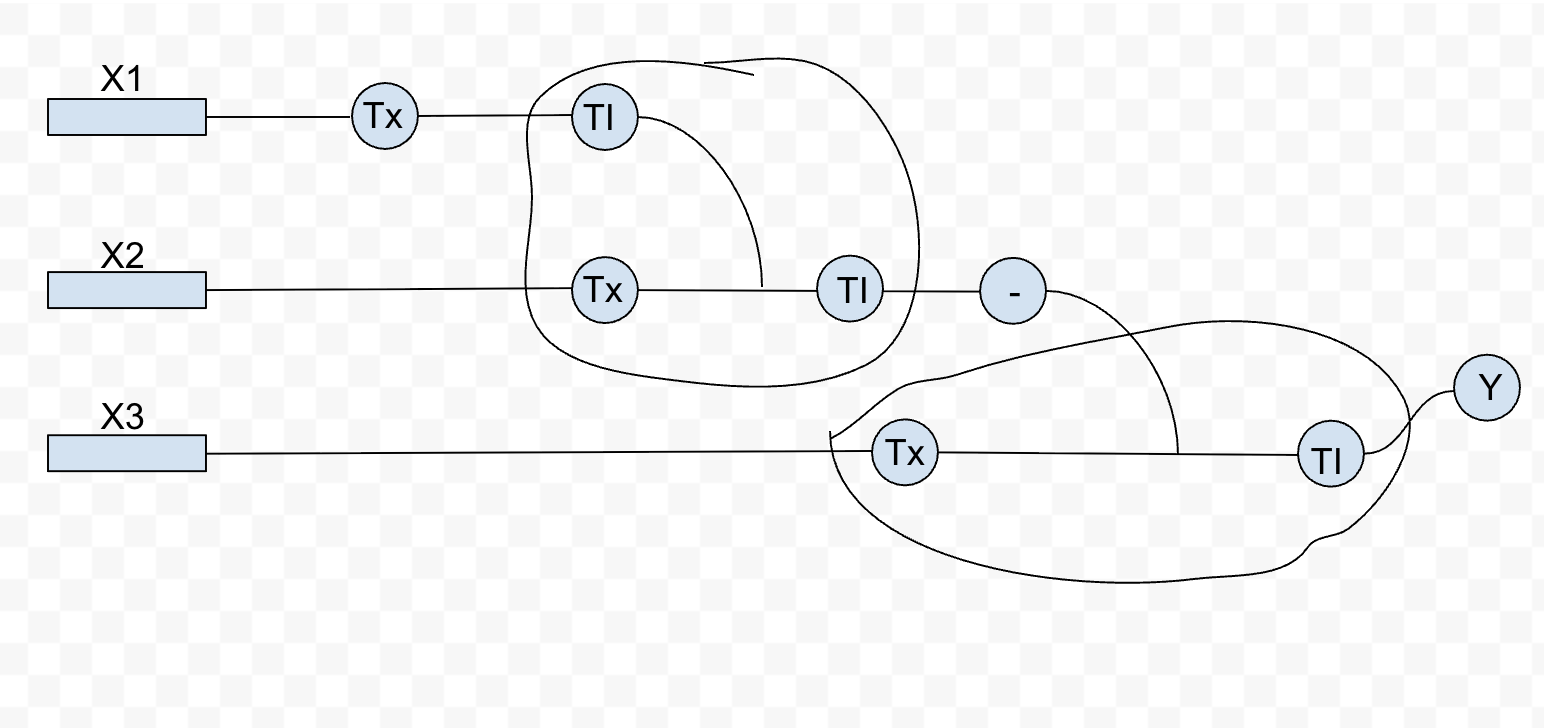
X1 encodes for Csy4 endoribonuclease. Csy4 cleaves X2’s mRNA acting as inhibitory weight.
X2 encodes for endoribonuclease 2. It has a recognition site for Csy4. The mRNA that survives Csy4 gets translated into endoribonuclease 2 giving the output for layer 1.
X3 encodes for fluorescent protein. It has a recognition site for endoribonuclease 2. The endoribonuclease 2 from before is the inhibitory weight. Whatever mRNA survives the endoribonuclease is translated into fluorescent protein output Y.
Assignment Part 2: Fungal Materials
What are some examples of existing fungal materials and what are they used for? What are their advantages and disadvantages over traditional counterparts?
Fungal materials are becoming increasingly more popular in various sectors. A prominent example includes the fashion industry, where mycelium leather is becoming more popular with luxury designers, including Hermes and Stella McCartney. While production includes less toxic chemicals and water needed, it’s still difficult to scale outside of luxury/avant-garde products, and is a bit finicky in production. Another industry adapting fungal materials includes furniture/delivery. An example includes IKEA committing to using mycelium styrofoam for packaging. As regular styrofoam degrades slowly and is toxic to the environment, this offers a more eco-friendly solution. However, it has similar limitations, and slacking economics are difficult, and the mycelium is sensitive to water absorption damage during shipment. Lastly, mycelium is an interesting construction material, offering a non toxic solution to fiberglass. However, it remains limited in its structural usage due to its sensitivity to damage from water, and weak compressive strength.
What might you want to genetically engineer fungi to do and why? What are the advantages of doing synthetic biology in fungi as opposed to bacteria?
Interestingly, LightBio is a company that already produces glowing plants through the use of fungal pathways. There’s an obvious application to my project where it has been proven as plausible. However, its efficiency in converting energy to photons remains weak. Beyond bioluminescence, fungi still offer a wide variety of engineering purposes such as living biofertilizers, biocontrol agents (instead of more toxic insecticides), and biosensors for metal contamination or plant disease. Fungi has many advantages over bacteria in plant engineering. Firstly, it has the ability to penetrate root cells for metabolite exchange, something bacteria cannot do. The pathway to deliver engineered metabolites into plants already exists specifically in fungi. Furthermore, fungi share many similarities in protein folding, translations, etc. allowing for better protein processing than bacteria. These similarities translate to organelles, as fungi and plants share similar structures that bacteria lack. Lastly, fungi is already adapted to fluctuating soil conditions, making it a more stable and faithful medium.
Work Cited
https://en.wikipedia.org/wiki/Ecovative_Design
https://www.intelligentliving.co/ikea-mushroom-based-packaging/
https://www.sciencedirect.com/science/article/pii/S0264127519308354