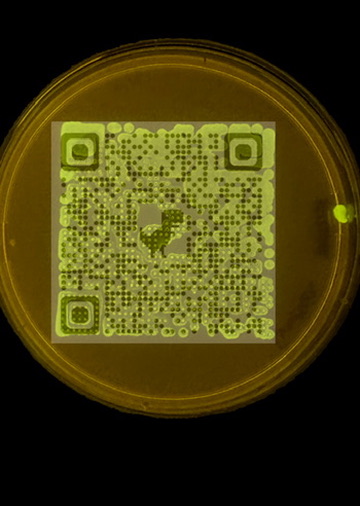
Week 3 Lab: Opentrons Fluorescent Bacteria Pixel Artwork
Opentrons Bio-Art Lab
Program the Opentrons OT-2 pipetting robot to create glowing designs by depositing genetically engineered E. coli onto black (charcoal) agar plates. Fluorescent proteins form bio-art that comes alive under UV light.
Lab Overview
This two-day lab combines synthetic biology, automation, and art:
- Opentrons OT-2 — liquid handling robot for precise pipetting
- Fluorescent E. coli — R/G/B/Orange/YFP bacteria on black agar
- Your design — custom Python protocol to deposit any pattern
Workflow: Paper Protocol → Opentrons Protocol → Compiled Protocol
- Paper Protocol — plain-language steps (e.g., “pipette 100 µL Green into well A1”)
- Opentrons Protocol — Python code the robot understands
- Compiled Protocol — validated and run on the OT-2
Key Actions
| Action | Function |
|---|---|
| Pick up tip | pick_up_tip() |
| Aspirate | aspirate(volume, location_of_color('Green')) |
| Dispense | dispense_and_detach(pipette, volume, location) |
| Drop tip | drop_tip() |
Design: T-Rex QR Code
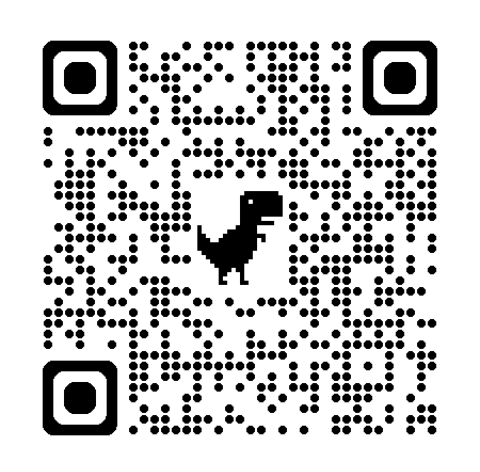
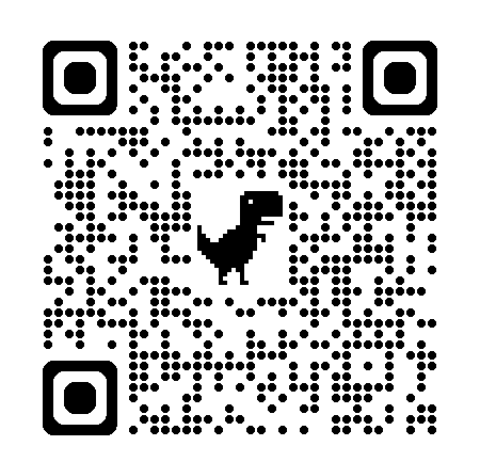
This lab implements a QR code with an embedded T-Rex — a 33×33 pixel grid where black modules are deposited as fluorescent bacteria. Under UV light, the QR code glows and remains scannable.
Lab Components
Part 1: Protocol Script
The Python protocol that maps the QR code pixel grid to agar plate coordinates and deposits fluorescent bacteria at each black pixel. Uses a single color (Green) for the monochrome design.
Submission & Running
- Submit your protocol to your TA or publish to GinkgoArtworks
- Sign up for a robot time slot (MIT/Harvard: during Lab hours)
- Submit at least one day before your robot slot via the course Form
Post-Lab (All Students)
- Automation for final project — Describe what you intend to automate (procedures, 3D-printed holders, pseudocode)
- Published paper — Find and describe a paper using Opentrons or similar automation for novel biological applications (e.g., automated PACE)